





— Blogs —
—Products—
 Consumer hotline +8618073152920
WhatsApp:+8615367865107
Address:Room 102, District D, Houhu Industrial Park, Yuelu District, Changsha City, Hunan Province, China
Product knowledge
Time:2026-09-21 13:00:00 Popularity:196
A self-cleaning multi-parameter water quality probe is useful when deposits on accessible sensing surfaces are the main cause of lost measurement quality. It does not remove every type of fouling, unblock a clogged protective guard or recalibrate an aged electrode. For high-fouling sites, qualify the cleaning mechanism in the actual water and record readings before cleaning, after automatic cleaning and after manual inspection. Select the NiuBoL MPS configuration by its required channels and cleaning coverage, not by the word self-cleaning alone.
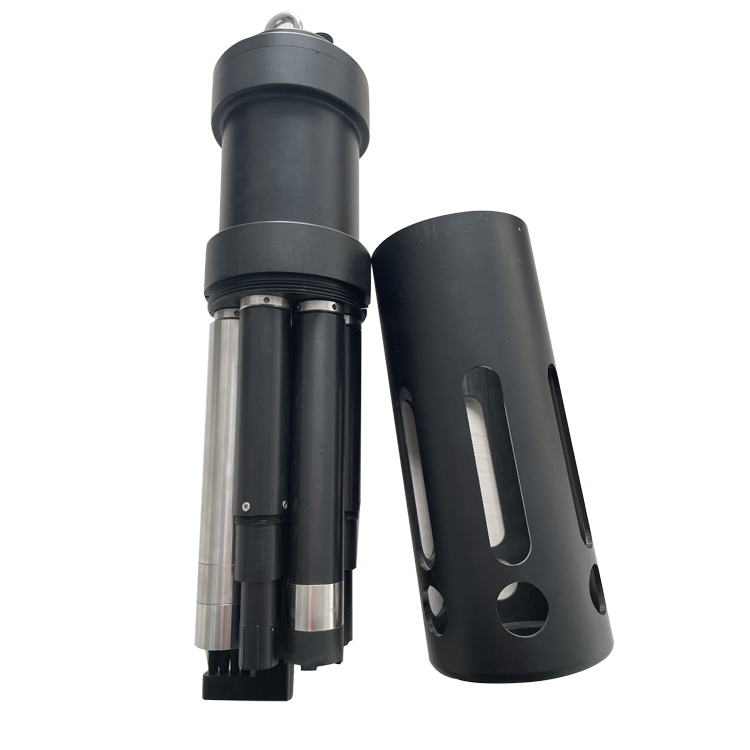
A soft biofilm on an optical window, mineral scale, oily deposits and fibrous material require different responses. A brush may remove a soft surface film while leaving hardened scale or material wrapped around the assembly. More frequent movement is not a reliable cure for all four conditions and may increase wear without restoring the measurement.
| Fouling condition | What to inspect | Practical response |
|---|---|---|
| Soft biological film | Contact between the brush and the relevant sensing surfaces | Trial an interval that prevents unacceptable drift between cycles. |
| Mineral deposits | Hard deposits remaining after a normal cycle | Use parameter-specific, material-compatible service procedures; reconsider the measuring location if scaling persists. |
| Oil or grease | Residual coating, trapped particles and recovery after cleaning | Assess compatibility and sample representativeness before committing to direct immersion. |
| Fibres or large debris | Guard slots, moving parts and water exchange around the modules | Provide safe retrieval and physical inspection; a brush is not a debris shredder. |
| Electrode aging | Response in fresh standards after cleaning | Recalibrate or replace the affected consumable when justified, rather than increasing brush frequency. |
A slotted protective guard can reduce mechanical contact with larger objects, but it must still allow representative water to reach the sensors. If slots become blocked, clean sensing faces inside the guard may measure water that exchanges too slowly. Inspect the complete assembly, not just the window visible from the outside.
The NBL-WQ-MPS-5A supports a selectable configuration of up to eight parameters including temperature, with options such as dissolved oxygen, COD, pH, ORP, conductivity/salinity, ammonium and turbidity. The NBL-WQ-MPS-5B supports up to six parameters including temperature, drawn from its own DO, pH, ORP, conductivity/salinity and turbidity options.
Those maximum counts do not mean every channel is fitted in every delivered unit. Nor should the 5A's COD or ammonium options be assumed available in a 5B configuration. Request the populated module list, matching ranges and replacement-part identities with the order.
| Assembly item | MPS-5A | MPS-5B |
|---|---|---|
| Power supply | 12 VDC +/-5% | 12 VDC; confirm allowable tolerance for the delivered assembly |
| Rated power | 5 W at 12 V | 2 W at 12 V |
| Communication | RS485 Modbus RTU | RS485 Modbus RTU |
| Cleaning | Automatic interval and cycle settings | Cleaning brush with configurable interval and cycle settings |
| Cable | Standard 5 m; four-core twisted-pair shielded cable | Standard 5 m; four-core twisted-pair shielded cable |
| Environmental limits | Specify the assembled configuration's temperature, pressure and protection limits | 0-50 degrees C; pressure at or below 0.2 MPa; IP68 |
| Construction and handling | Use the designated mechanical mounting points; do not suspend by the cable | POM and 316L housing; lifting ring or designated mounting threads |
Do not power either integrated assembly from a 24 V circuit merely because separate NiuBoL probes may accept 12-24 V. Check voltage at the probe while cleaning operates, especially with an extended cable. The rated power is not a substitute for confirming starting current or the selected cleaning duty.
| MPS-5B channel example | Range and resolution | Acceptance consideration |
|---|---|---|
| Turbidity | 0-20 NTU at 0.01 NTU; 0-200 or 0-1000 NTU at 0.1 NTU | The lowest range includes an absolute +/-1.5 NTU accuracy term; a small display increment does not make it a precision low-turbidity instrument. |
| pH | 0-14; 0.01 resolution | Stated accuracy +/-0.1 pH; verify with suitable buffers after service. |
| ORP | -1500 to +1500 mV; 1 mV resolution | Stated accuracy +/-6 mV; ORP is not a direct concentration measurement. |
| Dissolved oxygen | 0-20 mg/L; 0.01 mg/L resolution | Confirm the percentage accuracy basis and relevant compensation for the ordered module. |
The individual turbidity probe below is a separately mounted instrument, not the integrated MPS assembly. Check the installed MPS arrangement to identify which surfaces its cleaning mechanism reaches and whether every ordered module is compatible with that contact. A shared housing does not prove identical cleaning treatment for every sensing element.
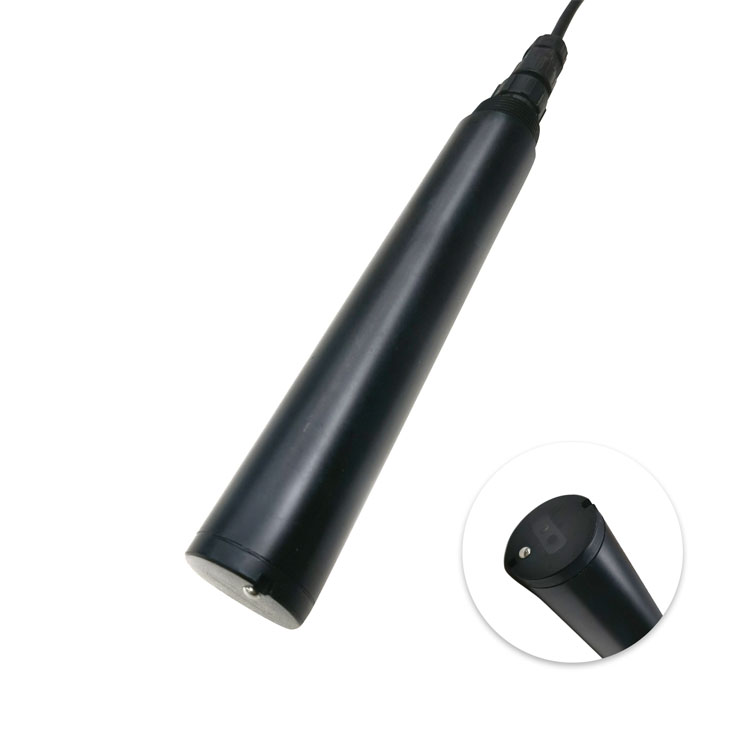
Start with independently checked sensors and an accessible installation. Record representative readings, water conditions and the configured cleaning interval. At selected visits, capture the value before the scheduled cleaning cycle, after the cycle and after a controlled manual inspection. Compare with suitable reference measurements for each parameter.
If automatic cleaning repeatedly restores agreement and subsequent drift remains acceptable, the mechanism is addressing an important source of error. If manual cleaning creates an additional substantial correction, examine missed surfaces, brush condition and guard blockage. If neither cleaning step restores agreement, investigate calibration, interference, sample position or a real water change.
Do not infer the required interval from a photograph of a clean new probe. Trial conditions should include the site's likely biological growth, solids or process variation. For a seasonal river, a winter trial may not establish summer service needs. For a treatment basin, assess the water encountered during normal loading changes, not just a clean commissioning tank.
The acceptance limit belongs to the channel's operating purpose. Specify an allowable difference against the reference and a maximum invalid-data period around cleaning. Record how many scheduled observations remain usable. A system that cleans effectively but spends an excessive fraction of time settling may not meet the required monitoring interval.
Brush movement can disturb deposits or the water near an optical window. Mark the cleaning period and establish recovery from observed response rather than assuming the next serial reply is immediately valid. Preserve raw observations with their quality status so an investigator can distinguish a cleaning-related excursion from a sustained event.
Confirm whether the instrument exposes cleaning status through its register map. If the host schedules a cleaning command but receives no completion status, elapsed time alone is not proof that the mechanism moved. Provide a functional inspection routine or another supported diagnostic. Do not invent a brush-position register or automatic fault signal that the ordered assembly does not supply.
Configure the logger so that one failed module is distinguishable from loss of the entire RS485 Modbus RTU link. Reading a populated pH register says nothing about the freshness of the turbidity channel. After any module replacement, verify identification, engineering units, scaling and calibration separately before returning combined trends to service.
Mount the assembly so it can be recovered without entering hazardous water or pulling on the signal cable. Allow clearance around the guard and moving mechanism. A holder that prevents removal or presses the probe against a wall can negate the maintenance benefit of automatic cleaning.
Quote compatible brushes, seals, electrodes, optical consumables and standards as applicable to the actual module list. Ask which items the site can replace and which require return service. The probe body's service life is not the same as the life of every electrode or cleaning part. Keep module identity and replacement dates with the calibration records.
Send NiuBoL a photograph of the deposit or retrieved probe, the water source, required ranges, access restrictions, planned controller and the observed cleaning response. These details help decide whether to change the cleaning arrangement, revise the mounting or choose separately serviceable sensors instead of an integrated probe.
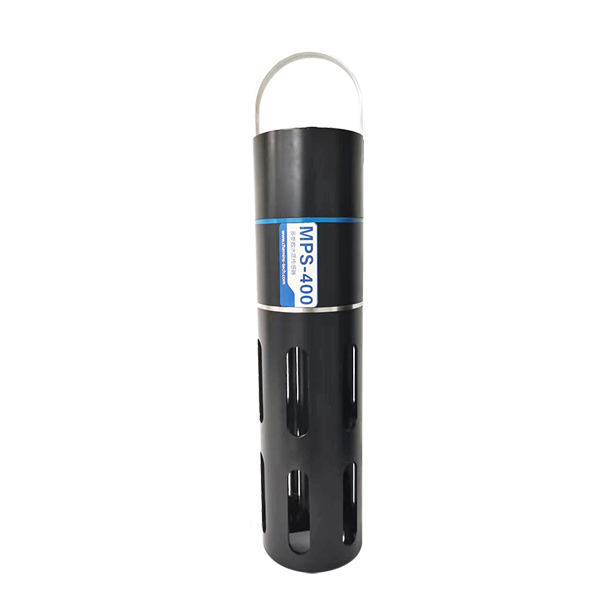
No. It can reduce surface-fouling effects, but the assembly still requires inspection of the guard, brush, cable and consumables, plus parameter-specific verification. Extend a visit interval only after the field record supports it under representative conditions.
Cleaning removes deposits; calibration adjusts a measurement response against a reference. pH, conductivity, turbidity and dissolved oxygen need their own appropriate checks. A cleaner optical window does not confirm that a pH electrode or temperature channel remains within tolerance.
Compare the alarm decision with the selected turbidity module's full accuracy expression. The 0-20 NTU option has a 0.01 NTU resolution but includes a much larger absolute accuracy term. For small changes near zero, qualify a dedicated low-range instrument rather than selecting by display resolution.
First check for trapped debris, bubbles, damaged parts and real process changes. More cleaning can increase disturbances or wear. Adjust the interval only when before-and-after comparisons show that surface fouling is the cause and the revised cycle improves usable data.
Do not assume that. Both use RS485 Modbus RTU, but the populated channels, connectors, wire definitions and register mapping must match the ordered unit. Verify each replacement against its connection information before applying power or restoring the host configuration.
Define the trial water, reference checks, allowable channel error, cleaning settings and invalid-data periods. Include physical inspection of surfaces not reached by cleaning. Avoid an unsupported promise of a fixed number of unattended days for every season or process condition.

A self-cleaning multi-parameter water quality probe earns its place when it controls a demonstrated fouling problem while preserving usable measurements. Compare MPS-5A and MPS-5B by their actual modules, supply requirements and cleaning coverage. Use the field trial to set service intervals, and retain access for the deposits, damaged parts and calibration work that automatic brushing cannot resolve.
Prev:Multi-Parameter Water Quality Sensor: Choose Reservoir Monitoring Depths
Next:Water Quality Monitoring Buoy System: Sensors, Power, Gateway and Maintenance
Related recommendations
Sensors & Weather Stations Catalog
 Agriculture Sensors and Weather Stations Catalog-NiuBoL.pdf
Weather Stations Catalog-NiuBoL.pdf
Agriculture Sensors Catalog-NiuBoL.pdf
Water Quality Sensor Catalog-NiuBoL.pdf
Related products
 Combined air temperature and relative humidity sensor
 TDR Soil Moisture & Temperature Sensor for irrigation| RS485 |4-20mA| NBL-S-THR
 Soil pH sensor RS485 soil Testing instrument soil ph meter for agriculture |NBL-S-PH
 Wind Speed sensor Output Modbus/RS485/Analog/0-5V/4-20mA
 Tipping bucket rain gauge for weather monitoring auto rainfall sensor RS485/Outdoor/stainless steel
 Pyranometer Solar Radiation Sensor 4-20mA/RS485


Screenshot, WhatsApp to identify the QR code
WhatsApp number:+8615367865107
(Click on WhatsApp to copy and add friends)

