





— Blogs —
—Products—
 Consumer hotline +8618073152920
 WhatsApp:+8615367865107
Address:Room 102, District D, Houhu Industrial Park, Yuelu District, Changsha City, Hunan Province, China
Product knowledge
Time:2026-03-06 17:29:03 Popularity:535
A scenic area weather station can supply useful visitor information without turning every sensor reading into a safety index. The contractor's task is to match each published label to an actual measurement or a defined calculation. Temperature, particulate concentration, UV Index and lightning warnings are different outputs; a multi-parameter NiuBoL station does not provide all of them simply because a display has space for more tiles.
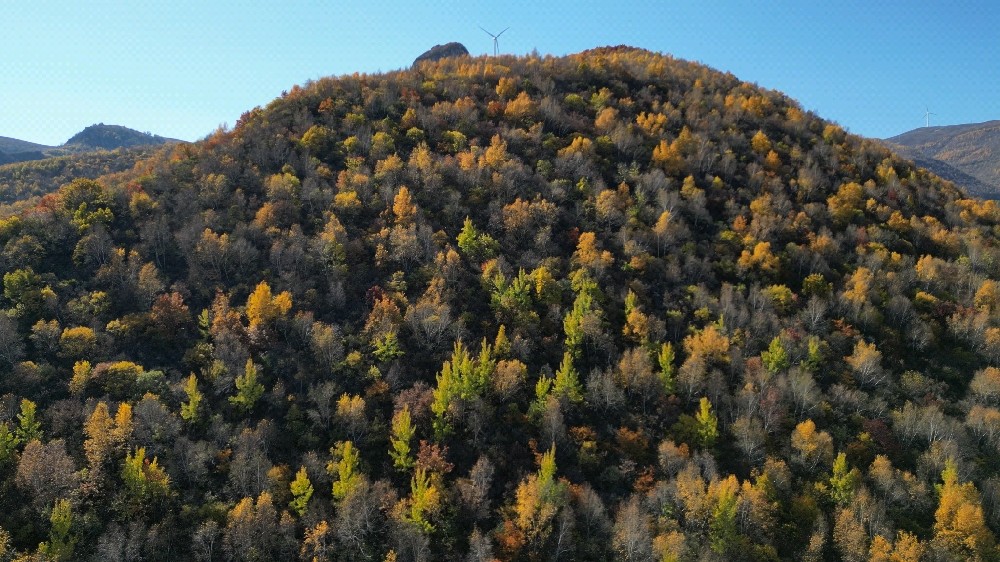
Begin with the information that the operator intends to publish. A park entrance may need local temperature and recent rainfall, while an exposed viewpoint may need a wind observation with its location clearly identified. An events area may need an environmental sound-level channel. These requirements should determine the instruments and data processing, rather than copying the labels from an example dashboard.
Separate measured quantities, calculated indices and messages received from an external service. This helps a procurement team identify missing instruments and software responsibilities before equipment arrives. It also prevents a live local observation from being confused with a regional forecast or an official warning.
| Proposed public label | Required input or method | Misleading substitution to avoid |
|---|---|---|
| Air temperature | Suitably exposed, shielded temperature measurement | Cabinet temperature or a sensor heated by the display |
| Heat index | Temperature, humidity and an identified calculation with applicable conditions | Calling the temperature reading feels-like temperature |
| UV Index | A suitable UV measurement or a clearly identified external UV product | Converting total solar radiation or Lux by a universal factor |
| Sunshine duration | A suitable sunshine-duration measurement method | Adding hours when an illuminance reading is nonzero |
| Particle information | Identified PM fraction, unit and averaging period | Presenting one instantaneous value as an unspecified official AQI |
| Lightning warning | A separately specified detection or warning service | Inferring lightning detection from pressure, rain and wind alone |
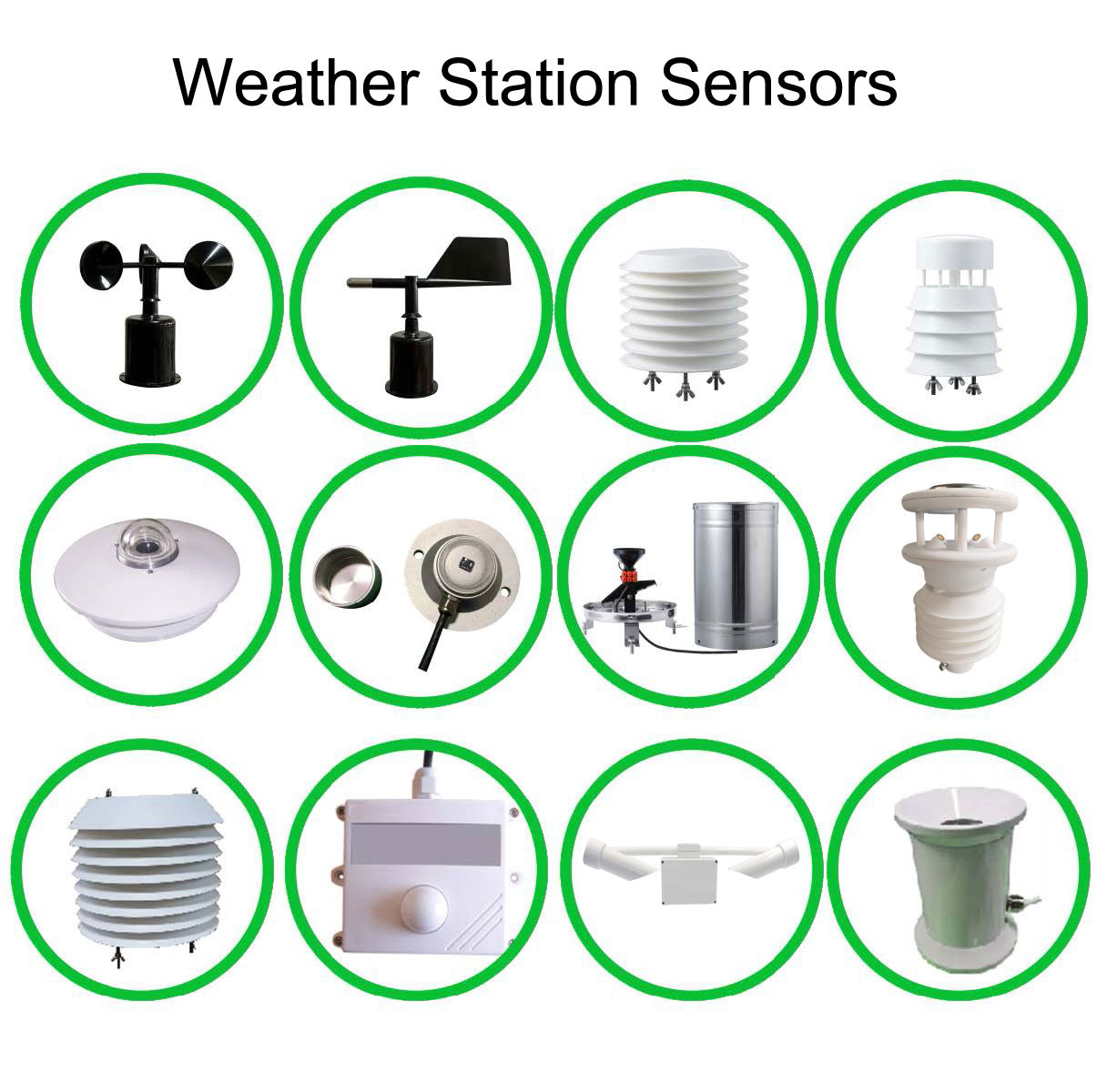
The NBL-W-LBTH measures air temperature, relative humidity and pressure. Its atmospheric channels can feed a compatible data logger, PLC or RTU. Place the shield where it samples representative air, away from heated walls, kitchen exhaust and the electronics of a visitor display. A well-designed label cannot compensate for a poor measurement position.
If a heat index is published, retain its method and distinguish it from measured temperature. National Weather Service heat guidance explains that the conventional heat index represents shaded conditions. It should not be presented as a complete assessment of strenuous hiking in direct sun. Use the site's approved visitor messaging rather than allowing a derived number to imply that every activity is safe.
Likewise, pressure is a useful observation but a pressure drop alone does not establish a local thunderstorm warning. Keep official warnings and the station's observations separately identified. Show their different issue or observation times so a cached warning tile cannot appear to be a freshly measured channel.
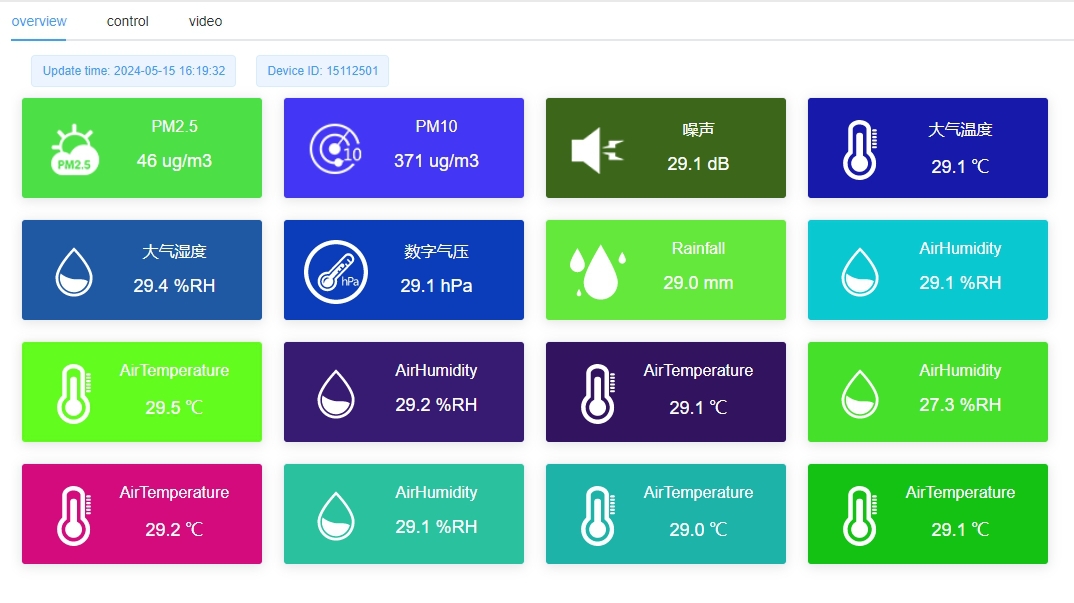
A PM2.5 or PM10 sensor estimates particle mass concentration under its measurement method. It does not measure every pollutant or determine the cause of a haze event. Fog, condensation, inlet contamination and local dust sources can affect interpretation. Inspect the data and the installation before attributing a rise to traffic, construction or smoke.
An AQI calculation requires a named system, pollutant, averaging method and applicable breakpoints. EPA explains that the NowCast uses multiple hours of past observations; it is not interchangeable with an arbitrary minute reading. If the project provides only a particle-specific indicative index, name that pollutant and method instead of implying a complete regulatory air-quality assessment.
| NiuBoL module | Relevant specifications | What must be resolved for publication |
|---|---|---|
| NBL-W-LBTH atmospheric module | Temperature -40 to 80 C, +/-0.5 C; RH 0-100%, +/-5%; 12-24 VDC; RS485 Modbus RTU or 4-20 mA version | Sensor position, selected output and any derived heat-index method |
| PM2.5/PM10 module | PM2.5 0-1000 and PM10 0-2000 micrograms/m3; 12-24 VDC; RS485; power at most 350 mW; -20 to 60 C; non-condensing operation | Accuracy envelope for the application, averaging and comparison procedure; standard cable 2.5 m |
| NBL-W-NS sound-level module | 30-130 dB; 31.5 Hz-8 kHz; 200 ms response; 12 VDC; approximately 20 mW; RS485 Modbus RTU or 4-20 mA; IP65 | Required weighting, interval indicators, calibration evidence and outdoor conditions |
The particle sensor and NBL-W-NS sound sensor are separate options, not a promise that every station includes them. A decibel channel does not automatically supply LAeq, octave bands or a compliance report. Specify those outputs explicitly if they are needed; ordinary arithmetic averaging of decibels is not an equivalent sound-level calculation.
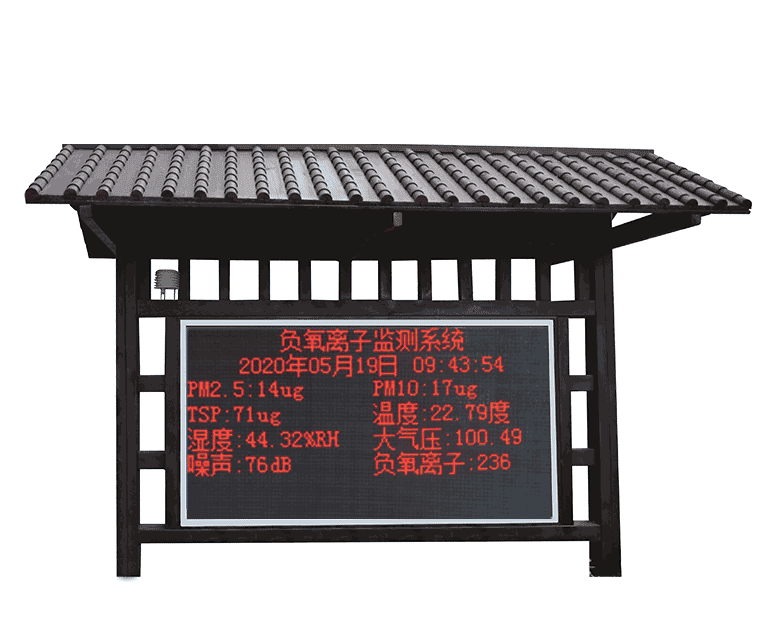
A screen showing wind near a park entrance is not automatically the wind-protection input for a cable car or elevated attraction. Equipment operators must define the relevant measurement position, time statistic, limits and control arrangement through the appropriate engineering process. A public dashboard and a protective controller have different responsibilities.
NBL-W-SS wind speed and NBL-W-DS wind direction sensors have IP65 protection. Choose their signal versions and acquisition method for the intended observation. Do not add a relay to the display and describe the result as a complete safety system. A rain gauge similarly measures precipitation at its collection point; it does not directly measure the water depth on a trail or establish a catchment flood forecast.
Display outages also need an explicit state. A disconnected sensor should not leave yesterday's temperature on screen without an age indication. For an external warning service, test expiry and failed-update behaviour separately. Information should disappear, be marked unavailable or be handled according to the operator's approved rule, not silently remain current-looking.
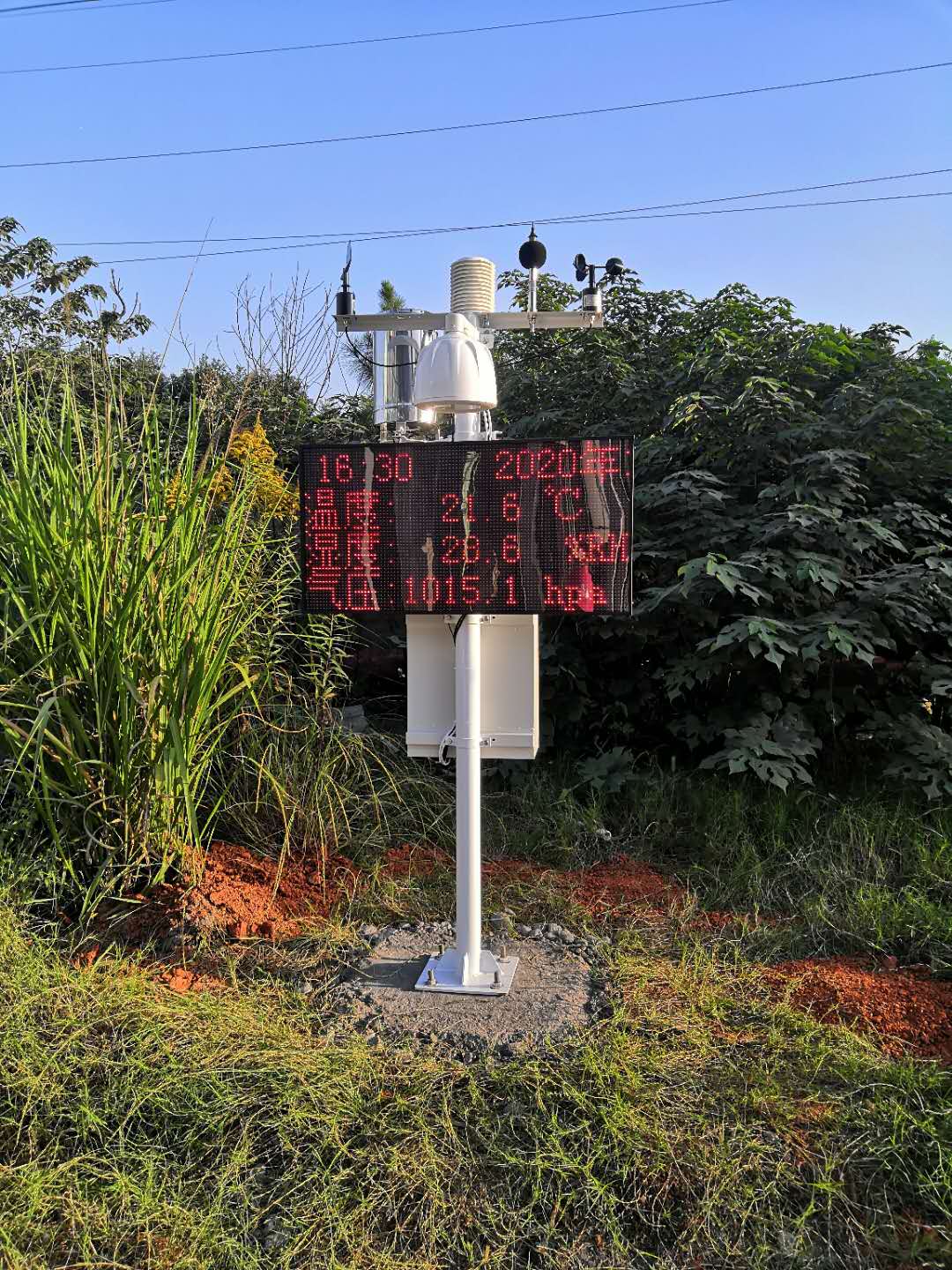
Commission the installed instruments through the ordered logger and final display. Confirm units, decimal scaling, observation time, averaging period and sensor identity. For RS485 Modbus RTU, check the exact register map; for a broadcast or information platform, establish its separate receiving interface. MQTT, cellular service and remote notifications depend on the selected gateway and application.
Include a deliberate missing-channel test. Disconnect an optional input and inspect every place its value appears. Verify that a spare register containing zero does not become a claimed UV or particle reading. Check that a forecast remains labelled forecast and that the published location is meaningful when more than one station supplies the system.
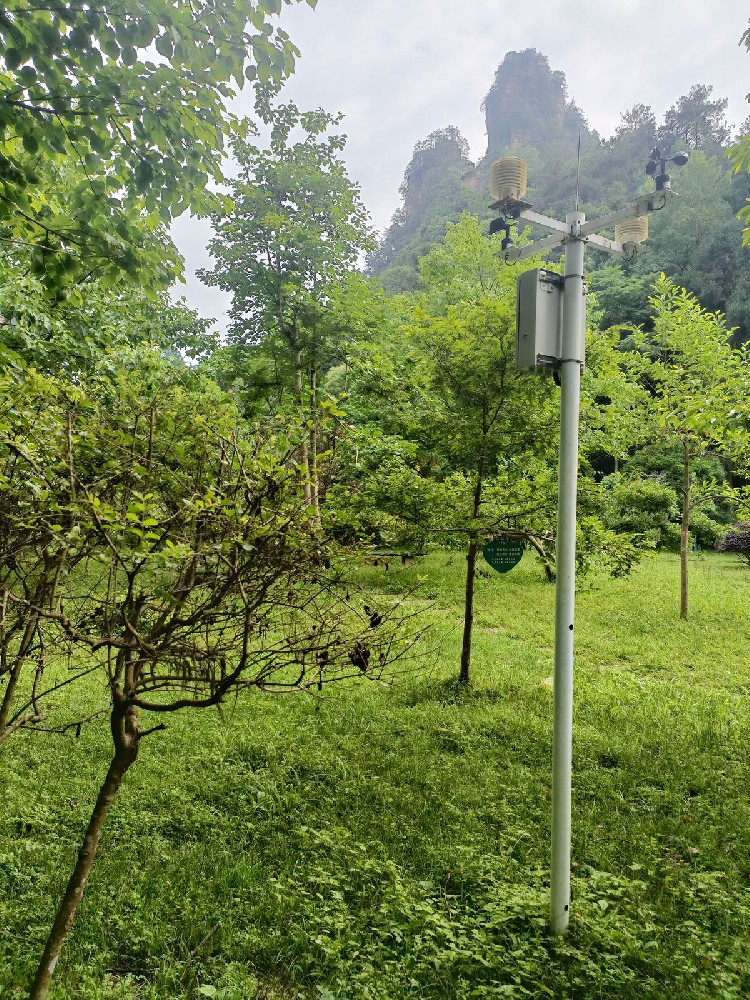
Terrain and tree cover make wireless performance site-dependent. Request an uplink survey at the proposed cabinet and gateway locations rather than accepting a fixed kilometre radius. Solar sizing likewise needs the installed load and shading conditions, including the display if it shares the supply. A sensor-only power calculation cannot establish whole-system autonomy.
No universal conversion is appropriate. Select a suitable UV input or identify the source of an external UV product. A pyranometer's total short-wave irradiance is a different quantity.
Not merely because PM channels are available. The project needs appropriate measurements, a defined index and averaging procedure, and any required approval. Label indicative local particle information distinctly.
Not automatically. Define the indicators, measurement procedure and evidence required by the project before choosing the instrument and processing software.
Not as an assumed function of the weather display. Protective control needs separately defined inputs, failure handling and engineering approval for the equipment involved.
Provide the proposed public labels, station locations, operating uses, display interface, power availability and terrain. Identify which information comes from sensors, calculations or external services.
The receiving system should identify its age and follow an agreed unavailable or expired state. Demonstrate that behaviour at acceptance rather than assuming it follows from a working network connection.
A scenic area weather station should publish only what its instruments and agreed processing actually establish. Define the visitor labels first, then select NiuBoL atmospheric, wind, particle and sound modules where they serve a clear purpose. Keeping local observations, derived indices and official warning services distinct makes the information more useful and the equipment scope easier to quote.
Prev:Photovoltaic Environmental Monitor: Validate Data for Performance Ratio
Next:Automatic Soil Moisture Monitoring System: Define Irrigation Thresholds
Related recommendations
Sensors & Weather Stations Catalog
 Agriculture Sensors and Weather Stations Catalog-NiuBoL.pdf
Weather Stations Catalog-NiuBoL.pdf
Agriculture Sensors Catalog-NiuBoL.pdf
Water Quality Sensor Catalog-NiuBoL.pdf
Related products
 Combined air temperature and relative humidity sensor
 TDR Soil Moisture & Temperature Sensor for irrigation| RS485 |4-20mA| NBL-S-THR
 Soil pH sensor RS485 soil Testing instrument soil ph meter for agriculture |NBL-S-PH
 Wind Speed sensor Output Modbus/RS485/Analog/0-5V/4-20mA
 Tipping bucket rain gauge for weather monitoring auto rainfall sensor RS485/Outdoor/stainless steel
 Pyranometer Solar Radiation Sensor 4-20mA/RS485

Screenshot, WhatsApp to identify the QR code
WhatsApp number:+8615367865107
(Click on WhatsApp to copy and add friends)

