





— Blogs —
—Products—
 Consumer hotline +8618073152920
 WhatsApp:+8615367865107
Address:Room 102, District D, Houhu Industrial Park, Yuelu District, Changsha City, Hunan Province, China
Product knowledge
Time:2026-07-28 10:07:55 Popularity:264
A COD, BOD and TSS sensor package is usually purchased when a single water quality reading is not enough to understand effluent risk. COD indicates oxidizable load, BOD relates to biodegradable organic load, and TSS shows suspended solids that can affect treatment and discharge.
A BOD COD sensor selection note should also name the operator action: alarm review, process adjustment, discharge investigation or maintenance inspection. Without that action, the package is harder to justify.
`n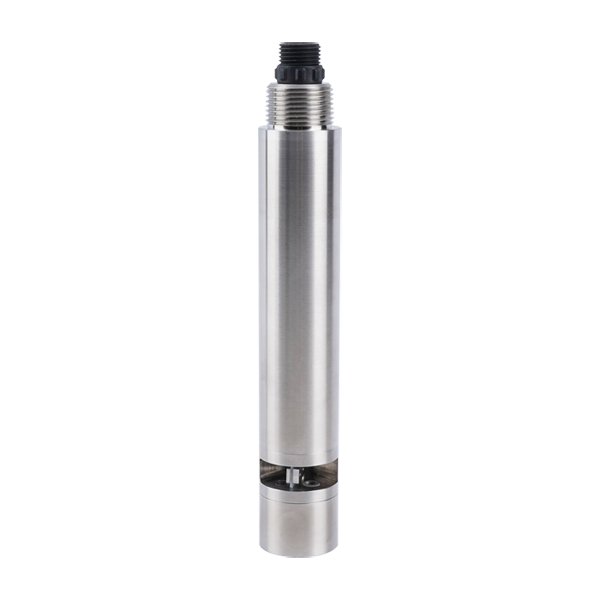
For procurement, the main question is not whether to buy three sensors. The question is where each parameter is useful, how the data will be accepted, and who will maintain optical surfaces, cleaning parts and comparison records.
Effluent monitoring can support process control, early warning, discharge trend records or project demonstration. These purposes have different sensor packages. A plant that only needs alarm trends may not need the same configuration as a regulatory reporting station.
COD and BOD sensors provide trend information that helps operators react faster than periodic laboratory results. TSS adds context because high solids can disturb optical measurements and can indicate clarifier or filtration problems.
| Parameter | Operational role | Project note |
|---|---|---|
| COD | Tracks oxidizable organic and inorganic load trends. | Confirm method, range and site correlation. |
| BOD | Supports biodegradable organic load trend monitoring. | Do not confuse online trend data with laboratory BOD5 replacement without project approval. |
| TSS | Shows suspended solids changes. | Plan cleaning and lab comparison. |
| pH and flow | Provide context for discharge interpretation. | Often required in complete effluent stations. |
Buying separate sensors can look cheaper at the first quotation stage, but a combined package may reduce cabinet wiring, gateway configuration, cable routing and acceptance paperwork. The right choice depends on quantity, site layout and who owns integration.
A combined NiuBoL package can include COD, BOD, TSS, pH, conductivity, turbidity or ammonia nitrogen depending on the outlet. The value is in a unified power, communication and maintenance plan.
If the contractor is already providing the cabinet and SCADA work, individual sensors with clear Modbus documents may be enough. If the buyer needs one supplier to define the measuring node, a package quotation is safer.

COD, BOD and TSS optical sensors can be affected by fouling, color, bubbles, solids and changing particle properties. The project should define mounting depth, sample flow, cleaning access and verification method before ordering.
Self-cleaning may be justified when the station is remote, solids are high or the cost of missing data is large. Manual cleaning may be acceptable for easy-access final effluent with trained operators.
| BOM item | Why it belongs in the quotation | Risk if omitted |
|---|---|---|
| Mounting bracket | Controls position and service access. | Sensor may sit in an unrepresentative zone. |
| Cleaning method | Protects optical surfaces and trend stability. | Drift is blamed on sensor quality. |
| Controller or gateway | Unifies data and alarms. | Integration is pushed to site commissioning. |
| Comparison plan | Supports acceptance and long-term confidence. | Online data is challenged without evidence. |
RS485 Modbus RTU is commonly used when several sensors report to one cabinet or telemetry unit. The integrator needs register maps, units, scaling, alarm limits and data timestamp rules. These documents should be requested before factory assembly.
Acceptance should include communication tests, stable readings in the selected water, cleaning verification and comparison with laboratory or reference methods where appropriate. For organic load parameters, the buyer should define whether the online data is used for trend, alarm or reporting.
Provide outlet quantity, water source, expected COD/BOD/TSS ranges, solids level, installation drawing, power supply, communication interface, data platform requirement, cleaning access, spare parts requirement and target delivery date.
If the buyer has a tender document, send the parameter list and acceptance clauses. This allows NiuBoL to separate standard sensor supply from system package items such as cabinet, solar power, telemetry and data reporting.
A plant inlet, biological treatment stage and final discharge point do not need the same sensor package. Inlet points may focus on load fluctuation. Process points may focus on treatment stability. Final discharge points need reliable trend, alarms and documentation.
COD, BOD and TSS should be selected with pH, conductivity, flow and temperature context where required. A three-sensor package can answer organic load and solids questions, but it may not explain every abnormal event without supporting parameters.
| Monitoring point | Common package | Reason |
|---|---|---|
| Plant inlet | COD, pH, conductivity and flow | Tracks load shock and industrial discharge changes |
| Process outlet | COD, BOD trend, DO and TSS | Shows treatment response and solids carryover |
| Final effluent | COD, TSS, pH, flow and optional BOD | Supports discharge alarms and operation records |
For a package quotation, ask NiuBoL to separate sensors, mounting accessories, controller or logger, telemetry, cleaning parts and spare items. This makes the price easier to compare against a tender list or contractor BOM.
Acceptance should not rely on one number at startup. A better handover includes stable communication, recorded cleaning, comparison samples, alarm settings and data export. This evidence helps the buyer trust online COD, BOD and TSS trends after the installer leaves.
For export or multi-site projects, ask about packaging by station, labeling, manuals and spare-part lead time. These details reduce field confusion when several sensors arrive in one shipment.
A COD, BOD and TSS package is more credible when the buyer can see how the sensors will be installed, cleaned, connected and verified. A list of model names does not show whether the station will survive wastewater conditions.
For engineering contractors, the package should include the signal path: probe to controller, controller to logger or PLC, and data output to the user platform. Each parameter should have unit, range, alarm rule and maintenance note.
For procurement teams, the package should separate hardware cost from commissioning and service items. This makes quotations easier to compare and reduces change orders after the project starts.
A full COD, BOD and TSS package may be excessive for a small site that only needs periodic discharge records and has no operator response plan. It is also not ideal if the site cannot clean optical sensors or perform comparison checks.
In those cases, a smaller package or phased installation may be better. Start with the parameter that drives the operational decision, then add other sensors when the site team is ready to use the data.
A package also helps when the buyer needs one support contact. If COD, BOD and TSS are bought from separate sources, the contractor may spend commissioning time proving which sensor, controller or cable is responsible for a data problem.
For tenders, write the acceptance method into the purchasing document. State whether online readings are compared with laboratory samples for trend agreement, alarm verification or reporting support. This avoids unrealistic pass-fail rules copied from laboratory methods.
For NiuBoL quotation, include the number of outlets and whether each outlet needs the same parameters. Some sites need a full package only at final discharge, with fewer parameters at internal process points.
The package should also identify which data is used for operation and which data is used only for reference. This avoids asking one online sensor package to satisfy every laboratory, process and reporting expectation at the same time.
Where budgets are limited, start with the discharge point that carries the highest operational risk. A phased package is often easier to operate than a large station installed without maintenance budget, spare parts or comparison testing.
For procurement review, also ask which parameters need spare sensors on site. A final discharge point may justify one spare optical probe or critical cleaning part, while an internal trend point may only need scheduled consumables.
A BOD COD sensor package is less suitable when the buyer expects online sensors to replace every laboratory method without acceptance rules. It is more credible when the project defines trend use, alarm use and comparison records separately.
For procurement search intent, the phrase BOD COD sensor should refer to a real package boundary: which organic-load parameter is monitored online, which solids parameter is included, and which party owns calibration, cleaning and data acceptance.
A BOD COD sensor package should be quoted with TSS, pH, flow or other supporting parameters only when those values improve the operator's decision. Adding sensors without a data-use plan increases cost without improving acceptance.

Q1: Why combine COD, BOD and TSS sensors?
A: Combining these parameters gives a clearer view of effluent condition: COD for oxidizable load, BOD for biodegradable organic trend and TSS for suspended solids behavior.
Q2: Can online COD or BOD sensors replace laboratory tests?
A: They are mainly used for continuous trend, alarm and process control unless the project authority accepts online data for a defined reporting purpose. Laboratory comparison remains important.
Q3: Why is TSS included with COD and BOD?
A: High suspended solids can indicate clarifier or filtration problems and may affect optical measurements. TSS also helps operators interpret changes in organic-load sensor trends.
Q4: Is RS485 Modbus RTU suitable for a COD BOD TSS package?
A: Yes. RS485 Modbus RTU is practical for multi-sensor stations because several devices can report to one controller, RTU or data logger with defined register maps.
Q5: What causes poor data from effluent sensor packages?
A: Poor sampling location, fouled optical surfaces, bubbles, missing cleaning plan, wrong range, weak grounding and no comparison records are common causes.
Q6: Should I buy individual sensors or a complete package?
A: Buy individual sensors when the integrator owns cabinet and data work. Buy a complete package when one supplier should define sensors, mounting, communication, cleaning and documentation.
Q7: What information is needed for quotation?
A: Send parameter list, expected ranges, outlet quantity, water type, solids level, installation drawings, power and communication requirements, data reporting needs and maintenance access.
Q8: What should be included in acceptance?
A: Acceptance should check sensor operation, communication values, mounting position, cleaning result, alarm logic and comparison with laboratory or reference data where applicable.
Q9: When is self-cleaning recommended?
A: Self-cleaning is recommended for high fouling, remote stations or critical discharge points where manual cleaning is difficult or data gaps are costly.
Q10: Can NiuBoL support OEM or contractor packages?
A: Yes. Share BOM format, communication protocol, labeling needs, project quantity and delivery schedule so the package can be quoted in a form suitable for the project.

COD, BOD and TSS sensor packages should be specified around the discharge purpose, not around a generic list of instruments. Range, cleaning, communication and acceptance records decide whether the system will be trusted.
For NiuBoL quotation, provide outlet details, expected ranges and integration responsibility. That makes it possible to quote sensors only, or a wider effluent monitoring package with mounting and data components.
Prev:ORP Sensor Selection for Disinfection, Aquaculture and Wastewater
Next:Water Quality Monitoring Buoy: Sensor Package, Power and Telemetry Design
Related recommendations
Sensors & Weather Stations Catalog
 Agriculture Sensors and Weather Stations Catalog-NiuBoL.pdf
Weather Stations Catalog-NiuBoL.pdf
Agriculture Sensors Catalog-NiuBoL.pdf
Water Quality Sensor Catalog-NiuBoL.pdf
Related products
 Combined air temperature and relative humidity sensor
 TDR Soil Moisture & Temperature Sensor for irrigation| RS485 |4-20mA| NBL-S-THR
 Soil pH sensor RS485 soil Testing instrument soil ph meter for agriculture |NBL-S-PH
 Wind Speed sensor Output Modbus/RS485/Analog/0-5V/4-20mA
 Tipping bucket rain gauge for weather monitoring auto rainfall sensor RS485/Outdoor/stainless steel
 Pyranometer Solar Radiation Sensor 4-20mA/RS485

Screenshot, WhatsApp to identify the QR code
WhatsApp number:+8615367865107
(Click on WhatsApp to copy and add friends)

