





— Blogs —
—Products—
 Consumer hotline +8618073152920
 WhatsApp:+8615367865107
Address:Room 102, District D, Houhu Industrial Park, Yuelu District, Changsha City, Hunan Province, China
Product knowledge
Time:2026-03-03 13:33:12 Popularity:647
An agricultural meteorological station can supply the observations used to calculate reference evapotranspiration, but it does not directly measure a crop's irrigation requirement. Before connecting a weather station to an irrigation platform, check the calculation method, input units, observation heights and treatment of missing data. A plausible ET0 number on a dashboard is not enough to justify a valve command.
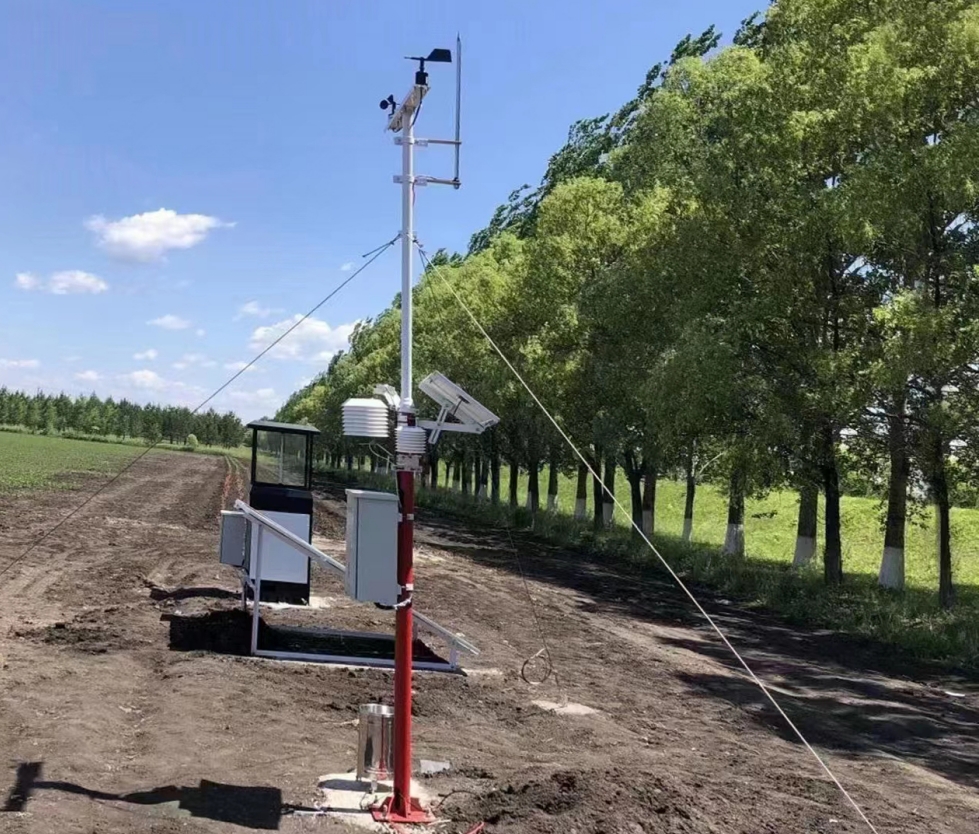
Reference evapotranspiration, ET0, describes atmospheric demand over a defined reference surface. Crop evapotranspiration, ETc, relates that reference to a particular crop and growth stage through an appropriate crop coefficient or other specified method. Irrigation demand then depends on the field water balance and application system, not just either evapotranspiration value.
The FAO Penman-Monteith method uses meteorological inputs to estimate ET0. It is not a soil-moisture measurement or a universal automatic irrigation algorithm. Specify which software performs the calculation, which version of the method it uses and whether the displayed value is hourly, daily or accumulated over another period.
| Quantity | What it describes | What it does not establish |
|---|---|---|
| ET0 | Reference-surface evaporative demand | Actual water loss from every crop block |
| ETc | Crop-related evapotranspiration under the stated method and assumptions | Water already available in the root zone |
| Net irrigation requirement | Water needed after the relevant field balance is considered | The pump run time without delivery information |
| Gross applied irrigation | Water supplied through the application system | Uniform useful water storage throughout the field |
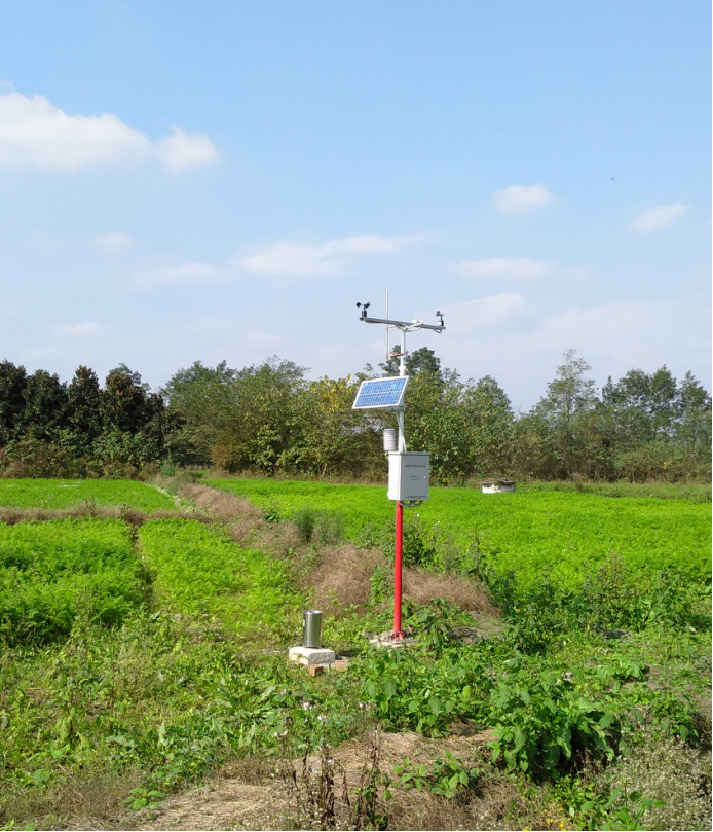
For a weather-based irrigation project, identify the required air temperature, humidity, wind and radiation observations before selecting the logger. Rainfall is important to the subsequent field water balance, even though it is not a direct meteorological input to the standard ET0 equation. Soil measurements provide another independent check on the field response.
Ask the platform supplier for an input schedule showing the quantity, unit, averaging interval and source of each variable. Mark any calculated or estimated input. A system may estimate missing radiation from other observations, but that is different from measuring it with a pyranometer and should remain visible in the calculation record.
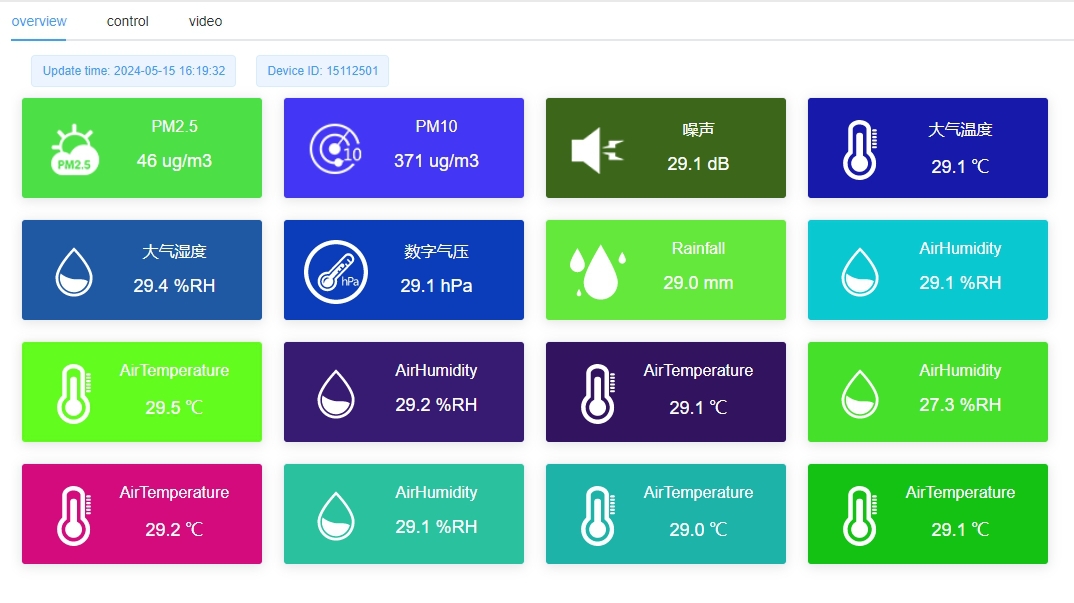
A midday radiation value is not the day's incoming solar energy. A gust is not daily mean wind speed. Similarly, a single afternoon humidity reading cannot automatically stand in for the humidity variables required by a particular daily method. Define how the logger or server forms the daily inputs from the underlying observations.
Use a consistent daily boundary and time zone. Otherwise rainfall may be assigned to one day while evapotranspiration is calculated for another. Preserve the observation intervals used in each calculation, including changes after a logger replacement or a reporting configuration adjustment.
A pyranometer reading in W/m2 is irradiance at an instant or an average over a stated interval. Daily incoming solar energy is an integral, commonly expressed in MJ/m2 per day. Neither quantity is identical to net radiation, which includes additional energy terms and must be measured or derived by the selected calculation procedure.
As an illustrative check, an average irradiance of 500 W/m2 maintained for ten hours represents 18 MJ/m2 over that period: 500 multiplied by 36,000 seconds, divided by one million. This example checks units only; actual sunlight changes throughout the day. Missing intervals and nighttime handling need a stated rule rather than silent replacement with zero.
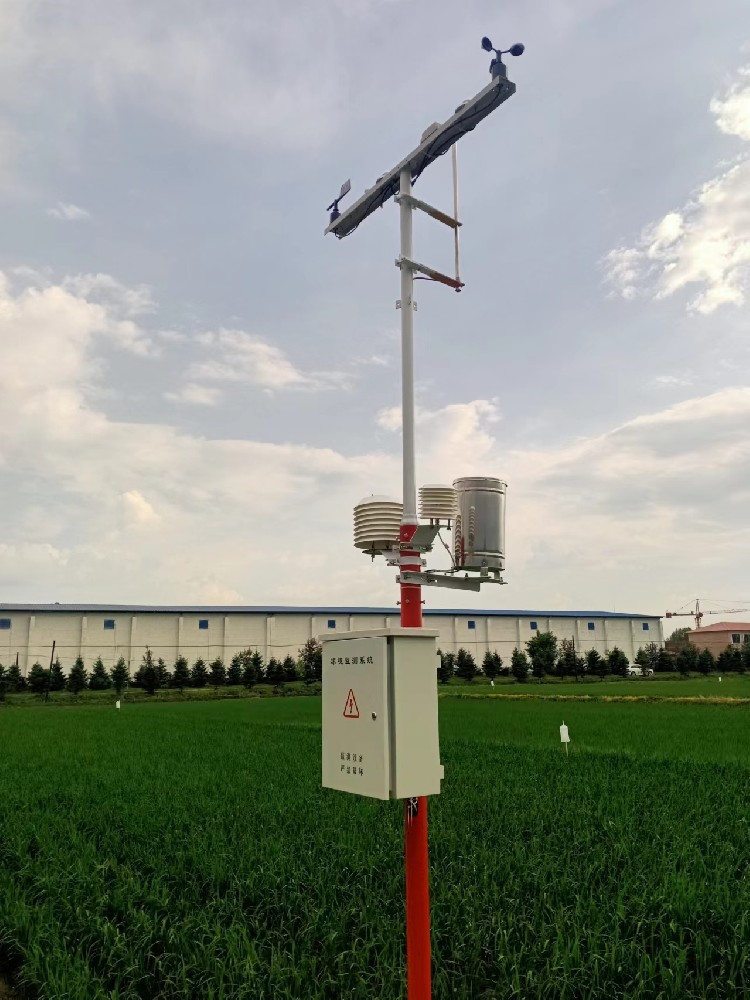
The NiuBoL NBL-W-HPRS is a thermopile solar radiation sensor with a 0-2000 W/m2 measuring range and a 0.3-3 micrometre spectral range in the specified configuration. It measures broadband solar radiation, not crop photon flux, and does not directly produce every radiation term needed by an evapotranspiration model. Select its output and logger scaling together.
The FAO daily method uses wind speed referenced to two metres above the ground. A wind instrument mounted higher for another observation purpose needs a suitable height adjustment before its reading is used in that calculation. Record both the measured wind speed and the adjusted input, rather than overwriting the original channel.
FAO's meteorological data procedures include the wind-height conversion. That conversion assumes an appropriate exposure and wind profile. It cannot remove the disturbed airflow behind a building or make a sheltered orchard measurement equivalent to an open reference location.
The stated conversion is u2 = uz multiplied by 4.87 / ln(67.8z - 5.42), where z is measurement height in metres, uz is the wind speed at that height and ln is the natural logarithm. In FAO's example, 3.2 m/s measured at ten metres becomes approximately 2.4 m/s at two metres. Apply it only within the method's stated conditions.
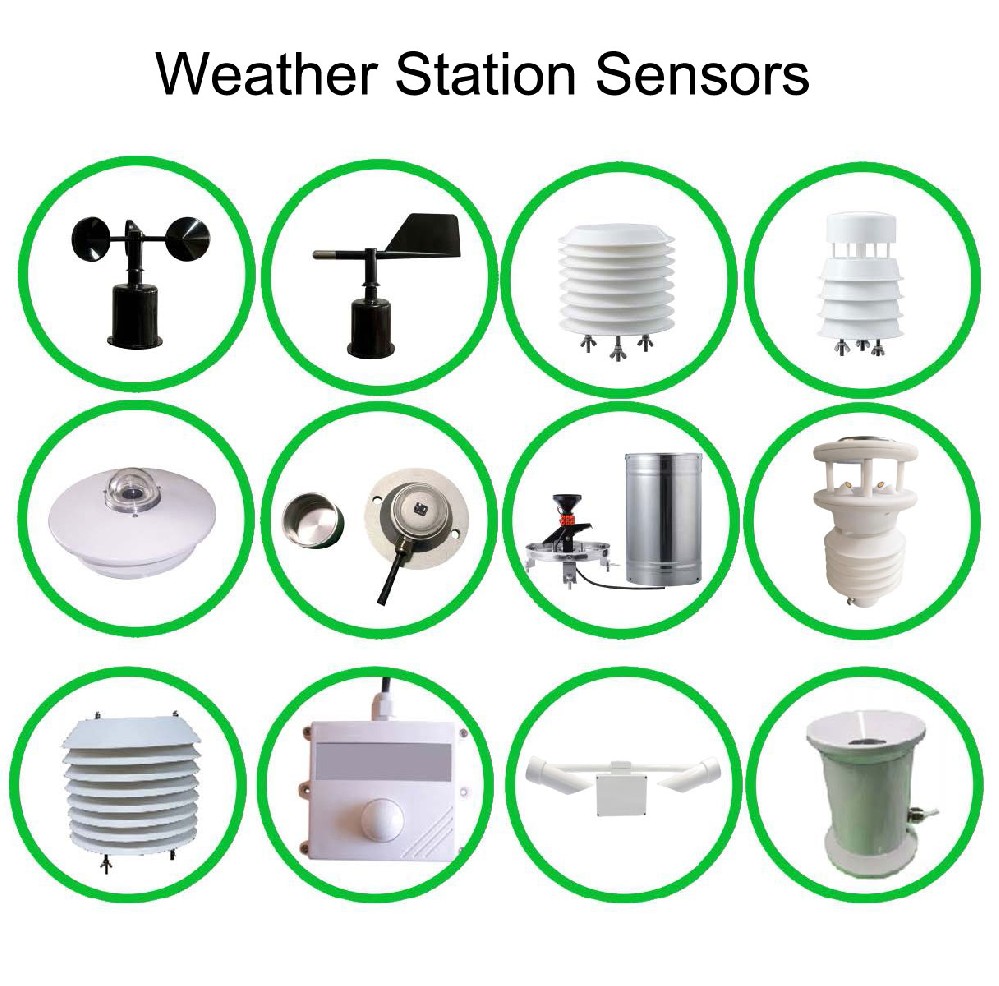
| Component | Model-specific information | Calculation or integration check |
|---|---|---|
| NBL-W-LBTH atmospheric sensor | Temperature -40 to 80 C, ±0.5 C; humidity 0-100%RH, ±5%RH; pressure 10-1200 hPa, ±1.5 hPa | Use the required daily temperature and humidity variables, not arbitrary snapshots |
| NBL-W-LBTH digital configuration | 12-24 VDC; RS485 Modbus RTU; minimum polling interval 1000 ms | Confirm the map and distinguish station pressure from an adjusted pressure value |
| NBL-W-HPRS radiation configuration | 0-2000 W/m2; analog or RS485 output options | Integrate incoming shortwave observations; derive net radiation by the chosen method |
| NBL-W-SS and NBL-W-DS | Separate wind speed and direction sensors; IP65 | Record mounting height, direction reference and selected output |
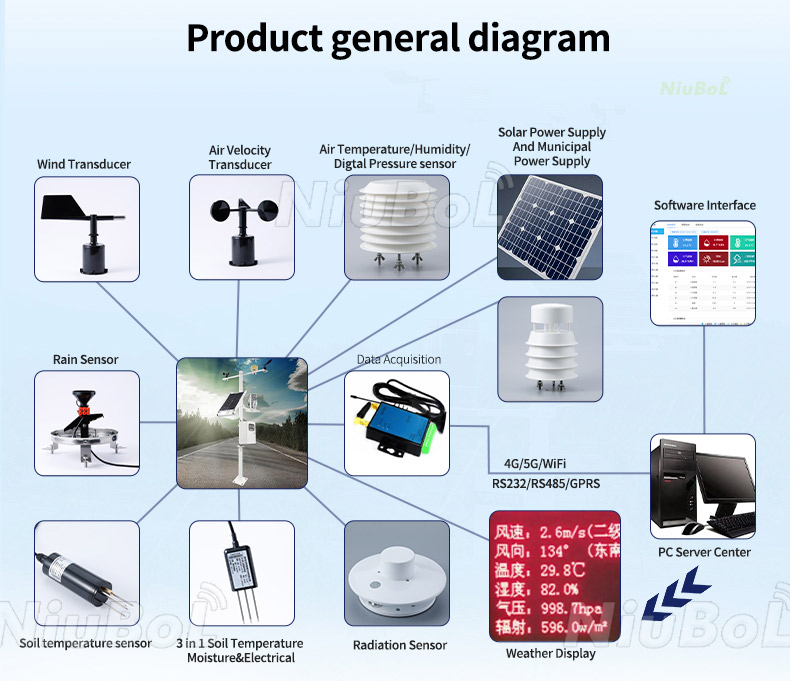
The NBL-W-LBTH and other sensors supply observations. The data logger, PLC, RTU or server must implement the required calculations and data checks. Do not assume that an RS485 connection includes ET0 software, a particular cloud interface or direct irrigation control.
For radiation version details, use the NBL-W-HPRS technical document alongside the ordered configuration. Power supply, cable jacket, instrument consumption and enclosure requirements need to be assessed across the actual station. One sensor's temperature range does not qualify the battery or communications equipment for the same environment.
Suppose a deliberately simplified example uses ET0 of 5 mm/day and a crop coefficient of 0.8. The corresponding ETc estimate is 4 mm/day. It is not automatically a 4 mm irrigation command: usable rainfall, root-zone storage, drainage, crop condition and management constraints may change the required application.
A millimetre of water over one hectare equals 10 m3. Thus a hypothetical 4 mm net requirement over two hectares represents 80 m3 before any application-system allowance. Turning that volume into runtime also requires measured delivery flow and an assessment of distribution. A weather station cannot detect a blocked lateral solely from atmospheric observations.
For open-field irrigation, review weather-based estimates against root-zone response. For orchards with different exposures or soils, do not apply one coefficient and one weather record across every block without agronomic review. For greenhouses, an outdoor reference calculation alone does not describe the altered radiation, airflow and humidity beneath the cover.
No. Some systems only acquire and transmit measurements. Confirm the calculation function, method, time step and output separately from the sensor list. Request a sample input and result record before treating ET0 as part of the supplied configuration.
Not merely because both respond to sunlight. Illuminance, photon flux and broadband irradiance are different quantities. Use the radiation input required by the method, or a documented estimation procedure with its limitations, rather than an unexplained conversion factor.
Not as though it were already the method's two-metre input. Apply the appropriate height procedure when its exposure assumptions are met. Keep the actual height and original measurement so future users can review how the adjusted value was obtained.
The calculation should identify the missing period and any approved estimation method used. Suppressing the fault while displaying a fresh ET0 value hides uncertainty from irrigation decisions. The controller needs a separate response for unavailable or unsuitable weather estimates.
No. Interception, runoff, infiltration and drainage affect how much rainfall contributes to root-zone storage. Determine the relevant field response rather than subtracting the collector total directly from demand in every situation.
Specify the calculation method and platform, site location, sensor heights, radiation quantity, required daily outputs and irrigation-system interface. Ask NiuBoL to separate sensor and logger supply from calculation software, communications and control integration, so competing proposals cover the same work.
A weather-based irrigation project needs a traceable route from observations to ET0, then from crop and soil conditions to the required water application. Correct units, averaging and exposure matter before any calculation is trusted. Select the agricultural meteorological station and calculation platform together, while keeping field water delivery and controller safeguards as separate engineering tasks.
Prev:Agricultural Meteorological Instruments: Match Each Measurement to a Farm Decision
Next:Industrial Weather and Environmental Monitoring: Place Each Channel for Its Purpose
Related recommendations
Sensors & Weather Stations Catalog
 Agriculture Sensors and Weather Stations Catalog-NiuBoL.pdf
Weather Stations Catalog-NiuBoL.pdf
Agriculture Sensors Catalog-NiuBoL.pdf
Water Quality Sensor Catalog-NiuBoL.pdf
Related products
 Combined air temperature and relative humidity sensor
 TDR Soil Moisture & Temperature Sensor for irrigation| RS485 |4-20mA| NBL-S-THR
 Soil pH sensor RS485 soil Testing instrument soil ph meter for agriculture |NBL-S-PH
 Wind Speed sensor Output Modbus/RS485/Analog/0-5V/4-20mA
 Tipping bucket rain gauge for weather monitoring auto rainfall sensor RS485/Outdoor/stainless steel
 Pyranometer Solar Radiation Sensor 4-20mA/RS485

Screenshot, WhatsApp to identify the QR code
WhatsApp number:+8615367865107
(Click on WhatsApp to copy and add friends)

