





— Blogs —
—Products—
 Consumer hotline +8618073152920
 WhatsApp:+8615367865107
Address:Room 102, District D, Houhu Industrial Park, Yuelu District, Changsha City, Hunan Province, China
Product knowledge
Time:2026-06-06 09:36:33 Popularity:1120
Quick Answer: Dissolved oxygen in water quality monitoring describes oxygen available in the water at the measurement point. It helps operators follow oxygen depletion, aeration response and changes in natural waters, but does not identify the cause of oxygen demand by itself. Choose the instrument for the expected concentration, compensation requirements and sample conditions. An environmental-range optical DO sensor should not be assumed suitable for trace oxygen in boiler feedwater.
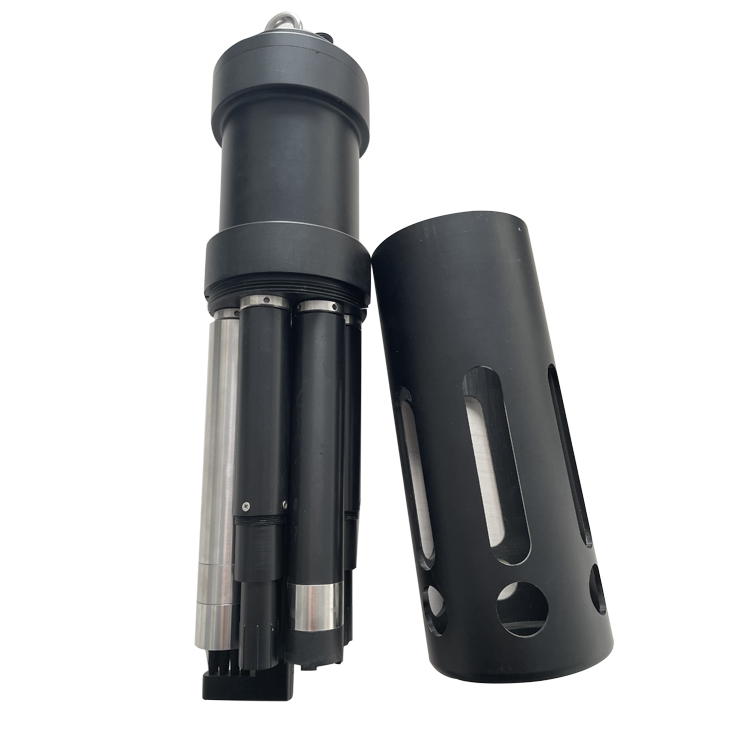
A falling oxygen trend can accompany biological demand, reduced mixing, changes in temperature or an altered water source. In rivers and ponds, photosynthesis and respiration can produce a daily pattern; a daytime visit may miss a lower nighttime value. In a treatment basin, the reading also depends on load, aeration and where the probe sits relative to those processes.
The practical task is to relate the record to an operating question. Is an aeration change reaching the monitored zone? Is a persistent low-oxygen area developing? Did a river event coincide with an oxygen decline? Record the location, depth, observation time and relevant operating events before comparing numbers from different points.
A multi-parameter assembly, such as the unit pictured above, can place several observations together. Confirm which probes are actually installed and the specification of each channel. Additional pH, conductivity or turbidity values can help interpret an event, but they do not turn a DO reading into a chemical identification or prove a pollution source.
Concentration in mg/L expresses dissolved oxygen per volume of water. DO saturation expresses the measurement relative to an applicable equilibrium concentration. Temperature, pressure and salinity affect the reference, so the same concentration can have a different percentage saturation under different conditions. Keep the selected units and compensation settings with exported records.
For an illustrative calculation, if the applicable reference concentration is 8.0 mg/L and the measured concentration is 6.4 mg/L, saturation is 80%: 6.4 / 8.0 x 100. The assumed 8.0 mg/L is not a universal saturation concentration or a product specification. Confirm the reference conditions and compensation method of the selected instrument before comparing percentages.
An unusually high value is not automatically a sensor fault; natural waters can become supersaturated. Equally, a plausible percentage is not proof that salinity or pressure settings are correct. Check the conditions independently. A local atmospheric pressure observation and a weather service's sea-level pressure are different quantities and should not be substituted without the appropriate conversion.
Dissolved oxygen is the oxygen present at the probe. Chemical oxygen demand and biochemical oxygen demand assess different aspects of oxidizable material or biological demand under their respective methods. A low DO value cannot be converted into COD, and a high COD signal does not establish the current DO concentration.
A separate optical COD sensor can provide another trend where its response has been evaluated for the water. The pictured COD probe is not an oxygen probe. In wastewater work, compare these observations with process load, flow and suitable analyses rather than assuming a fixed numerical relationship between channels.
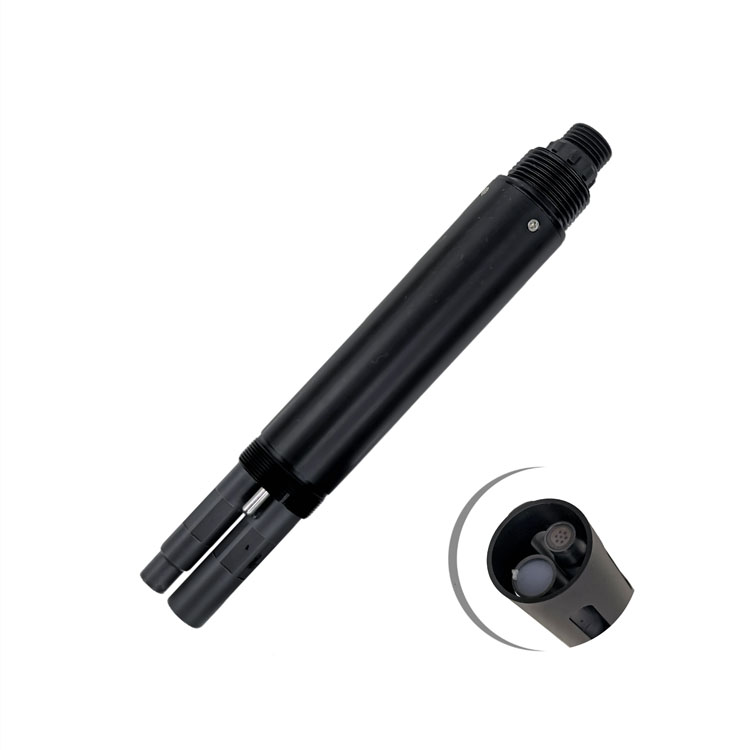
Dissolved oxygen in an aeration basin, pond or river is commonly reviewed in mg/L and sometimes as percentage saturation. Trace-oxygen work in boiler feedwater is a different measurement duty. A sensor with an ordinary environmental range should not be assumed suitable for low-ppb oxygen simply because its upper limit covers the value.
For optical DO instruments, review cap condition, temperature compensation and any required pressure or salinity correction for the model. Keep bubbles and deposits from producing an unrepresentative reading. A process trend is more useful when the point, cleaning state and compensation settings are known.
NiuBoL fluorescence-based DO instruments measure the oxygen-dependent behavior of a sensing cap. They do not consume oxygen as part of the measurement, but the sensing surface must still represent the water of interest. Fouling, trapped bubbles and a stagnant local pocket can impair the usefulness of an otherwise functioning optical measurement.
| Parameter | NBL-WQ-DO | NBL-WQ-DO-4S configuration |
|---|---|---|
| Measurement range | 0-20 mg/L; 0-200% saturation at 25 C | 0-20.00 mg/L; 0-200% saturation at 25 C |
| Resolution | 0.01 mg/L; temperature 0.1 C | 0.01 mg/L; temperature 0.1 C |
| Accuracy | +/-2% FS; temperature +/-0.3 C | +/-2% FS; temperature +/-0.3 C |
| Working conditions | 0-45 C; pressure below 0.2 MPa | 0-45 C; pressure below 0.2 MPa |
| Supply and consumption | 12-24 V DC; below 0.3 W at 12 V | 12-24 V DC; 0.2 W at 12 V |
| Output | RS485 Modbus RTU | RS485 Modbus RTU; optional 4-20 mA version |
| Temperature compensation | Automatic, Pt1000 | Automatic, Pt1000 |
| Installation and protection | Immersion; IP68 probe | Immersion; IP68 probe |
| Housing | POM and 316L stainless steel, by assembly | 316L stainless steel |
| Cable | 5 m standard; specify jacket and termination | 5 m standard, five-core shielded assembly; specify jacket and termination |
On a 20 mg/L span, 2% FS is 0.4 mg/L. It is not 2% of each reading. At an operating value of 1 mg/L, an absolute error of that size is important for aeration control or low-level interpretation. Agree the required uncertainty near the actual operating point rather than choosing from the 0.01 mg/L display increment.
The working temperature is 0-45 C for these configurations. A storage limit or a different product's temperature range does not extend that operating boundary. Pressure limits also apply independently of IP68 protection. Where the process is hotter, pressurized or requires trace-level detection, evaluate a suitable alternative instrument or a properly designed sample-conditioning arrangement.
In a river or lake, identify whether the task is a fixed-depth trend, a vertical profile or comparison of locations. A surface probe cannot describe the entire water column. Secure the sensor against movement, avoid sediment burial and document depth changes as water level varies. Access for cleaning should not depend on unsafe retrieval from the bank or structure.
In an aeration basin, choose a mixed zone representative of the control objective rather than directly in a dense bubble plume. Compare locations before relying on one point for a whole basin. In a pond, consider the monitoring depth and the time when oxygen demand is most operationally important; do not adopt one universal threshold for all species, temperatures and stocking conditions.
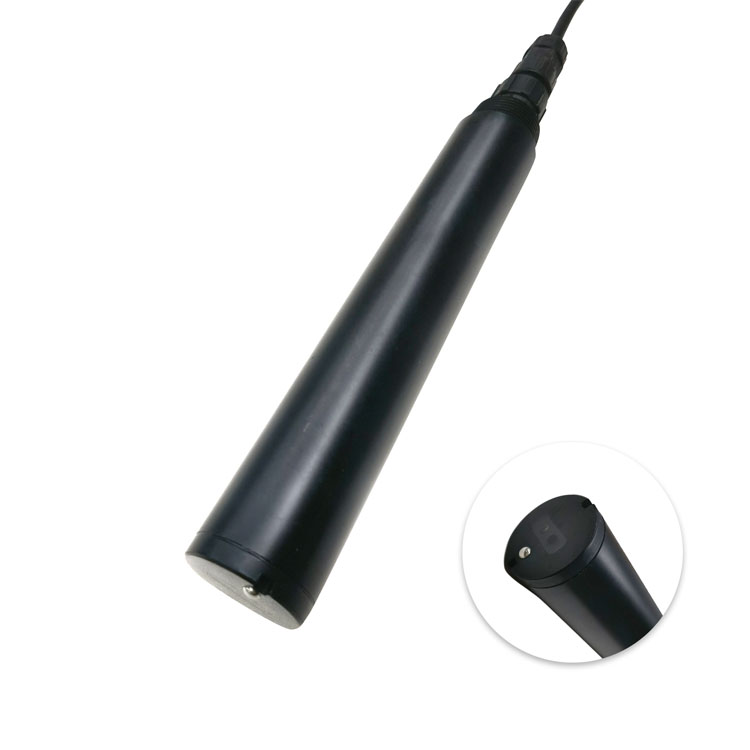
A separate turbidity observation can help describe an event or changing solids conditions. It is not a direct oxygen or oxygen-demand measurement. The turbidity probe below belongs to that separate channel; its range and maintenance requirements must not be assigned to the DO sensor.
| Observed behavior | First checks | Interpretation to avoid |
|---|---|---|
| Sudden step after maintenance | Cap seating, calibration, units and compensation settings | Assuming a simultaneous change in water quality without checking the service event |
| Erratic values in an aerated zone | Bubbles on the cap, mounting movement and local mixing | Treating each spike as a whole-basin oxygen change |
| Persistent low value | Compare with a suitable reference and inspect the sensing surface | Assigning a pollution source or increasing aeration solely from one unchecked channel |
| Unchanged value during an outage | Observation time, last valid record and communication status | Accepting a held value as a fresh measurement |
Clean the cap gently without scraping its sensing layer. Inspect it for damage and restore the intended mounting before checking the measurement. Establish an inspection interval from fouling rate and process conditions; an optical principle does not remove field maintenance. Keep compatible replacement caps available and verify the required calibration after replacement rather than assuming a fixed service life in every water type.
For an RS485 Modbus RTU connection, match the actual model's serial settings, register layout, units and scaling. Check concentration, saturation and temperature as separate values where available. A successful response proves communication, not that the PLC or data logger is displaying the intended oxygen variable.
Wire by the supplied model identification. The NBL-WQ-DO connection uses blue for A and white for B, while the cited DO-4S configuration uses blue for A and green for B. The DO-4S yellow conductor is the optional current output. Do not transfer one product's wire colors to another simply because the bodies look similar.
Before enabling aeration control, compare the installed point with an appropriate independent measurement, observe its response to a known operating change and test disconnection. Define stale-data behavior and local equipment protections. Remote reporting should not bypass blower protection, interlocks or the process owner's approved operating limits.
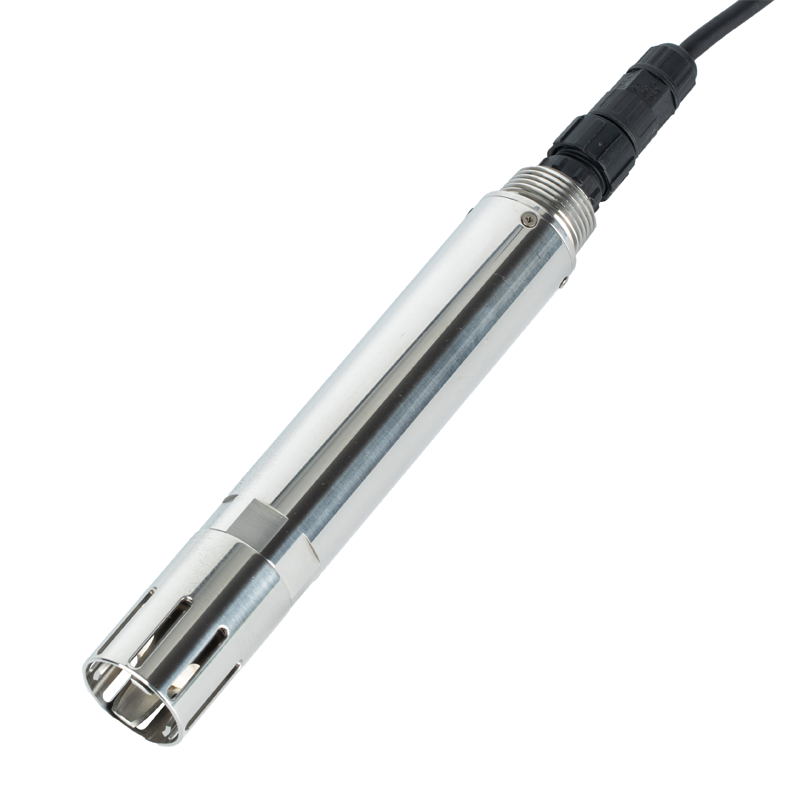
For a NiuBoL inquiry, provide the normal and alarm oxygen concentrations, water type, temperature, pressure, salinity, mounting and receiving system. Identify whether you need one DO point or a multi-parameter assembly. The stainless steel variant pictured below illustrates a housing option; select the actual model and output by the measurement duty, not by appearance.
It measures dissolved oxygen at the sampling point. A low value can have several causes, including demand, poor aeration or mixing. Compare the trend with operating records and appropriate water analysis before assigning a cause.
Only if its specified range, resolution, accuracy and sample conditions meet that duty. Trace-oxygen applications can require a different instrument and sample-conditioning arrangement. Send the actual normal and alarm values for selection.
Percentage saturation is referenced to oxygen solubility under defined conditions. Temperature and relevant pressure or salinity compensation affect its interpretation. Retain units and compensation settings when comparing records.
Choose a point representative of the control or observation objective, with suitable mixing and safe cleaning access. Avoid interpreting a bubble-rich or stagnant local pocket as the condition of the whole tank.
Match the model register, concentration or saturation unit, decimal scaling and temperature channel to the logger. A successful Modbus read does not prove that the correct oxygen variable is being displayed.
Provide the water type, normal and alarm oxygen levels, temperature, salinity, mounting, cleaning access and receiving system. State whether the application needs environmental-range or trace-oxygen measurement.
No. Deposits, damage and cap condition affect the observation. Establish inspection and cleaning from actual exposure, and confirm the calibration procedure for a replacement. Avoid a universal replacement guarantee for every process.
Agree a reference method and comparison conditions appropriate to the required uncertainty. Include the specified absolute error, compensation, installed location and response. A matching display at one high concentration does not establish performance near a low alarm value.
Dissolved oxygen in water quality monitoring is useful when the measurement point, compensation and uncertainty match the decision. Preserve concentration and saturation units, distinguish oxygen from demand indicators, and check the instrument before acting on an abnormal trend. NiuBoL optical DO configurations can be evaluated against the actual water conditions and acquisition requirements.
Prev:Dissolved Oxygen Electrode Types: Galvanic, Polarographic and Optical
Next:Dissolved Oxygen Sensor for Aquaculture: Check Recovery After Feeding
Related recommendations
Sensors & Weather Stations Catalog
 Agriculture Sensors and Weather Stations Catalog-NiuBoL.pdf
Weather Stations Catalog-NiuBoL.pdf
Agriculture Sensors Catalog-NiuBoL.pdf
Water Quality Sensor Catalog-NiuBoL.pdf
Related products
 Combined air temperature and relative humidity sensor
 TDR Soil Moisture & Temperature Sensor for irrigation| RS485 |4-20mA| NBL-S-THR
 Soil pH sensor RS485 soil Testing instrument soil ph meter for agriculture |NBL-S-PH
 Wind Speed sensor Output Modbus/RS485/Analog/0-5V/4-20mA
 Tipping bucket rain gauge for weather monitoring auto rainfall sensor RS485/Outdoor/stainless steel
 Pyranometer Solar Radiation Sensor 4-20mA/RS485

Screenshot, WhatsApp to identify the QR code
WhatsApp number:+8615367865107
(Click on WhatsApp to copy and add friends)

