

— Blogs —
—Products—
 Consumer hotline +8618073152920
WhatsApp:+8615367865107
Address:Room 102, District D, Houhu Industrial Park, Yuelu District, Changsha City, Hunan Province, China
Product knowledge
Time:2023-03-04 20:35:36 Popularity:1926
Quick answer: An agricultural weather station measures conditions at the farm or production site instead of relying only on a distant public weather report. It can combine air temperature and humidity, wind, rainfall, solar radiation and soil measurements with a data logger and remote communication. The station supports decisions only when its sensors are correctly exposed and the farm has defined action thresholds.
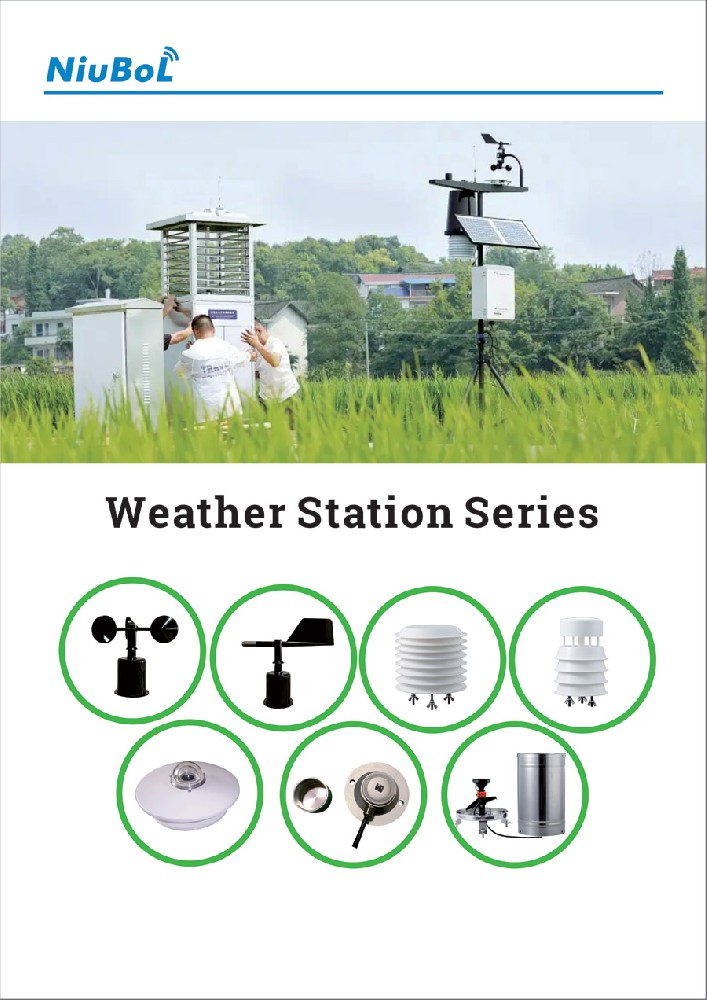
Weather can vary across short distances because of elevation, shelter, irrigation, nearby water, crop canopy and soil condition. A regional forecast remains useful, but it may not represent frost risk in a low field, wind at a spray site or rainfall received by one irrigation block. A farm station provides the local record needed to compare forecast conditions with what actually occurred.
The first configuration question is therefore not how many sensors fit on a mast. It is which weather conditions need to be recorded, at which part of the farm and over what time interval. A station used to maintain a field rainfall history has a different layout from a point intended to observe a frost-prone orchard or support a crop-disease model.
An agricultural weather station should produce a record that can be explained after an event. The operator should be able to distinguish measured rainfall from an irrigation entry, crop-height temperature from a general air-temperature reference, and an average wind speed from a short maximum. These distinctions affect which sensors and logger functions are needed.
| Farm decision | Useful measurements | Installation note |
|---|---|---|
| Irrigation scheduling | Rainfall, air conditions, solar radiation and soil moisture | Place soil probes in representative root zones and keep the rain gauge clear. |
| Frost response | Air temperature and humidity at a representative crop height | Avoid heat sources and record conditions in known frost-prone areas. |
| Spray planning | Wind speed, wind direction, temperature and humidity | Keep the wind sensor away from trees, buildings and other obstructions. |
| Disease-risk models | Temperature, humidity, rainfall and, where required, leaf wetness | Use the placement and model inputs defined for the crop program. |
| Greenhouse ventilation | Indoor and outdoor temperature, humidity, radiation and wind | Separate indoor control measurements from the outdoor reference station. |
A tipping-bucket rain gauge supplies counts or processed rainfall data, depending on the output version. The logger must use the rainfall-per-tip factor of the ordered mechanism. A rain gauge with pulse output requires a counter input; an RS485 version requires the correct protocol handling. Those interfaces are not interchangeable merely because both ultimately report millimetres.
For example, with an explicitly configured 0.2 mm-per-tip gauge, 25 tips represent 5.0 mm. Applying a 0.5 mm factor to those same counts would report 12.5 mm. This is a configuration example, not a specification for every NiuBoL rain gauge. Record the factor and verify it during commissioning.
Decide when a daily total starts and ends. A station resetting at local midnight and a platform grouping by UTC can give different daily figures even when both retain the same event. Keep interval totals or a documented cumulative counter so a missed upload does not erase the rainfall history. Also define how a power restart or counter rollover is handled.
Keep the collector level and clear of overhanging vegetation, splash and irrigation spray. If rain falls while a block is being irrigated, the collector should still measure rainfall rather than the sprinkler pattern. Inspect the funnel and mechanism when a nearby observation suggests rain but the station remains at zero.
A convenient mast location may not capture the coldest part of an orchard. Review low ground, slope and crop layout before selecting frost-observation points. Retain a consistent general air-temperature reference, and use additional labelled points where the crop programme needs measurements at another height or location.
Air temperature is not identical to flower, leaf or fruit temperature. Crop sensitivity also changes with growth stage. Set alert thresholds with the responsible agronomic team instead of applying one universal freezing threshold to every crop. FAO's discussion of frost-protection methods distinguishes crop sensitivity and critical temperatures; the station supplies observations, not a stand-alone guarantee of protection.
Agree the alarm recipient, message interval and action during a communications outage before a frost night. Verify readings from the crop point against the intended reference, with both sensors under appropriate exposure. Test the complete alert route, not just the temperature value on a local display. Frost forecasting and monitoring also require local interpretation; a measured low temperature and a forecast minimum are different records.
Wind speed and direction help characterise conditions at the work location. A sensor behind a barn or orchard shelterbelt can understate exposure elsewhere in the field. Keep speed and direction on a common time basis, and identify whether the report contains instantaneous samples, an average or a maximum over a defined interval. Do not describe a sampled maximum as a standard gust without defining the calculation.
Temperature and relative humidity add context, but a weather-station display does not issue a universal spray approval. The farm must apply the requirements for the actual crop, treatment and equipment. When records are kept for an operation, associate them with its location and time rather than a farm-wide daily average.
A crop-disease model may require temperature, humidity, rainfall and a duration of leaf wetness. Relative humidity alone is not a direct observation of liquid water on foliage. Add a leaf-wetness measurement when the selected model requires it, and follow the placement and threshold method used by that crop programme. A wetness sensor is a model input, not an instrument that identifies a pathogen.
Solar irradiance in W/m2, photosynthetically active radiation and illuminance in lux are also different measurements. Choose the channel required by the calculation or crop study. A light reading in lux cannot simply be renamed solar radiation in the logger to satisfy an evapotranspiration or energy calculation.
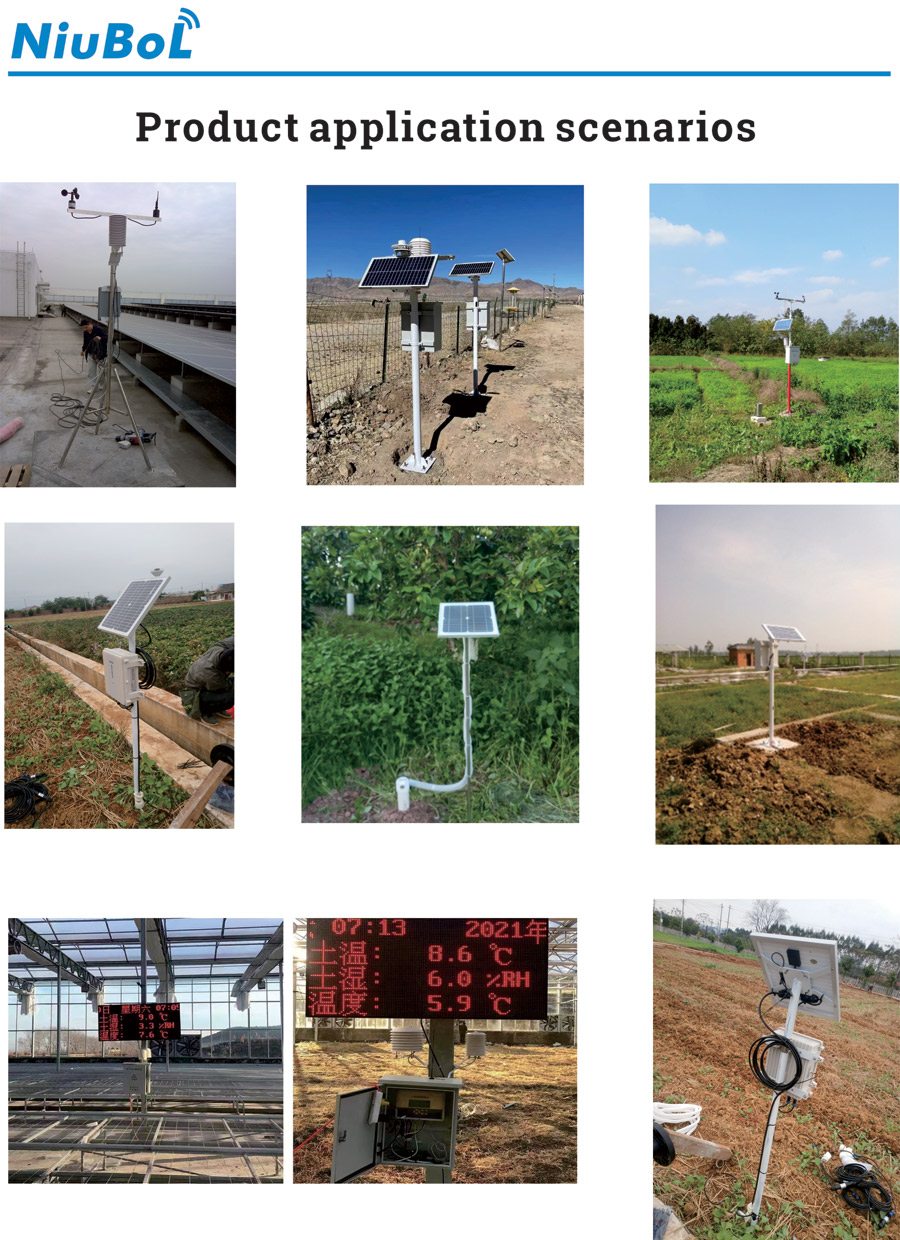
| Channel and unit | Possible equipment | Acquisition requirement |
|---|---|---|
| Wind speed, m/s; direction, degrees | NBL-W-SS and NBL-W-DS, or an appropriate integrated wind instrument | Match the ordered outputs and retain simultaneous speed/direction records. |
| Air temperature, degrees C; RH, %; pressure, hPa | NBL-W-LBTH atmospheric sensor | Use the selected interface and a representative, properly shielded exposure. |
| Rainfall, mm | NBL-W-RS tipping-bucket rain gauge | Match the pulse factor or RS485 driver and the accumulation/reset method. |
| Solar irradiance, W/m2 | NBL-W-HPRS pyranometer configuration | Match signal scaling, levelling and the calculation's required time basis. |
| Root-zone moisture and temperature | Additional soil probes where the farm needs them | Keep soil points separately identified by management zone and depth. |
| Leaf wetness where required | Optional wetness sensor compatible with the crop programme | Agree the wet/dry interpretation and duration calculation rather than assuming a universal scale. |
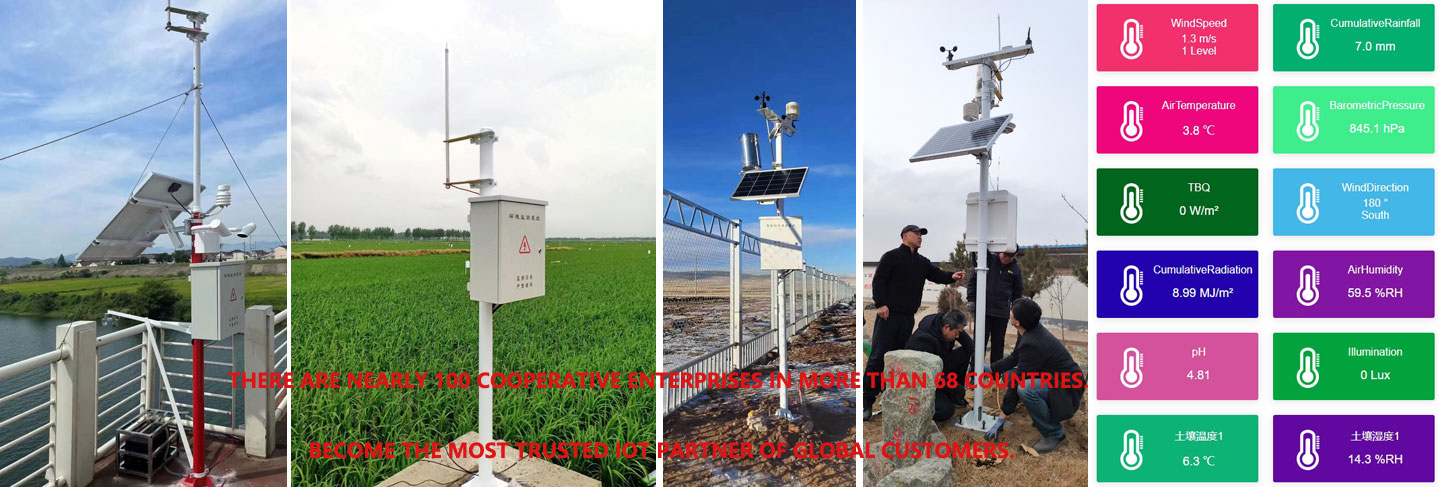
Review the NiuBoL weather-station configurations, rain gauge and wind direction sensor against this channel list. Match each component's output, supply and measuring range to the logger inputs and farm conditions. Specify IP65 for the ordered wind-speed and wind-direction sensor assemblies; the logger enclosure and cable entries require their own protection assessment.
Sensors connect to a local data logger through supported analog, pulse or digital interfaces. Industrial stations often use RS485, and many devices carry Modbus RTU over that electrical link. The logger timestamps and stores measurements, then sends records through Ethernet, cellular or another gateway connection to the farm platform.
Sampling and reporting intervals do not have to be identical. The logger may sample frequently, calculate an average, maximum, minimum or rainfall accumulation, and transmit a smaller scheduled record. The calculation method and time zone should be documented so data from several stations can be compared.
Match the logger to the inputs actually required: serial ports and drivers for RS485 Modbus RTU, counter inputs for pulse devices, and suitable analogue inputs for current or voltage transmitters. Obtain the register map for the ordered digital sensor. A communications router forwards data but does not necessarily acquire a rain-gauge pulse or calculate a meteorological average.
A NiuBoL weather-station data logger is a possible acquisition route. Confirm the selected firmware's aggregation, storage and upload functions. For a new station, check solar-panel exposure, battery access and winter energy demand together with the modem's operating schedule; do not size the supply from sensor power alone.
Separate an open weather reference from measurements intentionally placed within a crop. Record sensor heights, crop cover and nearby obstructions at installation. When a hedge grows, a tree is removed or a greenhouse is extended, note the change because the exposure may no longer be comparable with earlier records.
Use a suitable radiation shield for air temperature and humidity. Level the rain collector and the radiation sensor where applicable, and route cables so water cannot run into an enclosure entry. Leave safe access for cleaning and servicing without disturbing orientation. Clear labels on the logger and platform should identify which reading belongs to the general station and which belongs to a crop-specific point.
During commissioning, compare at least one meaningful event across the acquisition chain: a controlled rain-gauge check, an observed wind-direction change or a supervised alert test. Verify units and timestamps at both the logger and platform. Disconnect the backhaul and confirm the storage and later upload behaviour that was actually ordered.
A weather station records conditions; it does not automatically predict yield or prevent damage. Alerts and control actions need thresholds based on the crop, growth stage and local agronomic practice. Maintenance is also part of measurement quality. Dirty radiation domes, blocked rain funnels, damaged cables and changed vegetation around the mast can bias the record.
A station reporting humidity and temperature does not automatically include a disease model. A weather-based irrigation recommendation does not operate a valve without separate control equipment. Put those functions in the quotation only when the project needs them, with the responsible software and control interface identified.
Provide the crop, the decisions supported, site terrain and coordinates, proposed measurement locations, required channels, mast arrangement, power availability, communications coverage and platform interface. Add the reporting interval and maintenance access. This produces a more useful configuration discussion than asking for a single price for an unspecified agricultural weather station.
Only where its exposure is representative of the decisions being made. Varied terrain, local rainfall, shelter and frost-prone low areas may justify additional points. Use the main station as a consistent reference and add targeted crop or rainfall nodes where differences matter.
No. It supplies local observations to compare with the forecast and interpret farm conditions. A forecast describes expected weather; the station records what its sensors actually measured. Keep those records distinct, especially when reviewing an event or an alert.
First check the rainfall-per-tip factor, day boundary, time zone and counter reset. Then inspect missing or duplicated records. A correct total across an event can still be assigned to different calendar days when one system uses UTC and the other local time.
It is useful when the selected crop programme or disease model needs a wetness-duration input. Temperature and relative humidity do not directly measure liquid water on a leaf. Confirm the model's placement and interpretation requirements before adding the channel.
A suitably configured logger can continue local acquisition, but retention and later upload depend on its hardware and firmware. Confirm buffer capacity, overwrite behaviour, timestamps and backfill during acceptance. Remote alarms may be delayed, so critical local response needs a separate arrangement.
Set tasks by exposure and sensor type. Inspect rain funnels for blockage, radiation surfaces for contamination, shields for fouling and mechanical wind sensors for free movement. Increase checks during conditions that create deposits or obstruction, and preserve before/after readings when investigating a suspected bias.
An agricultural weather station should preserve a trustworthy local weather record for the farm's actual decisions. Choose channels and exposure together, define how rainfall and interval data are recorded, and add crop-specific points where the main mast cannot represent the required condition. NiuBoL sensor and acquisition options can then be specified around that purpose rather than a fixed sensor count.
Related recommendations
Sensors & Weather Stations Catalog
 Agriculture Sensors and Weather Stations Catalog-NiuBoL.pdf
Weather Stations Catalog-NiuBoL.pdf
Agriculture Sensors Catalog-NiuBoL.pdf
Water Quality Sensor Catalog-NiuBoL.pdf
Related products
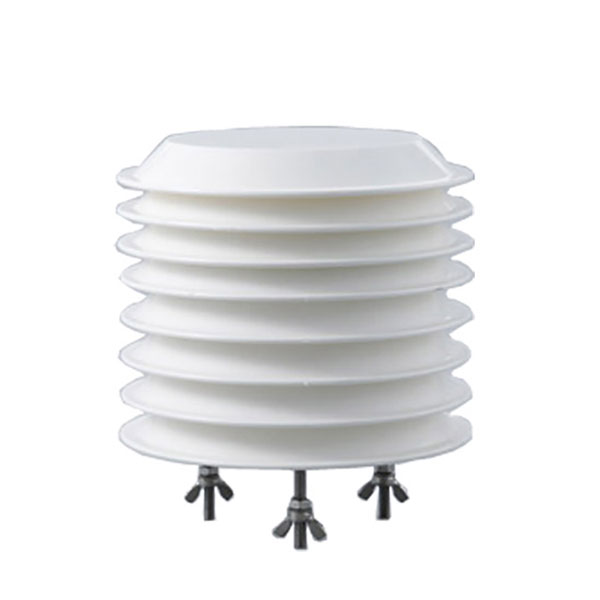 Combined air temperature and relative humidity sensor
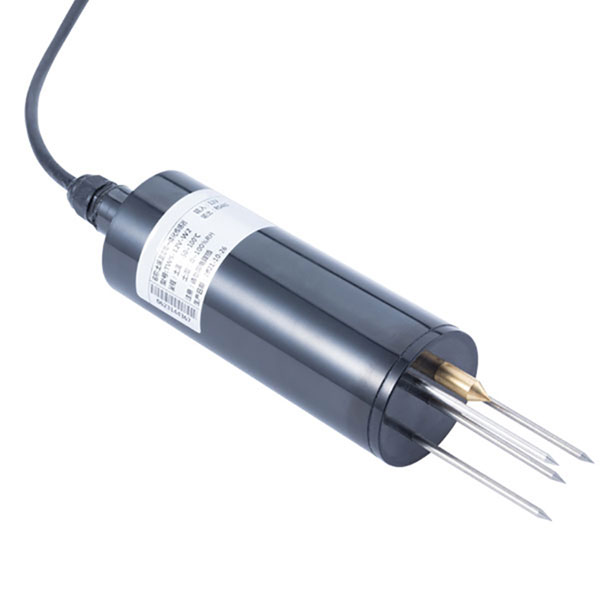 TDR Soil Moisture & Temperature Sensor for irrigation| RS485 |4-20mA| NBL-S-THR
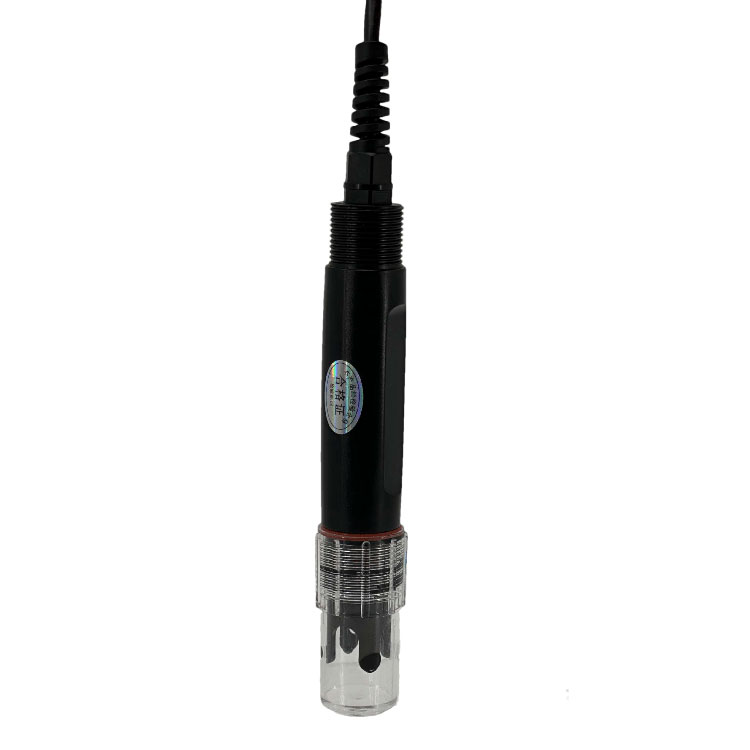 Soil pH sensor RS485 soil Testing instrument soil ph meter for agriculture |NBL-S-PH
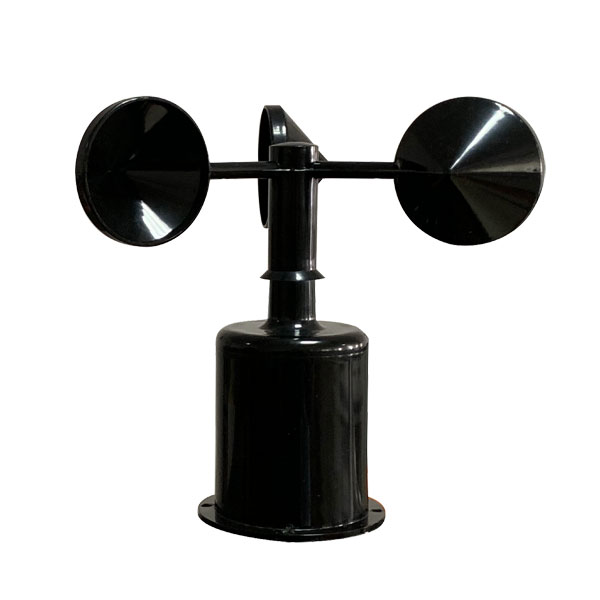 Wind Speed sensor Output Modbus/RS485/Analog/0-5V/4-20mA
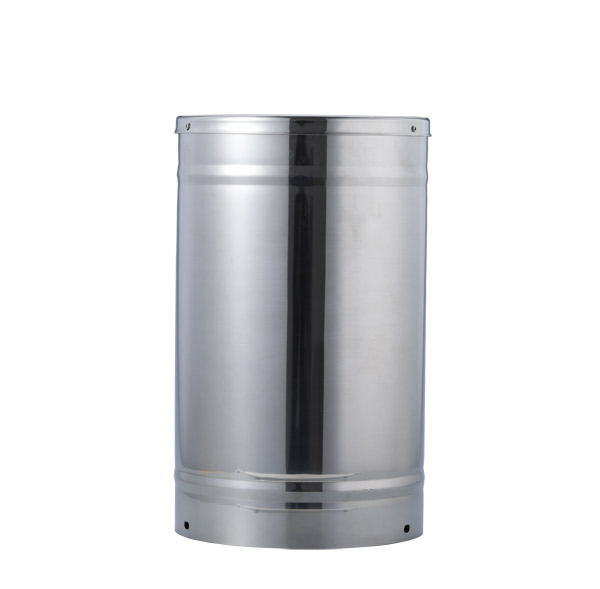 Tipping bucket rain gauge for weather monitoring auto rainfall sensor RS485/Outdoor/stainless steel
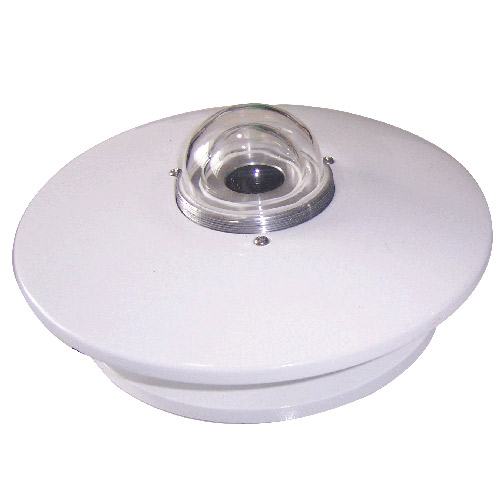 Pyranometer Solar Radiation Sensor 4-20mA/RS485

Screenshot, WhatsApp to identify the QR code
WhatsApp number:+8615367865107
(Click on WhatsApp to copy and add friends)