





— Blogs —
—Products—
 Consumer hotline +8618073152920
 WhatsApp:+8615367865107
Address:Room 102, District D, Houhu Industrial Park, Yuelu District, Changsha City, Hunan Province, China
Product knowledge
Time:2026-03-13 16:03:13 Popularity:447
In the field of hydrological monitoring, radar water level and rainfall monitoring systems have become key tools for improving flood prevention efficiency. As a non-contact measurement device, this system is widely used in river water level monitoring, flood early warning systems, and water conservancy project management. By integrating advanced K-band radar technology and IoT interfaces, it provides reliable data support for system integrators and project contractors, helping optimize water resource scheduling and disaster response strategies. The NiuBoL radar water level and rainfall monitoring system, with its high precision and low power consumption design, is suitable for unattended field environments, ensuring real-time data transmission and analysis.
China's hydrological and meteorological observation system has gradually improved and plays a core role in basin flood prevention, flood resistance, and water resource management. Among them, radar water level and rainfall monitoring systems serve as key components, providing basic support for decision-making by collecting real-time data on precipitation, water level, flow velocity, etc. In recent years, the frequent occurrence of extreme weather events, such as the floods in Henan and Shanxi, highlights the necessity of strengthening hydrological monitoring. These events not only cause property losses but also test the reliability and response speed of monitoring equipment.
Traditional hydrological monitoring relies on manual observation, greatly affected by weather and human factors, while modern radar systems adopt non-contact measurement principles to avoid these limitations. The NiuBoL system integrates microwave technology and can operate stably in complex environments, including lakes, rivers, and tidal areas. Such systems help prevent drought and flood disasters and support the planning and design of embankment building, bank consolidation, and flood discharge projects. Through online monitoring, hydrological data can be timely fed back to relevant departments to achieve flood early warning and optimized resource allocation.
In flood prevention work, the application of radar water level and rainfall monitoring systems directly improves disaster response capabilities. For example, during heavy rain, the system can monitor river water level changes and predict potential breach risks, helping engineering companies formulate emergency plans. IoT solution providers can integrate this system with cloud platforms to achieve remote data access and automated alarms, further strengthening the resilience of flood prevention systems.
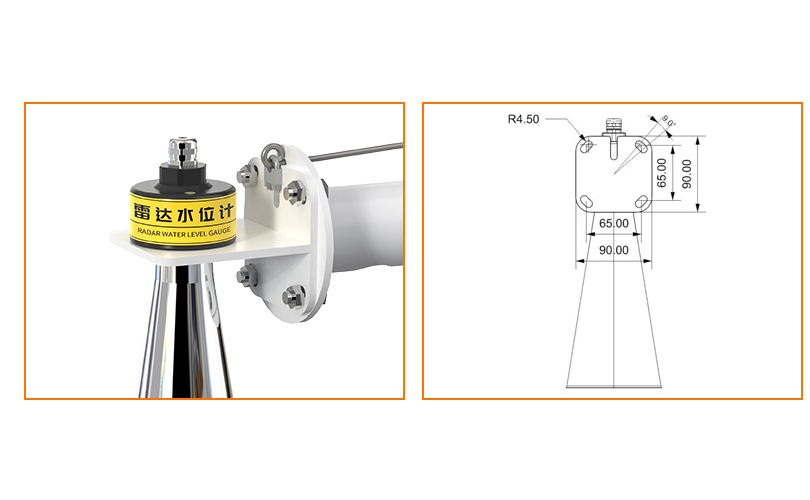
The NiuBoL radar water level gauge and rainfall monitoring system is a professional device based on FMCW (Frequency Modulated Continuous Wave) radar technology, operating in the 77GHz to 79GHz frequency range. This system is specially designed for surface water level and rainfall measurement and is suitable for field automatic station applications. Its core advantage lies in water surface fluctuation filtering processing, ensuring measurement accuracy is unaffected by atmospheric conditions such as temperature, pressure, wind speed, and humidity.
The system adopts a horn antenna design, optimizing power consumption and voltage adaptability, supporting wide-range DC10-30V input. This makes it particularly suitable for remote areas or solar-powered scenarios. The product is compact in size and easy to install, and can be used with poles and hosts. As a manufacturer, NiuBoL provides customized interfaces for system integrators, supporting RS485 communication protocol for easy integration into existing IoT frameworks.
In terms of functions, the system not only measures water level but can also be extended to monitor flow velocity, flow rate, and rainfall. Through built-in software algorithms, it calculates real-time cross-section flow and cumulative flow, providing comprehensive hydrological data. Compared to traditional water gauge observation, this system achieves automated collection, reducing human intervention and improving data accuracy.
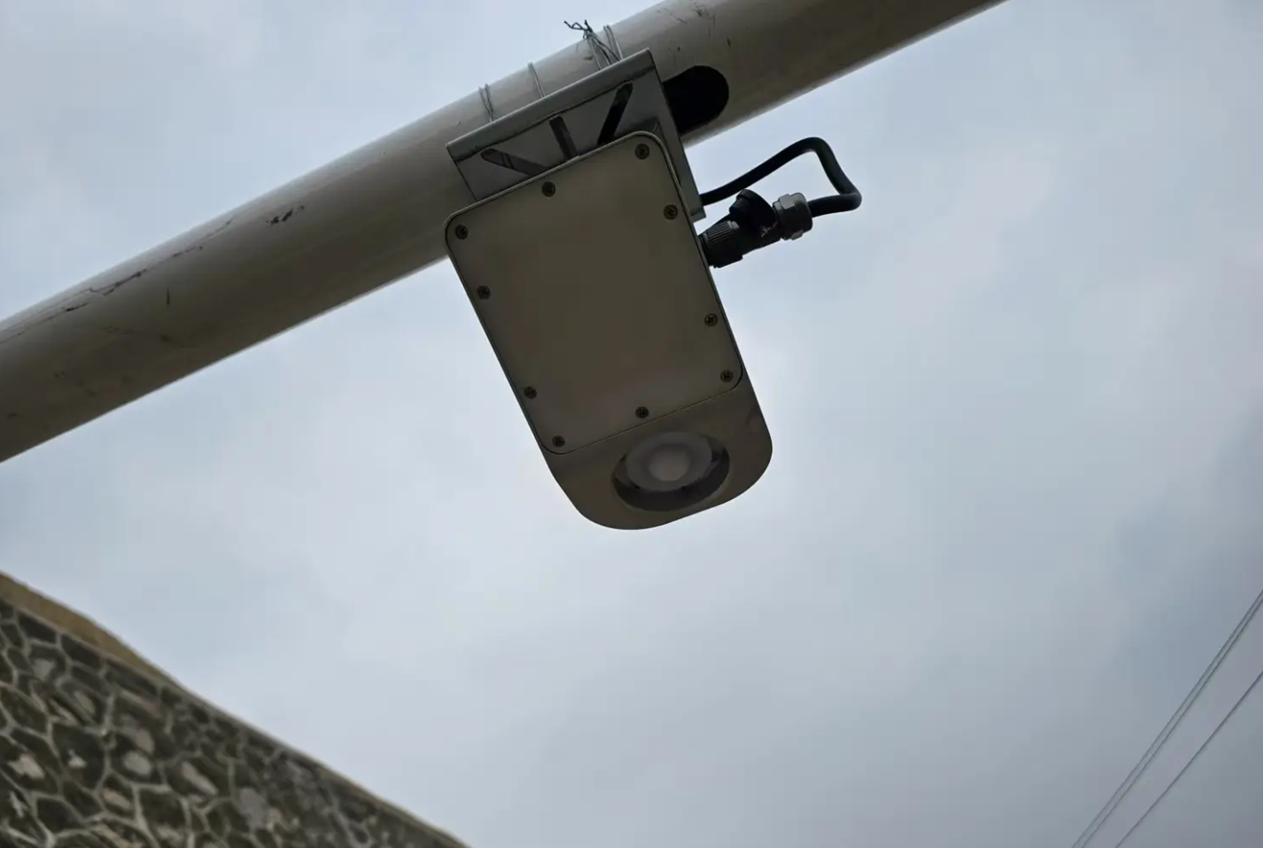
The NiuBoL radar water level and rainfall monitoring system has multiple engineering-grade functional features to ensure stability and efficiency in flood prevention applications.
First, based on self-developed CMOS millimeter-wave RF chips, the system achieves a compact architecture and high signal-to-noise ratio, with blind zone control within 15 cm. This helps achieve precise measurement in narrow river channels or shallow water areas. Its large operating bandwidth improves resolution and accuracy, with the narrowest antenna beam angle of 8°, reducing interference from installation environments.
Second, the integrated lens design makes the product compact and easy for field deployment. Low power consumption characteristics (maximum 0.6W) extend equipment life, suitable for long-term unattended operation. Protection rating reaches IP67, ensuring reliable operation in harsh weather.
In addition, the system is unaffected by water quality changes, floating objects, or aquatic plants, suitable for various environments such as reservoir gates, underground drainage networks, and irrigation channels. Flexible working mode configuration allows users to adjust parameters according to project needs and supports non-contact flow measurement. This provides scalable solutions for project contractors, outputting data in real time in flood early warning.
In IoT integration, the RS485 output protocol facilitates connection with SCADA systems or cloud platforms for remote data transmission and analysis. This helps engineering companies build intelligent flood prevention networks and improve overall response efficiency.
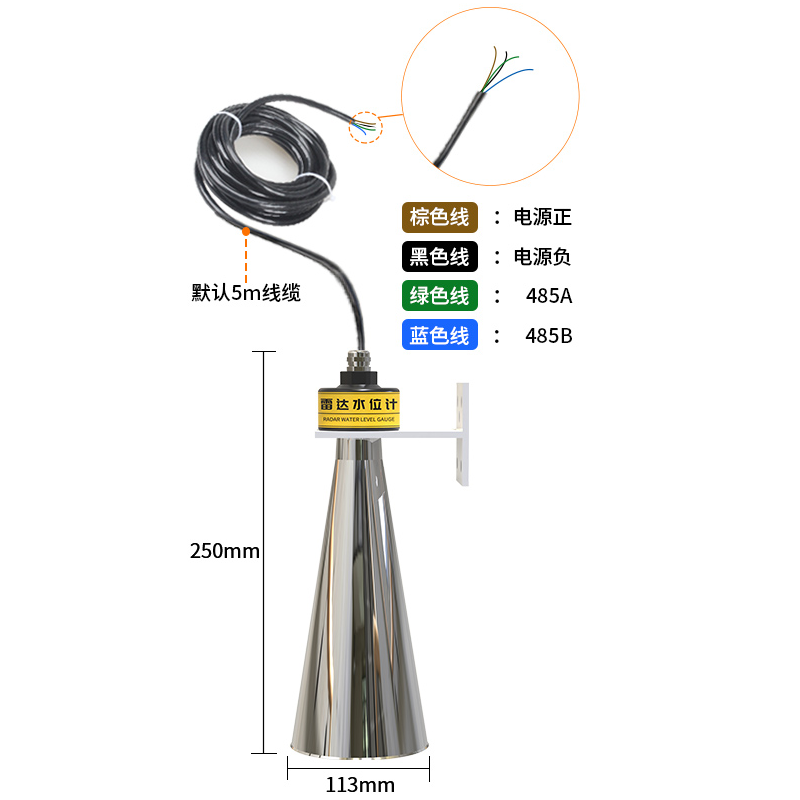
The following table summarizes the main technical indicators of the NiuBoL radar water level and rainfall monitoring system for easy evaluation of applicability by system integrators and project contractors.
| Parameter | Specification Value |
|---|---|
| Power Supply | DC10-30V |
| Maximum Power Consumption | 0.6W |
| Transmission Frequency | 77GHz~79GHz |
| Measurement Range | 0.15m ~65m |
| Resolution | 1mm |
| Measurement Accuracy | ±1mm @(4m, 40%RH, 25℃) |
| Beam Angle | 8° |
| Transmitter Element Temperature and Humidity Resistance | -40℃~+80℃, 0%RH~95%RH (non-condensing) |
| Communication Protocol | RS485 output |
| Protection Rating | IP67 |
These indicators ensure high reliability of the system in flood prevention scenarios, such as maintaining continuous monitoring in flood-prone areas.
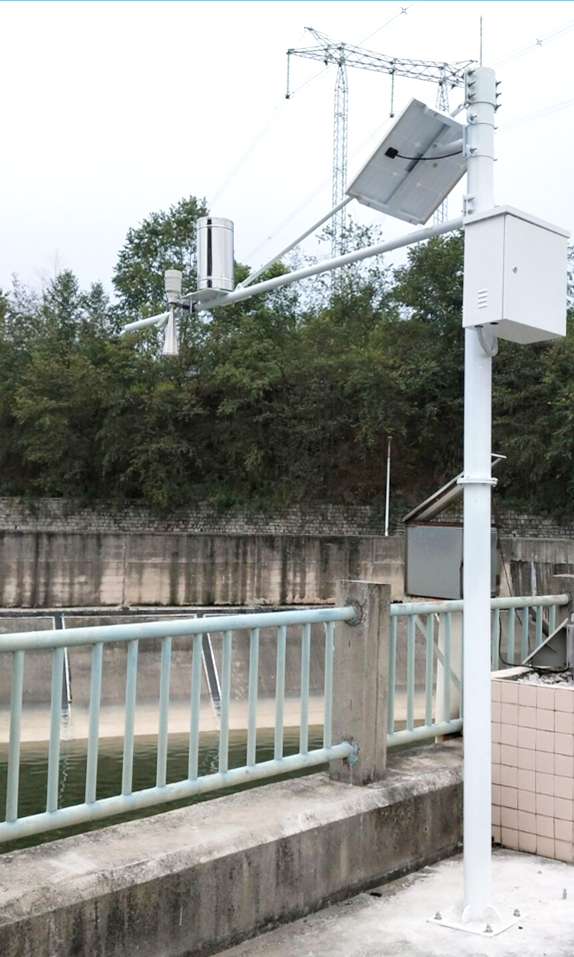
Radar water level and rainfall monitoring systems have diverse application scenarios in flood prevention work, covering river monitoring, urban drainage, and reservoir management.
1. In river flood early warning, the system monitors water level and rainfall in real time to help predict flood peak arrival time. Given China's numerous rivers and complex hydrology, the NiuBoL system is suitable for flash flood-prone areas. Through non-contact measurement, it avoids equipment damage. Project contractors can deploy it on riverbanks and integrate it into flood early warning platforms to achieve automatic alarm sending.
2. Urban waterlogging is another key application. With urbanization, hardened ground increases drainage pressure. The system can monitor flow velocity and water level in underground pipe networks and drainage ditches, providing data support for urban water supply and sewage management. After floods in places like Henan, such systems help optimize drainage system design and reduce property losses.
3. In addition, in reservoir and tidal water level monitoring, the system handles water quality changes and floating object interference to ensure accurate data collection. IoT solution providers can use its low-power design to deploy solar-powered stations in remote reservoirs for remote scheduling.
4. In water conservancy project planning, water level data is fundamental. The system supports bridge, port, and waterway construction by providing real-time intelligence to promote flood prevention and drought relief decisions. Combined with software algorithms, it outputs cross-section flow data to assist engineering companies in flood analysis and drought prediction.
Overall, these application scenarios play a role in enhancing flood prevention resilience, helping target customers build efficient hydrological monitoring networks.
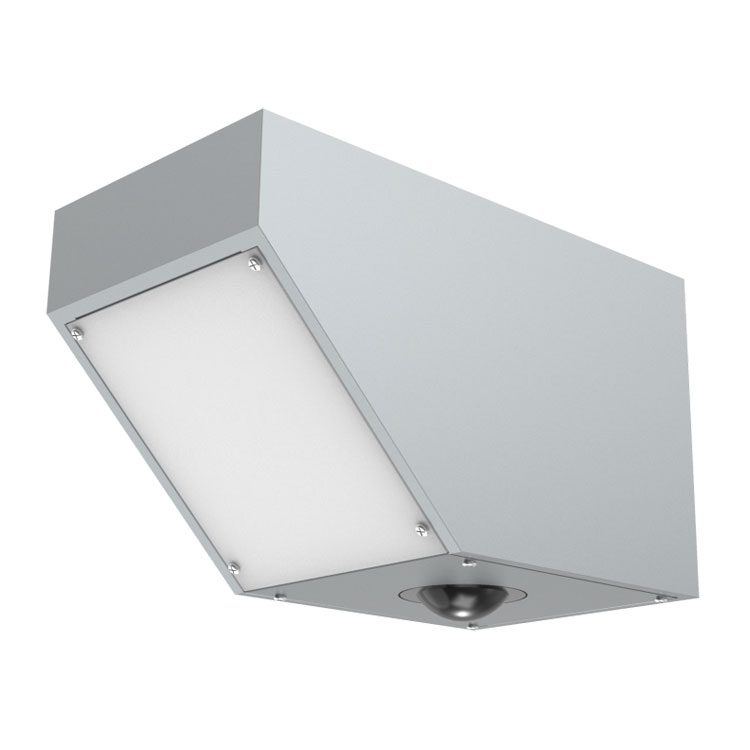
Traditional hydrological monitoring mainly relies on water gauges and manual observation. While simple, this method has problems such as low accuracy, great influence by weather, and high safety risks. For example, during heavy rain, observers need to approach water bodies, increasing accident risks. Data collection intervals are long, unable to achieve real-time feedback, resulting in delayed flood prevention response.
In contrast, the NiuBoL radar water level and rainfall monitoring system adopts radar technology for non-contact measurement. The measurement process is unaffected by temperature, sediment, or pollutants, with accuracy up to ±1mm. This significantly improves data reliability, especially in ditches with sediment or aquatic plants.
Automation is another advantage. The system supports full-time online monitoring, outputting real-time and cumulative flow data for easy integration into IoT platforms. Companies can reduce manpower input and focus on data analysis and decision-making.
In terms of cost-effectiveness, although initial investment is higher, the low-maintenance design and long service life reduce long-term operating costs. Compared to manual methods, it reduces error rates and improves flood prevention efficiency, helping avoid disaster losses.

In flood prevention work, radar water level and rainfall monitoring systems provide real-time hydrological characteristic data to help relevant departments respond timely. Climate change intensifies extreme events, requiring monitoring systems with high adaptability. The NiuBoL system performs excellently in this field, supporting flood forecasting and drought relief measure implementation.
For example, in basin management, the system monitors evaporation, wind conditions, and water level changes to assist water resource scheduling. Project contractors can combine it with GIS systems to build visual flood prevention maps for precise early warning.
In post-disaster recovery stages, data accumulation helps engineering assessment, such as embankment reinforcement design. Through accumulated historical data, the system supports long-term trend analysis to optimize water conservancy investment.
Overall, the system promotes scientific and intelligent flood prevention work.
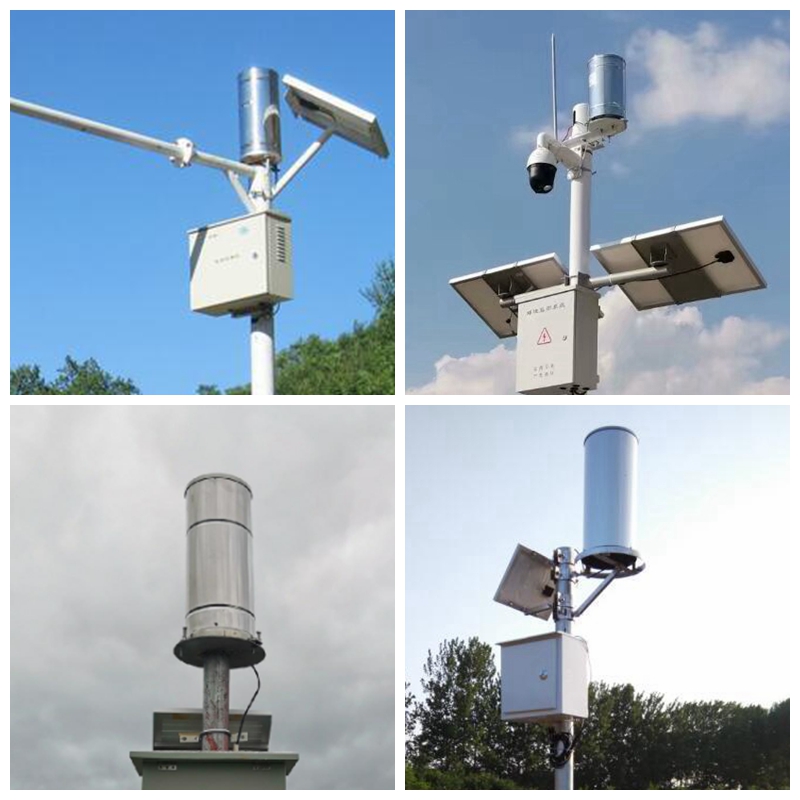
The following are common questions about the NiuBoL radar water level and rainfall monitoring system, aimed at providing clear guidance for system integrators and project contractors.
Q1: How does the radar water level and rainfall monitoring system achieve non-contact measurement?
The system adopts K-band planar radar technology, calculating water level and flow velocity by emitting microwave signals and analyzing echoes without physical contact with the water body, avoiding equipment corrosion or interference.
Q2: What environmental conditions is this system suitable for?
Suitable for lakes, rivers, reservoirs, open channels, wetlands, and tidal areas, especially in places with floating objects, sediment, or aquatic plants, as well as flash flood-prone areas.
Q3: Compared to traditional water gauge observation, what are the advantages?
Provides real-time automated monitoring with higher accuracy (±1mm), unaffected by atmospheric factors, reducing human errors and safety risks.
Q4: What communication protocols does the system support?
Mainly supports RS485 output, facilitating integration into SCADA or IoT platforms for remote data transmission.
Q5: What are the installation and maintenance requirements?
The system is compact and supports nut fixing method with IP67 protection rating for durability. Low-power design reduces maintenance needs, suitable for unattended field operation.
Q6: How does it handle the impact of water surface fluctuations on measurement?
Built-in water surface fluctuation filtering algorithm filters interference to ensure measurement stability.
Q7: Can the system be extended to flow and rainfall monitoring?
Yes, through software algorithms, it can simultaneously measure flow velocity, flow rate, and rainfall, providing comprehensive hydrological data.
Q8: What is its specific role in flood early warning?
Outputs real-time water level and rainfall data, supports flood forecasting and alarm systems, helping decision-making departments deploy measures in advance.
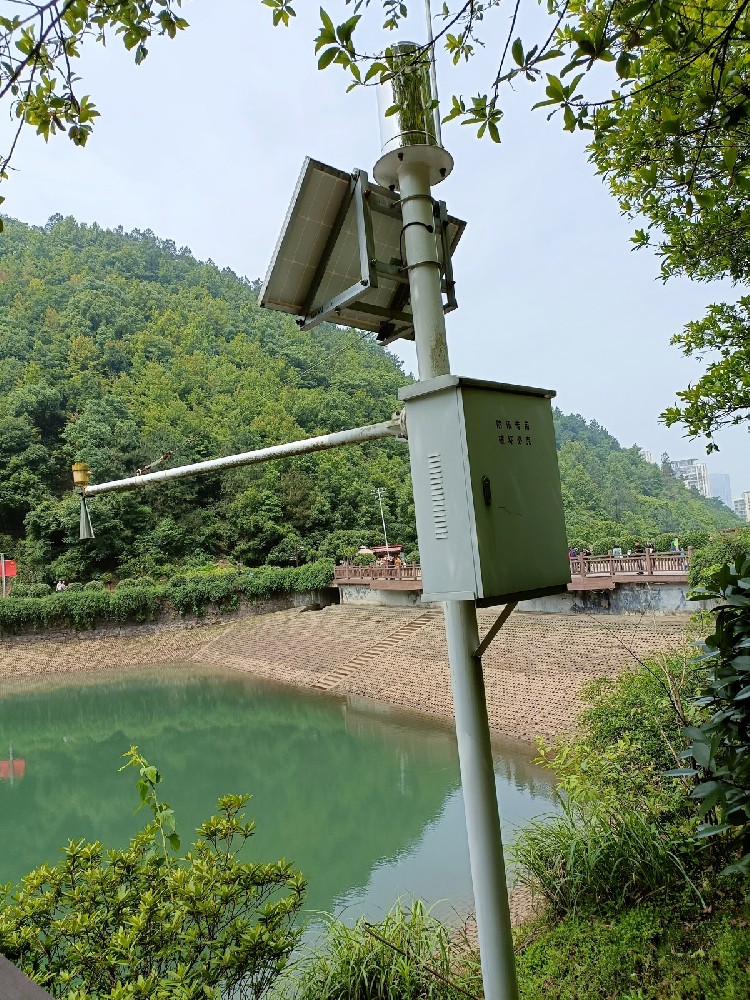
The application of radar water level and rainfall monitoring systems in flood prevention work significantly improves the accuracy and efficiency of hydrological monitoring. As a manufacturer, NiuBoL provides reliable solutions tailored to the needs of system integrators, IoT suppliers, and project contractors, optimizing water conservancy project management and disaster response. Through non-contact technology and IoT integration, the system helps build resilient flood prevention systems and reduce disaster impacts. In the future, with technological progress, such systems will play a greater role in sustainable water resource management. It is recommended that engineering teams evaluate specific project needs and explore customized integration options to achieve optimal performance.
 NBL-W-ARS-Tipping-bucket-rain-gauge-instruction-manual.pdf
Related recommendations
Sensors & Weather Stations Catalog
Agriculture Sensors and Weather Stations Catalog-NiuBoL.pdf
Weather Stations Catalog-NiuBoL.pdf
Agriculture Sensors Catalog-NiuBoL.pdf
Water Quality Sensor Catalog-NiuBoL.pdf
Related products
 Combined air temperature and relative humidity sensor
 Soil Moisture Temperature sensor for irrigation|NBL-S-THR
 Soil pH sensor RS485 soil Testing instrument soil ph meter for agriculture |NBL-S-PH
 Wind Speed sensor Output Modbus/RS485/Analog/0-5V/4-20mA
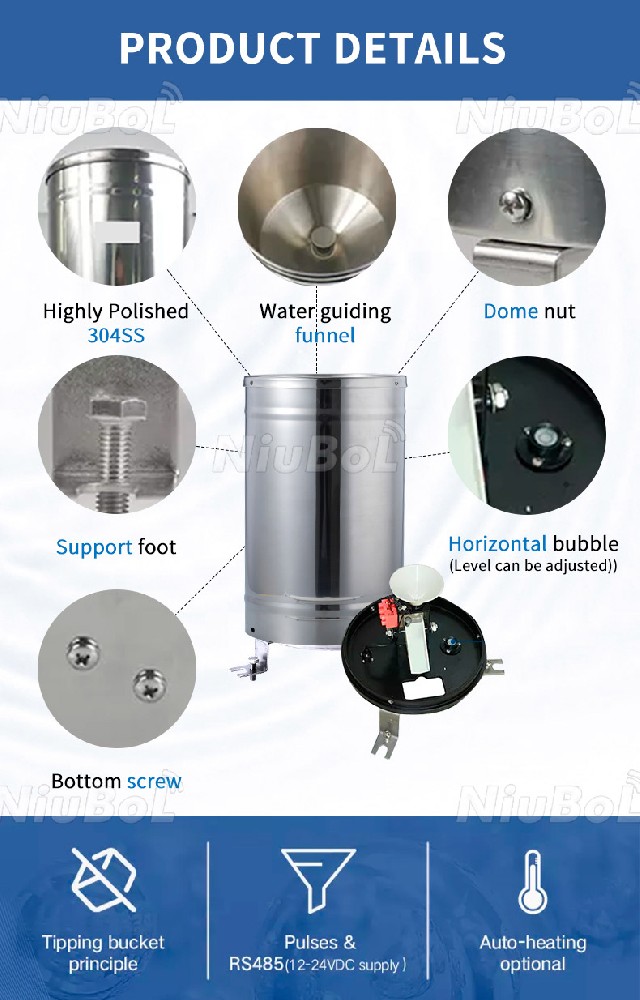
 Tipping bucket rain gauge for weather monitoring auto rainfall sensor RS485/Outdoor/stainless steel
 Pyranometer Solar Radiation Sensor 4-20mA/RS485

Screenshot, WhatsApp to identify the QR code
WhatsApp number:+8615367865107
(Click on WhatsApp to copy and add friends)

