





— Blogs —
—Products—
 Consumer hotline +8618073152920
 WhatsApp:+8615367865107
Address:Room 102, District D, Houhu Industrial Park, Yuelu District, Changsha City, Hunan Province, China
Product knowledge
Time:2026-03-27 10:43:22 Popularity:658
NiuBoL automatic weather station adopts industrial-grade data logger, modular sensors and hot-dip galvanized bracket. It supports collection of temperature, humidity, wind speed, wind direction, air pressure, soil temperature and humidity, PM2.5/PM10, CO₂, total radiation and other elements. It is compatible with Modbus RTU/TCP, MQTT and 4G protocols, and can seamlessly integrate with SCADA and cloud platforms. This article focuses on engineering applications, comprehensively presenting how NiuBoL automatic weather station provides stable, reliable and highly integrated meteorological data support for industrial users from system architecture and compatibility to real project implementation.
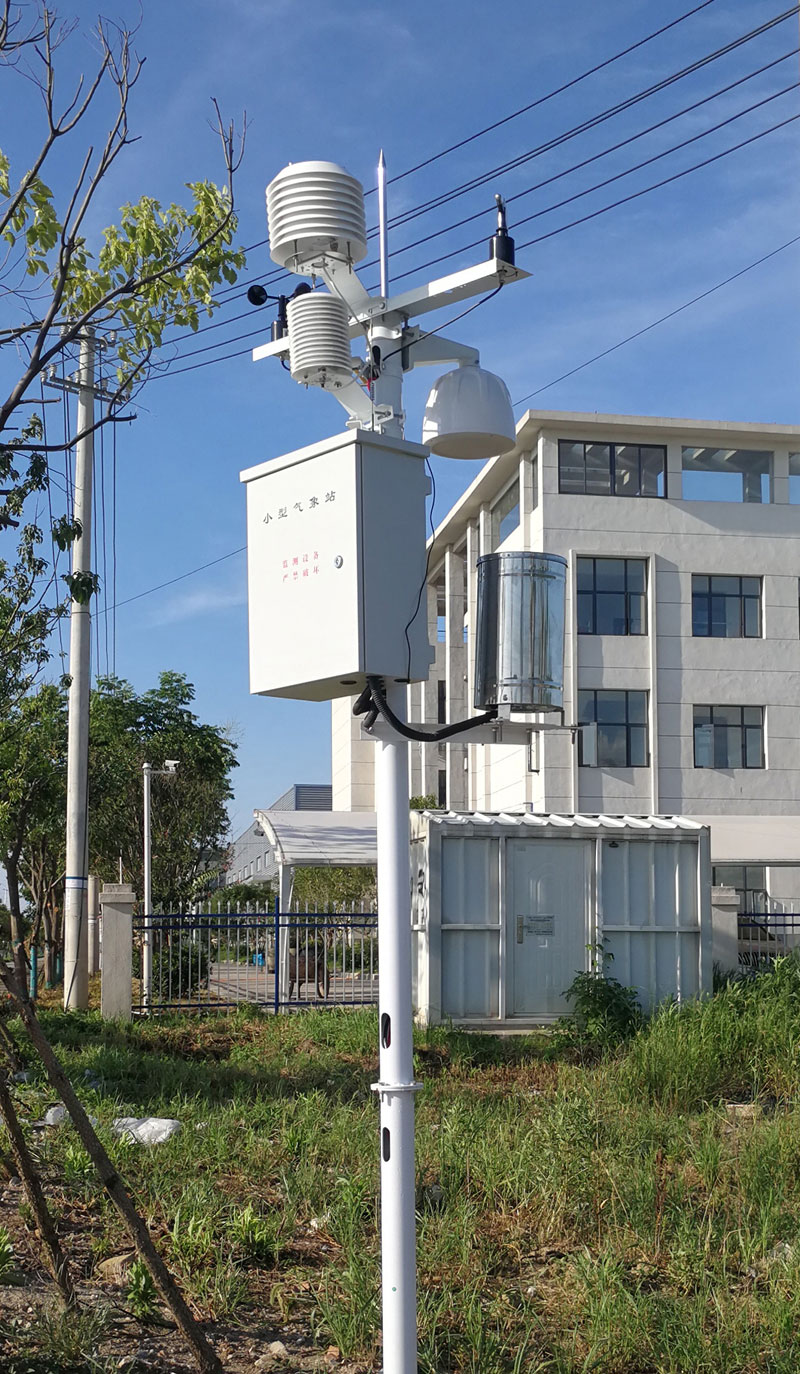
NiuBoL automatic weather station adopts modular design. The core hardware has undergone industrial-grade selection and features high reliability and scalability. The main functional features are as follows:
Equipped with high-performance ARM industrial-grade processing chip and ABS engineering plastic housing, it is lightweight and sturdy, adapting to a wide temperature range of -40℃~+70℃. It comes standard with a 192×64 dot matrix LCD screen, supporting graphical real-time data display; an optional 7-inch industrial color touch screen enables local parameter configuration and data browsing. The data logger supports external U-disk expansion storage. When the network is disconnected, data can be cached locally to ensure data integrity.
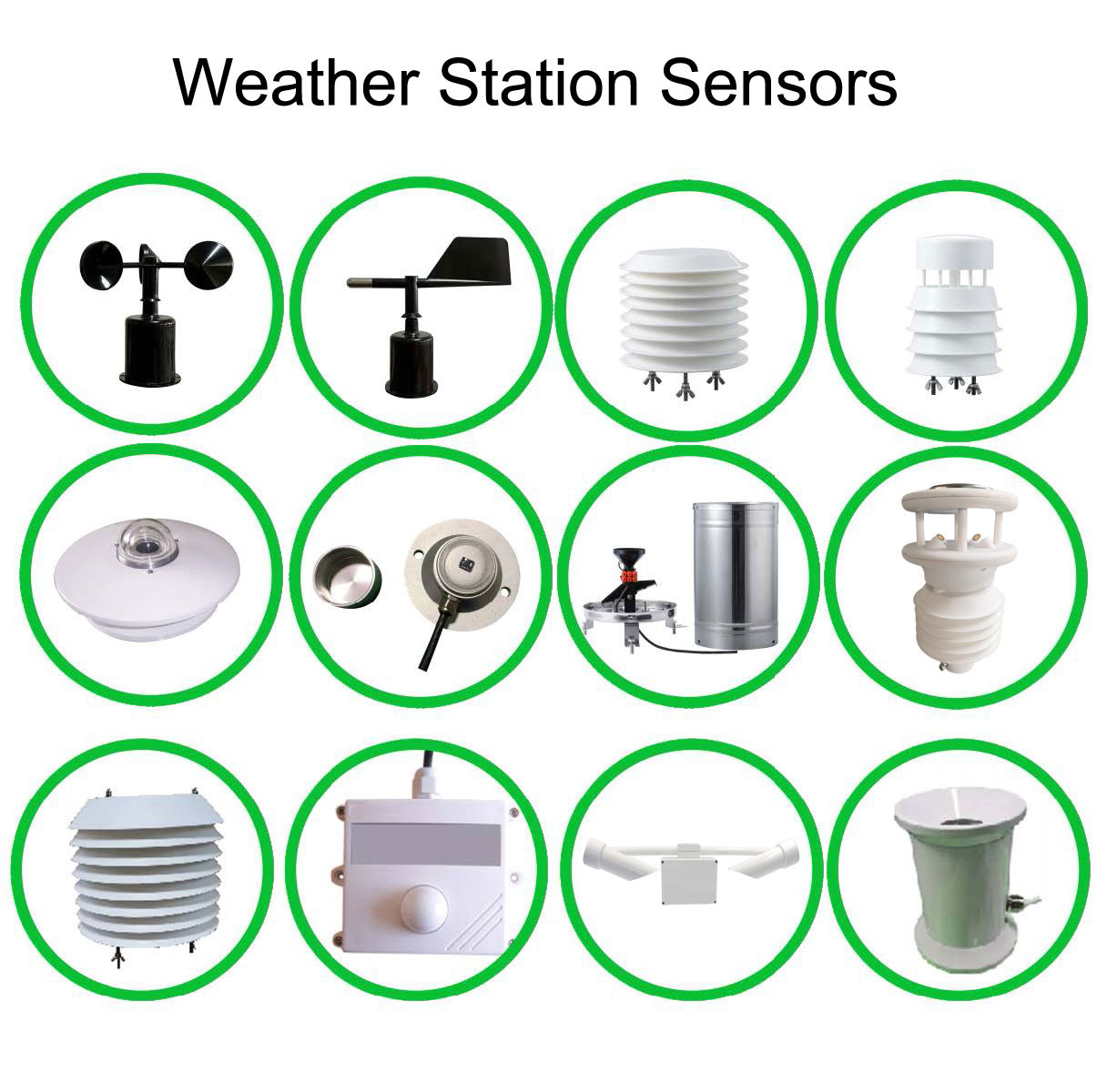
The system supports simultaneous access of up to 16 channels of sensors, covering meteorological and environmental elements:
Air temperature, humidity and air pressure sensors
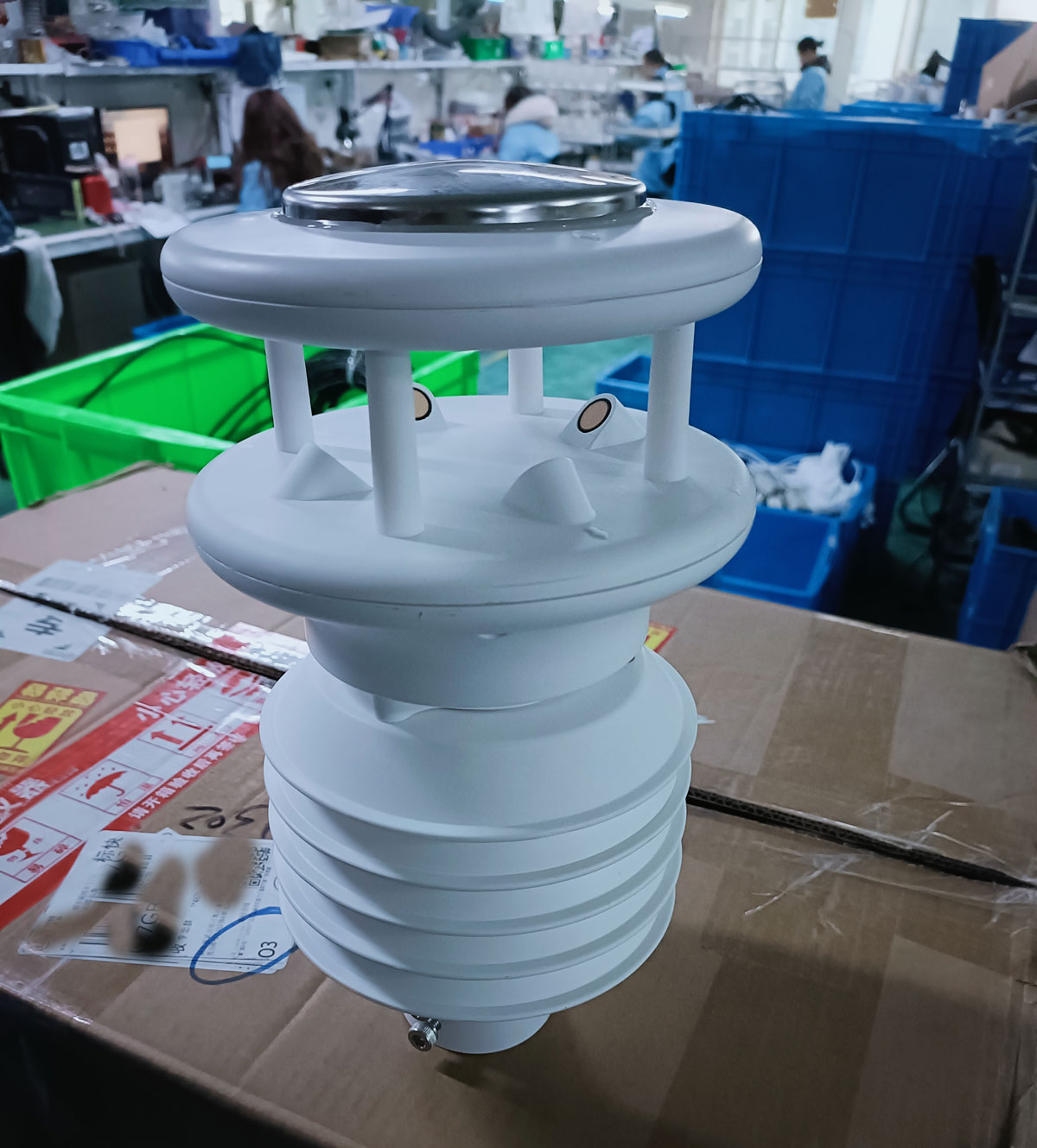
Wind speed and wind direction sensors (ultrasonic or mechanical sensors optional)
Rainfall (tipping bucket sensor, piezoelectric rain gauge or weighing sensor)
Soil temperature, soil humidity, soil pH and soil salinity (EC) sensors
Total radiation, sunshine duration, photosynthetically active radiation sensors
Air quality elements (PM2.5, PM10, CO, NO₂, SO₂, O₃, CO₂) sensors
Negative oxygen ion concentration sensor (optional)
All sensors adopt RS485 digital output and feature temperature compensation and digital filtering functions to ensure long-term stability.
The main pole adopts hot-dip galvanizing + electrostatic spraying process. The standard height is 3.0 meters (customizable from 2.5 to 10 meters). It is equipped with windproof cables and grounding devices, resistant to 10-level wind load, and suitable for long-term outdoor deployment.
The supporting meteorological data analysis platform supports:
Real-time and historical data query, export (Excel/CSV) and printing for any time period
Single-element or multi-element statistics (maximum, minimum, average, cumulative values), with time granularity supporting year, month, day, hour, 10 minutes and custom intervals
Real-time curves, bar charts, pie charts and other visualization presentations
Threshold alarm setting and historical alarm record query
Data cloud storage and multi-user permission management
The system supports Modbus RTU/TCP, MQTT and HTTP protocols by default and can seamlessly connect to users' existing SCADA, PLC, GIS or IoT cloud platforms.
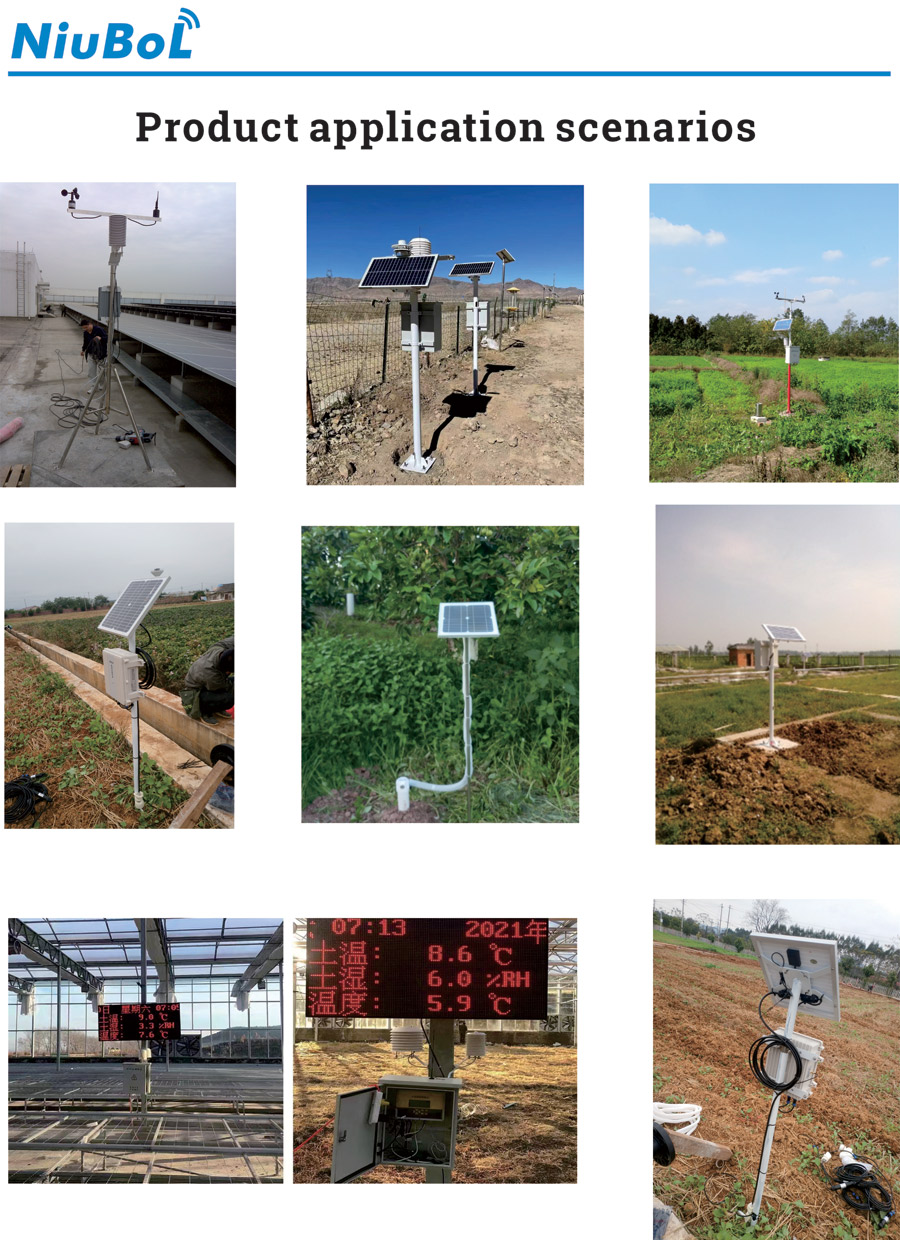
To ensure measurement accuracy and long-term stable operation of the system, NiuBoL automatic weather station strictly follows the following engineering requirements during installation:
The site selection should be open, without tall buildings or trees blocking the view. The distance between surrounding obstacles and sensors should be at least 10 times the height of the obstacles to ensure air circulation and radiation observation are not affected.
Stay away from strong electromagnetic interference sources: more than 200 meters from railways, more than 100 meters from electrified railways, more than 30 meters from highways, and avoid transformers, high-voltage lines and other strong magnetic field equipment.
Handle with care during installation. Professional technicians should guide or operate to avoid sensor calibration deviation or line damage. The equipment has been fully calibrated before leaving the factory. On site, only fix the bracket according to the drawings, connect the cables and perform functional verification.
NiuBoL provides on-site survey and installation guidance services to ensure that each system complies with relevant observation specifications of the WMO (World Meteorological Organization).
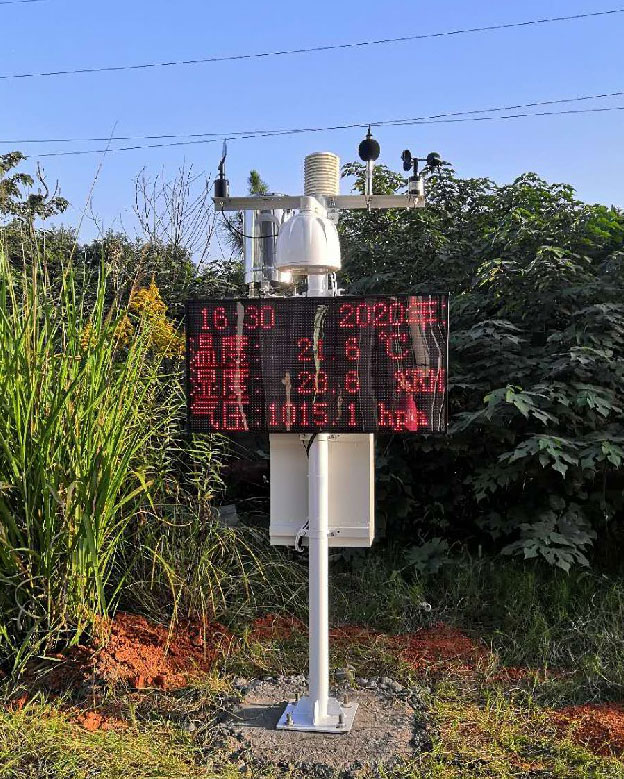
NiuBoL automatic weather station adopts an open architecture with strong compatibility and can be quickly integrated into various industrial systems:
Access PLC/DCS through RS485 bus or Ethernet gateway to achieve local automation control
Support 4G wireless transmission to push data in real time to Alibaba Cloud or enterprise private servers
Open API interface to support docking with GIS map platforms, decision support systems and big data analysis platforms
Modular sensor design allows hot-swappable addition of new elements according to project needs in the later stage without replacing the host
This high compatibility makes the system suitable for both single-station independent operation and networking of more than one hundred stations to form a regional meteorological monitoring network.
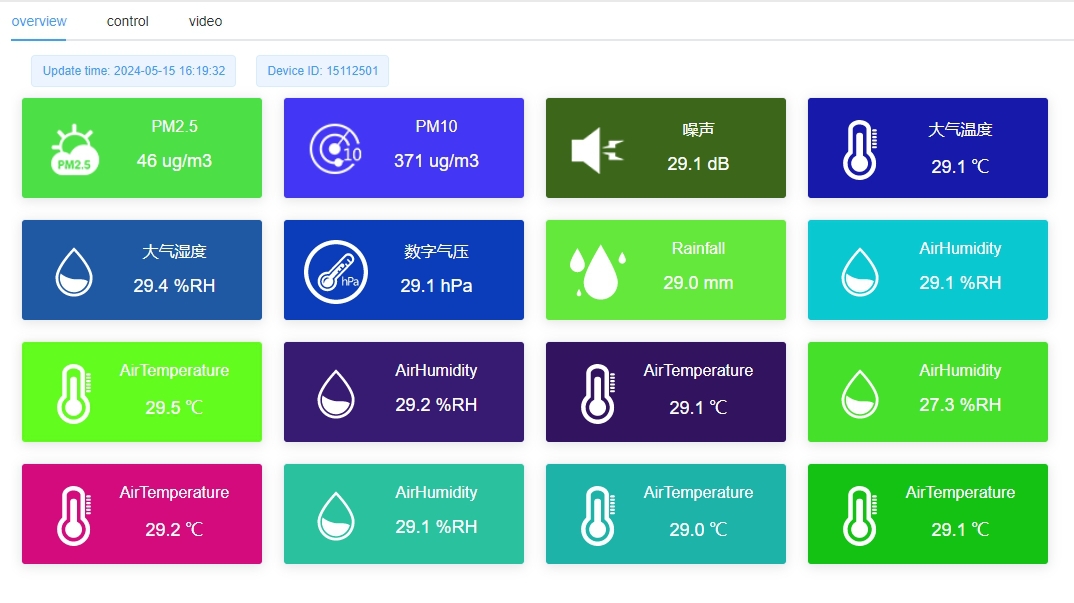
Smart Agriculture Base Meteorological Monitoring Project
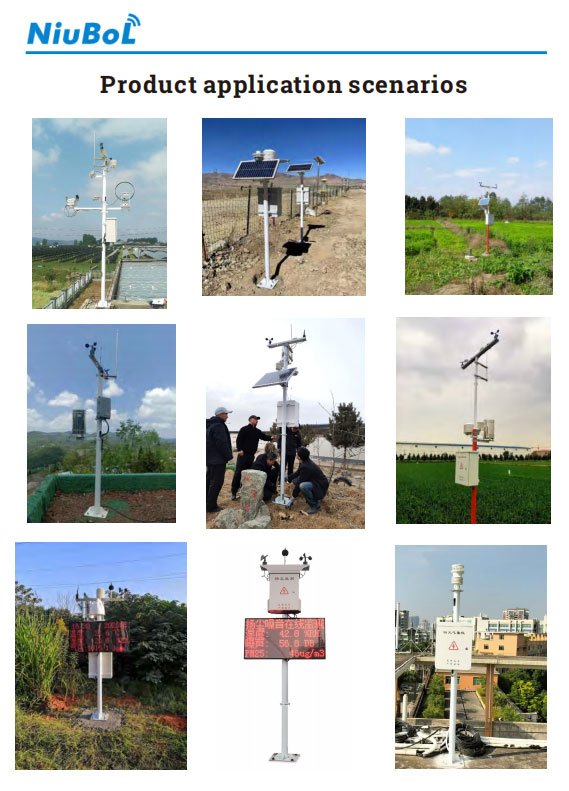
In 2025, NiuBoL deployed 30 sets of small automatic weather stations for a 10,000-mu grain and facility agriculture base in Henan. The system integrates soil temperature and humidity, meteorological elements and PM2.5 sensors. Data is uploaded to the cloud platform via 4G and linked with irrigation controllers. When soil moisture is below the set threshold or temperature is abnormal, irrigation and ventilation warnings are automatically triggered. After the project was put into operation, the irrigation water utilization efficiency of the base increased by 25%, and losses caused by meteorological disasters decreased by 30%, providing reliable data support for precision agriculture.
Campus Meteorological Science Popularization and Scientific Research Observation Project
A university environmental science laboratory introduced NiuBoL automatic weather station as teaching and research equipment. The system simultaneously monitors conventional meteorological elements and negative oxygen ion concentration. Data is connected to the campus IoT platform, allowing students to remotely access real-time curves and historical statistics. The project not only meets the needs of meteorological professional teaching but also provides long-term sequence data for climate change research, and has been recognized as a demonstration project of industry-university-research cooperation by the Ministry of Education.
Scenic Area Environmental Quality Monitoring Project
A 5A-level scenic area in East China deployed NiuBoL automatic weather station and negative oxygen ion monitoring module. The system displays temperature, humidity, wind speed and negative oxygen ion concentration in real time, and shows environmental quality data to tourists through large screens and WeChat mini-programs. The background platform automatically generates daily/weekly environmental reports, providing decision-making basis for scenic area ecological protection and tourism planning, significantly improving the scientific level of scenic area environmental management.
Environmental Protection and Urban Micro-Meteorological Grid Project
The environmental protection bureau of a provincial capital city deployed more than 20 sets of NiuBoL automatic weather stations in industrial parks and residential areas, integrating six air quality parameters and meteorological elements. Data is uniformly connected to the urban environmental big data platform, supporting linkage with pollution source traceability models, and providing high spatio-temporal resolution data for air quality forecasting and emergency response. The project operates stably with a data availability rate of 99.8%, becoming an important part of local smart environmental protection construction.
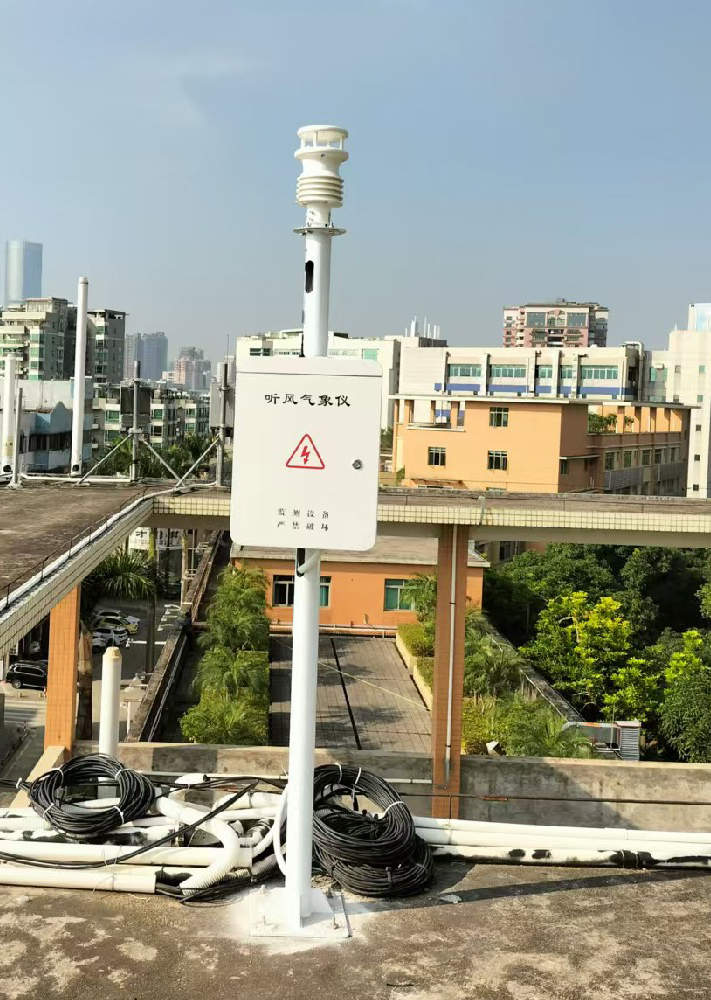
NiuBoL automatic weather station is widely applicable to the following industrial and public fields:
Precision production management in agriculture and facility agriculture
Ecological monitoring in forestry, orchards and tea gardens
Long-term observation in campus education and scientific research institutions
Environmental quality and meteorological services in tourist scenic areas
Air quality and meteorological coupling monitoring by environmental protection departments
Traffic meteorological support for airports, ports and highways
Marine scientific research, polar and plateau environmental monitoring
Urban smart parks and sponge city construction
Whether for single-station deployment or regional networking, NiuBoL can provide customized sensor configuration, communication solutions and platform integration services according to on-site conditions.
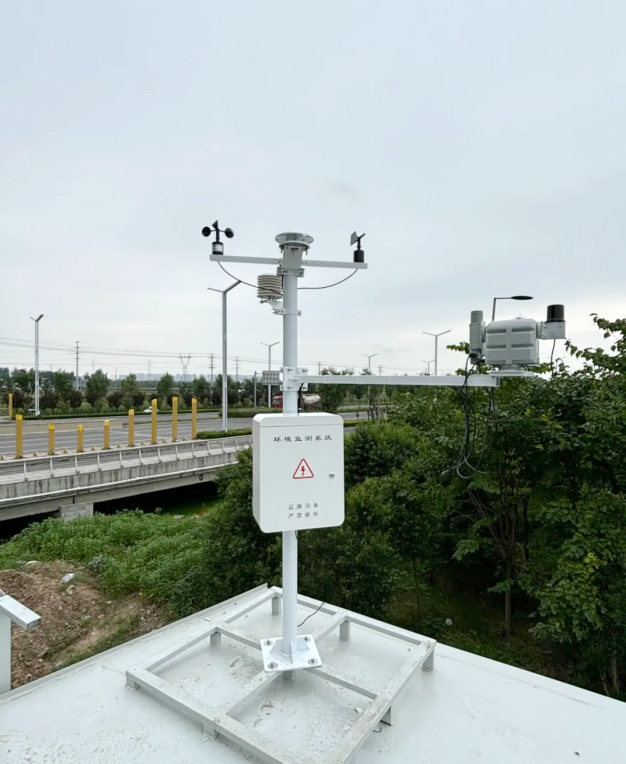
NiuBoL standard automatic weather station core parameters (support customization as needed)
| Monitoring Element | Range | Accuracy | Remarks |
|---|---|---|---|
| Air Temperature | -40~+70 ℃ | ±0.2 ℃ | Platinum resistance sensor |
| Air Humidity | 0~100% RH | ±2% RH (@25℃) | Capacitive type, anti-condensation |
| Wind Speed | 0~60 m/s | ±0.3 m/s | Ultrasonic/mechanical optional |
| Wind Direction | 0~359° | ±3° | 360° no blind area |
| Air Pressure | 300~1100 hPa | ±0.3 hPa | Silicon piezoresistive type |
| Rainfall | 0~200 mm/h | ±3% (≥10mm/h) | Tipping bucket or piezoelectric type |
| Total Radiation | 0~2000 W/m² | ±5% | Thermopile type (optional) |
| Soil Temperature | -40~+80 ℃ | ±0.3 ℃ | Inserted type |
| Soil Humidity | 0~100% VWC | ±2% | FDR method |
| PM2.5/PM10 | 0~1000 μg/m³ | ±10 μg/m³ | Laser scattering method (optional) |
| CO₂ Concentration | 0~5000 ppm | ±50 ppm | NDIR (optional) |
Data Logger Parameters
Display: 192×64 dot matrix / Optional 7-inch touch screen
Storage: Local U-disk expansion + cloud storage
Communication protocols: Modbus RTU/TCP, MQTT, 4G/5G
Power supply: DC12V/24V, solar + battery backup
Protection rating: IP65 (host), IP67 (sensors)
Working temperature: -40℃~+70℃
NiuBoL focuses on the R&D, manufacturing and engineering integration of meteorological monitoring system solutions. It has independent intellectual property rights and ISO9001 quality management system certification, as well as CE and RoHS. The company's technical team has many years of industrial on-site implementation experience and can provide users with full-process services from demand analysis, solution design, equipment customization, production and delivery to installation and debugging, operation training and long-term operation and maintenance. Adhering to the principle of "quality first, integrity-based", a lifelong technical file is established for each system to ensure long-term stable operation for users.
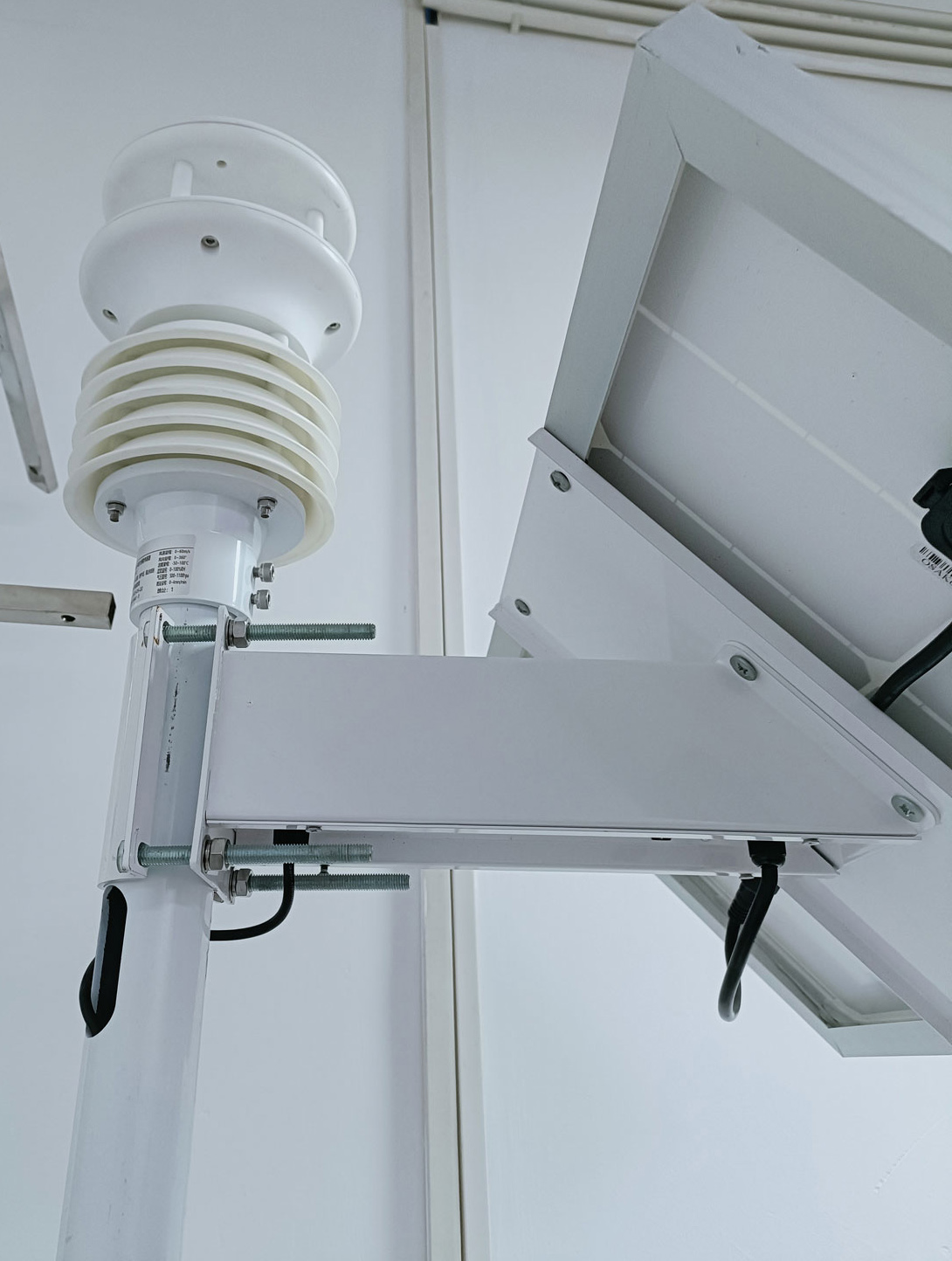
Q1: How many channels of sensors does NiuBoL automatic weather station support at most?
A1: The standard configuration supports 16 channels of sensor expansion and can be further increased according to project needs.
Q2: How does the system achieve data protection when the network is disconnected?
A2: The data logger has built-in large-capacity storage and external U-disk expansion. It automatically caches data when the network is disconnected and automatically retransmits after network recovery.
Q3: Does it support integration with existing SCADA or PLC systems?
A3: It supports Modbus RTU/TCP and MQTT protocols and can seamlessly connect to various industrial control systems through gateways.
Q4: What are the key requirements for the installation environment?
A4: It needs to be open and unobstructed, away from strong magnetic fields and traffic arteries. The specific requirements are subject to the on-site survey report.
Q5: Does the data platform support multi-station networking management?
A5: It supports networking of more than one hundred stations and realizes unified monitoring, statistics and alarm management through the B/S architecture platform.
Q6: How is long-term stability of sensor accuracy guaranteed?
A6: Overall calibration is completed before leaving the factory. Temperature compensation and digital filtering algorithms are adopted, combined with regular calibration services to maintain high precision.
Q7: How to power the system in an off-grid environment?
A7: Solar panels + maintenance-free battery combination are standard. Configuration can be optimized according to local lighting conditions.
Q8: What technical support can be obtained after purchase?
A8: On-site survey, installation guidance, debugging training, 7×24-hour technical response and free repair service during the warranty period are provided.
NiuBoL automatic weather station takes industrial-grade hardware foundation, modular sensor array and highly compatible data platform as the core, providing mature and reliable multi-element monitoring system solutions for users in the fields of meteorology, agriculture, environmental protection, scientific research and smart parks. Through open protocols and flexible expansion capabilities, the system can be quickly integrated into users' existing information systems to achieve data-driven refined management.
In the context of climate change and intelligent transformation, choosing a professional and stable automatic weather station is an important measure to enhance risk prevention and control capabilities, optimize resource allocation and support scientific decision-making. Welcome meteorological departments, agricultural enterprises, scientific research institutes and engineering project parties to contact NiuBoL for targeted technical solutions and on-site inspection support. We are committed to building highly reliable meteorological monitoring infrastructure for partners and jointly promoting high-quality development of the industry.
Next:NiuBoL Small Weather Station: Intelligent Environmental Monitoring System Solution for Greenhouse
Related recommendations
Sensors & Weather Stations Catalog
 Agriculture Sensors and Weather Stations Catalog-NiuBoL.pdf
Weather Stations Catalog-NiuBoL.pdf
Agriculture Sensors Catalog-NiuBoL.pdf
Water Quality Sensor Catalog-NiuBoL.pdf
Related products
 Combined air temperature and relative humidity sensor
 TDR Soil Moisture & Temperature Sensor for irrigation| RS485 |4-20mA| NBL-S-THR
 Soil pH sensor RS485 soil Testing instrument soil ph meter for agriculture |NBL-S-PH
 Wind Speed sensor Output Modbus/RS485/Analog/0-5V/4-20mA
 Tipping bucket rain gauge for weather monitoring auto rainfall sensor RS485/Outdoor/stainless steel
 Pyranometer Solar Radiation Sensor 4-20mA/RS485

Screenshot, WhatsApp to identify the QR code
WhatsApp number:+8615367865107
(Click on WhatsApp to copy and add friends)

