





— Blogs —
—Products—
 Consumer hotline +8618073152920
WhatsApp:+8615367865107
Address:Room 102, District D, Houhu Industrial Park, Yuelu District, Changsha City, Hunan Province, China
Product knowledge
Time:2026-03-27 10:52:59 Popularity:754
A small weather station for greenhouse use can explain why CO2 concentration changes when vents open, fans start or the crop becomes active. The useful record combines crop-zone CO2 with ventilation status and light conditions. A concentration reading alone cannot distinguish plant uptake, fresh-air exchange and a poorly distributed enrichment supply.
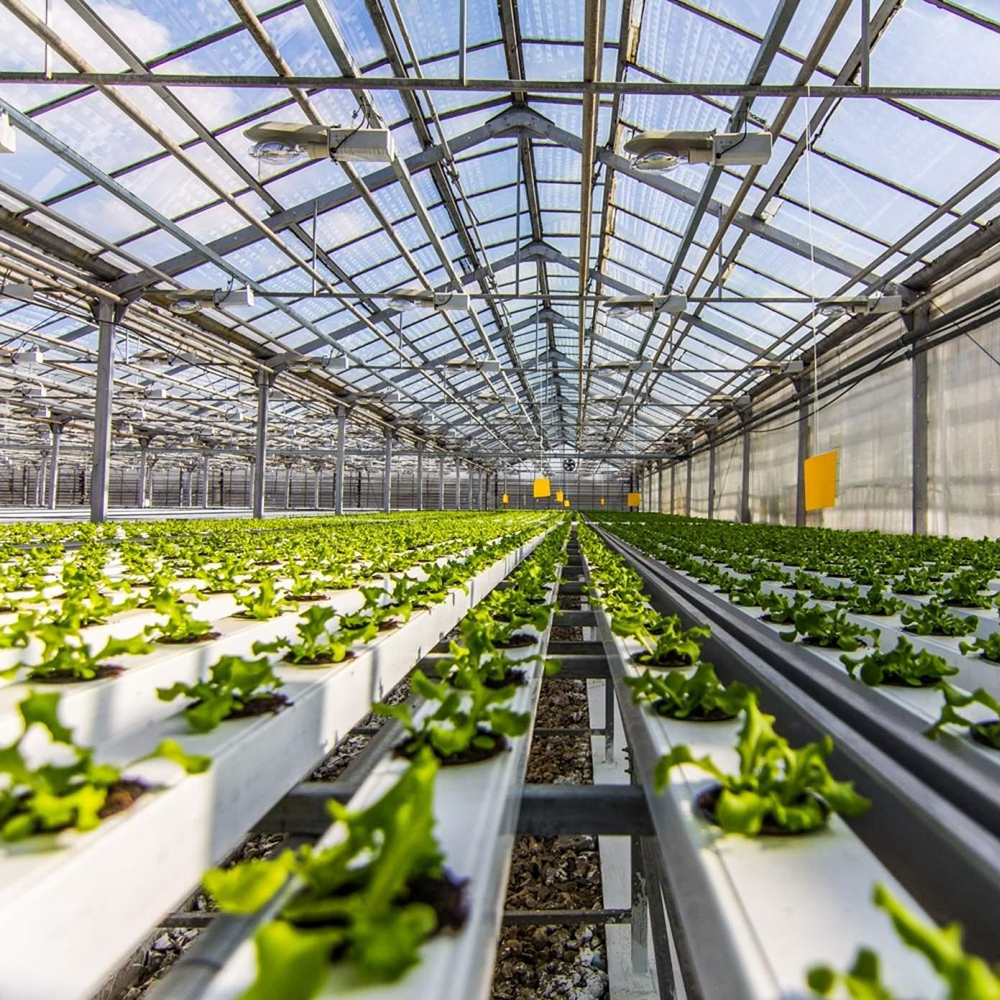
Ventilation does not always reduce greenhouse CO2. In a closed house with an actively photosynthesizing crop and no enrichment, fresh air can replenish depleted CO2. In an enriched house with concentration above the outdoor level, the same exchange can remove added gas. Interpret the difference between inside and outside conditions before labelling ventilation a loss.
The NSW agriculture guidance on greenhouse ventilation describes air exchange as important for heat, humidity and CO2 management. It does not make a single vent opening or concentration suitable for every crop and structure. A monitoring installation should show which operating condition produced the measurement.
Log the observation time for CO2 and air temperature alongside the available vent position, fan feedback and enrichment command. Identify whether a vent field is a requested position or measured position. A controller command does not prove that the mechanism reached its target or that a gas valve delivered the requested flow.
A dashboard containing many parameters is not sufficient if their timestamps refer to different events. Keep sensor acquisition time distinct from upload time. During a communications interruption, avoid comparing a recovered CO2 sample with the current fan state as if both were measured together. Local records are useful only when their time references can be reconciled.

| Observed pattern | Possible explanation | Next evidence to collect |
|---|---|---|
| CO2 falls after vents open in an enriched house | Added CO2 is being exchanged with outdoor air | Outdoor concentration, actual vent position and enrichment flow or operating state |
| CO2 falls in daylight with vents closed | Crop uptake exceeds replenishment, or supply is not reaching the sampled zone | Light, distribution layout and readings from another crop position |
| CO2 rises quickly near a supply outlet | The probe samples a local plume rather than mixed crop air | Distance from outlet, airflow and comparison at a representative position |
| CO2 remains unchanged while equipment state changes | Slow mixing, stale data or an unchanged actual equipment state | Raw observations, response over time and equipment feedback |
These are diagnostic possibilities, not automatic fault verdicts. Several processes occur together. Start with a period when equipment operation and crop conditions are known, then inspect the response before changing concentration setpoints or increasing gas delivery.
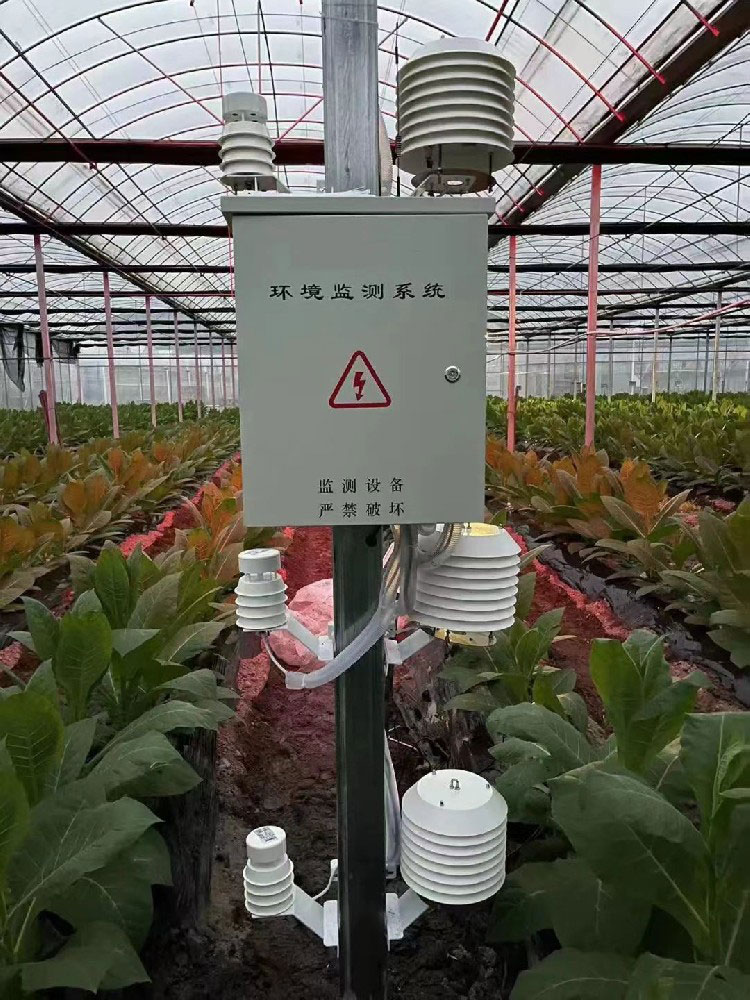
An outdoor weather station can supply wind, rain and external temperature information relevant to ventilation decisions. It cannot measure CO2 throughout the greenhouse or show conditions between crop rows. Keep outdoor and indoor station names distinct in the receiving system; an attractive overview screen should not hide the location behind each value.
Outdoor wind can influence natural ventilation, but wind speed at the mast is not an air-exchange-rate measurement. Vent geometry, opening, wind direction, screens and temperature differences also matter. Where an air-exchange estimate is required, use an appropriate method and validation rather than assigning a fixed exchange rate to a particular wind reading.

The NiuBoL NBL-W-THPLC combines CO2 with temperature, humidity, pressure and illuminance. It is an option for environmental observation where its specified ranges and installation conditions fit. It does not include root-zone water content, nutrient solution chemistry or a direct crop-transpiration measurement.
| NBL-W-THPLC item | Specification | Meaning for this application |
|---|---|---|
| CO2 | 0-2000 ppm; accuracy +/-(40 ppm + 2% FS); resolution 1 ppm | Check both the required range and full-scale accuracy basis |
| Air temperature | -50 to 100 degrees C measurement range; accuracy +/-0.5 degrees C | Measurement range does not replace operating limits |
| Relative humidity | 0-100% RH; accuracy +/-5% RH | Do not promise greenhouse control within +/-3% RH from this specification |
| Illuminance | 0-200000 lux; accuracy +/-7% | Not a PPFD channel |
| Supply and output | DC 12 V or 24 V option; RS485 | Confirm the ordered supply and serial protocol details |
| Operating temperature | -50 to 80 degrees C | Assess enclosure and installation conditions separately |
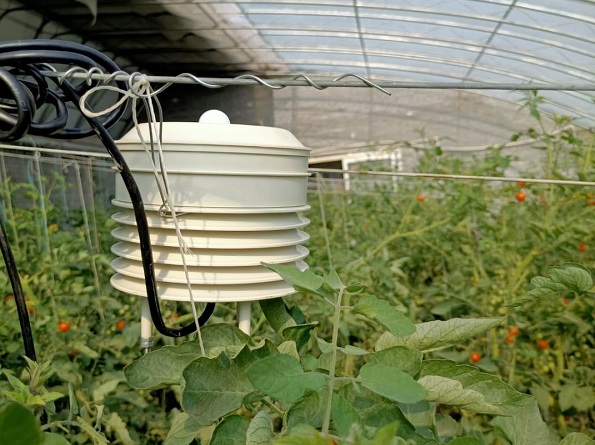
For a 2000 ppm full-scale basis, the CO2 accuracy expression gives 40 + 0.02 x 2000 = 80 ppm. Confirm the applicable accuracy conditions and full-scale definition for the supplied unit. A 1 ppm display resolution does not mean that a 1 ppm difference between zones is a reliable operational signal.
Use a suitable reference comparison when investigating bias. Do not declare an instrument faulty solely because two probes at different positions disagree. First compare them under shared, stable conditions using the appropriate procedure, then return to assessing the spatial difference. Keep calibration adjustments separate from changes in crop placement or ventilation behavior.
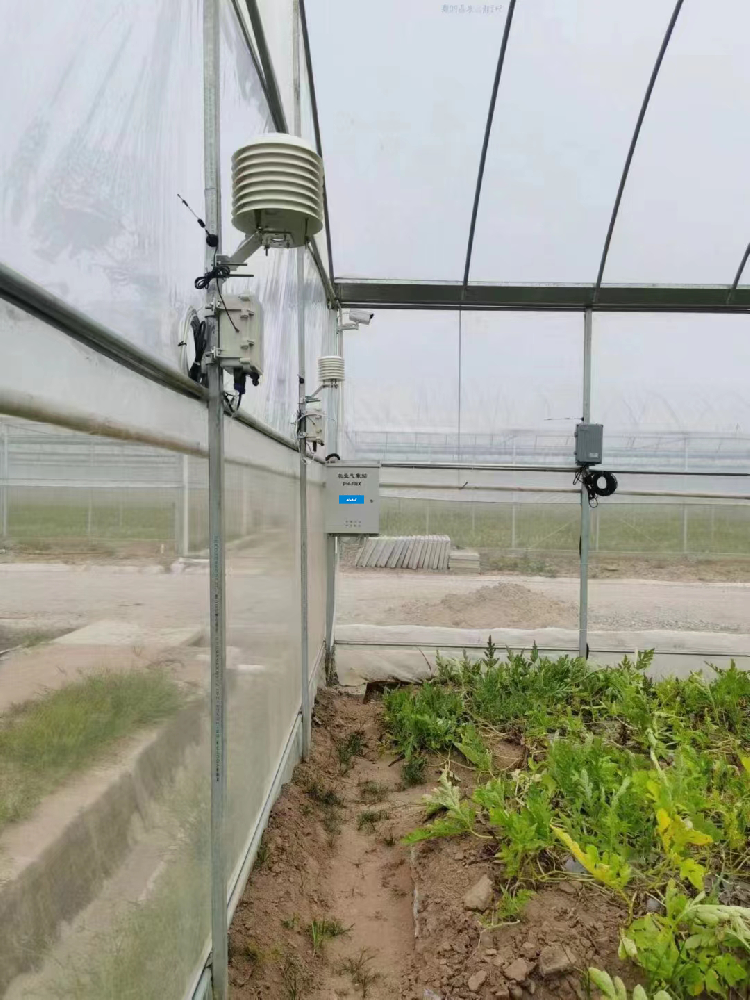
Avoid placing the CO2 inlet directly in an enrichment jet or against a vent opening unless the purpose is specifically to investigate that location. Document height relative to the crop and revisit it as plants grow. A probe in an aisle or near an entrance may not describe the atmosphere within a dense canopy.
Do not wet the sensing assembly with irrigation, cleaning spray or condensation discharge. A high relative-humidity range is not evidence that an exposed sensing element can tolerate liquid water. Plan cable entries, enclosure drainage and accessible cleaning around the actual greenhouse environment, including chemical application and washdown procedures.
For RS485 Modbus RTU integration, confirm the actual protocol version, address, register types, scaling and invalid-value behavior before connecting the sensor to a PLC, RTU or data logger. RS485 alone specifies neither a register map nor an MQTT interface. A network gateway needs its own agreed data mapping and connection arrangement.
Gas-supply actuation, ventilation interlocks and worker-protection arrangements belong to the appropriately designed control and safety systems. The greenhouse environmental probe is not automatically a certified occupational CO2 alarm. An environmental data feed should not be treated as permission to bypass an equipment interlock or a required independent safety instrument.
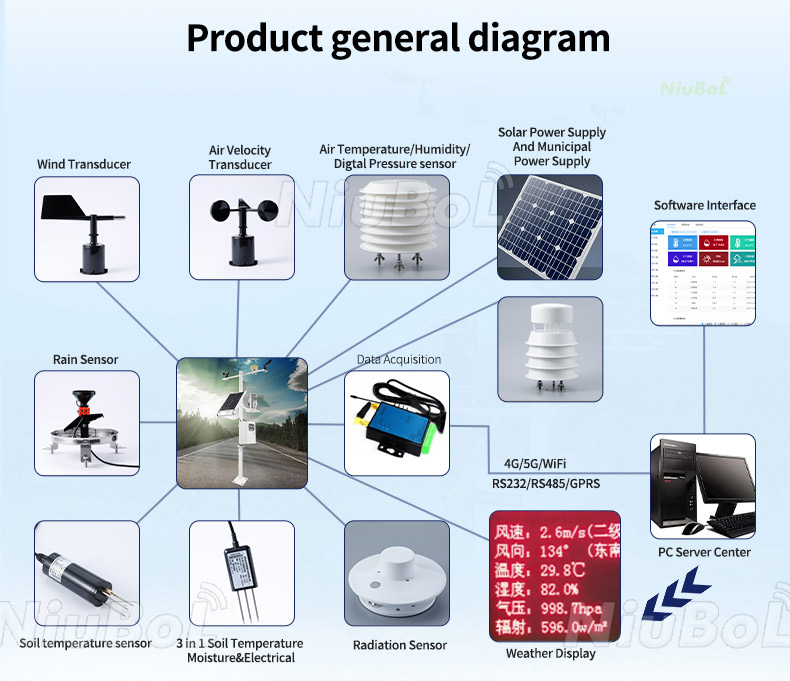
Under the greenhouse operator's approved procedure, record a normal ventilation event with the relevant sensor and equipment timestamps. Check whether the observed direction of CO2 change agrees with the indoor-outdoor difference and enrichment state. Allow for instrument response and air mixing; the first changed sample is not necessarily the stabilized crop condition.
Repeat at representative crop positions or operating periods if the question concerns distribution. Keep light, crop stage and equipment operation with the record. A concentration trend cannot establish kilograms of gas lost without additional flow or mass-balance information, and it cannot by itself demonstrate a yield increase or financial saving.
Send NiuBoL the crop layout, expected CO2 range, enrichment distribution drawing and existing controller interface when requesting a configuration. State whether the requirement is observation only or a defined integration into an existing control system. This distinction avoids purchasing a weather station while assuming that gas regulation hardware is included.
No. Fresh air can replenish a depleted greenhouse, while an enriched house can lose added CO2 through air exchange. Compare current indoor and outdoor concentrations and the enrichment state.
No. Illuminance and photosynthetic photon flux density are different quantities. Specify a suitable PAR or quantum measurement when the growing strategy requires PPFD; do not relabel the THPLC lux channel.
Only if comparison supports that use. Separately ventilated or enriched compartments can behave differently. Investigate distribution before reducing measurement points for cost reasons.
No. Check normal operation, expected excursions and required accuracy. A horticultural observation range should not be assumed suitable for an occupational safety alarm or a higher-concentration process.
Include sensor identity and position, raw and displayed values, observation times, reference comparison and a normal ventilation response. Identify commands separately from actual equipment feedback.
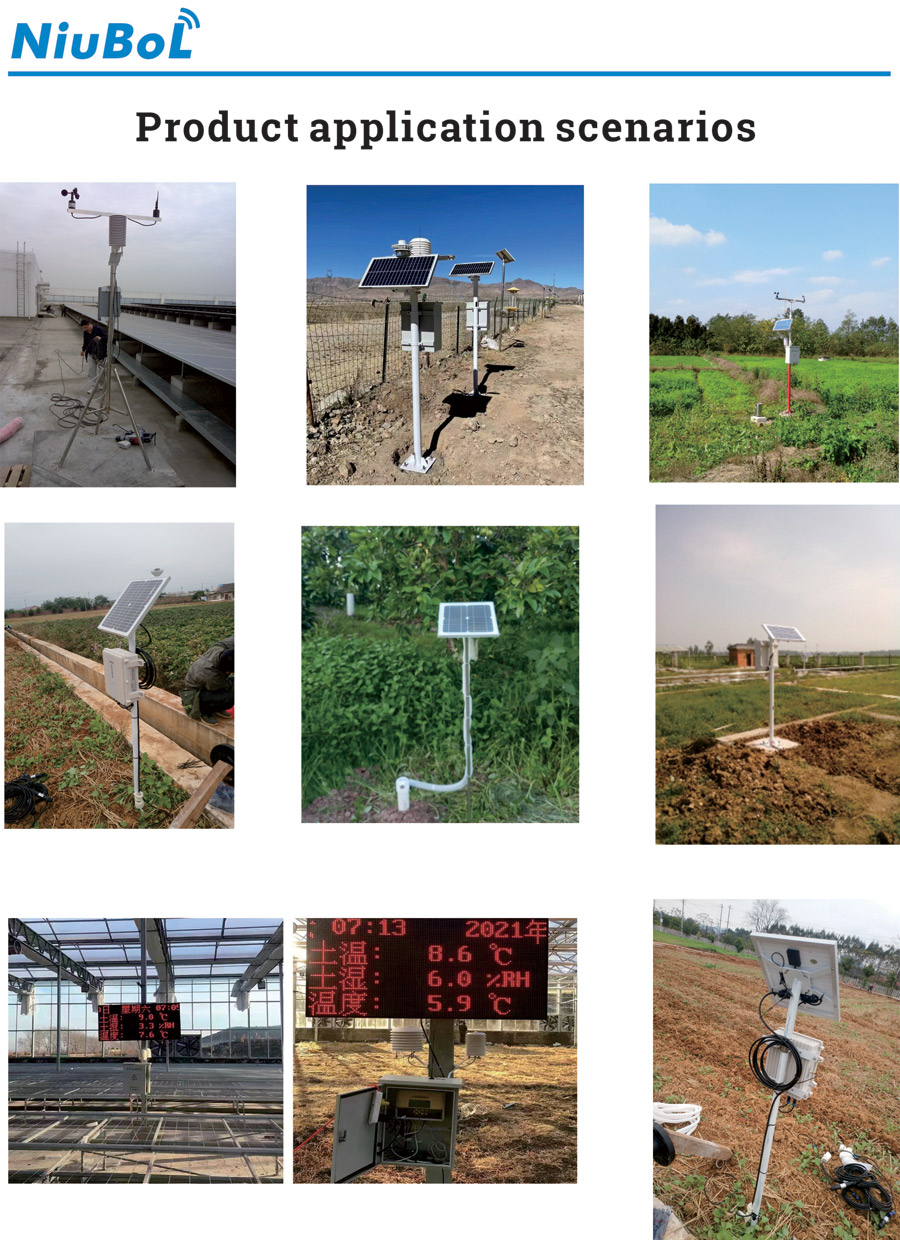
A small weather station for greenhouse CO2 monitoring is useful when it connects crop-zone observations with ventilation and enrichment operation. Select a sensor with a suitable range, account for its accuracy, and test whether its position represents the crop air. Keep concentration trends distinct from measured gas loss, crop response and safety protection.
Prev:Automatic Weather Station System Integration Guide
Next:Buoy Water Quality Monitoring for Pollution and Aquaculture
Related recommendations
Sensors & Weather Stations Catalog
 Agriculture Sensors and Weather Stations Catalog-NiuBoL.pdf
Weather Stations Catalog-NiuBoL.pdf
Agriculture Sensors Catalog-NiuBoL.pdf
Water Quality Sensor Catalog-NiuBoL.pdf
Related products
 Combined air temperature and relative humidity sensor
 TDR Soil Moisture & Temperature Sensor for irrigation| RS485 |4-20mA| NBL-S-THR
 Soil pH sensor RS485 soil Testing instrument soil ph meter for agriculture |NBL-S-PH
 Wind Speed sensor Output Modbus/RS485/Analog/0-5V/4-20mA
 Tipping bucket rain gauge for weather monitoring auto rainfall sensor RS485/Outdoor/stainless steel
 Pyranometer Solar Radiation Sensor 4-20mA/RS485


Screenshot, WhatsApp to identify the QR code
WhatsApp number:+8615367865107
(Click on WhatsApp to copy and add friends)

