





— Blogs —
—Products—
 Consumer hotline +8618073152920
WhatsApp:+8615367865107
Address:Room 102, District D, Houhu Industrial Park, Yuelu District, Changsha City, Hunan Province, China
Product knowledge
Time:2025-03-24 20:49:48 Popularity:1891
Campus weather station installation should balance measurement exposure, safe access and the school's ability to operate the system after handover. Select the site for the intended observations, provide a service route that does not depend on student access, and test data access before acceptance. A weather station is not a substitute for the school's severe-weather safety procedures.
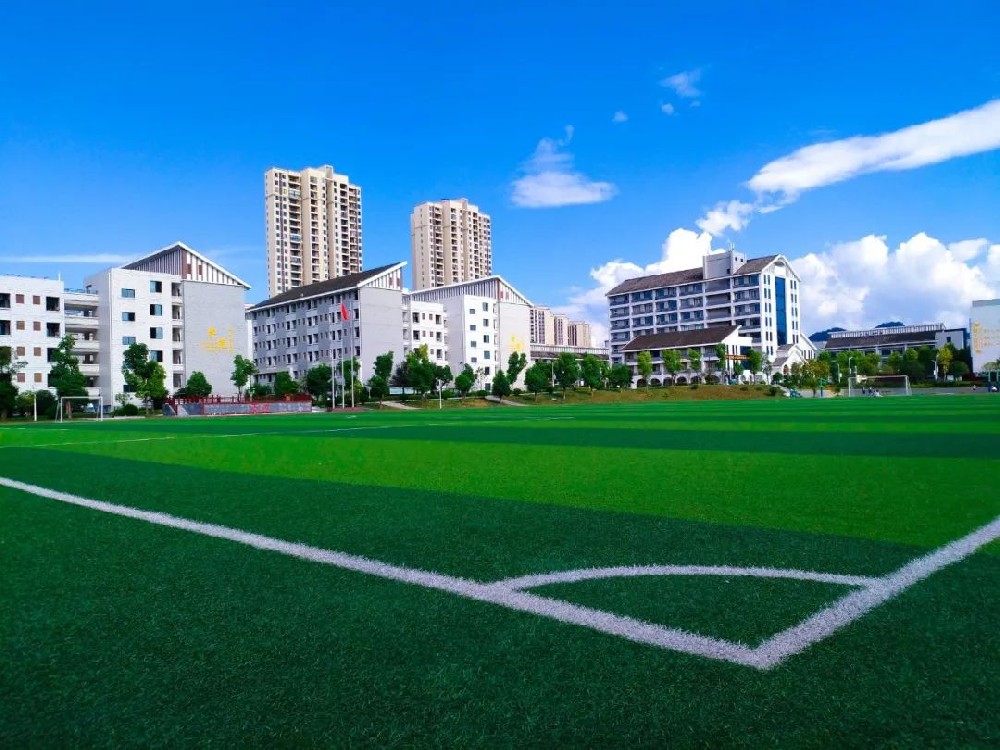
A station used for classroom demonstrations can describe its immediate surroundings. A station intended for comparable open-field observations needs a more demanding exposure assessment. A courtyard, roof and sports-field boundary can all produce useful records, but they do not represent the same environment. State what the school wants to observe before selecting the most visible position.
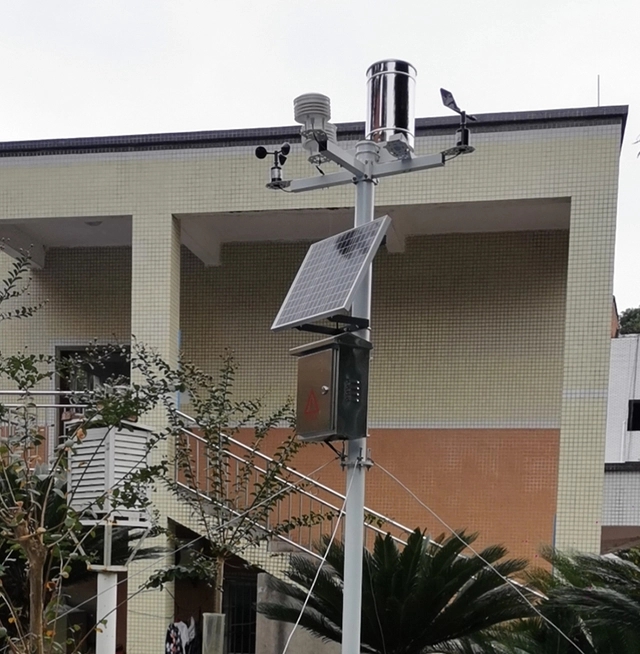
For each proposed site, inspect buildings, trees, hot surfaces, irrigation spray and future construction. There is no universal 10 m obstacle-free radius that makes every channel valid. A rain collector near a roof edge can receive splash or obstructed rainfall, while wind near a building can differ substantially from open-field wind. Record these limitations rather than hiding them behind a general claim of accurate campus data.
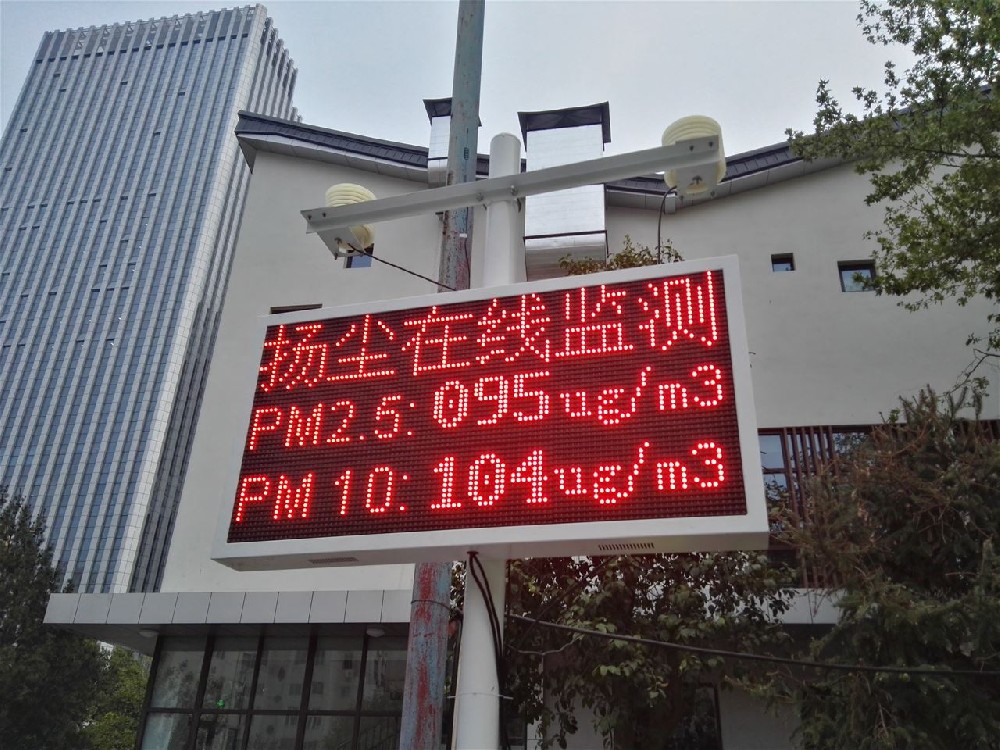
A display is often most useful near a classroom or entrance, where visitors can read it. The sensors may need a different location. Do not move the measuring instruments into a sheltered or heated position merely to make the display convenient. Decide whether the display receives records through a local cable, network or another supported connection.
Outdoor air-quality displays and weather stations also have different measurement scopes. A PM2.5 or PM10 display requires the corresponding particulate instruments; air temperature, humidity and wind sensors do not measure particle concentration. Treat such channels as separate options, with their own maintenance and interpretation requirements.
| Installation decision | Question to resolve | Handover item |
|---|---|---|
| Ground mast or roof installation | Who can safely reach instruments and the enclosure for service? | Approved access arrangement and responsible staff or contractor |
| Mast and brackets | Are loads, attachments and ground or roof conditions suitable? | Site-specific mechanical design and installation responsibility |
| Cable route | Are cables protected without creating trip, snag or unauthorized-access hazards? | Route drawing and identifiable connection points |
| Power and protection | Who designs and verifies the electrical and lightning-protection arrangement? | Relevant inspection records and isolation procedure |
| Cleaning and checks | Can a competent adult service collectors and optics without moving other sensors? | Component-specific service instructions and initial schedule |
Keep equipment maintenance separate from supervised learning activities. Students can analyze records or make observations without being responsible for opening live cabinets or climbing masts. A teacher's change of role or a school holiday should not leave the station without an identified operator. Include service access and responsibility in the project scope before installation.
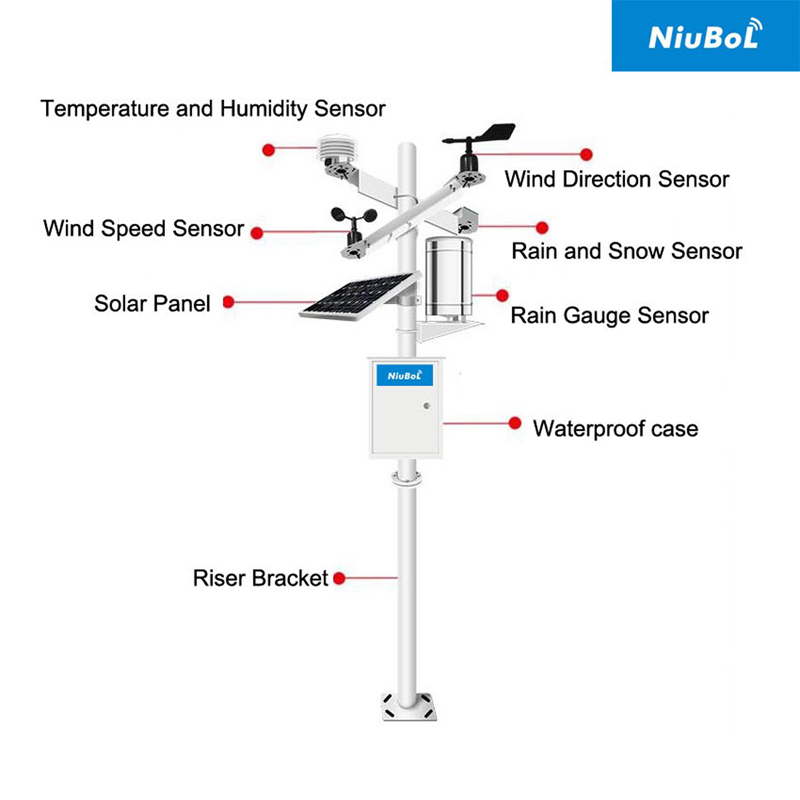
A modular NiuBoL configuration can include wind speed, wind direction, air temperature, relative humidity, pressure and rainfall. Add radiation or soil observations when a named activity needs them. Broadband solar radiation is not interchangeable with ultraviolet intensity, and a soil sensor needs a specified depth and representative soil location.
| Example component | Parameter | Installation consequence |
|---|---|---|
| NBL-W-SS and NBL-W-DS | Separate wind speed and direction; IP65 | Provide suitable exposure, orientation and protected field connections. |
| NBL-W-LBTH | Temperature -40 to +80 degrees C; humidity 0-100% RH; pressure 10-1200 hPa; 12-24 V DC | Keep the shield ventilated and away from artificial heat; select the required interface. |
| NBL-W-RS | Rain increment 0.2 mm; operating temperature 0 to +50 degrees C | Provide level mounting and cleaning access; do not assume frozen-precipitation measurement. |
| TG462/TG462S | 5-35 V DC input; IP30 | Include suitable outdoor cabinet protection and power for the complete configuration. |
A single component's low power consumption is not the demand of the whole station. The logger, modem and public display may dominate the load. Require the proposed solar and battery arrangement to be sized for the actual installation and required autonomy. Do not accept a blanket ten-day rainy-weather claim without the load, usable storage and design conditions behind it.
For digital field instruments, RS485 Modbus RTU requires compatible serial settings, addresses and register interpretation. Analog or pulse versions need the corresponding inputs. The TG462/TG462S acquisition options can support a suitable architecture, but the required application and data access must be configured for the project.
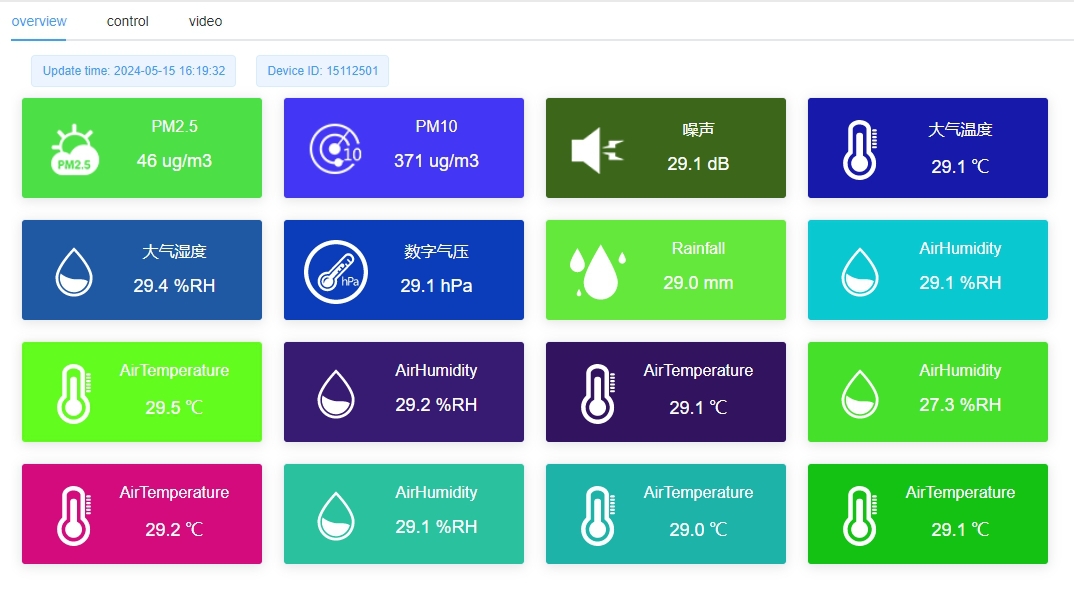
Ask the school's network team about connectivity before choosing wired or cellular communication. Establish who manages credentials, who can change settings and whether teachers can export historical observations without administrator assistance. Separate read-only classroom access from configuration permissions. An example dashboard is not evidence that all displayed channels or account functions are included.
Test the required records after a planned communication outage and restart. Local recording, recovery of historical data and remote alerts are different requirements. Record which behavior has been supplied and demonstrated. Keep time zone, units and observation intervals consistent across the classroom display and exported files.
Not automatically. A roof may offer a sky view but can introduce heat, wind distortion, access difficulties and structural requirements. Compare it with ground locations against the measurement purpose and the school's service arrangements.
The protection arrangement must follow the site's assessment and applicable rules. A rod alone does not establish a safe installation. Have the responsible qualified designer specify the complete arrangement and its verification.
A standard wind, air and rain station is not a lightning-detection or complete severe-weather decision system. The National Weather Service guidance for organized outdoor activities calls for an established lightning safety plan. Follow the school's approved procedures and relevant local warnings rather than relying only on station readings.
Check the installed channel list, orientation and units, usable staff accounts, historical export and agreed outage behavior. Identify who performs maintenance and which tasks require a contractor. A live screen alone is not a complete handover.
Provide intended observations, site photographs, access constraints, required display, network availability and who will maintain the station. State whether the supply includes installation and training so proposals can be compared consistently.
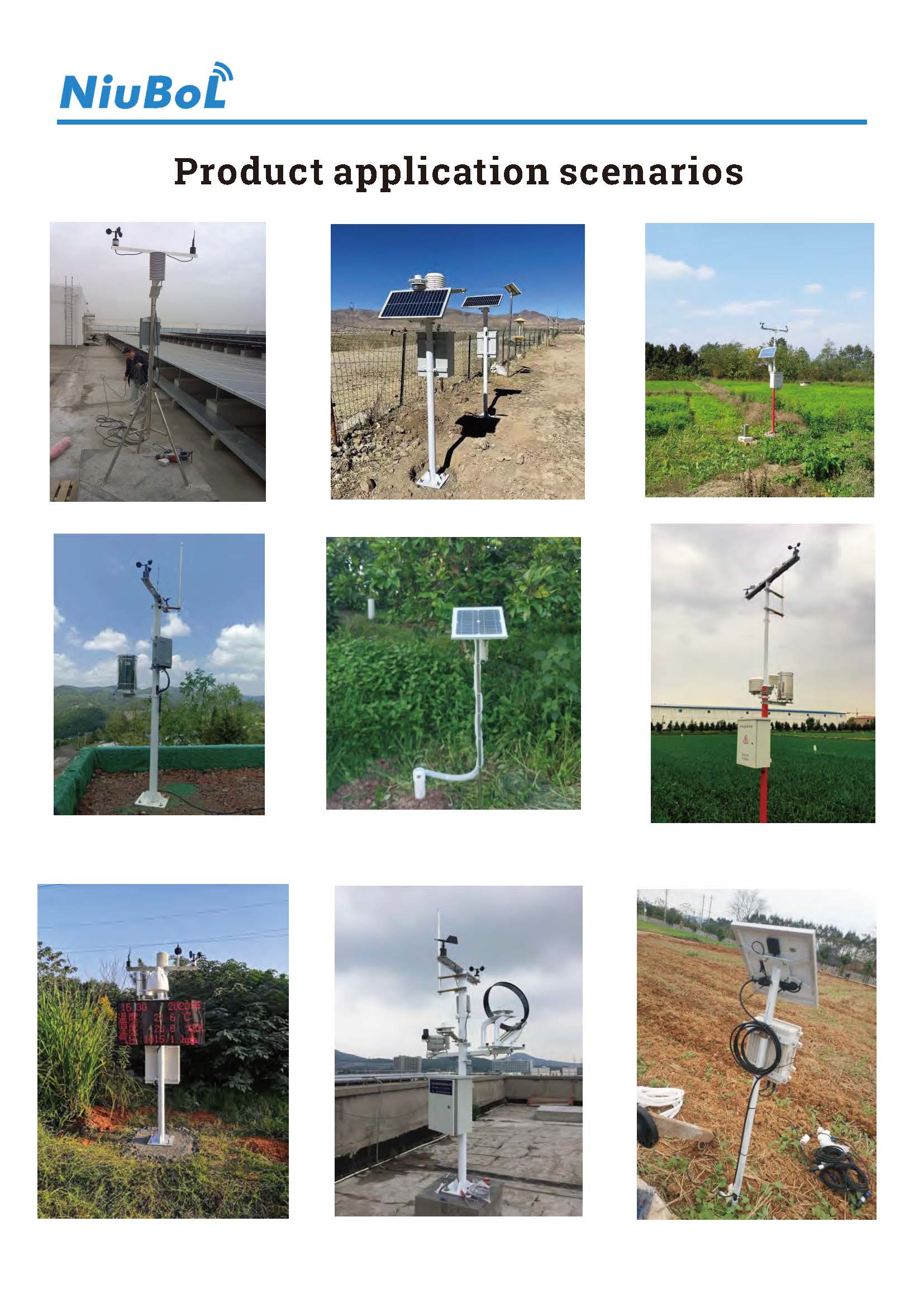
Campus weather station installation works when the school can explain what the instruments observe and can maintain them safely. Choose the exposure, service arrangement and data access together. NiuBoL can review a focused instrument configuration; site construction, electrical protection and school safety decisions remain clearly assigned project responsibilities.
Prev:PV Weather Station Retrofit: Add Sensors Without Disrupting Existing Data
Next:Automatic Rainfall Station Alarms: Define Windows, Validity and Delivery
Related recommendations
Sensors & Weather Stations Catalog
 Agriculture Sensors and Weather Stations Catalog-NiuBoL.pdf
Weather Stations Catalog-NiuBoL.pdf
Agriculture Sensors Catalog-NiuBoL.pdf
Water Quality Sensor Catalog-NiuBoL.pdf
Related products
 Combined air temperature and relative humidity sensor
 TDR Soil Moisture & Temperature Sensor for irrigation| RS485 |4-20mA| NBL-S-THR
 Soil pH sensor RS485 soil Testing instrument soil ph meter for agriculture |NBL-S-PH
 Wind Speed sensor Output Modbus/RS485/Analog/0-5V/4-20mA
 Tipping bucket rain gauge for weather monitoring auto rainfall sensor RS485/Outdoor/stainless steel
 Pyranometer Solar Radiation Sensor 4-20mA/RS485


Screenshot, WhatsApp to identify the QR code
WhatsApp number:+8615367865107
(Click on WhatsApp to copy and add friends)

