





— Blogs —
—Products—
 Consumer hotline +8618073152920
WhatsApp:+8615367865107
Address:Room 102, District D, Houhu Industrial Park, Yuelu District, Changsha City, Hunan Province, China
Product knowledge
Time:2025-03-24 20:57:24 Popularity:1733
Automatic rainfall station alarms need a defined rainfall window, valid input data and a tested notification path. A rain gauge measures local precipitation; it does not measure river level or independently predict flooding. Choose instruments and software around the observation and response required, rather than assuming that an automatic station includes a complete warning system.
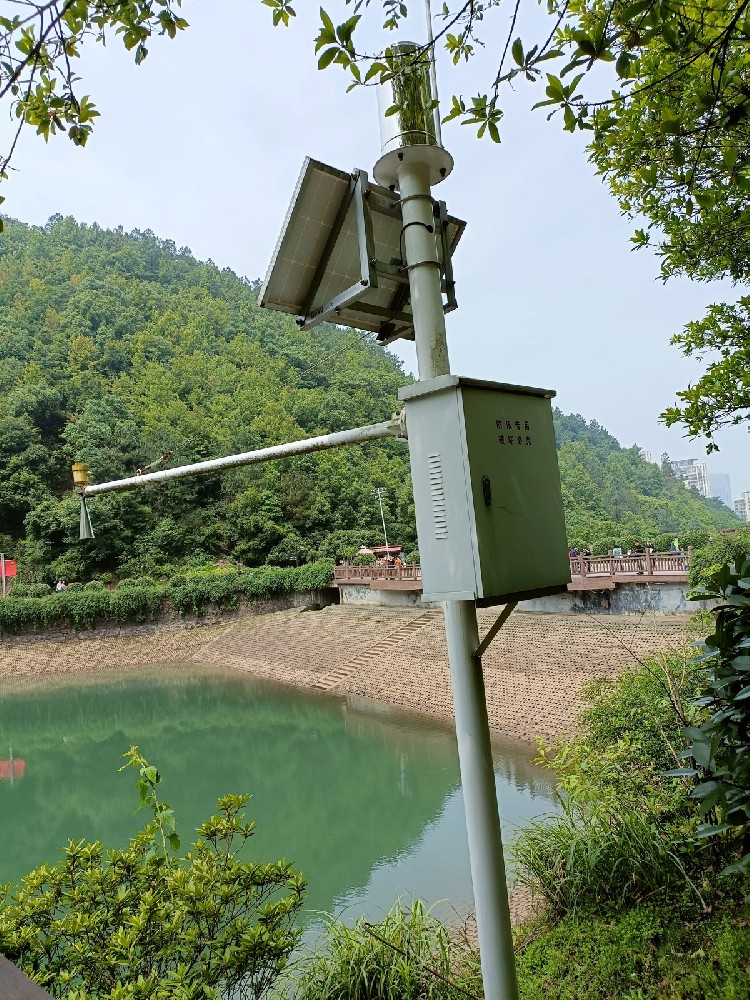
An automatic rainfall station can record precipitation, send records to a receiving system and support a configured threshold alert. These are separate functions. A working rain channel does not prove that a message will reach a duty officer, and a delivered message does not establish a reliable forecast of flood impact.
Rainfall monitoring is useful for drainage operations, construction records, irrigation review and hydrological observation. Where water level is also needed, specify a separate level instrument and a suitable reference. The measured quantities can be considered together by an operational procedure without being interchangeable. A photograph of a station beside a river does not mean its rain gauge measures that river.
| Requested value | Definition needed | Reason it matters |
|---|---|---|
| Rainfall since midnight | Day boundary and time zone | A calendar reset can split a continuous event. |
| Rolling-period rainfall | Window duration, update interval and boundary treatment | The value changes as older rain leaves the window. |
| Event rainfall | Event start and the dry interval used to end it | Different event definitions produce different totals. |
| Rainfall intensity | Rate calculation and averaging period | A short burst can disappear in a long average. |
| Missing rainfall data | Validity flag and treatment of incomplete intervals | An unavailable measurement must not appear as confirmed zero rain. |
Use thresholds supplied or approved for the project purpose. A threshold used to review irrigation is not a public flood-warning criterion. For any safety-related response, the responsible authority or qualified project team must define the decision process, additional information and actions. Do not copy a numerical threshold from an unrelated catchment or infer one from the sensor range.
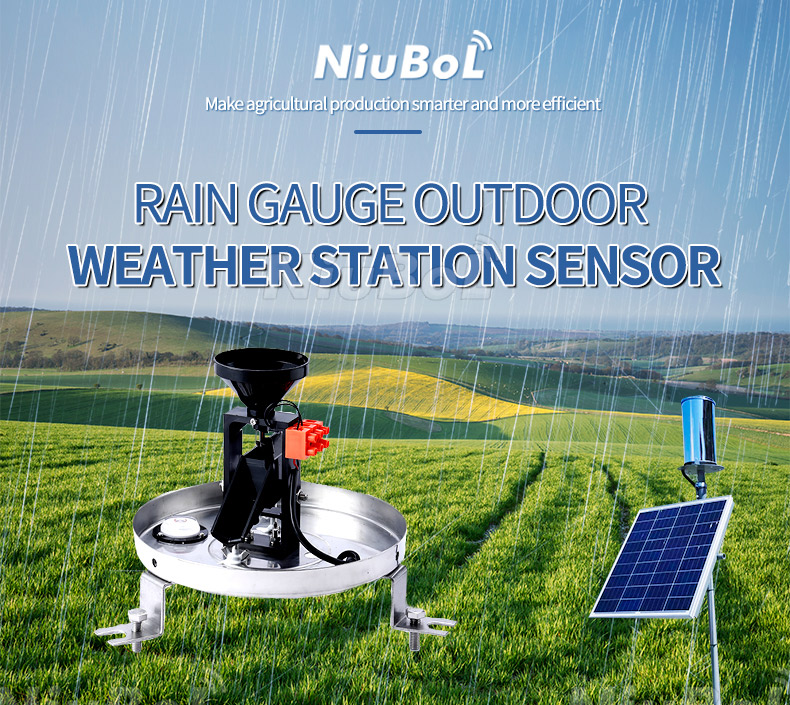
The NiuBoL NBL-W-RS can provide a rain measurement channel for a compatible station. Specify the actual output version and ensure the logger interprets it correctly. A contact pulse input and an RS485 Modbus RTU input need different acquisition arrangements; neither should be assumed from the appearance of the housing.
| NBL-W-RS parameter | Value | Implication for an alarm application |
|---|---|---|
| Rainfall increment | 0.2 mm | A threshold is reached through discrete measured increments. |
| Intensity range | 0-4 mm/min | Check the range against the required event conditions. |
| Accuracy | +/-4% under an indoor static test at 2 mm/min | Do not treat this as a guaranteed field-event error under every exposure. |
| Supply | 5 V DC or 12-24 V DC, depending on configuration | Confirm the purchased version and voltage at the operating load. |
| Outputs | Switching, voltage or RS485 versions | Match counting, analog conversion or digital decoding to the selected output. |
| Operating temperature | 0 to +50 degrees C | Do not assume valid snow or freezing-rain measurement from an unheated installation. |
For example, 40 valid tips from a 0.2 mm gauge represent 8.0 mm. That is a conversion example, not a recommended alert threshold. Test both the count and the resulting rainfall value at the final application. Do not confuse the gauge increment with overall rainfall accuracy or the counting test with a full gauge calibration.
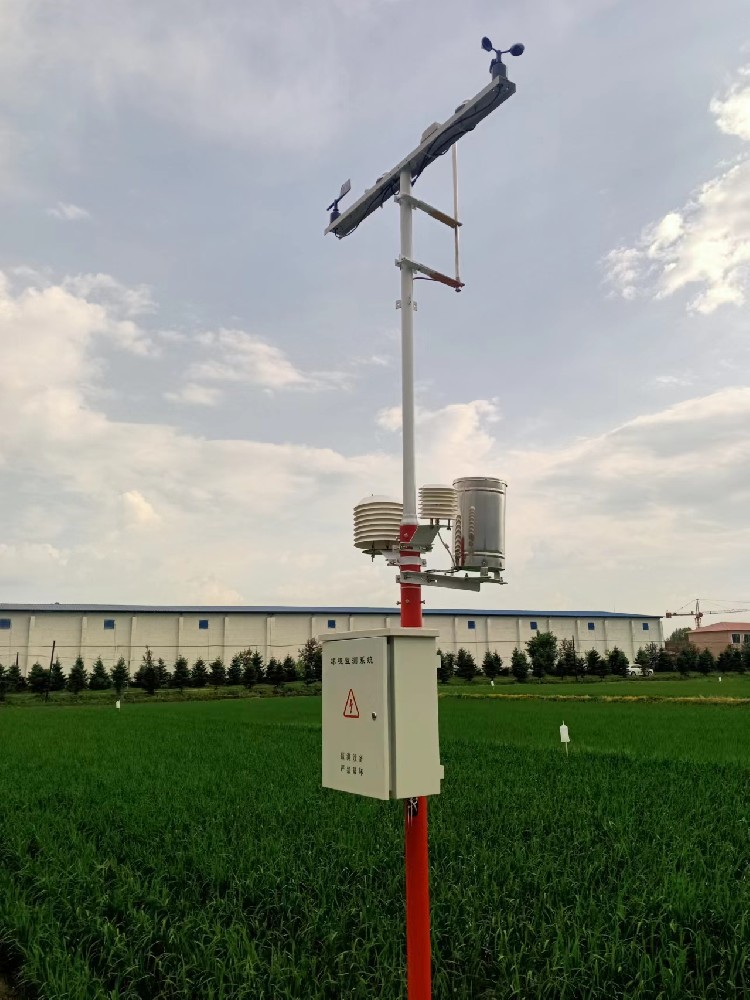
A local logger can run configured logic if its hardware and software support the requirement. Alternatively, the server can calculate the threshold from incoming records. The choice affects what happens during a communications outage. A cloud alarm cannot evaluate fresh measurements it has not received, even when the station continues to store them locally.
The TG462/TG462S data logger family provides industrial inputs and networking functions, but a rainfall accumulation rule, SMS service or siren behavior must be agreed for the actual project. Relay outputs alone do not establish an operational warning system. Identify any external devices, power and application configuration needed.
Define whether an alert repeats, remains active until acknowledgement or clears automatically. Specify how recovered historical rain is treated after an outage: it may belong in the archive without being presented as a newly occurring event. Keep the occurrence time separate from the arrival time, especially when operators act on notifications.
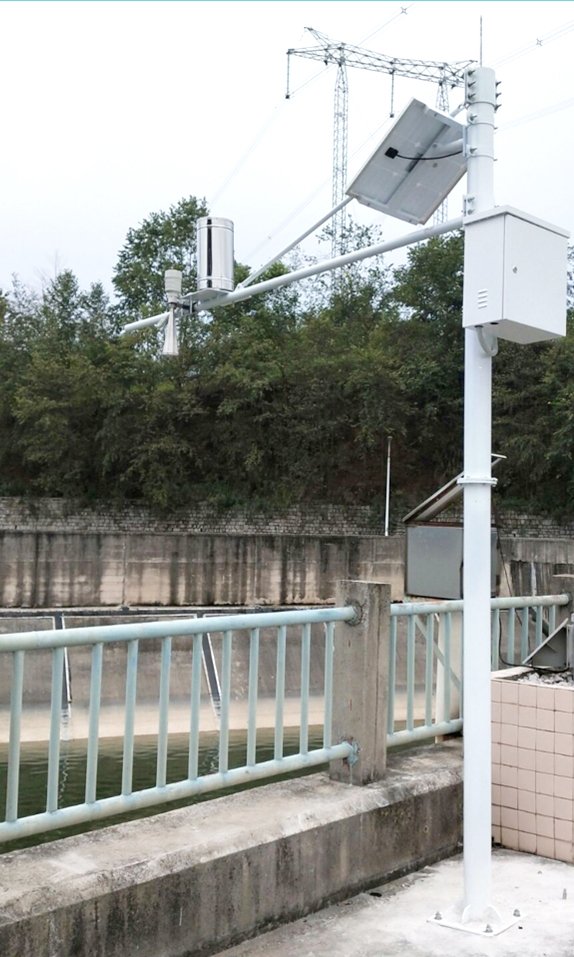
Commission the complete path using a controlled test identified in the record. Verify the input, rainfall calculation, threshold transition, recipient and event time. Use simulation where appropriate rather than creating uncontrolled water flow through a field installation. Ensure test rainfall is excluded from operational totals by a documented method.
Then disconnect communication in a planned test and verify the agreed stale-data indication. Check loss of sensor input, logger restart, power recovery and a recipient who does not acknowledge. These checks reveal different problems: an alarm may work in the dashboard but fail to reach the person responsible for the response.
Document what the system does not detect. A blocked funnel can produce zero counts while communication remains healthy. Inspection and cleaning remain necessary; a valid data packet is not evidence that the collector is unobstructed. Choose visit intervals from contamination, access and the importance of the measurement.
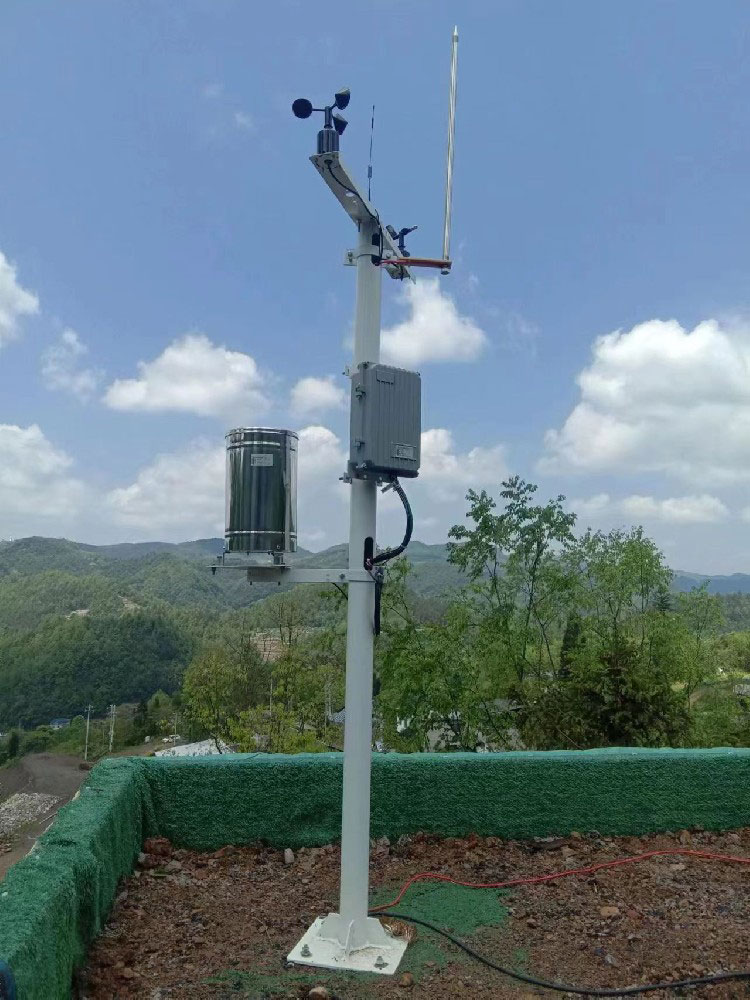
For irrigation, rainfall may trigger review of a schedule alongside soil and irrigation records. At a construction site, a rainfall log can support decisions about drainage inspections under the site's operating procedure. For catchment monitoring, several observation points and additional hydrological information may be needed; one gauge cannot establish the rainfall distribution over the whole area.
For a quotation, tell NiuBoL the observation interval, required output, power and communications, installation environment and receiving system. If alerts are required, include the calculation window, recipient arrangement and responsibility for approving thresholds. Itemizing those functions prevents an instrument-only price being compared with a fully configured notification service.
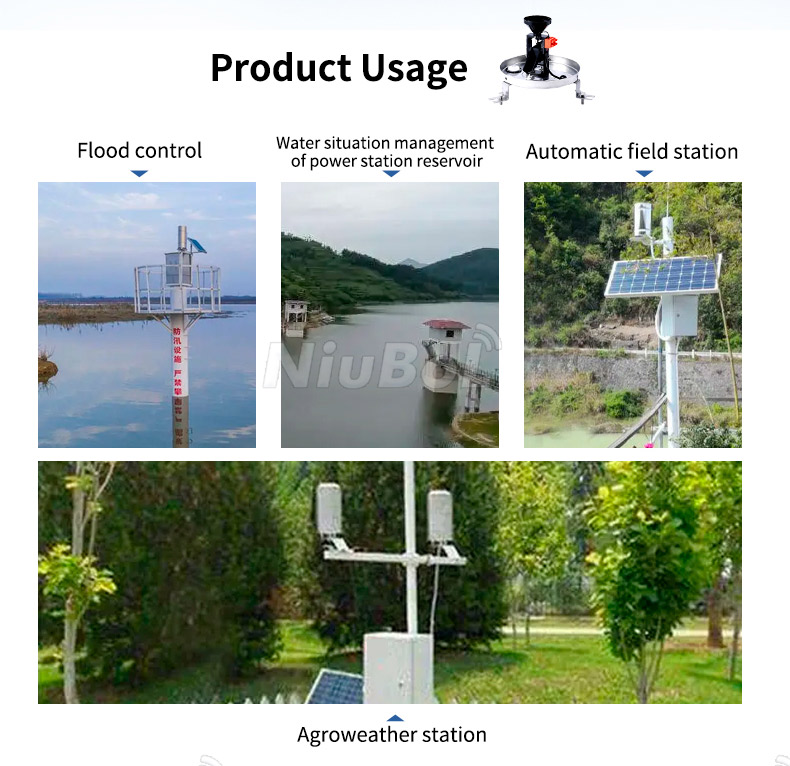
No. Rainfall and water level need separate sensing arrangements. Specify the level instrument, measurement reference and installation if that channel is required. The rainfall channel alone cannot provide river depth.
No. Calendar totals, rolling windows and event totals answer different questions. Define the required quantity and response before setting a threshold, and preserve the accumulation method in the project configuration.
An RS485 output supplies data to a compatible receiver. Messaging requires the appropriate gateway or server application, network service, recipients and tested logic. Include those elements in the agreed supply scope.
Only through a local function that has been explicitly configured and tested with the necessary power and devices. Remote delivery still depends on its communication route. Offline recording does not guarantee timely notification.
Demonstrate correct rainfall conversion and timestamps, the approved threshold logic, actual delivery to the intended recipient, and the agreed behavior during faults and recovery. This verifies the configured function, not a guarantee against flooding.
Automatic rainfall station alarms are useful when the measured quantity, accumulation rule and operational response are explicit. Start with a reliable rainfall channel, then verify the calculation and delivery chain. Keep hydrological interpretation and safety decisions with the responsible project team rather than attributing them to the rain gauge.
Prev:Campus Weather Station Installation: Siting, Access and School Handover
Next:Small Weather Station Components: What a Complete Supply Includes
Related recommendations
Sensors & Weather Stations Catalog
 Agriculture Sensors and Weather Stations Catalog-NiuBoL.pdf
Weather Stations Catalog-NiuBoL.pdf
Agriculture Sensors Catalog-NiuBoL.pdf
Water Quality Sensor Catalog-NiuBoL.pdf
Related products
 Combined air temperature and relative humidity sensor
 TDR Soil Moisture & Temperature Sensor for irrigation| RS485 |4-20mA| NBL-S-THR
 Soil pH sensor RS485 soil Testing instrument soil ph meter for agriculture |NBL-S-PH
 Wind Speed sensor Output Modbus/RS485/Analog/0-5V/4-20mA
 Tipping bucket rain gauge for weather monitoring auto rainfall sensor RS485/Outdoor/stainless steel
 Pyranometer Solar Radiation Sensor 4-20mA/RS485


Screenshot, WhatsApp to identify the QR code
WhatsApp number:+8615367865107
(Click on WhatsApp to copy and add friends)


