





— Blogs —
—Products—
 Consumer hotline +8618073152920
 WhatsApp:+8615367865107
Address:Room 102, District D, Houhu Industrial Park, Yuelu District, Changsha City, Hunan Province, China
Product knowledge
Time:2026-03-02 14:38:45 Popularity:567
Campus weather station installation has two different audiences: sensors need suitable exposure, while students need an accessible way to see and use the observations. Putting every component beside the busiest walkway rarely serves both. Separate the observation location from the public display, then design foundations, cable routes and service access around the selected site.
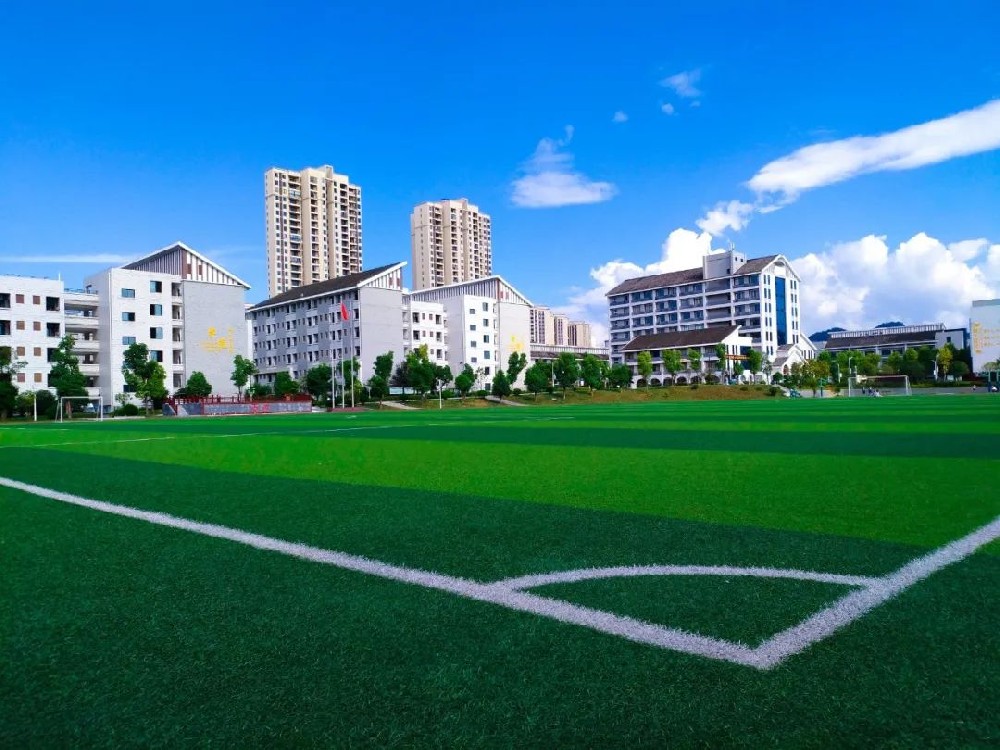
A school may want a general outdoor record, conditions on a sports field, or a comparison between paved and planted areas. Those are different measurements. A sensor beside a sunlit wall can describe that wall-side environment, but its temperature should not be presented as an unbiased record for the entire campus.
Mark the intended observation area on a campus plan before locating equipment. Include buildings, mature tree canopies, sports lighting, air-conditioning outlets, sprinklers, roof drains and planned construction. Visit during normal campus activity; a quiet site during a holiday may become an assembly space or irrigation zone during term.
| Location | Useful observation | Installation limitation |
|---|---|---|
| Open ground | Outdoor conditions over the selected surface | Protect access without introducing nearby shading or splash |
| Sports field edge | Conditions near an activity area | Check balls, mowing, irrigation and spectators |
| Rooftop | Roof-level exposure or a defined roof study | Parapet turbulence, heated surfaces and difficult servicing |
| Garden or planted plot | Vegetation and soil comparisons | Changing canopy and watering can dominate local readings |
There is no single campus-wide obstacle distance that makes all variables representative. Wind, rainfall, air temperature and radiation respond differently to obstructions. If a formal observation network or research project specifies exposure criteria, identify that requirement explicitly and evaluate each channel against it. A small teaching installation should not be described as meeting a national station standard without that assessment.
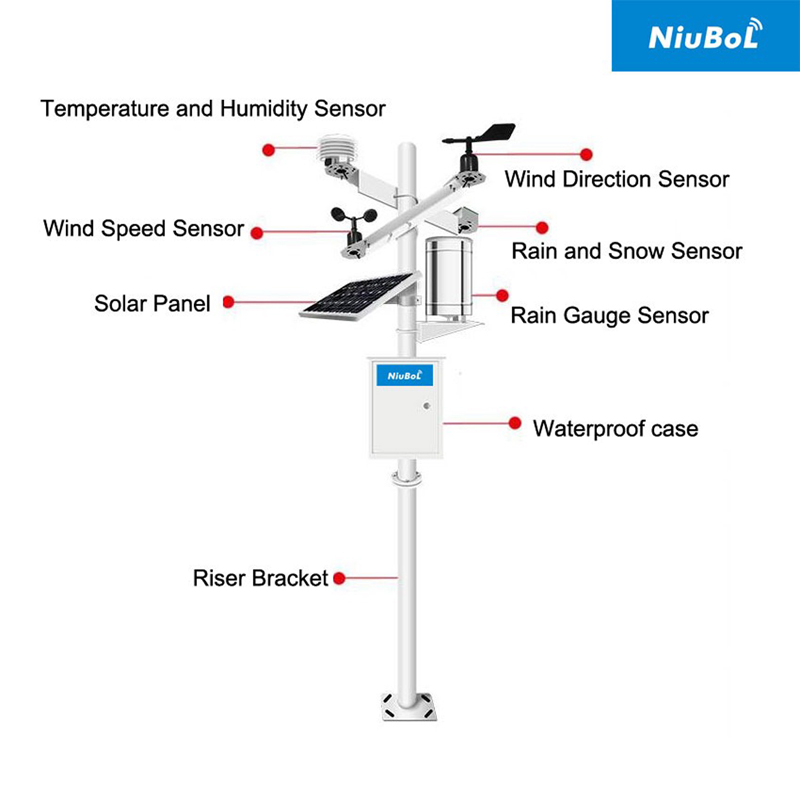
Record the wind sensor height above its local surface and the surrounding obstructions. A high mast near a taller building can still sit in disturbed flow. A lower installation may be useful for a pedestrian-level study, but comparisons with another station must retain the height and exposure difference rather than attributing it to calibration.
The NiuBoL NBL-W-SS wind speed sensor and NBL-W-DS wind direction sensor have IP65 protection. Orient the direction sensor to the project's geographic reference using its actual mounting marks. Record any correction applied in software, so the same offset is not applied twice after service.
Place the temperature and humidity assembly where air can circulate without exhaust air or heat from a wall dominating the reading. A radiation shield reduces direct solar heating of the sensing elements; it does not cancel a poorly selected location. State the mounting height and underlying surface in the station record.
Keep the rain collector opening level and away from roof drainage, sprinkler throw and splash. Do not place a solar panel above it. A rainfall total that includes sports-field irrigation cannot be repaired merely by changing the display unit or replacing the gauge.
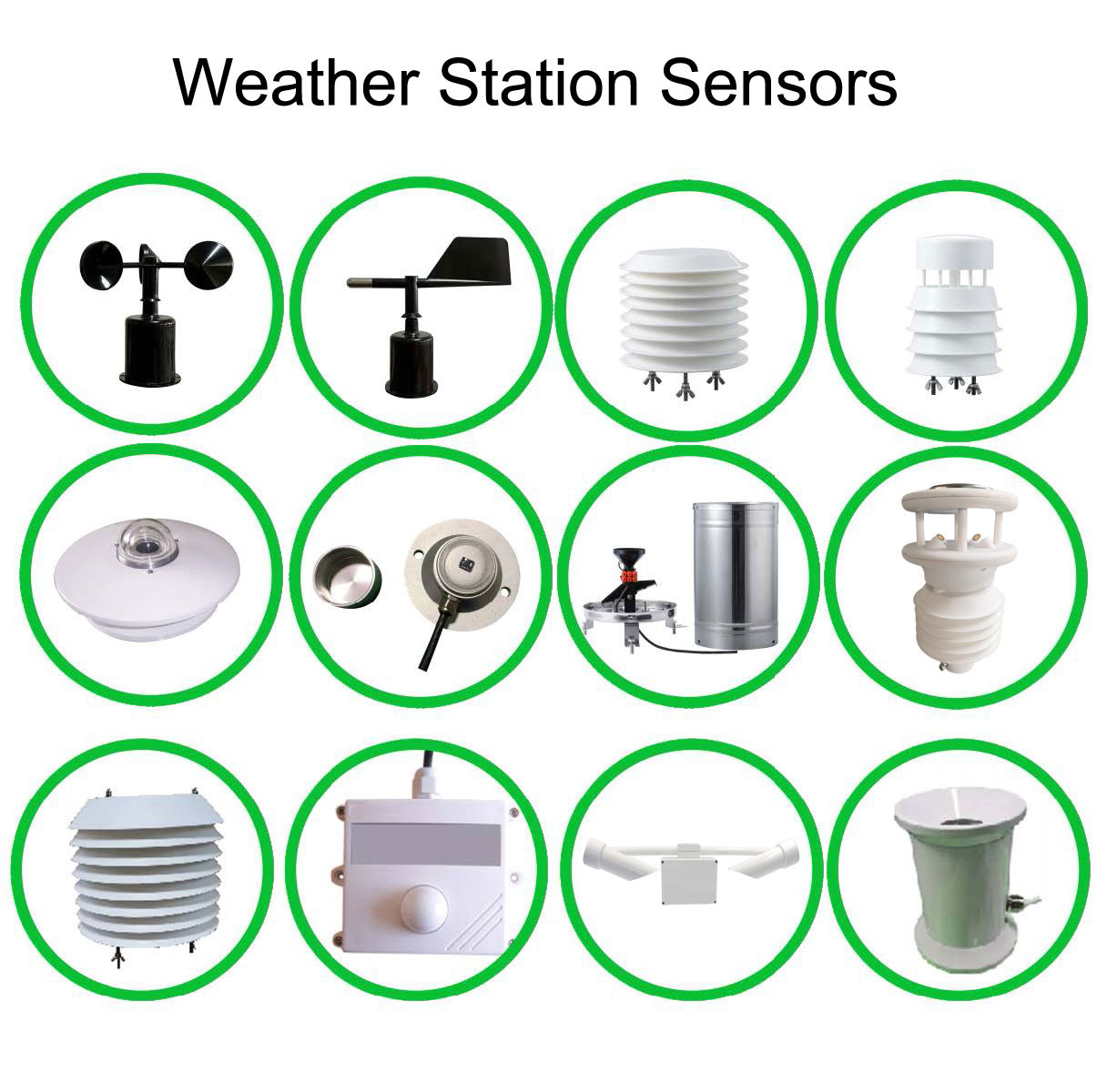
The NBL-W-LBTH atmospheric sensor combines temperature, relative humidity and pressure. Its digital configuration can connect to a compatible logger through RS485 Modbus RTU. Rainfall, wind and radiation remain separate channels with their own installation and acquisition requirements.
| Selected component | Useful technical information | Campus installation check |
|---|---|---|
| NBL-W-LBTH temperature | -40 to 80 C; accuracy ±0.5 C | Shield ventilation, local heat sources and stated mounting height |
| NBL-W-LBTH humidity | 0-100%RH; accuracy ±5%RH | Distinguish actual atmospheric changes from direct spray |
| NBL-W-LBTH pressure | 10-1200 hPa; accuracy ±1.5 hPa | Label local pressure separately from any calculated sea-level value |
| NBL-W-LBTH supply and digital output | 12-24 VDC; RS485 Modbus RTU; polling at least 1000 ms apart | Match supply, map and logger serial settings |
| NBL-W-SS / NBL-W-DS | Separate wind speed and direction sensors; IP65 | Specify the output version, mast exposure and direction reference |
| NBL-W-RS rainfall option | 0.2 mm nominal resolution | Select a compatible counter or digital input arrangement |
Do not assign one accuracy or enclosure rating to a complete weather station by combining figures from unrelated sensor models. The procurement schedule should distinguish supplied instruments, optional channels, logger functions and software services. The NiuBoL weather station range provides a starting point for that configuration, not a reason to order every possible measurement.
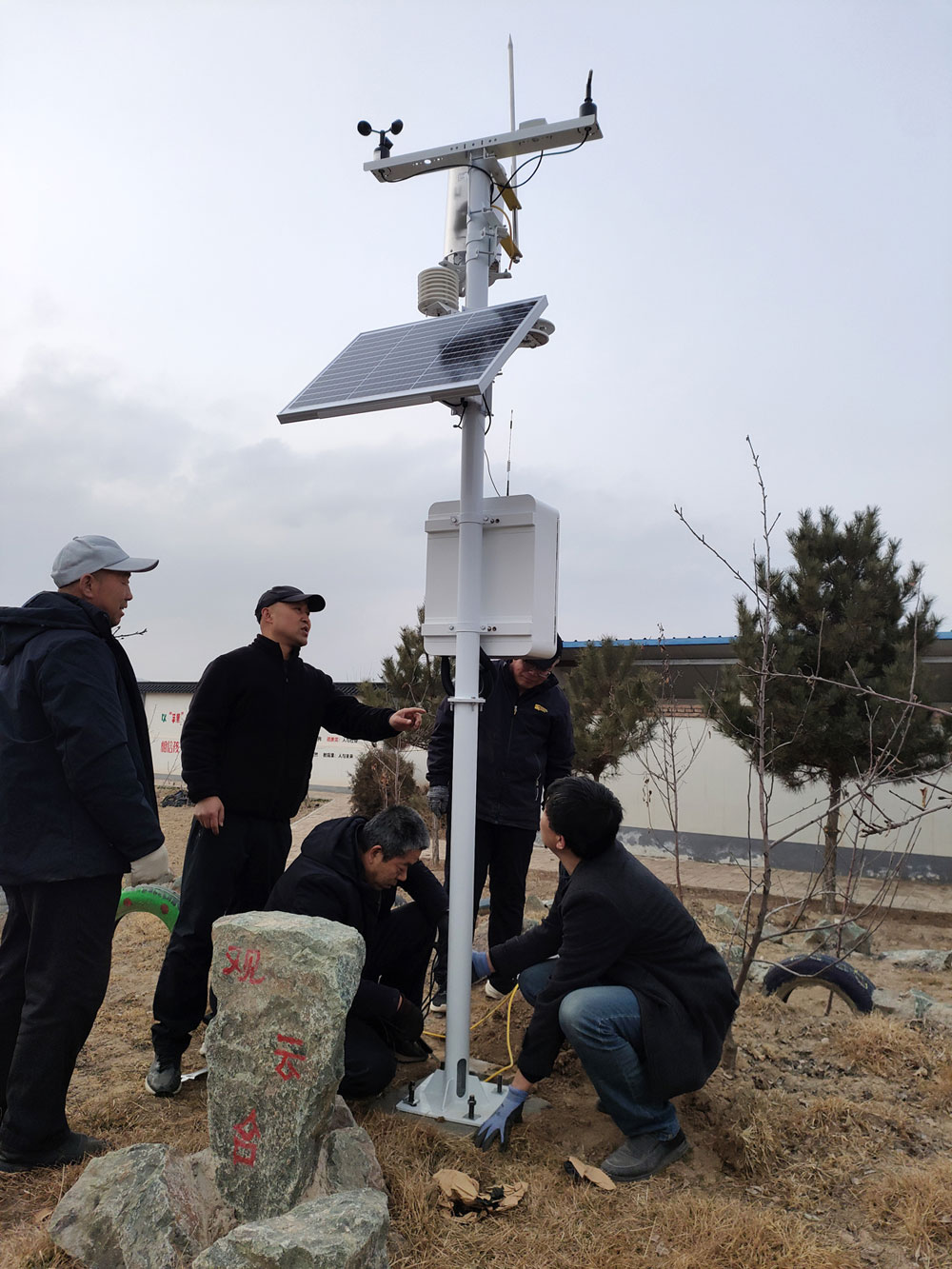
Foundation dimensions depend on mast geometry, local wind loading, soil conditions and the engineered fixing arrangement. A generic concrete block and bolt size copied from another campus is not a structural design. Before excavation, locate buried services and obtain the campus permits required for ground disturbance and electrical work.
Choose a maintenance method that does not require students to enter a work area. A tilt-down mast needs a clear lowering envelope and a controlled procedure; a fixed tall mast needs appropriate access equipment. Check the space with doors, fences and nearby planting in their final positions, not just on an empty-site drawing.
Keep cabinets secured, protect cables from foot traffic and grounds equipment, and avoid exposed loops that can be pulled. Any protective fence must be evaluated for its influence on the sensors. Lightning protection, bonding and mains connections belong to qualified site design and installation; a low-voltage sensor does not make an exposed mast risk-free.
A reception display can receive data from a more suitable observation site. This avoids choosing a shaded entrance simply because the display cable is convenient. Decide whether data travels through the campus network, a dedicated wired link or a separately specified wireless gateway, and involve the campus network administrator before ordering.
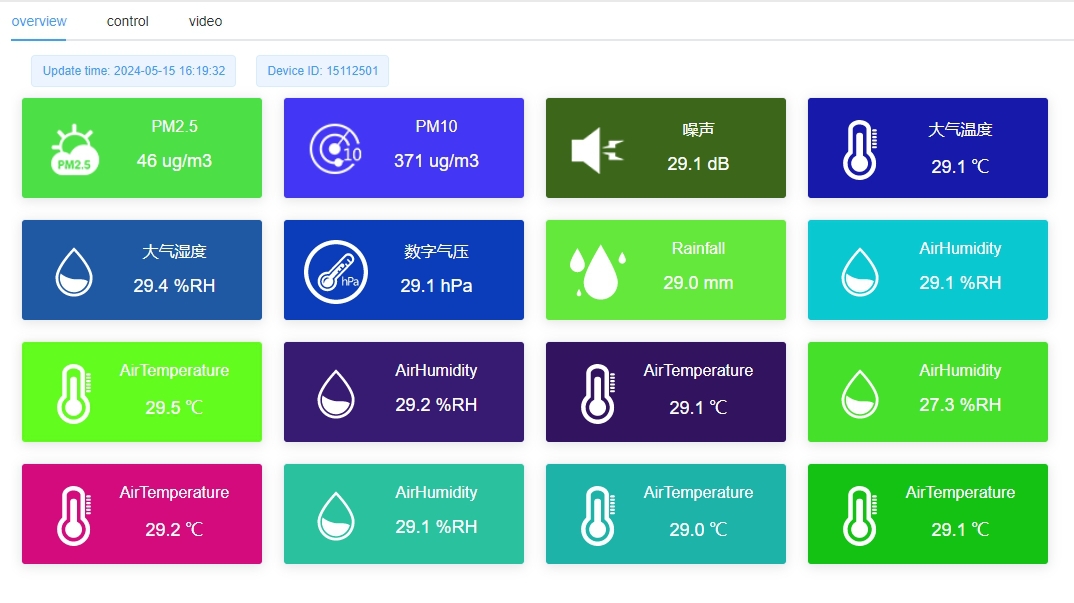
The logger acquires the sensor values; the gateway or server delivers them to the classroom or display. Modbus compatibility at the sensor does not automatically provide an internet dashboard, a particular cloud interface or unrestricted campus network access. Confirm the required transport, authentication and payload with the actual equipment and software suppliers.
Display the observation time as well as the value. If the network stops, a screen should indicate that the observation is old instead of presenting yesterday's conditions as current. Limit control permissions separately from read-only teaching access. Public-facing weather readings are not, by themselves, a validated lightning detection service or authority to reopen sports activities.
Assign responsibilities to a named campus role, not just to the installation contractor. The site needs someone to identify blocked funnels, new shade, loose mounts, damaged leads and display faults. Inspection frequency should respond to local debris, vandalism risk and research needs rather than an automatic annual or quarterly promise.
Keep a dated record when a sensor is cleaned, moved or replaced. For a student comparison exercise, collect a short period of overlapping observations where practical. Otherwise a change caused by relocation or maintenance can be mistaken for a genuine environmental difference.
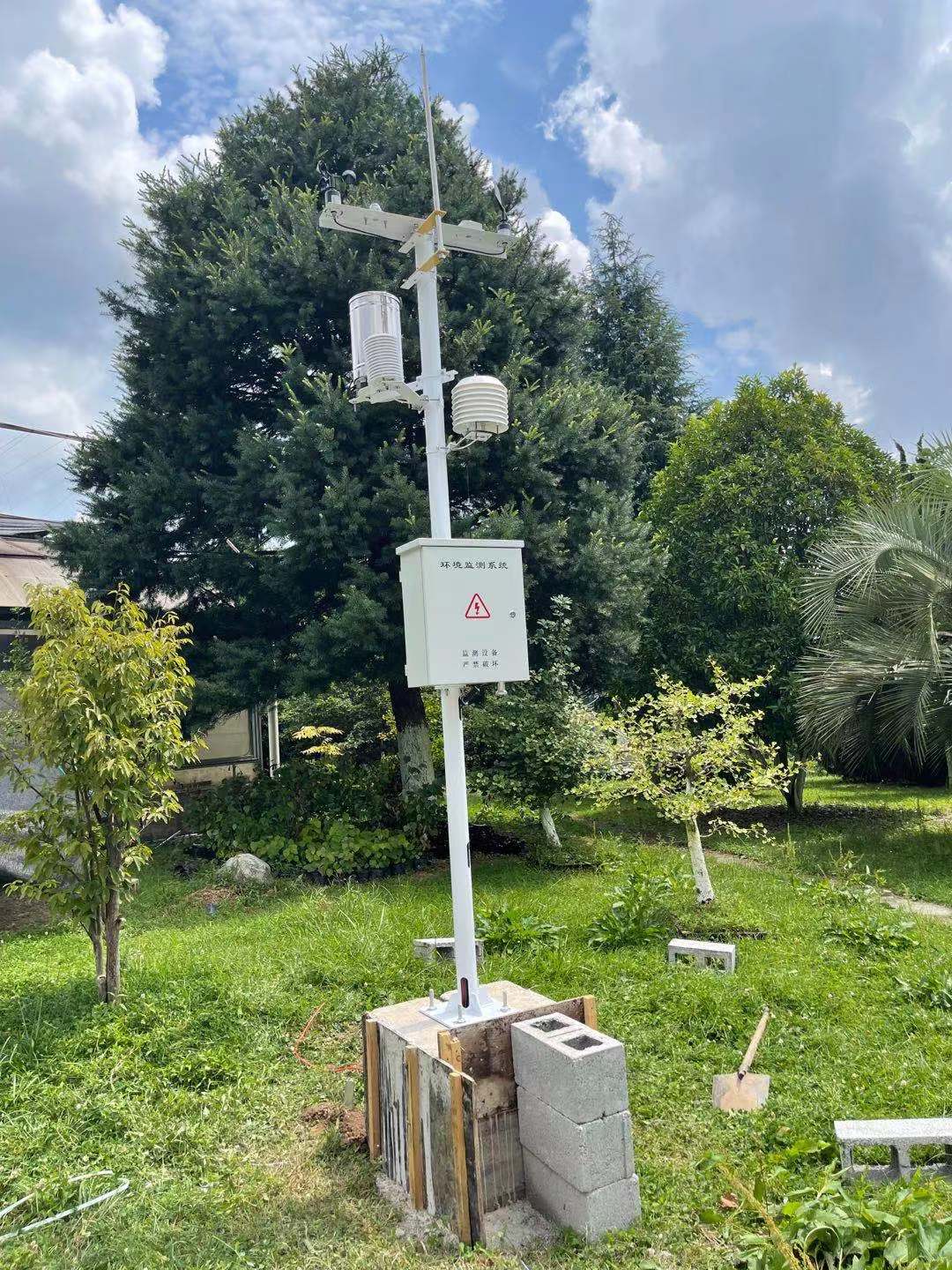
It can be appropriate for a roof-specific study or a constrained project with documented limitations. Evaluate access, structural loading, wind disturbance and surface heating. Do not label rooftop observations as equivalent to an open-ground reference merely because the same sensors are used.
The required height depends on the observation purpose and applicable specification. A project requiring reference-height observations should meet that requirement. A lower educational installation can still be useful if its height and surroundings are documented and comparisons acknowledge the difference.
It can supply environmental observations to more than one application. A safety function needs its own performance requirements, fault response and authorised operating procedure. A classroom dashboard should not silently become the sole input for a safety-critical decision.
Separate sensor and logger supply from foundations, mast erection, electrical protection, network work, display software and maintenance access. Request an itemised site-specific quotation. A sensor-only price cannot represent a completed campus installation with civil works and network approval.
Describe which channels the obstruction affects and the hours or wind sectors involved. Consider separating sensors or narrowing the station's stated purpose. Keeping an honest local record is more useful than claiming unrestricted exposure that the site cannot provide.
Provide a site plan, photographs in several directions, available mounting areas, desired measurements and the campus data destination. Include student access restrictions and maintenance arrangements. These details allow a practical discussion of sensor placement and equipment scope before an order is placed.
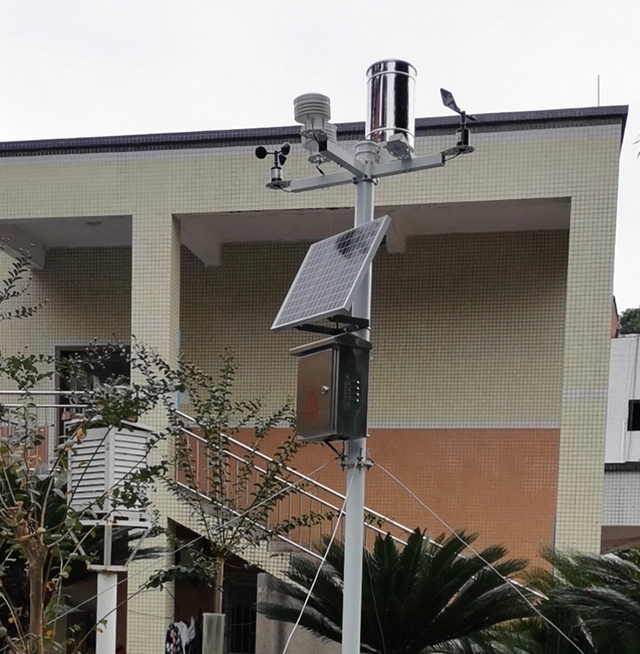
A workable campus installation keeps the observation purpose, public access and maintenance route distinct. Select the site for the measurements, engineer the mounting for the location and deliver the data to students through a suitable display connection. Record unavoidable exposure limits so the campus can use the observations without overstating what they represent.
Prev:Solar-Powered Rain Gauge Station: Size Power Without Missing Rainfall
Next:Compact Weather Station Procurement: Logger, Power and Site Acceptance
Related recommendations
Sensors & Weather Stations Catalog
 Agriculture Sensors and Weather Stations Catalog-NiuBoL.pdf
Weather Stations Catalog-NiuBoL.pdf
Agriculture Sensors Catalog-NiuBoL.pdf
Water Quality Sensor Catalog-NiuBoL.pdf
Related products
 Combined air temperature and relative humidity sensor
 TDR Soil Moisture & Temperature Sensor for irrigation| RS485 |4-20mA| NBL-S-THR
 Soil pH sensor RS485 soil Testing instrument soil ph meter for agriculture |NBL-S-PH
 Wind Speed sensor Output Modbus/RS485/Analog/0-5V/4-20mA
 Tipping bucket rain gauge for weather monitoring auto rainfall sensor RS485/Outdoor/stainless steel
 Pyranometer Solar Radiation Sensor 4-20mA/RS485

Screenshot, WhatsApp to identify the QR code
WhatsApp number:+8615367865107
(Click on WhatsApp to copy and add friends)

