





— Blogs —
—Products—
 Consumer hotline +8618073152920
 WhatsApp:+8615367865107
Address:Room 102, District D, Houhu Industrial Park, Yuelu District, Changsha City, Hunan Province, China
Product knowledge
Time:2025-12-15 14:05:20 Popularity:785
As global attention to climate change and renewable energy intensifies, precise measurement of solar radiation has become key to numerous scientific research and engineering applications. Total solar radiation sensors are the core tools undertaking this responsibility.
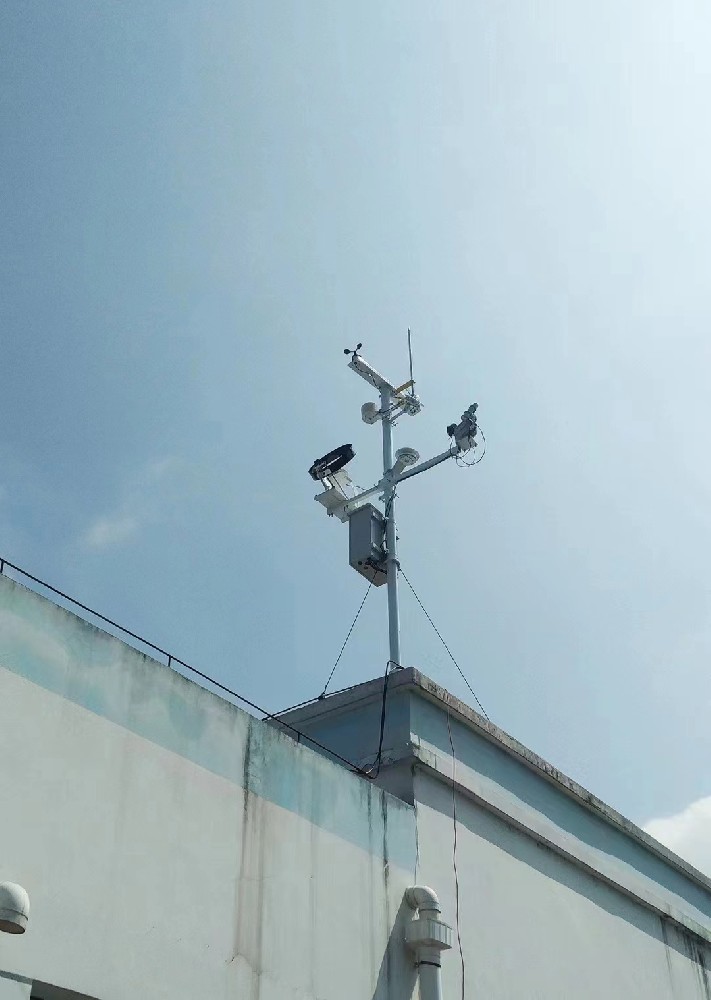
Total solar radiation (Global Solar Radiation) refers to the total solar radiation energy reaching a specific horizontal or inclined surface on Earth at a given time. It includes two parts:
Direct Radiation: Energy directly from the solar disk reaching the surface.
Diffuse Radiation: Energy scattered by atmospheric molecules, aerosols, cloud droplets, etc., reaching the surface.
Total solar radiation sensors, abbreviated as pyranometers, can integrally measure the energy of these two parts.
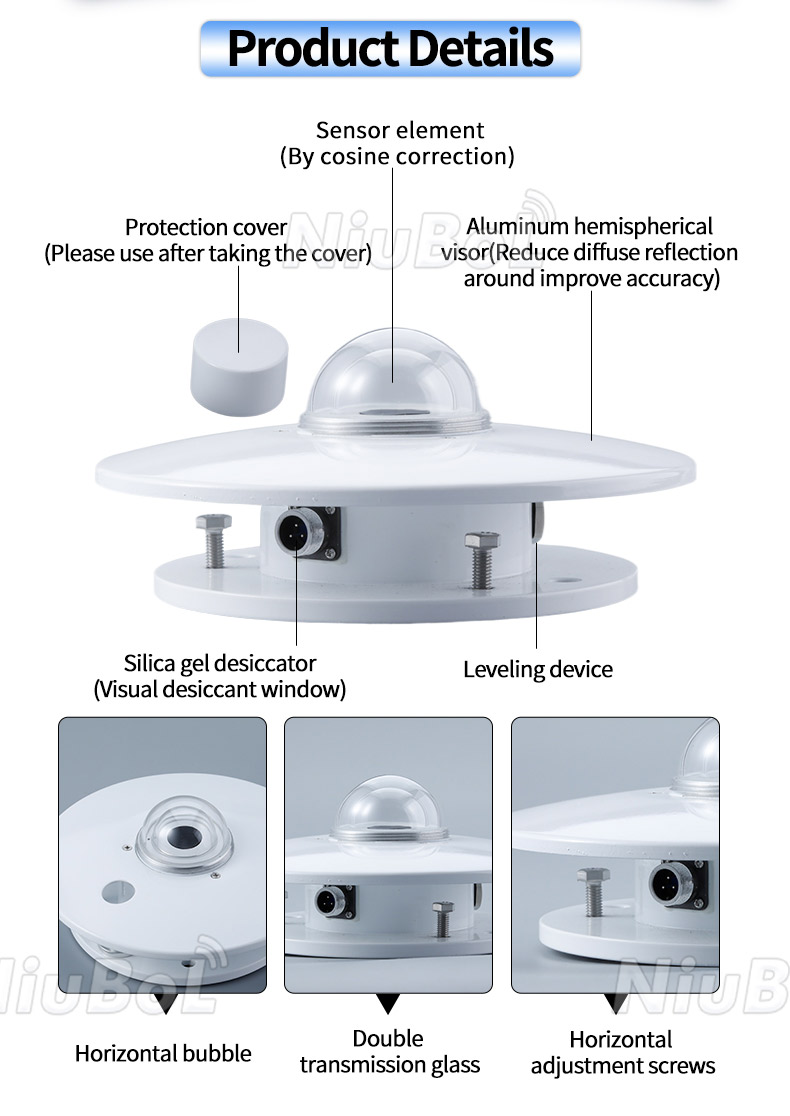
The working principle of NiuBoL (NBL-W-HPRS) total solar radiation sensor is based on the classic thermoelectric effect — a high-precision and reliable measurement method.
The sensor core is a thermopile consisting of multiple series-connected thermocouples. It utilizes the phenomenon that when two different metal conductors are connected at both ends and the junctions have different temperatures, an electromotive force (thermoelectric potential) is generated.
Energy Absorption: When solar radiation enters the sensor top optical window (glass or concentrator), it is absorbed by the internal black coating.
Temperature Difference Generation: The irradiated surface (hot junction) temperature rises rapidly, while the sensor internal or bottom reference surface (cold junction) temperature remains relatively stable (or used for ambient temperature compensation).
Electromotive Force Output: Due to temperature difference (ΔT) between hot and cold junctions, the thermopile outputs a tiny voltage signal V proportional to the temperature difference according to the thermoelectric effect.
V = k · ΔT
where k is the sensitivity coefficient of the thermocouple.
Radiation Conversion: Greater absorbed radiation energy means larger temperature difference and stronger output voltage signal. Therefore, measuring output voltage V accurately determines total solar radiation energy (unit usually W/m²).
To ensure measurement accuracy and stability, the sensor is optimized in structural design:
Optical Window: Transparent glass or concentrator protects thermocouple from pollution and weather while ensuring wide spectral transmission (NBL-W-HPRS spectral range 0.3−3 μm).
Black Coating: Efficiently absorbs solar radiation with high stability.
Insulation & Wind Shield: Uses insulation materials and mechanical structures (e.g., probe housing) to reduce ambient temperature changes and wind speed impact on thermopile cold junction, maintaining stable temperature or effective compensation.
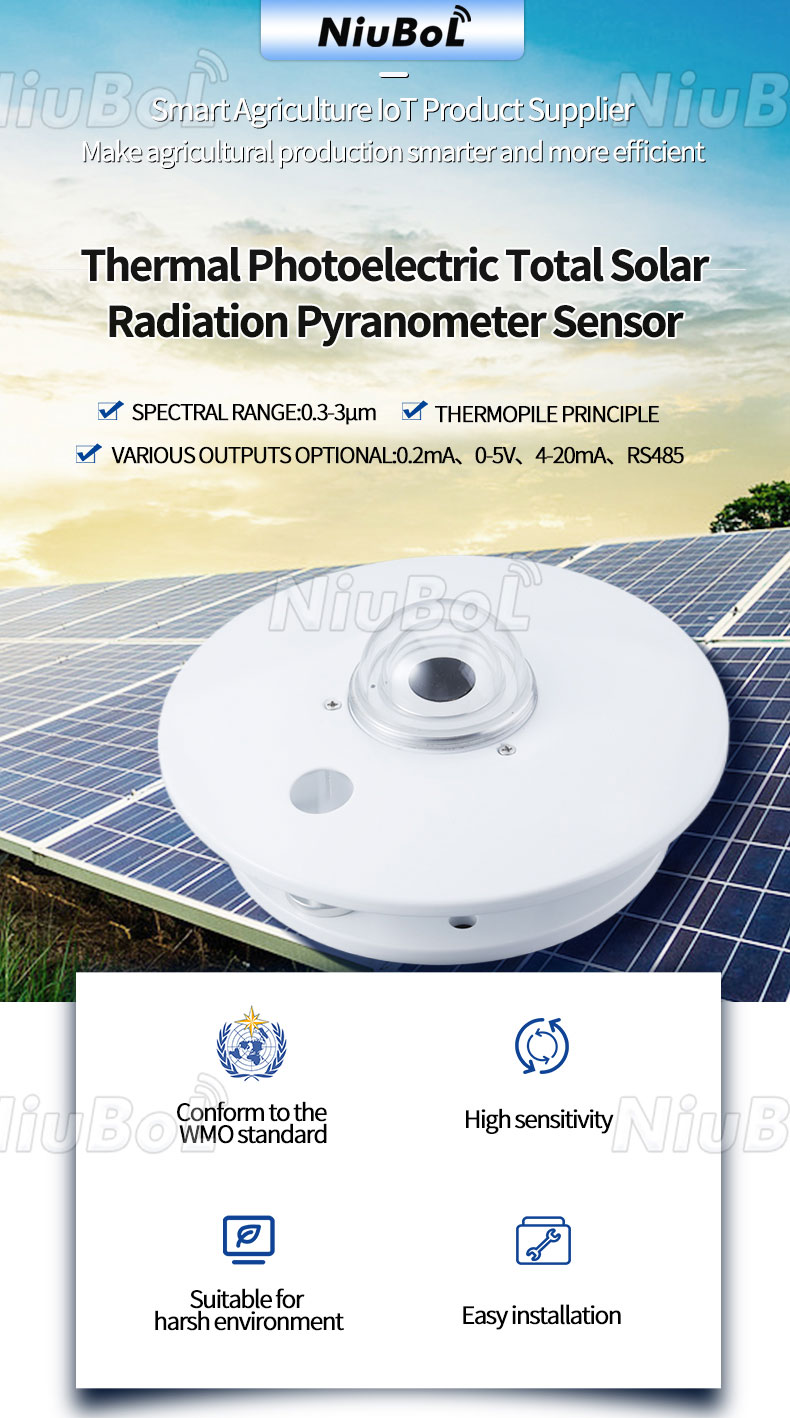
NiuBoL NBL-W-HPRS total solar radiation sensor embodies high reliability and professionalism in structure and technical parameters, meeting demanding outdoor measurement needs.
| Component | Material/Feature | Functional Role |
| Probe Appearance | Cylindrical, metal or weather-resistant plastic housing | Protects internal precision components, adapts to outdoor environment |
| Optical Window | Transparent glass or concentrator | Wide spectral transmission, dust/rain proof, concentrates radiation |
| Sensing Element | Series thermocouples (thermopile) | Based on thermoelectric effect, converts radiation heat energy to electrical energy |
| Surface Treatment | Black coating | Efficiently absorbs solar radiation energy |
| Circuit Part | Amplifier, filter, conversion circuit | Amplifies tiny signal from thermopile and converts to standard output signal |
| Parameter Category | NBL-W-HPRS Specification | Technical Significance |
| Sensitivity | 7~14 μV/(W·m²) | Sensor response to radiation changes; higher value means stronger capture of weak radiation |
| Spectral Range | 0.3−3 μm | Covers ultraviolet, visible light, and near-infrared for comprehensive total solar radiation measurement |
| Measurement Range | 0–2000 W/m² | Meets measurement needs from night to clear sunny days |
| Response Time | < 35 seconds (99%) | Time from receiving radiation to stable output signal, reflecting response speed |
| Annual Stability | < ±2% | Ensures long-term performance reliability |
| Cosine Response | <7% (at 10° solar elevation) | Measures accuracy when sensing surface angle with sunlight changes |
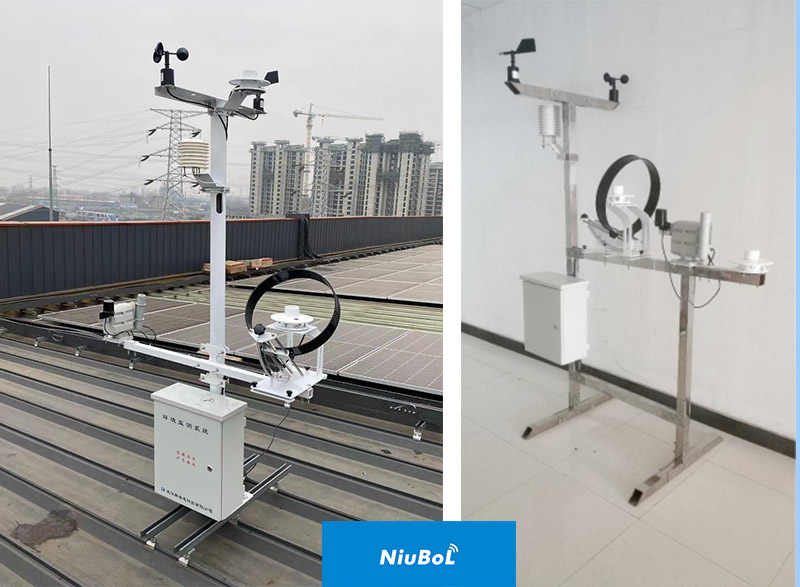
Sensor accuracy depends on regular calibration. Calibration purpose is to determine or correct sensor calibration coefficient so output signal accurately reflects actual radiation intensity.
Calibration steps usually include:
Prepare standard source: Use standard radiation source certified by national or international standards organization (e.g., known standard total radiometer or high-precision blackbody radiation source).
Co-location comparison measurement: Place sensor to be calibrated (NBL-W-HPRS) with standard source in same open location, ensuring both sensing surfaces accurately aligned with radiation source.
Data acquisition & calculation: Record standard source radiation intensity Istd and initial output voltage Vraw of sensor to be calibrated.
Determine calibration coefficient: Calibration coefficient C equals standard radiation intensity divided by sensor output signal:
Calibration coefficient C = Istd / Vraw
Coefficient input: Input calculated calibration coefficient into data acquisition system or sensor own circuit for real-time conversion of subsequent measurement values, ensuring output data accuracy.
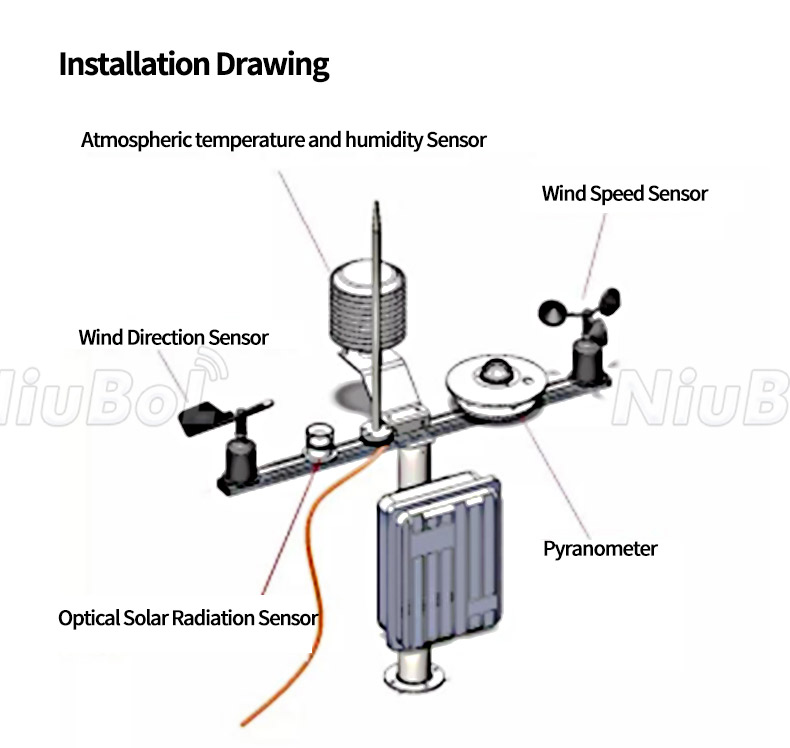
NiuBoL total solar radiation sensor, as key basic data acquisition equipment, plays an irreplaceable role in multiple core fields.
This is the most direct application scenario, directly affecting clean energy efficiency and economic benefits.
Photovoltaic Power Station Design & Site Selection: Long-term accurate total solar radiation data measurement is foundation for assessing regional solar resource potential, guiding optimal site selection, capacity planning, and tilt angle design for photovoltaic stations.
Power Generation Efficiency Monitoring & Optimization: Real-time monitoring of total radiation intensity compared with actual station power generation for system fault diagnosis, performance ratio (PR value) evaluation, and inverter control strategy optimization.
Concentrated Solar Power (CSP): Precise radiation data is key input parameter for tracking and focusing sunlight, controlling concentrator mirror array.
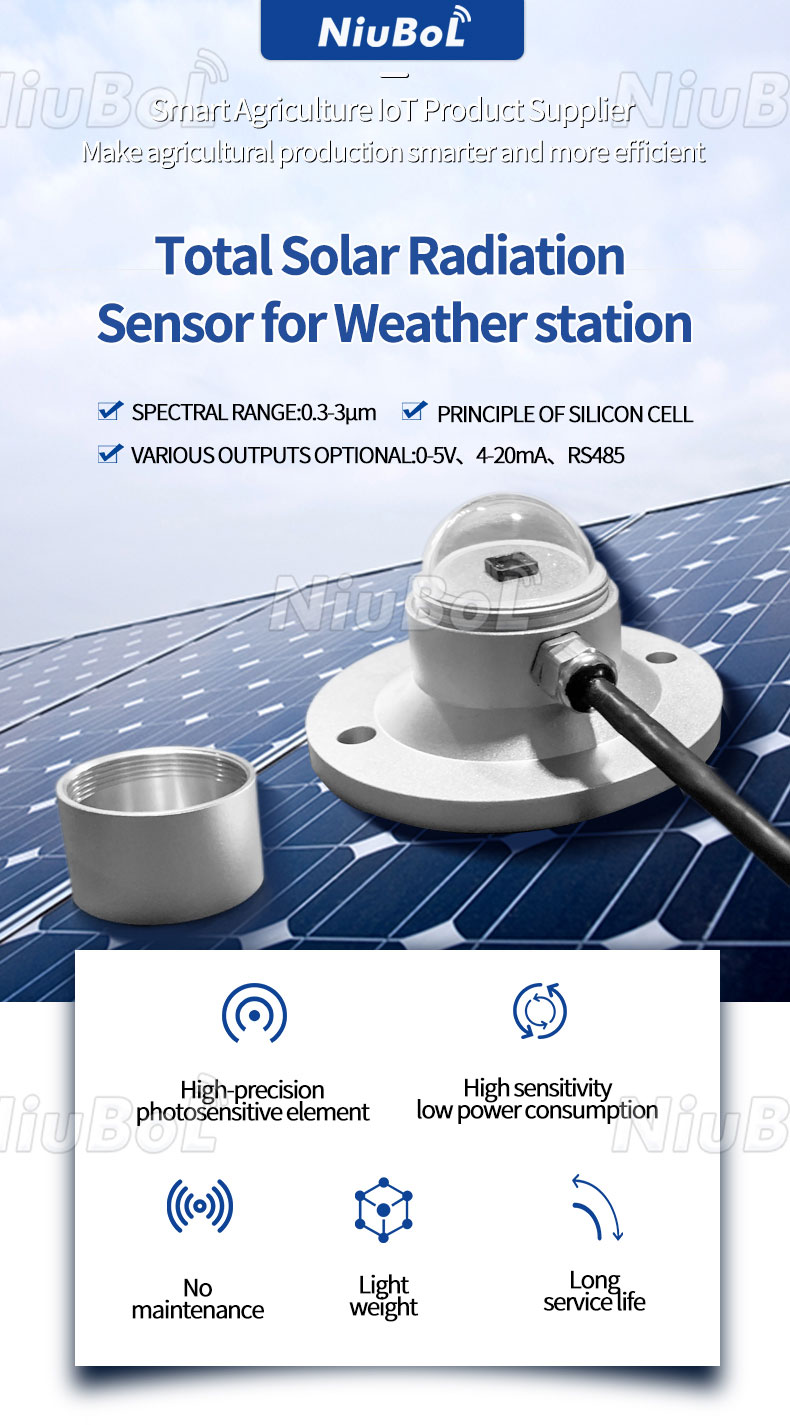
Solar radiation is driving force of Earth atmospheric energy budget balance; radiation data is important part of meteorology.
Climate Model Establishment & Prediction: Radiation data is core parameter input to climate models, helping scientists understand and predict global and regional climate change.
Weather Forecasting: Radiation intensity data helps predict surface temperature, evaporation, atmospheric instability, etc., improving short- and medium-term weather forecast accuracy.
Agricultural Meteorology: Radiation data used to calculate photosynthetically active radiation (PAR) for crops, guiding planting, irrigation, and fertilization.
Atmospheric Pollution Research: Monitoring changes in solar radiation reaching surface helps analyze atmospheric aerosol, pollutant, and cloud weakening effects on radiation, assessing air quality.
Material Aging & Testing: Used to simulate and accelerate outdoor radiation effects on building materials, plastics, coatings, etc., evaluating weather resistance.
Building Energy Consumption Analysis: Measures radiation intensity on building surfaces for assessing building heat gain and cooling load, guiding energy-saving design.
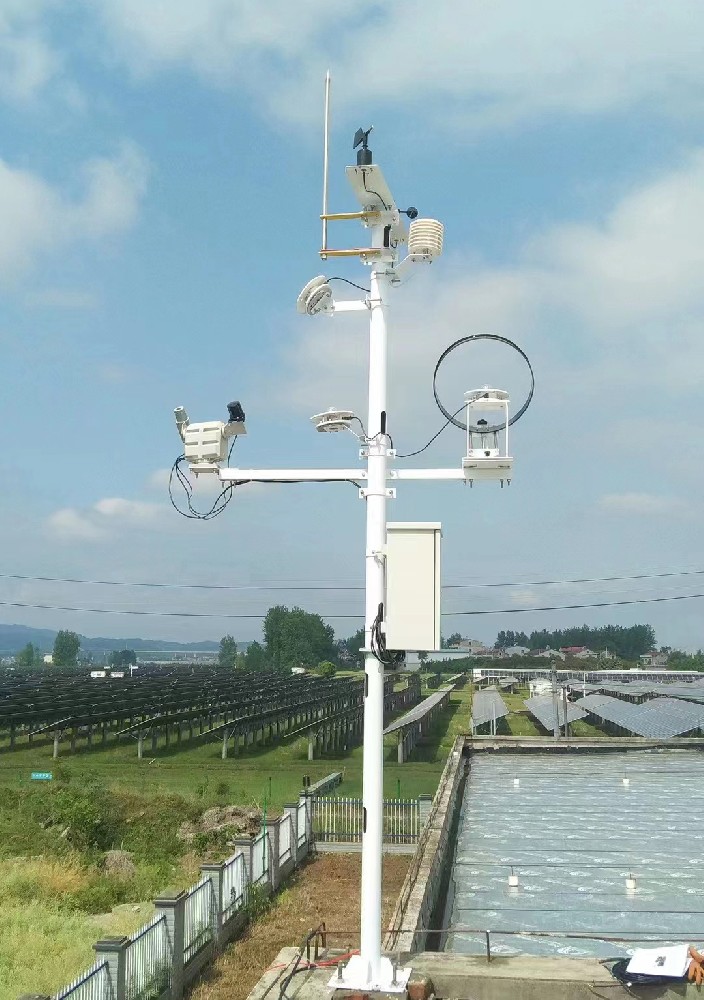
Besides thermoelectric type sensors (e.g., NBL-W-HPRS solar radiation sensor), other types exist on the market, each with specific advantages, disadvantages, and application scenarios.
| Sensor Type | Working Principle | Advantages | Disadvantages | Typical Applications |
| Thermoelectric Type (NBL-W-HPRS) | Thermoelectric effect, measures temperature difference | Wide spectral response, high precision, high stability, suitable for total radiation standard measurement | Relatively slower response time, higher cost, requires regular calibration | Meteorological stations, standard monitoring, large photovoltaic power stations |
| Silicon Photocell Type | Silicon semiconductor photoelectric effect | Fast response speed, low price, compact size | Narrow spectral response range (only visible light and near-infrared part), relatively poor long-term stability, greatly affected by temperature | Simple photovoltaic system monitoring, auxiliary monitoring for weather forecasting machines |
| Photovoltaic Type | Semiconductor material photoelectric conversion | High sensitivity, fast response, can work in wide wavelength range | Output affected by temperature and humidity, requires temperature compensation | Industrial automation, environmental monitoring |
Professional Selection Recommendation: Thermoelectric type sensors like NBL-W-HPRS are widely recognized as the preferred standard for scientific research, meteorological monitoring, and high-standard solar resource assessment due to wide spectral response and high stability. Silicon photocell type sensors are usually used in scenarios requiring high cost and response speed but low spectral integrity requirements.
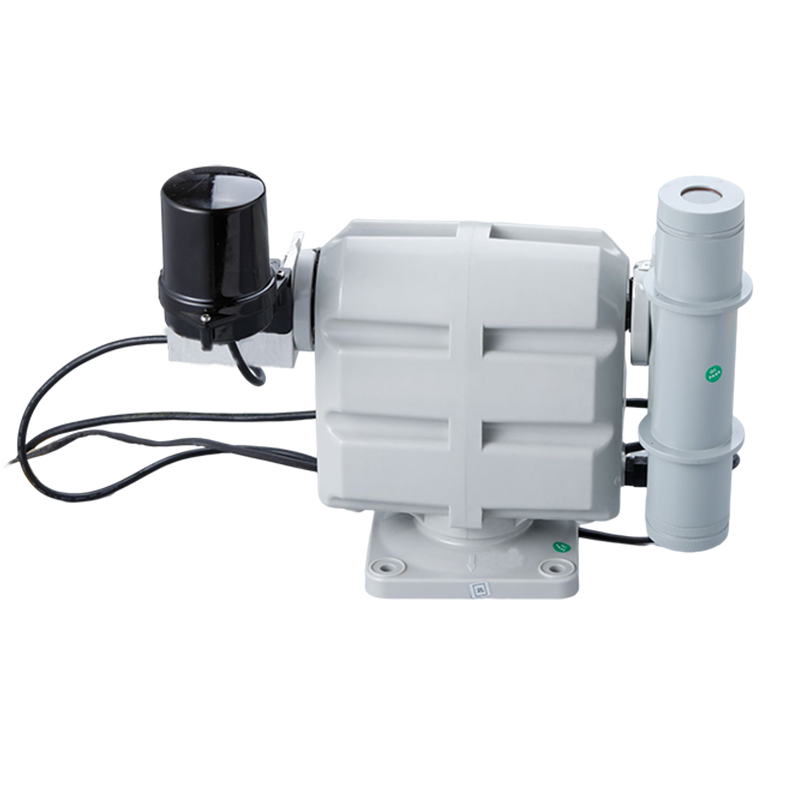
To meet growing precise measurement and complex environment application needs, total solar radiation sensors are developing in the following directions:
Intelligent & Digital Integration: Future sensors will more deeply integrate microprocessors for internal digital signal processing, automatic temperature compensation, and self-diagnosis functions. Through RS485, Modbus, and other digital outputs (e.g., NBL-W-HPRS RS485 output), achieving plug-and-play and simplifying system integration.
High Precision & Stability Improvement: Through new thermoelectric materials and advanced structural design, further reducing cosine response error, azimuth response error, and temperature characteristic error, especially improving measurement accuracy and annual stability in extreme environments (e.g., polar regions, high altitudes).
Miniaturization & Low Power Consumption: Adapting to Internet of Things (IoT) and automatic weather station (AWS) needs, sensors will be smaller, lighter, with lower power consumption, facilitating large-scale distributed deployment and battery power.
Multi-Parameter Integration: Integrating radiation, ultraviolet, infrared, temperature, humidity, and other environmental parameters for synchronous acquisition of multi-dimensional environmental information.
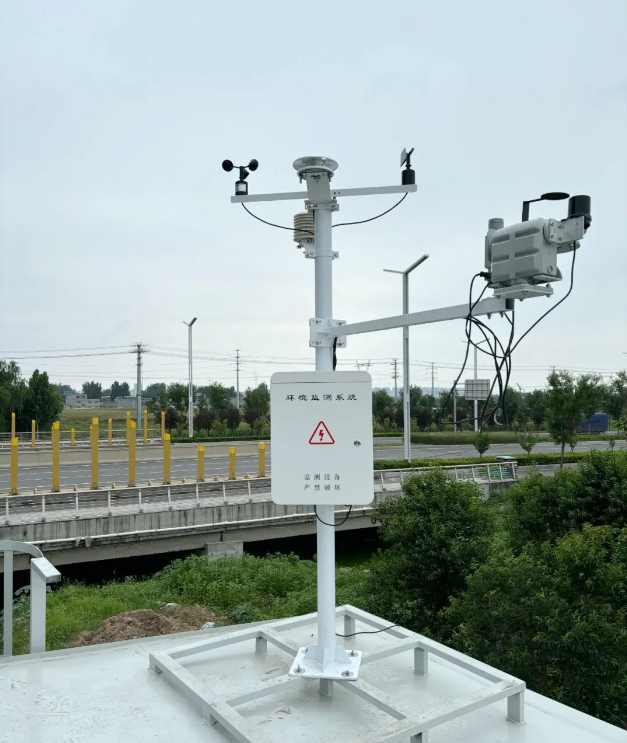
NiuBoL (NBL-W-HPRS) total solar radiation sensor, with its precise measurement principle based on thermoelectric effect, rugged and durable structural design, and excellent performance parameters (e.g., 0.3−3 μm wide spectral range), has become an indispensable professional tool in meteorology, environmental monitoring, and solar resource assessment fields. From helping meteorologists build precise climate models to guiding photovoltaic station maximization design and operation, it provides reliable data support for human deep understanding and efficient utilization of solar energy. With continuous technological progress, future total solar radiation sensors will be more intelligent, precise, and easy to integrate, continuing to drive sustainable development and innovation in energy fields.
Do you need me to further provide detailed technical specification comparison between NBL-W-HPRS sensor and other brand similar products, or query its latest market price and purchase channel information?
 NBL-W-SRS-Solar-radiation-sensor-instruction-manual-V4.0.pdf
NBL-W-HPRS-Solar-Radiation-Sensor-Instruction-Manual-V3.0.pdf
Prev:Radar Water Level Gauge: Non-Contact Essential Tool for Water Conservancy Monitoring & Flood Warning
Next:Core Value, Working Principle, and Efficient Application of Solar Radiation Sensors
Related recommendations
Sensors & Weather Stations Catalog
Agriculture Sensors and Weather Stations Catalog-NiuBoL.pdf
Weather Stations Catalog-NiuBoL.pdf
Agriculture Sensors Catalog-NiuBoL.pdf
Water Quality Sensor Catalog-NiuBoL.pdf
Related products
 Combined air temperature and relative humidity sensor
 TDR Soil Moisture & Temperature Sensor for irrigation| RS485 |4-20mA| NBL-S-THR
 Soil pH sensor RS485 soil Testing instrument soil ph meter for agriculture |NBL-S-PH
 Wind Speed sensor Output Modbus/RS485/Analog/0-5V/4-20mA
 Tipping bucket rain gauge for weather monitoring auto rainfall sensor RS485/Outdoor/stainless steel
 Pyranometer Solar Radiation Sensor 4-20mA/RS485

Screenshot, WhatsApp to identify the QR code
WhatsApp number:+8615367865107
(Click on WhatsApp to copy and add friends)

