





— Blogs —
—Products—
 Consumer hotline +8618073152920
 WhatsApp:+8615367865107
Address:Room 102, District D, Houhu Industrial Park, Yuelu District, Changsha City, Hunan Province, China
Product knowledge
Time:2025-12-15 14:13:35 Popularity:780
Total solar radiation sensor is the key instrument for precisely obtaining surface solar radiation energy information. It measures not only visible light but also ultraviolet and infrared in the solar spectrum, serving as the foundation for efficient solar energy utilization and in-depth climate research.
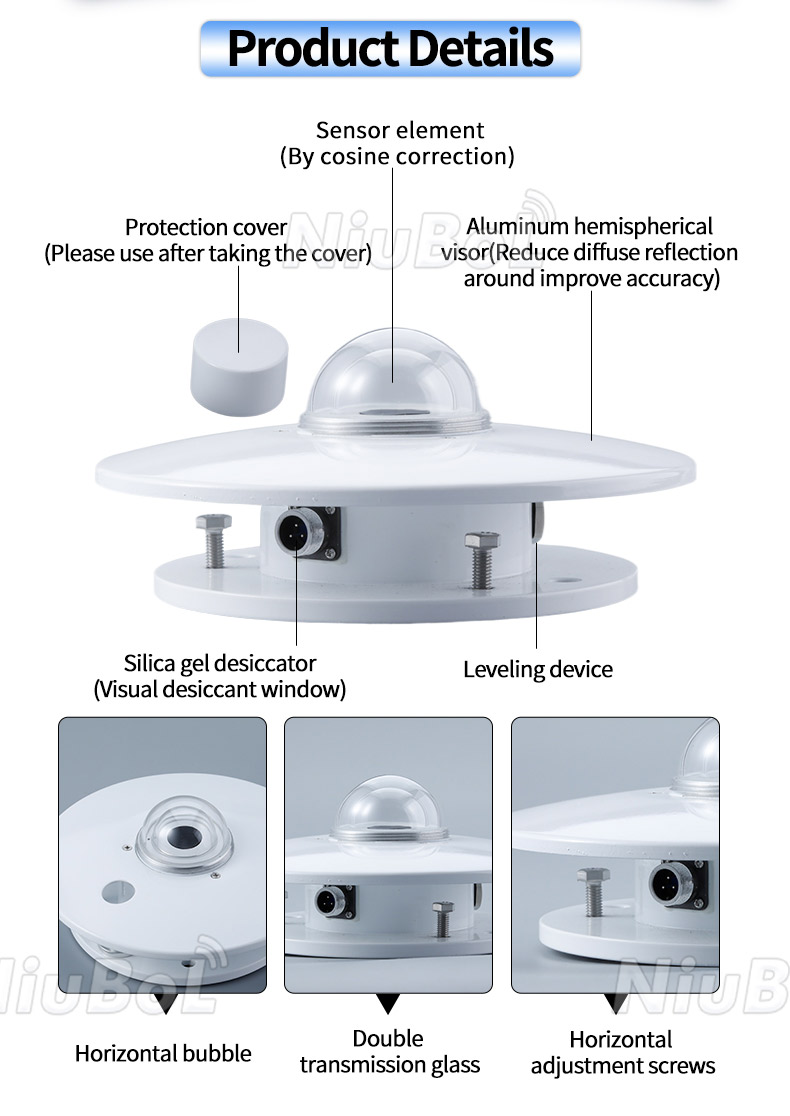
Total solar radiation sensor is used to measure total solar radiation (Global Solar Radiation) reaching the sensor sensing surface. Total radiation consists of two parts:
Direct radiation from the sun.
Diffuse radiation scattered by atmosphere reaching the surface.
NiuBoL NBL-W-HPRS model is a high-precision pyranometer designed to precisely measure solar radiation in the spectral range of 0.3–3 μm. This spectral range covers the main energy part of solar radiation, ensuring comprehensiveness and accuracy of measurement.
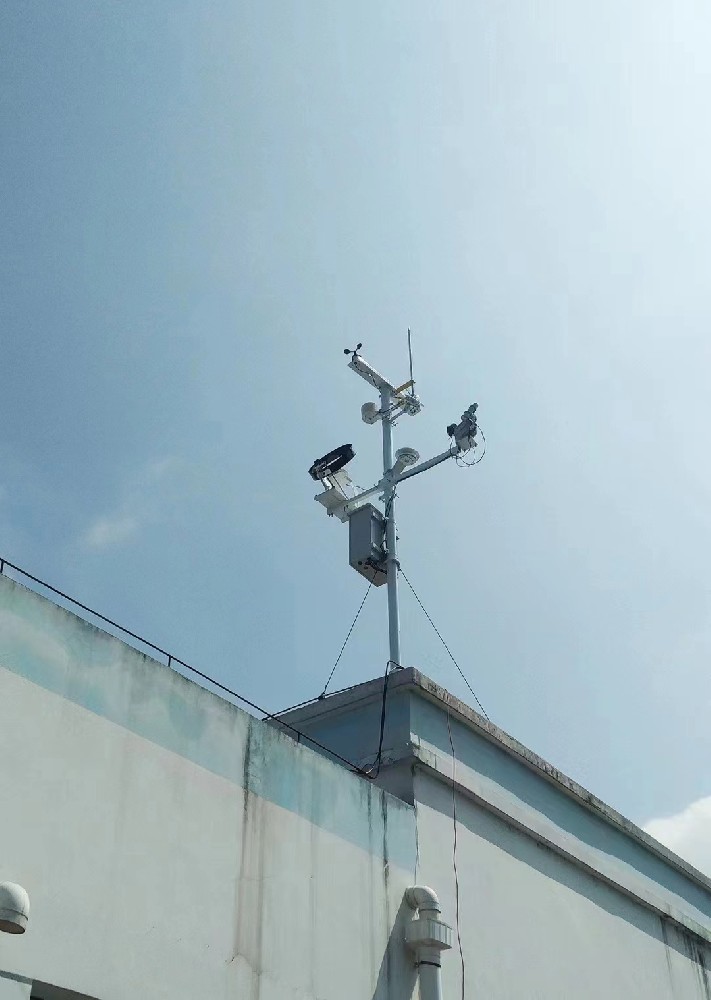
The core of NiuBoL sensor is the thermoelectric sensing principle based on the Seebeck effect.
The sensor uses a wound plated multi-junction thermopile as the core sensing element.
Energy Absorption & Temperature Difference: Thermopile surface coated with high-absorptivity black coating. When solar radiation is absorbed by this coating, heat rises. Thermopile hot junctions are on the sensing surface receiving radiation heating; cold junctions are inside the body maintaining relatively stable temperature.
Electromotive Force Generation: Temperature difference between cold and hot junctions generates thermoelectric potential (voltage signal) according to thermoelectric effect.
Radiation Conversion: Within linear range, output voltage signal magnitude is proportional to solar irradiance (radiation intensity, unit W/m²). By measuring this voltage signal, radiation intensity data can be precisely obtained.
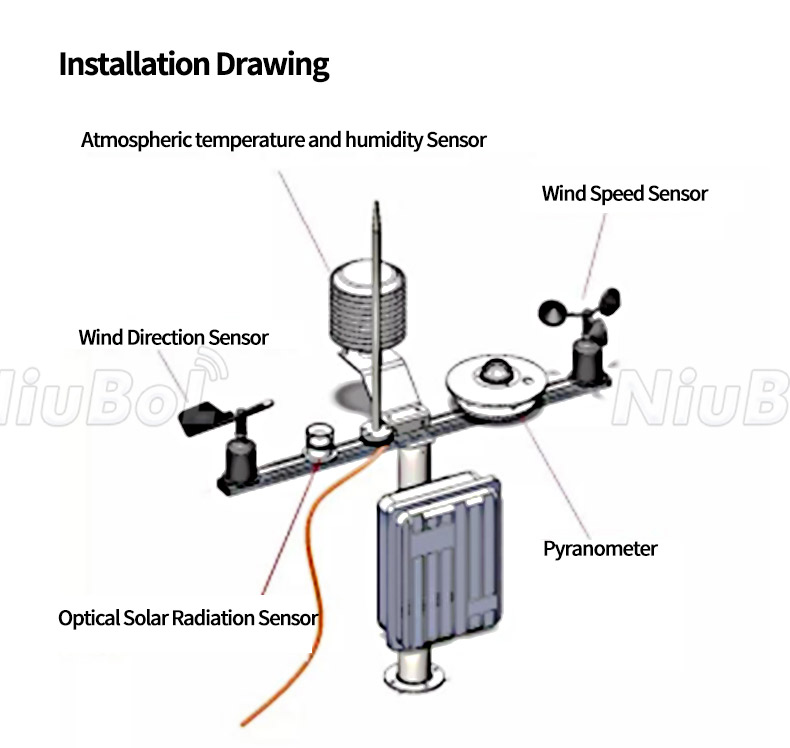
NiuBoL NBL-W-HPRS sensor is optimized in structural design to ensure high precision and stability in harsh environments, complying with World Meteorological Organization (WMO) standards.
The sensor receiver is protected by a unique double-layer transmission glass dome. This is not just simple rain protection but has important physical significance:
Outer Dome: Main function is to block rain/wind, protect internal components, while serving as first layer thermal isolation.
Inner Dome: Main purpose is to cut off infrared radiation from outer dome itself, reducing interference from outer dome temperature changes caused by wind or environment on internal thermopile, thereby minimizing air convection impact on pyranometer measurement.
This double-layer structure, combined with internal visible desiccant window design, effectively prevents water vapor condensation, ensuring long-term stability of optical transmittance.
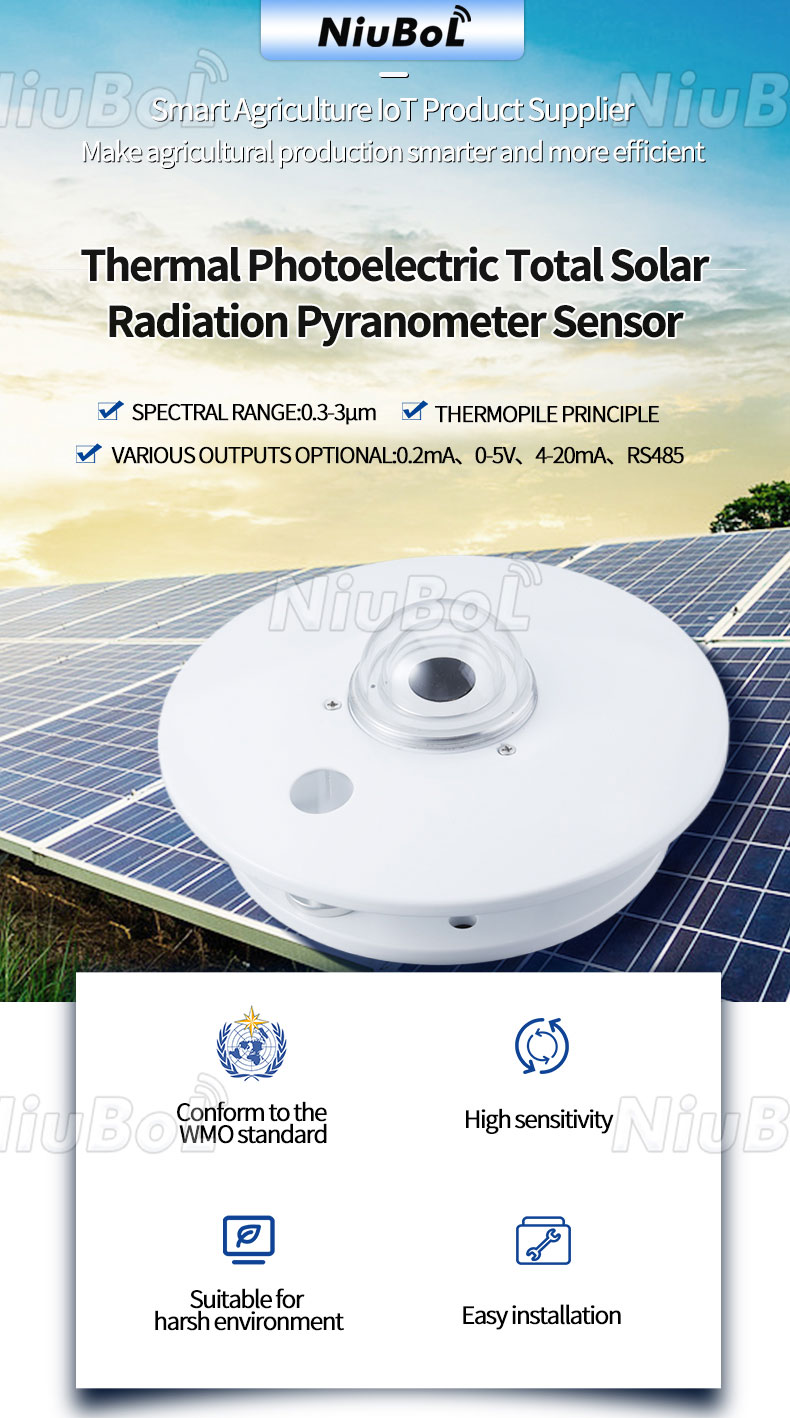
NBL-W-HPRS technical parameters reflect its reliability in professional applications:
Measurement range: 0–2000 W/m² (covering full range from night to strong sunlight).
High sensitivity: Reaching 7~14 μV/(W·m²), ensuring precise capture of weak radiation changes.
High stability: Annual stability < ±2%, meeting long-term outdoor monitoring needs.
Fast response: Response time < 35 seconds (99%), quickly reflecting radiation intensity changes.
Environmental adaptability: Operating temperature -40°C ~ +50°C, suitable for various harsh climates.
Diverse output forms, including current (4–20 mA), voltage (0–5 V), and digital signal (RS485), easily compatible with various radiation recorders and data acquisition equipment.
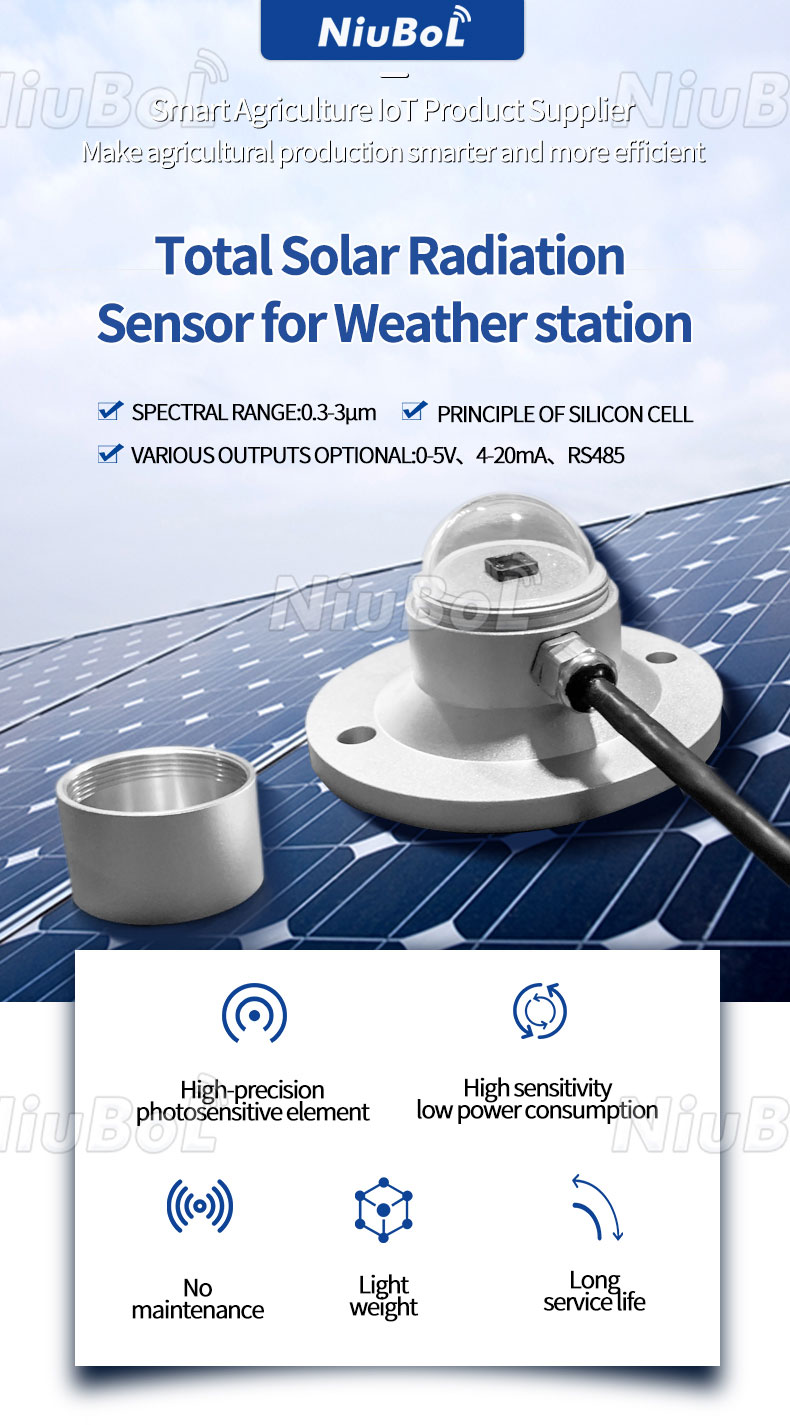
Total solar radiation sensor is a universal tool for multi-field scientific research and engineering practice. NiuBoL sensor, with WMO compatibility and high precision, has particularly wide applications.
Solar Resource Assessment: Measuring long-term accurate total radiation data in a location is foundation for assessing regional solar resource potential, guiding photovoltaic station optimal site selection, capacity planning, and tilt angle design.
System Efficiency Monitoring & Optimization: Real-time monitoring of radiation intensity entering photovoltaic array, compared with actual power generation for diagnosing system faults (e.g., shading, panel aging) and evaluating system performance ratio (PR).
Photovoltaic Design Optimization: Measuring incident radiation on inclined surface, guiding optimal tilt and azimuth angle design for solar panels.
Meteorological Station & Radiation Balance: Used for monitoring atmospheric radiation balance and energy flow in meteorological stations, important parameter for climate change model establishment and prediction.
Agricultural & Forestry Monitoring: Radiation data used to calculate crop photosynthetically active radiation (PAR), guiding agricultural/forestry irrigation, fertilization, and pest warning, crucial for crop growth monitoring.
Environmental Assessment: Used for building material aging tests and atmospheric pollution research (e.g., aerosol weakening effect on radiation).
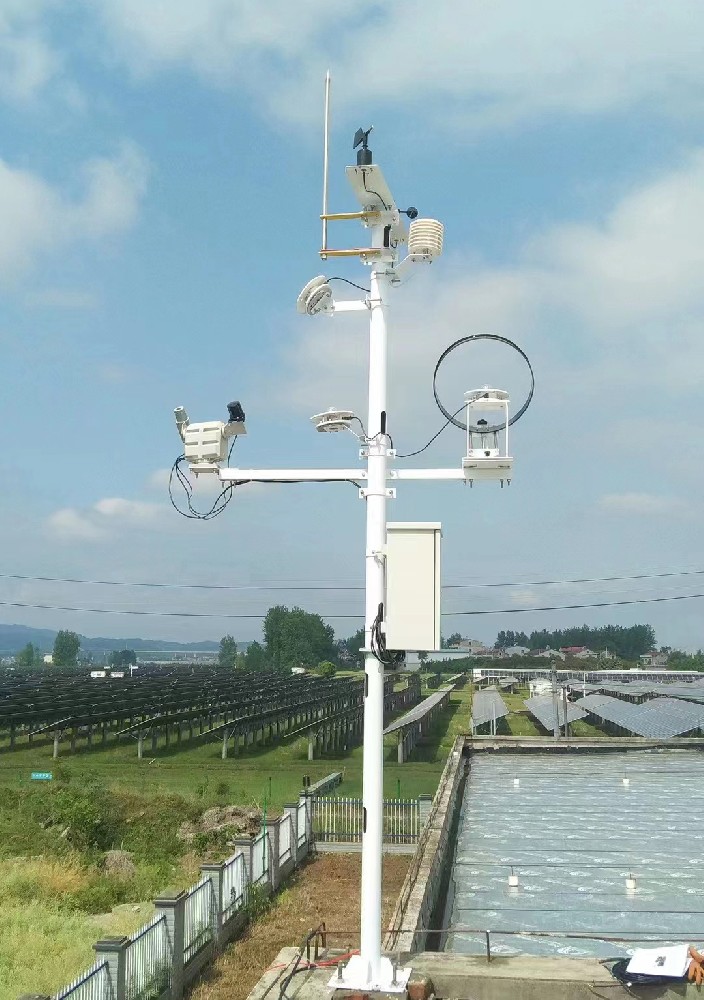
NBL-W-HPRS pyranometer can achieve multiple radiation measurements through accessories:
Diffuse radiation: Add shading ring to block direct sunlight for diffuse radiation measurement.
Reflected radiation: Install sensing surface downward for surface reflected radiation measurement.
Any precision measurement instrument has specific advantages and limitations.
| Advantage | Description |
| High measurement accuracy | Based on thermopile thermoelectric effect, measures wide spectrum (0.3–3 μm), ensuring comprehensiveness of total radiation energy. Complies with WMO standards, high precision and reliability |
| Good long-term stability | NBL-W-HPRS has high annual stability, thermocouple element long lifespan, suitable for long-term continuous outdoor monitoring |
| Reliable structural design | Double-layer glass dome design effectively suppresses thermal convection and infrared interference, improving environmental adaptability of measurement |
| Wide applications | Flexibly measures total radiation, reflected radiation, diffuse radiation, and other parameters through accessories |
| Limitation | Description | Countermeasure (NiuBoL Features) |
| Relatively slow response speed | Thermopile needs time to accumulate temperature difference, response time (e.g., ≤35 seconds) slower than photocell | Suitable for medium- and long-term data monitoring, not rapid transient change capture |
| Affected by weather | Rain, snow, etc., affect radiation amount, need to ensure top dome clean | Visible desiccant window and waterproof design, easy maintenance |
| Maintenance & cost | Requires regular calibration and maintenance (cleaning, desiccant replacement), cost higher than low-precision sensors | Manufacturer promises recalibration after more than two years, extending maintenance cycle |
| Precision limitation | Precision limited by thermocouple sensitivity and temperature drift characteristics | High sensitivity design and strict temperature characteristic control (±2% (−10°C∼+40°C)) minimizes error |
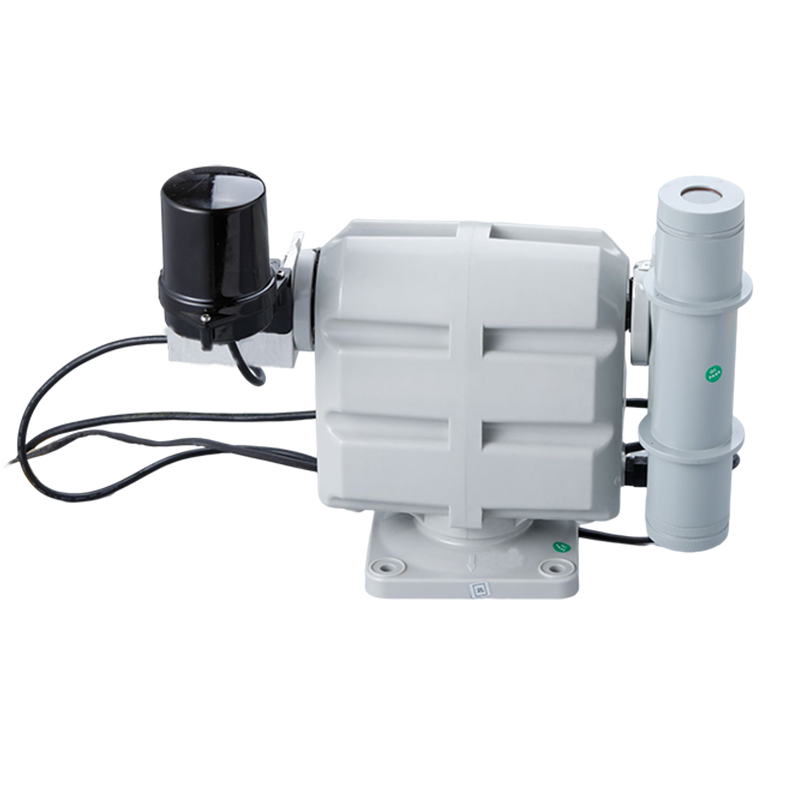
To ensure long-term high-precision operation of NiuBoL sensor, daily maintenance is crucial:
Keep Clean: Strictly prohibit dismantling or loosening optical dome. Regularly use soft cloth or fur to gently wipe optical dome, keeping it clean and transparent.
Moisture Prevention Check: Frequently check desiccant status inside dryer. Once desiccant changes from blue to red or white, must promptly replace or bake to blue before use, preventing water vapor condensation inside dome affecting measurement.
Precipitation Protection: Although NBL-W-HPRS has good waterproof performance, during heavy rain, snow, or prolonged precipitation, cover for protection. Open immediately after rain stops to ensure normal operation.
Regular Calibration: After more than two years of use, must be recalibrated by manufacturer or professional metrology department to ensure sensitivity meets standards.
Fault Troubleshooting: If output value found too high/low, first check if sensing port has dirt; if display zero or out of range, check if wiring secure and correct.
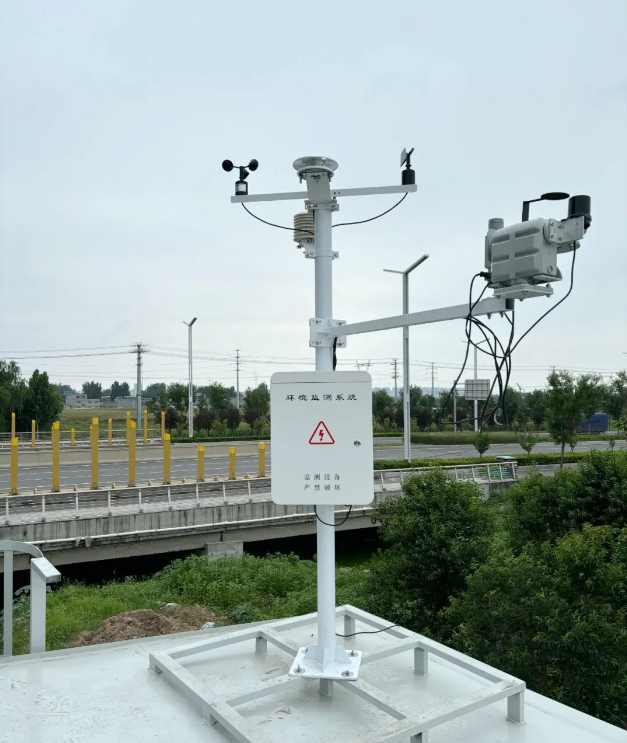
NiuBoL (NBL-W-HPRS) total solar radiation sensor, with its thermoelectric sensing core, precision double-layer glass dome structure, and WMO-compliant performance indicators, has become a reliable choice in solar & photovoltaic power generation, meteorological monitoring, agricultural & forestry ecology, and other fields. It not only accurately provides total solar radiation data but also flexibly measures reflected and diffuse radiation through installation methods, greatly expanding application range.
In today's increasingly important clean energy and climate change research, precise measurement of total solar radiation is the foundation for promoting sustainable development. In the future, with further sensor technology intelligence and integration, high-precision pyranometers like NiuBoL will continue to play key roles in building smart grids, optimizing agricultural production, and deepening climate understanding.
Do you have further questions about NBL-W-HPRS sensor technical parameters or installation details? Or want to learn more about its specific application cases in photovoltaic power stations?
 NBL-W-SRS-Solar-radiation-sensor-instruction-manual-V4.0.pdf
NBL-W-HPRS-Solar-Radiation-Sensor-Instruction-Manual-V3.0.pdf
Prev:Comparative Analysis of Different Types of Solar Radiation Sensors
Next:Noise Sensor: Working Principle, Technical Advantages & Applications
Related recommendations
Sensors & Weather Stations Catalog
Agriculture Sensors and Weather Stations Catalog-NiuBoL.pdf
Weather Stations Catalog-NiuBoL.pdf
Agriculture Sensors Catalog-NiuBoL.pdf
Water Quality Sensor Catalog-NiuBoL.pdf
Related products
 Combined air temperature and relative humidity sensor
 TDR Soil Moisture & Temperature Sensor for irrigation| RS485 |4-20mA| NBL-S-THR
 Soil pH sensor RS485 soil Testing instrument soil ph meter for agriculture |NBL-S-PH
 Wind Speed sensor Output Modbus/RS485/Analog/0-5V/4-20mA
 Tipping bucket rain gauge for weather monitoring auto rainfall sensor RS485/Outdoor/stainless steel
 Pyranometer Solar Radiation Sensor 4-20mA/RS485

Screenshot, WhatsApp to identify the QR code
WhatsApp number:+8615367865107
(Click on WhatsApp to copy and add friends)

