





— Blogs —
—Products—
 Consumer hotline +8618073152920
 WhatsApp:+8615367865107
Address:Room 102, District D, Houhu Industrial Park, Yuelu District, Changsha City, Hunan Province, China
Product knowledge
Time:2025-12-31 15:13:24 Popularity:762
In the digital transformation of modern agriculture, environmental ecological protection, and smart city construction, small meteorological stations (automatic meteorological observation stations) have become indispensable underlying data facilities. They act like "digital sensors" distributed in the field, capturing subtle changes in the atmospheric environment in real time. However, what exactly constitutes a high-performance NiuBoL small meteorological station? What evolution has it undergone from traditional mechanical to modern ultrasonic technology? And how does it ensure scientific-grade data output in harsh natural environments?
This article will reveal the internal structure of meteorological stations, deeply analyze their software and hardware synergy logic, and share professional installation practical skills.
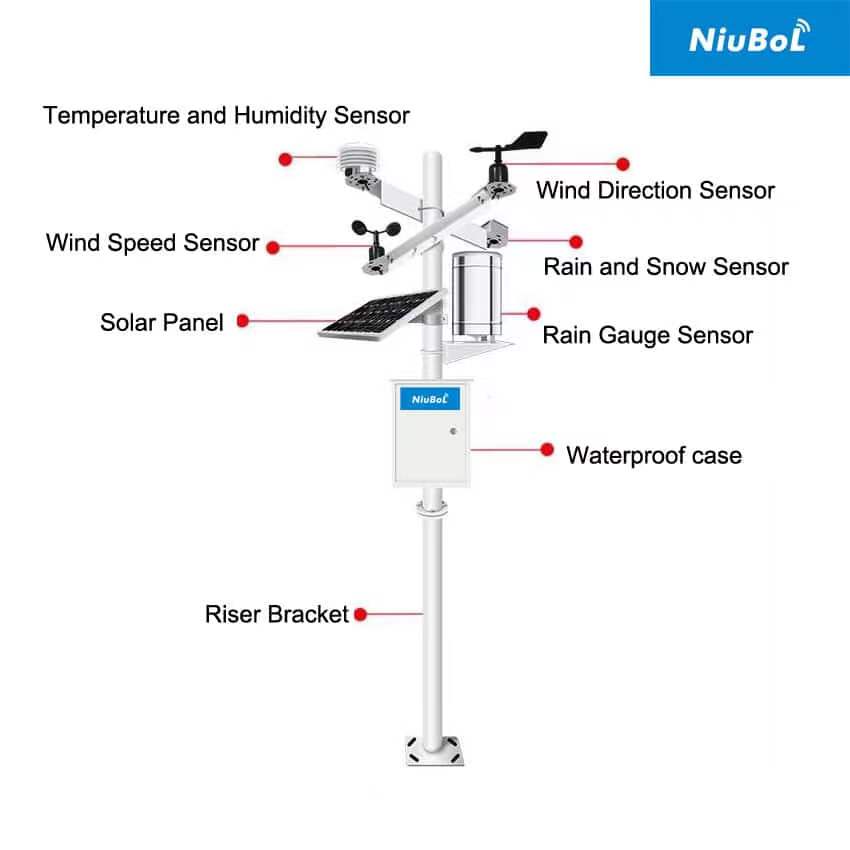
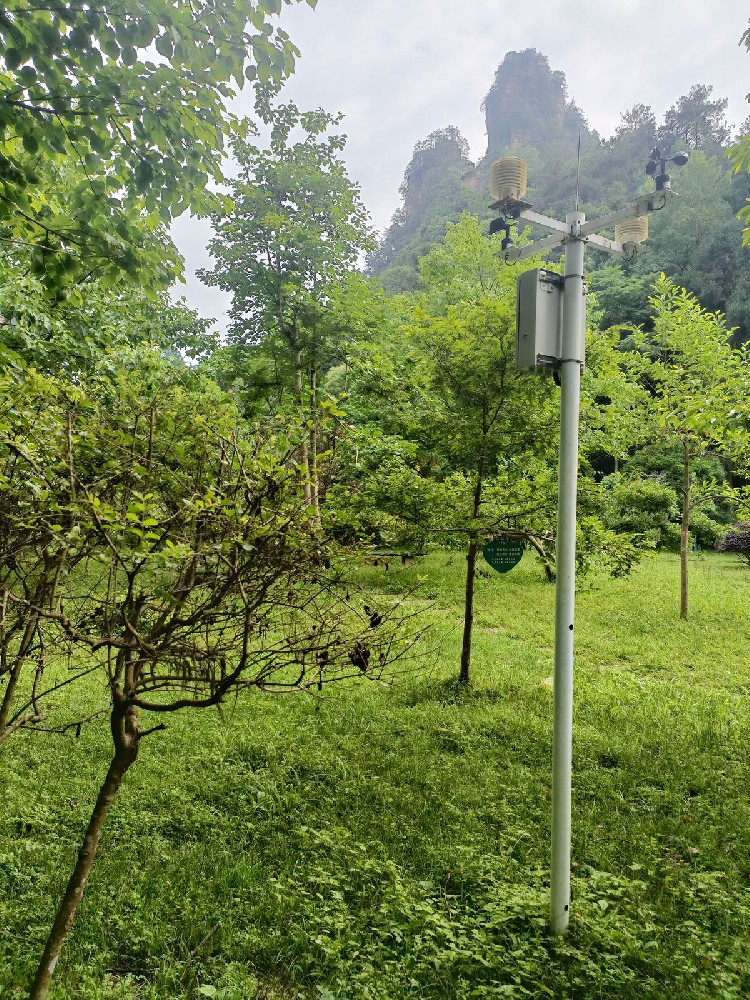
A small meteorological station is not a single monitoring tool but a highly integrated automation system. Each component performs its duties, forming a complete chain from perception to processing and energy support.
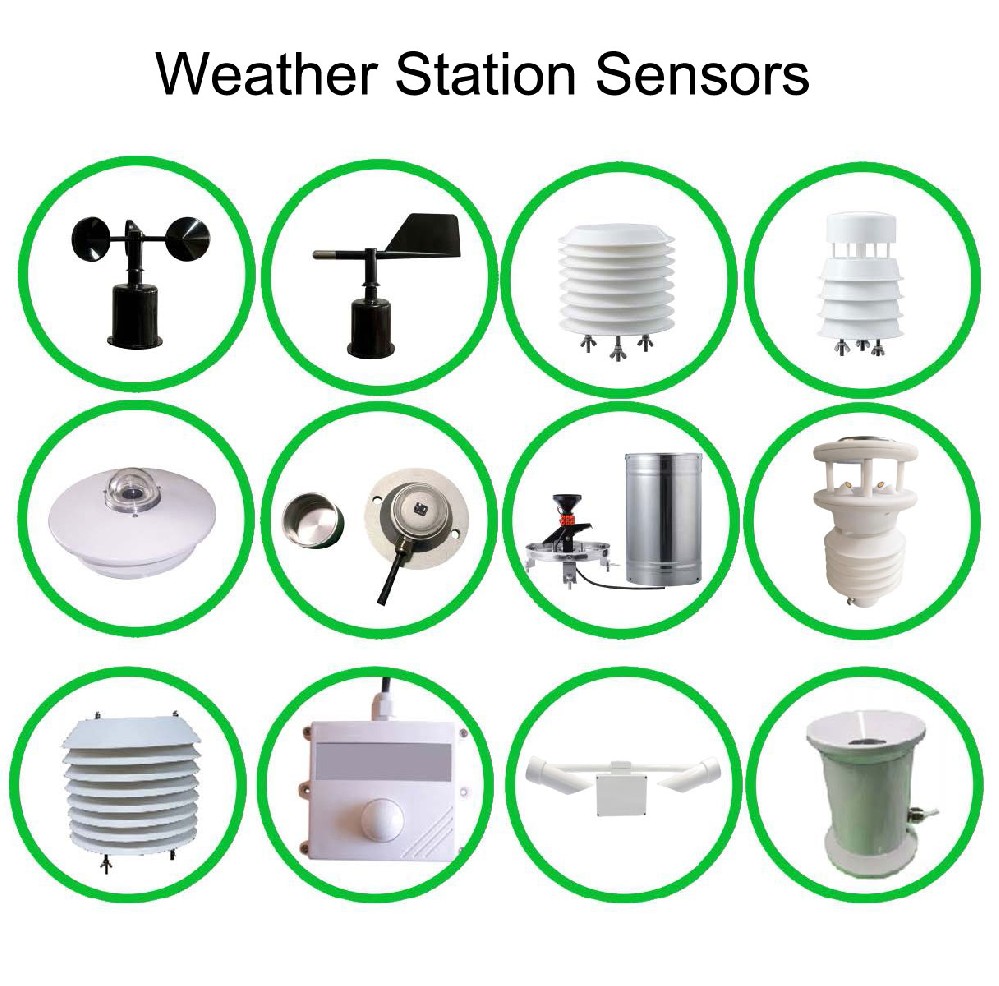
Sensors are the front-end detection components of the meteorological station, directly determining monitoring precision. NiuBoL meteorological stations support flexible configurations of multiple sensors:
Air Temperature and Humidity Sensor: Usually integrated in a radiation-proof louver box to avoid direct sunlight interference, accurately monitoring atmospheric cold/hot and dry/wet levels.
Wind Speed and Direction Sensor: Captures wind dynamic parameters, providing basis for wind disaster prevention and mitigation.
Rain Sensor: Adopts tipping bucket structure to convert precipitation into digital pulses, recording total precipitation and instantaneous intensity.
Atmospheric Pressure Sensor: Senses pressure fluctuations through high-precision piezoresistive elements.
Featured Options: Can add illumination radiation, carbon dioxide, negative oxygen ions, PM2.5/PM10, and other sensors based on needs.
The collector is the hub of the entire equipment, responsible for data collection, processing, and logic control. Current, voltage, or pulse signals output by sensors are aggregated into the collector.
Core Functions: Features analog-to-digital (A/D) conversion capability, supports large-capacity local storage to ensure secure data backup during communication interruptions. It also has intelligent self-test functions to monitor system voltage status in real time.
Monitored data needs to be transmitted to remote servers via communication networks. The transmission module is usually integrated in the collection box.
Mainstream Solutions: NiuBoL supports 4G full-network, LoRaWAN, and other wireless transmission methods to ensure stable data output even in remote farmlands or forests.
Interface Support: Standard RS485 interface, compatible with multiple industrial protocols for easy integration into existing systems.
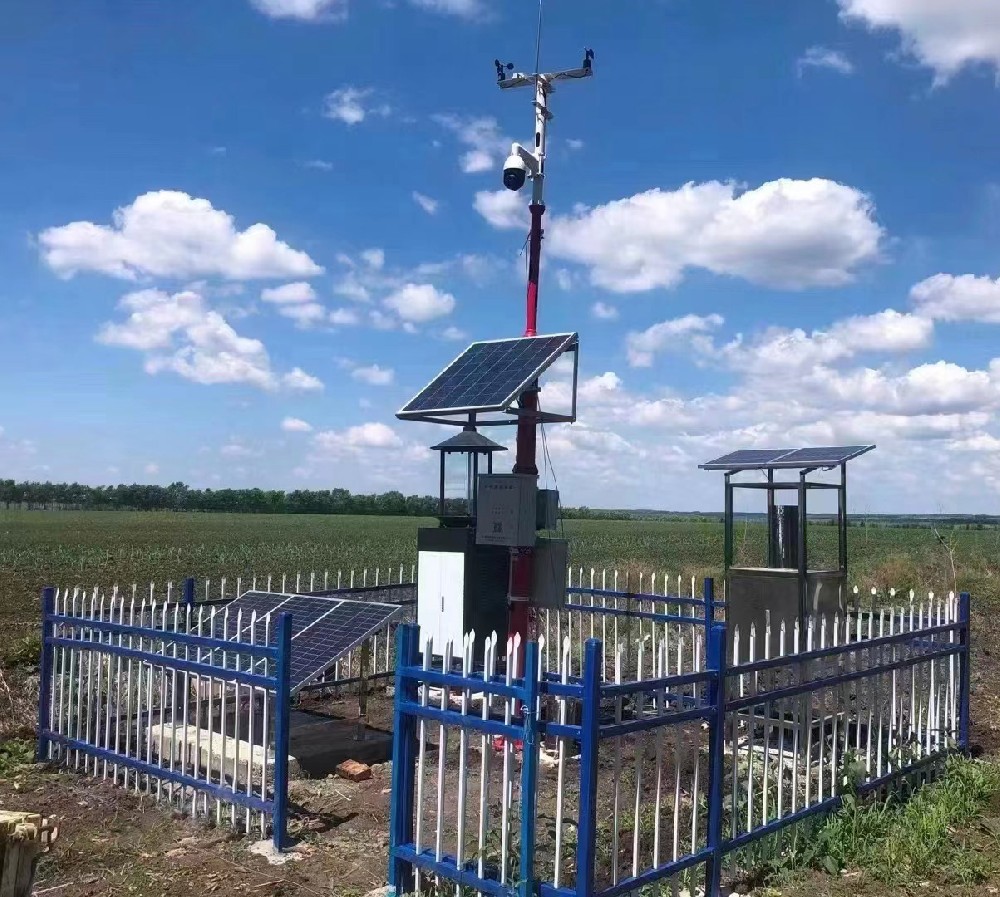
Field environments often lack power supply, so NiuBoL adopts a "solar panel + battery" energy combination.
Energy Management: Solar panels convert light energy into electricity, managed by the controller for charging/discharging processes. Even in continuous rainy weather, high-performance batteries ensure normal operation for 7-15 days.
The bracket is not only physical support but also determines sensor installation height and posture.
Material Selection: NiuBoL uses thickened stainless steel or high-strength galvanized steel materials, with extremely strong wind resistance and corrosion prevention, ensuring the equipment stands firm in wind, frost, rain, and snow.
With technological progress, monitoring technology in small meteorological stations is constantly evolving. While maintaining the high cost-effectiveness of traditional mechanical sensors, NiuBoL introduces more advanced ultrasonic integrated monitoring technology.
Mechanical Sensors: Such as three-cup anemometers, with intuitive structure and easy maintenance, suitable for most conventional agricultural scenarios.
Ultrasonic Integrated Sensors: Use ultrasonic time difference method to measure wind speed and direction.
Advantages: No mechanical wear, no starting wind speed limit (measures from zero wind speed), integrated structure resistant to snow and dust.
Applications: More suitable for polar, desert, coastal high-salt fog, and high-precision scientific scenarios.
Hardware handles "collection," while software handles "empowerment." NiuBoL's accompanying smart cloud platform is key to achieving agricultural digitalization.
Real-Time Data Visualization: Users can intuitively view real-time curves and statistical charts via computer or mobile App.
Multi-Level Warning System: Users can set thresholds (e.g., wind speed over level 8, temperature below 0°C), and the system automatically sends alerts via SMS, email, or App push.
Intelligent Report Export: Supports one-click export of historical data (Excel/csv format).
Site Map Management: For large-scale farms, intuitively manage multiple meteorological stations distributed in different areas on a map.
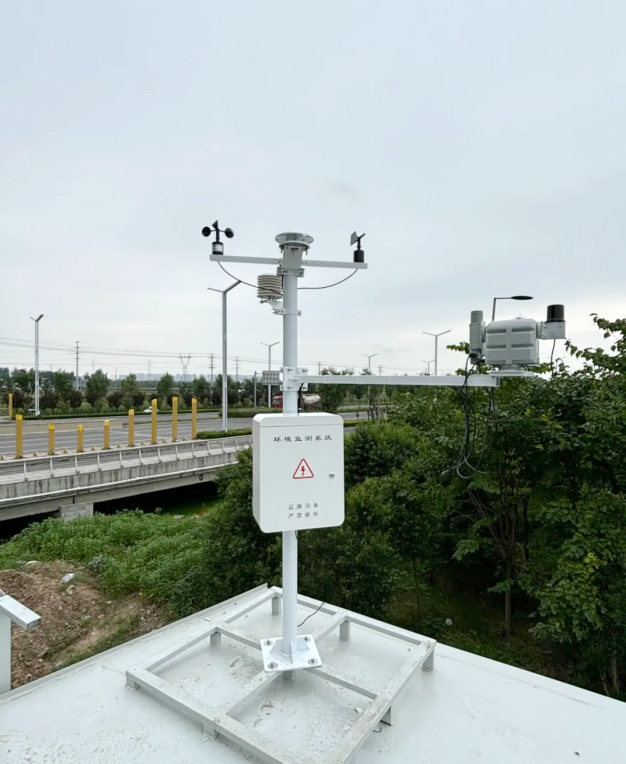
Even with excellent equipment performance, if the installation location is improper, monitoring data will lose reference value. NiuBoL summarizes the core points in installation for you:
Away from Strong Electromagnetic Interference
Strictly prohibit installation near transformers, high-voltage transmission lines, or large transmission towers. Pulse interference from electromagnetic fields can seriously mislead sensors like wind speed and rain, causing abnormal data fluctuations.
Avoid Airflow Blocking and Shading
Meteorological stations should be installed in open areas.
Principle: The height of surrounding buildings or trees should not exceed half the distance from the pressure station to the object. If installed on rooftops, ensure sensors are 1.5 meters above the rooftop parapet.
Rain Gauge Installation Should Be "Isolated"
No branches should overhang the rain gauge, and sides should be away from tall racks. Prevent leaves from falling and blocking the tipping bucket or underestimating precipitation due to shading.
Foundation Fixing to Prevent Tilting
Strictly prohibit direct insertion on soft soil. Must reinforce with concrete foundation and expansion screws to ensure the bracket is absolutely vertical.
Direction Calibration Should Be "Precise"
North alignment of the wind vane is the most error-prone in installation. Must use a compass to precisely align the wind direction sensor's north mark (N) with geographic true north. Wrong direction means all data is wrong.
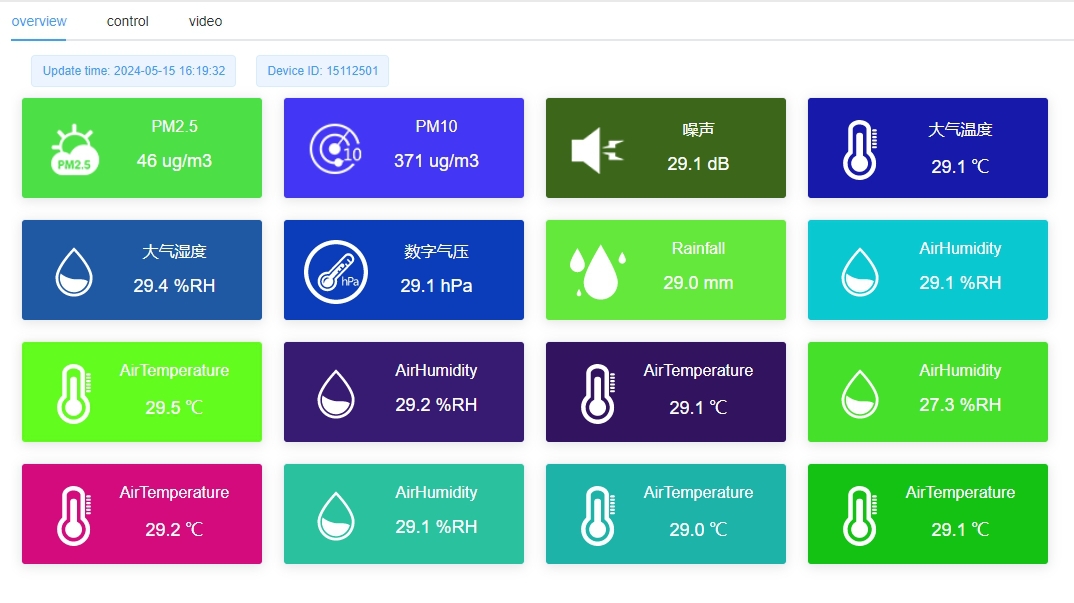
| Application Scenario | Recommended Core Sensors | Monitoring Focus |
|---|---|---|
| Precision Farmland Management | Air temperature and humidity, illumination, rainfall, soil moisture | Evapotranspiration calculation, irrigation guidance |
| Forestry Fire Prevention Monitoring | Wind speed, wind direction, air humidity, fine fuel moisture content | Fire risk grade forecasting, fire spread prediction |
| Campus Meteorology Popularization | Six elements (temperature humidity wind pressure rain light), negative oxygen ions, PM2.5 | Science education, environmental health |
| Urban Flood Prevention Warning | Rainfall (high precision), water pressure/level, road ponding | Urban waterlogging prevention |
Q1: How long can the battery support in continuous rainy days?
A: Under conventional configuration, it can support system operation for 7-15 days without sunlight after full charge.
Q2: How to prevent birds from "perching" on rain gauges or anemometers?
A: NiuBoL sensors can be optionally equipped with bird-proof spikes, effectively preventing bird interference without affecting monitoring precision.
Q3: Can the equipment be used in cold regions at -30°C?
A: Yes. NiuBoL provides industrial-grade wide-temperature components, with core collectors stable in -40°C to +85°C environments.
Q4: Why does the wind direction data seem unchanged?
A: Check if the wind vane is entangled with foreign objects or if bearing resistance increases due to non-level installation.
Q5: Can data transmission be viewed across regions?
A: Yes. As long as the device is networked, you can view real-time data from global sites via the cloud platform anywhere with mobile signal.
Q6: How to do lightning protection?
A: Bracket top standard equipped with lightning rod, recommend embedding grounding grid during foundation construction for overall induced lightning protection.
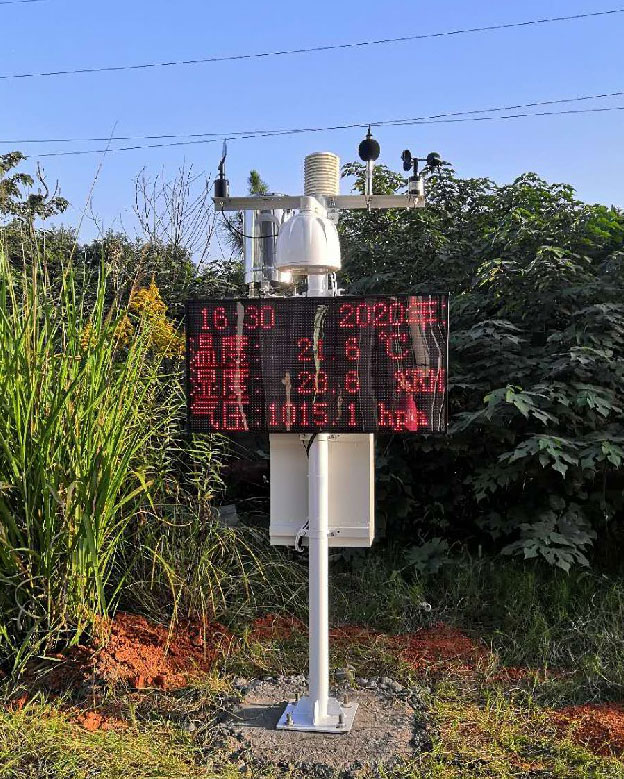
Small meteorological stations are the "first line of defense" for smart agriculture and environmental monitoring. From precise sensor induction to core collector computation, and to cloud big data analysis, NiuBoL is committed to providing precise, stable, and easy-to-use environmental monitoring solutions for every user.
Scientific monitoring starts with professional equipment and succeeds with standardized installation. We hope this in-depth guide helps you better utilize meteorological data to empower your production and research.
Communication Protocol: Supports standard Modbus-RTU protocol, supports custom protocol integration.
Data Units: Temperature (°C), Humidity (%RH), Wind Speed (m/s), Rainfall (mm), Pressure (hPa), Illumination (Lux).
Protection Level: Enclosure protection up to IP65/IP66 level.
Data Interface: RS485 (isolated), USB (debugging).
Do you need exclusive meteorological station configurations based on specific project scenarios (such as urban, plateau, island, facility agriculture)? Contact us, NiuBoL will provide one-stop customized meteorological monitoring solutions to help you master the climate and foresee the future.
Prev:Definition and Application Scenarios of Seven-Parameter Meteorological Stations
Next:Applications and Core Technical Advantages of Small Weather Stations in Agriculture
Related recommendations
Sensors & Weather Stations Catalog
 Agriculture Sensors and Weather Stations Catalog-NiuBoL.pdf
Weather Stations Catalog-NiuBoL.pdf
Agriculture Sensors Catalog-NiuBoL.pdf
Water Quality Sensor Catalog-NiuBoL.pdf
Related products
 Combined air temperature and relative humidity sensor
 TDR Soil Moisture & Temperature Sensor for irrigation| RS485 |4-20mA| NBL-S-THR
 Soil pH sensor RS485 soil Testing instrument soil ph meter for agriculture |NBL-S-PH
 Wind Speed sensor Output Modbus/RS485/Analog/0-5V/4-20mA
 Tipping bucket rain gauge for weather monitoring auto rainfall sensor RS485/Outdoor/stainless steel
 Pyranometer Solar Radiation Sensor 4-20mA/RS485

Screenshot, WhatsApp to identify the QR code
WhatsApp number:+8615367865107
(Click on WhatsApp to copy and add friends)

