





— Blogs —
—Products—
 Consumer hotline +8618073152920
 WhatsApp:+8615367865107
Address:Room 102, District D, Houhu Industrial Park, Yuelu District, Changsha City, Hunan Province, China
Product knowledge
Time:2026-01-10 15:14:22 Popularity:840
In today's era of highly integrated modern meteorology and IoT technology, meteorological observation is no longer limited to single temperature or precipitation records. NiuBoL multi-element weather station, as a new type of comprehensive observation system, integrates, collects, records, transmits, and intelligently analyzes originally scattered meteorological elements into full-dimensional digital assets, providing a solid data foundation for precise meteorological forecasting and environmental decision-making.
Compared with traditional single-function observation equipment, multi-element integrated weather stations not only improve data acquisition efficiency but also achieve qualitative leaps in adaptability to complex environments and data correlation analysis.
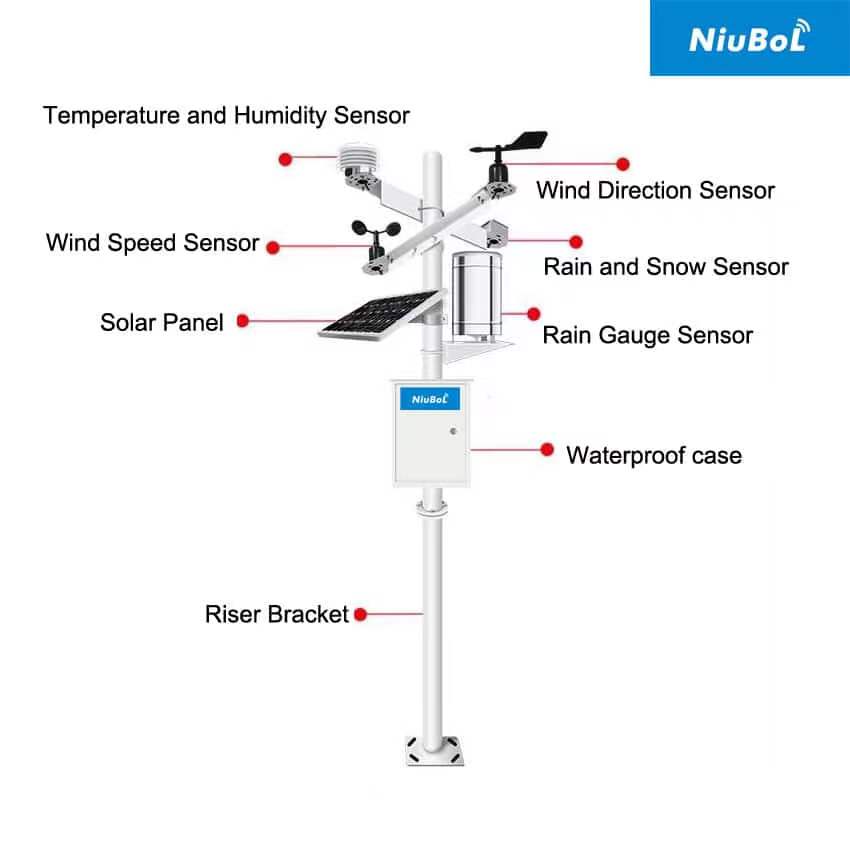
NiuBoL multi-element integrated weather station can transmit on-site particulate matter, noise, meteorology, video, and other data in real time through 4G/5G or internet broadband. Its built-in core sensor matrix constitutes the system's "perception hub".
1. Basic Meteorological Four Elements (Temperature, Humidity, Pressure, Rainfall)
Air Temperature Sensor: Real-time monitoring of atmospheric heat state, the foundation for evaluating microclimate changes and crop growth models.
Air Humidity Sensor: Measures water vapor content in air. It has core reference value in agricultural irrigation and forest fire risk level assessment.
Atmospheric Pressure Sensor: Changes in air pressure directly predict weather transitions between cloudy and sunny, a key indicator for medium- and short-term weather forecasting in weather stations.
Rainfall Sensor: Adopts tipping bucket or radar principle to accurately record precipitation intensity and accumulation, providing real-time data for flood warning.
2. Dynamic Meteorological Elements (Wind Speed, Wind Direction)
Wind Speed Sensor: Measures air flow speed. In construction tower crane safety, wind power generation, and pesticide spraying operations, wind speed data determines operational safety.
Wind Direction Sensor: Monitors wind direction. Combined with wind speed data, it can analyze pollutant diffusion trends, an indispensable part of environmental monitoring and aviation meteorology.
3. Environmental Quality Elements (Particulate Matter, Noise)
PM2.5 & PM10 Sensors: Adopt laser scattering principle to monitor inhalable particulate matter in air. This is a core indicator for measuring air quality in smart cities and industrial parks.
Noise Sensor: Real-time monitoring of environmental decibel values. In construction sites, traffic arteries, and school surroundings, noise monitoring is an important means to ensure the quality of human settlement environment.
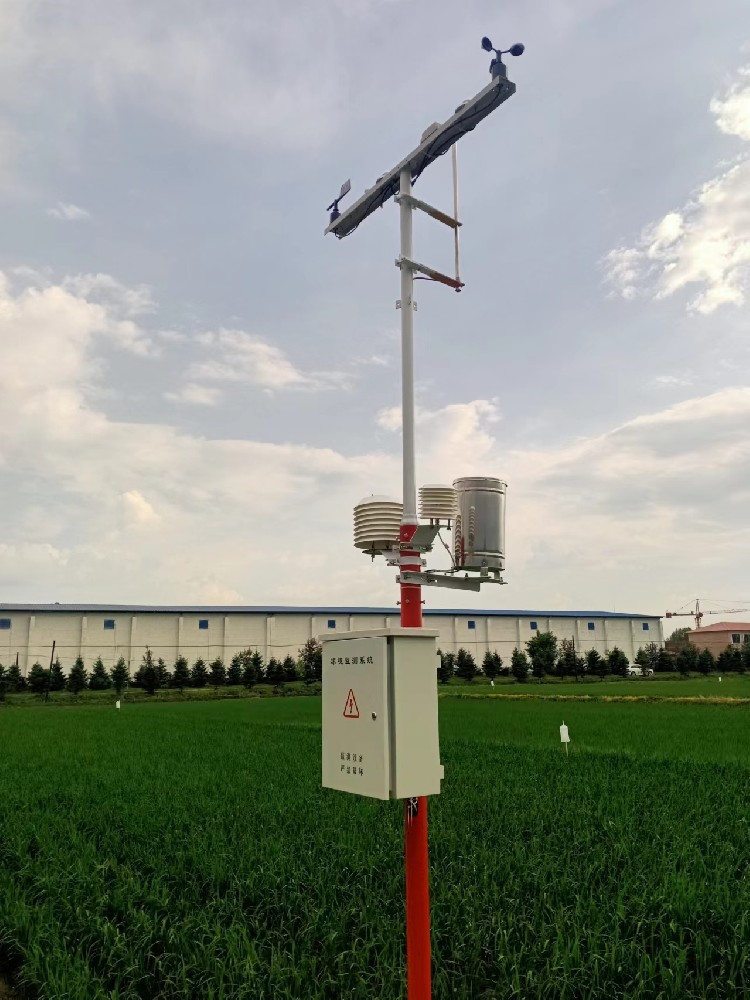
1. Multi-Element Collaborative Observation, Eliminating Data Islands
Traditional systems often only observe single elements, while NiuBoL multi-element weather station achieves "one machine for multiple uses". Simultaneous observation of multiple elements can provide more comprehensive and accurate raw data. For example, combining temperature, humidity, and particulate matter concentration can more scientifically analyze the formation mechanism of haze, providing more valuable in-depth information for meteorological forecasting.
2. Industrial-Grade Precision and Stability
Data accuracy is the lifeline of weather stations. NiuBoL adopts high-quality sensor probes to ensure data stability in extremely cold, high-temperature, high-humidity, and other harsh environments. Higher data accuracy means more accurate disaster warning and production decision-making, which has milestone significance for precision agricultural feeding, aviation safety, and meteorological scientific research.
3. Global Interconnection: No-Dead-Angle Remote Monitoring
Through cloud computing and IoT technology, NiuBoL system completely breaks spatial limitations. Whether the weather station is located in remote mountains, desolate deserts, or offshore platforms, real-time data can be uploaded via 3G/4G/5G or WIFI signals. Managers can retrieve on-site video and real-time curves from the command center or mobile terminals, achieving "control thousands of miles away in real time".
4. Modular Customization, On-Demand Configuration
The observation system of multi-element weather stations has extremely strong flexibility. NiuBoL supports adding or reducing sensor elements according to users' specific needs.
Agricultural users: Can add soil moisture and solar radiation sensors.
Industrial users: Can strengthen noise, smoke, and specific gas monitoring.
This customizability ensures every set of equipment meets specific industry needs with the most optimal configuration, avoiding resource waste.
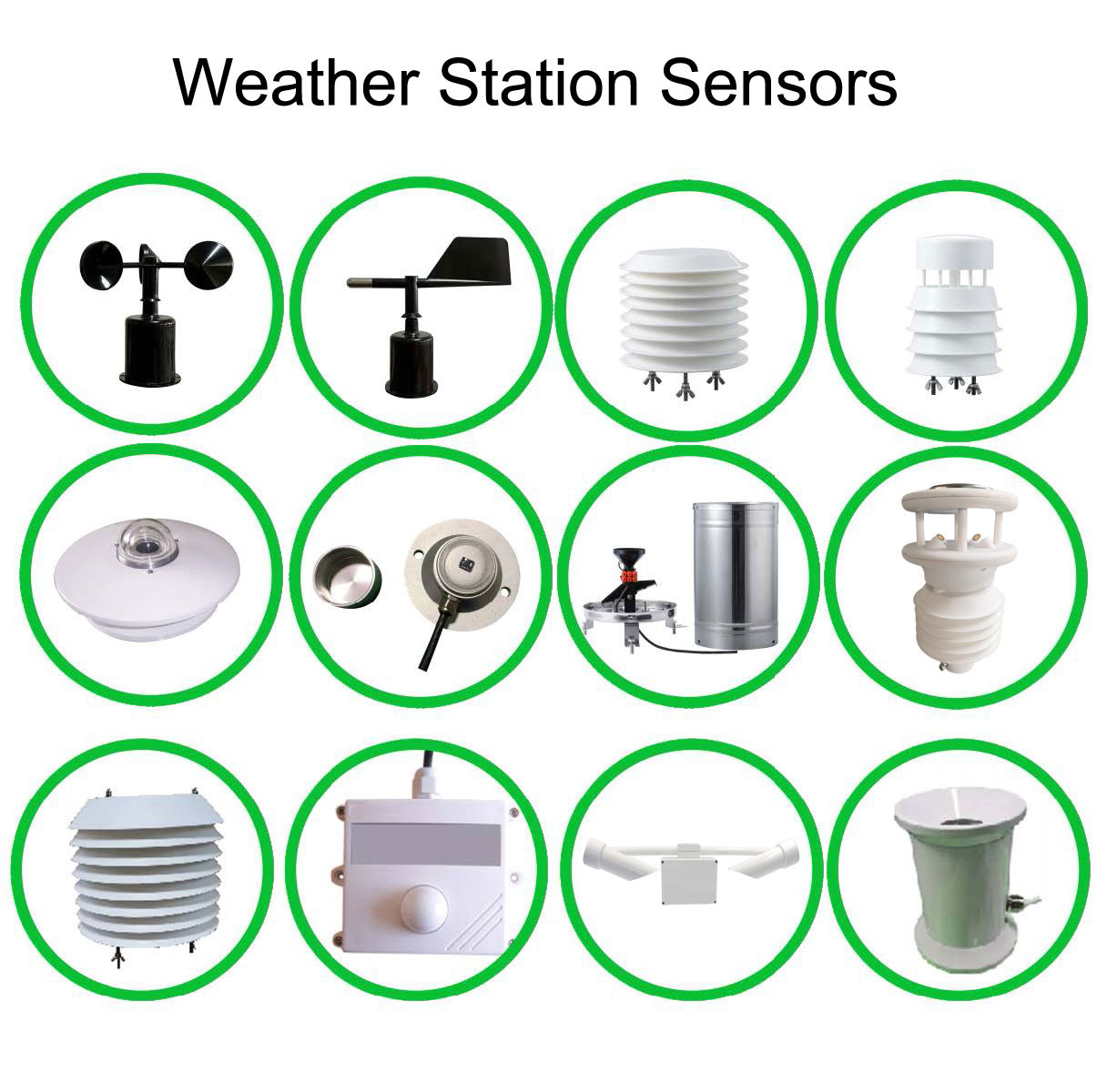
1. Smart Agriculture and Precision Farming
Multi-element weather station is the "command center" of smart agriculture. Through real-time monitoring of accumulated temperature, light, and precipitation, the system can automatically suggest the best sowing and harvesting timing for farmers. Combined with wind speed and direction monitoring, it can effectively avoid drift risks when spraying pesticides, improving efficacy.
2. Environmental Protection and Grid Management
Deploying multi-element integrated monitoring points on urban streets and industrial parks can achieve grid monitoring of PM2.5, PM10, and noise. The system can automatically generate pollution heat maps, providing scientific basis for precise law enforcement by environmental protection departments and regional air quality improvement.
3. Transportation, Aviation, and Emergency Support
On highways, general aviation airports, or cross-sea bridges, instantaneous changes in wind speed and direction directly threaten traffic safety. NiuBoL real-time warning system can issue warnings before extreme weather arrives, triggering emergency plans.
4. Meteorological Disaster Prevention and Reduction
In special fields such as mountain flood warning and forest fire monitoring, comprehensive consideration of multiple factors such as temperature, humidity, wind force, and precipitation is needed. Multi-element weather stations can establish more complex disaster models, striving for more warning time for personnel transfer.
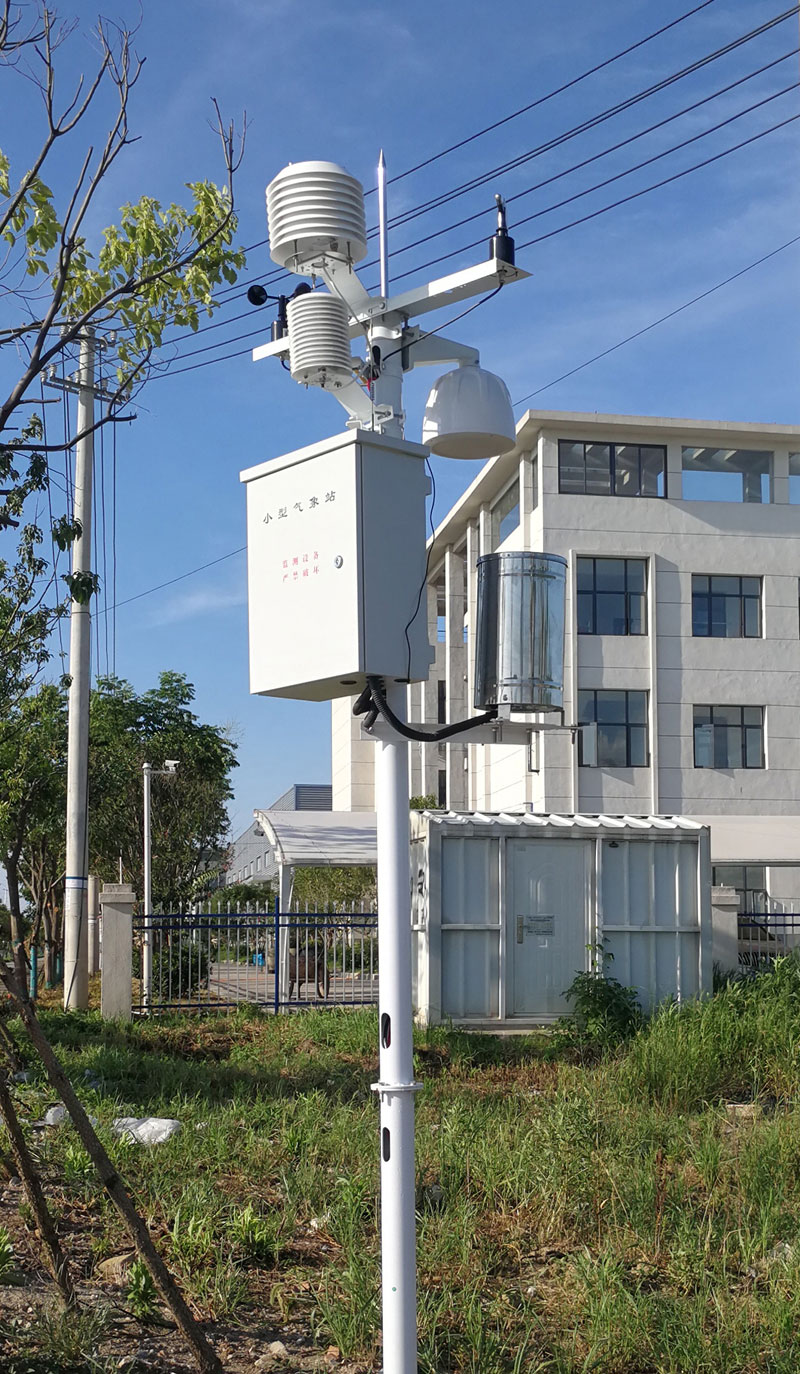
Q1: What are the benefits of multi-element integrated weather station compared to split-type?
A: Integrated weather station has smaller volume, more convenient installation, and reduces external wiring through internal integration between sensors, lowering the probability of failure due to line aging or lightning strikes. At the same time, it greatly saves installation bracket and infrastructure costs.
Q2: How to ensure PM2.5 sensor accuracy?
A: NiuBoL selected particulate matter sensor has built-in efficient sampling fan and self-cleaning optical path system, effectively reducing dust accumulation on optical window. In extremely dusty conditions, regularly check if intake port has foreign objects.
Q3: Does the system support offline continuation?
A: Yes. Collector has large-capacity storage space. When network temporarily fluctuates causing connection interruption, data will be saved locally; after connection recovery, system automatically retransmits offline period data, ensuring database continuity.
Q4: With so many sensors, what if data conflicts or one fails?
A: No conflict. NiuBoL adopts modular design internally, each sensor performs its own duties without interference. If one fails, it supports individual replacement without scrapping the whole machine, with very low maintenance cost.
Q5: Can this integrated weather station withstand strong wind and heavy rain in the field for long?
A: Body adopts industrial-grade ABS protective material, waterproof and corrosion-resistant. Sensors have no mechanical rotating parts, not afraid of dust blockage. Under solar power supply, it can operate continuously and stably for more than 3 years, basically requiring no manual intervention.
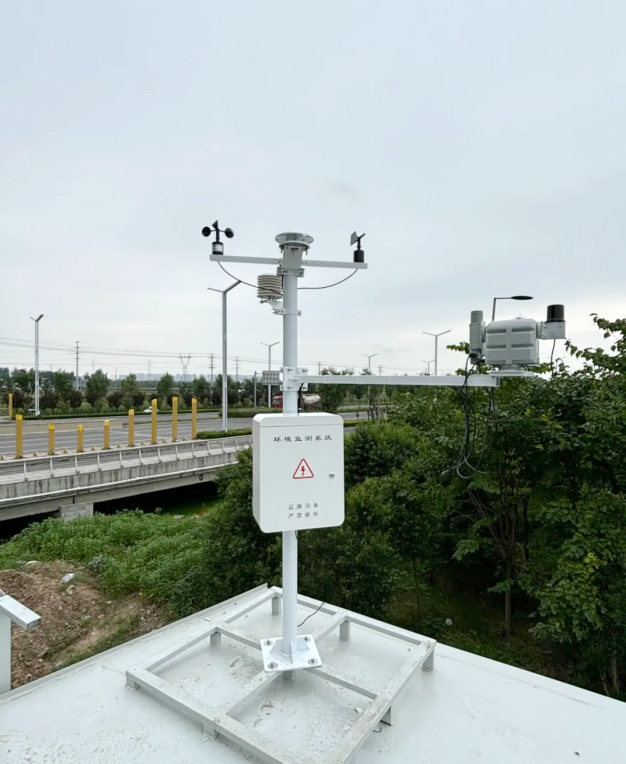
NiuBoL multi-element weather station is not only a meteorological parameter collector but also an "accelerator" of industry intelligence. From basic temperature and humidity to complex environmental quality monitoring, it provides digital support for meteorological research, agricultural production, and safety assurance with more comprehensive, more precise, and more intelligent posture.
Choosing multi-element integrated solution means choosing higher efficiency and lower maintenance cost. NiuBoL provides you with more competitive meteorological perception technology, jointly foreseeing the wind and clouds.
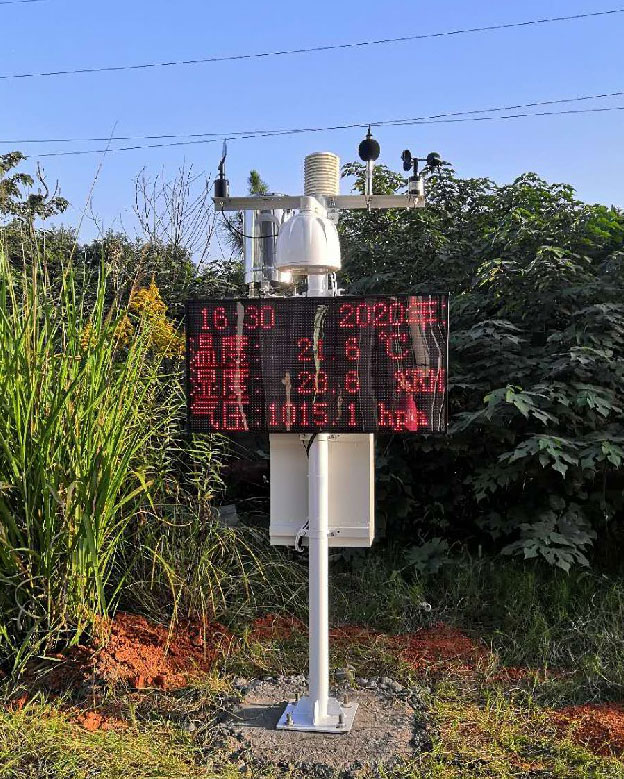
Monitoring Elements: Temperature, humidity, air pressure, wind speed, wind direction, rainfall, PM2.5, PM10, noise.
Communication Protocol: Modbus-RTU / Modbus-TCP.
Communication Interface: RS485 / RS232.
Transmission Link: GPRS / 4G / 5G / NB-IoT / LoRa.
Power Supply Voltage: DC 12V-24V / AC 220V / Solar power.
Protection Level: Collector box IP65, Sensors IP65-IP68.
Measurement Accuracy: Temperature ±0.3°C, Wind speed ±(0.3+0.03V)m/s, Particulate matter ±10%.
Operating Environment: -40°C ~ 85°C (industrial grade).
Do you need a customized multi-parameter meteorological sensor list tailored to specific project requirements, such as construction site dust monitoring or wildfire meteorological observation? Contact NiuBoL and its technical team today. We provide end-to-end hardware configuration and platform integration solutions.
Related recommendations
Sensors & Weather Stations Catalog
 Agriculture Sensors and Weather Stations Catalog-NiuBoL.pdf
Weather Stations Catalog-NiuBoL.pdf
Agriculture Sensors Catalog-NiuBoL.pdf
Water Quality Sensor Catalog-NiuBoL.pdf
Related products
 Combined air temperature and relative humidity sensor
 TDR Soil Moisture & Temperature Sensor for irrigation| RS485 |4-20mA| NBL-S-THR
 Soil pH sensor RS485 soil Testing instrument soil ph meter for agriculture |NBL-S-PH
 Wind Speed sensor Output Modbus/RS485/Analog/0-5V/4-20mA
 Tipping bucket rain gauge for weather monitoring auto rainfall sensor RS485/Outdoor/stainless steel
 Pyranometer Solar Radiation Sensor 4-20mA/RS485

Screenshot, WhatsApp to identify the QR code
WhatsApp number:+8615367865107
(Click on WhatsApp to copy and add friends)

