





— Blogs —
—Products—
 Consumer hotline +8618073152920
 WhatsApp:+8615367865107
Address:Room 102, District D, Houhu Industrial Park, Yuelu District, Changsha City, Hunan Province, China
Product knowledge
Time:2026-05-07 09:09:03 Popularity:417
Chemical industry wastewater is characterized by complex composition, high toxicity, and poor biodegradability. A single treatment technology is difficult to achieve comprehensive compliance, and each method has clear applicability limitations.
Filtration intercepts suspended solids through filter layers but has no removal effect on dissolved organic pollutants and inorganic salts. Filter layers are prone to clogging, resulting in high backwashing frequency. Sedimentation uses gravity to separate settleable suspended solids, but it is ineffective for colloidal particles, emulsified oil, and pollutants with density close to water. Sedimentation tanks also occupy a large area.
Air flotation adheres hydrophobic suspended particles through microbubbles and is suitable for oil removal. However, it is completely ineffective for soluble organic matter and heavy metal ions. Operating efficiency is affected by multiple factors such as bubble size and pH value, making regulation complex.
Chemical oxidation uses oxidants such as ozone and hydrogen peroxide to degrade refractory organic matter. However, oxidant consumption is large, with treatment costs of 5-15 yuan per ton of wastewater, and it may generate more toxic intermediate products.
Coagulation sedimentation effect is significantly affected by pH value and temperature. When pH fluctuates greatly, dosing amount needs frequent adjustment. Under low temperature conditions (<10℃), sedimentation efficiency decreases by 30%-50%. Removal capacity for dissolved organic matter with molecular weight below 1000 Da is limited, and COD removal rate is usually only 30%-60%.
Micro-electrolysis technology is only effective for specific industrial wastewater and has poor water quality adaptability. Iron-carbon fillers are prone to hardening and passivation, requiring frequent replacement (3-6 months). The reaction needs to maintain acidic conditions (pH 2-4), and the effluent requires alkali addition for adjustment, increasing corrosion risk and making large-scale promotion difficult.
Heavy metals, organic solvents, and high salinity in chemical wastewater are toxic to microorganisms. When COD exceeds 5000 mg/L or salinity exceeds 20000 mg/L, the system is prone to collapse. Water quality fluctuations often cause biological system shocks, with recovery periods lasting several weeks.
In the biofilm method, suspended solids easily clog the filler layer, and excessive biofilm thickness limits internal mass transfer. Anaerobic treatment has strict requirements on temperature (35-55℃) and pH (6.8-7.5). Sulfate inhibits methanogenic bacteria activity, and startup time can take 2-6 months.

Ion exchange resins have strict requirements on influent suspended solids (<5 mg/L). The regeneration process produces high-concentration regeneration waste liquid, accounting for 40%-60% of operating costs and causing secondary pollution.
Extractants have trace mutual solubility with water, and residual solvents cause secondary pollution. Solvent recovery requires distillation equipment with high energy consumption and is prone to emulsification.
Membrane separation technology has high rejection rates for dissolved salts and organic matter, but equipment investment is large (500,000-2 million yuan per ton of water). Membrane fouling leads to flux decline, requiring frequent chemical cleaning. Ion exchange membranes in electrodialysis are prone to polarization. Concentrated liquid (10%-30% of raw water volume) contains high-concentration pollutants and is difficult to dispose of. Direct discharge will cause secondary pollution.
Adopt combined processes: Pretreatment (air flotation/coagulation sedimentation) + Main treatment (micro-electrolysis + Fenton oxidation + anaerobic + aerobic) + Advanced treatment (ozone catalytic oxidation + membrane separation). Establish online water quality monitoring systems and implement refined dosing control.
Q1. Can physical methods alone achieve compliance discharge?
No. Physical methods only remove suspended pollutants and are ineffective against dissolved organic matter and heavy metals. They must be combined with chemical or biological methods.
Q2. What is the applicable scope of micro-electrolysis technology?
It is suitable for specific wastewater containing refractory organic matter such as nitrobenzene and azo dyes. It works best for acidic wastewater with pH 2-4, but has poor water quality adaptability.
Q3. Why does biological treatment often fail in chemical wastewater treatment?
Heavy metals, organic solvents, and high salinity in wastewater are toxic to microorganisms, leading to system collapse. It lacks buffering capacity when water quality fluctuates greatly.
Q4. What factors affect COD removal in coagulation sedimentation?
It is affected by pH value, temperature, type of coagulant, hydraulic conditions, and coexisting ions. Efficiency drops significantly when pH deviates from the optimal range.
Q5. How to dispose of concentrated liquid from membrane separation?
It can be returned to the front-end regulating tank for re-treatment, or disposed of by evaporation crystallization, wet oxidation, or incineration, but both energy consumption and investment are high.
Q6. What is the regeneration cycle of ion exchange resin?
Generally 1-7 days, depending on influent ion concentration. High-salt wastewater may require regeneration in just a few hours.
Q7. How to treat residual extractant in extraction effluent?
It can be removed by activated carbon adsorption, air stripping, or secondary distillation. It is recommended to configure a solvent recovery device.
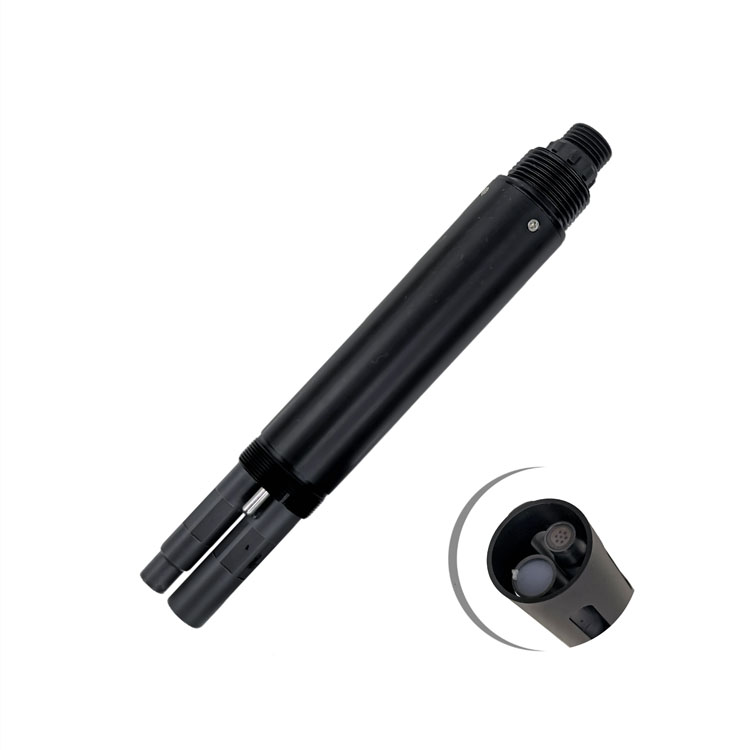
In chemical wastewater treatment, physical methods are ineffective for dissolved substances, chemical methods have high costs and are constrained by environmental parameters, biological methods are sensitive to toxicity, and membrane separation and ion exchange technologies face secondary pollution and operational stability issues. The effective engineering path is a multi-technology synergistic combined process, combined with online monitoring and refined operation. It is recommended that users conduct pilot tests and develop solutions based on actual water quality.
 NBL-WQ-CL Water Quality Sensor Online Residual Chlorine Sensor.pdf
NBL-WQ-DO Online Fluorescence Dissolved Oxygen Sensor.pdf
NBL-WQ-NHN Ammonia Nitrogen Water Quality Sensor.pdf
NBL-WQ-COD Online Water Quality COD Sensor.pdf
NBL-WQ-PH Online pH Water Quality Sensor.pdf
NBL-WQ-EC water quality conductivity sensor.pdf
Prev:Top 10 Core Parameters That Must Be Monitored in Urban and Industrial Sewage Treatment Processes
Related recommendations
Sensors & Weather Stations Catalog
Agriculture Sensors and Weather Stations Catalog-NiuBoL.pdf
Weather Stations Catalog-NiuBoL.pdf
Agriculture Sensors Catalog-NiuBoL.pdf
Water Quality Sensor Catalog-NiuBoL.pdf
Related products
 Combined air temperature and relative humidity sensor
 TDR Soil Moisture & Temperature Sensor for irrigation| RS485 |4-20mA| NBL-S-THR
 Soil pH sensor RS485 soil Testing instrument soil ph meter for agriculture |NBL-S-PH
 Wind Speed sensor Output Modbus/RS485/Analog/0-5V/4-20mA
 Tipping bucket rain gauge for weather monitoring auto rainfall sensor RS485/Outdoor/stainless steel
 Pyranometer Solar Radiation Sensor 4-20mA/RS485

Screenshot, WhatsApp to identify the QR code
WhatsApp number:+8615367865107
(Click on WhatsApp to copy and add friends)

