





— Blogs —
—Products—
 Consumer hotline +8618073152920
 WhatsApp:+8615367865107
Address:Room 102, District D, Houhu Industrial Park, Yuelu District, Changsha City, Hunan Province, China
Product knowledge
Time:2026-01-13 14:08:25 Popularity:868
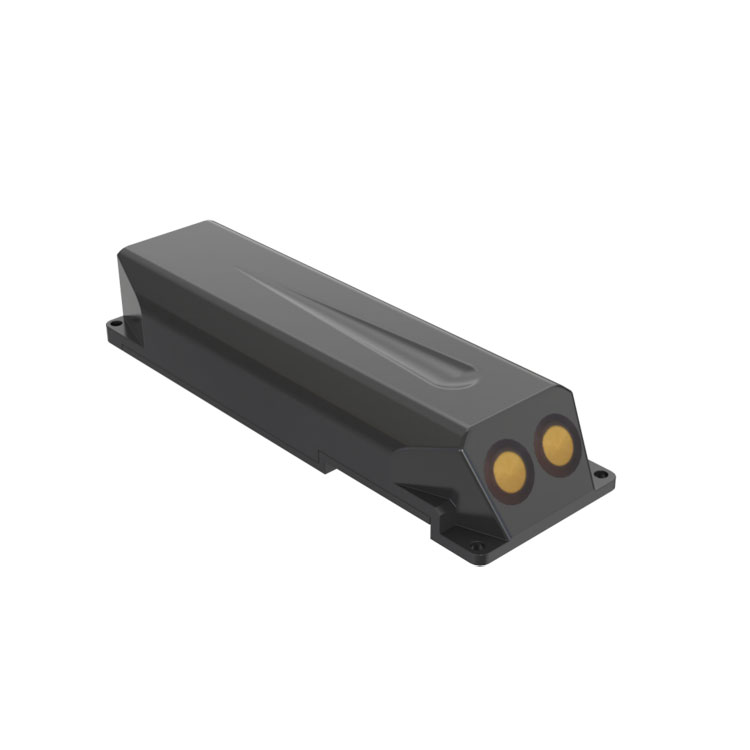
In the fields of modern water conservancy engineering and environmental science, accurately obtaining hydrodynamic data of water flow is the foundation for water resource allocation, flood warning, and sewage treatment. With the advancement of industrialization and urbanization, traditional mechanical rotor current meters are difficult to meet the needs of digital management due to severe wear, frequent maintenance, and inability to transmit in real time. Leveraging cutting-edge acoustic sensing technology, NiuBoL's Doppler flowmeter (Doppler velocity meter) is becoming a benchmark product in the smart water conservancy field with its integrated monitoring capabilities for velocity, water level, and temperature.
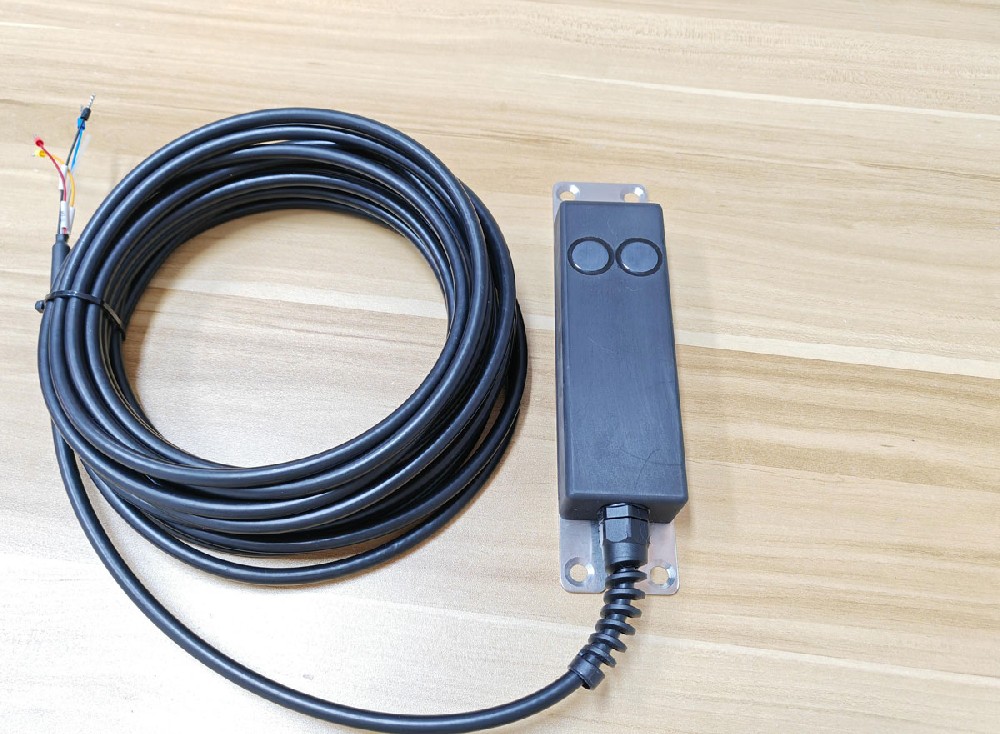
The core of the Doppler flowmeter is based on the Doppler Effect in physics.
Its working process is as follows: The sensor emits ultrasonic pulses of a specific frequency into the water body. When the ultrasonic waves encounter suspended particles or bubbles (tracers) in the water, they produce scattered echoes. Since these particles move with the water flow, the frequency of the reflected ultrasonic waves shifts.
Frequency increase: Particles approaching the sensor (flowing toward the device);
Frequency decrease: Particles moving away from the sensor (flowing away from the device).
The NiuBoL sensor captures this frequency shift through precise algorithms and converts it into instantaneous velocity. Due to the use of contact measurement, it can sense more subtle velocity changes, especially performing excellently under low-velocity conditions.
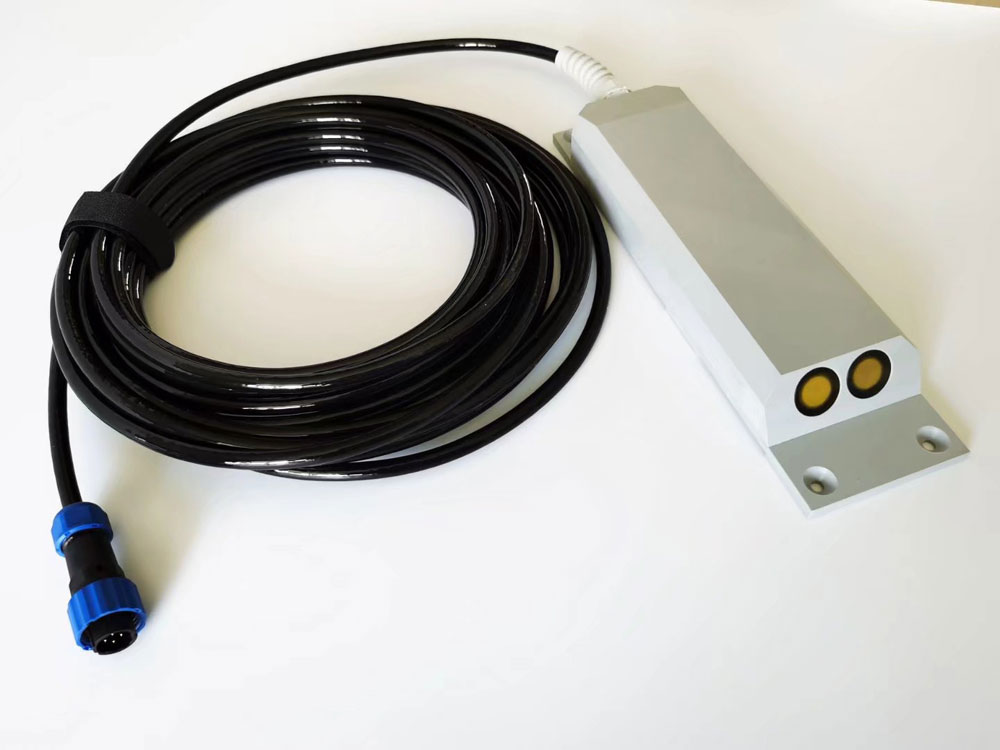
1. Three-in-One Multi-Parameter Monitoring
The NiuBoL Doppler flowmeter is not just a velocity meter; it is a highly integrated monitoring platform:
Velocity monitoring: Capable of precisely distinguishing water flow direction (positive and negative), enabling net flow statistics.
Water level monitoring: Built-in high-precision pressure water level gauge for real-time acquisition of cross-sectional liquid level height.
Temperature monitoring: Synchronous collection of water body temperature, providing environmental auxiliary data for scientific research.
2. Fully Electronic Design, Zero Mechanical Wear
Unlike flowmeters with impellers or rotors, NiuBoL adopts a fully electronic circuit design. This "no moving parts" structure brings extremely high reliability:
Maintenance-free: Eliminates mechanical jamming or wear caused by silt entanglement.
High lifespan: Electronic components age much slower than mechanical wear, ensuring long-term monitoring accuracy and stability.
3. Rugged and Durable Physical Protection
For harsh submerged working environments in the field, the device adopts high-specification material design:
ABS engineering plastic housing: Possesses extremely strong impact resistance and corrosion resistance, with sealing up to IP68 rating.
High-quality vented cable: The cable integrates a vent tube internally to compensate for atmospheric pressure fluctuations affecting water level measurements, and the material is acid and alkali resistant, suitable for long-term immersion in water.
4. Low Power Consumption and Remote Communication
The device supports RS485 interface and standard ModBus-RTU protocol, with power consumption around 1.3W (measurement current about 106mA under 12V power supply). This makes it highly suitable for solar-powered field telemetry stations, achieving "unattended, data to the cloud."
| Parameter Item | Specification Description |
|---|---|
| Brand & Model | NiuBoL Doppler Flowmeter |
| Power Supply Voltage | DC 10~30V (wide voltage) |
| Velocity Range/Accuracy | 0.03 ~ 5m/s; ±1.0% ±1cm/s |
| Water Level Range/Accuracy | 0.03 ~ 5m; 0.3% ±0.5cm |
| Temperature Range/Accuracy | -10℃ ~ 60℃; ±1℃ |
| Protection Rating | IP68 (fully submersible) |
| Interface/Protocol | RS485 / ModBus-RTU |
| Housing Material | High-strength ABS engineering plastic |
| Cable Characteristics | Dedicated vented sealed cable |
1. Open Channels and Irrigation District Metering
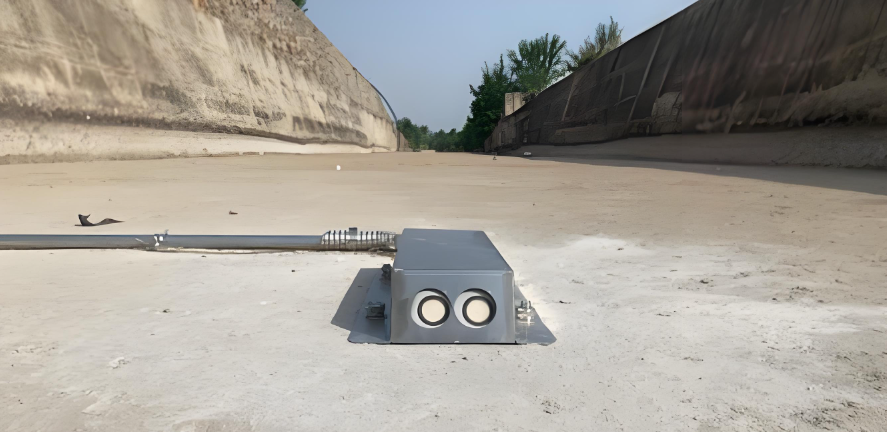
In agricultural irrigation, the Doppler flowmeter can be installed at the bottom or side wall of the channel to accurately count diversion volumes, providing scientific basis for water fee collection and water resource scheduling. Its direction distinction capability can monitor backflow phenomena, ensuring the accuracy of net flow data.
2. Non-Full Pipe Monitoring
Urban stormwater and sewage pipe networks are often in non-full pipe states, where traditional electromagnetic flowmeters are ineffective. The NiuBoL Doppler flowmeter, through integrated velocity and water level monitoring, can precisely calculate instantaneous flow in non-full pipe cross-sections, preventing urban waterlogging and sewage exceedance.
3. Natural River Channels and Environmental Monitoring
In river hydrological monitoring, the device can continuously capture velocity changes during dry and wet seasons, and its ABS housing can effectively resist chemical corrosion in natural environments, making it the preferred choice for environmental departments to monitor cross-sectional water flow dynamics in real time.
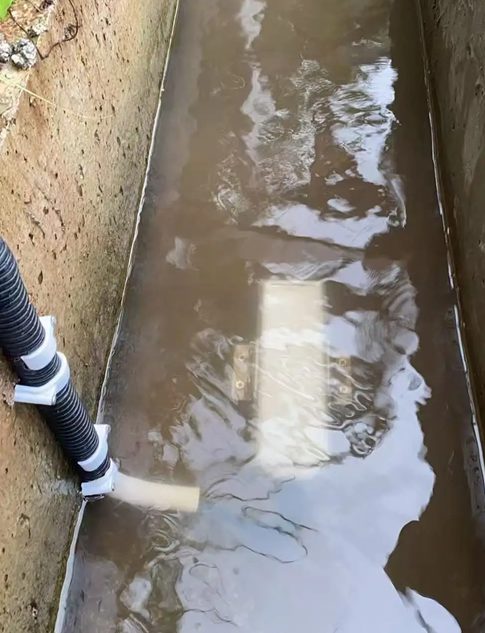
To ensure the accuracy of monitoring data, the installation of the NiuBoL Doppler flowmeter should strictly follow the following technical details:
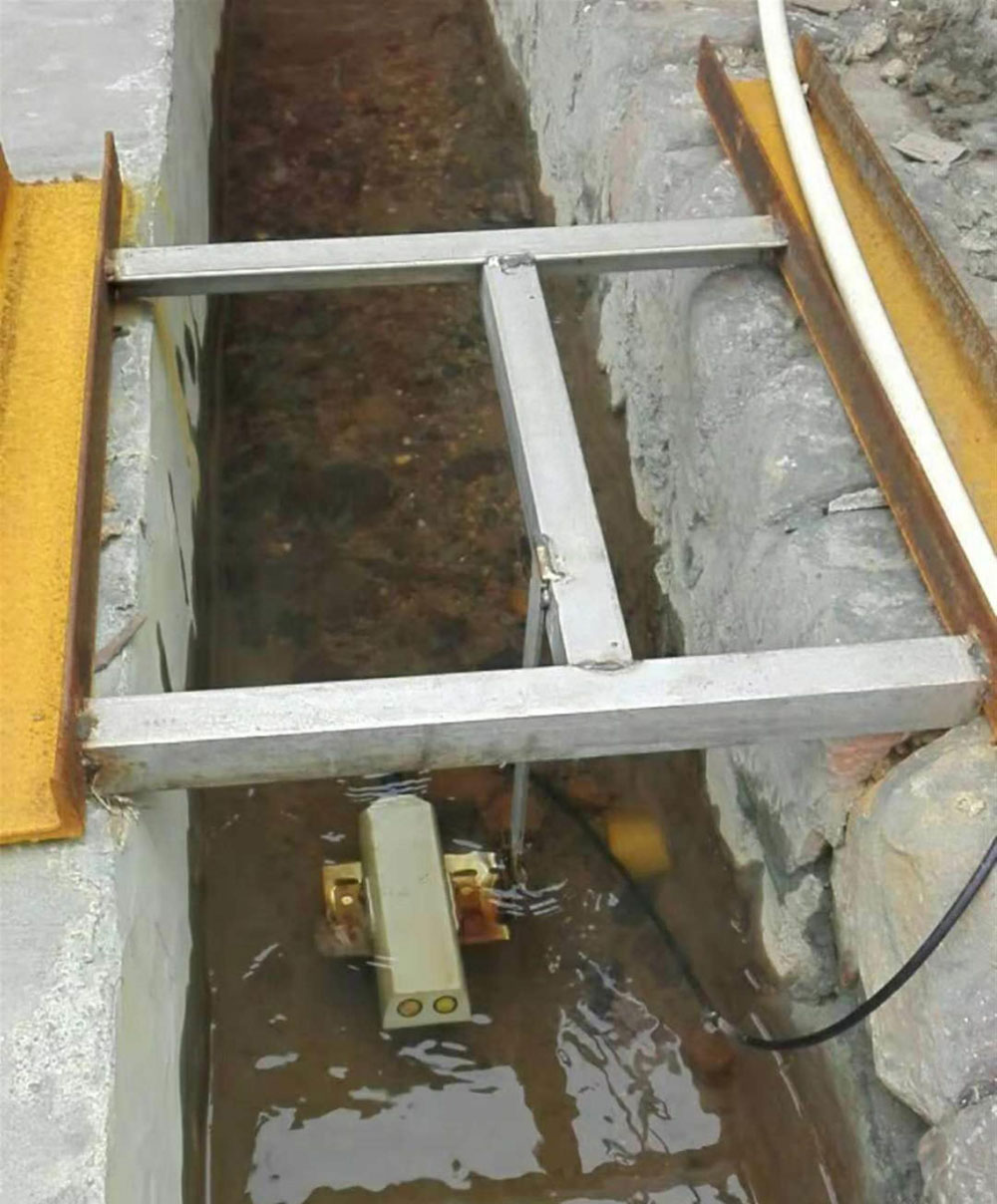
Submersion depth: Must ensure the device is completely submerged. Normal installation should be 20cm below the lowest water level, with an absolute minimum of no less than 5cm, to prevent the sensor from being exposed to air and producing invalid data.
Water environment assessment: Avoid silt layers, dense aquatic plant areas, and dead water zones near the banks. The sensor should be installed horizontally facing the flow direction.
Filtration and damage prevention: If the water body contains large branches, stones, or high-concentration silt, it is recommended to set up an isolation grid in front of the device.
Cable protection: The vented cable must not be bent or excessively squeezed, ensuring the vent tube is unobstructed to maintain physical compensation for water level measurements.
Cleaning and maintenance: Regularly clean attachments on the transducer surface (sensor front end). If the surface is covered by thick biofilm or mud, the ultrasonic signal will attenuate significantly, leading to measurement errors.
Avoid dead water and vortices: The sensor should be installed in a straight section with smooth flow, as far as possible from gates, weirs, or river bends, as vortices in these areas will interfere with the capture of ultrasonic Doppler frequency shifts.
Avoid siltation and foam: The sensor should be fixed horizontally at the channel bottom but raised about 5-10cm above the sediment layer to prevent the probe from being buried in mud. At the same time, avoid areas with dense foam on the water surface to prevent air interference with ultrasonic emission.
Avoid strong electromagnetic interference: Although the NiuBoL device has extremely strong anti-interference capabilities, it is still recommended to keep wiring away from large inverters or high-voltage transmission lines.
The NiuBoL Doppler flowmeter is equipped with M5 fixing round holes. In actual projects, it is recommended to use stainless steel L-shaped brackets or streamlined bases. The key point is: The sensor front end must point toward the "flow-facing direction," meaning the probe is directly facing the incoming water flow. This design ensures the sensor captures the most representative velocity profile.
Q1: Does the Doppler flowmeter have requirements for water clarity?
Answer: There are certain requirements. The Doppler principle relies on "impurities" (particles or bubbles) in the water to reflect echoes. If it is completely pure distilled water, the device will not work. However, the impurity content in natural rivers, farmland irrigation water, and stormwater sewage networks usually perfectly meets the measurement needs.
Q2: What is the difference between it and a radar flowmeter?
Answer: Radar flowmeters are non-contact and measure surface velocity; Doppler flowmeters are contact (submersible) and measure underwater velocity. Doppler flowmeters are less affected by surface waves and strong winds, and perform more stably at extremely low velocities, suitable for sites requiring high-precision cross-sectional monitoring.
Q3: How to calculate instantaneous flow?
Answer: The device obtains real-time water level h through the pressure water level gauge, then combines the preset cross-sectional shape in the host computer (such as U-shaped channel, trapezoidal channel, circular pipe) to calculate the cross-sectional area A. According to the formula Q = A*V, the instantaneous flow Q can be obtained. The NiuBoL device directly outputs instantaneous flow and cumulative flow data.
Q4: What happens if the water flow velocity exceeds the 5m/s range limit?
Answer: The physical range of the NiuBoL Doppler flowmeter is 0.03-5m/s, which covers the vast majority of natural rivers and artificial channel networks. If the instantaneous velocity exceeds 5m/s, the device can still output data, but accuracy may decrease. For special high-velocity conditions, it is recommended to install flow guiding devices or contact the technical team for a customized high-velocity version.
Q5: Can the Doppler flowmeter measure industrial wastewater containing chemical components?
Answer: As long as the pH of the wastewater is within the tolerance range of ABS engineering plastic and vented cable (conventional pH 5-9), the NiuBoL device can operate stably. Due to its fully electronic design without mechanical wear, it is more suitable than traditional metal impeller current meters for sewage monitoring in chemical parks.
Q6: Does the device need to be removed in northern winter ice-covered environments?
Answer: If the water body is completely frozen, the device may be damaged by ice pressure. It is recommended to remove the device before the ice-sealing period or install it in flowing water areas below the ice layer (ensuring no ice around the probe). The NiuBoL's lower operating temperature limit is -10℃, and it can still accurately measure water temperature and velocity in ice-water mixtures.
The NiuBoL Doppler flowmeter, with its maintenance-free mechanical design, low power consumption, and comprehensive sensing technical foundation, solves the pain points of difficult maintenance, low accuracy, and single functionality in traditional water conservancy monitoring. It not only precisely calculates positive and negative cumulative flow but also provides a "digital foundation" for water resource protection and utilization.
In future smart water management construction, NiuBoL will continue to optimize acoustic algorithms and material processes, helping every monitoring station achieve more intelligent and reliable data interaction.
Are you seeking a customized installation solution for your on-site channel or pipe network? We can provide you with more detailed cross-sectional calculation guidance or host computer integration manuals. Would you like to learn more about the supporting solutions for Doppler flowmeters and IoT gateways, or do you need on-site measurement recommendations for existing channels?
Related recommendations
Sensors & Weather Stations Catalog
 Agriculture Sensors and Weather Stations Catalog-NiuBoL.pdf
Weather Stations Catalog-NiuBoL.pdf
Agriculture Sensors Catalog-NiuBoL.pdf
Water Quality Sensor Catalog-NiuBoL.pdf
Related products
 Combined air temperature and relative humidity sensor
 TDR Soil Moisture & Temperature Sensor for irrigation| RS485 |4-20mA| NBL-S-THR
 Soil pH sensor RS485 soil Testing instrument soil ph meter for agriculture |NBL-S-PH
 Wind Speed sensor Output Modbus/RS485/Analog/0-5V/4-20mA
 Tipping bucket rain gauge for weather monitoring auto rainfall sensor RS485/Outdoor/stainless steel
 Pyranometer Solar Radiation Sensor 4-20mA/RS485

Screenshot, WhatsApp to identify the QR code
WhatsApp number:+8615367865107
(Click on WhatsApp to copy and add friends)

