





— Blogs —
—Products—
 Consumer hotline +8618073152920
 WhatsApp:+8615367865107
Address:Room 102, District D, Houhu Industrial Park, Yuelu District, Changsha City, Hunan Province, China
Product knowledge
Time:2026-03-31 14:10:19 Popularity:610
With the acceleration of urbanization, dust generated by construction has become an important source of air pollution. Exposed ground, material transportation, and mechanical operations on construction sites easily produce a large amount of inhalable particulate matter, directly affecting surrounding air quality and residents' health. The dust monitoring system provides scientific basis for dust pollution control on construction sites through real-time data collection and intelligent early warning. With stable and reliable sensor technology as the core, the NiuBoL dust monitor helps construction units accurately control environmental parameters, achieve active dust suppression, and meet national environmental protection regulatory requirements.
This article elaborates in detail on the causes and hazards of dust pollution, the working principle of the monitoring system, NiuBoL product technical parameters, installation and application scenarios, and actual effects, providing professional reference for engineering enterprises, system integrators, and project contractors.
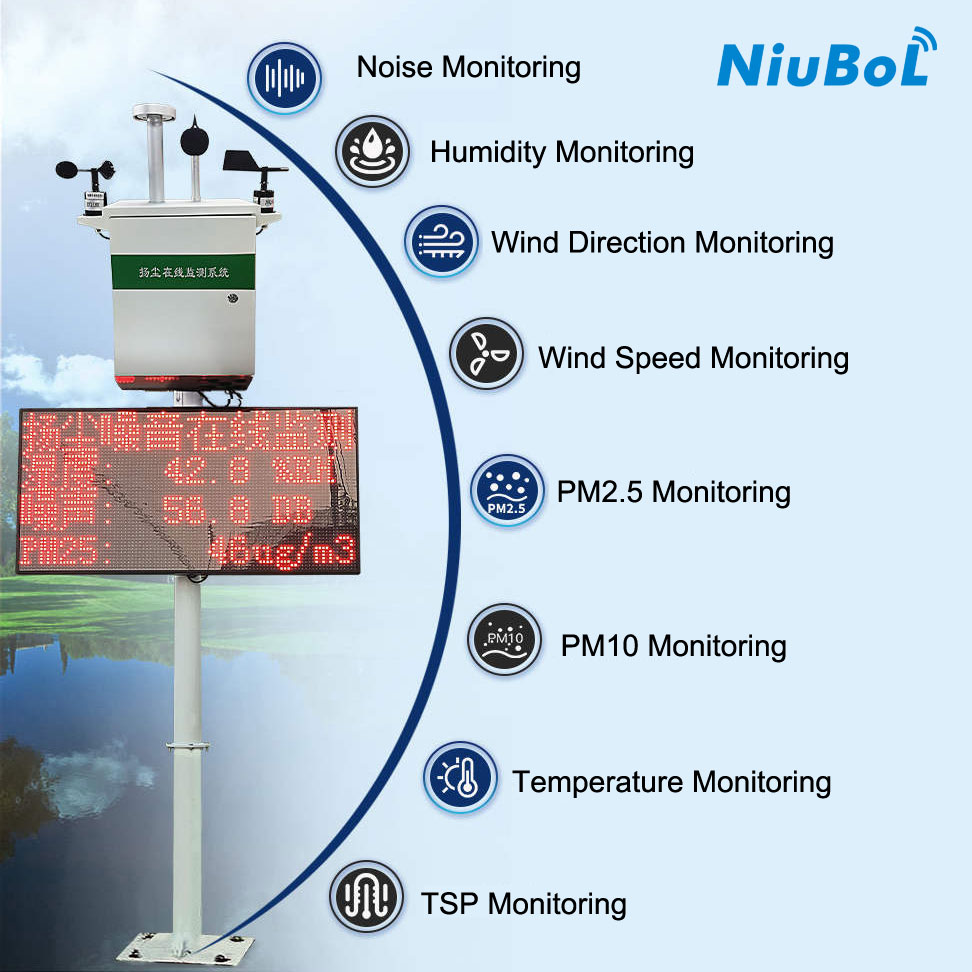
Construction site dust mainly originates from exposed ground, earth excavation, building material stacking, and vehicle transportation. Under wind force or mechanical disturbance, dust enters the atmosphere to form fugitive dust, which contains PM2.5, PM10, TSP and other particulates, and may also carry bacteria and heavy metals. Dust diffuses slowly in the urban environment, and high-rise buildings further exacerbate local accumulation, leading to PM2.5 concentration exceeding standards.
Dust poses significant harm to human health. Inhalation can easily cause respiratory diseases, lung damage, and even spread bacterial infections. For the environment, dust settlement will cover green plants, affecting landscape and ecology. The state has increasingly strict requirements for air pollution prevention and control. If construction units do not take effective measures, they are very likely to face penalties from urban management or environmental protection departments. For example, some construction sites have been dealt with according to law due to excessive dust and lack of dust prevention facilities.
Traditional manual inspection methods have problems such as manpower waste, poor real-time performance, and subjective data. The dust monitoring system can work continuously 24 hours a day, guiding measures such as dust-proof net covering, fog cannon spraying, and water sprinkling for dust reduction through quantitative data, controlling dust concentration within a reasonable range, and achieving precise governance and cost optimization.
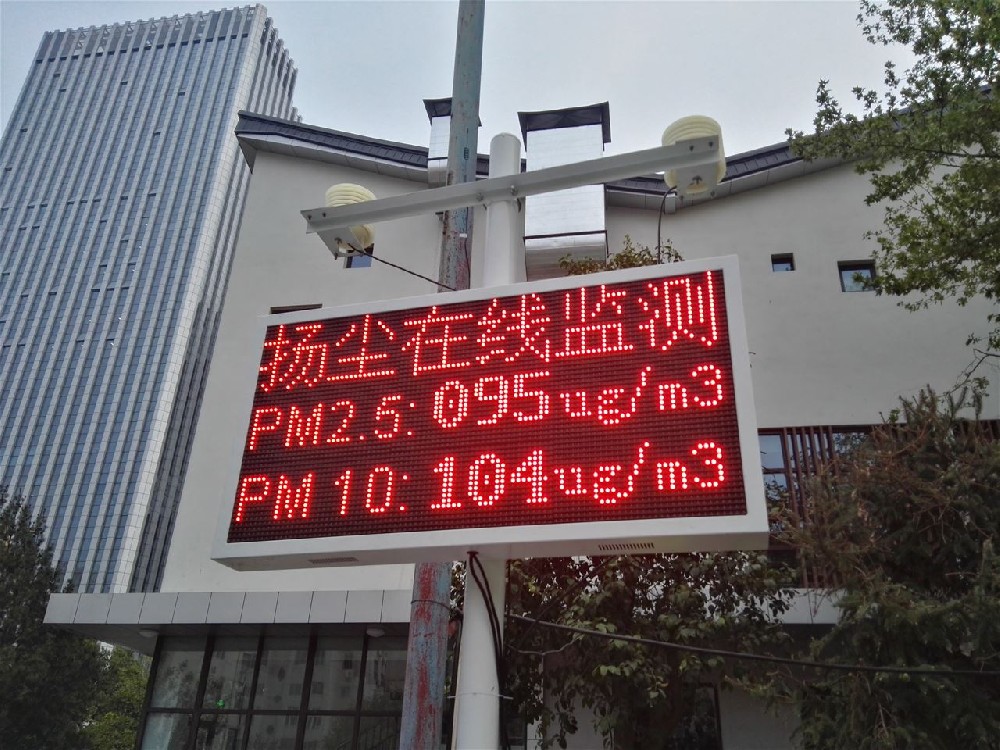
The dust monitoring system consists of particulate sensors, noise sensors, and multi-parameter environmental modules. It uses the laser scattering principle to sensitively detect PM2.5, PM10 and other particulates. Built-in fans ensure stable airflow. Data is output through interfaces such as RS485 and uploaded to the cloud monitoring backend in real time via wireless communication modules, supporting remote viewing and alarms.
The advantages of the NiuBoL dust monitor are reflected in the following aspects:
All-weather monitoring: Covers multiple factors such as PM2.5, PM10, PM1.0, TSP, noise, ambient temperature, ambient humidity, wind speed, and wind direction, solving multi-parameter needs in one go.
Reliable data transmission: Data from each test point is wirelessly uploaded to the backend, reducing on-site inspection costs and improving regulatory efficiency of environmental protection departments.
Solution-oriented: Monitoring data directly guides dust suppression operations, such as starting fog cannons or covering dust-proof nets during dust concentration peaks to prevent dust from spreading to surrounding areas.
Low-maintenance design: Sensors use imported lasers and photosensitive components, with stable data, suitable for complex construction environments.
Through these functions, construction units can transform dust governance from passive response to active prevention and control, significantly reducing environmental risks and improving project compliance.
The core components of the NiuBoL dust monitoring system include the NBL-W-PM particulate sensor and NBL-W-NS noise sensor. The following are detailed technical parameters presented in table form for easy reference.
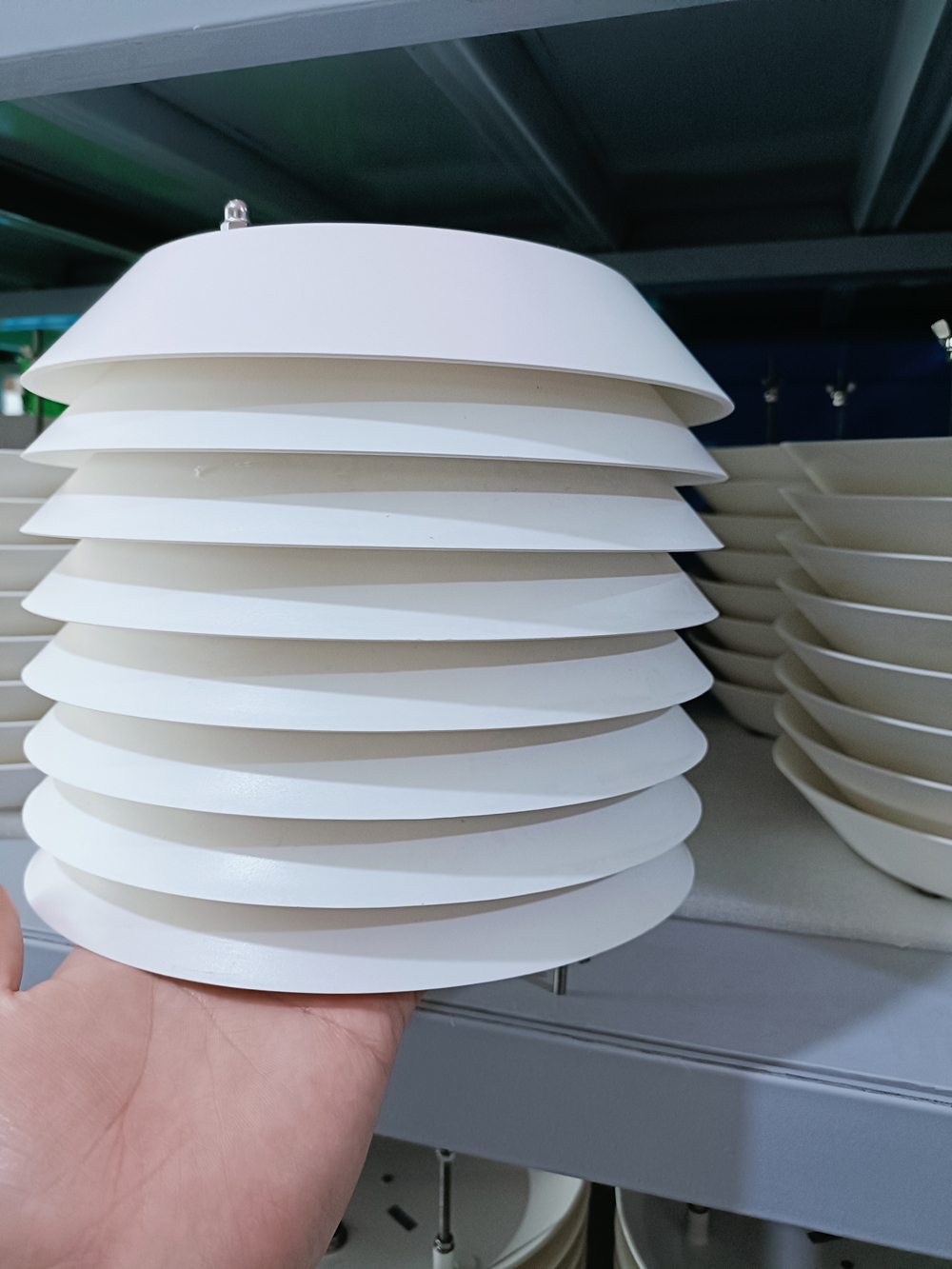
| Parameter | Specification Value |
|---|---|
| Measurement Range | PM2.5: 0-1000μg/m³ PM10: 0-2000μg/m³ |
| Relative Error | PM2.5, PM10: Maximum error of ±15% and ±10μg/m³ (25℃, 50%RH) |
| Minimum Detectable Particle | 0.3μm diameter |
| Power Supply Method | DC 12V-24V |
| Output Form | RS485 |
| Instrument Cable Length | Standard: 2.5 meters |
| Operating Ambient Temperature | -20℃~+60℃ |
| Operating Ambient Humidity | 0~99%RH |
The sensor adopts the laser scattering principle with high integration. Power supply voltage and output signal types can be adjusted according to needs. The built-in fan design ensures uniform airflow and strong data stability.
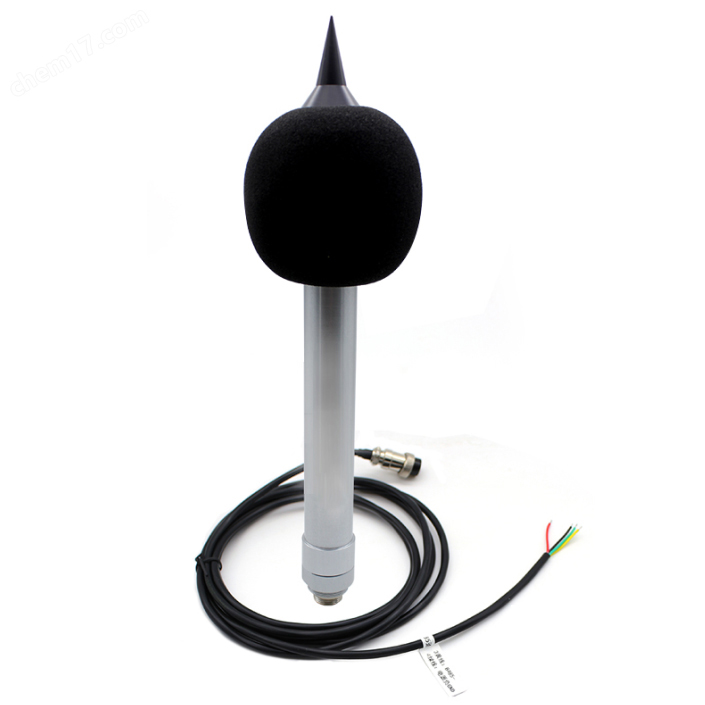
| Parameter | Specification Value |
|---|---|
| Measurement Range | 30~130dB |
| Output Form | 485 output / 4~20mA |
| Accuracy | ±1.5dB (at 94dB standard source) |
| Frequency Range | 31.5Hz to 12.5kHz |
| Microphone | Condenser microphone |
| Power Supply | DC 12V~24V |
| Power Consumption | 0.15W |
| Appearance Packaging | ABS plastic |
| Operating Temperature | -20~60℃ |
| Operating Humidity | <100% relative humidity |
The noise sensor has a durable structure and can operate stably for a long time, suitable for simultaneous monitoring of construction site noise and dust.
The NiuBoL system also integrates temperature and humidity, wind speed and direction modules, supporting multi-point deployment and data fusion to further improve monitoring comprehensiveness.
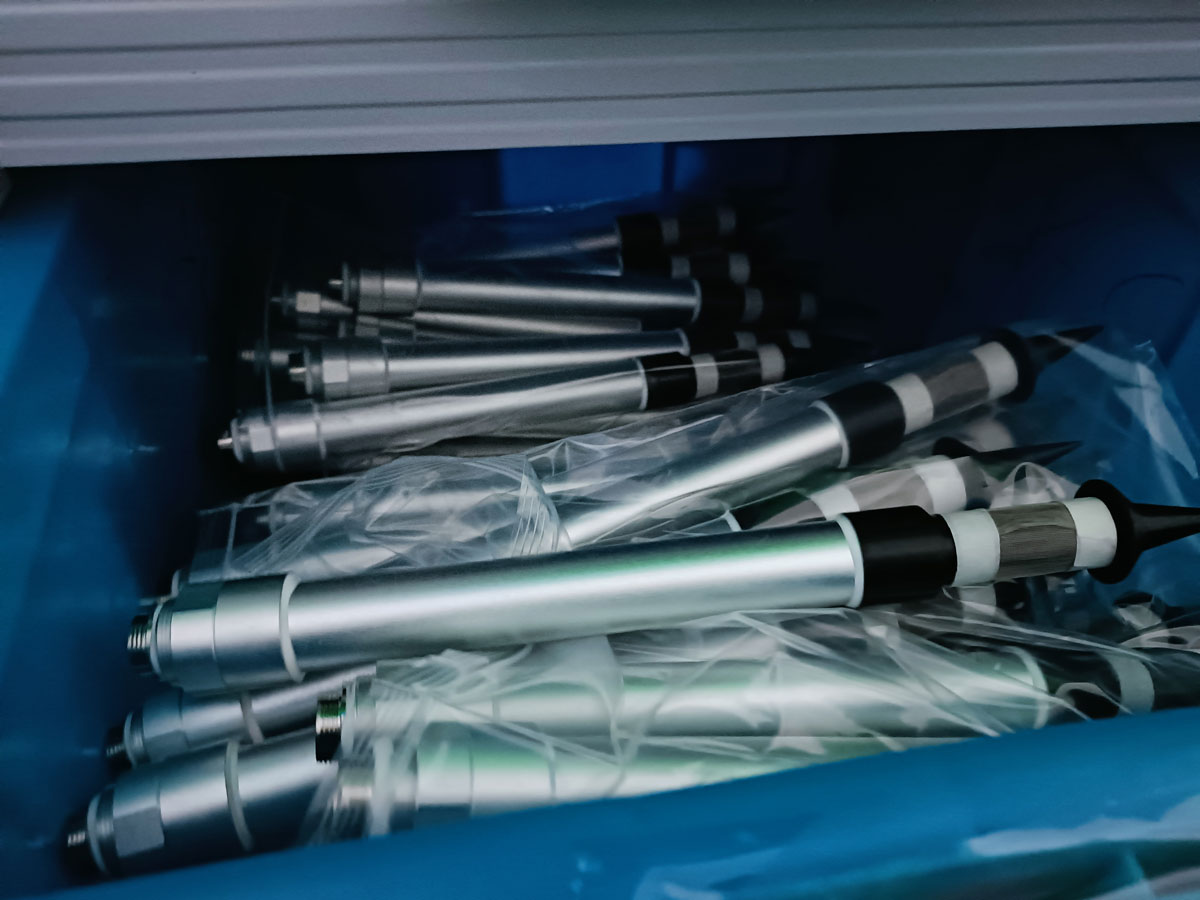
Correct installation is the prerequisite for ensuring accurate data from the dust monitor. Installation requirements for the NBL-W-PM particulate sensor are as follows:
1. Must be installed vertically.
2. Stay away from artificial airflow (such as fans), avoid installing directly in front of or behind fans; you can choose one side of the housing but keep the ventilation opening.
3. Prevent viscous particles (such as oil and willow catkins) from entering the module to avoid optical component contamination leading to failure.
4. Avoid humid environments affecting normal sensor function.
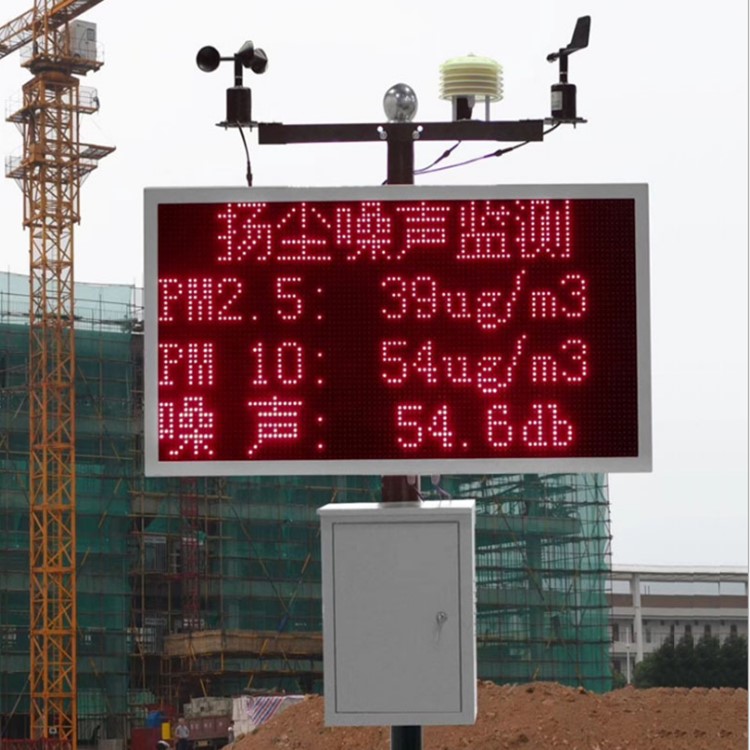
When installing the noise sensor, select a representative location for the noise source to ensure the microphone has no obstruction. The entire system is recommended to be installed in the area with the highest dust concentration (such as earthwork operation areas or material stockpiles) to monitor the maximum value and guide targeted dust suppression.
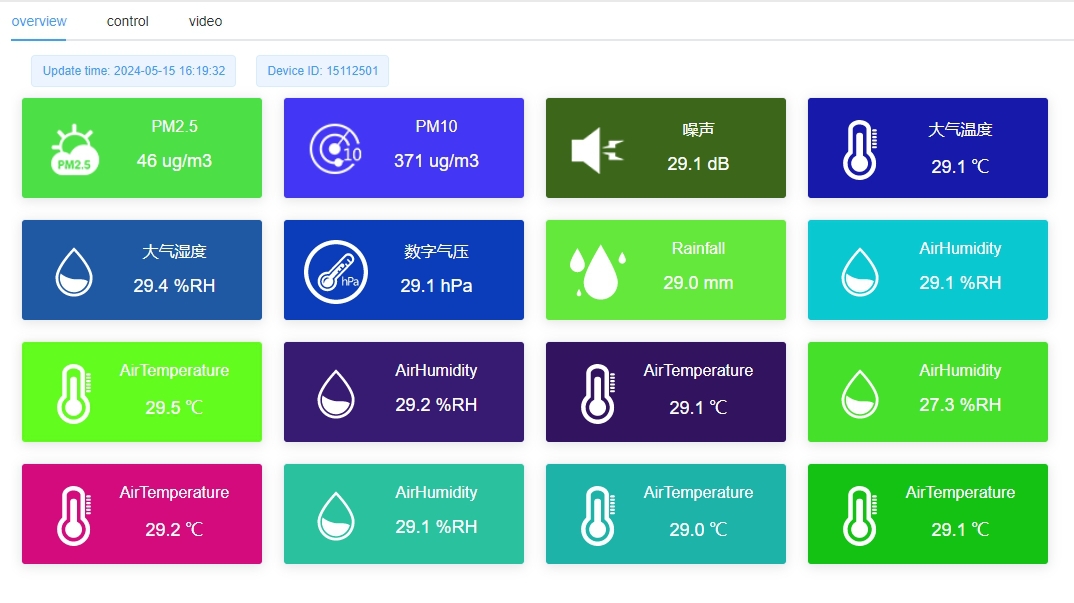
The device supports wireless communication. After deployment, data is automatically uploaded to the backend. Construction units can view trend charts and alarm information in real time via computer or mobile terminal.
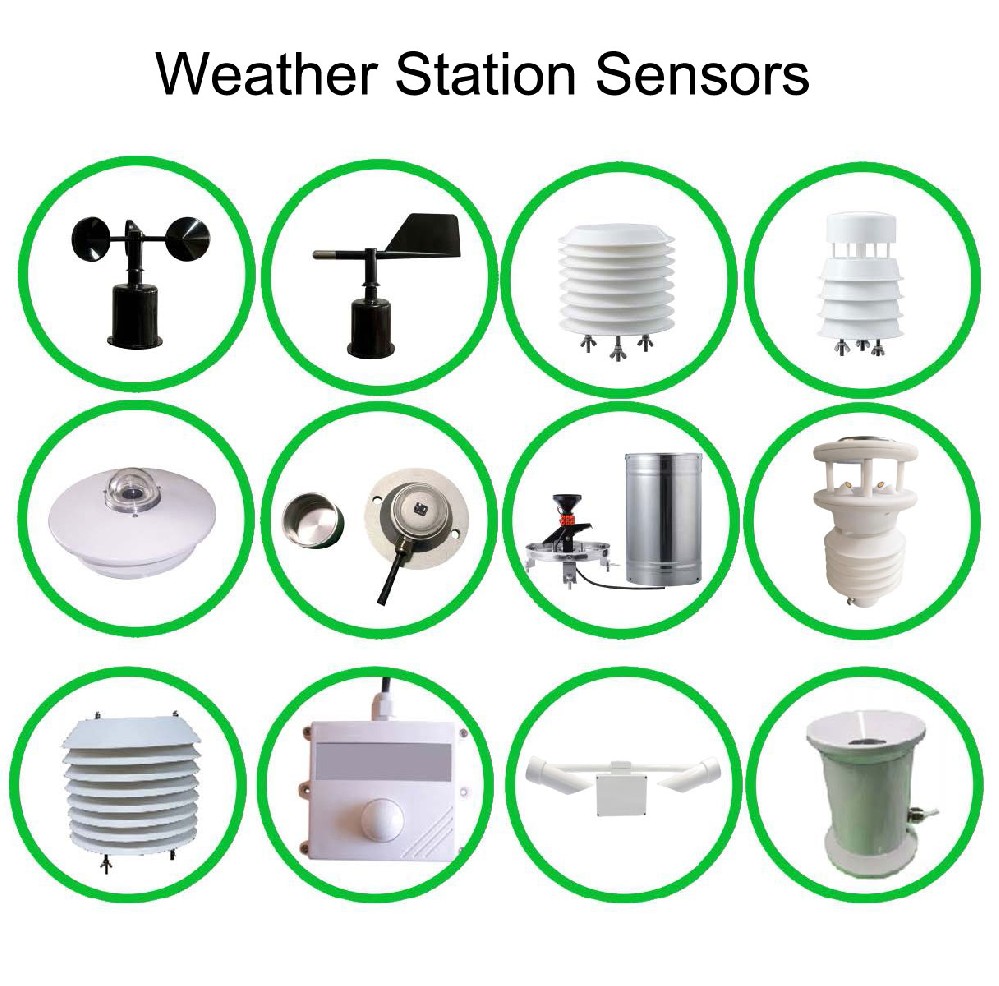
The NiuBoL dust monitor is widely applicable to various engineering scenarios:
Construction and demolition sites: Real-time monitoring of dust generated during earth excavation, concrete pouring, and demolition operations, guiding sprinkler trucks and fog cannon operations to reduce impact on surrounding residents.
Coal mines and industrial parks: Addressing dust from material transportation and stockpiles, optimizing dust-proof net layout in combination with wind speed and direction data.
Communities, urban environments, and residential areas: Assisting municipal engineering or greening construction to ensure air quality compliance.
In a construction site case in Shanghai, penalties were imposed due to excessive dust and failure to take timely measures. After introducing a professional monitoring system, construction units can provide early warning and implement dust prevention measures to avoid similar problems. System data can also serve as important evidence for environmental protection acceptance, helping projects proceed smoothly.
Through the wireless upload function, environmental protection departments can remotely supervise multiple construction sites, significantly reducing manual inspection costs. At the same time, construction units can optimize operation times based on data (such as performing earthwork when wind speed is low), achieving a win-win situation of green construction and economic benefits.
The dust monitor is not just a data recording tool but a complete solution tool. The monitoring backend can set threshold alarms. When PM10 exceeds the set value, the system automatically pushes notifications to remind the activation of fog cannons or covering dust-proof nets. Wind speed and direction data further assist in judging the diffusion direction for precise application of dust suppressants.
Compared with traditional methods, this system reduces human error, data is traceable, and supports historical curve analysis, providing strong support for subsequent environmental protection reports. As a professional manufacturer, NiuBoL provides system integrators, IoT solution providers, and engineering companies with stable and compatible RS485 interfaces for easy docking with existing platforms.
Q1. What is a dust monitoring system?
The dust monitoring system is a professional device used to detect parameters such as PM2.5, PM10, TSP, and noise on construction sites in real time. Data is uploaded via wireless communication to help construction sites achieve precise dust pollution control.
Q2. What parameters does the NiuBoL dust monitor mainly monitor?
The system can monitor multiple environmental factors such as PM2.5, PM10, PM1.0, TSP, noise, ambient temperature, ambient humidity, wind speed, and wind direction to meet the comprehensive regulatory needs of construction sites.
Q3. How does the laser scattering principle ensure data accuracy?
The NBL-W-PM sensor uses imported lasers and photosensitive components, combined with a built-in fan to form a stable airflow. The minimum detectable particle reaches 0.3μm, and the relative error is controlled within ±15% (under 25℃, 50%RH conditions).
Q4. What matters should be noted when installing the dust monitor?
It must be installed vertically, avoiding artificial airflow, viscous particles, and humid environments. It is recommended to install it at the location with the highest dust concentration and keep the sensor ventilation opening unobstructed.
Q5. How is the data uploaded to the monitoring backend?
Data from each test point is directly uploaded via wireless communication modules, supporting RS485 output. Both construction units and environmental protection departments can remotely view real-time and historical data.
Q6. Can the dust monitoring system help avoid environmental penalties?
Yes. Through timely early warning and data support, construction units can quickly take measures such as dust-proof nets and fog cannons to control dust within compliance ranges and reduce penalty risks.
Q7. What industry scenarios is this system suitable for?
It is mainly suitable for dust-prone places such as construction sites, demolition sites, coal mines, industrial parks, community municipal projects, and residential areas.
Q8. What are the advantages compared with traditional manual monitoring?
The NiuBoL system realizes all-weather automatic monitoring, saves labor costs, improves data objectivity and real-time performance, supports multi-parameter fusion analysis, and significantly improves governance efficiency.
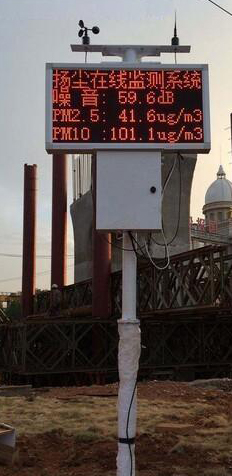
The dust monitoring system has become an indispensable environmental protection tool on modern construction sites. With reliable sensor technology, convenient wireless data transmission, and comprehensive parameter coverage, NiuBoL provides professional solutions for dust pollution control on construction sites. Whether for daily monitoring or emergency response, it can help construction units achieve data-driven precise dust suppression, reduce environmental impact, and improve project compliance levels.
Facing increasingly strict environmental protection regulations, adopting scientific monitoring methods is not only a compliance requirement but also a strategic choice for sustainable enterprise development. As a manufacturer specializing in industrial monitoring equipment, NiuBoL continues to provide high-performance products and technical support for system integrators and engineering companies. If you need further information on NBL-W-PM and NBL-W-NS sensor integration solutions, please contact the professional team for customized advice.
Through the implementation of the dust monitoring system, construction sites can truly achieve “construction while governing while meeting standards,” contributing to the improvement of urban air quality. Choosing professional and reliable solutions makes every construction greener and more efficient.
Related recommendations
Sensors & Weather Stations Catalog
 Agriculture Sensors and Weather Stations Catalog-NiuBoL.pdf
Weather Stations Catalog-NiuBoL.pdf
Agriculture Sensors Catalog-NiuBoL.pdf
Water Quality Sensor Catalog-NiuBoL.pdf
Related products
 Combined air temperature and relative humidity sensor
 TDR Soil Moisture & Temperature Sensor for irrigation| RS485 |4-20mA| NBL-S-THR
 Soil pH sensor RS485 soil Testing instrument soil ph meter for agriculture |NBL-S-PH
 Wind Speed sensor Output Modbus/RS485/Analog/0-5V/4-20mA
 Tipping bucket rain gauge for weather monitoring auto rainfall sensor RS485/Outdoor/stainless steel
 Pyranometer Solar Radiation Sensor 4-20mA/RS485

Screenshot, WhatsApp to identify the QR code
WhatsApp number:+8615367865107
(Click on WhatsApp to copy and add friends)


