





— Blogs —
—Products—
 Consumer hotline +8618073152920
 WhatsApp:+8615367865107
Address:Room 102, District D, Houhu Industrial Park, Yuelu District, Changsha City, Hunan Province, China
Product knowledge
Time:2026-05-23 11:50:19 Popularity:320
Driven by both industrial development and ecological civilization construction, traditional manual sampling has fully transitioned to a digital, grid-based, and automated online monitoring system. Leveraging the Industrial Internet of Things (IIoT), environmental monitoring has become a core infrastructure for enterprises to optimize processes, reduce compliance risks, and achieve green development.
For environmental engineering contractors, smart city system integrators, and environmental protection managers in industrial parks, mastering the professional classification of environmental monitoring and accurately matching hardware is key to reducing operational costs and ensuring long-term system stability. This article systematically outlines the technology selection logic from two dimensions: monitoring purpose and monitoring medium, combined with NiuBoL industrial-grade hardware solutions.
According to the "Environmental Monitoring Technical Specifications," environmental monitoring is divided into three categories: surveillance monitoring, specific purpose monitoring, and research monitoring.
1. Surveillance Monitoring (Routine Monitoring)
This is the most extensive and continuous routine work, mainly used to assess environmental quality status and track pollution source dynamics. It includes pollution source supervision monitoring (e.g., wastewater discharge outlets, CEMS) and environmental quality monitoring (e.g., industrial parks, ecological reserves).
NiuBoL Solution: The NiuBoL compact air quality monitoring station (AQM) and online water quality monitoring station enable 24/7 continuous data collection, uploading data via RS485 (Modbus-RTU) protocol, providing reliable data support for regional environmental capacity assessment.
2. Specific Purpose Monitoring (Emergency Monitoring)
Targeting sudden pollution incidents, law enforcement arbitration, or project acceptance, this type is highly targeted and time-sensitive.
NiuBoL Solution: Sensors feature low-power design, supporting rapid deployment on mobile monitoring vehicles, emergency kits, or drone platforms. Even in power outage conditions, fast networking can be achieved using batteries.
3. Research Monitoring
Mainly serves high-precision needs such as ecological environment baseline surveys and academic research.
NiuBoL Solution: Provides a complete open Modbus register map and raw data interface, supporting research institutions in secondary development and algorithm modeling.
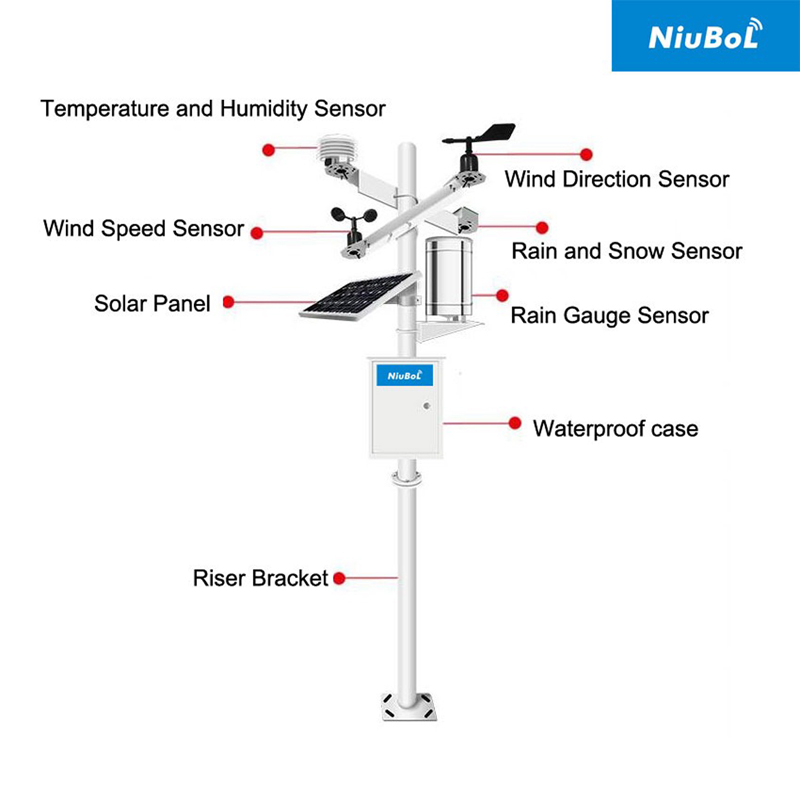
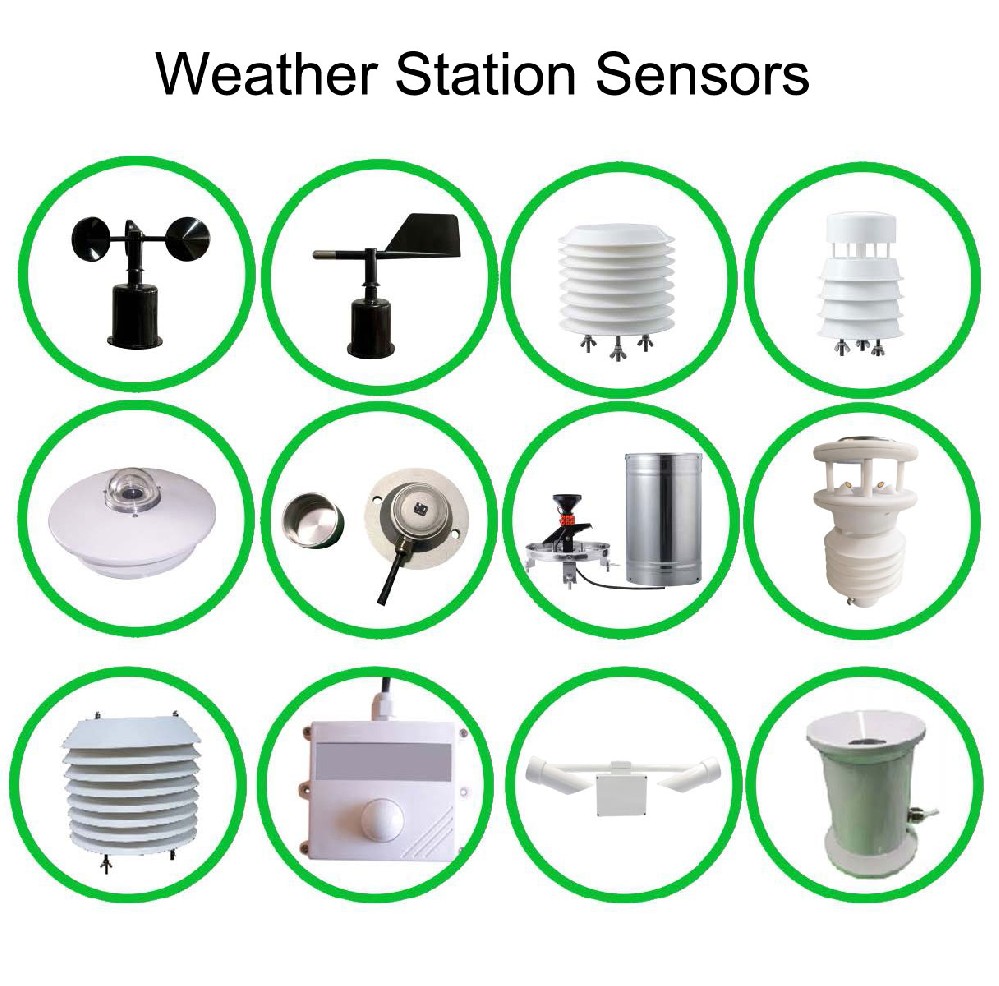
1. Air & Meteorological Monitoring
Core parameters: temperature, humidity, air pressure, wind speed & direction, PM2.5/PM10, noise.
NiuBoL Solution: The all-in-one micro weather station uses ultrasonic wind speed & direction sensors with a non-mechanical wear structure, significantly reducing field maintenance difficulty.
2. Water Quality Monitoring
Core parameters: pH, dissolved oxygen (DO), conductivity, turbidity, COD, ammonia nitrogen, etc.
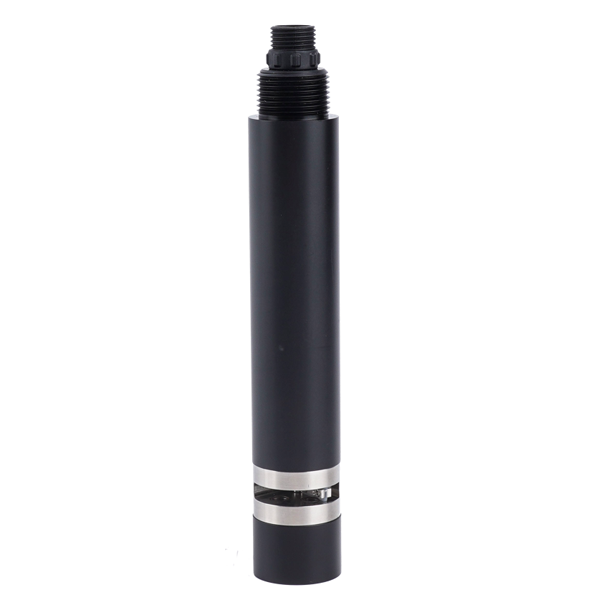
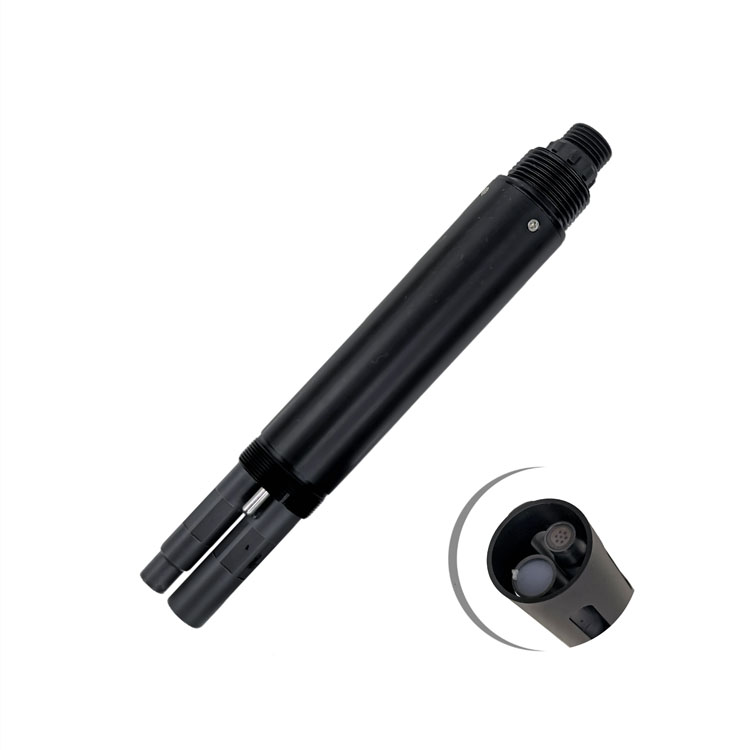
NiuBoL Solution: The digital multi-parameter water quality analyzer (NBL-WQ-) features 316L stainless steel and POM materials, IP68 protection, supports automatic temperature compensation, and effectively resists biofouling and corrosion.
3. Soil Monitoring
Core parameters: soil moisture, temperature, electrical conductivity (EC), nitrogen, phosphorus, potassium.
NiuBoL Solution: The needle-type soil 3-in-1 sensor (NBL-S-TMC) uses FDR principle and vacuum potting technology, suitable for long-term burial, supporting in-situ continuous monitoring.
| Monitoring Medium | Recommended Model | Core Parameters | Output Interface | Protection Rating | Typical Scenario |
|---|---|---|---|---|---|
| Air / Weather | NBL-W-71GUWS | Temp, Humidity, Pressure, Wind Speed/Direction, PM2.5/PM10 | RS485 Modbus-RTU | IP65 | Industrial Park Boundary, Smart City |
| Water Quality | NBL-WQ- | pH, DO, COD, Ammonia Nitrogen | RS485 Modbus-RTU | IP68 | Wastewater Discharge Outlet, WWTP |
| Soil | NBL-S-TMC | Temperature, Moisture, EC | RS485 Modbus-RTU | IP68 | Leakage Monitoring, Ecological Restoration |
| Noise | NBL-W-NS | 30-130dB | RS485/4-20mA | IP65 | Facility Boundary Noise Compliance Monitoring |
1. Field Power Supply Quota Calculation
When using solar + lithium battery solutions, consider 5-7 days of cloudy/rainy backup and select low-power devices. NiuBoL sensors support sleep mode, significantly reducing overall system power consumption.
2. RS485 Bus Integration
A bus topology must be used, with 120Ω terminating resistors at both ends, shielded twisted pair with single-ended grounding. For distances exceeding 300 meters, consider adding repeaters.
3. Lightning & Surge Protection
Elevated equipment requires lightning rods; industrial-grade SPD surge protectors must be configured for power and signal lines, with grounding resistance <4Ω.
Q1: How to solve zero drift of wind speed sensors in field weather stations?
NiuBoL ultrasonic wind speed & direction sensors have no mechanical parts and feature a built-in zero-point self-calibration algorithm for long-term stability.
Q2: How to achieve parallel data collection from multiple sensors using Modbus-RTU?
Use a unified baud rate, configure different Slave IDs, and the master station performs polling reads.
Q3: How corrosion-resistant are IP68 sensors during long-term immersion?
Made of 316L stainless steel + POM material with vacuum epoxy potting, effectively resisting acids, alkalis, and organic solvents.
Q4: How to choose between an all-in-one weather station and a separate type?
All-in-one is recommended for routine grid monitoring; separate type is suitable for high-precision research or special installation height requirements.
Q5: How to size a solar power system?
Taking 1.5W total power consumption as an example, a 60W solar panel + 30Ah battery is recommended to ensure operation during continuous cloudy/rainy days.
Q6: How to select sensors for different soil types?
Needle-type sensors for surface rapid measurement; tube-type multi-layer sensors for deep profile monitoring.
Q7: Do you provide secondary development materials?
Yes, complete Modbus register manual, SDK, and CAD dimension drawings are provided.
Q8: What is the lead time for bulk purchases?
Standard products ship within 3-5 working days; sample testing policy is available.
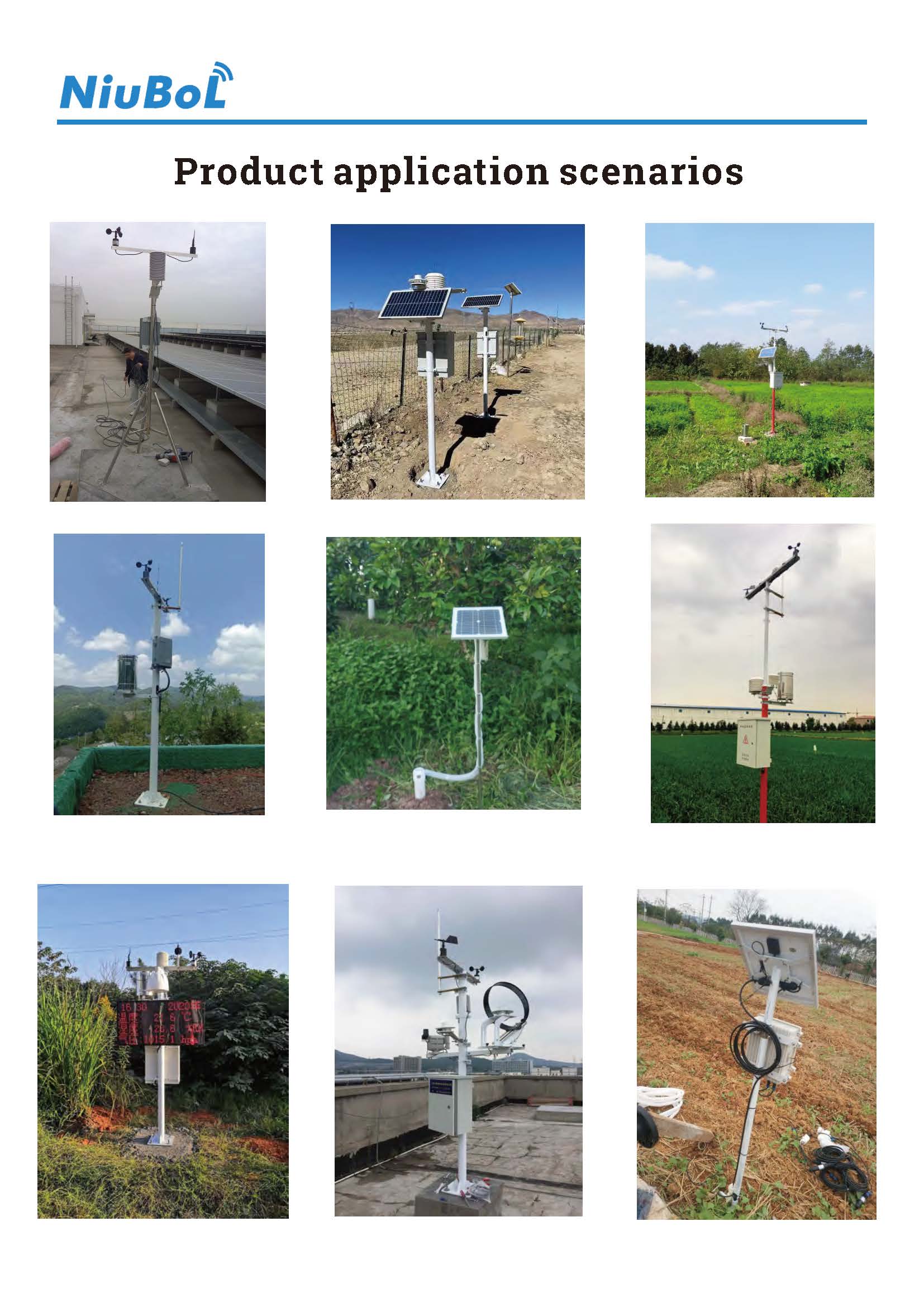
Clearly defining environmental monitoring classifications is the prerequisite for project planning and hardware selection. NiuBoL focuses on providing highly reliable, low-maintenance industrial-grade sensing terminals to help integrators achieve efficient delivery.
For the complete NiuBoL product selection manual, Modbus protocol documentation, CAD drawings, or bulk purchase quotations, please contact our application engineering team. We provide 1-on-1 technical support within 24 hours.
Related recommendations
Sensors & Weather Stations Catalog
 Agriculture Sensors and Weather Stations Catalog-NiuBoL.pdf
Weather Stations Catalog-NiuBoL.pdf
Agriculture Sensors Catalog-NiuBoL.pdf
Water Quality Sensor Catalog-NiuBoL.pdf
Related products
 Combined air temperature and relative humidity sensor
 TDR Soil Moisture & Temperature Sensor for irrigation| RS485 |4-20mA| NBL-S-THR
 Soil pH sensor RS485 soil Testing instrument soil ph meter for agriculture |NBL-S-PH
 Wind Speed sensor Output Modbus/RS485/Analog/0-5V/4-20mA
 Tipping bucket rain gauge for weather monitoring auto rainfall sensor RS485/Outdoor/stainless steel
 Pyranometer Solar Radiation Sensor 4-20mA/RS485

Screenshot, WhatsApp to identify the QR code
WhatsApp number:+8615367865107
(Click on WhatsApp to copy and add friends)

