





— Blogs —
—Products—
 Consumer hotline +8618073152920
WhatsApp:+8615367865107
Address:Room 102, District D, Houhu Industrial Park, Yuelu District, Changsha City, Hunan Province, China
Product knowledge
Time:2025-11-02 16:29:49 Popularity:1142
Fully automatic weather station operation automates selected measurement and recording tasks, not every physical service activity. Collectors still need clear openings, radiation instruments need suitable optical exposure, and power, mounting and connections need inspection. Specify the field work and service access with a NiuBoL configuration rather than assume a remote dashboard makes the station maintenance-free.
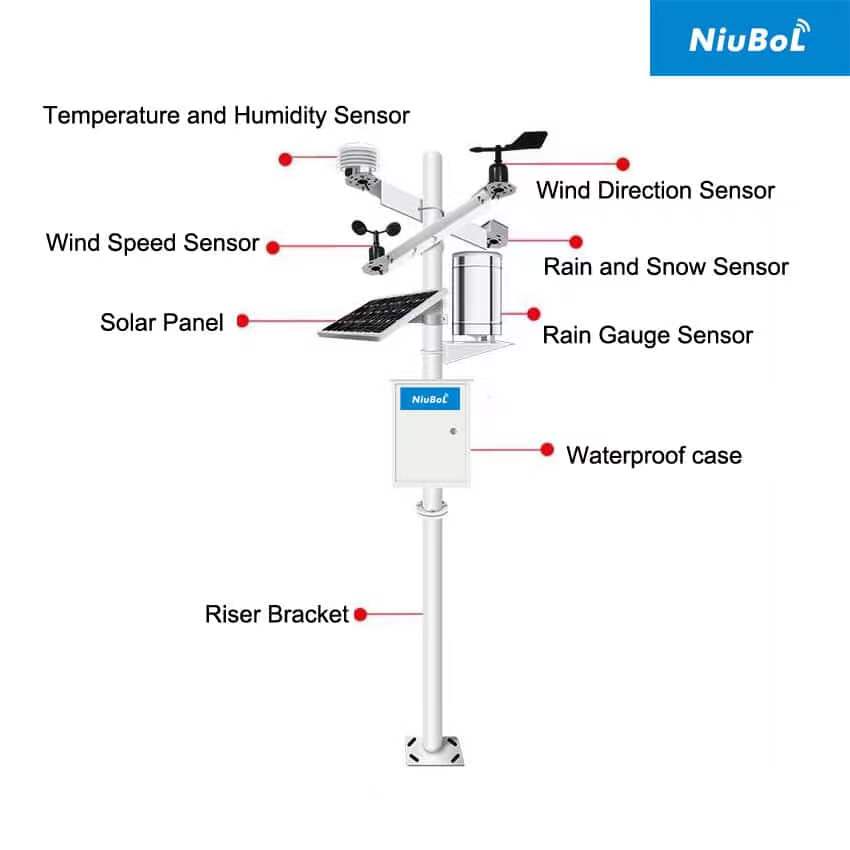
A configured station can acquire compatible instruments, retain selected observations and transfer records through a supported connection. Staff still have to verify the installation and deal with contamination, damage or changes around the instruments. Automatic collection cannot remove debris from a collector or correct a displaced bracket.
Separate routine remote review from work needing a visit. A missing channel may justify checking configuration or communications first. A photograph showing a blocked opening or shifted instrument requires a physical remedy even when data continues arriving.
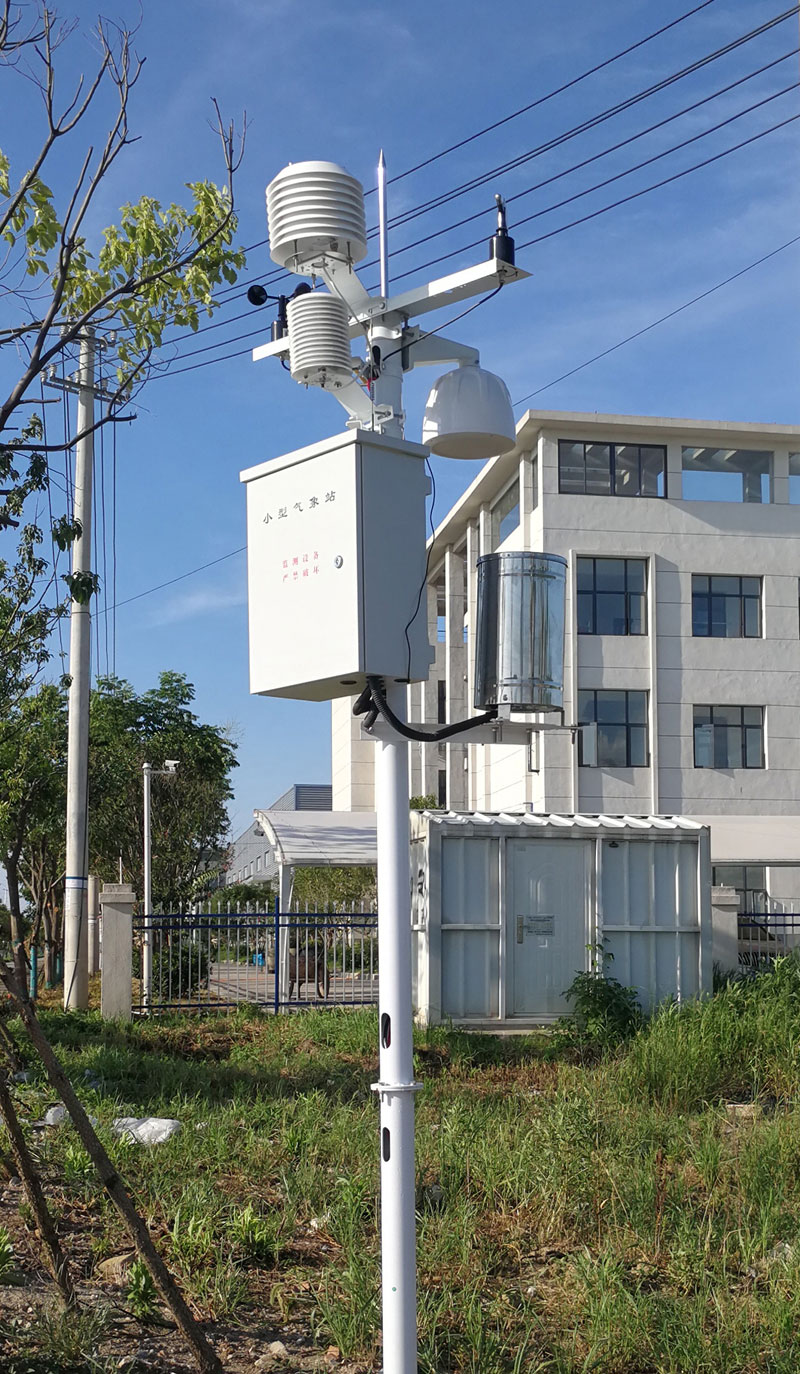
| Equipment | What to inspect | Why remote viewing is insufficient |
|---|---|---|
| Rain collector | Opening, funnel, drainage and tipping mechanism | A zero record can mean dry weather or failed collection |
| Radiation sensor | Receiving surface, alignment and new shadows | A plausible value may still be affected by fouling or exposure |
| Air shield | Air passage, contamination and local heat sources | The displayed value cannot prove representative exposure |
| Wind instruments | Mounting, orientation and clear measurement space | Communication does not establish unchanged alignment |
| Supply and connections | Selected power equipment, enclosure seals and cable condition | Intermittent physical faults may not be obvious in one record |
Record the condition before servicing as well as afterward. If the trace changes after cleaning or realignment, that history helps explain the earlier observations. A service visit should not silently overwrite settings on unrelated channels.
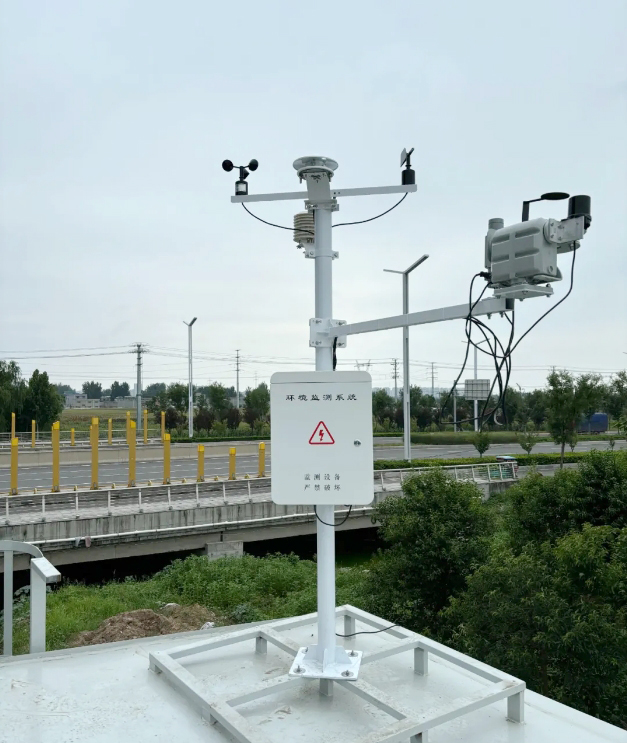
The NBL-W-RS measures liquid precipitation with a tipping mechanism. Water leaving the collector does not guarantee that the opening and funnel remain free of debris. Check the physical collection path before treating a persistent zero during reported rain as a communication fault.
| NBL-W-RS item | Specification | Operating implication |
|---|---|---|
| Selected tipping increment | 0.2 mm | Match the collector's pulse conversion |
| Precipitation intensity range | 0-4 mm/min | Review the intended rainfall conditions |
| Accuracy condition | +/-4% at 2 mm/min in the stated indoor static test | Not a universal error limit for every field event |
| Operating temperature | 0-50 C | Do not infer an all-season frozen-precipitation capability |

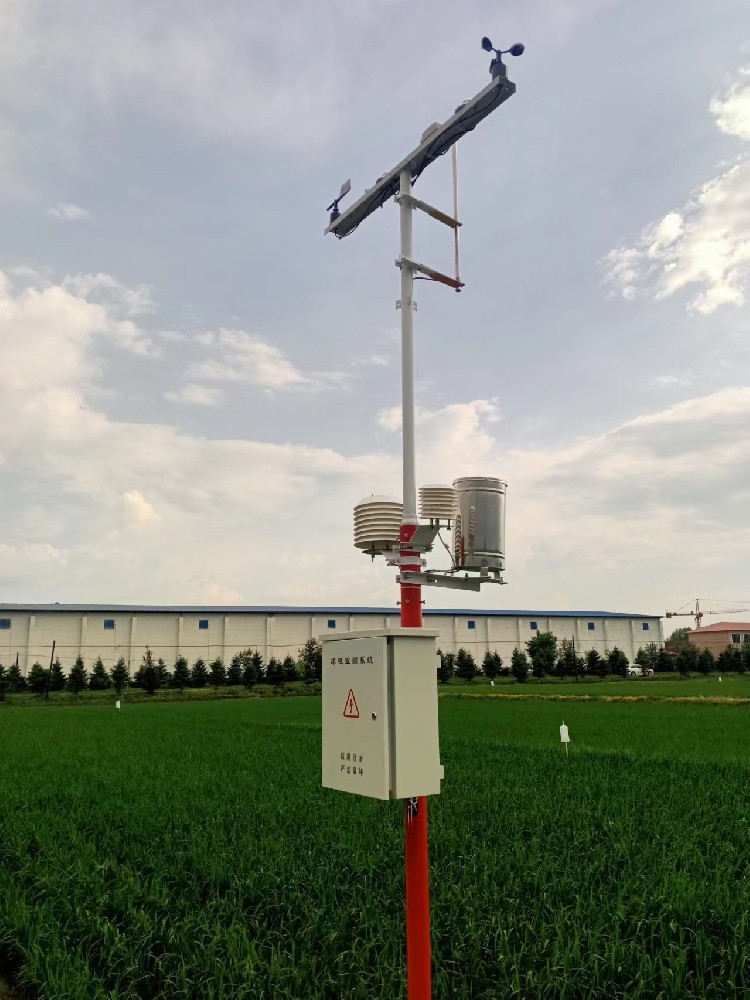
Inspect panel shading, accessible mounting and the selected battery/controller arrangement. A panel and battery shown in a product illustration identify a configuration, not guaranteed autonomy at every site. Available solar energy, loads and usable capacity determine whether the station can meet its required reserve.
Keep the supply panel clear without disturbing the measurement instruments. Before electrical service, use the applicable isolation and equipment procedures. Do not diagnose every missing remote record as an empty battery without checking local acquisition and the onward connection.
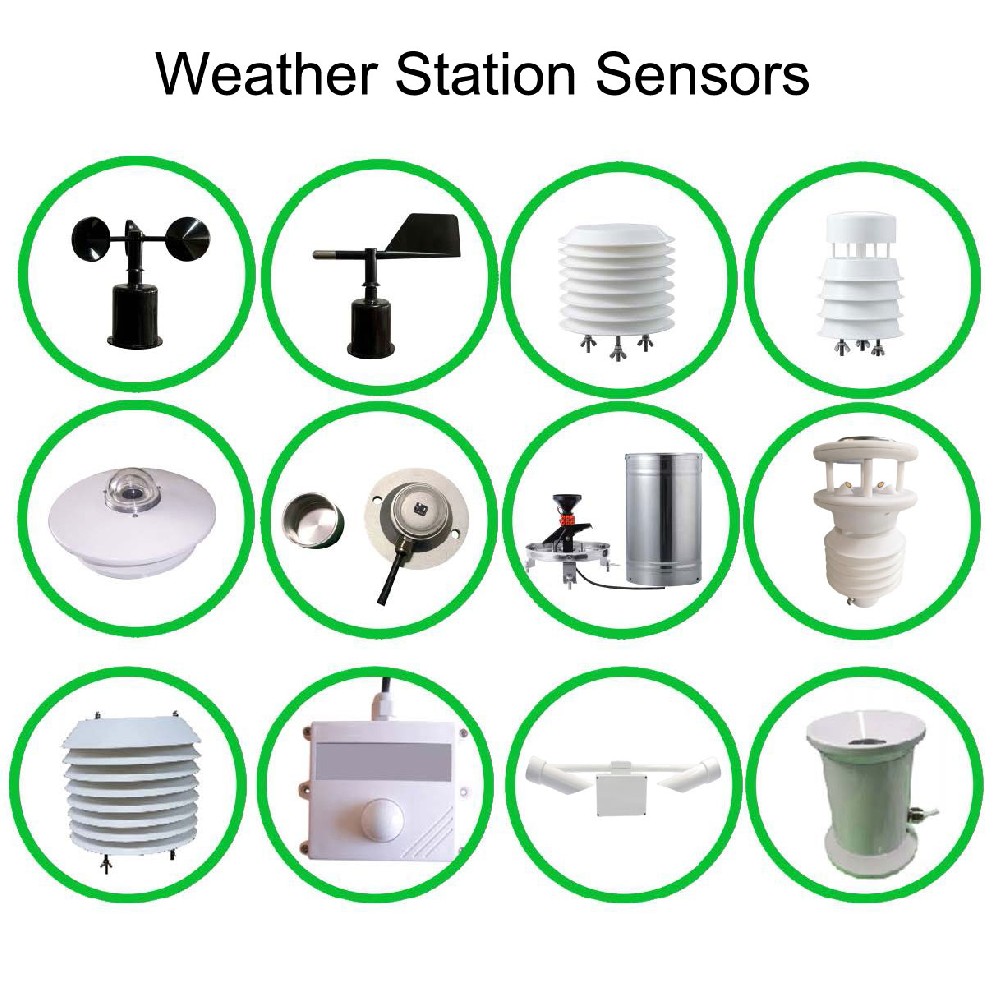
The NBL-W-LBTH measures atmospheric temperature, relative humidity and pressure. Its shield needs suitable airflow and exposure. Adding an arbitrary software offset to compensate for a heated location is not equivalent to correcting that location or calibrating the instrument.
For separate NBL-W-SS and NBL-W-DS wind instruments use IP65. That rating does not remove orientation checks or establish protection for every connection. Ultrasonic alternatives avoid rotating wind-measurement parts but still require a clear measurement space and appropriate inspection.
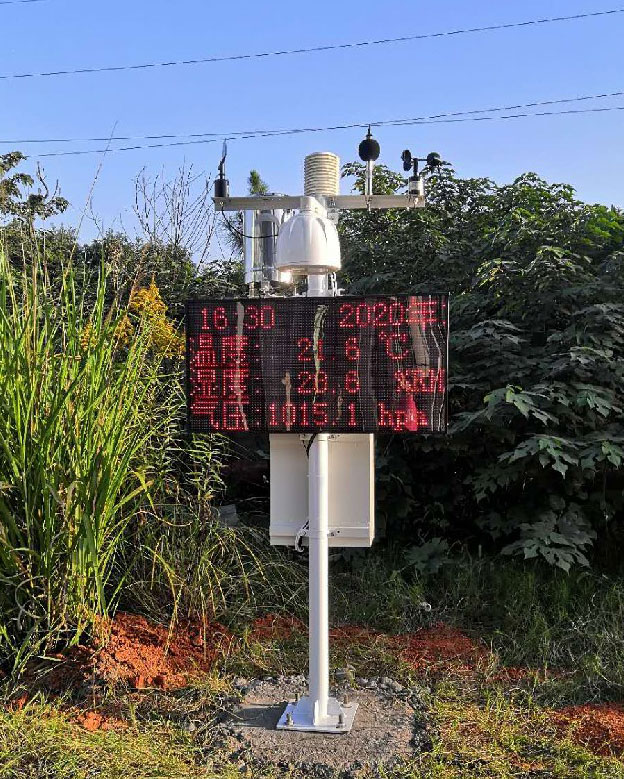
The NBL-PH-1 offers local FLASH recording with a saving interval of 1-240 minutes and configured 4G communication. Establish the available history and retrieval method for the delivered system. Local storage is not proof of unlimited retention or automatic transfer after every outage.
Use RS485 Modbus RTU compatibility and actual channel mapping when checking connected digital instruments. Compare local observations with the receiving system before changing physical sensors. A correct local value and missing remote record point to a different investigation from an absent sensor response.
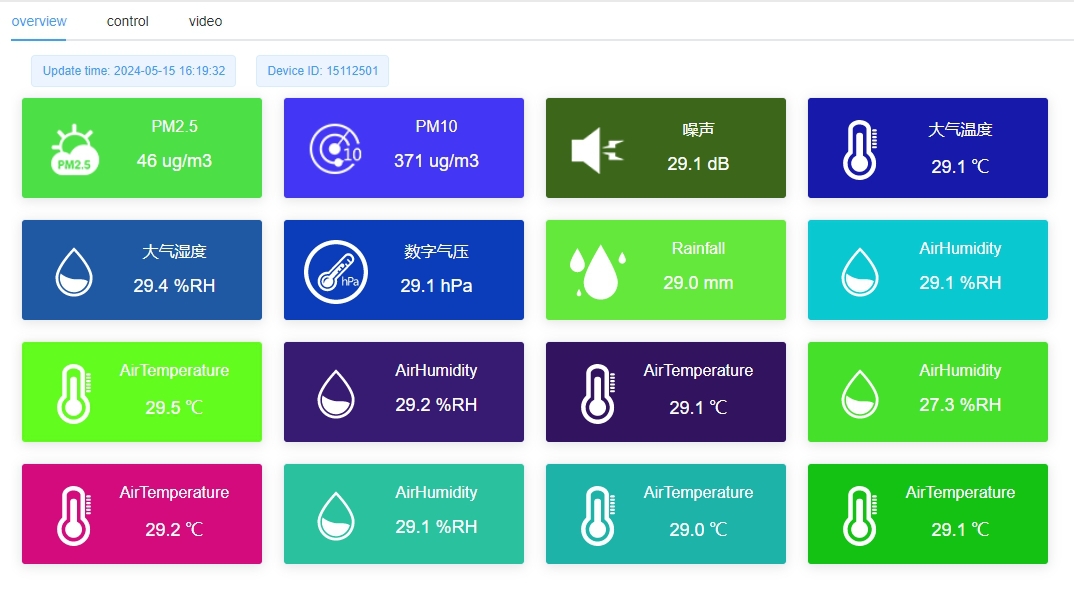
An environmental dashboard can support review without being a certified emissions system or an equipment-protection controller. If the project requires a regulatory measurement, specific alarm service or machinery response, identify its instruments and test requirements separately.
Routine weather service should not be described as proof of environmental compliance or equipment safety. Keep those responsibilities with the applicable project design and operating procedures, including what happens when observations are missing or under maintenance.
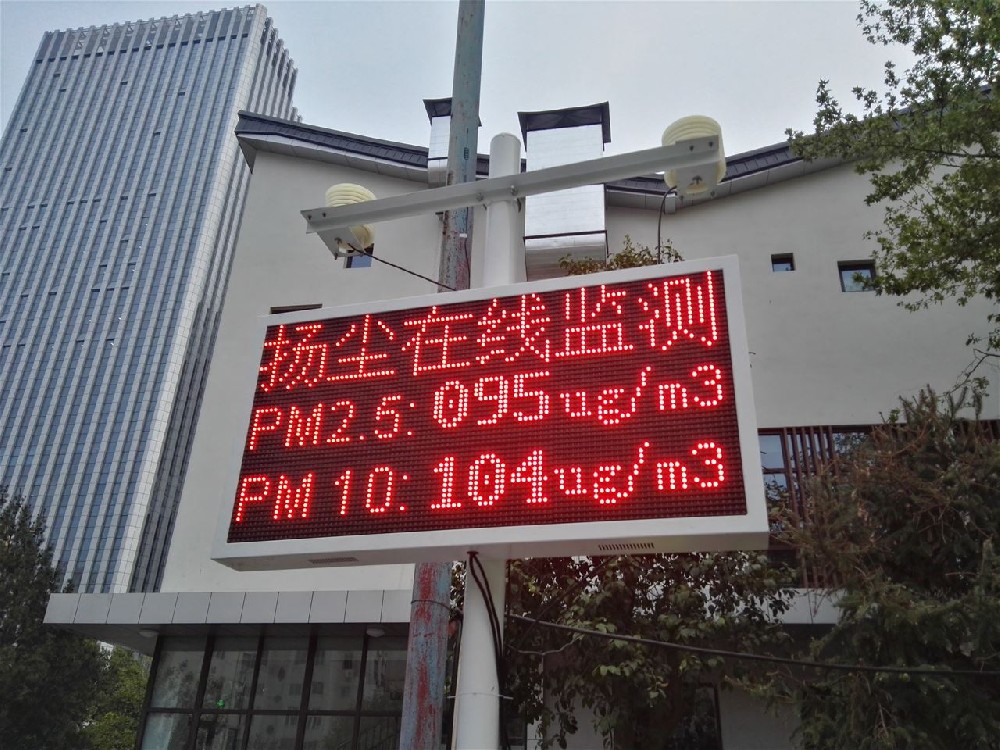
Dust, insects, vegetation growth and access conditions vary between sites. Start with the selected instruments' service requirements and inspect often enough to learn the local fouling pattern. Shorten the interval if cleaning repeatedly finds a problem that could affect observations.
After service, verify alignment, relevant settings and a suitable response check. Cleaning is not a calibration certificate, and a single plausible reading does not establish the complete channel's performance. Keep service dates with the records so analysts can identify affected periods.
No. It describes selected acquisition and recording functions. Instruments and power equipment still need appropriate physical checks, cleaning and repairs.
No. Debris can still obstruct the collector or funnel. Inspect the collection path and mechanism when rainfall records are questionable.
No. Review the physical receiving surface and exposure. A changing or plausible irradiance value does not rule out contamination or partial shading.
Not automatically. Use instrument requirements and site findings to set inspection frequency, and distinguish routine cleaning from calibration or repair.
Identify access arrangements, routine tasks, calibration requirements, replacement items and support responsibilities. Send NiuBoL the environment and selected instruments so service requirements can be reviewed with the equipment scope.
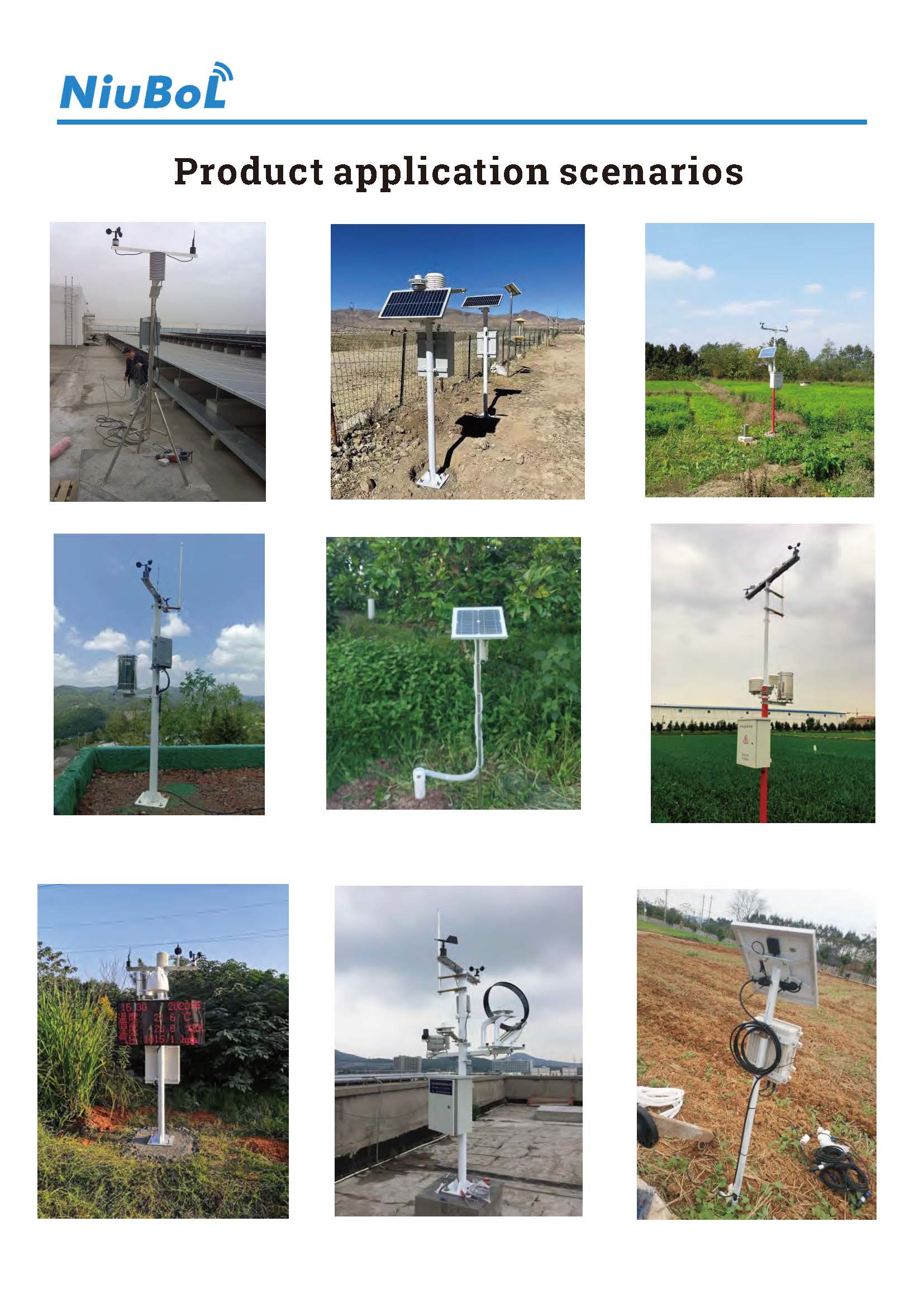
Fully automatic weather station operation still depends on serviceable instruments and a defined field-work plan. Separate remote data checks from physical inspection, retain service history and verify affected channels after work. This supports usable observations without promising maintenance-free operation or unsupported project outcomes.
Prev:Agricultural Sensors for Precision Farming and IoT
Next:Best Wireless Soil Moisture Sensors for Precision Irrigation
Related recommendations
Sensors & Weather Stations Catalog
 Agriculture Sensors and Weather Stations Catalog-NiuBoL.pdf
Weather Stations Catalog-NiuBoL.pdf
Agriculture Sensors Catalog-NiuBoL.pdf
Water Quality Sensor Catalog-NiuBoL.pdf
Related products
 Combined air temperature and relative humidity sensor
 TDR Soil Moisture & Temperature Sensor for irrigation| RS485 |4-20mA| NBL-S-THR
 Soil pH sensor RS485 soil Testing instrument soil ph meter for agriculture |NBL-S-PH
 Wind Speed sensor Output Modbus/RS485/Analog/0-5V/4-20mA
 Tipping bucket rain gauge for weather monitoring auto rainfall sensor RS485/Outdoor/stainless steel
 Pyranometer Solar Radiation Sensor 4-20mA/RS485


Screenshot, WhatsApp to identify the QR code
WhatsApp number:+8615367865107
(Click on WhatsApp to copy and add friends)

