





— Blogs —
—Products—
 Consumer hotline +8618073152920
 WhatsApp:+8615367865107
Address:Room 102, District D, Houhu Industrial Park, Yuelu District, Changsha City, Hunan Province, China
Product knowledge
Time:2026-04-24 09:05:17 Popularity:330
Under the dual pressures of global water scarcity and increasingly stringent environmental regulations, environmental water treatment has evolved from a passive compliance issue into a cutting-edge field that drives industrial sustainability and creates new value. For system integrators, project contractors, and solution providers, understanding the industry’s evolution from “treatment” to “reuse” and ultimately to “smart solutions” is key to seizing market opportunities and building core competitiveness. This article will analyze the core forces driving industry transformation, explore the development directions of key technologies, and explain how to deliver water treatment solutions with greater foresight and operational flexibility to customers through intelligent means.
The environmental water treatment industry is no longer driven solely by environmental regulations, but by a convergence of multiple forces that deeply influence technology selection and project design.
1. Stricter Regulations & Higher Standards: Discharge limits (especially nitrogen, phosphorus, recalcitrant organics, and emerging micropollutants) continue to tighten worldwide. Zero Liquid Discharge (ZLD) and Minimum Liquid Discharge (MLD) are shifting from optional to mandatory in water-scarce regions and highly sensitive sectors (e.g., coal chemicals, pharmaceuticals). This directly drives demand for advanced and tertiary treatment technologies.
2. Water Valuation & Circular Economy: Rising freshwater costs and a growing focus on water footprints are transforming wastewater from a "liability" into a "resource." Water reuse (industrial cooling, process water, even boiler feedwater) and resource recovery (phosphorus, energy) are becoming economically viable. Project evaluation is moving from "lowest capital cost" to "lifecycle cost and resource revenue."
3. Digitalization & Smart Operations: IoT, big data analytics, and AI are reshaping facility operations. Through predictive maintenance, process optimization, and digital twins, smart water plants achieve higher stability, lower energy/chemical consumption, and less manual intervention — enabling new business models for operations services.
Membrane Technology Integration & Applications
Microfiltration, ultrafiltration, nanofiltration, reverse osmosis — membranes are the cornerstone of advanced treatment and reuse. Trends include: low-cost/high-performance membranes (anti-fouling, high flux, long life); process coupling (MBR as standard for high-end municipal/industrial applications; UF+RO dual-membrane or NF for salt separation as key for high-quality reuse and ZLD pretreatment); expanding applications (landfill leachate, electronics ultrapure water, industrial park water reuse).
Biological Treatment: Intensification & Innovation
Anammox saves 60% aeration energy and 100% carbon source compared to conventional nitrification-denitrification, already engineered for high-ammonia wastewater (sludge digester liquor) and expanding to mainstream processes. MBBR/IFAS significantly increases biomass and treatment capacity, ideal for upgrading/expanding existing plants without extra footprint. Aerobic Granular Sludge (AGS) achieves COD oxidation, nitrification, denitrification, and phosphorus removal in one reactor, saving up to 50% footprint and 30% energy — moving from demonstration to full-scale application.
Advanced Oxidation Processes (AOPs): Precision Application
For bio-recalcitrant toxic organics (antibiotics, POPs, endocrine disruptors), AOPs (catalytic ozonation, Fenton/electro-Fenton, electrocatalytic oxidation) shift from 'backup' to 'standard unit'. Core: hydroxyl radicals for non-selective mineralization or breakdown of complex organics, improving biodegradability. Engineering focus: reducing operating cost via real-time monitoring of specific pollutants to enable on-demand start/stop or dosage adjustment, avoiding wasteful over-oxidation.
With increasing process complexity, intelligent monitoring is the nervous system for stable, efficient, low-cost operation. Multi-dimensional sensing networks go beyond conventional COD, ammonia, total phosphorus to include online monitoring of specific ions (nitrate, nitrite), toxicity, biological activity (ATP), and membrane fouling indicators (SDI, TOC). Data-driven decision making uses machine learning to build predictive models of influent quality - process parameters - effluent quality - energy/chemical consumption, enabling precise feedforward/feedback control of chemical dosing and aeration. Digital twins simulate process behavior under various conditions for operator training, process optimization, and predictive maintenance of critical equipment (pumps, blowers, membrane modules) — significantly reducing unplanned downtime.
| Monitoring Target | Key Parameters | Technology Principle | Application Scenario |
|---|---|---|---|
| Process Control | DO, ORP, MLSS | Fluorescence/Electrochemical/Optical Scattering | Aerobic/Anoxic tank aeration optimization, MBR membrane tank |
| Nutrient Removal | NH₃-N, NO₃-N, PO₄-P | Ion Selective Electrode/UV absorption | Biological N/P removal, intelligent carbon/coagulant dosing |
| Membrane Protection | Turbidity, SDI, TOC | Nephelometry/Laser Diffraction/UV254 | RO/UF feed water early warning & cleaning judgment |
| Toxicity Early Warning | Bio-toxicity (luminescent bacteria) | Microbial fuel cell/Luminescence inhibition | Early warning of industrial shock loads |
| Data Integration | Multi-parameter acquisition & edge computing | Supports Modbus, PROFINET, OPC UA | Plant-wide data aggregation, edge analytics & cloud platform interface |
When designing next-generation water treatment systems for industrial clients or parks, go beyond unit technologies and focus on system-level solutions. Modular & scalable design allows easy expansion or process upgrades based on future changes in flow, quality, or standards. Resource & energy recovery: integrate anaerobic digestion for biogas, phosphorus recovery, waste heat utilization to enhance overall economic and environmental benefits. Resilient design: consider ability to handle influent fluctuations, extreme weather, power outages (equalization basins, backup power, smart emergency dispatch). Lifecycle cost analysis: evaluate not only CAPEX but also 20–30 year OPEX (energy, chemicals, maintenance, labor) and potential resource revenues to deliver real ROI for clients.
Q1: For existing WWTP upgrading, what is the most cost-effective technology?
A: No single answer — it depends on existing processes and goals. Common efficient solutions: MBBR/IFAS (enhances biological treatment without extra tanks) and "high-rate clarifier + deep-bed filter" (advanced P/N removal). Pilot testing is recommended.
Q2: What is the biggest challenge with membrane technology and how to solve it?
A: Membrane fouling is the core challenge. Online monitoring of feed water fouling index and transmembrane pressure enables early fouling warning and predictive cleaning, effectively controlling fouling and extending membrane life.
Q3: AOPs have high operating costs. How to optimize?
A: Precision dosing is key. Real-time monitoring of influent pollutant load coupled with oxidant dosing system (on-demand start/stop and dose adjustment) can significantly reduce chemical and energy consumption.
Q4: What value does a smart water platform bring to owners and engineering companies?
A: For owners: lower OPEX, stable operation, risk mitigation. For engineering firms/integrators: higher project value-add, upgrading from one-time construction to recurring technology service business models.
Q5: For industrial water reuse, which water quality parameters matter most?
A: Core principle: "quality matches purpose". Cooling water: scaling/corrosion factors (hardness, chlorides); boiler feedwater: silica, conductivity; process water: depends on specific production. Detailed water analysis is essential.
Q6: Anammox has clear advantages. Why is it not widely applied?
A: Main bottlenecks: slow startup and demanding process control. Currently best for high-temperature, high-ammonia wastewater (sludge digester liquor, landfill leachate). Mainstream municipal application still needs solutions for low-temperature bacteria enrichment.
Q7: When selecting online water quality instruments, what matters beyond accuracy?
A: In complex industrial environments, reliability, anti-fouling capability, and ease of maintenance are more critical than lab-grade accuracy. Focus on ingress protection, self-cleaning functions, and MTBF.
Q8: How to integrate intelligent monitoring systems with existing automation?
A: Use gateways supporting standard industrial protocols (Modbus, PROFINET, OPC UA) to seamlessly integrate data into existing PLC, DCS, or SCADA systems without retrofitting underlying architecture.
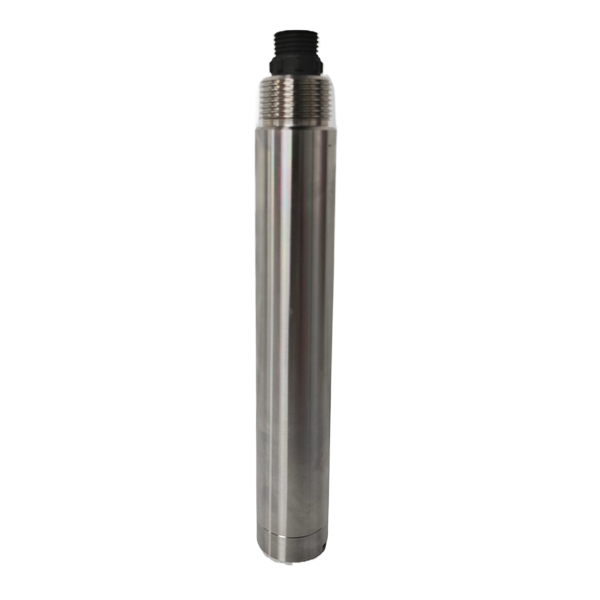
Summary: The environmental water treatment industry is in a critical transition — from scale expansion to quality improvement, from pollution control to resource circularity, from experience-driven to data-driven. For system integrators, engineering companies, and technology providers, success lies in mastering technology integration and data intelligence. Those who embrace smart monitoring, advanced treatment integration, and lifecycle value will lead the next decade of water transformation.
 NBL-NHN-302 Online Ammonia Nitrogen Sensor.pdf
NBL-RDO-206 Online Fluorescence Dissolved Oxygen Sensor.pdf
NBL-COD-208 Online COD Water Quality Sensor.pdf
NBL-CL-206 Water Quality Sensor Online Residual Chlorine Sensor.pdf
NBL-DDM-206 Online Water Quality Conductivity Sensor.pdf
NBL-BOD-406 Online BOD Sensor.pdf
Next:Industrial Printing & Dyeing Wastewater Treatment: Process Characteristics to System Integration
Related recommendations
Sensors & Weather Stations Catalog
Agriculture Sensors and Weather Stations Catalog-NiuBoL.pdf
Weather Stations Catalog-NiuBoL.pdf
Agriculture Sensors Catalog-NiuBoL.pdf
Water Quality Sensor Catalog-NiuBoL.pdf
Related products
 Combined air temperature and relative humidity sensor
 Soil Moisture Temperature sensor for irrigation|NBL-S-THR
 Soil pH sensor RS485 soil Testing instrument soil ph meter for agriculture |NBL-S-PH
 Wind Speed sensor Output Modbus/RS485/Analog/0-5V/4-20mA
 Tipping bucket rain gauge for weather monitoring auto rainfall sensor RS485/Outdoor/stainless steel
 Pyranometer Solar Radiation Sensor 4-20mA/RS485

Screenshot, WhatsApp to identify the QR code
WhatsApp number:+8615367865107
(Click on WhatsApp to copy and add friends)

