





— Blogs —
—Products—
 Consumer hotline +8618073152920
 WhatsApp:+8615367865107
Address:Room 102, District D, Houhu Industrial Park, Yuelu District, Changsha City, Hunan Province, China
Product knowledge
Time:2026-04-24 09:35:17 Popularity:374
As global environmental regulations tighten on industrial discharge standards, refined management of nitrogen-containing compounds has become a compliance necessity in the energy, chemical, and pharmaceutical industries. In the fields of industrial wastewater treatment (IWT) and environmental AIoT, achieving real-time, accurate monitoring of ammonia nitrogen (NH₄⁺-N) is a core technical challenge for system integrators and EPC contractors.
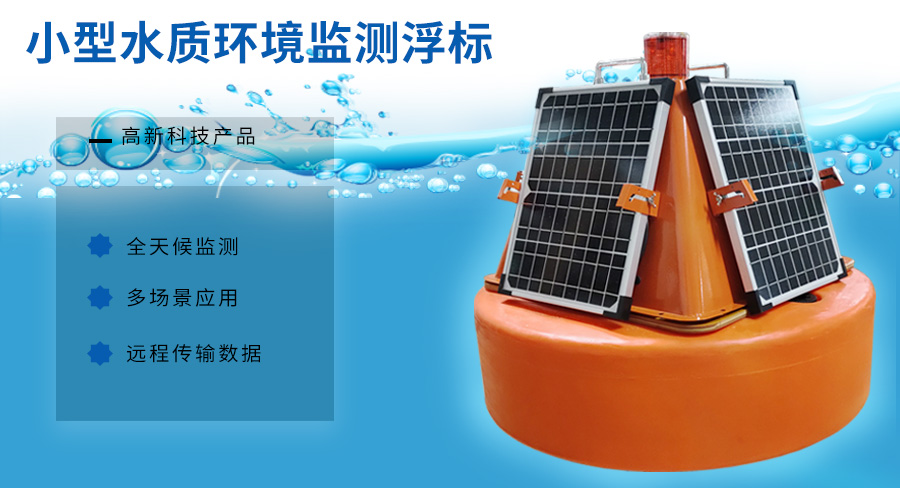
In industrial engineering contexts, ammonia nitrogen in wastewater exists mainly as free ammonia (NH₃) and ionic ammonium (NH₄⁺). The composition is directly regulated by pH: under neutral or alkaline conditions, inorganic ammonia and ammonia water coexist; under acidic conditions, it exists mainly as inorganic ammonium salts (e.g., ammonium sulfate, ammonium chloride).
Core Discharge Sources
1. Energy & Heavy Chemical: Process wastewater from coking, synthetic ammonia production, and petrochemical processing — typically high salinity and high concentration.
2. Pharmaceutical & Fine Chemical: Nitrogen-containing organic decomposition from fermentation, organic synthesis, and catalytic processes.
3. Municipal & Public Works: Municipal sewage, landfill leachate — leachate has extremely high ammonia nitrogen and complex composition, demanding high anti-interference capability for sensor membranes.
4. Agricultural Engineering: Large-scale livestock wastewater and fertilizer runoff — major contributors to eutrophication.
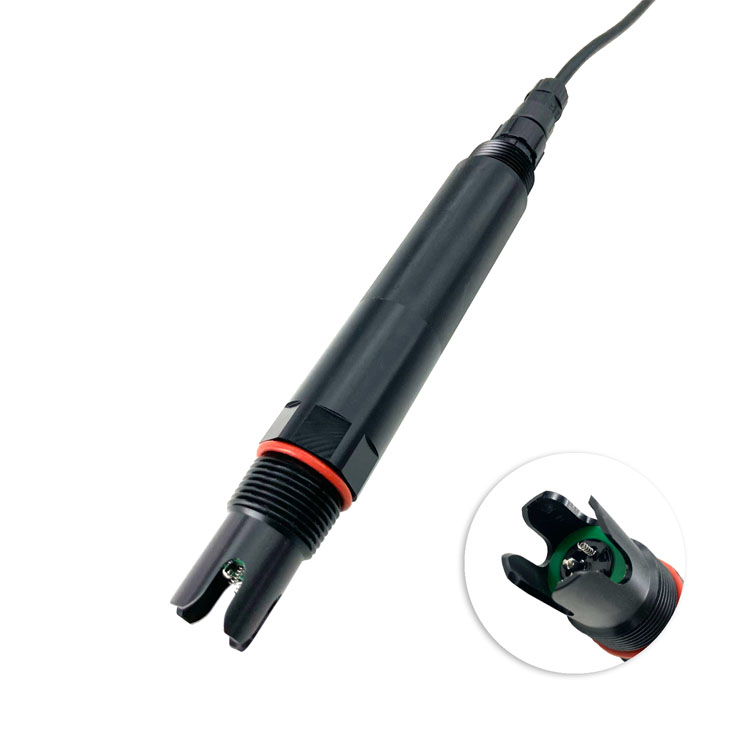
For engineering firms, excessive ammonia nitrogen is not only an environmental compliance issue but directly affects production facility lifespan and treatment process stability.
Asset Corrosion & Biofouling: Ammonia nitrogen is highly corrosive to non-ferrous metals like copper. In industrial recirculating cooling systems, high ammonia nitrogen promotes microbial proliferation, forming biofouling that blocks heat exchanger tubes and significantly reduces heat exchange efficiency.
Sharp Cost Increase: In front-end treatment, ammonia nitrogen dramatically increases chlorine demand for breakpoint chlorination, raising O&M costs.
Biological System Shock: Excessive ammonia nitrogen load inhibits biological nitrification activity, potentially collapsing the entire wastewater treatment plant.
Health & Legal Risks: Under nitrification, ammonia nitrogen converts to nitrite and nitrate — both highly carcinogenic and subject to strict environmental regulatory audit.
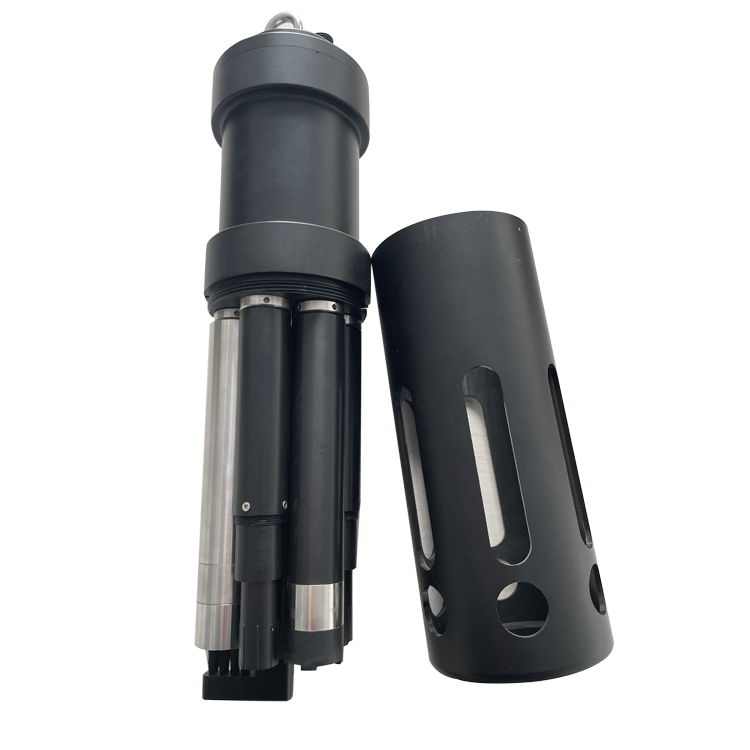
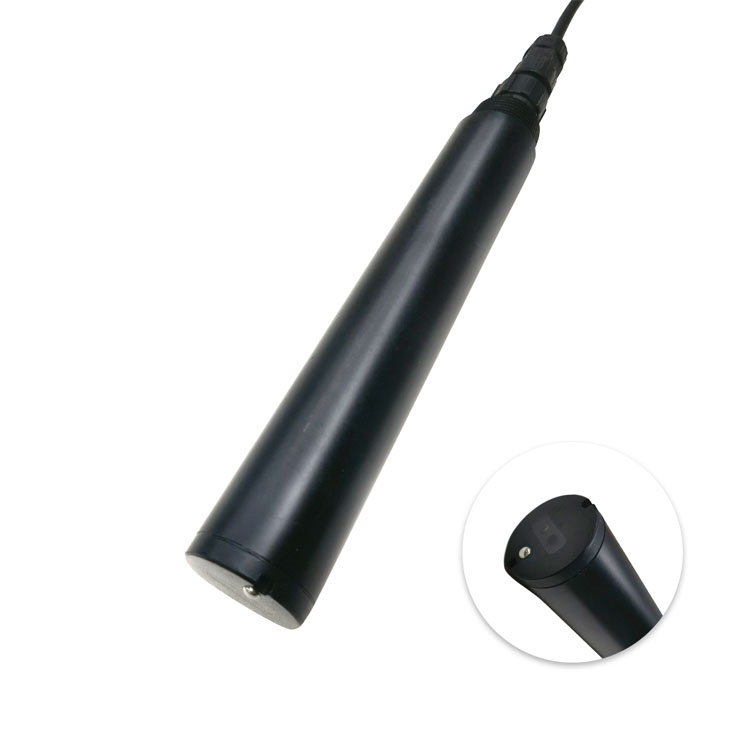
Addressing system integrator requirements for stability and communication convenience, NiuBoL developed the NBL-NHN-206 all-in-one online sensor. Based on PVC membrane Ion Selective Electrode (ISE) technology with built-in temperature compensation, it is designed for harsh industrial environments.
| Specification | Detail |
|---|---|
| Model | NBL-NHN-206 |
| Measuring Principle | Ion Selective Electrode (ISE) |
| Housing Material | ABS, PVC, POM (corrosion-resistant) |
| Measuring Range | 0–10.00 mg/L; 0–100.00 mg/L; 0–1000.0 mg/L (selectable) |
| Resolution | 0.01 mg/L / 0.1 mg/L (depending on range) |
| Accuracy | ±10% of reading or ±1 mg/L (whichever greater) |
| Response Time (T90) | <60s |
| Output Interface | RS-485 (Modbus RTU protocol) |
| Analog Output | 4-20 mA (optional) |
| Operating Conditions | 0–40°C; <0.1 MPa; pH 4–10 |
| Power Supply | 12–24V DC |
| Protection Rating | IP68 |
| Installation Thread | 3/4 NPT, submersible mounting |

In IoT solutions, the NBL-NHN-206 online ammonium sensor is not just a measurement unit — it is a core sensing layer node.
Typical Application Scenarios for Online Ammonium Nitrogen Sensor
1. Industrial Wastewater Treatment Process Control: Real-time monitoring of ammonia nitrogen in aeration tanks and outlets, interlocked with VFDs to control aeration or chemical dosing pumps.
2. Municipal Leachate Monitoring Systems: Integrated into mobile treatment terminals, connected via RS-485 bus to central control room.
3. Surface Water & Section Monitoring: Paired with NiuBoL data loggers and solar power systems for unattended real-time early warning in remote areas.
4. Recirculating Water Quality Monitoring: In cooling water reuse systems, monitoring ammonia nitrogen to prevent equipment corrosion and biofilm formation.
Selection Guidelines & Precautions
Range Matching: During design phase, select appropriate range based on site historical peak values. For high-concentration wastewater (e.g., coking wastewater), recommend 0-1000 mg/L range.
Interfering Ions Consideration: ISE is susceptible to interference from ions with same valence (e.g., K⁺). Under very high potassium concentration, consider pre-treatment or algorithmic compensation.
Installation Angle: To ensure effective contact between internal electrolyte and membrane, sensor must NOT be inverted or installed horizontally — maintain at least 15° tilt.
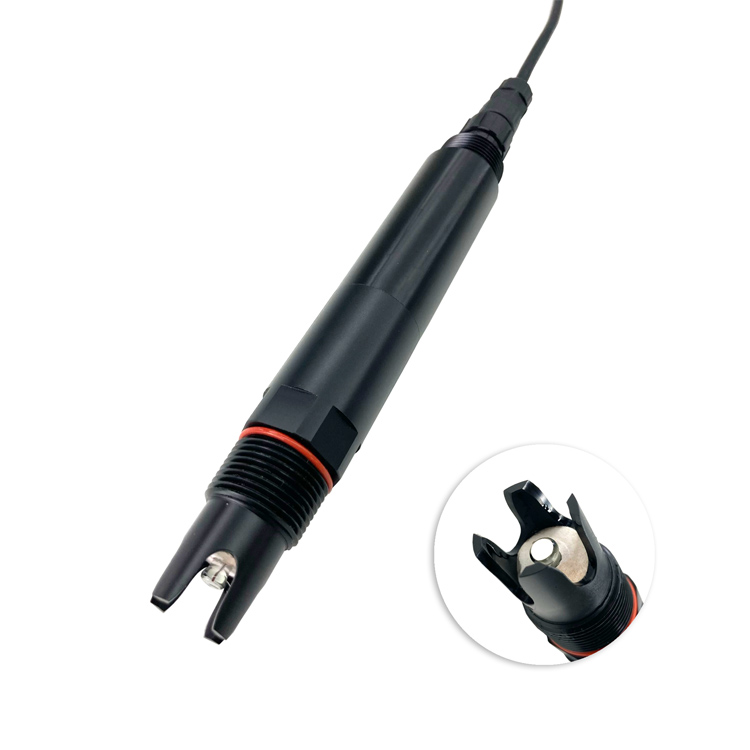
To ensure continuity and accuracy of industrial monitoring data, system integrators should include the following operating procedures in maintenance agreements:
Activation Treatment: New or long-stored electrodes should be soaked in clean water for 2 hours to activate the membrane.
Calibration Interval: Depending on water quality complexity, recommend two-point calibration every 2–4 weeks.
Electrode Storage: When not in use for over two weeks, store dry with protective cap to avoid sensing element damage.
Failure Determination: Replace electrode assembly when calibration slope drops significantly or response time exceeds 120s with cleaning ineffective.
Q1: What communication protocol does the NBL-NHN-206 ammonium nitrogen sensor use?
A: The sensor uses industry-standard Modbus RTU protocol over RS-485 bus, allowing integrators to easily connect to PLCs, DCS, or third-party IoT cloud platforms.
Q2: Does it support analog signal output?
A: The standard model has RS-485 output. We can optionally provide a 4-20 mA analog signal module to accommodate traditional secondary instruments.
Q3: Does the sensor have automatic cleaning?
A: NBL-NHN-206 does not come with a mechanical wiper. For high suspended solids or scaling-prone water, recommend external water rinsing or periodic manual maintenance.
Q4: What is the average lifespan of the sensor electrode?
A: With a patented reference system, internal reference liquid slowly seeps out under 1 Bar pressure, preventing external wastewater contamination. Under normal industrial wastewater maintenance conditions, electrode life typically exceeds comparable industrial products.
Q5: There is no 24V power supply at the installation site — can 12V be used?
A: Yes. The sensor supports 12–24V DC wide voltage input with only 0.2W power consumption, ideal for solar-powered remote monitoring stations.
Q6: Does pH fluctuation affect measurement results?
A: Yes. NBL-NHN-206 requires operating pH between 4–10. If pH is too high, ammonium ions convert to molecular ammonia, causing low readings.
Q7: Can the sensor be submerged in strong acids or bases for extended periods?
A: The housing uses ABS/PVC/POM with good corrosion resistance, but the measuring membrane must follow pH 4–10 limits. Outside this range, pre-treatment adjustment is needed.
Q8: Is custom cable length available?
A: Standard cable is 5 meters. For deep wells or large sedimentation tanks, we can provide custom shielded cables of 10m, 20m, or longer to ensure signal transmission quality.
Summary: In the context of Industry 4.0 and smart environmental protection, high-concentration ammonia nitrogen wastewater treatment has shifted from "end-of-pipe treatment" to "process monitoring". NiuBoL's online ammonium monitoring solution, with its high accuracy, low power consumption, and outstanding integration convenience, provides a reliable technology foundation for system integrators. Through scientific selection and standardized maintenance, engineering firms can significantly reduce project delivery risk and improve the overall ROI of environmental monitoring systems.
 NBL-RDO-206 Online Fluorescence Dissolved Oxygen Sensor.pdf
NBL-COD-208 Online COD Water Quality Sensor.pdf
NBL-CL-206 Water Quality Sensor Online Residual Chlorine Sensor.pdf
NBL-DDM-206 Online Water Quality Conductivity Sensor.pdf
Related recommendations
Sensors & Weather Stations Catalog
Agriculture Sensors and Weather Stations Catalog-NiuBoL.pdf
Weather Stations Catalog-NiuBoL.pdf
Agriculture Sensors Catalog-NiuBoL.pdf
Water Quality Sensor Catalog-NiuBoL.pdf
Related products
 Combined air temperature and relative humidity sensor
 Soil Moisture Temperature sensor for irrigation|NBL-S-THR
 Soil pH sensor RS485 soil Testing instrument soil ph meter for agriculture |NBL-S-PH
 Wind Speed sensor Output Modbus/RS485/Analog/0-5V/4-20mA
 Tipping bucket rain gauge for weather monitoring auto rainfall sensor RS485/Outdoor/stainless steel
 Pyranometer Solar Radiation Sensor 4-20mA/RS485

Screenshot, WhatsApp to identify the QR code
WhatsApp number:+8615367865107
(Click on WhatsApp to copy and add friends)

