





— Blogs —
—Products—
 Consumer hotline +8618073152920
WhatsApp:+8615367865107
Address:Room 102, District D, Houhu Industrial Park, Yuelu District, Changsha City, Hunan Province, China
Product knowledge
Time:2025-10-13 17:34:05 Popularity:1090
Climate adaptation sensors for agriculture help operators observe local heat exposure, rainfall and root-zone response. They do not make drought or heat damage automatically predictable or controllable. Specify what condition must be detected, how it will be checked and who can act before choosing the monitoring channels.
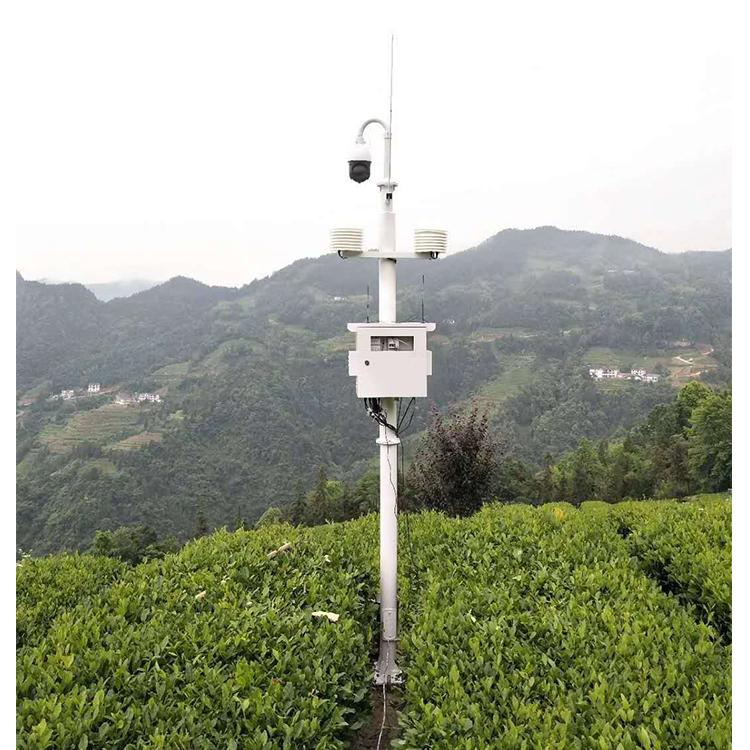
An orchard facing hot afternoons, a greenhouse with uneven ventilation and an irrigation district managing a limited allocation need different information. All may use weather data, but a single temperature threshold or soil-moisture percentage cannot define stress across crops, soils and growth stages.
Air temperature, humidity, wind and radiation help describe the environment driving water loss. Soil observations show the local root-zone condition. Irrigation records indicate when water was applied. Interpret these together: a hot day does not prove that the root zone is dry, and a wet point beside a dripper does not establish that the entire block is adequately supplied.
Where a canopy-temperature instrument is used, differences between canopy and air temperature require an appropriate method and context. Radiation, wind, crop cover and sensor view can affect interpretation. A fixed 3-degree difference is not a universal instruction to irrigate or spray.
| Field question | Useful observations | Decision boundary |
|---|---|---|
| Is an orchard block drying between irrigation events? | Comparable root-zone depths, weather conditions and applied-water records | Check soil contact and distribution before changing the whole block's schedule. |
| Does one greenhouse zone remain hotter? | Representative air temperature/RH in each relevant compartment and equipment operating times | A measurement can identify a persistent difference; ventilation or shading capacity determines the response. |
| Did rainfall reduce the need for irrigation? | Measured rainfall, soil response and the site's water-balance method | Gauge rainfall is not automatically effective rainfall stored in the root zone. |
| Is a warning based on current conditions? | Latest valid measurement time, data quality and communication status | A stale or invalid record must be distinguished from a genuine threshold event. |
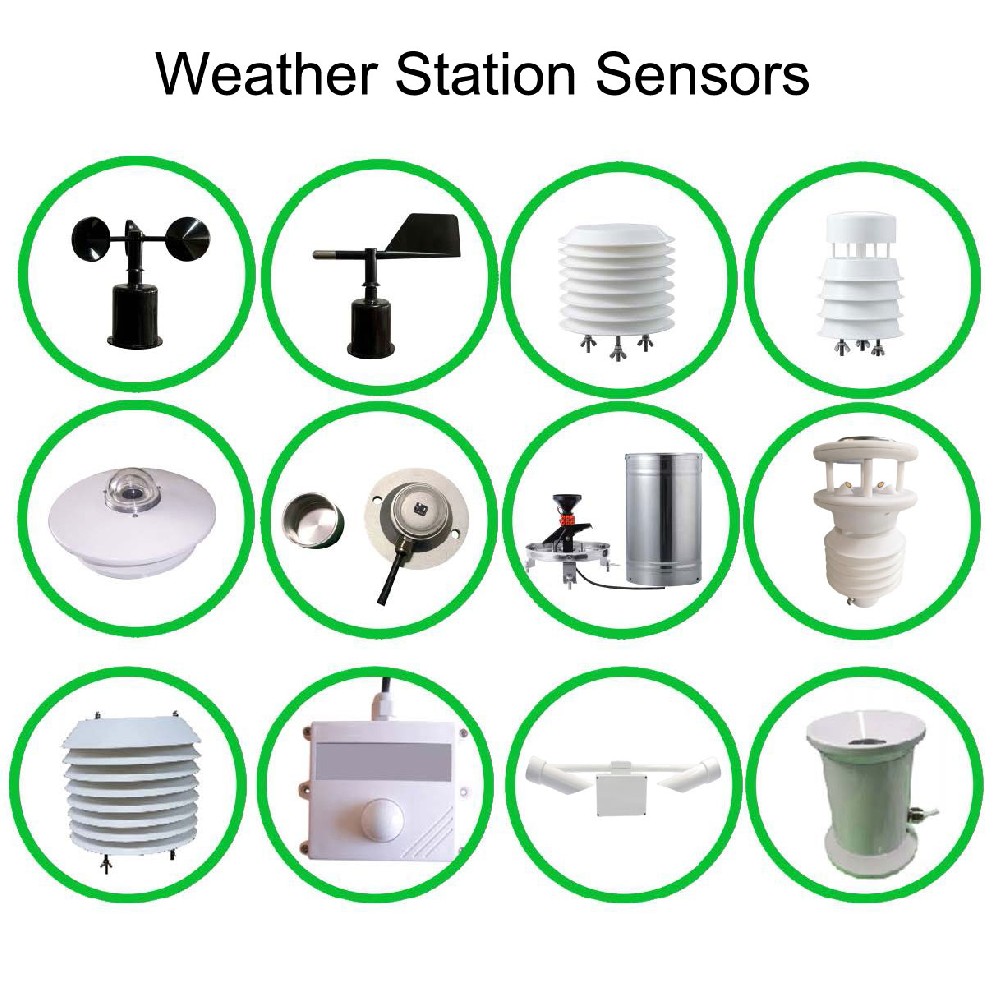
Choose a minimum set that answers those questions before adding specialist instruments. Leaf wetness can support a crop-specific disease-risk method, but does not identify a pathogen. A soil EC channel can reveal conductivity changes, but cannot independently prescribe a fertilizer dose.
The NiuBoL NBL-W-LBTH and NBL-S-TMC soil probe provide different parts of the observation. Check the operating limits of each sensor and the complete station, including supply, enclosure and communications equipment.
| Component | Relevant specification | Field implication |
|---|---|---|
| NBL-W-LBTH | Air temperature -40 to 80 degrees C; stated temperature accuracy +/-0.5 degrees C; DC 12-24 V; RS485 Modbus RTU version | Use a representative shielded air location; range does not remove radiation-exposure error. |
| NBL-S-TMC | Moisture 0-100%; stated moisture accuracy +/-5%; IP68; RS485 Modbus RTU | Choose depth and soil-specific interpretation; a displayed percentage is not a universal drought threshold. |
| NBL-W-RS rain gauge | 0.2 mm resolution; liquid rainfall; operating temperature 0-50 degrees C | Do not assume snow measurement or operation beyond that limit without a suitable configuration. |
| NBL-PH-1 logger | Local FLASH records; configured 4G transmission; saving interval 1-240 minutes | Match record and transmission schedules to the required review time; verify station power separately. |
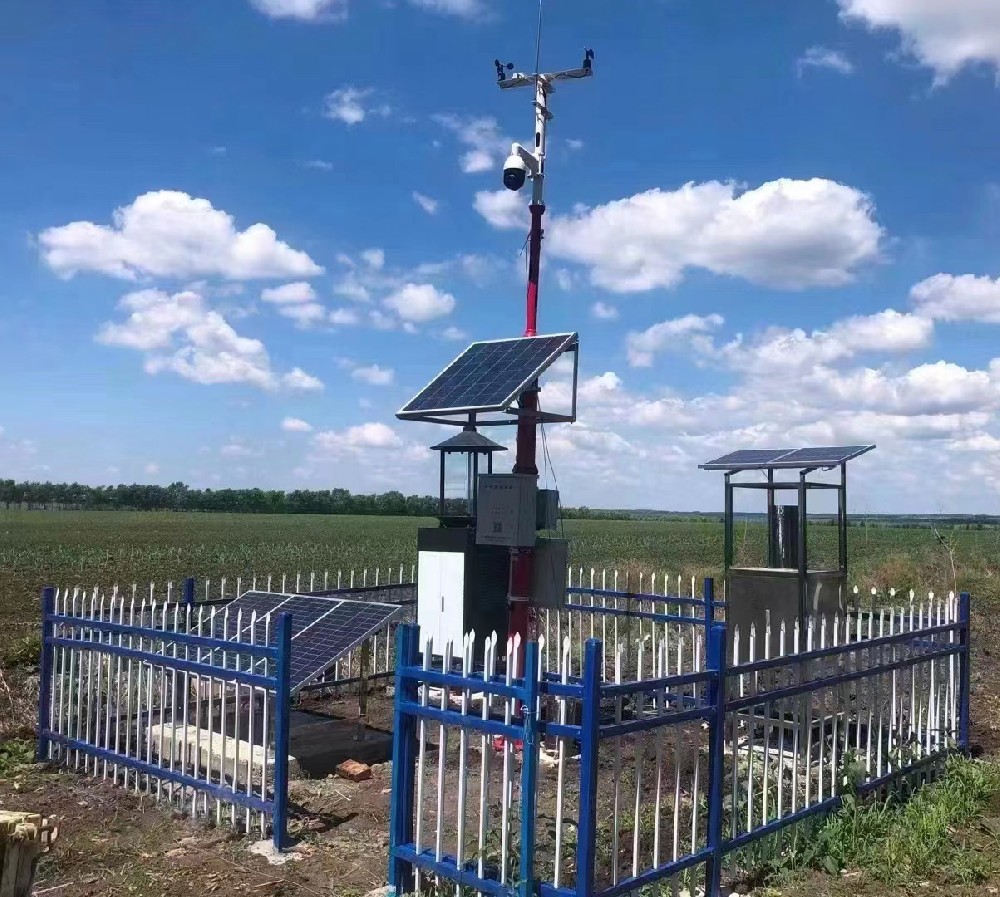
A solar-powered station can lose availability if its total load and reserve have not been assessed. Include modem activity and any optional heater in the power calculation. Verify cable entries, supports and access after wind, dust or heavy rain. No single environmental rating establishes that the whole station will operate through every extreme event.
First verify the instrument against a suitable reference and confirm units, depth, location and timestamps in the stored data. Then test a defined warning condition with the receiving platform. A logger that saves observations is not automatically a validated crop-warning service or an irrigation controller.
The WMO description of climate services emphasizes using climate information for decisions and connecting providers with users. At farm level, the practical requirement is similarly clear: identify the recipient, useful timing and feasible action, rather than delivering an unexplained number.
Set local action thresholds with the crop adviser or responsible operator. Test who receives a warning, how it is acknowledged and what happens when the network fails. Irrigation or cooling equipment needs its own control design, capacity assessment and protection; remote weather readings alone do not establish safe automatic actuation.
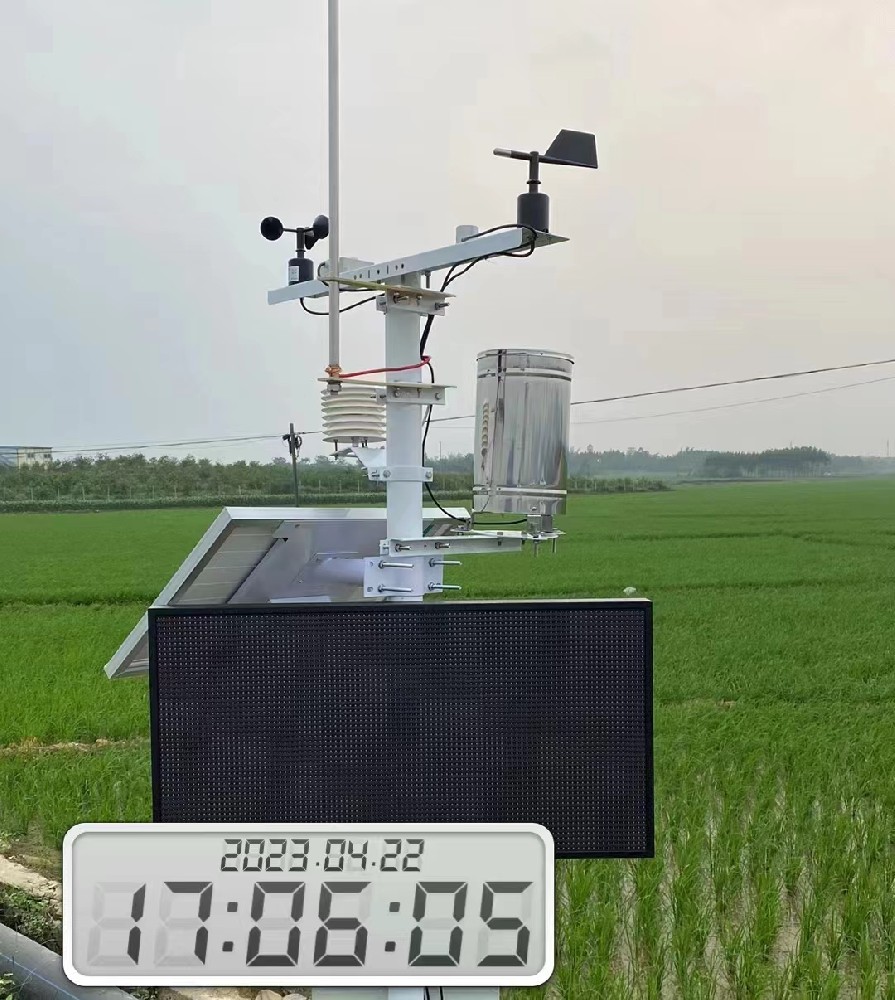
Keep the measurement history, applied-water records, equipment operation and field observations. When reviewing a heat or dry period, ask whether the data revealed an actionable condition and whether the response occurred in time. Compare like conditions where possible and record changes in crop area, growth stage and weather.
That evidence helps refine sensor placement and operating procedures. It does not justify attributing all yield differences to the monitoring system or promising that a future event will cause no loss. Climate adaptation remains a combination of observation, agronomy, infrastructure and management.
No. Soil texture, root depth, crop stage and the measurement method affect interpretation. Establish local operating bands using appropriate soil and crop information, then verify the installed probe's response.
No. Add a depth when it answers a root-zone or drainage question. A deep measurement outside the active root zone may be useful for drainage but unsuitable as the only irrigation trigger.
No. It supplies local observations. Forecast information comes from a separate service or model, with its own update time, spatial scale and uncertainty.
Check local recording, stale-data indication and the response of any connected control system. Confirm the retrieval and recovery method rather than assuming that stored records automatically reach the server later.
Describe the crop and growth stage, principal risk, irrigation or cooling capability, site environment and warning recipient. Include the required measurements, power availability and receiving-system interface so NiuBoL can assess the appropriate instruments and logger.
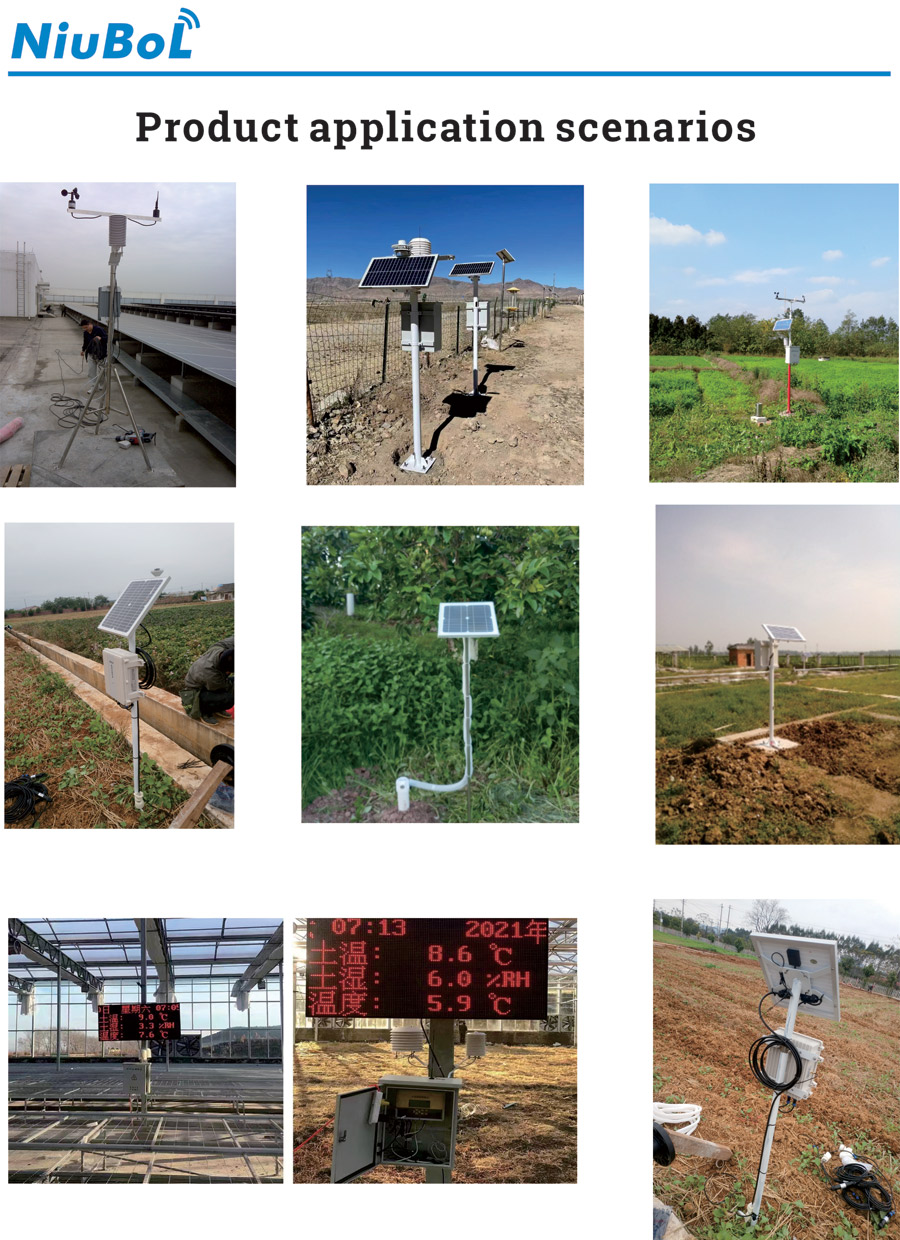
Climate adaptation sensors for agriculture are useful when their observations lead to a feasible, checked response. Combine weather context with representative soil measurements, respect each component's limits and test data availability. NiuBoL instruments can support that monitoring task without implying guaranteed forecasts, automatic crop decisions or fixed yield protection.
Prev:Climate Change and Agricultural Sensor Demand
Next:Agriculture IoT Sensor Market: Demand and Distributor Decisions
Related recommendations
Sensors & Weather Stations Catalog
 Agriculture Sensors and Weather Stations Catalog-NiuBoL.pdf
Weather Stations Catalog-NiuBoL.pdf
Agriculture Sensors Catalog-NiuBoL.pdf
Water Quality Sensor Catalog-NiuBoL.pdf
Related products
 Combined air temperature and relative humidity sensor
 TDR Soil Moisture & Temperature Sensor for irrigation| RS485 |4-20mA| NBL-S-THR
 Soil pH sensor RS485 soil Testing instrument soil ph meter for agriculture |NBL-S-PH
 Wind Speed sensor Output Modbus/RS485/Analog/0-5V/4-20mA
 Tipping bucket rain gauge for weather monitoring auto rainfall sensor RS485/Outdoor/stainless steel
 Pyranometer Solar Radiation Sensor 4-20mA/RS485


Screenshot, WhatsApp to identify the QR code
WhatsApp number:+8615367865107
(Click on WhatsApp to copy and add friends)

