





— Blogs —
—Products—
 Consumer hotline +8618073152920
 WhatsApp:+8615367865107
Address:Room 102, District D, Houhu Industrial Park, Yuelu District, Changsha City, Hunan Province, China
Product knowledge
Time:2026-05-02 10:22:20 Popularity:374
Nitrogen (N) is an important component of amino acids, proteins, and chlorophyll in plants, directly participating in photosynthesis and cell division. Appropriate nitrogen application can promote vegetative growth of crops, improve tillering ability and leaf area index, and thereby increase biomass and yield.
Phosphorus (P) is mainly concentrated in crop seeds and reproductive organs and is a key component of cell nuclei, nucleic acids, and phospholipids. It can accelerate cell division, promote root system development (especially lateral roots and fine roots), and improve crop stress resistance (drought, cold, disease). Phosphorus fertilizer can also increase grain fullness in cereals, fruit sugar content, and oil content in oil crops.
Potassium (K) exists in plants in the form of free potassium ions and does not participate in organic matter composition, but it can activate various enzyme systems, promote carbohydrate and nitrogen metabolism, regulate stomatal opening and closing, and maintain cell osmotic pressure. Potassium can enhance crop lodging resistance, disease resistance, and stress resistance, while improving fruit quality and storability.
The three major elements work synergistically to influence the transition of crops from vegetative growth to reproductive growth. Accurately grasping the dynamic content of available nitrogen, available phosphorus, and available potassium in the soil is the foundation for formulating scientific fertilization plans.
Traditional extensive fertilization concepts often lead to nutrient input far exceeding the actual needs of crops, resulting in multiple negative effects:
Excessive Nitrogen Fertilizer Hazards:
Excessive nitrogen makes crop cell walls thinner and plants tender and succulent, making them prone to lodging and mechanical damage. At the same time, excessive vegetative growth leads to greedy green and late maturity, prolonged growth period, increased carbohydrate consumption, and affects fruit sugar accumulation and quality. Crop disease resistance decreases, making it susceptible to diseases such as wheat scab and rice brown spot. Large amounts of nitrogen leaching can also cause groundwater nitrate pollution.
Excessive Phosphorus Fertilizer Hazards:
Excessive phosphorus can cause overly strong respiration, where dry matter consumption exceeds accumulation, leading to early maturity, incomplete grains, and reduced yield. In zinc-deficient soils, excessive phosphorus easily forms insoluble zinc phosphate precipitates with zinc, inducing zinc deficiency symptoms in crops. Long-term excessive phosphorus application will also deteriorate soil physical and chemical properties, reduce the availability of micronutrients, and cause water eutrophication through runoff.
Excessive Potassium Fertilizer Hazards:
Excessive potassium will inhibit the absorption of calcium, magnesium, and other cations by crops, inducing physiological diseases such as "heart rot" in leafy vegetables and "bitter pit" in apples. It also causes resource waste, weakens the overall production capacity of crops, and may exacerbate soil salinization risks, affecting subsequent crop growth.
These hazards not only reduce economic benefits but also increase the pressure of agricultural non-point source pollution control. Using real-time soil nutrient monitoring technology can effectively avoid blind fertilization and achieve "supply on demand".
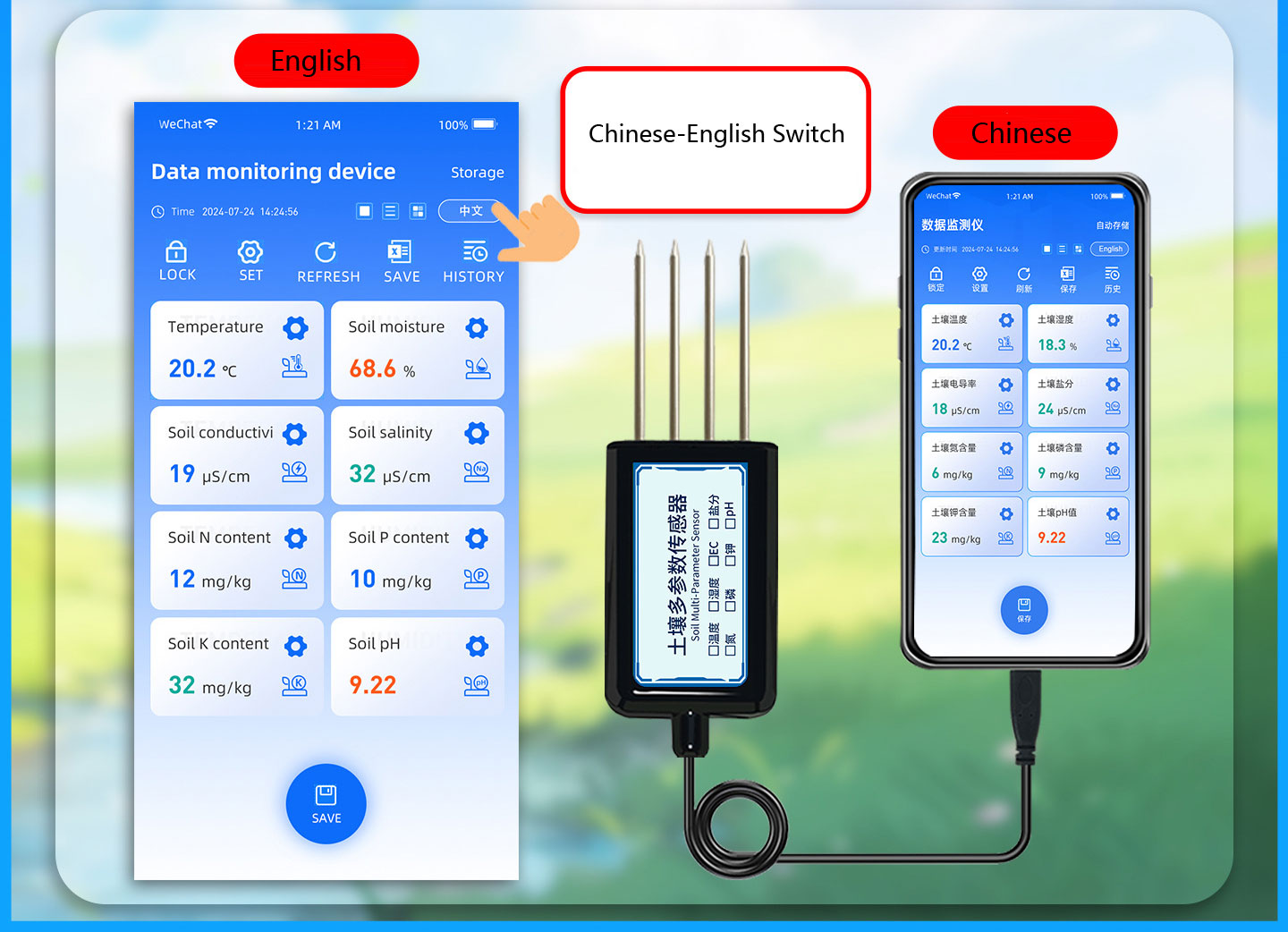
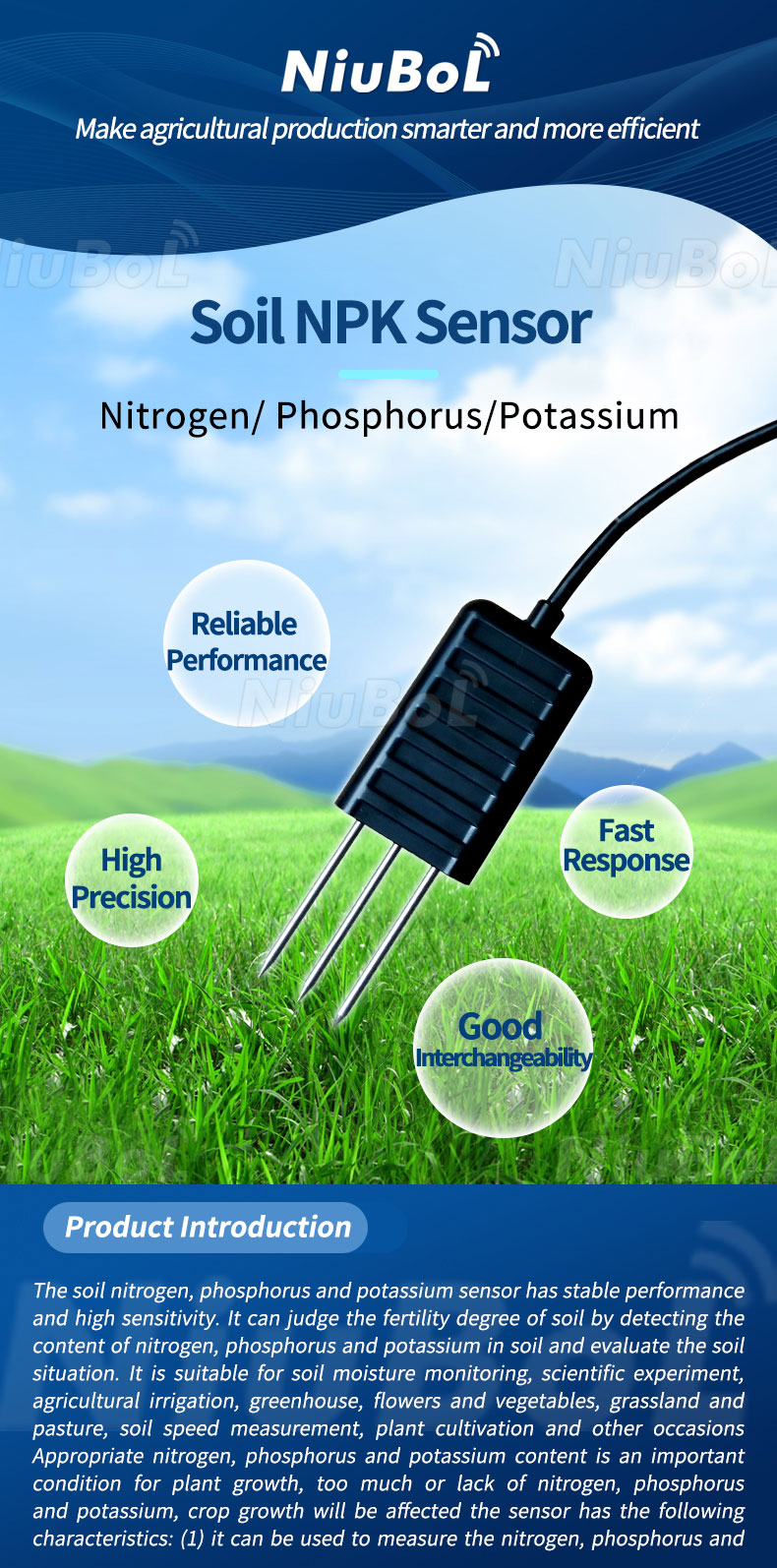
The NiuBoL soil nitrogen, phosphorus, and potassium sensor series adopts advanced detection technology, which can quickly and accurately measure the effective content of nitrogen, phosphorus, and potassium in the soil. It supports RS485 Modbus RTU protocol output, making it easy to integrate into agricultural IoT platforms, PLC controllers, or integrated water and fertilizer systems. The sensor is resistant to long-term burial, has a high protection level, and is suitable for continuous or regular monitoring in various planting scenarios such as large fields, greenhouses, and orchards.
By deploying NiuBoL NPK sensors, system integrators can build the following solutions:
Real-time collection of soil nutrient data, combined with crop growth models to generate variable fertilization prescription maps.
Networking with multi-parameter sensors such as soil moisture, pH, conductivity, temperature and humidity to form a comprehensive soil moisture monitoring system.
Data upload to cloud platforms to achieve remote monitoring, early warning, and automatic control of water and fertilizer integrated equipment.
Support fertilization optimization in precision agriculture projects, reducing fertilizer usage by 15%-30%, while improving crop yield and quality.
| Parameter | Specification Details |
|---|---|
| Detection Items | Nitrogen (N), Phosphorus (P), Potassium (K) |
| Output Signal | RS485 (Modbus RTU protocol) |
| Power Supply Voltage | 5-30V DC (typical 12-24V) |
| Protection Level | IP68 |
| Operating Temperature | -20℃~60℃ (typical range) |
| Installation Method | Directly buried in soil or probe insertion |
| Communication Distance | Supports long-distance bus transmission |
| Features | Resistant to long-term electrolysis, corrosion resistant, low maintenance |
Remark: Soil NPK sensor actually measures the electrical conductivity of the soil. The manufacturer multiplies the measured conductivity value by a corresponding factor (based on the conventional soil content of nitrogen, phosphorus and potassium) to arrive at a value for the nitrogen, phosphorus and potassium content. Due to the different soils and environments on site, such sensors cannot accurately measure the actual nitrogen, phosphorus and potassium content of the soil on site, but give an empirical, theoretical value.
(Specific model parameters are subject to the actual product manual. Single-parameter or multi-parameter integrated sensors can be selected according to project requirements.)
Field Crop Precision Fertilization: Wheat, rice, and corn planting bases, monitoring nutrient distribution in different tillage layers through multi-point sensor deployment to guide staged topdressing.
Facility Agriculture: Greenhouses and multi-span greenhouses, linked with environmental controllers to achieve precise water and fertilizer coupling supply.
Orchards and Cash Crops: Horticultural crops such as apples, citrus, and tea to avoid physiological diseases and improve fruit commodity rate.
Smart Agriculture Demonstration Zones: Integrated into agricultural IoT platforms to support GIS map overlay, fertilization prescription generation, and traceability management.
Ecological Agriculture and Pollution Prevention: Monitor nutrient loss risks and assist in formulating fertilizer reduction and efficiency enhancement technical solutions.
Q1: Can soil NPK sensors achieve real-time online monitoring?
Yes. NiuBoL sensors support continuous or high-frequency data collection and can be connected to IoT platforms via RS485 protocol to achieve remote real-time monitoring.
Q2: What are the main crop manifestations of excessive nitrogen application?
Main manifestations include excessive vegetative growth, soft stems prone to lodging, greedy green and late maturity, decreased disease resistance, and reduced fruit quality.
Q3: What impact does excessive phosphorus fertilizer have on soil micronutrients?
It easily induces the fixation of micronutrients such as zinc, causing zinc deficiency symptoms in crops, and may also lead to deterioration of soil physical and chemical properties.
Q4: Does the NiuBoL sensor support integration with equipment from other brands?
Yes. As long as the host system is compatible with the Modbus RTU protocol, data interoperability can be achieved. Protocol debugging support can be provided if necessary.
Q5: How to avoid problems caused by excessive potassium fertilizer?
By real-time monitoring of soil available potassium content and combining with crop fertilizer requirements to formulate balanced fertilization plans to prevent obstruction of calcium and magnesium absorption.
Q6: Does sensor installation depth affect measurement results?
Yes. It is recommended to select a reasonable depth according to the main distribution layer of different crop root systems, usually focusing on monitoring nutrients in the tillage layer.
Q7: Can this system help reduce chemical fertilizer usage?
By accurately grasping soil nutrient status and crop demand, fertilization amount can be significantly optimized, reducing unnecessary input and environmental risks.
Q8: How is it recommended to use NPK sensors in smart agriculture projects?
It is recommended to combine with soil moisture, temperature, pH, and conductivity sensors to form a multi-parameter soil moisture monitoring network to support precise control of water and fertilizer integration.
Reasonable ratio of nitrogen, phosphorus, and potassium is the foundation for ensuring high yield and high quality of crops, while excessive application will bring crop physiological disorders, quality decline, and environmental pressure. The NiuBoL soil nitrogen, phosphorus, and potassium sensor series provides a scientific fertilization data foundation for system integrators, IoT solution providers, and agricultural engineering companies with stable and reliable performance and convenient integration features.
With the help of real-time nutrient monitoring technology, project teams can build a closed-loop precision agriculture system from perception to decision-making and then to execution, effectively reducing fertilizer usage, improving resource utilization efficiency, and assisting in the green and sustainable development of agriculture. If you need product technical information, integration solution design, or project application case support, please feel free to contact the NiuBoL team to jointly promote the implementation of smart agriculture monitoring technology in actual engineering applications.
Related recommendations
Sensors & Weather Stations Catalog
 Agriculture Sensors and Weather Stations Catalog-NiuBoL.pdf
Weather Stations Catalog-NiuBoL.pdf
Agriculture Sensors Catalog-NiuBoL.pdf
Water Quality Sensor Catalog-NiuBoL.pdf
Related products
 Combined air temperature and relative humidity sensor
 Soil Moisture Temperature sensor for irrigation|NBL-S-THR
 Soil pH sensor RS485 soil Testing instrument soil ph meter for agriculture |NBL-S-PH
 Wind Speed sensor Output Modbus/RS485/Analog/0-5V/4-20mA
 Tipping bucket rain gauge for weather monitoring auto rainfall sensor RS485/Outdoor/stainless steel
 Pyranometer Solar Radiation Sensor 4-20mA/RS485

Screenshot, WhatsApp to identify the QR code
WhatsApp number:+8615367865107
(Click on WhatsApp to copy and add friends)

