





— Blogs —
—Products—
 Consumer hotline +8618073152920
 WhatsApp:+8615367865107
Address:Room 102, District D, Houhu Industrial Park, Yuelu District, Changsha City, Hunan Province, China
Product knowledge
Time:2026-05-02 11:27:29 Popularity:46
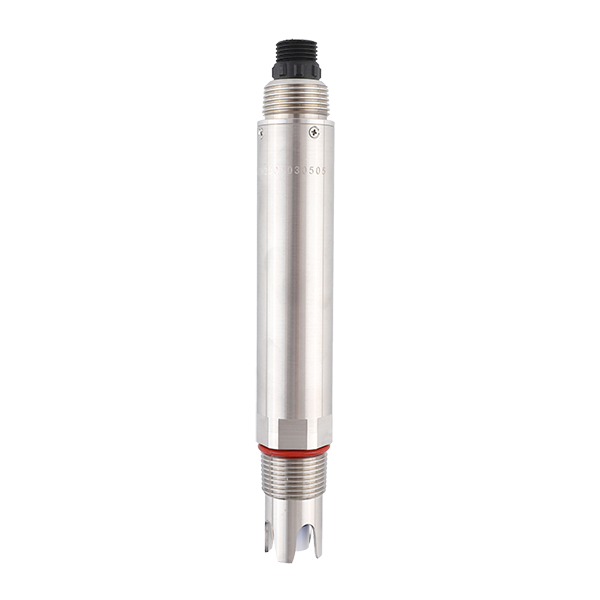
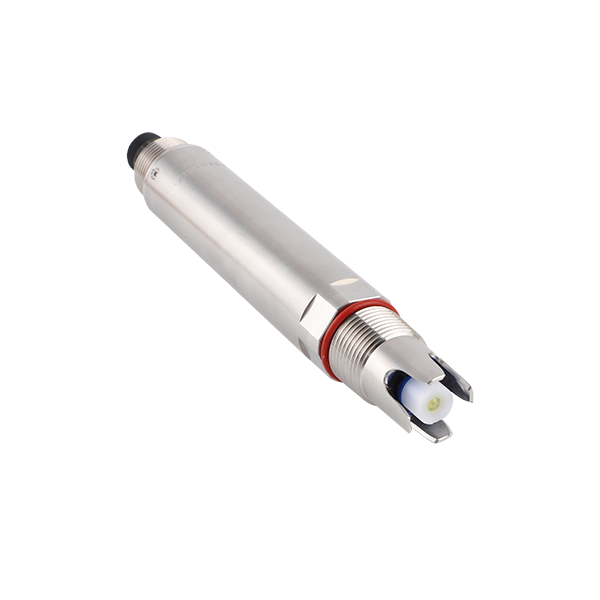
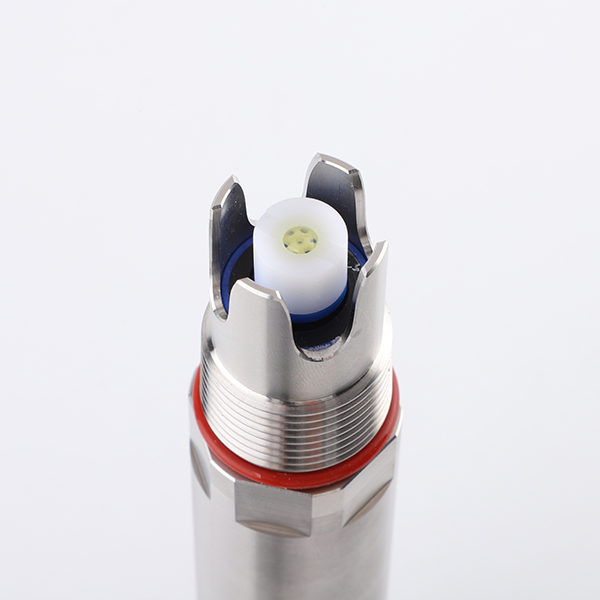
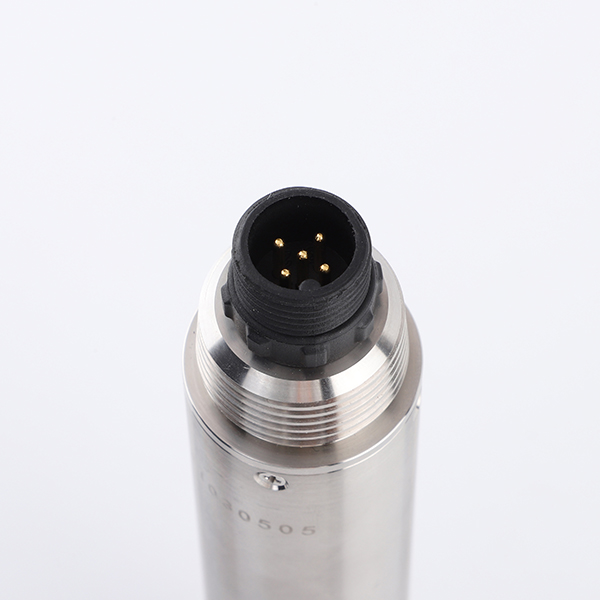
Water hardness is one of the key parameters in industrial water treatment, boiler feed water, circulating cooling water, and environmental monitoring. The NiuBoL NBL-WQ-TH-4 split-type online total hardness sensor adopts a patented calcium and magnesium selective PVC membrane electrode, enabling continuous and stable monitoring of total hardness in water (as CaCO₃). It provides a reliable online hardness monitoring solution for system integrators, IoT solution providers, and water treatment engineering companies.
Water hardness refers to the total concentration of dissolved multivalent metal cations in water other than sodium and potassium ions, mainly calcium (Ca²⁺) and magnesium (Mg²⁺). It is usually expressed in terms of CaCO₃ concentration (mg/L).
Based on formation and removal methods, water hardness can be classified into temporary hardness and permanent hardness:
- Temporary hardness: caused by bicarbonates of calcium and magnesium. It can be reduced by boiling or adding calcium hydroxide (lime), which converts bicarbonates into carbonate precipitates.
- Permanent hardness: caused by sulfates, chlorides, and other non-carbonate salts of calcium and magnesium. It cannot be removed by boiling or lime addition and usually requires ion exchange or reverse osmosis processes.
- Total hardness: the sum of temporary hardness and permanent hardness.
In industrial applications, high hardness can cause scaling in boilers and heat exchangers, reduce heat transfer efficiency, increase energy consumption, and even lead to equipment corrosion. Therefore, accurate and continuous monitoring of total hardness is essential for process control and equipment safety.
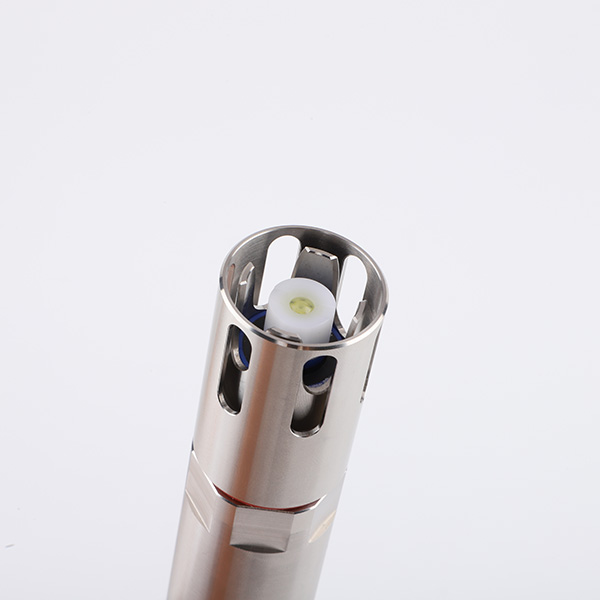
The NBL-WQ-TH-4 split-type online total hardness sensor is based on a PVC membrane calcium/magnesium ion-selective electrode principle combined with automatic temperature compensation (Pt1000). It can quickly and accurately measure total hardness in water. The sensor adopts a patented reference system, where the internal reference solution slowly leaks through a microporous salt bridge under ≥100 kPa pressure, ensuring long-term stable reference potential and significantly extending electrode service life.
Main advantages include:
- Stable signal output: standard RS-485 (Modbus RTU protocol), optional 4-20mA output
- Low power consumption: only 0.2W @ 12V, suitable for unattended monitoring scenarios
- High protection level: IP68, suitable for long-term submerged installation
- Easy installation: 3/4 NPT threaded connection, compatible with pipelines, tanks, and open water bodies
| Parameter | Specification Details |
|---|---|
| Model | NBL-WQ-TH-4-A (POM+ABS) / NBL-WQ-TH-4-S (POM+316L) |
| Housing material | POM & ABS / POM & 316L stainless steel |
| Range & resolution | 0–1000.0 mg/L (as CaCO₃), resolution 0.1 mg/L |
| Accuracy | ±10% of reading; temperature ±0.3°C |
| Response time (T90) | < 60 s |
| Detection limit | 0.1 mg/L |
| Calibration method | Two-point calibration |
| Temperature compensation | Automatic (Pt1000) |
| Output | RS-485 (Modbus RTU), 4-20mA (optional) |
| Power supply | 12–24V DC |
| Power consumption | 0.2W @ 12V |
| Operating conditions | 0–40°C, ≤0.2 MPa, pH 4–10 |
| Installation | Submersible, 3/4 NPT thread |
| Protection level | IP68 |
| Cable length | 5 m (customizable) |
The NBL-WQ-TH-4 online total hardness sensor is widely used in the following industrial and environmental projects:
- Boiler feed water and industrial circulating cooling water hardness monitoring
- Reverse osmosis (RO) and softening system influent/effluent hardness monitoring
- Municipal water supply and wastewater treatment plant process control
- Industrial park water reuse and reclaimed water hardness monitoring
- Environmental monitoring stations for surface water and groundwater long-term monitoring
- Integrated buoy or shore-based multi-parameter water quality monitoring systems
The sensor can be integrated with ammonia nitrogen, COD, total phosphorus, pH, turbidity, and other water quality sensors to form a complete online water quality monitoring system. Through the Modbus RTU protocol, it can be connected to PLC, DCS, SCADA, or IoT cloud platforms for centralized data acquisition, remote monitoring, and automatic process control.
- For general industrial water treatment, NBL-WQ-TH-4-A (POM+ABS) is recommended for cost efficiency.
- For corrosive or high-demand environments, NBL-WQ-TH-4-S (316L stainless steel housing) is recommended.
- For systems requiring analog output, a 4–20mA option is available.
1. Before first use, soak the electrode in tap water for 48 hours for activation, then rinse with deionized water.
2. When not in use for long periods, store in a dry condition with a protective cap.
3. Avoid long-term immersion in distilled water or high-concentration protein solutions and contact with silicone oils.
4. Regularly check wiring terminals for dryness; clean with anhydrous alcohol if contaminated and dry thoroughly.
5. If the PVC membrane becomes semi-transparent or shows deposits, rinse with distilled water; replace electrode if calibration cannot meet accuracy requirements.
6. Use shielded cables and properly configure Modbus address and baud rate to ensure stable communication.
1. What output options does NBL-WQ-TH-4 support?
Standard RS-485 Modbus RTU, optional 4–20mA analog output for different control systems.
2. What unit is used for water hardness?
Typically expressed as mg/L CaCO₃.
3. Does the electrode require frequent cleaning?
No daily manual cleaning is required, but periodic inspection and maintenance according to water quality conditions are recommended.
4. Is it suitable for seawater or high-salinity water?
It is mainly designed for industrial and surface water applications. For seawater, technical confirmation is required.
5. Is installation flexible?
Yes, it supports 3/4 NPT submersible installation in pipelines, tanks, or open water bodies.
6. What is the electrode service life?
Thanks to the patented microporous salt bridge system, service life is longer than conventional electrodes, depending on water conditions and maintenance.
7. How is calibration performed?
Two-point calibration is supported; periodic calibration is recommended for accuracy.
8. Can it integrate with other brands' systems?
Yes, as long as the system supports Modbus RTU. Technical support is available if protocol adaptation is needed.
The NiuBoL NBL-WQ-TH-4 online total hardness sensor provides an efficient hardness monitoring solution for industrial water treatment, environmental monitoring, and water resource management with stable performance, easy integration, and low maintenance cost. Its RS-485 Modbus RTU communication and IP68 protection design enable seamless integration into automation and IoT systems.
For system integrators, contractors, and engineering companies, choosing NBL-WQ-TH-4 means adopting a mature and reliable hardness monitoring component that improves overall system stability and data reliability.
For technical datasheets, integration support, or project case studies, please contact the NiuBoL technical team for professional support.
 NBL-WQ-CL Water Quality Sensor Online Residual Chlorine Sensor.pdf
NBL-WQ-DO Online Fluorescence Dissolved Oxygen Sensor.pdf
NBL-WQ-NHN Ammonia Nitrogen Water Quality Sensor.pdf
NBL-WQ-COD Online Water Quality COD Sensor.pdf
NBL-WQ-PH Online pH Water Quality Sensor.pdf
NBL-WQ-EC water quality conductivity sensor.pdf
Related recommendations
Sensors & Weather Stations Catalog
Agriculture Sensors and Weather Stations Catalog-NiuBoL.pdf
Weather Stations Catalog-NiuBoL.pdf
Agriculture Sensors Catalog-NiuBoL.pdf
Water Quality Sensor Catalog-NiuBoL.pdf
Related products
 Combined air temperature and relative humidity sensor
 Soil Moisture Temperature sensor for irrigation
 Soil pH sensor RS485 soil Testing instrument soil ph meter for agriculture
 Wind Speed sensor Output Modbus/RS485/Analog/0-5V/4-20mA
 Tipping bucket rain gauge for weather monitoring auto rainfall sensor RS485/Outdoor/stainless steel
 Pyranometer Solar Radiation Sensor 4-20mA/RS485

Screenshot, WhatsApp to identify the QR code
WhatsApp number:+8615367865107
(Click on WhatsApp to copy and add friends)

