





— Blogs —
—Products—
 Consumer hotline +8618073152920
 WhatsApp:+8615367865107
Address:Room 102, District D, Houhu Industrial Park, Yuelu District, Changsha City, Hunan Province, China
Product knowledge
Time:2026-01-20 09:46:57 Popularity:755
Level sensor output selection determines whether the receiving equipment gets a threshold state, a continuous analog value or a digital measurement. A switch contact, 4–20 mA loop and RS485 Modbus RTU interface are not interchangeable inputs. Choose the output around the existing PLC, RTU or data logger and the information the process needs, rather than assuming every level sensor can connect to every controller.
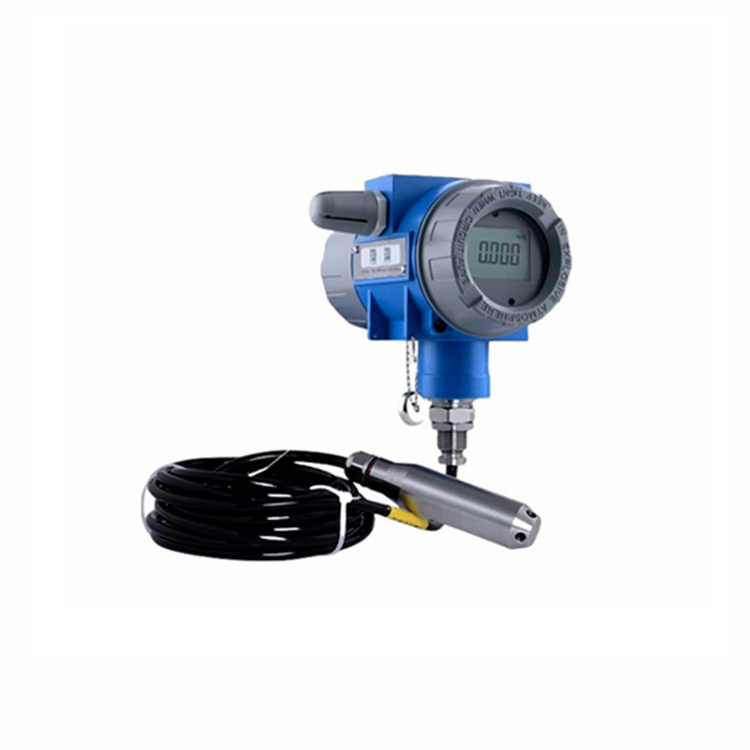
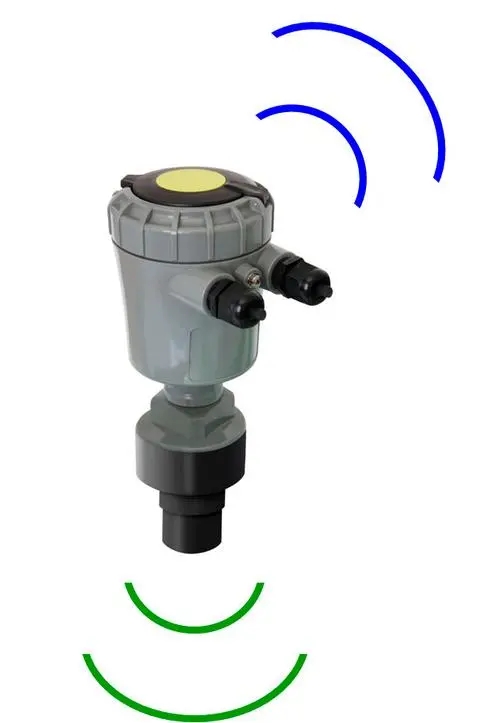
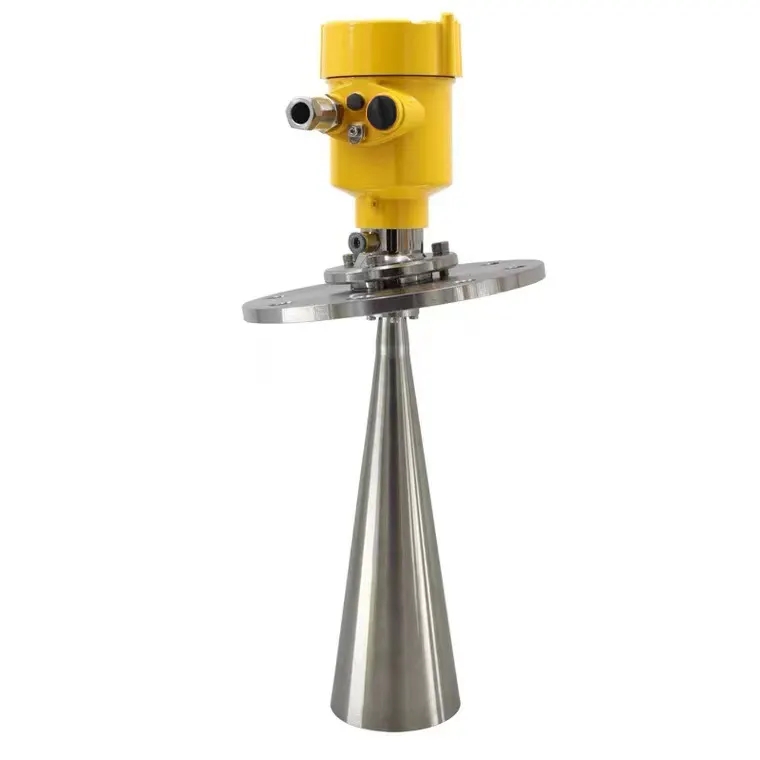
Hydrostatic, ultrasonic and radar instruments detect level through different physical effects. Their interface is another design choice. A pressure transmitter may supply an analog current, while another pressure model supplies a digital register. The receiving input does not identify which sensing principle is installed.
Start with the required information. A refill limit may need only a state change. Inventory trending needs a continuous value with a defined reference. Remote diagnostics may need additional device information, but that information must exist in the selected instrument; it is not a universal benefit of choosing a digital cable.
| Output | Information available | Receiving equipment |
|---|---|---|
| Point-level switch | A state at a particular sensing position. | Compatible discrete input or an appropriately designed switching circuit. |
| 4–20 mA | A continuous value mapped to the configured span. | Suitable analog current input with the required loop arrangement. |
| Voltage output | A continuous value mapped to the specified voltage range. | Matching voltage input and reference connection. |
| RS485 Modbus RTU | Defined digital values and supported device functions. | Compatible serial master with the correct register interpretation. |
A transmitter with an internal alarm threshold does not necessarily expose a physical switch output. Similarly, a local display does not establish whether its connected receiver needs analog or digital input. Confirm the electrical output of the exact ordered configuration.
A current transmitter maps the measuring span to current. For an illustrative 0–4 m configuration, 8 mA represents 1 m and 16 mA represents 3 m. The calculation uses the 16 mA measuring interval above the 4 mA lower endpoint. Configuring a receiver as 0–20 mA would produce a different result.
Also check how the loop is powered. A two-wire loop-powered transmitter and a separately powered active current output need different input arrangements. The sensor, receiving card, isolation components and any barriers must be compatible together. Do not connect two devices merely because both terminals mention 4–20 mA.
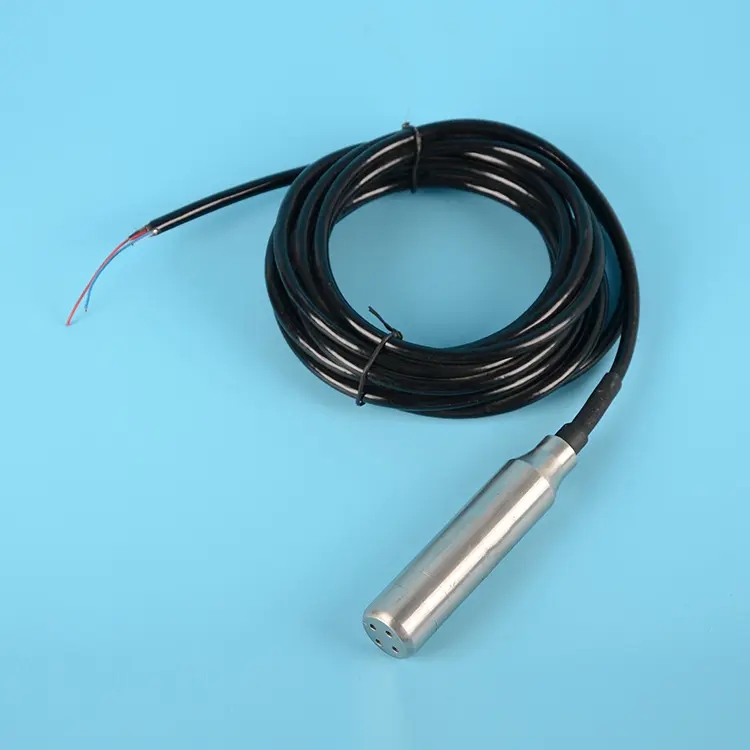
Include cable and input resistance in the available loop-voltage assessment. For an illustrative total load of 400 Ω, 20 mA drops 8 V. A 24 V supply then leaves 16 V for the transmitter before other voltage drops, while a 12 V supply leaves only 4 V. A transmitter requiring at least 9 V cannot work correctly at that second condition even though the supply itself reads 12 V. These are circuit examples, not a universal permissible load; check the selected model and lowest actual supply.
The NiuBoL NBL-L-SMP4603 current-output configuration uses DC 9–30 V. Its voltage-output variants are different configurations. Use the output and load information for the actual order rather than applying those current-loop requirements to an RS485 probe.
RS485 provides a serial electrical interface; Modbus RTU defines the device exchange used by the NBL-L-WLPS configuration. A compatible master polls the instrument and interprets its response. The probe still needs a suitable DC supply, and a working data pair does not prove that the required voltage reaches the sensor.
Match the device address and serial settings, then verify the register definition and numeric representation. The relevant value may be pressure, distance, head or an already converted level. A successful response with the wrong scaling can look plausible while giving an incorrect engineering result.
If several devices share a bus, assign unique addresses and design the topology, termination and electrical referencing for that network. There is no useful universal distance guarantee independent of cable, baud rate, interference and equipment design. Do not add a termination resistor as the only response to every communication fault.
For replacement procurement, ask for a sample point list or a test with the intended master. Two Modbus devices do not necessarily use the same register locations, function support or decimal format. Replacing the instrument can therefore require configuration work even when the same RS485 wiring is retained.
A point-level device may provide a dry contact or a powered electronic switching output. These are not identical. Confirm the state convention, input voltage, contact or output rating and how a disconnected wire will appear to the controller.
A small signal contact should not be assumed capable of switching a pump motor. Use the appropriate control arrangement for the load and application. Where the point device performs an independent protective duty, assess that duty separately from ordinary level indication.
During commissioning, cross the actual switching position under an approved test procedure and observe the receiving input. A software-forced state can test the PLC logic but does not demonstrate that the float, electrode or optical sensing point responds correctly.
| Configuration | Interface and supply | Integration consequence |
|---|---|---|
| NBL-L-WLPS RS485 | Modbus RTU; DC 10–30 V, typical 24 V; maximum 0.2 W. | Requires a compatible powered serial acquisition arrangement. |
| NBL-L-SMP4603 current version | 4–20 mA; DC 9–30 V. | Requires a compatible analog input and sufficient loop voltage. |
These examples do not make either output universally preferable. An existing analog cabinet may make a current transmitter the simpler choice. A planned multi-device logger may favour a documented digital interface. Compare the installed input, configuration effort and maintenance access, not only the sensor purchase price.
Neither 4–20 mA nor RS485 Modbus RTU is a direct cloud connection. A suitable controller, logger or gateway must acquire the value and provide the required network transfer. Confirm what happens to the local measurement and displayed status if that network is unavailable.
For a NiuBoL enquiry, provide the receiver model or input specification, available power, cable route and required quantity. State whether a local continuous reading, a threshold state or remote records are needed. That allows the offered output to be checked against a real receiving circuit rather than a generic compatibility claim.
Not directly. They use different electrical interfaces and data representations. Select the required transmitter output or a suitably assessed acquisition/conversion device, including its power and scaling.
No. Check the available receiver and the required information. If a working cabinet has only analog inputs, a digital replacement may add hardware and configuration without improving the operating decision.
No. Similar display housings can accompany different electrical configurations. Confirm the order code and wiring information; do not infer analog, digital or radio functions from appearance.
Not when individually polled on the same bus. Give each device a unique address and verify the serial settings and network design. A shared address can make responses collide or become ambiguous.
Only if the complete electrical arrangement and ratings permit that duty. A signal contact or electronic output is not automatically a motor-rated switch. Define the control circuit and failure response for the installation.
It should show the actual receiver reading the intended quantity with correct units, endpoints and fault indication. For a digital model, include register interpretation; for an analog model, include the loop and scaling.
Select a level sensor output by the information needed and the receiver that will use it. Confirm the circuit, signal meaning and supported functions before treating the instrument as compatible. Keeping local acquisition separate from remote networking makes the scope of a NiuBoL configuration easier to specify and test.
Related recommendations
Sensors & Weather Stations Catalog
 Agriculture Sensors and Weather Stations Catalog-NiuBoL.pdf
Weather Stations Catalog-NiuBoL.pdf
Agriculture Sensors Catalog-NiuBoL.pdf
Water Quality Sensor Catalog-NiuBoL.pdf
Related products
 Combined air temperature and relative humidity sensor
 TDR Soil Moisture & Temperature Sensor for irrigation| RS485 |4-20mA| NBL-S-THR
 Soil pH sensor RS485 soil Testing instrument soil ph meter for agriculture |NBL-S-PH
 Wind Speed sensor Output Modbus/RS485/Analog/0-5V/4-20mA
 Tipping bucket rain gauge for weather monitoring auto rainfall sensor RS485/Outdoor/stainless steel
 Pyranometer Solar Radiation Sensor 4-20mA/RS485

Screenshot, WhatsApp to identify the QR code
WhatsApp number:+8615367865107
(Click on WhatsApp to copy and add friends)

