





— Blogs —
—Products—
 Consumer hotline +8618073152920
 WhatsApp:+8615367865107
Address:Room 102, District D, Houhu Industrial Park, Yuelu District, Changsha City, Hunan Province, China
Product knowledge
Time:2026-01-20 09:38:21 Popularity:785
Quick Answer: Liquid sensor applications include tank and well level monitoring, pipeline pressure control, flow measurement, leak detection and water-quality monitoring. These are different measurement tasks. A level transmitter cannot directly replace a flowmeter, and a conductivity probe does not identify every dissolved chemical. Choose the quantity needed by the process before comparing sensing technologies or output signals.
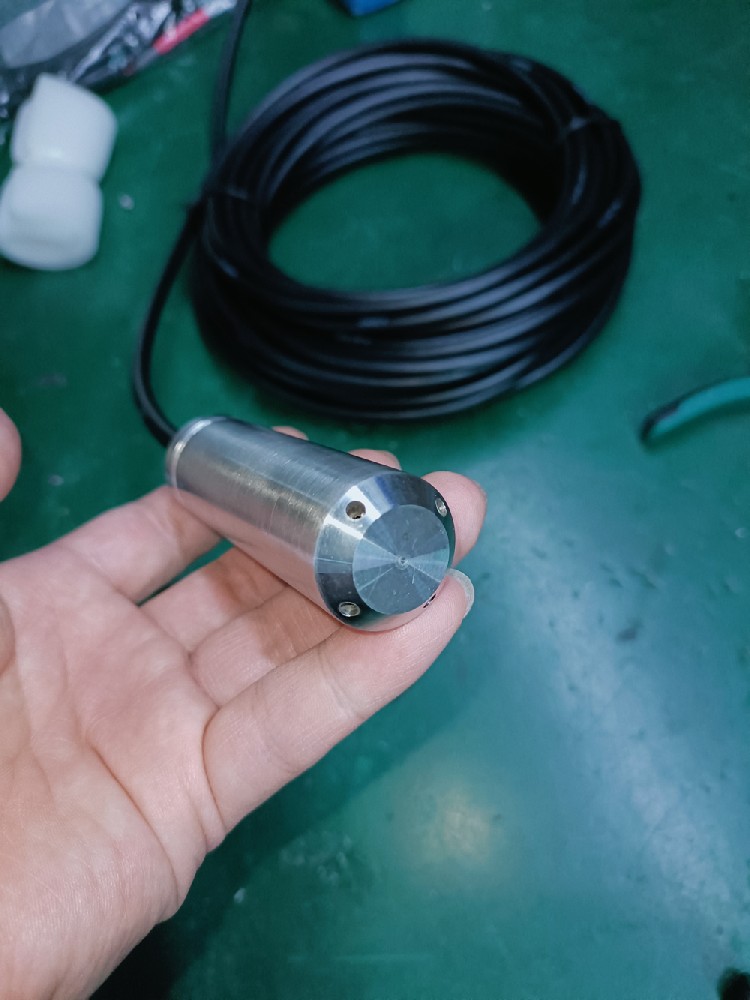
The term liquid sensor covers instruments that answer quite different questions. A tank operator may need to know how much usable water remains, while a treatment operator needs to know whether the water meets a process target. Both work with liquid, but neither a common enclosure nor a shared RS485 connection makes their measurements interchangeable.
Start with the physical quantity, its unit and the action it informs. This also prevents a common specification error: requesting a sensor that detects water without distinguishing between the presence of a small leak, the depth of a reservoir and the quality of a process sample.
| Quantity | Application | Interpretation |
|---|---|---|
| Level: depth or distance, such as m or mm | Tank refill, well drawdown, reservoir stage | Stored volume needs vessel geometry or a valid level-to-volume relationship. |
| Pressure: kPa, bar or MPa | Pump discharge and pressurized pipelines | A pressure signal is not a flow measurement. |
| Flow: volume or mass per time | Water delivery, process transfer, open-channel discharge | Velocity in m/s is different from discharge in m3/s or m3/h. |
| Presence: wet/dry or point-level state | Equipment trays, sumps and overflow indication | A switch state does not quantify liquid depth or leak volume. |
| Quality: pH, EC, turbidity or DO | Treatment, aquaculture and process-water monitoring | Each parameter requires its own method and interpretation. |
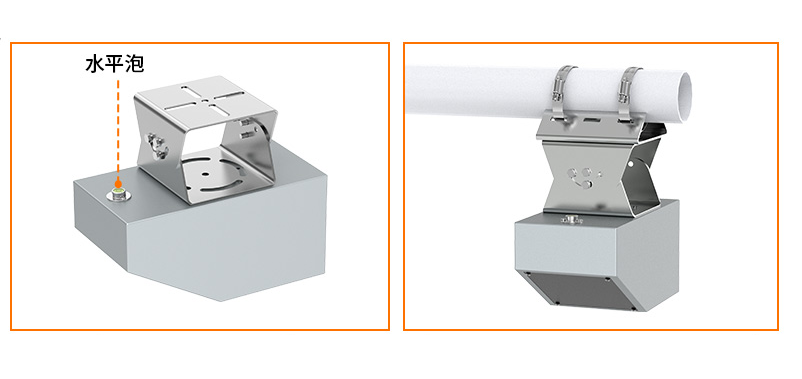
In a full pipe, a suitable flowmeter can report the amount passing a section per unit time. Technology selection depends on the liquid, pipe condition and installation. Electromagnetic measurement needs a sufficiently conductive liquid and the required pipe-filling conditions. Ultrasonic methods have their own requirements for the acoustic path, bubbles, pipe material or suspended matter, depending on the method.
For an open channel, the calculation needs the flow cross-section and an appropriate representation of velocity. A non-contact radar arrangement may combine surface-velocity and water-level observations. Surface velocity is not automatically the cross-section's mean velocity; channel geometry and a valid conversion or calibration are needed. Interpret the channel's level and velocity records as separate inputs to the discharge calculation.
As an illustrative calculation, a mean velocity of 1 m/s across a wetted area of 0.5 m2 gives 0.5 m3/s. That is not a performance figure for a radar instrument, and it cannot be calculated correctly from a surface speed alone without the required relationship. Changes in sediment, vegetation or channel shape can also change the conversion.
There is no universal requirement of 10 pipe diameters upstream and five downstream for every flow technology. Use the installation requirements for the selected instrument and disturbance: an elbow, partially closed valve and pump outlet need not have the same effect. Where custody transfer is involved, the complete metering arrangement also needs the applicable legal and calibration requirements.
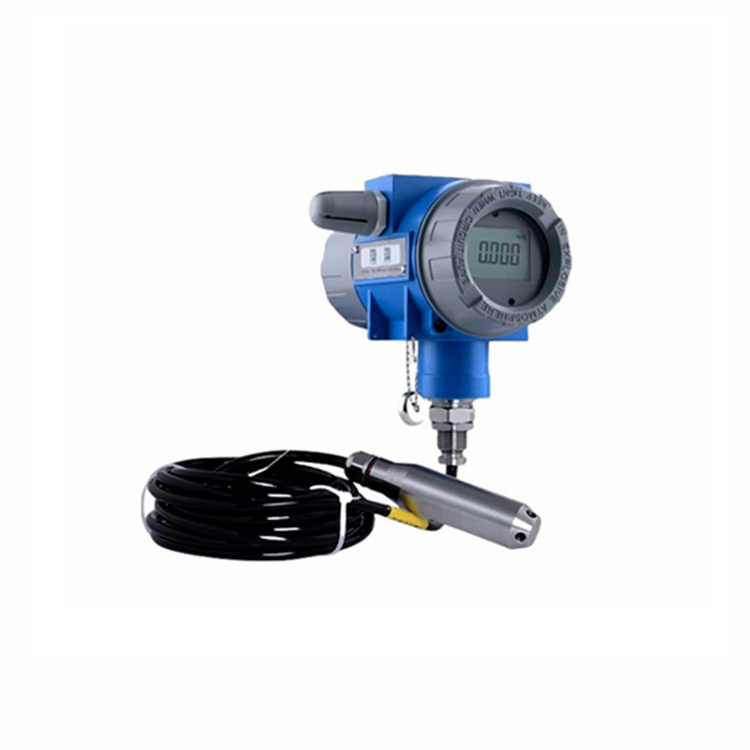
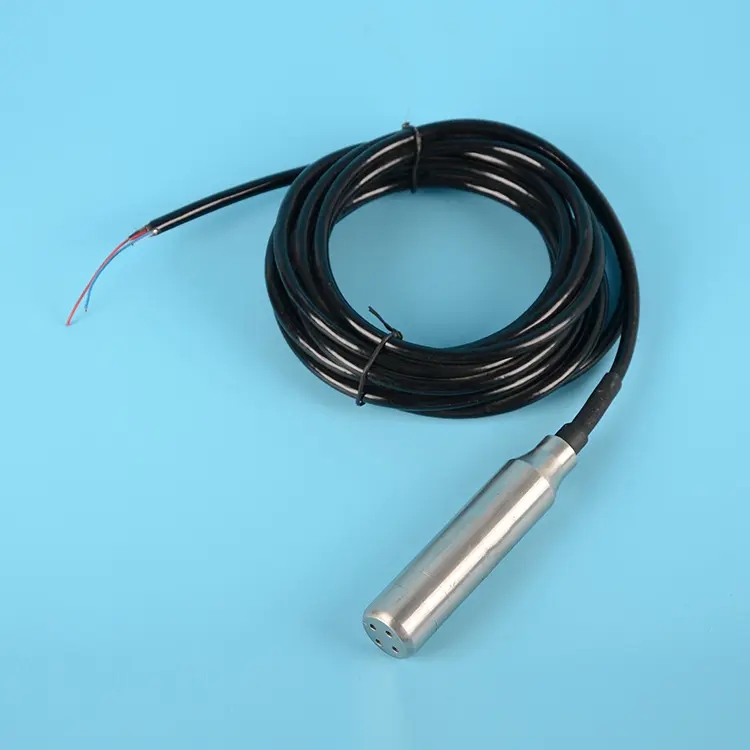
A hydrostatic liquid level sensor infers the liquid column above its sensing diaphragm from pressure. For an open vessel, the relevant relationship is h = P / (rho x g), where P is pressure relative to the free surface, rho is liquid density and g is gravitational acceleration. A vented gauge-pressure probe uses an atmospheric reference; its vent must remain dry and unobstructed.
The same pressure corresponds to different depths in liquids of different density. For illustration, 9.81 kPa corresponds to approximately 1 m for an assumed density of 1000 kg/m3 and g of 9.81 m/s2. At an assumed density of 1200 kg/m3, that pressure represents approximately 0.833 m. These are calculation examples, not a calibration for an unknown chemical mixture.
A sealed pressurized vessel introduces another condition: gas pressure above the liquid can contribute to the measured pressure. A vented probe referenced to outside air does not automatically remove that contribution. The pressure-reference arrangement and vessel design must match the application; an ordinary open-water probe is not a universal sealed-tank solution.
The following values describe the linked NiuBoL RS485 submersible level transmitter family. They are not specifications for the pictured radar flowmeter, ultrasonic sensor or every liquid sensor.
| Parameter | Configuration | Selection consequence |
|---|---|---|
| Measurement range | 5 m standard configuration; 10-60 m range options | Select for actual maximum depth and the ordered model. |
| Typical accuracy | 0.2% FS or 0.5% FS, depending on configuration | The full-scale range affects the absolute error represented by the percentage. |
| Power supply | 10-30 VDC; typical 24 VDC | Check voltage at the end of the installed cable. |
| Static consumption | <=0.2 W | Allow separately for the receiving controller and remote communication equipment. |
| Output | RS485 Modbus RTU | Select a separate current-output version if the receiver requires 4-20 mA. |
| Protection and housing | IP68 probe; 304 or 316L stainless steel according to configuration | Check immersion conditions and chemical compatibility, including seals and cable. |
| Temperature | Operating range -40 to +80 degrees C; medium temperature <=60 degrees C for long-term measurement | Do not treat the upper operating limit as unrestricted continuous hot-liquid service. |
| Cable | Vented cable; length and jacket material selected for the installation | Protect the atmospheric reference and select material for the actual liquid. |
A source-tank level point indicates available depth, pipeline pressure shows the hydraulic condition at its tapping point, and a flowmeter confirms delivery through its section. If pressure is present but delivered flow is unexpectedly low, the investigation differs from a low source level. None of these observations proves uniform delivery from every irrigation emitter.
A wet-well level signal can support pump sequencing, while separate high-level protection may be needed by the control design. Check solids, deposits and access to the sensing point. A quality sensor adds treatment or condition information but is not a replacement for a level channel when the immediate task is controlling liquid depth.
Level can support inventory or refill decisions only when its conversion to volume matches the vessel. Density changes matter for hydrostatic measurements. Wetted material, seals, pressure and temperature need review for the actual chemical composition; stainless steel is not a universal declaration of chemical compatibility.
pH, dissolved oxygen, conductivity and turbidity answer different operating questions. For example, conductivity can indicate a change in ionic content but does not identify a particular fertilizer, pathogen or organic pollutant. Use independent measurements where the management task requires them, rather than assigning several unmeasured properties to one convenient channel.
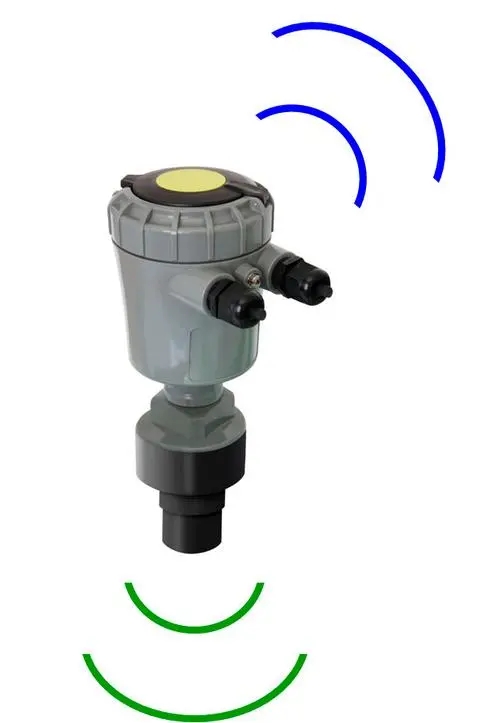
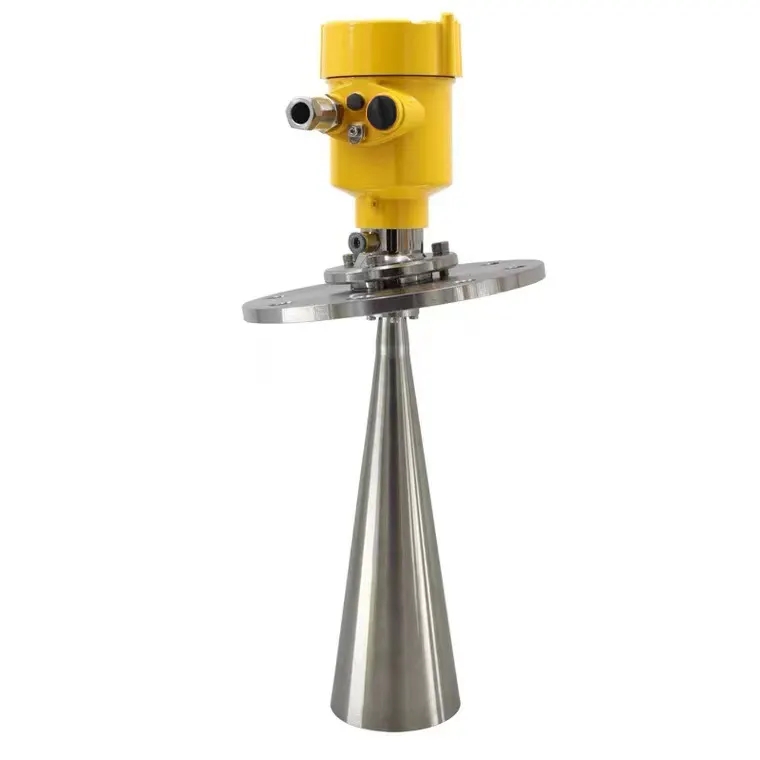
Ultrasonic and radar level sensors measure the distance to a reflecting surface without placing the sensing element in the liquid. The installation must define the distance reference and the maximum liquid level. A reported distance becomes liquid level only after the correct reference geometry is applied.
Ultrasonic measurement uses sound propagation, so the gas path, temperature gradients and acoustic disturbances matter. Foam, condensation and turbulence can interfere with usable echoes. Radar uses electromagnetic waves; the relevant limitations include the target's reflecting properties, beam geometry, false echoes and the selected frequency and antenna arrangement.
Non-contact does not mean unaffected by the installation. Check the instrument's near-field or blocking distance, mounting nozzle, tank internals and the entire measurement path through the expected level range. A sensor that can see a calm surface during installation may behave differently when foam develops or the level approaches its minimum measuring distance.
Choose between contact and non-contact around the process and maintenance conditions. A submerged probe may suit a narrow well; a non-contact arrangement can keep equipment out of a dirty channel. The more convenient access method is useful only if the selected technology still measures the required surface or pressure reliably.
RS485 describes an electrical interface; Modbus RTU defines a serial communication method. Neither identifies which property is being measured. The register map must establish units, decimal scaling, data type and status information. A register containing velocity cannot be relabeled as flow simply because the application expects a flow tag.
For analog signals, match the ordered range to the receiving input. A 4-20 mA loop and an RS485 connection are different output arrangements, not two names for the same wiring. Remote transmission requires the corresponding data logger or gateway. Do not assume every liquid sensor includes Ethernet, a cellular modem or an internet service.
Communication distance is a network-design result, not a universal guarantee. Cable properties, topology, speed, termination, interference and the power arrangement all matter. Likewise, a fast internal sample rate does not establish the end-to-end alarm response. Polling, filtering, transmission and application processing can each add delay.
Check the quantity and reference before checking a dashboard value. For level, compare against a known datum or depth. For pressure, use a suitable pressure reference. For discharge, validate the measurement or conversion across relevant flow conditions. A zero check alone cannot verify the full working range of every sensor type.
Plan access for the likely failure mechanism: a blocked vent, fouled probe, submerged connector or obstructed echo path requires a different inspection. Calibration frequency should follow service conditions and observed stability, not a fixed annual adjustment applied to all liquid sensors. Do not apply a remote offset until the physical cause of a disagreement has been investigated.
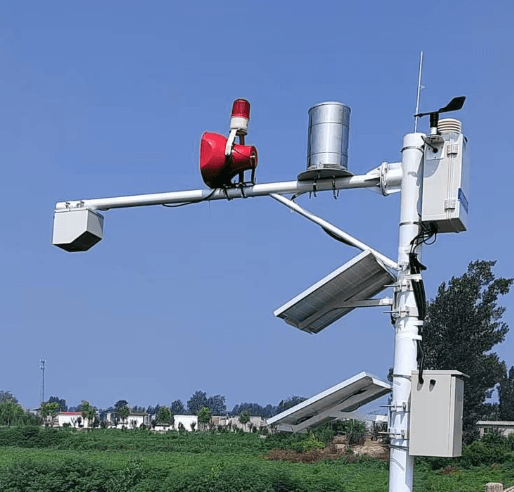
Remote hydrological monitoring may combine level or flow observations with rainfall and weather measurements. Keep their timestamps consistent while retaining each channel's identity and condition. Rain at a weather pole does not establish discharge at a channel section, and a failed flow sensor should not make valid rainfall records disappear from the same platform.
They include level and inventory monitoring, pipeline pressure control, delivery or discharge measurement, leak detection and water-quality monitoring. Define the measured quantity and operating action first; the phrase liquid sensor alone is too broad for a reliable specification.
Only when its wetted materials, cable and operating limits are suitable. Hydrostatic interpretation also depends on density. A water-calibrated output must not be assumed to indicate the correct oil depth without checking the configuration.
Only if the complete arrangement includes the necessary geometry and validated velocity-to-discharge method. Surface speed alone is not discharge. Confirm what is measured directly and what is calculated.
No. It avoids immersion but needs a usable reflecting target and suitable mounting geometry. A narrow well, foam, internal obstructions or difficult access can change the choice. Evaluate the process rather than ranking technologies universally.
It establishes only its specified measurement. pH does not determine dissolved oxygen, and EC does not identify all contaminants. Choose a parameter set around the actual process, aquaculture or treatment decision.
A switch can indicate a defined wet/dry or threshold state. It cannot provide a continuous level trend or inventory estimate. Some control designs need both continuous measurement and separate protection.
Specify the measured quantity, liquid composition, working range, pressure, temperature, installation geometry and receiving interface. For hazardous locations or regulated metering, identify the applicable certification and approval requirements separately.
Liquid sensor applications cover level, pressure, flow, presence and quality. Match the instrument to the quantity and the process conditions, then verify its conversion and output through the receiving system. NiuBoL level, hydrological and water-quality products provide options for these tasks; the appropriate combination depends on what the installation must actually determine.
Prev:Liquid Level Measurement and Volume Conversion: What Data Can Show
Next:Level Sensor Output Selection: Switch, 4-20 mA or RS485?
Related recommendations
Sensors & Weather Stations Catalog
 Agriculture Sensors and Weather Stations Catalog-NiuBoL.pdf
Weather Stations Catalog-NiuBoL.pdf
Agriculture Sensors Catalog-NiuBoL.pdf
Water Quality Sensor Catalog-NiuBoL.pdf
Related products
 Combined air temperature and relative humidity sensor
 TDR Soil Moisture & Temperature Sensor for irrigation| RS485 |4-20mA| NBL-S-THR
 Soil pH sensor RS485 soil Testing instrument soil ph meter for agriculture |NBL-S-PH
 Wind Speed sensor Output Modbus/RS485/Analog/0-5V/4-20mA
 Tipping bucket rain gauge for weather monitoring auto rainfall sensor RS485/Outdoor/stainless steel
 Pyranometer Solar Radiation Sensor 4-20mA/RS485

Screenshot, WhatsApp to identify the QR code
WhatsApp number:+8615367865107
(Click on WhatsApp to copy and add friends)

