





— Blogs —
—Products—
 Consumer hotline +8618073152920
 WhatsApp:+8615367865107
Address:Room 102, District D, Houhu Industrial Park, Yuelu District, Changsha City, Hunan Province, China
Product knowledge
Time:2026-01-20 09:25:41 Popularity:786
Liquid level measurement and volume conversion are different operations. A sensor locates the surface relative to a reference; a geometric relationship or calibrated table converts that level into volume. Estimating flow from changing volume adds further assumptions about time, inlet and outlet conditions. A value labelled “50%” is therefore incomplete unless the system states whether it means level span, total volume or usable capacity.
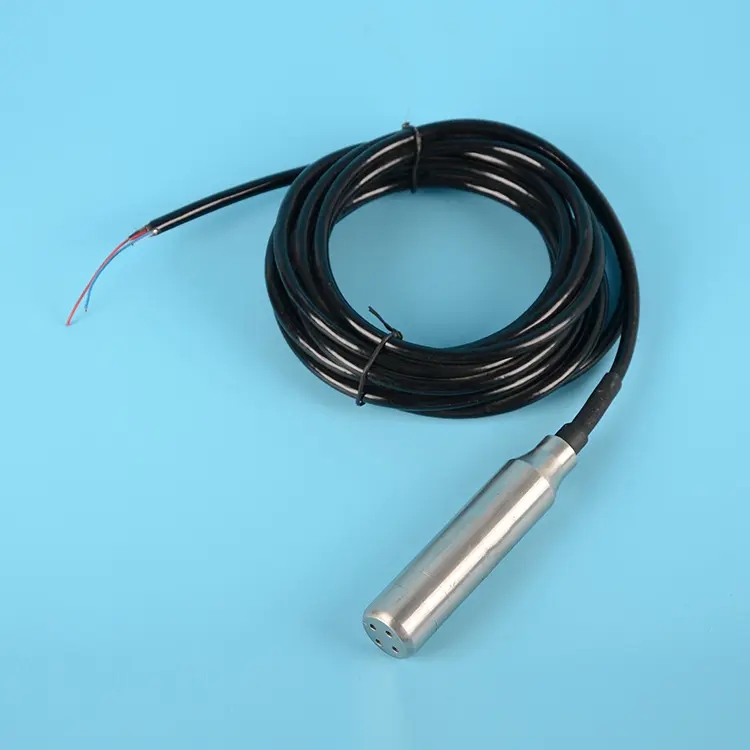
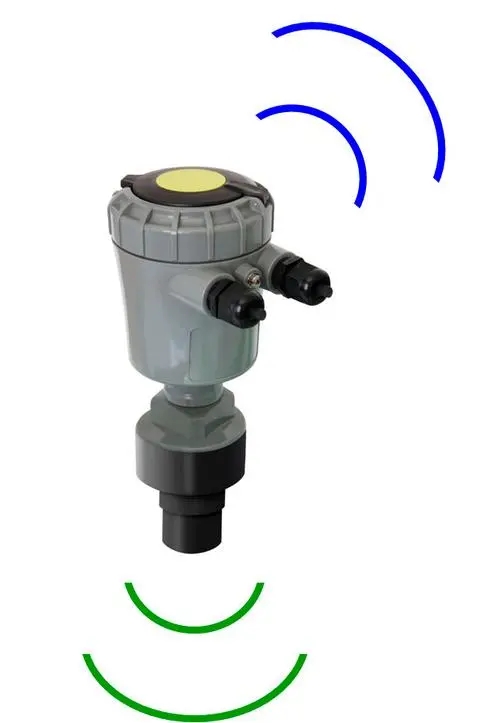
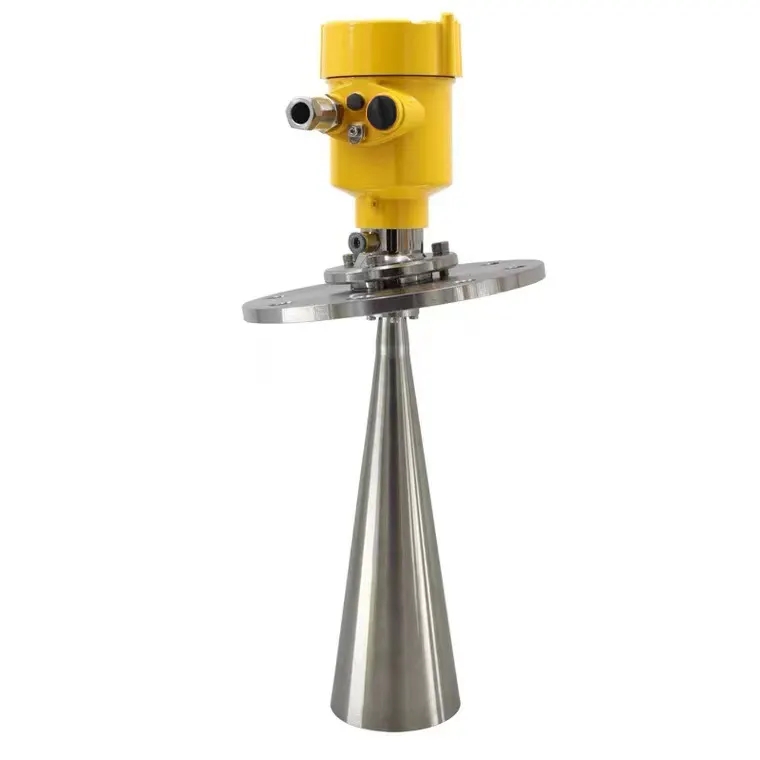
A hydrostatic sensor measures pressure that can be converted to head, while a radar or ultrasonic instrument derives distance to a surface. The installation then relates that result to the chosen level zero. None of these principles independently establishes the shape or capacity of a tank.
Record the physical level and calculated volume as separate fields where possible. If a volume result later changes after a tank-table update, the underlying level history can still be reviewed. Storing only a converted percentage can make it difficult to distinguish a measurement change from a configuration change.
| Reported quantity | Required information | What it does not establish alone |
|---|---|---|
| Level height | Sensor result and a defined physical reference. | Total volume or remaining usable water. |
| Volume | Level plus tank geometry or a valid calibration table. | Individual inlet and outlet flows. |
| Net storage change | Comparable volume readings and elapsed time. | Consumption when other flows are unknown. |
| Percent capacity | Explicit numerator, denominator and reference limits. | An unambiguous physical level without those definitions. |
A top-mounted sensor may report the air gap. The volume table normally needs liquid height, so the gap first has to be related to the tank zero. Confirm whether the device or receiver already performs this conversion before applying it again in a platform.
A submerged pressure probe has a different reference issue: it measures head above its diaphragm. If the probe is raised for sediment clearance, the tank-floor level includes that offset. The selected density and pressure reference must also be appropriate before the calculated height is used in a capacity table.
Keep those installation corrections outside the tank geometry record where the system permits. Replacing or moving a sensor should not require changing the physical tank dimensions to force the display to match.
For a vertical tank with a constant horizontal area A, geometric volume above the chosen floor is V = A × h. In an illustrative rectangular tank with area 6 m², a water height of 1.2 m represents 7.2 m³. A 0.01 m level change corresponds to 0.06 m³, or 60 L.
The example also shows why a level uncertainty matters to volume. Under that constant-area assumption, a 0.01 m height uncertainty contributes approximately 60 L of volume uncertainty. Tank dimensions, reference position and any calibration-table uncertainty contribute separately; they are not removed by displaying more decimal places.
Use actual internal dimensions and the correct floor or operating reference. A nominal tank size or external dimension may not describe the contained volume closely enough for a tight inventory requirement.
A horizontal cylindrical tank has a changing horizontal liquid area as it fills. A level-to-volume table or the appropriate segment geometry is needed. At one-quarter of its diameter, an ideal horizontal cylinder contains about 19.6% of its full volume, not 25%. This figure excludes end-shape and fitting effects.
A conical lower section, sloping floor or irregular sump creates similar nonlinearity. If a calibration table is used, confirm its units, zero, applicable tank identity and interpolation method. Test the points where the geometry changes rather than checking only empty and full endpoints.
Do not extrapolate beyond the validated table range without an approved basis. A sensor may continue to report a valid level while the volume calculation has reached an undefined part of the tank geometry.
Water below an outlet or minimum operating level may not be available to the process. Space above a normal high-level limit may be reserved for operating headroom. Usable capacity therefore depends on the defined low and high limits, not just the tank's physical maximum.
For a hypothetical constant-area tank of 6 m² with usable limits of 0.3 m and 1.8 m, the usable capacity between those limits is 9 m³. At 1.2 m, the available volume above the lower limit is 5.4 m³, or 60% of that usable interval. That is different from the gross volume of 7.2 m³ above the floor.
The low limit must come from the operating requirements, including any pump submergence or process reserve. It should not be invented to make a percentage display convenient. Show the level and basis of the percentage alongside the capacity value.
If storage falls from 7.2 m³ to 6.0 m³ in ten minutes, the average net loss is 1.2 m³ per ten minutes, equivalent to 7.2 m³/h. It is not necessarily the outlet flow. Simultaneous inflow, a bypass or another transfer changes the relationship.
For short intervals, small level fluctuations can dominate the difference between two readings. An unsuitable smoothing or time interval can either amplify noise or hide a real change. Choose the interval and reference method for the question being investigated and preserve the original observations.
For a river or open channel, tank geometry is not a substitute for a stage-discharge relationship. Backwater and changing section conditions can make stage alone insufficient. A combined radar flow instrument uses additional velocity and section information; it should not be described as an ordinary level sensor directly measuring flow.
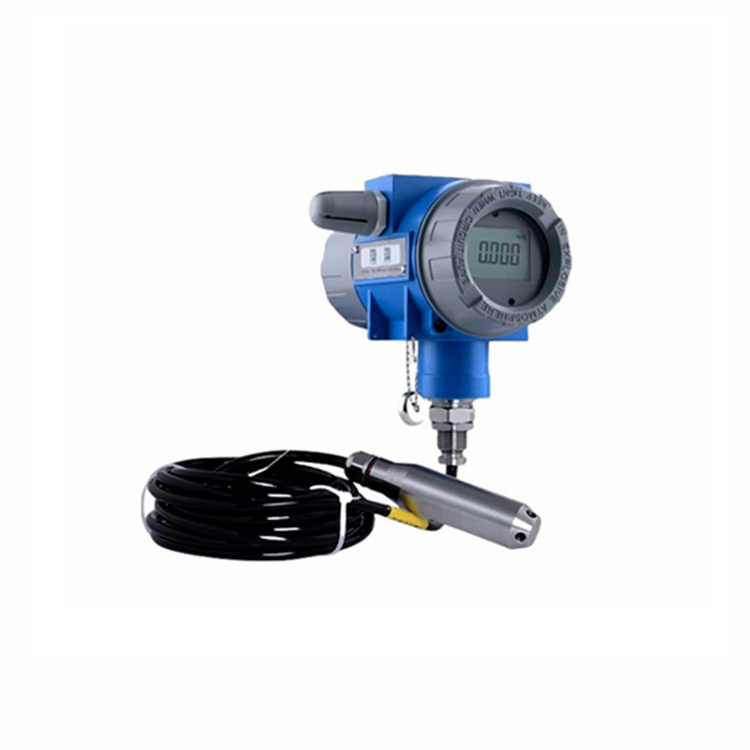
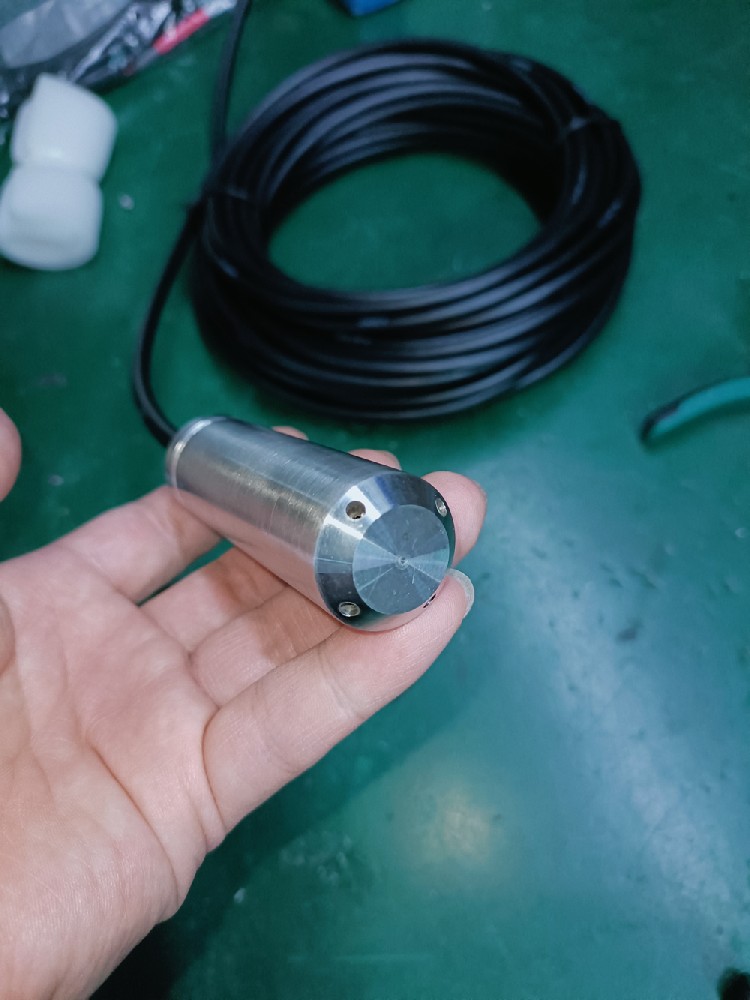
A NiuBoL NBL-L-WLPS RS485 probe supplies hydrostatic measurement data to a compatible receiver. A separate controller, logger or platform may handle tank conversion if that function is supported and configured. Do not assume that a general Modbus output includes a tank table or totalizer.
Identify which component applies the datum offset, density conversion and volume relationship. Check the raw quantity and final display for several known levels. Applying the same offset in both the device and PLC, or applying a tank table to an already converted value, can produce a plausible but incorrect result.
For a NiuBoL project enquiry, provide the tank drawing or calibration table, expected liquid conditions and the required reported quantities. State whether the receiving system needs metres, litres, percent usable capacity or a net storage-change rate. That allows the sensor and calculation scope to be assessed separately.
Usually not. It measures a physical quantity related to surface position. Volume requires the relevant geometry or tank calibration relationship after the reading is converted to the correct level reference.
No. The relationship depends on tank shape and the percentage definition. Even where half-height coincides with half-volume for a symmetric tank, other fractions may not match. Usable-capacity percentages also depend on operating limits.
It should not be used to hide an installation-reference error. Correct the sensor datum or offset first, then apply the table to the physical level quantity for which it was created.
Only under understood conditions and with a valid volume conversion. The difference gives net storage change. Unknown simultaneous inflows or transfers prevent it from identifying consumption alone.
No. Modbus carries defined device values. A volume calculation is a separate supported function in the instrument or receiving system. Check the actual register meaning before choosing where to perform it.
Check the physical reference, raw level, intermediate conversions and final volume at representative levels. Include geometry changes and usable limits. Retain the tank-table version and units with the results.
Liquid level, stored volume and flow are related but distinct quantities. Preserve the level reference, use an appropriate geometry relationship and state any assumptions behind a storage-change calculation. A clear definition of each result prevents a detailed dashboard from reporting more than the measurements can support.
Related recommendations
Sensors & Weather Stations Catalog
 Agriculture Sensors and Weather Stations Catalog-NiuBoL.pdf
Weather Stations Catalog-NiuBoL.pdf
Agriculture Sensors Catalog-NiuBoL.pdf
Water Quality Sensor Catalog-NiuBoL.pdf
Related products
 Combined air temperature and relative humidity sensor
 TDR Soil Moisture & Temperature Sensor for irrigation| RS485 |4-20mA| NBL-S-THR
 Soil pH sensor RS485 soil Testing instrument soil ph meter for agriculture |NBL-S-PH
 Wind Speed sensor Output Modbus/RS485/Analog/0-5V/4-20mA
 Tipping bucket rain gauge for weather monitoring auto rainfall sensor RS485/Outdoor/stainless steel
 Pyranometer Solar Radiation Sensor 4-20mA/RS485

Screenshot, WhatsApp to identify the QR code
WhatsApp number:+8615367865107
(Click on WhatsApp to copy and add friends)

