





— Blogs —
—Products—
 Consumer hotline +8618073152920
WhatsApp:+8615367865107
Address:Room 102, District D, Houhu Industrial Park, Yuelu District, Changsha City, Hunan Province, China
Product knowledge
Time:2025-01-14 10:43:12 Popularity:1526
Rainfall monitoring during logger replacement needs a defined boundary between the last valid old record and the first valid new record. Preserve the original totals and timestamps, identify any unrecorded interval, and verify the new input scaling before joining the series. A new logger starting at zero does not mean rainfall before the change disappeared.
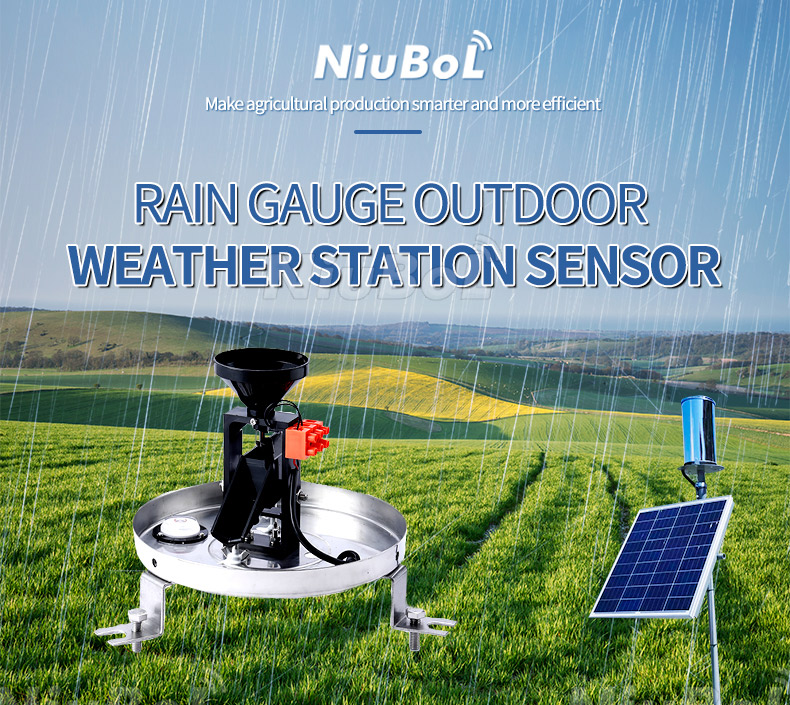
A tipping-bucket rain gauge produces an observation associated with each tip. Depending on the ordered output, the receiving equipment may count contact transitions, read an electrical signal or poll a digital rainfall value. The displayed daily total may be calculated in the logger or in the remote application. Establish which device owns each calculation before disconnecting anything.
The NiuBoL NBL-W-RS rain gauge has a 0.2 mm configuration and multiple output options. A logger configured for a different amount per tip can communicate normally while reporting the wrong rainfall. Keep the gauge's identity and output version with the handover record.
| Existing connection | Information to preserve | Replacement check |
|---|---|---|
| Pulse/contact input | Amount per accepted tip, input wiring, count convention and accumulated count | One accepted test event is counted once with the correct rainfall scale |
| Analog output | Electrical range and corresponding rainfall quantity | The new input converts the actual signal using the correct range and units |
| RS485 digital output | Protocol, register meaning, scaling and reset behavior | Distinguish cumulative rainfall, interval rainfall and intensity where provided |
| Remote platform calculation | Last accepted timestamp, daily boundary and handling of repeated records | Delayed old records and new records do not overlap or count the same rain twice |
RS485 is an interface, not a definition of rainfall quantity. Where the supplied digital version uses Modbus RTU, obtain the matching register information. A cumulative value must not be added repeatedly as if it were a new interval amount. Use the register map for the ordered gauge and a matching logger driver.
Export the raw record and note its time zone, last valid acquisition time, accumulated value and any known reset. Save configuration values that affect the rain channel. If the platform may still receive buffered data from the old logger, identify how those records will be recognized after the change.
Plan the work in a dry interval when practical, but record the actual observation coverage rather than assuming that no rain occurred. A gauge with a passive contact does not necessarily retain events while its receiving counter is disconnected. Rain falling during the work may be unrecoverable from that gauge alone.
Separate rainfall captured before the work, water introduced during service testing and rainfall observed after acceptance. Water used for an approved gauge test or manually generated input events must be identifiable as commissioning activity. It should not silently become part of the site's weather record.
Suppose, as an illustration, the old valid record ends at 35.0 mm and the new logger later records 10 accepted rainfall tips at 0.2 mm per tip. Those new observations represent 2.0 mm. A stitched total of 37.0 mm is defensible only if the segments use the same intended accumulation period and no rain is missing or duplicated between them.
If coverage was interrupted, preserve the two segments and flag the gap. Adding an offset to the display can make a line look continuous, but it cannot reconstruct rain that was never counted. Retain any derived continuous series separately from the original records and explain its calculation.
Check supply and wiring for the selected input version, then use the approved test method to verify the input and scale. Distinguish an electronic input test from a water-based gauge calibration. A correct count at the logger proves neither the collection geometry nor the gauge's performance over every rainfall intensity.
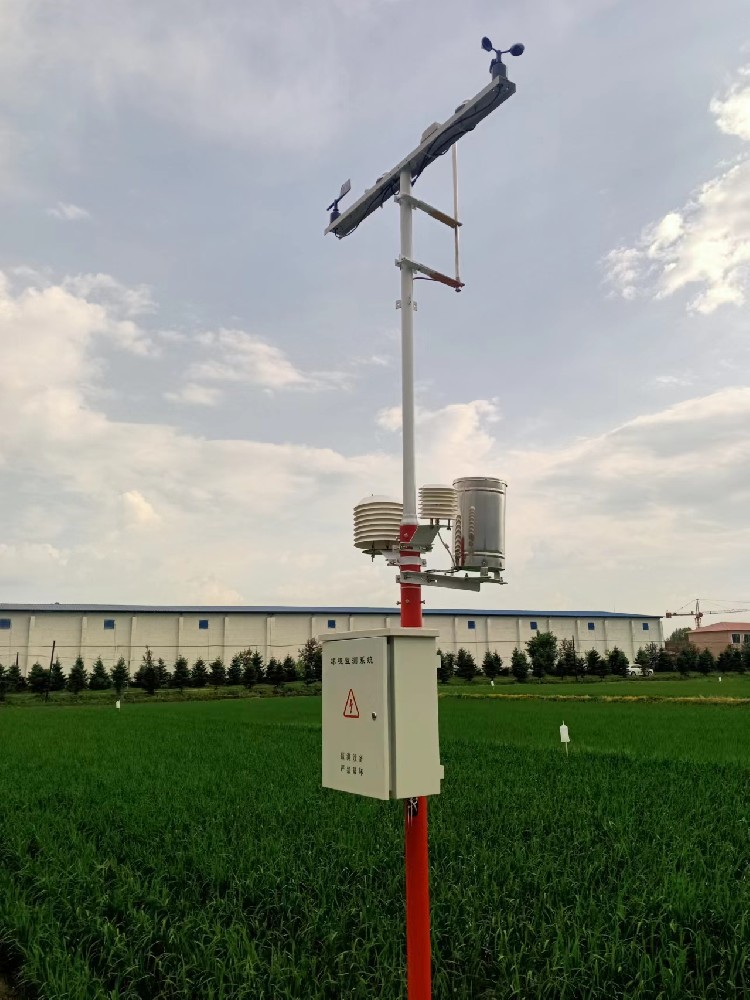
The TG462/TG462S data logger and gateway provides digital, analog and RS485 interfaces for compatible configurations. Confirm the input's suitability for the gauge's signal and expected event timing before assuming it will count every tip. The gateway itself is IP30 and needs a suitable outdoor protective cabinet.
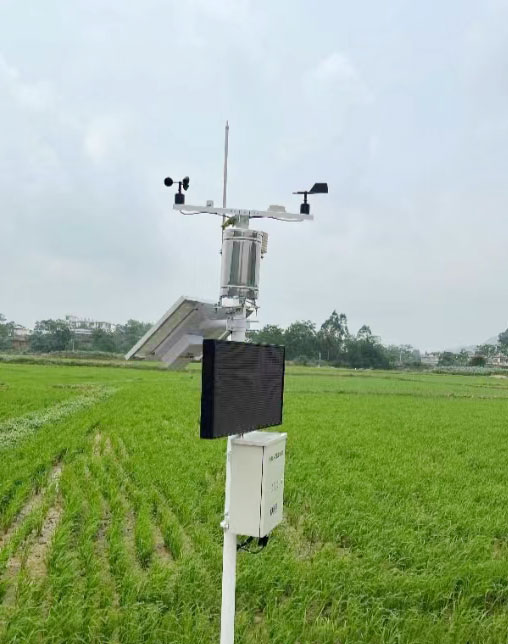
A logger replacement can also change the clock, daily reset or reporting interval. A daily total based on a midnight boundary cannot be compared directly with a total using another boundary. Keep the agreed local or UTC convention and verify how the receiving application assigns records to days.
Test the treatment of an old record arriving after a new one. The upload time should not replace the original observation time. The platform also needs to distinguish a replacement logger's identity or series from the former device where that affects duplicate handling. These behaviors belong to the configured application and are not guaranteed by cellular connectivity.
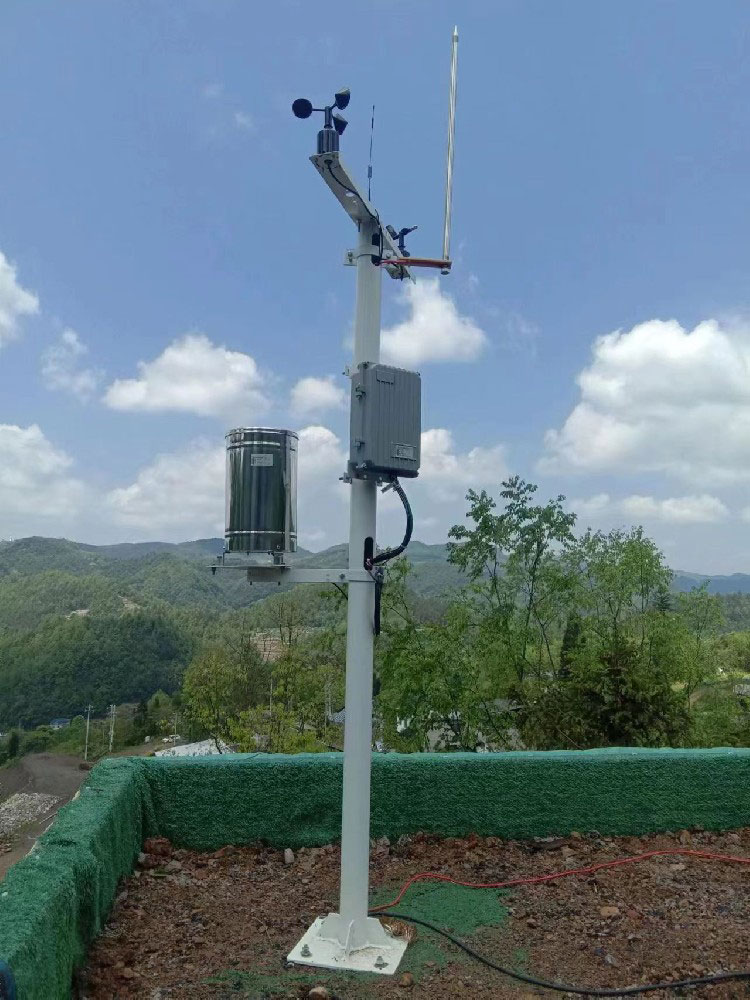
Keep a short handover note with the old and new device IDs, cutover time, valid end/start records, excluded test interval and any unresolved gap. For an irrigation project this prevents a daily-rain comparison from understating recent water input; for drainage monitoring it preserves the timing needed to interpret an event. Neither application should treat an incomplete series as a complete storm record.
For a replacement enquiry, send NiuBoL the existing gauge model, output type, current logger configuration and required platform record. Include the planned service interval and whether continuous capture is essential. A backup observation arrangement must be designed before disconnection if the project cannot tolerate a gap.
Yes, if the new segment is clearly identified and the platform handles it correctly. Preserve the earlier segment; do not interpret the counter reset as negative rain or overwrite the historical total.
Only if a verified recording path retained it. A passive gauge contact alone does not establish storage. Otherwise mark the interval incomplete rather than estimating an exact amount without evidence.
No. Keep them as identified test events and exclude them from the weather total through the approved data workflow. Preserve a record of any resulting adjustment.
No. Confirm the register quantity, engineering unit, scaling and reset behavior for the supplied version, then compare a known test result in the receiving system.
Verify the last old and first new observation, excluded tests, time convention and treatment of resets or delayed records. Any unmeasured interval must remain visible in the accepted series.
Rainfall monitoring during logger replacement is a data-continuity task as well as a wiring task. Preserve the old observations, validate the new input and keep gaps, tests and reset boundaries explicit. A continuous-looking chart is useful only when its rainfall accounting is correct.
NBL-W-ARS Tipping-Bucket Rain Gauge Instruction Manual
 NBL-W-ARS-Tipping-bucket-rain-gauge-instruction-manual.pdf
NBL-W-RS Rain Sensor Instruction Manual V4.0
NBL-W-RS-Rain-sensors-instruction-manual-V4.0.pdfPrev:Greenhouse Monitoring After a Crop Change: Sensors and Setpoints
Next:Rainfall Monitoring Station Functions and Application Scenarios
Related recommendations
Sensors & Weather Stations Catalog
 Agriculture Sensors and Weather Stations Catalog-NiuBoL.pdf
Weather Stations Catalog-NiuBoL.pdf
Agriculture Sensors Catalog-NiuBoL.pdf
Water Quality Sensor Catalog-NiuBoL.pdf
Related products
 Combined air temperature and relative humidity sensor
 TDR Soil Moisture & Temperature Sensor for irrigation| RS485 |4-20mA| NBL-S-THR
 Soil pH sensor RS485 soil Testing instrument soil ph meter for agriculture |NBL-S-PH
 Wind Speed sensor Output Modbus/RS485/Analog/0-5V/4-20mA
 Tipping bucket rain gauge for weather monitoring auto rainfall sensor RS485/Outdoor/stainless steel
 Pyranometer Solar Radiation Sensor 4-20mA/RS485


Screenshot, WhatsApp to identify the QR code
WhatsApp number:+8615367865107
(Click on WhatsApp to copy and add friends)

