





— Blogs —
—Products—
 Consumer hotline +8618073152920
WhatsApp:+8615367865107
Address:Room 102, District D, Houhu Industrial Park, Yuelu District, Changsha City, Hunan Province, China
Product knowledge
Time:2025-01-11 20:05:58 Popularity:2205
Greenhouse monitoring after a crop change should start with the new crop layout and growing method, not a copy of last season's controller settings. Recheck air-sensor exposure, light measurement, CO2 scope and root-zone probe suitability. Reuse equipment where it still fits, but identify any moved measurement point or changed control rule before restarting automatic operation.
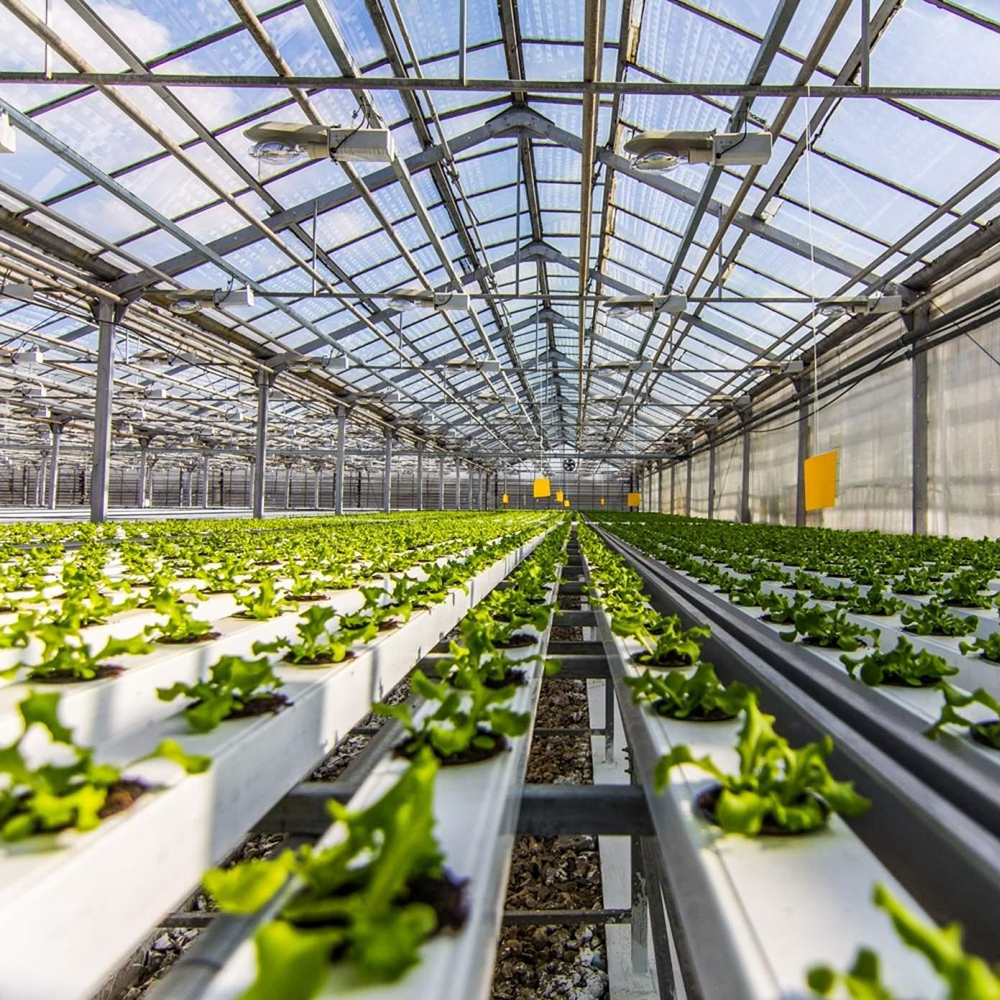
A greenhouse changing from low crops to a tall canopy, or from soil beds to containers, may retain working sensors while changing what their readings represent. A temperature probe at the old position can become shaded, enclosed by leaves or exposed to a supply-air stream. A soil probe can remain physically connected after its measurement medium has changed.
Map the new rows, canopy development, irrigation zones and service access before moving instruments. Identify the crop manager responsible for new operating targets and the technician responsible for measurement and controller changes. The sensors provide observations; crop-specific decisions require an agreed cultivation plan.
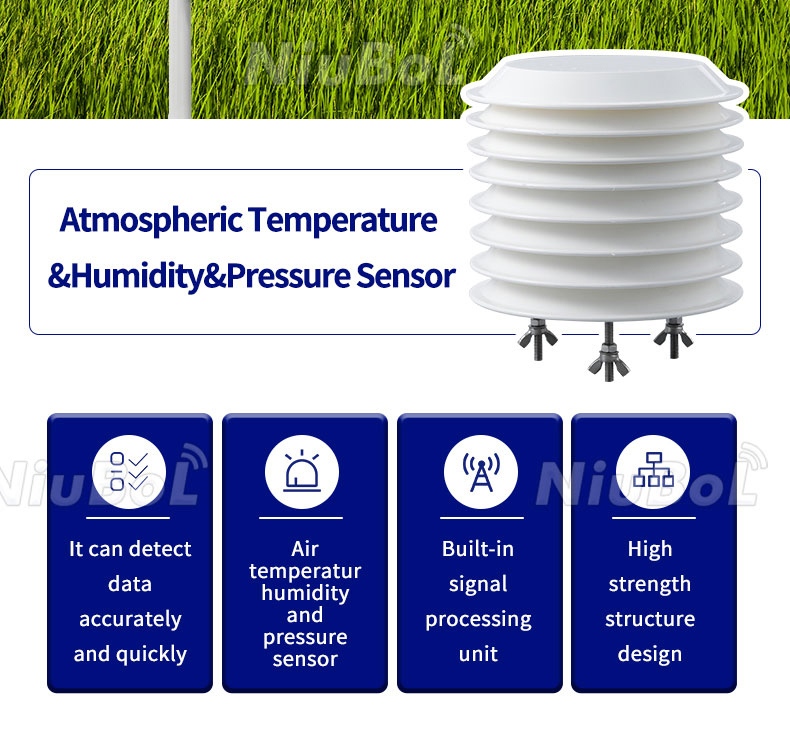
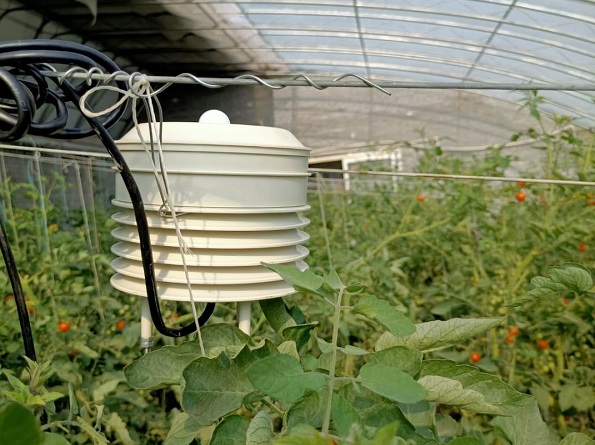
The NBL-W-LBTH atmospheric sensor measures air temperature, relative humidity and pressure. It does not measure soil moisture or leaf temperature. Retain a location that answers the intended air-climate question, and check whether developing foliage, a heater, a vent or a misting outlet changes that exposure.
Do not apply a universal mounting distance to every crop and greenhouse. Record the selected position and reason, then review it as the canopy develops. If the instrument moves, annotate the record; a step in the trend after moving may describe a different microclimate rather than a sudden change in the whole greenhouse.
| Existing measurement | NiuBoL configuration example | Crop-change check |
|---|---|---|
| Air temperature and humidity | NBL-W-LBTH: -40 to 80 C, +/-0.5 C; 0-100% RH, +/-5% RH | Airflow and exposure still represent the intended crop zone |
| Illuminance | NBL-W-LUX: 0-200,000 Lux; specified accuracy +/-7% | Decide whether the task needs illuminance or a separate plant-light measurement |
| Integrated CO2 channel | NBL-W-THPLC configuration: 0-2000 ppm | Confirm range and placement against the new measurement requirement |
| Soil pH | NBL-S-PH: 0-14 pH, +/-0.1 pH; 0.01 pH resolution | Check medium, electrode condition, contact and comparison method |
These are different instrument configurations, not one interchangeable set of channels. Retain the actual model, output and scaling with each measurement point. A shared RS485 connection does not make the quantities or their cultivation uses equivalent.
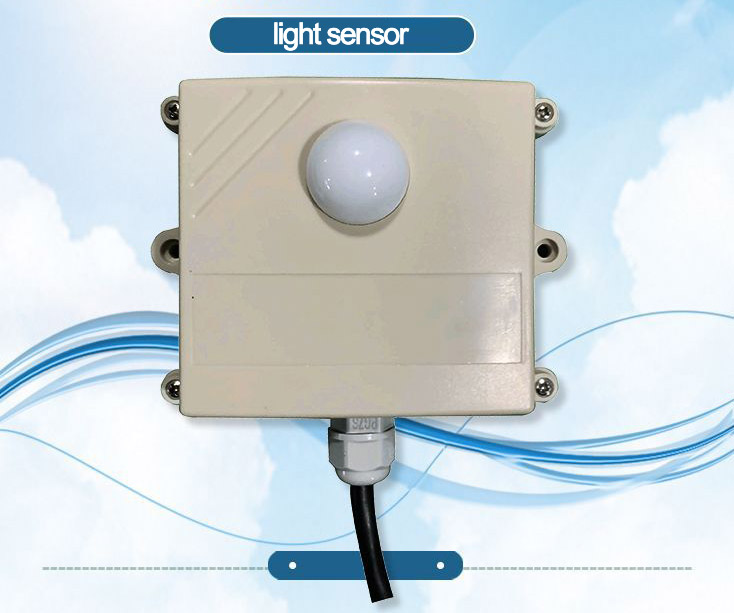
The NBL-W-LUX illuminance sensor reports Lux. It can support comparisons of visible-light conditions and configured shading tasks. It is not a direct PPFD measurement, and an unchanged Lux target is not automatically an appropriate crop-light target after a lighting or crop change.
If the new cultivation plan specifies plant-light quantities or a daily photon integral, assess the appropriate PAR/PPFD sensor and calculation instead. A single fixed conversion from Lux is not generally valid across different spectra. Keep the existing Lux history labelled as Lux rather than relabelling it as a new radiation quantity.
An integrated NBL-W-THPLC sensor combines temperature, humidity, pressure, illuminance and CO2 channels. Confirm the delivered CO2 range before using it in the new cultivation plan. A range endpoint is not a recommended enrichment concentration or an occupational-safety limit.
Changes in vent scheduling, plant density or gas-distribution layout can change local readings. Check whether the point measures representative air or a local discharge plume. CO2 monitoring does not alone command ventilation or dosing; those actions need the configured controller, equipment and protections appropriate to the project.
Soil beds, peat-based containers and recirculating nutrient solution are different measurement environments. A probe selected for one should not be assumed suitable for all three. Confirm the medium and installation method before reinstalling a soil instrument into a new substrate or liquid system.
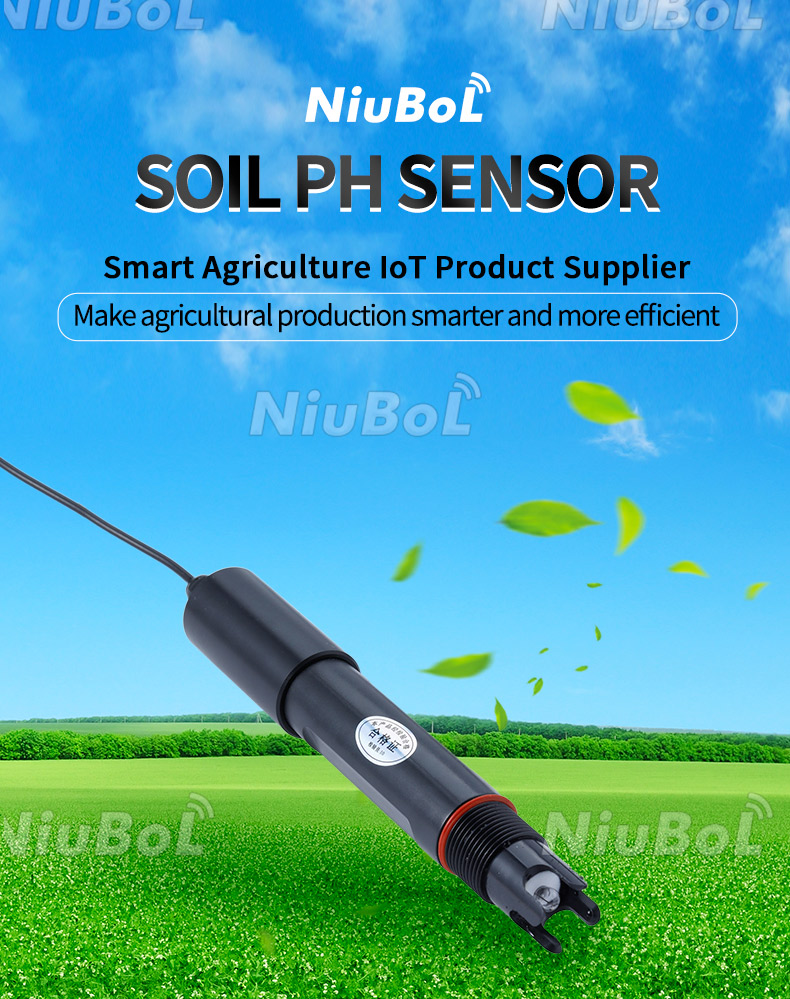
The NBL-S-PH soil pH sensor needs appropriate electrode condition, moisture and contact. Its 0.01 pH resolution does not remove those requirements or make an arbitrary direct reading equivalent to a laboratory soil method. Use a defined comparison procedure when assessing a new medium.
A pH reading describes acidity or alkalinity, not fertilizer concentration or the amount of every nutrient available to the crop. Keep pH, electrical conductivity and soil-water observations distinct where the cultivation plan requires them. The sensor does not add fertilizer or correct the root zone by itself.
Keep the previous crop's data and its location and control settings identifiable. For each change, record the effective time, measurement point, unit and any new alarm or controller target. If a channel is reassigned to another bed, preserve the old assignment rather than making historical observations appear to come from the new location.
For RS485 Modbus RTU versions, verify the actual address, register map and engineering scaling at the receiving PLC, RTU or logger. Moving a sensor does not normally require changing the measurement unit, while replacing a model may require a different interpretation. Test the new value in the correct channel before using it in control logic.
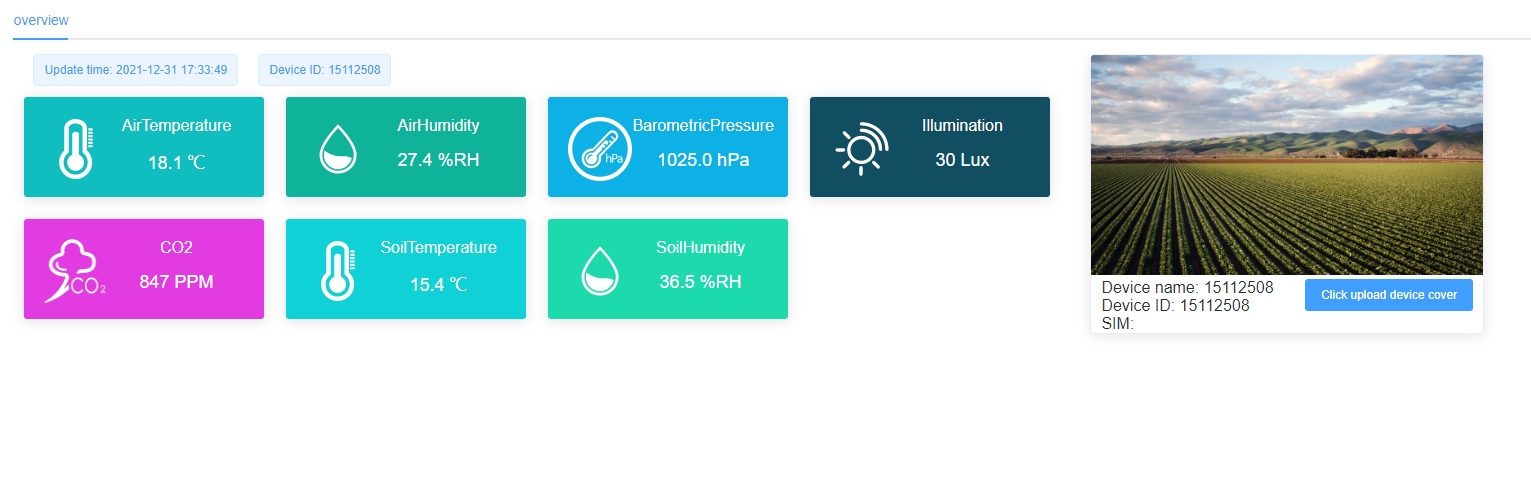
During the crop turnaround, distinguish cleaning and commissioning observations from normal cultivation data. Protect sensors under the approved cleaning procedure; do not treat their operating humidity rating as permission for direct pressure washing. Inspect exposure and cable condition before returning channels to service.
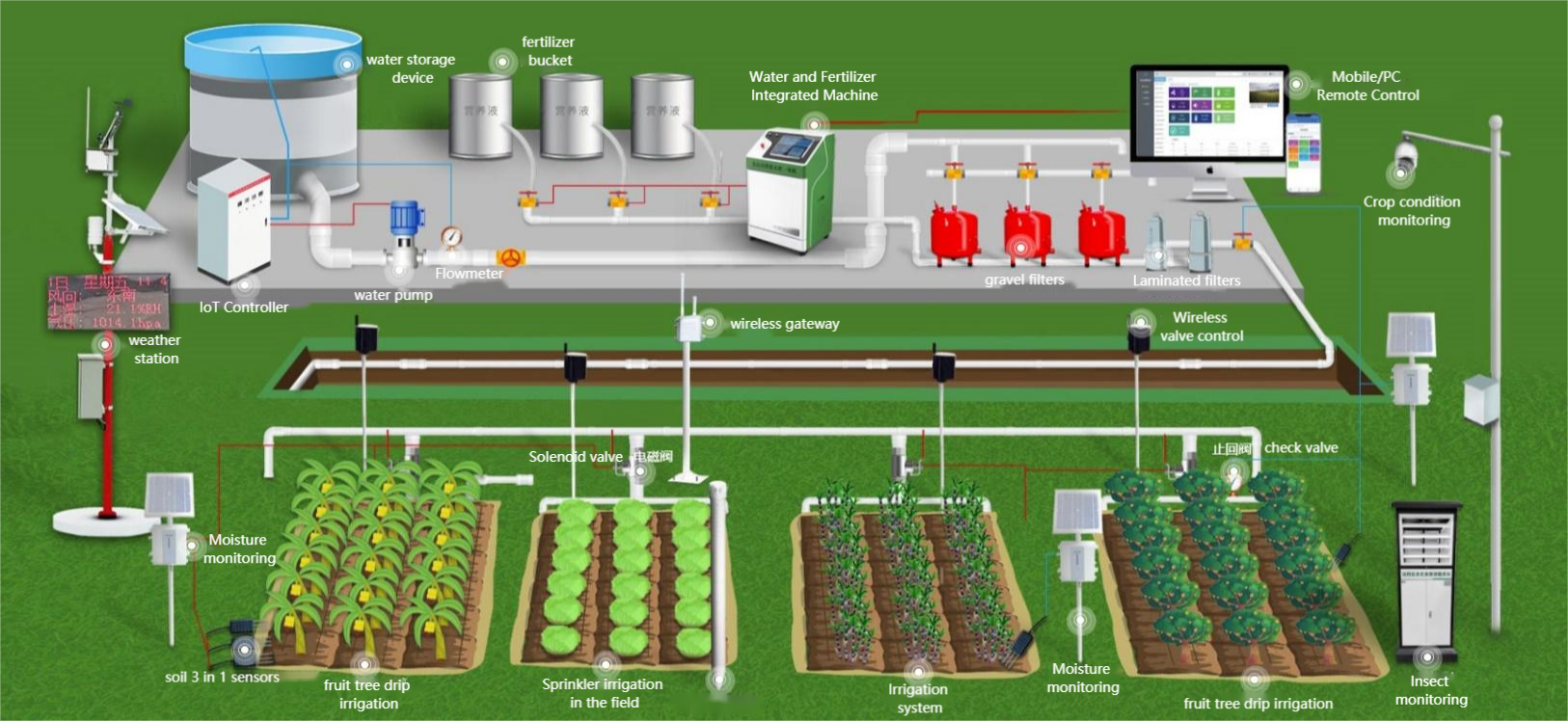
Recommission the control actions that changed, using authorized staff and the site's safe operating procedure. Confirm a measured condition, the intended command and the actual equipment response where feedback is required. A refreshed dashboard alone does not establish that the new crop's ventilation or irrigation behavior is correct.
Send NiuBoL the retained sensor list, new crop layout, growing medium and intended measurement or control tasks. This makes it possible to assess repositioning, compatible replacements and any genuinely missing measurement without replacing working hardware unnecessarily.
No. Retain working instruments that suit the new medium, range and measurement location. Repositioning or a configuration change may be sufficient; document the resulting record boundary.
Only after the cultivation team confirms the task and target. Lux is not PPFD, and a lighting-spectrum change can invalidate a previously assumed relationship.
No. Confirm the probe's intended medium and installation. Select a suitable solution-measurement instrument where required instead of assuming the same soil installation applies.
Check canopy, airflow, local heating or misting, cable routing and the channel's location label. Preserve the move time so the old and new exposure are distinguishable.
Correct measurement assignments, agreed crop targets and verified affected control actions are needed. Keep commissioning intervals separate and retain the previous crop's observations.
Greenhouse monitoring after a crop change is a review of measurement suitability and cultivation use. Reuse sound equipment, adjust positions and configuration deliberately, and verify any changed control task. Keep the old and new crop records interpretable instead of treating the turnover as a dashboard reset.
Prev:City Dust Monitoring Sensors: PM, Weather, Gas and Noise Roles
Next:Rainfall Monitoring During Logger Replacement: Keep Totals Consistent
Related recommendations
Sensors & Weather Stations Catalog
 Agriculture Sensors and Weather Stations Catalog-NiuBoL.pdf
Weather Stations Catalog-NiuBoL.pdf
Agriculture Sensors Catalog-NiuBoL.pdf
Water Quality Sensor Catalog-NiuBoL.pdf
Related products
 Combined air temperature and relative humidity sensor
 TDR Soil Moisture & Temperature Sensor for irrigation| RS485 |4-20mA| NBL-S-THR
 Soil pH sensor RS485 soil Testing instrument soil ph meter for agriculture |NBL-S-PH
 Wind Speed sensor Output Modbus/RS485/Analog/0-5V/4-20mA
 Tipping bucket rain gauge for weather monitoring auto rainfall sensor RS485/Outdoor/stainless steel
 Pyranometer Solar Radiation Sensor 4-20mA/RS485


Screenshot, WhatsApp to identify the QR code
WhatsApp number:+8615367865107
(Click on WhatsApp to copy and add friends)

