





— Blogs —
—Products—
 Consumer hotline +8618073152920
 WhatsApp:+8615367865107
Address:Room 102, District D, Houhu Industrial Park, Yuelu District, Changsha City, Hunan Province, China
Product knowledge
Time:2026-05-25 10:23:52 Popularity:296
System integrators and engineering contractors often encounter the problem of pH electrode glass bulb being damaged due to collision, stirring or improper installation in sewage treatment plants, chemical plants and environmental monitoring stations. Such failures will lead to measurement interruption, system downtime for calibration, and even affect the stability of the entire process control chain, directly increasing project maintenance costs and unplanned downtime.
Traditional pH electrodes have prominent glass bulb fragility in high flow rate, particle-containing media or frequent manual maintenance scenarios. After the bulb is damaged, the entire electrode usually needs to be replaced, and the spare parts procurement cycle and brand compatibility issues further extend the fault recovery time. At the same time, if the sensor output is analog signal during system integration, it will increase the fault points of signal conversion modules.
NiuBoL NBL-WQ-PH industrial online pH sensor addresses these site pain points by adopting reinforced glass membrane technology and overall ABS/PC alloy housing protection structure, combined with patented reference system and RS-485 digital output, reducing electrode damage probability and simplifying replacement process, supporting rapid system recovery.
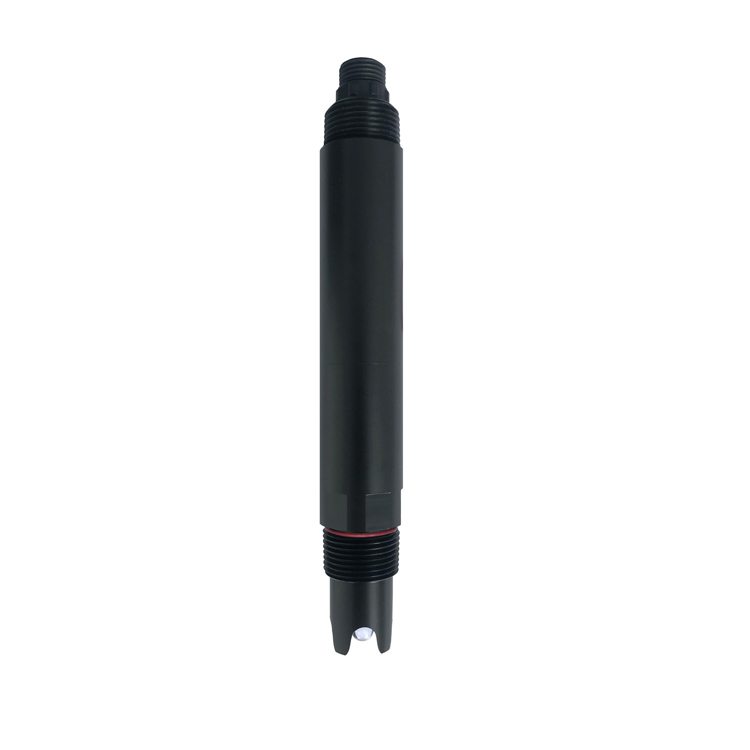
The pH electrode bulb (glass sensitive membrane) is the core sensitive element of the sensor. Its damage mainly comes from external mechanical stress, including:
Collision and extrusion during installation or disassembly;
Incorrectly using the electrode as a stirring rod;
Excessive force when cleaning and wiping;
Exceeding the rated working pressure (≤0.2 MPa).
Handling process after bulb damage:
Stop using immediately. After confirming the damage, the entire electrode needs to be replaced (glass membrane damage cannot be repaired).
Check whether other sensor components (housing, cable, connector) are intact.
Replace with NiuBoL original compatible electrode assembly, perform two-point calibration and put back into use.
Analyze the cause of damage and optimize installation method or add electrode protective sleeve.
To reduce such failures, it is recommended to select industrial-grade protective structure sensors during project design phase and establish standardized operating procedures.
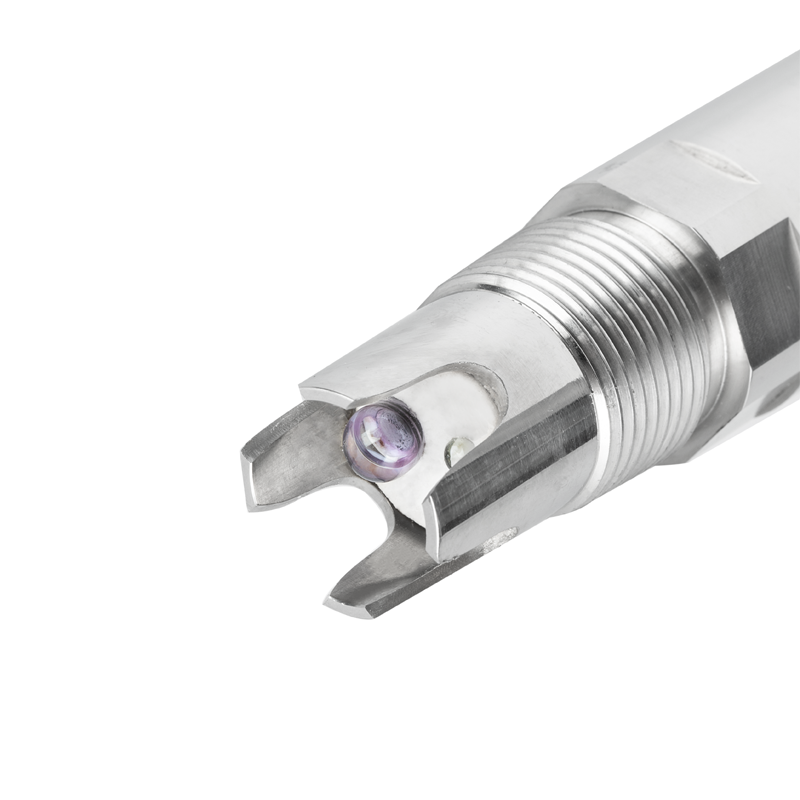
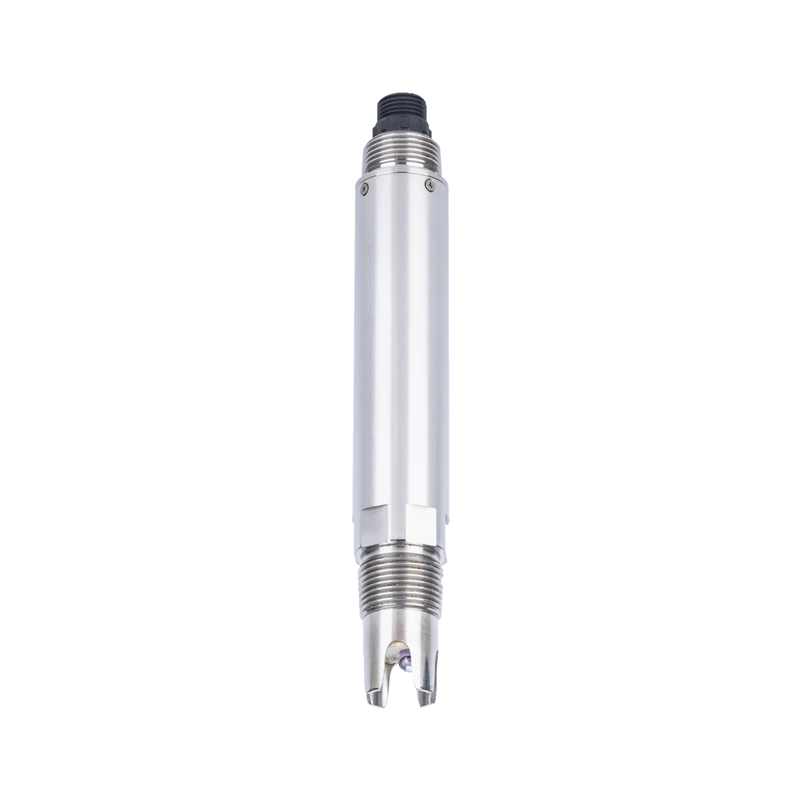
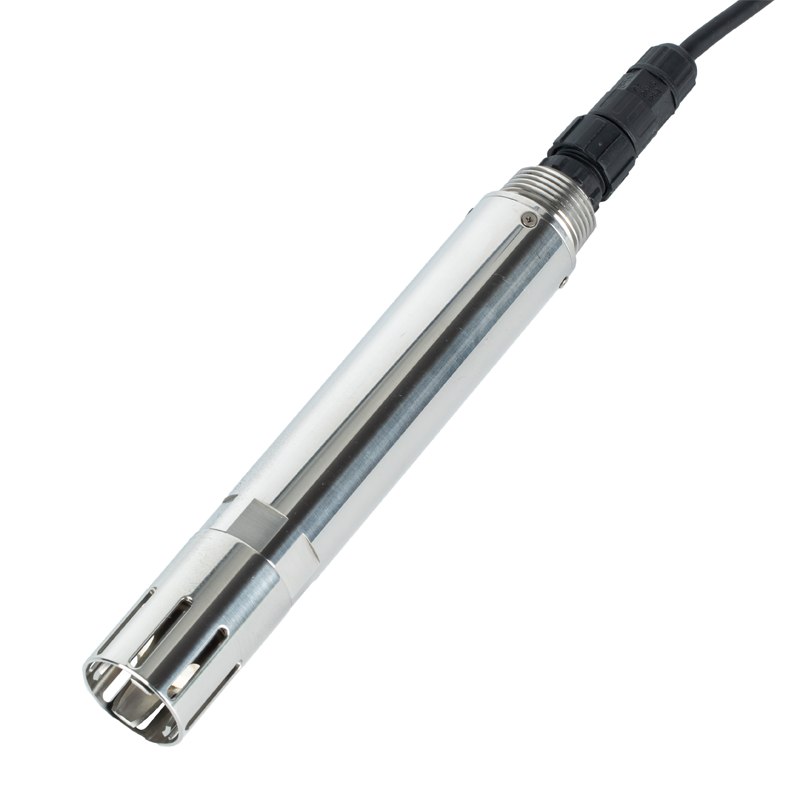
NBL-WQ-PH is a submersible pH sensor developed by NiuBoL specifically for industrial online monitoring. The housing material is ABS/PC alloy, with IP68 protection rating, supporting long-term immersion operation. Its core adopts glass electrode method, built-in Pt1000 temperature compensation element, and patented microporous salt bridge reference system allows reference liquid to slowly seep out under ≥100kPa pressure, significantly improving electrode long-term stability.
The 3/4 NPT installation interface and RS-485 Modbus RTU output design facilitate rapid deployment by system integrators while reducing the risk of electrode bulb exposure to mechanical damage.
NBL-WQ-PH water quality pH sensor adopts RS-485 physical layer and Modbus RTU protocol to achieve reliable connection with industrial control systems.
Physical layer advantages:
12~24V DC wide voltage power supply, adapting to different field power systems.
Differential signal transmission with strong anti-electromagnetic interference capability, suitable for motor-intensive environments.
Supports maximum 1200 meters transmission distance, meeting distributed deployment needs of large projects.
Protocol compatibility:
The sensor follows standard Modbus RTU and can be directly connected to mainstream PLC, DCS and SCADA systems. Multiple parameter sensors such as pH and ORP can be integrated simultaneously on the same bus, reducing wiring complexity. System integrators can use function code 03 to read pH value, temperature and diagnostic status to achieve remote fault warning.
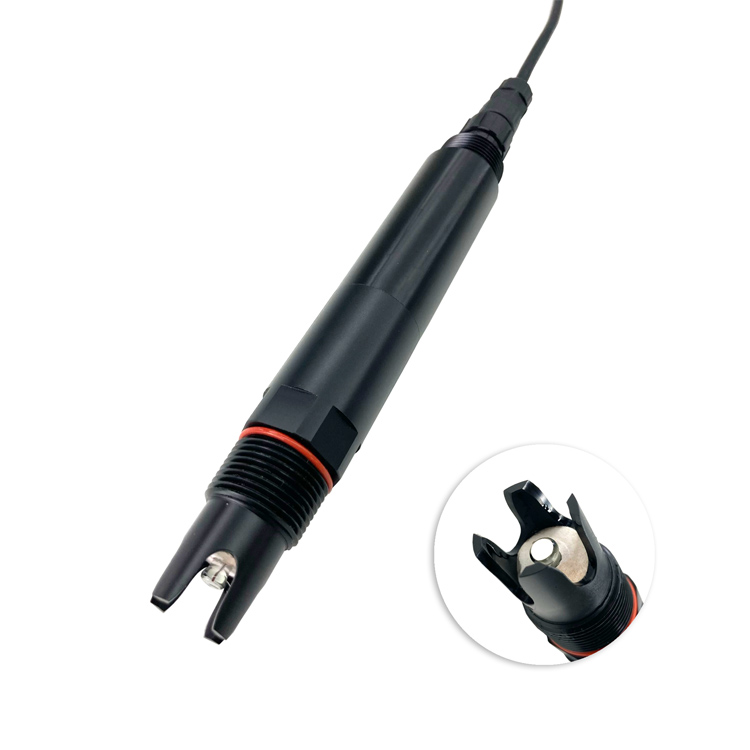
| Parameter | Specification | Remarks |
|---|---|---|
| Model | NBL-WQ-PH | Submersible industrial online pH sensor |
| Measurement Principle | Glass electrode method | High strength glass membrane |
| Measurement Range | 0~14.00 pH | Resolution 0.01 |
| Measurement Accuracy | ±0.1 pH, ±0.3℃ | Under calibration conditions |
| Response Time (T90) | <30s | - |
| Temperature Compensation | Automatic (Pt1000) | Improve measurement consistency |
| Calibration Method | Two-point calibration | pH4.00 / 6.86 / 9.18 |
| Output Signal | RS-485 (Modbus RTU) | Digital bus |
| Power Supply Voltage | 12~24V DC | Power consumption 0.2W@12V |
| Protection Rating | IP68 | Full immersion protection |
| Operating Temperature | 0~50℃ | Storage temperature -5~65℃ |
| Operating Pressure | ≤0.2 MPa | Electrode bulb protection |
| Installation Method | 3/4 NPT submersible | Pipeline/tank installation |
| Cable Length | Standard 5 meters (customizable) | Industrial grade shielded cable |
| Housing Material | ABS/PC alloy | Impact and corrosion resistant |
Technical Support Tip: If you need NiuBoL NBL-WQ-PH electrode replacement guidance video, spare parts list or Modbus address mapping table, please contact our engineers. We will provide complete technical documents within 24 hours.
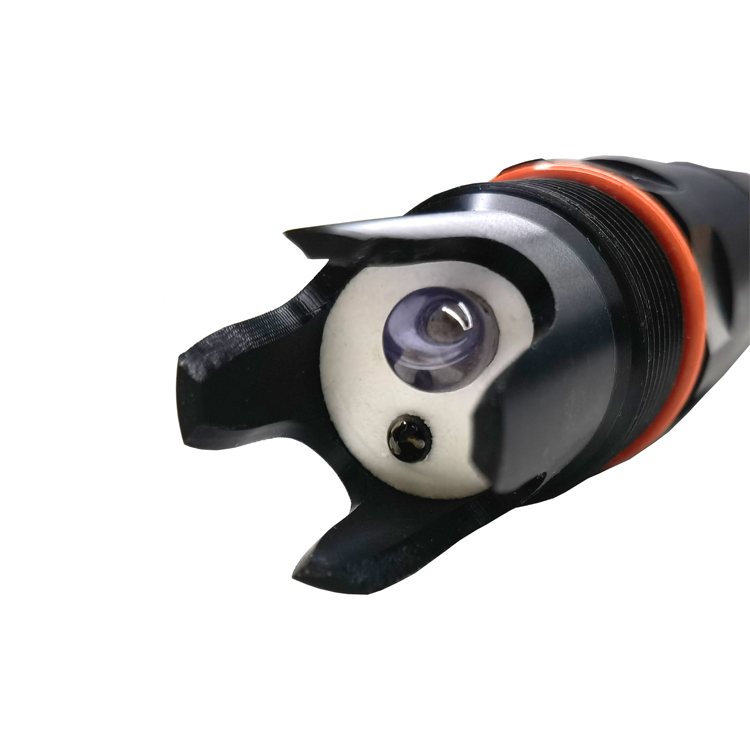
1. Sewage Treatment Plant Aeration Tank pH Control
Site environment challenges: High suspended particles, frequent maintenance operations, electrode bulb easily damaged by collision.
System integration solution: Adopt 3/4 NPT with protective sleeve installation, RS-485 connected to PLC linkage dosing system, remote diagnosis of electrode status.
User value: Reduce downtime caused by damage, stably control pH in 6.5-8.5 range, reduce chemical consumption.
2. Chemical Reaction Process pH Monitoring
Site environment challenges: Acid-base alternation, strong stirring, glass bulb bears large mechanical stress.
System integration solution: Bypass pipeline installation method, combined with automatic cleaning device, Modbus RTU realizes DCS closed-loop control.
User value: Improve electrode service life and ensure stable reaction process parameters.
3. Environmental Water Quality Continuous Monitoring Station
Site environment challenges: Outdoor installation, large temperature changes, maintenance personnel operations easily cause electrode damage.
System integration solution: IP68 full immersion design, solar RTU acquisition, upload to cloud platform via RS-485.
User value: Reduce on-site intervention frequency and ensure data continuity.
4. Electroplating Wastewater Treatment System
Site environment challenges: Corrosive media, high salt environment, frequent electrode maintenance.
System integration solution: Unified bus integration of pH and ORP sensors, optimize dosing control logic.
User value: Simplify spare parts management and reduce overall maintenance costs.
5. Food and Pharmaceutical Purified Water System
Site environment challenges: High hygiene requirements, electrode needs frequent disinfection and cleaning.
System integration solution: Installation structure compatible with GMP requirements, digital output directly connected to monitoring system.
User value: Ensure parameter traceability and reduce verification difficulty.
Accuracy and cost balance: For conventional sewage treatment, ±0.1 pH accuracy is sufficient; high-value chemical projects can increase calibration frequency to extend service life. NBL-WQ-PH provides a choice that balances reliability and economy.
Communication and transmission distance: RS-485 supports 1200 meters at 9600bps. It is recommended to add repeaters every 700-800 meters in actual projects to ensure signal quality.
Installation environment adaptation: Prefer 3/4 NPT installation method with protective sleeve to avoid direct exposure of electrode bulb to high flow rate or stirring areas.
Power supply system allocation: Single unit 0.2W low power consumption, supports large-scale deployment. It is recommended to plan uniformly with on-site PLC power supply and implement lightning protection measures.
Selection suggestion: For projects with high electrode damage risk, priority can be given to mechanical protective sleeve version. If you need specific project matching, please provide working condition parameters, and our engineers will assist in completing the selection report.
1. Before installation, confirm the electrode bulb is intact and soak in distilled water for more than 24 hours to activate.
2. Strictly prohibit using the sensor as a stirring tool. Installation position should avoid strong stirring dead zones.
3. RS-485 wiring uses shielded twisted pair, correctly connect A/B lines and add terminating resistor at the end of the bus.
4. Regularly visually inspect glass membrane status. Use dilute hydrochloric acid to clean when turbidity or deposits are found.
5. Establish operation SOP to avoid excessive force wiping the bulb during maintenance.
6. When not in use for a long time, place in 3mol/L KCl protection solution to prevent drying or freezing cracks.
7. Add pH value mutation alarm and electrode diagnosis function in PLC program.
Q1: Can the pH electrode bulb be repaired after damage?
A: The glass sensitive membrane cannot be repaired after damage, and the entire electrode assembly needs to be replaced.
Q2: How to prevent electrode bulb damage in high flow rate environments?
A: Adopt installation method with mechanical protective sleeve, or choose bypass pipeline installation, and control the medium flow rate within a reasonable range.
Q3: Does NBL-WQ-PH support on-site quick electrode replacement?
A: It supports modular design. After quick on-site replacement, two-point calibration can be performed to restore measurement.
Q4: What configuration is recommended for projects with high electrode bulb damage frequency?
A: It is recommended to use IP68 enhanced protection version and equip with automatic cleaning device.
Q5: How compatible is NBL-WQ-PH with existing PLC systems?
A: Standard Modbus RTU protocol, can be directly connected to most mainstream PLCs.
Q6: Will working pressure exceeding 0.2 MPa cause bulb damage?
A: Exceeding the rated pressure will significantly increase damage risk. Working conditions must be strictly matched during selection.
Q7: Does it support bulk supply of electrode spare parts?
A: Supports long-term spare parts supply and provides bulk project preferential schemes.
Q8: How to handle electrode bulb damage within the product warranty period?
A: Quality problems caused by non-human factors can be handled according to warranty terms. Details are subject to the contract.
NiuBoL NBL-WQ-PH industrial online pH sensor effectively reduces electrode bulb damage risk through reinforced structure design and patented reference technology, while providing convenient maintenance and replacement paths, providing stable and reliable pH measurement solutions for system integrators in sewage treatment, chemical processes and environmental monitoring scenarios.
Mastering electrode protection specifications and selecting appropriate product configurations can significantly reduce on-site failure rates and maintenance costs. If you need to request NiuBoL official product manual, electrode replacement operation manual, data sheet or bulk project quotation, please contact our application engineer team. We will provide complete technical support and selection suggestions within 24 hours.
 NBL-WQ-PH Online Water Quality pH Sensor.pdf
Prev:Industrial Online pH Sensor Technical Specifications & System Integration Guide
Next:Industrial Online ORP Sensor vs pH Meter - System Integration Guide
Related recommendations
Sensors & Weather Stations Catalog
Agriculture Sensors and Weather Stations Catalog-NiuBoL.pdf
Weather Stations Catalog-NiuBoL.pdf
Agriculture Sensors Catalog-NiuBoL.pdf
Water Quality Sensor Catalog-NiuBoL.pdf
Related products
 Combined air temperature and relative humidity sensor
 TDR Soil Moisture & Temperature Sensor for irrigation| RS485 |4-20mA| NBL-S-THR
 Soil pH sensor RS485 soil Testing instrument soil ph meter for agriculture |NBL-S-PH
 Wind Speed sensor Output Modbus/RS485/Analog/0-5V/4-20mA
 Tipping bucket rain gauge for weather monitoring auto rainfall sensor RS485/Outdoor/stainless steel
 Pyranometer Solar Radiation Sensor 4-20mA/RS485

Screenshot, WhatsApp to identify the QR code
WhatsApp number:+8615367865107
(Click on WhatsApp to copy and add friends)

