





— Blogs —
—Products—
 Consumer hotline +8618073152920
 WhatsApp:+8615367865107
Address:Room 102, District D, Houhu Industrial Park, Yuelu District, Changsha City, Hunan Province, China
Product knowledge
Time:2026-05-27 11:53:48 Popularity:390
In urban water supply projects and modern industrial water treatment systems, ensuring the biological safety of terminal water quality is an important issue in system integration. The new version of "GB 5749-2022 Sanitary Standard for Drinking Water" imposes strict restrictions on terminal pipe network water quality, clearly stipulating that free chlorine (residual chlorine) after 30 minutes of contact with water must meet the range of greater than or equal to 0.05 mg/L and less than or equal to 2 mg/L at the end of the pipe network (residential user end).
For IoT solution providers, system integrators (SI), and automation engineering contractors, how to deploy highly stable, maintenance-free secondary water supply residual chlorine monitoring systems with standard digital interfaces in high-risk areas such as smart pump rooms and secondary water supply tanks is the key to improving the overall project delivery quality and passing environmental compliance acceptance. This article will systematically elaborate on the technical integration logic and selection guidelines of NiuBoL brand's NBL-WQ-CL constant voltage method online water quality monitor.
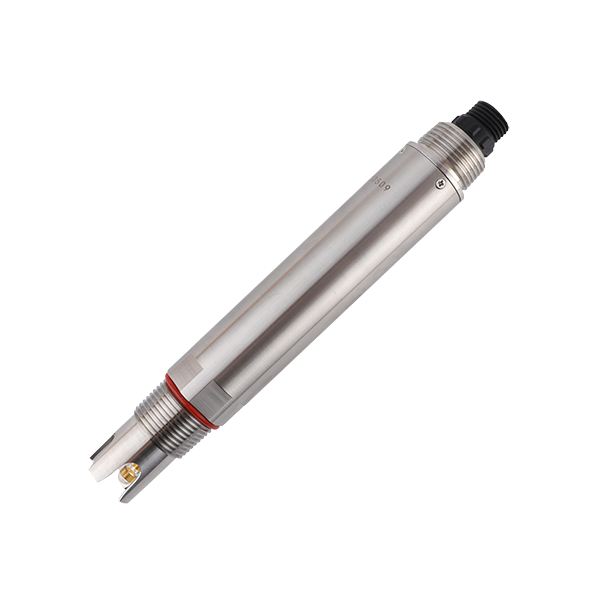
When tap water plant effluent passes through long urban underground water transmission networks or enters high-rise building secondary water supply storage tanks (water tanks), due to long residence time, aging pipelines, improper water tank cleaning and maintenance, it is very easy to breed pathogenic microorganisms such as coliforms and Salmonella, thereby causing secondary pollution.
In order to effectively inhibit microbial reproduction, an appropriate amount of free chlorine (hypochlorous acid HClO) must be maintained in the water supply network. However, too low residual chlorine content will make it lose its bactericidal efficacy, while too high residual chlorine content will produce a strong irritating odor and even react with organic matter in water to generate carcinogenic by-products such as chloroform.
In the actual engineering applications of smart pump room water quality monitoring projects, system integrators face the following technical requirements:
Real-time continuous monitoring: Traditional manual sampling analysis has serious lag, and the system requires online sensors with second-level response.
High anti-interference ability: There are a large number of frequency converters and high-power water pumps inside secondary water supply pump rooms, and strong electromagnetic interference can easily distort analog signals.
Low maintenance cycle: Traditional membrane sensors require regular replacement of electrolyte and membrane sheets, which cannot meet the long-term unattended operation requirements of smart water affairs.
In the topological architecture of the secondary water supply residual chlorine monitoring system, the NiuBoL NBL-WQ-CL sensor serves as the core hardware node of the physical perception layer. Its cascading relationship in the overall system is as follows:
[Perception Layer: NiuBoL Residual Chlorine Sensor]
│ (RS485 Bus / Modbus RTU Protocol)
▼
[Control Layer: Industrial PLC / IoT Gateway] ─── (Feedback Loop) ───► [Execution Layer: Variable Frequency Dosing Metering Pump]
│ (MQTT / TCP/IP)
▼
[Application Layer: Smart Water Affairs Cloud Platform / Pump Room Central Control SCADA]
Through flow cell installation, the sensor collects the hypochlorous acid concentration in the flow pipeline in real time and converts the physical and chemical signals into digital signals. The PLC or edge gateway reads this data, compares it with the system set value, and then adjusts the operating frequency of the sodium hypochlorite or chlorine dioxide dosing pump through the RS485 closed-loop automatic dosing control loop to achieve precise drug control.
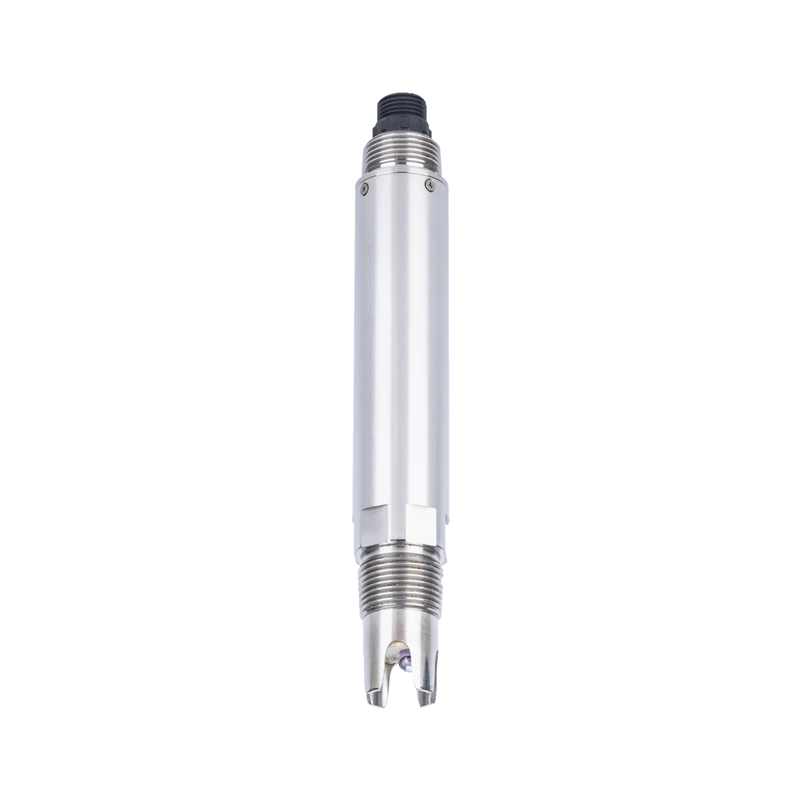
In order to ensure that the sensor can be seamlessly embedded into various mainstream industrial control systems (such as Siemens, Schneider PLC or various configuration software), NiuBoL adopts a standard industrial digital design:
RS485 Bus Standard: Adopts differential signal transmission, which naturally has extremely strong common-mode interference resistance and can still maintain stable communication data flow in the pump room frequency converter group environment. The standard wiring distance can reach 1200 meters.
Modbus RTU Protocol: The protocol structure is highly standard and open. System integrators only need to configure simple baud rate settings (such as 9600 bps) and device station number to directly obtain the hexadecimal residual chlorine actual measurement value and internal temperature compensation value through the standard `03` read register instruction. There is no need for cumbersome A/D signal conversion and formula calibration, which greatly shortens the system software development cycle and improves system scalability.
| Parameter Item | Technical Performance and Specification Index |
|---|---|
| Device Model | NBL-WQ-CL |
| Measurement Principle | Constant Voltage Method (Constant Voltage Method) |
| Measurement Range | 0 ~ 2.000 mg/L (mainly measures HClO in water) |
| Resolution | 0.001 mg/L |
| Measurement Accuracy | ±5% or ±0.05 mg/L, Temperature: ±0.3℃ |
| Response Time (T90) | Less than 90 seconds |
| Minimum Detection Limit | 0.05 mg/L |
| Temperature Compensation | Automatic temperature compensation (built-in Pt1000 platinum resistance) |
| Output Signal | RS-485 (Modbus RTU Protocol) |
| Power Supply Voltage | 12 ~ 24V DC (standard DC power supply) |
| Static Power Consumption | 0.2W @ 12V |
| Shell Material | ABS / PC alloy material |
| Protection Level | IP68 |
| Working Conditions | 5 ~ 50℃, Pressure ≤ 0.2MPa, pH Applicable Range: 4 ~ 9 |
| Calibration Method | Two-point calibration (zero point calibration and slope calibration) |
| Installation Interface and Cable | Flow cell installation, 3/4 NPT pipe thread; standard 5-meter cable (length can be customized) |
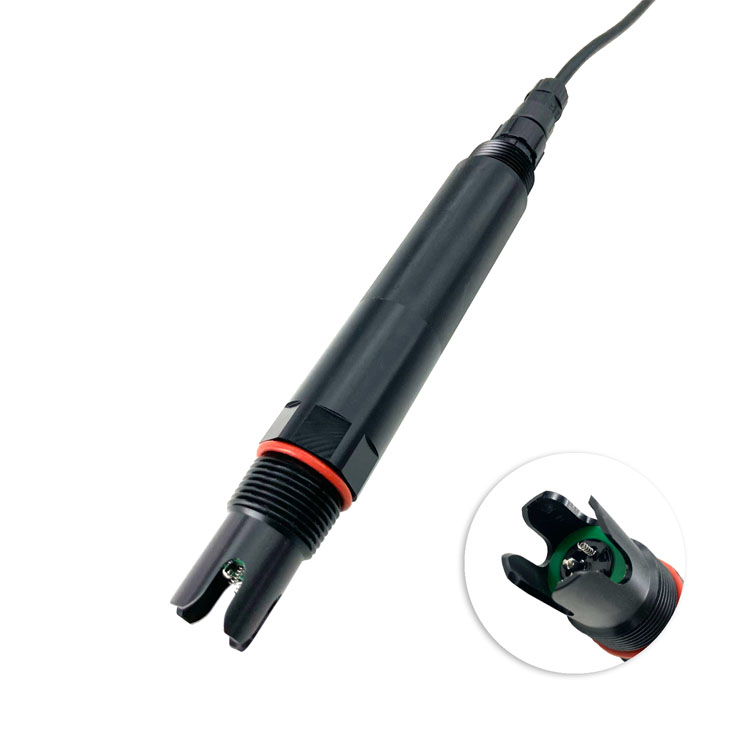
Scheme One: Smart Pump Room Water Quality Monitoring (High-rise Residential Secondary Water Supply)
[Site Environment Challenges]: Secondary water supply storage tanks are mostly located in basements or independent pump rooms with humid environments. Due to high and low peak water usage alternation, the internal pipeline flow rate is extremely unstable, and traditional sensors are prone to measurement drift; water tanks are prone to local residual chlorine attenuation due to water stagnation.
[System Integration Scheme]: Lead a bypass from the main water supply line and connect to a flow cell with a constant flow device to install the NiuBoL residual chlorine sensor. The sensor connects to the RTU of the pump room local control cabinet via RS485 bus, and the data is regularly reported to the smart water affairs unified management platform via 4G edge gateway.
[User Value Achieved]: Ensure complete compliance with GB 5749-2022 drinking water standard testing, realize remote digital supervision of unattended pump rooms, and avoid public health risks caused by abnormal water odor or bacterial exceedance.
Scheme Two: Industrial Cooling Circulating Water Dosing System
[Site Environment Challenges]: During concentrated operation of cooling tower circulating water, alkalinity and turbidity are high, which can easily produce biological slime and algae. The system needs to add bactericides regularly, but the water body composition is complex, requiring strict chemical resistance and long-term stability of the sensor.
[System Integration Scheme]: Integrate the NBL-WQ-CL constant voltage method online water quality monitor on the multi-parameter monitoring panel of the circulating water return pipeline. The sensor data is cascaded with the dosing pump driver to form an RS485 closed-loop automatic dosing control closed-loop loop.
[User Value Achieved]: Avoid metal pitting of heat exchangers and chemical waste caused by blind excessive dosing of bactericides, ensure long-term stability of heat exchange efficiency within design indicators, and effectively control operating costs.
Scheme Three: Swimming Pool Online Residual Chlorine Analysis
[Site Environment Challenges]: Swimming pools are affected by human metabolites, causing frequent fluctuations in water pH value and organic content. To ensure clear and sterile pool water, free chlorine indicators must be monitored at high frequency, and the sensor response time requirements are extremely high.
[System Integration Scheme]: Build a residual chlorine and pH linkage control system. Utilize the NBL-WQ-CL T90 fast response characteristic of less than 90 seconds to directly transmit digital measurement data to the central microprocessor of the dosing integrated machine.
[User Value Achieved]: Maintain pool water residual chlorine in the legal safe range in real time, eliminate cross-infection caused by insufficient residual chlorine, and avoid skin and corneal irritation to users caused by excessive residual chlorine.
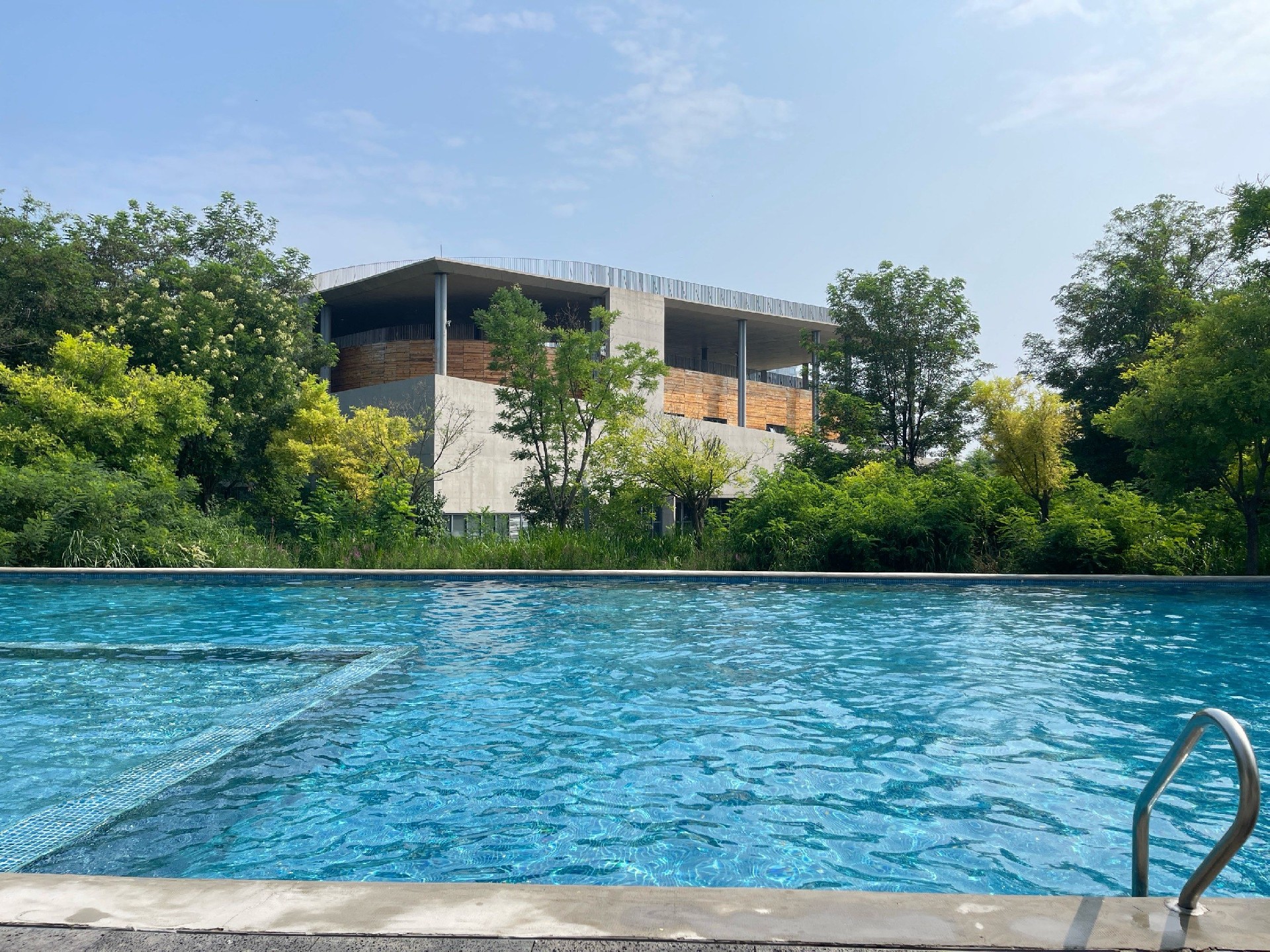
When conducting engineering project procurement, technical personnel need to conduct technical evaluation of residual chlorine products from the following four dimensions:
6.1 Accuracy and Principle Selection
Traditional colorimetric methods require reagent consumption with high operation and maintenance costs; traditional membrane (current) sensors are easily interfered by flow rate fluctuations and require frequent membrane replacement. The constant voltage method online water quality monitor recommended in this case uses polarized electrodes to measure the electrolytic current of HClO under constant voltage, achieving measurement accuracy of ±0.05 mg/L without consumables replacement. It is a typical low-maintenance, high-reliability industrial selection scheme.
6.2 Communication Method Selection
Must abandon 4-20mA analog selection with weak anti-interference ability and limited transmission distance. For smart systems with multi-node interconnection requirements, uniformly select industrial-grade residual chlorine determination modules with RS485 Modbus RTU output interfaces to facilitate full digital bus wiring and remote diagnosis.
6.3 Installation Environment Selection
During selection, confirm the process parameters of the measurement medium. NBL-WQ-CL supports flow cell installation (3/4 NPT thread) and requires working pressure ≤ 0.2MPa. If the on-site pipe network pressure is too high, a pressure reducing valve and constant flow valve must be integrated in the bypass to ensure stable water flow into the flow cell.
6.4 Power Supply Method Selection
Industrial site standard power supply is mostly safe voltage. This sensor supports 12 ~ 24V DC wide voltage input, perfectly adapting to 24V centralized switching power supply in PLC cabinets or 12V solar battery power supply systems in field monitoring stations.
Water Flow Continuity Management: The constant voltage principle relies on the dynamic chemical equilibrium on the electrode surface, so the water flow velocity through the flow cell must be kept relatively constant (recommended flow rate controlled between 15 to 30 L/h). It is strictly prohibited to expose the sensor directly in dead water or dry pipes with drastic flow velocity fluctuations.
pH Value Application Limits: Free chlorine in water is greatly affected by the dissociation equilibrium of pH value. This sensor can work stably in water with pH 4 to 9. If the on-site water pH is consistently greater than 8.5, hypochlorous acid will largely convert to hypochlorite (OCl-). It is recommended to add a pH-associated compensation factor in the upper computer software control algorithm.
Wall Effect and Bubble Prevention: When installing the flow cell, ensure water flows in from the bottom and out from the top to naturally drive away air bubbles in the measurement chamber. Bubble attachment on the platinum electrode surface will cause impedance mutations, leading to step abnormalities in Modbus readings.
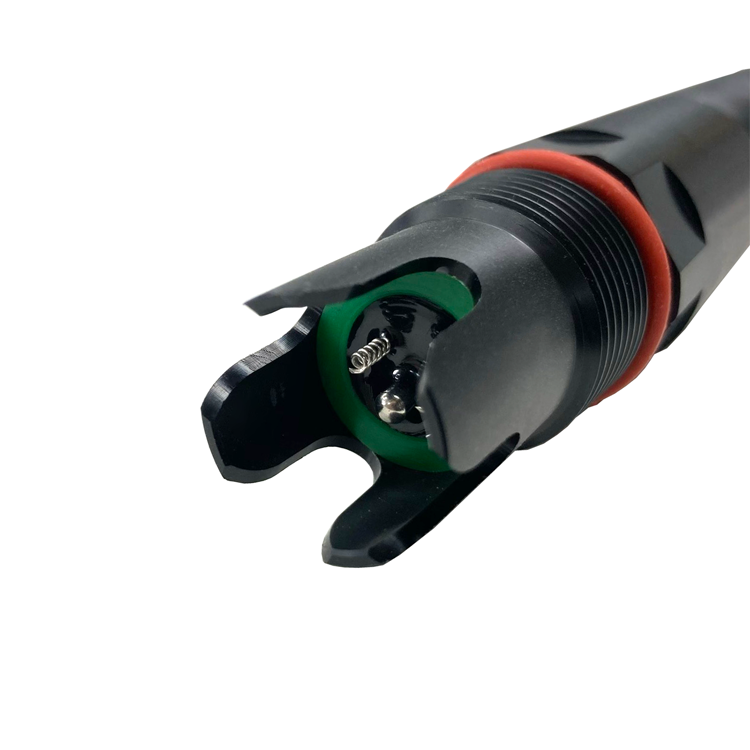
Q1: Does the constant voltage method residual chlorine sensor need to be used with reagents?
A: No. NiuBoL NBL-WQ-CL adopts a three-electrode constant voltage measurement principle, directly measuring the electrochemical characteristics of hypochlorous acid in water, with zero reagent consumption throughout the entire operating cycle.
Q2: What is the engineering function of the built-in temperature sensor in the sensor?
A: The current response of the electrode in solution is affected by temperature changes. The sensor has a built-in Pt1000 platinum resistance, which realizes automatic temperature compensation from 5 to 50℃ through the internal control chip, ensuring data consistency between northern winters and southern summers.
Q3: Why is the sensor's measurement range set to 0 ~ 2.000 mg/L?
A: This range is specially designed for drinking water terminal monitoring and secondary water supply safety lines. Its high resolution (0.001 mg/L) can accurately capture the minimum limit value changes of 0.05 mg/L specified in "GB 5749-2022".
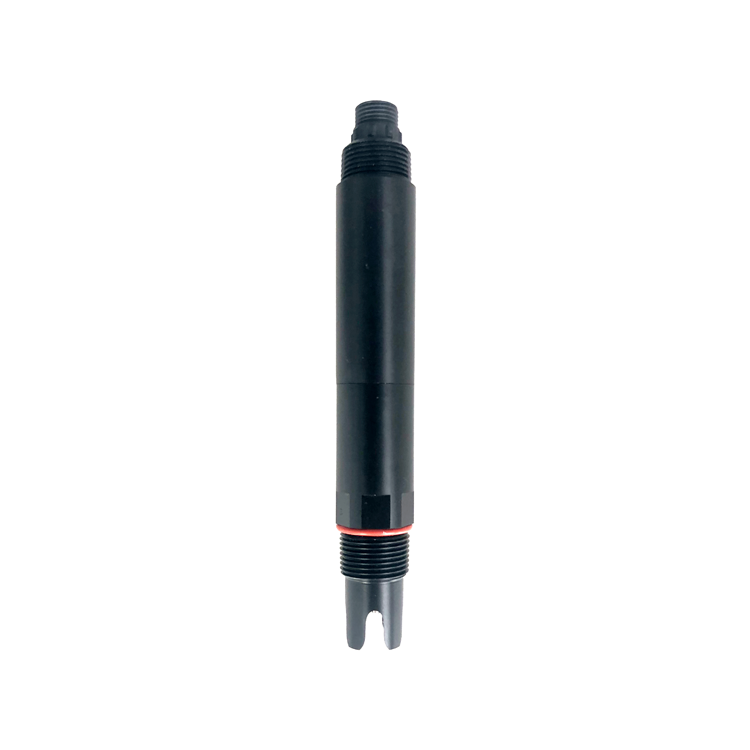
Q4: Can this sensor be used directly in sewage with high suspended solids and high turbidity?
A: Not recommended. This product is designed for low-turbidity clean water such as tap water, swimming pools, and clean circulating water. If suspended solids in water are too high, they will contaminate or scratch the platinum electrode surface, affecting measurement accuracy.
Q5: If the pump room wiring distance reaches 500 meters, is a signal amplifier needed?
A: No. The product outputs standard RS485 differential digital signals. Under the premise of using qualified shielded twisted pair wiring, it can support stable transmission of more than 1000 meters without any amplifier in the middle.
Q6: How to connect the 3/4 NPT threaded interface in actual engineering?
A: This is a standard tapered pipe thread interface. It can usually be directly screwed into a matching plexiglass or PVC hard flow cell, sealed with raw material tape to achieve leak-proof installation.
Q7: What is the usual equipment replacement and calibration cycle?
A: Thanks to the solid electrode design, this sensor does not require membrane or electrolyte replacement. In conventional secondary water supply environments, it is recommended that engineering operation and maintenance personnel perform one on-site slope comparison and calibration using standard DPD colorimetric method every 3 to 6 months.
Q8: Does the product support third-party SCADA system integration? Are register addresses open?
A: Fully supported. The product comes with a complete Modbus register address table (including hexadecimal command words, function codes, and register addresses corresponding to residual chlorine and temperature). Integrators can directly write the driver into any configuration software or PLC.
For procurement managers and system integrators of industrial projects, the core concerns are always the long-term stability of the data source, the openness and ease of use of the protocol, and the full lifecycle maintenance cost of the system.
NiuBoL NBL-WQ-CL online water quality digital sensor abandons the cumbersome wiring of traditional analog transmitters and perfectly fits the core pain points of modern smart pump rooms and automated industrial dosing systems by utilizing high anti-interference RS485 bus and reagent-free constant voltage measurement principle. When facing the stringent compliance requirements of the "GB 5749-2022" drinking water standard, integrating this sensor can effectively improve the speed of project system integration delivery and significantly reduce on-site manpower costs for later engineering operation and maintenance.
 NBL-WQ-CL Water Quality Sensor Online Residual Chlorine Sensor.pdf
NBL-WQ-CL-4A Industrial-grade Online Residual Chlorine Sensor.pdf
NBL-WQ-CL-4S Series Online Water quality Residual Chlorine Sensor.pdf
Related recommendations
Sensors & Weather Stations Catalog
Agriculture Sensors and Weather Stations Catalog-NiuBoL.pdf
Weather Stations Catalog-NiuBoL.pdf
Agriculture Sensors Catalog-NiuBoL.pdf
Water Quality Sensor Catalog-NiuBoL.pdf
Related products
 Combined air temperature and relative humidity sensor
 TDR Soil Moisture & Temperature Sensor for irrigation| RS485 |4-20mA| NBL-S-THR
 Soil pH sensor RS485 soil Testing instrument soil ph meter for agriculture |NBL-S-PH
 Wind Speed sensor Output Modbus/RS485/Analog/0-5V/4-20mA
 Tipping bucket rain gauge for weather monitoring auto rainfall sensor RS485/Outdoor/stainless steel
 Pyranometer Solar Radiation Sensor 4-20mA/RS485

Screenshot, WhatsApp to identify the QR code
WhatsApp number:+8615367865107
(Click on WhatsApp to copy and add friends)

