





— Blogs —
—Products—
 Consumer hotline +8618073152920
 WhatsApp:+8615367865107
Address:Room 102, District D, Houhu Industrial Park, Yuelu District, Changsha City, Hunan Province, China
Product knowledge
Time:2026-05-26 22:44:36 Popularity:360
For system integrators, IoT solution providers, project contractors, and engineering companies, ORP measurement is a field-level signal used in process control, chemical dosing, treatment verification, remote monitoring, and multi-parameter water quality systems. In industrial procurement, an ORP sensor is not evaluated as a stand-alone consumer product. It is assessed as a component that must connect reliably with controllers, data loggers, PLCs, RTUs, SCADA systems, IoT gateways, and cloud monitoring platforms.
NiuBoL is a manufacturer of industrial sensing and monitoring equipment for project-based B2B applications. Our ORP sensor solutions are designed for water treatment integrators, environmental monitoring solution providers, OEM equipment manufacturers, smart agriculture platform companies, and contractors that need stable online oxidation-reduction potential data for complete monitoring systems.
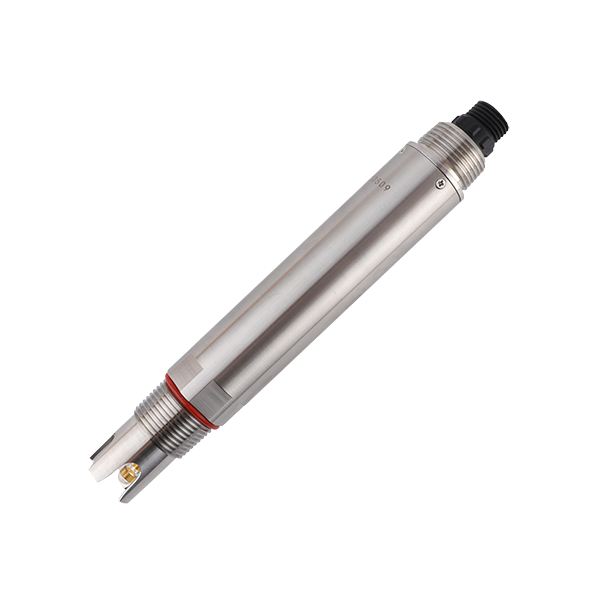
Most professional buyers searching for an industrial ORP sensor are not looking for a basic introduction. They want to confirm whether the sensor can be integrated into a project with predictable signal quality, clear communication output, acceptable maintenance cost, and stable supply. Procurement teams usually compare measurement range, electrode structure, reference stability, installation method, output signal, Modbus compatibility, controller matching, documentation, and supplier support.
For a system integrator, the sensor becomes part of a larger bill of materials. It may be installed in a sampling tank, mounted in an online cabinet, connected to a data collector, integrated with a gateway, and displayed on a cloud platform. Any instability at the sensor layer can increase commissioning time, after-sales workload, and project risk. Therefore, ORP sensor selection should be considered during the design stage, not only at the purchasing stage.
ORP stands for oxidation-reduction potential and is measured in millivolts (mV). It indicates whether the water environment has a stronger oxidizing or reducing tendency. In engineering applications, ORP is widely used as an online trend parameter for disinfection control, wastewater treatment, chemical dosing, biological process observation, recirculating water systems, aquaculture, and environmental monitoring stations.
ORP is often used together with pH, dissolved oxygen, conductivity, turbidity, temperature, residual chlorine, ammonia nitrogen, COD, and flow data. When these parameters are integrated into one monitoring architecture, the project team can build alarm rules, dosing references, remote diagnostics, process trend analysis, and maintenance planning.
In wastewater projects, ORP sensors are commonly installed in equalization tanks, anaerobic tanks, anoxic zones, aeration systems, oxidation-reduction process sections, and final discharge monitoring points. Integrators use ORP trend data to observe treatment stage changes, biological process conditions, aeration effects, and reducing environments. For wastewater applications, the electrode should be selected with attention to fouling, suspended solids, biofilm, installation protection, and maintenance access.
ORP measurement is suitable for water systems involving chlorine, chlorine dioxide, ozone, peracetic acid, and other oxidizing agents. Engineering companies may combine ORP data with residual disinfectant, flow rate, pH, and dosing pump operation to support automatic dosing logic. This is common in industrial cooling water, process water, food and beverage water treatment, water reuse systems, and disinfection skids.
For IoT solution providers, an ORP sensor is one endpoint in a distributed monitoring network. A typical project may include solar power, low-power data acquisition, RS485 bus communication, 4G gateways, NB-IoT devices, LoRaWAN nodes, edge computing units, and cloud dashboards. RS485 Modbus support helps reduce integration workload and allows the sensor to be connected with existing data loggers and industrial gateways.
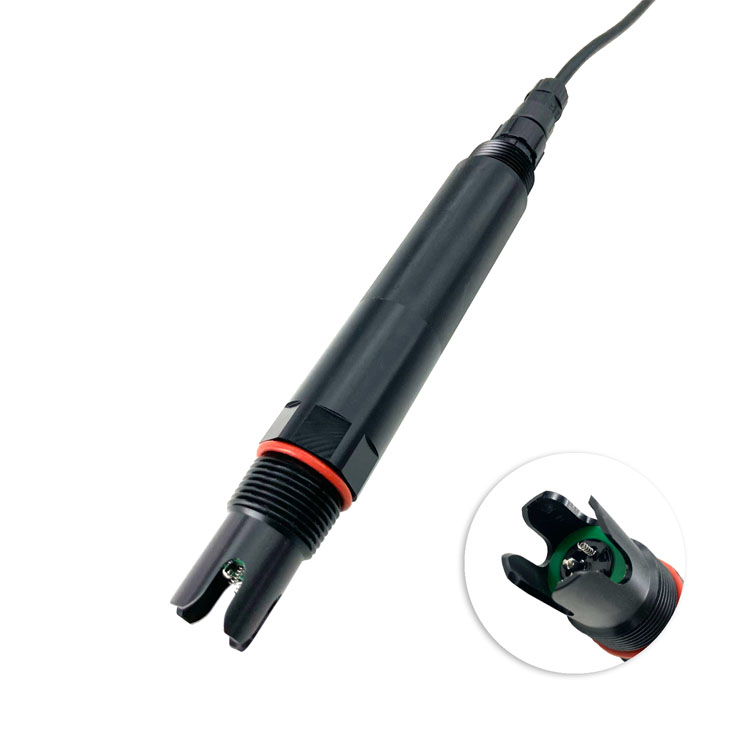
In aquaculture and recirculating systems, ORP data can support water condition assessment, disinfection process monitoring, and alarm threshold design. Integrators often combine ORP with dissolved oxygen, pH, temperature, salinity, ammonia nitrogen, and turbidity. In river stations, drainage outlets, and mobile monitoring cabinets, ORP becomes part of a multi-parameter profile used to identify abnormal changes in water chemistry.
NiuBoL provides industrial ORP sensor solutions for online water quality monitoring and system integration projects. The sensor can be configured with controllers, data acquisition modules, industrial cabinets, power supply units, solar systems, and communication gateways according to project requirements. The solution can support cabinet integration, OEM equipment integration, distributed IoT monitoring, or complete water quality monitoring stations.
For B2B partners, NiuBoL supports sensor selection, communication parameter confirmation, controller matching, installation discussion, and documentation for project deployment. This cooperation model is suitable for companies that require repeatable project delivery rather than one-time retail purchasing.
| Parameter | Typical Specification | Engineering Relevance |
|---|---|---|
| Measurement parameter | ORP / oxidation-reduction potential | Used for oxidation and reduction trend monitoring |
| Measurement unit | mV | Standard unit for ORP signal interpretation |
| Sensor type | Online ORP electrode | Suitable for continuous industrial monitoring |
| Signal output | RS485 Modbus, 4-20 mA options depending on configuration | Supports PLC, RTU, data logger, and IoT gateway integration |
| Installation options | Immersion, pipeline, flow cell, sampling tank | Allows adaptation to wastewater, process water, and monitoring stations |
| System compatibility | Controller, data collector, SCADA, cloud platform, OEM equipment | Reduces integration workload for engineering projects |
Clean water, industrial wastewater, high-suspended-solids water, chemical dosing lines, and biological treatment tanks require different installation and maintenance strategies. Heavy-duty water conditions require attention to electrode fouling, reference junction stability, mechanical protection, and cleaning frequency.
ORP may be used for monitoring, alarm, dosing reference, process diagnosis, or automatic control. A disinfection dosing system may require fast response and pump logic integration, while an environmental monitoring station may emphasize long-term trend stability and remote data transmission.
System integrators should confirm whether the project requires RS485 Modbus, 4-20 mA, relay output through a controller, or gateway integration. RS485 Modbus is common for digital multi-sensor networks. 4-20 mA is common in traditional automation systems. Clear register maps, baud rate settings, wiring diagrams, and device addresses reduce commissioning time.
Immersion installation is suitable for tanks, channels, and open water structures. Pipeline installation is used in recirculating and pressurized systems. Flow cell installation is useful when sample flow needs to be controlled. The installation point should provide representative water, stable flow, full electrode wetting, and convenient maintenance access.
ORP sensors require periodic inspection, cleaning, and verification with ORP standard solution. Maintenance frequency depends on fouling level, process chemicals, temperature, solids content, and site operating conditions. Contractors should include cleaning procedures, verification records, spare parts, and replacement planning in the project documentation.
Successful integration requires coordination between sensor hardware, controller configuration, power supply, communication network, mechanical installation, and platform software. Engineering teams should confirm cable length, grounding, shielding, waterproof connectors, enclosure rating, surge protection, and sampling structure. Poor grounding or signal interference can cause unstable readings even when the electrode is functioning correctly.
For RS485 networks, integrators should plan address allocation, baud rate, parity, termination resistance, and bus topology. For 4-20 mA systems, loop power, signal isolation, analog input scaling, and alarm conversion should be checked before commissioning. For cloud projects, the data acquisition unit should map ORP values with timestamp, device ID, location, alarm threshold, and maintenance status.

A water treatment integrator is building a monitoring cabinet for an industrial wastewater reuse project. The system includes pH, ORP, conductivity, turbidity, dissolved oxygen, flow measurement, and remote data transmission. The ORP sensor is installed in a sampling tank after chemical dosing and before the reuse process. The controller transmits ORP data through RS485 Modbus to an edge gateway, and the gateway uploads data to the customer's monitoring platform.
During commissioning, the integrator configures ORP alarm thresholds, verifies the sensor with standard solution, checks grounding, and compares ORP trends with dosing pump operation. After the system is online, the customer can monitor water quality changes remotely and adjust treatment strategy based on trend data. In this type of project, the ORP sensor contributes not only a measurement value but also a controllable data point within a complete industrial monitoring architecture.
NiuBoL focuses on sensor manufacturing and project-oriented monitoring solutions. For B2B partners, we support product selection, system compatibility discussion, communication protocol confirmation, and configuration according to project requirements. Our goal is to help integrators build stable monitoring systems that can be deployed in real engineering environments.
For OEM and solution providers, NiuBoL can discuss sensor configuration, controller matching, data acquisition integration, and application-specific requirements. This cooperation model is suitable for companies that need a reliable sensor supplier for repeated project delivery.
It is designed for B2B customers such as system integrators, IoT solution providers, engineering contractors, EPC companies, OEM equipment manufacturers, and water treatment project companies.
Yes. Depending on configuration, the sensor solution can support RS485 Modbus or 4-20 mA output through a controller or data acquisition module, making it suitable for PLC, SCADA, RTU, and gateway integration.
Yes. ORP is widely used in wastewater treatment to monitor oxidation-reduction conditions, biological process trends, dosing response, and treatment stage changes. The installation plan should match the water matrix and maintenance conditions.
Project teams should provide water type, installation method, expected output signal, communication protocol, temperature range, pressure condition, cable length, controller requirements, and whether the sensor is used for monitoring or control.
Yes. ORP is often integrated with pH, dissolved oxygen, conductivity, turbidity, residual chlorine, temperature, ammonia nitrogen, and flow sensors to form a complete water quality monitoring system.
RS485 Modbus is commonly used for digital multi-sensor networks and IoT gateways. 4-20 mA is commonly used in traditional automation systems. The preferred protocol depends on the control cabinet, data logger, and platform architecture.
Maintenance frequency depends on water quality and site conditions. Wastewater and high-fouling applications require more frequent cleaning and verification than clean water applications. A maintenance plan should be included in the project documentation.
Yes. NiuBoL can discuss sensor selection, controller matching, communication settings, installation requirements, and integration needs for project-based B2B applications.
An industrial ORP sensor is most valuable when it is selected and integrated as part of a complete water quality monitoring system. For system integrators and engineering companies, the key factors are water matrix compatibility, communication protocol support, installation design, maintenance planning, and data platform integration. NiuBoL provides ORP sensor solutions for industrial monitoring projects, helping B2B partners build reliable systems for wastewater treatment, disinfection control, IoT monitoring, aquaculture, and environmental water quality applications.
Related recommendations
Sensors & Weather Stations Catalog
 Agriculture Sensors and Weather Stations Catalog-NiuBoL.pdf
Weather Stations Catalog-NiuBoL.pdf
Agriculture Sensors Catalog-NiuBoL.pdf
Water Quality Sensor Catalog-NiuBoL.pdf
Related products
 Combined air temperature and relative humidity sensor
 TDR Soil Moisture & Temperature Sensor for irrigation| RS485 |4-20mA| NBL-S-THR
 Soil pH sensor RS485 soil Testing instrument soil ph meter for agriculture |NBL-S-PH
 Wind Speed sensor Output Modbus/RS485/Analog/0-5V/4-20mA
 Tipping bucket rain gauge for weather monitoring auto rainfall sensor RS485/Outdoor/stainless steel
 Pyranometer Solar Radiation Sensor 4-20mA/RS485

Screenshot, WhatsApp to identify the QR code
WhatsApp number:+8615367865107
(Click on WhatsApp to copy and add friends)

