





— Blogs —
—Products—
 Consumer hotline +8618073152920
WhatsApp:+8615367865107
Address:Room 102, District D, Houhu Industrial Park, Yuelu District, Changsha City, Hunan Province, China
Product knowledge
Time:2026-09-13 13:00:00 Popularity:209
Quick Answer: An ORP sensor for water quality measures an electrode potential in millivolts, not a pollutant concentration. The NiuBoL NBL-WQ-ORP measures -1500 to +1500 mV and communicates through RS485 Modbus RTU. To use its readings correctly, identify the reference basis, preserve the signed value and decimal scale, and compare water under equivalent conditions. A positive number alone does not establish that water is safe.
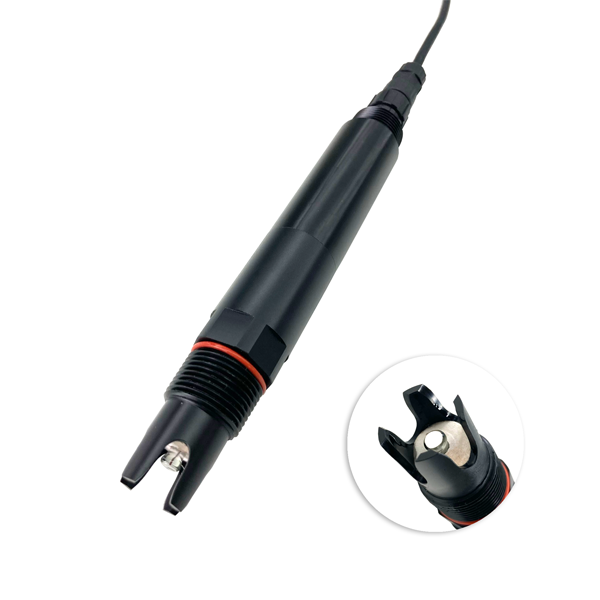
Oxidation-reduction potential describes the electrical potential measured between a sensing electrode and a reference electrode in the water. It can help follow changes in oxidizing or reducing conditions. In natural water, wastewater and process streams, several chemical couples may contribute to the observed response. The instrument does not identify each substance or report its concentration separately.
That distinction matters when a project specification lists ORP alongside ammonia, dissolved oxygen or chemical oxygen demand. ORP is not an alternative unit for any of them. A change in millivolts may accompany a process transition, but the relationship depends on the chemistry, pH, electrode condition and time allowed for stabilization.
For ammonia investigation, retain a selective ammonia measurement and its compensation requirements. An ORP trend may provide context about the changing environment, but it cannot establish an ammonia concentration or distinguish ammonium from dissolved ammonia. Replacing the ammonia channel with ORP would change the information available to the operator, not merely reduce the number of probes.
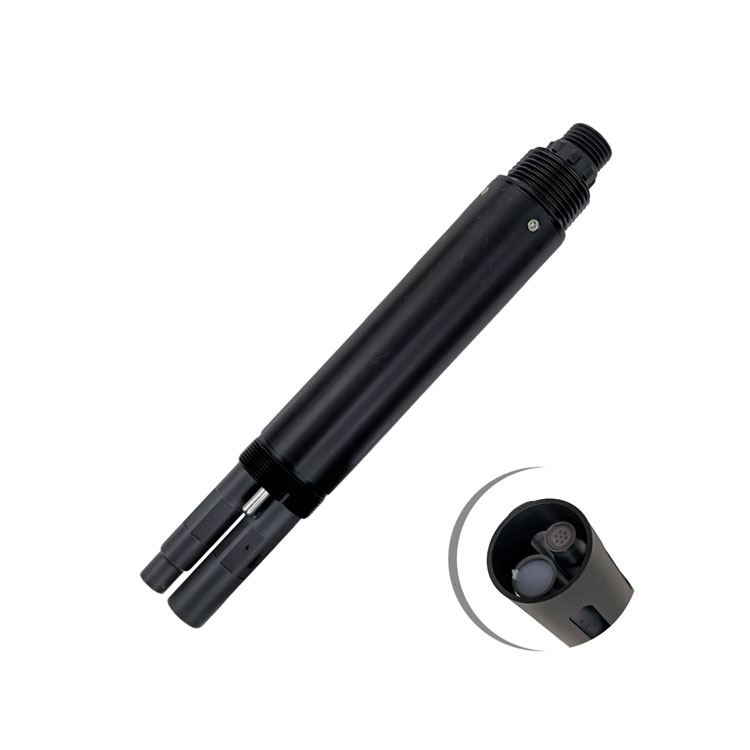
An electrode potential is measured relative to a reference. Eh conventionally expresses redox potential relative to the standard hydrogen electrode. A raw ORP value from a field instrument should not be labeled Eh unless the reference electrode and any required conversion are known. Two instruments can disagree because their reference systems or reporting conventions differ, even before considering contamination or calibration.
When comparing an existing installation with a replacement ORP sensor, obtain the reference-electrode details and find out whether the displayed result already includes a conversion. Do not add a correction twice. Reference corrections can depend on temperature and reference composition; there is no single offset that should be applied to every probe sold as an ORP sensor.
The USGS guidance on the electrode method for reduction-oxidation potential explains both the reference basis and important limitations of field measurements. For purchasing purposes, the practical question is whether the existing and proposed readings have the same meaning. Ask for that clarification before making agreement with a historical alarm value an acceptance condition.
Apply the same caution when a project uses COD as a supporting channel. An online COD result has its own measurement principle and units. It can help investigate a changing organic load, while ORP follows electrode potential. Neither channel provides a universal mathematical conversion to the other, and apparent correlation during one operating period may not persist after the water composition changes.
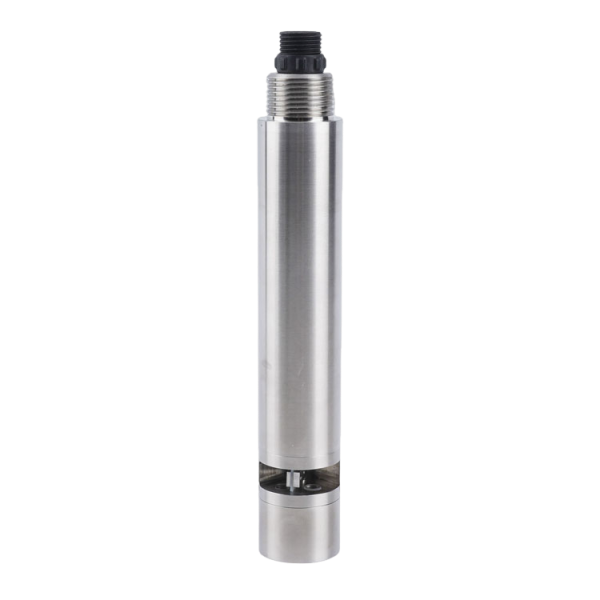
| Parameter | NBL-WQ-ORP specification | Practical implication |
|---|---|---|
| Measurement range | -1500 to +1500 mV | Retain both negative and positive values in the database |
| Accuracy | +/-6 mV | Use a suitable comparison procedure; resolution is not accuracy |
| Resolution | 1 mV | A one-millivolt display increment does not establish one-millivolt agreement |
| Nominal supply | 12-24 V DC | Check voltage at the sensor under operating load |
| Power consumption | 0.2 W at 12 V | Budget the logger and communication equipment separately |
| Communication | RS485, Modbus RTU | Requires a compatible master and correctly configured registers |
| Operating temperature | 0-65 C | Check the actual water temperature, including cleaning conditions |
| Pressure | Less than 0.1 MPa | Do not assume suitability for a pressurized process main |
| Protection and body | IP68; POM body | Assess chemical compatibility and external connection protection separately |
| Mount and cable | Immersion installation; 3/4 NPT; standard 5 m cable | Provide a support and a dry or suitably protected connection point |
| Adjustment | One-point calibration | Use an appropriate ORP standard; pH buffer values alone are not ORP standards |
When the project needs pH and ORP at the same point, specify both measurement functions and check that the logger can read each channel. The NBL-WQ-PH measures pH separately. A temperature output must also be specified if required; an operating-temperature rating describes where equipment can function, not an additional measurement that it necessarily transmits.
The cable jacket material is not established by the 5 m cable-length specification. For chemically aggressive locations, sunlight exposure or unusual routing, confirm the supplied cable construction and connection arrangement. Similarly, IP68 does not mean that an uncovered terminal or an improvised splice can be immersed with the probe.
The default serial setup is 9600 baud, 8 data bits, no parity and 1 stop bit. The default device address is 4. Give each device on a shared RS485 bus a unique address and verify the communication settings on a short bench connection before assembling the field network. RS485 describes the electrical interface; Modbus RTU describes the messages exchanged over it.
The measurement interface includes a value and decimal-place information. As a simple scaling example, a value of 120 with a decimal-place count of zero represents 120 mV. Do not inherit a pH driver's division by 100 merely because the equipment uses the same serial protocol. A plausible-looking decimal number can still be the wrong engineering value.
Test negative values explicitly with the register interpretation for the supplied firmware. A driver verified only at positive ORP does not prove correct signed decoding. Obtain a documented negative-value example or perform an approved bench test, and compare the decoded value with the sensor's reference readout. Do not silently convert a negative result to zero or to a large positive number.
Record at least the signed millivolt result, timestamp and communication validity. Where pH, conductivity or temperature are collected alongside ORP, keep separate units and channel names. Conductivity can provide context for a change in water composition, but a conductivity reading is not a correction coefficient that can automatically normalize ORP.
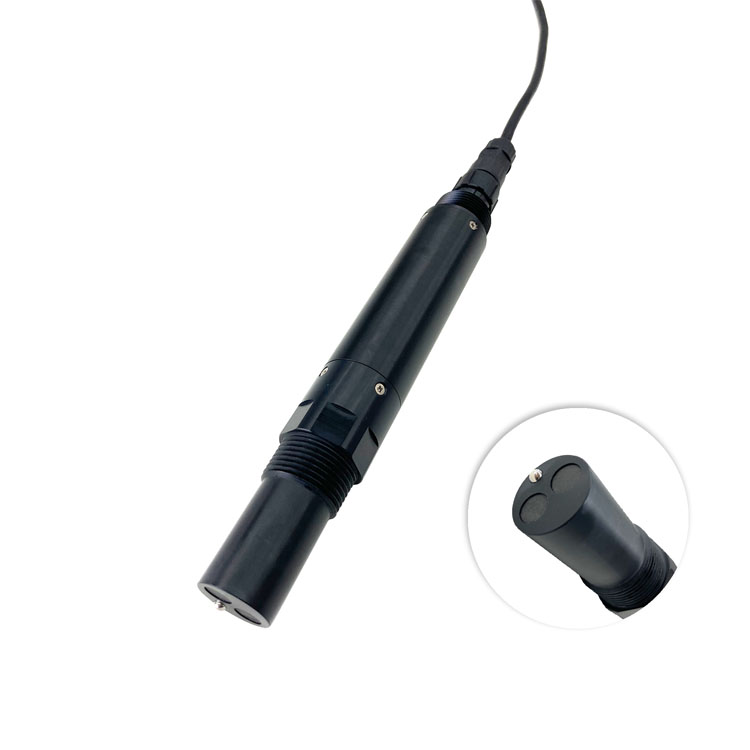
| Test condition | Expected result | Error it can expose |
|---|---|---|
| Known stable positive reading | Sensor readout, PLC and stored record agree in mV | Wrong address, scale or channel mapping |
| Verified negative reading | The sign and magnitude survive every stage | Incorrect signed decoding or unsigned database fields |
| Disconnected communication | The channel becomes invalid or stale, not a fresh zero | Faults disguised as real observations |
| Restored connection | New readings resume with acquisition timestamps | Old values presented as newly measured data |
Do not use an unexplained jump in a process tank as the only negative-value test. Water chemistry and stabilization can obscure whether the problem is the probe or the driver. If the available standard does not cover the required sign, arrange a suitable validated test method with the instrument supplier instead of inventing a register encoding from a positive example.
Compare probes in the same water at the same time, with equivalent mixing and sufficient stabilization. Moving a sample into an open container can alter dissolved gases and expose it to air. Comparing a probe in the process with a bottle measured later may therefore test two different water conditions rather than the agreement between instruments.
Check electrode cleanliness, the reference system and contact with the water. Air around the sensing tip, deposits or an aged reference junction can affect the result. Follow the permitted installation orientation: the NBL-WQ-ORP should not be installed horizontally or upside down; provide at least 15 degrees from horizontal and keep the sensing end immersed.
A prepared ORP reference solution with a certified value at the test temperature is preferable to an improvised chemical recipe. Verify the standard's identity, condition and temperature before deciding that the probe needs adjustment. Agreement in a standard is useful evidence about the instrument, but it does not prove that a changing environmental sample will settle rapidly or produce a unique equilibrium potential.
Optical organic-load channels can help explain some process changes, yet an online BOD estimate is not a direct measurement of ORP and is not automatically equivalent to laboratory BOD5. Keep the methods distinct when reviewing a trend. An ORP excursion with no corresponding change in another parameter is a reason to investigate, not an instruction to force the channels to agree.

For a river observation point, ORP may be one part of a chemical trend record. In a treatment process, it may support recognition of operating transitions after site-specific validation. In an aquaculture system, it should not displace direct dissolved oxygen monitoring when oxygen availability is the concern. These uses require different acceptance criteria despite using the same millivolt sensor.
There is no universal ORP number that establishes drinking-water safety, disinfection performance or a specific contaminant concentration. Those decisions require the relevant measurements and methods. An ORP signal used in an automatic control sequence also needs independent process limits and a tested response to invalid data; the probe's range is not a safe operating band for the process.
For a quotation, identify whether the requirement is a probe, a probe with local display, or a logged monitoring point. Include the water type, installation pressure, cable route and existing controller. Reference-electrode information and firmware compatibility matter when replacing a device in an established trend. A low equipment price offers little value if the replacement makes the historical thresholds uninterpretable.
Where suspended solids are part of the investigation, use a dedicated solids channel and inspect deposits on the ORP electrode. A solids increase can coincide with electrode fouling or a real water-quality change. Keeping the physical and electrochemical observations separate helps the operator decide whether to inspect the instrument, collect a sample or investigate the process.

No. ORP reports electrode potential in mV, while pH describes hydrogen-ion activity. pH can affect redox behavior, so the channels may be interpreted together, but they are not interchangeable. A specification requiring both needs two measurement functions or a multi-parameter assembly fitted with both modules.
No. Negative readings are within the NBL-WQ-ORP measurement range. Check the reference basis, water conditions and stability before diagnosing a fault. A negative result that becomes a large positive number only after transfer to the PLC is more suggestive of a decoding problem.
Only after establishing the old record's reference basis and conversion method. Raw ORP and hydrogen-electrode-referenced Eh are not automatically the same quantity. Obtain the reference-electrode details and temperature basis before applying an offset or retaining the old alarm thresholds.
No. The stated accuracy is +/-6 mV, while resolution is the size of the reported increment. A comparison procedure also needs to account for the reference standard, temperature and measurement conditions. Do not demand one-millivolt agreement solely because the display shows whole millivolts.
The PLC needs an RS485 Modbus RTU master interface or a suitable intermediary. Verify address, serial settings, register selection, decimal scaling and negative-value handling. If the existing input accepts only an analog signal, include a compatible conversion arrangement rather than assuming the digital probe provides that output.
Provide the existing model, reference convention, controller, cable length, water temperature and pressure. State whether historical alarm values must remain comparable. Ask which electrode maintenance items and commissioning support are included; replacement compatibility is more than matching a threaded connection.
Select an ORP sensor for water quality by the measurement meaning as well as the hardware. NBL-WQ-ORP provides a signed millivolt channel through RS485 Modbus RTU. Its value in a project depends on a known reference basis, correct data decoding and a clearly limited role alongside the other water-quality measurements. Those checks make the resulting trend useful without turning ORP into a claim it cannot support.
Prev:Surface Water Automatic Monitoring System Components: River and Lake Station Guide
Next:Multi-Parameter Water Quality Monitor Functions for Online Monitoring Projects
Related recommendations
Sensors & Weather Stations Catalog
 Agriculture Sensors and Weather Stations Catalog-NiuBoL.pdf
Weather Stations Catalog-NiuBoL.pdf
Agriculture Sensors Catalog-NiuBoL.pdf
Water Quality Sensor Catalog-NiuBoL.pdf
Related products
 Combined air temperature and relative humidity sensor
 TDR Soil Moisture & Temperature Sensor for irrigation| RS485 |4-20mA| NBL-S-THR
 Soil pH sensor RS485 soil Testing instrument soil ph meter for agriculture |NBL-S-PH
 Wind Speed sensor Output Modbus/RS485/Analog/0-5V/4-20mA
 Tipping bucket rain gauge for weather monitoring auto rainfall sensor RS485/Outdoor/stainless steel
 Pyranometer Solar Radiation Sensor 4-20mA/RS485


Screenshot, WhatsApp to identify the QR code
WhatsApp number:+8615367865107
(Click on WhatsApp to copy and add friends)

