





— Blogs —
—Products—
 Consumer hotline +8618073152920
 WhatsApp:+8615367865107
Address:Room 102, District D, Houhu Industrial Park, Yuelu District, Changsha City, Hunan Province, China
Product knowledge
Time:2026-05-27 11:59:54 Popularity:350
In industrial automation and smart water systems, system integrators and engineering contractors often need to continuously monitor and control conductivity (TDS) of various process water, water supply, reuse water, and wastewater. Conductivity, as an important indicator reflecting total ion concentration in water, directly affects equipment safety, product quality, and environmental compliance.
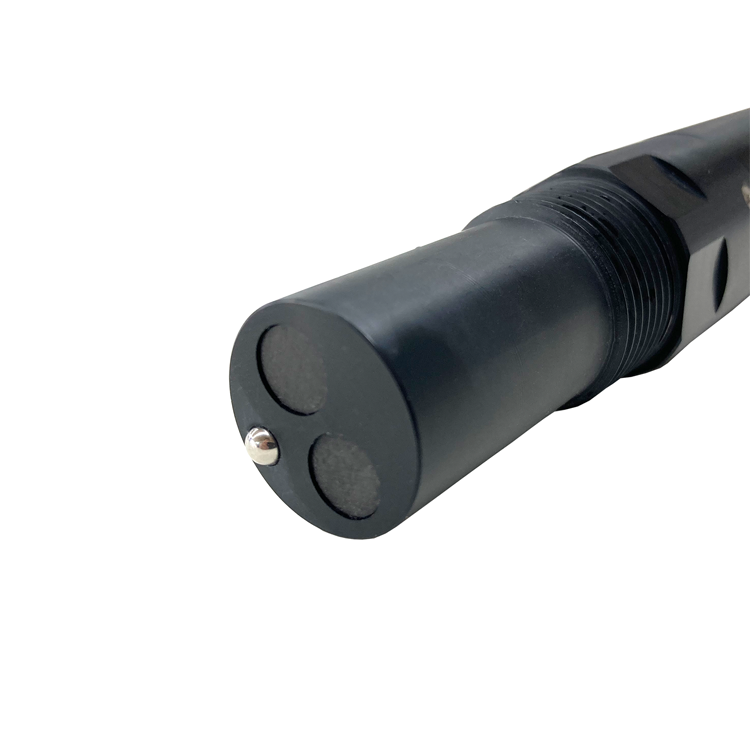
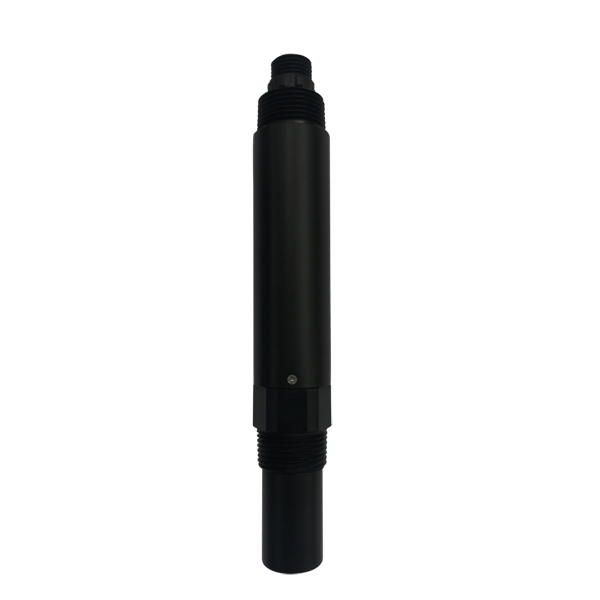
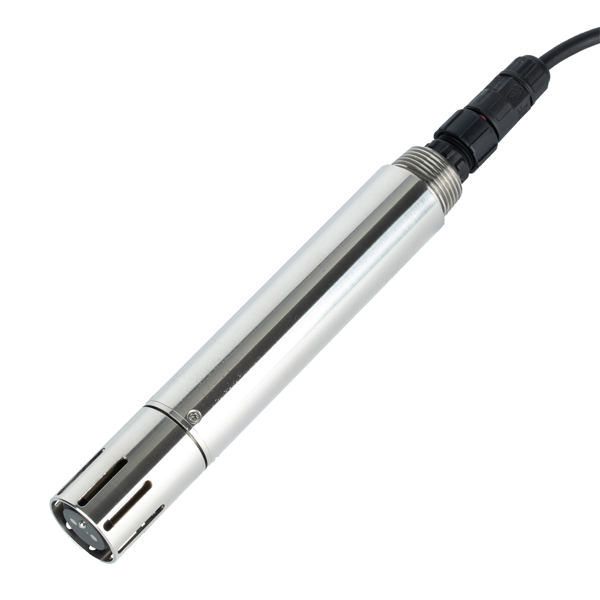
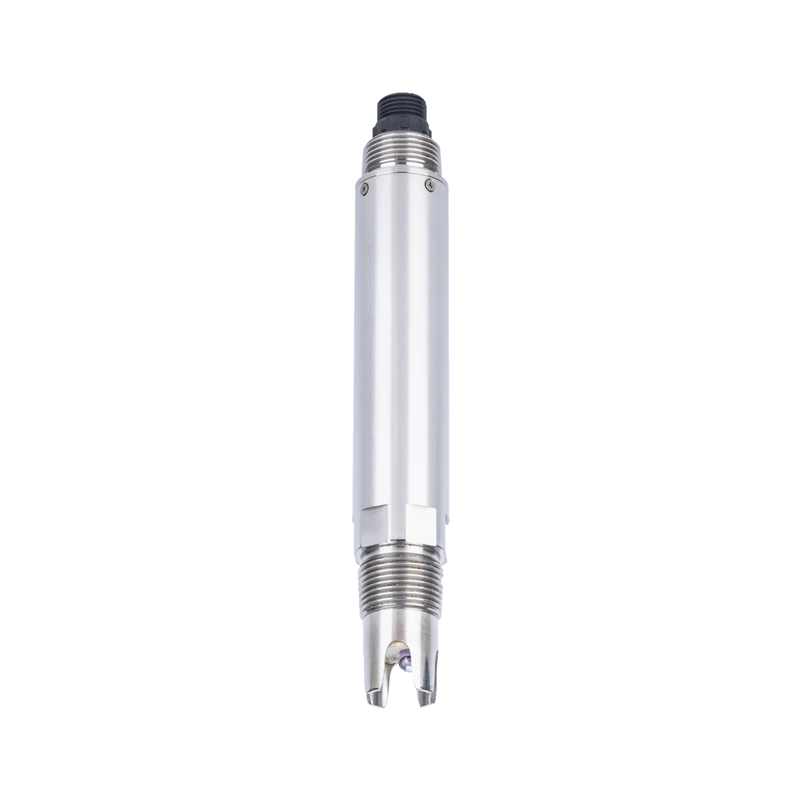
NiuBoL NBL-WQ-EC Industrial Conductivity Analyzer is designed for system integration scenarios. It adopts the electrode measurement principle, supports RS485 Modbus RTU protocol output, and can be directly connected to PLC, DCS, SCADA or IoT gateways to achieve distributed water quality parameter real-time acquisition and remote monitoring. This product is especially suitable for engineering projects requiring long-term stable operation, high protection rating (IP68) and low maintenance costs.
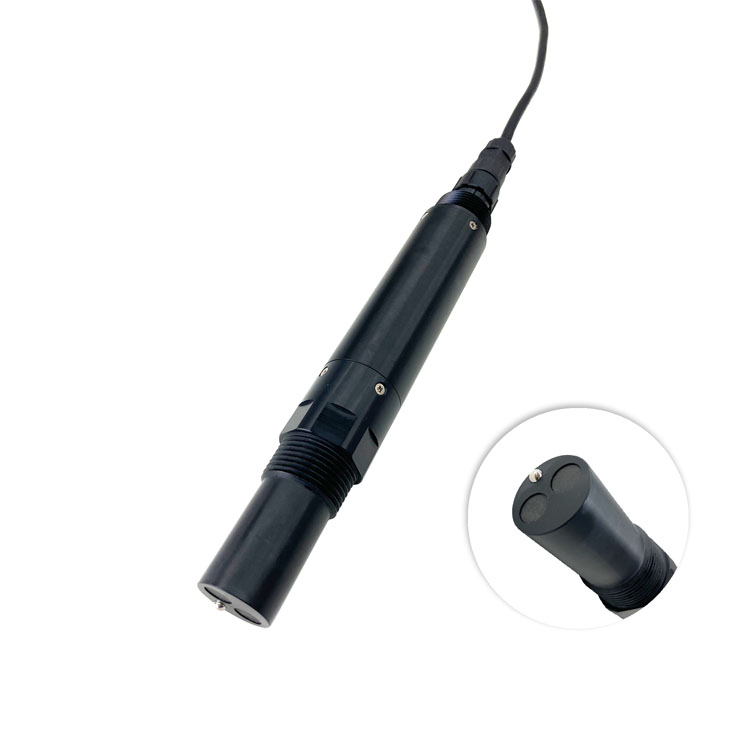
In the water treatment control system, the NBL-WQ-EC typically serves as a field-level conductivity detection unit, installed at water intakes, treatment tanks, pipelines, or storage tanks. It connects to the upper-level control system via the Modbus RTU bus, forming a complete closed-loop monitoring solution. It can be used independently as a conductivity transmitter or combined with other NiuBoL water quality sensors (such as pH, dissolved oxygen, turbidity) to form a multi-parameter monitoring array, reducing system integration complexity.
The NBL-WQ-EC conductivity sensor comes standard with an RS485 interface and uses the standard Modbus RTU communication protocol, supporting a baud rate of 9600 (default) and other common rates. This protocol has extremely high compatibility in industrial fields and can seamlessly connect with mainstream PLC brands (Siemens, Schneider, Omron, ABB, etc.), DCS systems, and various industrial IoT edge gateways.
The RS485 bus characteristic allows a maximum transmission distance of 1200 meters (without repeaters). Multiple instruments can be connected in parallel on the same bus, greatly simplifying wiring costs. Additionally, automatic temperature compensation is provided to ensure data consistency under different working conditions, meeting system integrators' core requirements for data stability and scalability.
| Parameter | Specification |
|---|---|
| Model | NBL-WQ-EC |
| Measurement Principle | Electrode Method |
| Measuring Range | 0~5000 μS/cm (TDS 0-3000 mg/L) |
| Resolution | 1 μS/cm |
| Accuracy | ±1.5% of reading, ±0.3℃ |
| Response Time (T90) | <30s |
| Lower Detection Limit | 2 μS/cm |
| Calibration Method | Two-point calibration |
| Temperature Compensation | Automatic temperature compensation (Pt1000) |
| Output | RS-485 (Modbus RTU protocol) |
| Power Supply | 12~24V DC |
| Power Consumption | 0.1W @ 12V |
| Operating Temperature | 0~50℃ |
| Storage Temperature | -5~65℃ |
| Operating Pressure | ≤0.6 MPa |
| Protection Rating | IP68 |
| Installation Method | Submersible installation, 3/4 NPT thread |
| Cable Length | Standard 5 meters (customizable) |
| Enclosure Material | ABS and ABS/PC alloy |
Drinking water / Surface water supply system
【On-site Environmental Challenges】 Significant seasonal fluctuations in source water quality; installation locations are mostly outdoor pools or pipelines, susceptible to rain, dust, and long-term immersion.
【System Integration Solution】 Submersible 3/4 NPT installation, directly connected to on-site PLC, uploaded to central monitoring platform via Modbus RTU for multi-point networked monitoring.
【User Value Realized】 Real-time grasp of raw water conductivity trends, providing reliable data support for subsequent treatment processes, reducing manual inspection frequency, and ensuring stable water supply quality.
Industrial boiler feed water treatment
【On-site Environmental Challenges】 Boiler feed water has strict salt content requirements; under high temperature and high pressure, electrodes are prone to scaling, requiring frequent maintenance of traditional instruments.
【System Integration Solution】 Combined with automatic temperature compensation function and IP68 protection rating, interlock with boiler control system to automatically trigger alarm or switch water source when conductivity exceeds the set threshold.
【User Value Realized】 Effectively prevent priming, scaling and corrosion issues, extend boiler equipment service life, and reduce operating maintenance costs.
Pharmaceutical and chemical process water
【On-site Environmental Challenges】 Purified water conductivity in pharmaceutical workshops has strict compliance requirements, requiring continuous recording and traceable data.
【System Integration Solution】 Connect to paperless recorder or MES system via RS485 Modbus RTU, support two-point calibration to ensure accuracy and auditability of measurement data.
【User Value Realized】 Meet GMP and FDA relevant water quality monitoring specifications, provide reliable conductivity data support for process validation.
Wastewater treatment and environmental monitoring
【On-site Environmental Challenges】 High suspended solids and strong corrosiveness in wastewater; conventional instruments are prone to contamination causing drift.
【System Integration Solution】 Use regular soft brush cleaning maintenance method, connect to environmental protection supervision platform via Modbus protocol for remote data upload and exceedance early warning.
【User Value Realized】 Help engineering contractors quickly complete environmental acceptance checks, reduce long-term maintenance labor input.
Food and beverage production process control
【On-site Environmental Challenges】 Production water requires strict control of ion content to ensure product taste and safety.
【System Integration Solution】 Submersible installation in batching tank or cleaning circuit, data directly enters PLC for recipe control.
【User Value Realized】 Improve product batch consistency, reduce quality issues caused by water quality fluctuations.
Accuracy selection: For general industrial applications, it is recommended to choose the ±1.5% accuracy model, which meets most control requirements; for high-purity water scenarios such as pharmaceuticals and semiconductors, pay special attention to the two-point calibration function and low detection limit performance.
Communication method selection: Give priority to the RS485 Modbus RTU version for easy integration with existing industrial control systems. For 4-20mA analog output or other protocols, please contact the manufacturer for customization.
Installation environment selection: NBL-WQ-EC adopts IP68 protection and 3/4 NPT thread, suitable for submersible, pipe insertion or tank installation. The installation position should avoid strong electromagnetic interference and ensure the electrode is completely immersed in the measured medium.
Power supply method selection: Supports 12-24V DC wide voltage input, adaptable to most industrial field power systems. It is recommended to use a stable DC power supply and ensure proper grounding to reduce signal interference.
Before electrode installation, rinse with distilled water below 0.5 μS/cm to avoid initial contamination affecting measurement accuracy.
RS485 bus wiring should use shielded twisted pair, and it is recommended to add a terminating resistor every 500 meters to ensure communication stability.
Regularly calibrate the electrode constant; it is recommended to calibrate every 1-3 months according to actual working conditions.
Avoid using strong acids or alkalis to clean the electrode to prevent altering the electrode constant.
The instrument should be installed in a relatively dry electrical cabinet to prevent wiring terminals from getting damp.
Technical Questions
Q1: What temperature compensation methods does NBL-WQ-EC support?
A: Built-in Pt1000 automatic temperature compensation, which can correct conductivity values in real time according to actual water temperature, ensuring data comparability under different temperature conditions.
Q2: Does the electrode require frequent maintenance during use?
A: Conventional electrodes are recommended to be cleaned with a soft brush and calibrated regularly; if an inductive electrode is selected, it is basically maintenance-free design, suitable for highly polluted environments.
Q3: Can the lower detection limit of 2 μS/cm meet high-purity water monitoring requirements?
A: For the 0-5000 μS/cm range, the 2 μS/cm detection limit can meet the monitoring requirements of most industrial pure water and drinking water. For high-purity water scenarios, it is recommended to evaluate based on actual process requirements.
Selection Questions
Q1: How to select the range?
A: For conventional drinking water and surface water, the 0-5000 μS/cm range is recommended; for special high salinity scenarios, please contact the manufacturer for a higher range version.
Q2: Does the Modbus RTU protocol support multi-device networking?
A: Yes, multiple NiuBoL sensors can be connected in parallel on the same bus, distinguished by different slave station addresses.
Q3: Can the cable length be customized?
A: Standard 5 meters, supports customization of longer cables according to project requirements.
Procurement/Project Questions
Q1: Does the product have relevant certifications or test reports?
A: NiuBoL industrial sensor series products are all provided with factory test reports and support third-party metrological calibration services.
Q2: What is the delivery lead time and support service for bulk purchases?
A: Standard models are mainly in stock; customized requirements typically take 2-4 weeks for delivery. Technical selection support, on-site debugging guidance, and after-sales maintenance services are provided.
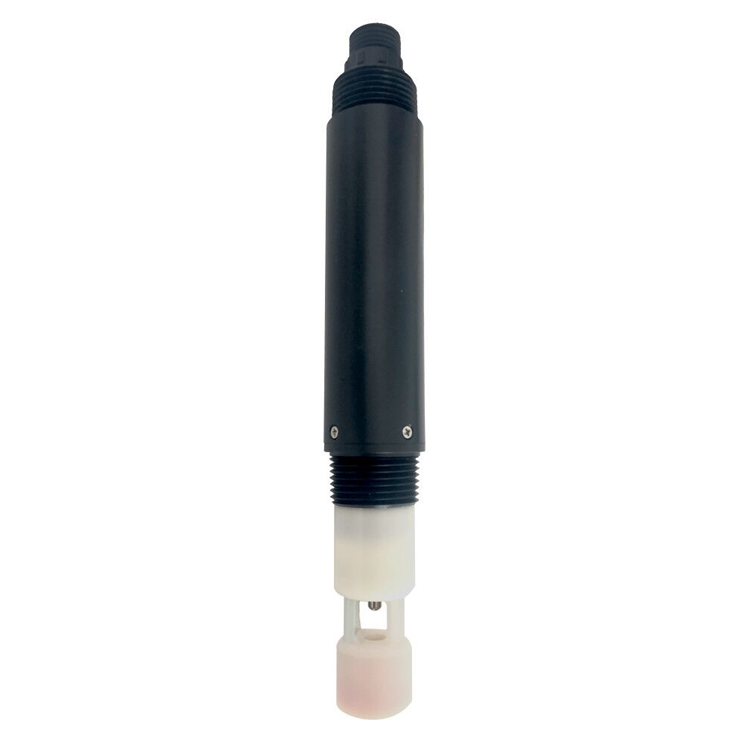
With stable electrode measurement technology, reliable RS485 Modbus RTU communication capability, and IP68 protection design, the NiuBoL NBL-WQ-EC industrial conductivity analyzer (sensor) provides system integrators and engineering contractors with a practical, cost-effective online conductivity monitoring solution. In multiple industrial scenarios such as drinking water treatment, boiler feed water, pharmaceutical processes, and wastewater treatment, it effectively improves system automation level and data reliability.
For projects that need to build a water quality monitoring network or upgrade existing control systems, choosing a conductivity sensor with compatible protocols, easy installation, and controllable maintenance costs is the key to ensuring long-term stable operation of the entire system. It is recommended to conduct on-site testing based on specific operating parameters to obtain the best integration results.
 NBL-WQ-EC water quality conductivity sensor.pdf
NBL-WQ-EC-4A Online water Conductivity Sensor.pdf
Related recommendations
Sensors & Weather Stations Catalog
Agriculture Sensors and Weather Stations Catalog-NiuBoL.pdf
Weather Stations Catalog-NiuBoL.pdf
Agriculture Sensors Catalog-NiuBoL.pdf
Water Quality Sensor Catalog-NiuBoL.pdf
Related products
 Combined air temperature and relative humidity sensor
 TDR Soil Moisture & Temperature Sensor for irrigation| RS485 |4-20mA| NBL-S-THR
 Soil pH sensor RS485 soil Testing instrument soil ph meter for agriculture |NBL-S-PH
 Wind Speed sensor Output Modbus/RS485/Analog/0-5V/4-20mA
 Tipping bucket rain gauge for weather monitoring auto rainfall sensor RS485/Outdoor/stainless steel
 Pyranometer Solar Radiation Sensor 4-20mA/RS485

Screenshot, WhatsApp to identify the QR code
WhatsApp number:+8615367865107
(Click on WhatsApp to copy and add friends)

