





— Blogs —
—Products—
 Consumer hotline +8618073152920
 WhatsApp:+8615367865107
Address:Room 102, District D, Houhu Industrial Park, Yuelu District, Changsha City, Hunan Province, China
Product knowledge
Time:2026-02-01 10:24:58 Popularity:621
In the context of increasingly scarce water resources, irrigation districts, as the main carriers of agricultural water use, have refined management and water-saving renovation as key measures to promote sustainable agricultural development. Traditional manual water measurement methods suffer from low accuracy, poor timeliness, and discontinuous data, failing to meet the needs of planned water use, conveyance loss assessment, and volumetric water fee collection. NiuBoL irrigation district water measurement automatic monitoring system achieves real-time monitoring of channel flow velocity, water level, flow rate, and cumulative flow through the deep integration of Doppler ultrasonic flowmeter and RTU telemetry terminal. It supports solar power supply and cloud platform data visualization. The system not only improves irrigation efficiency but also provides a reliable data foundation for irrigation district planning and design, crop irrigation quota calculation, and canal system water utilization analysis.
From the perspective of system integrators, irrigation district water measurement automation monitoring is no longer isolated equipment deployment but the core sensing layer embedded in smart water conservancy systems. It can seamlessly access provincial water resource management systems, ecological dispatching platforms, or farmland water conservancy IoT networks, realizing a full-chain closed loop from data acquisition to intelligent decision-making. Through GPRS remote transmission and RS485 interfaces, integrators can quickly build distributed monitoring networks, suitable for medium to large irrigation district renovations, river and lake ecological flow assurance pilots, and cross-basin water resource dispatching projects.
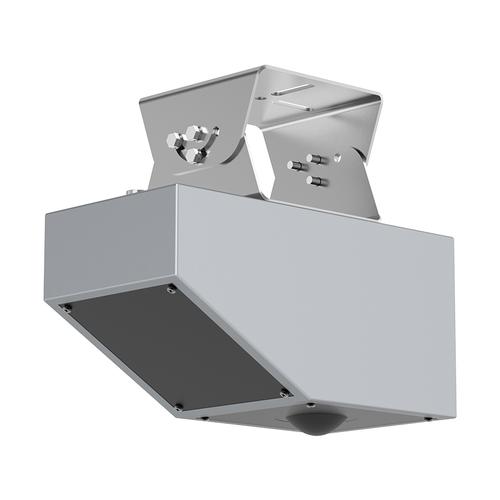
The NiuBoL system uses a Doppler ultrasonic flowmeter based on the Doppler effect principle as the measurement core, calculating flow velocity and flow rate by the propagation speed difference of sound waves in the flowing medium. This non-contact measurement technology avoids the easy clogging and maintenance difficulties of traditional weirs, slots, or rotor flowmeters, especially suitable for channel environments with sediment and vegetation interference.
The overall system composition includes:
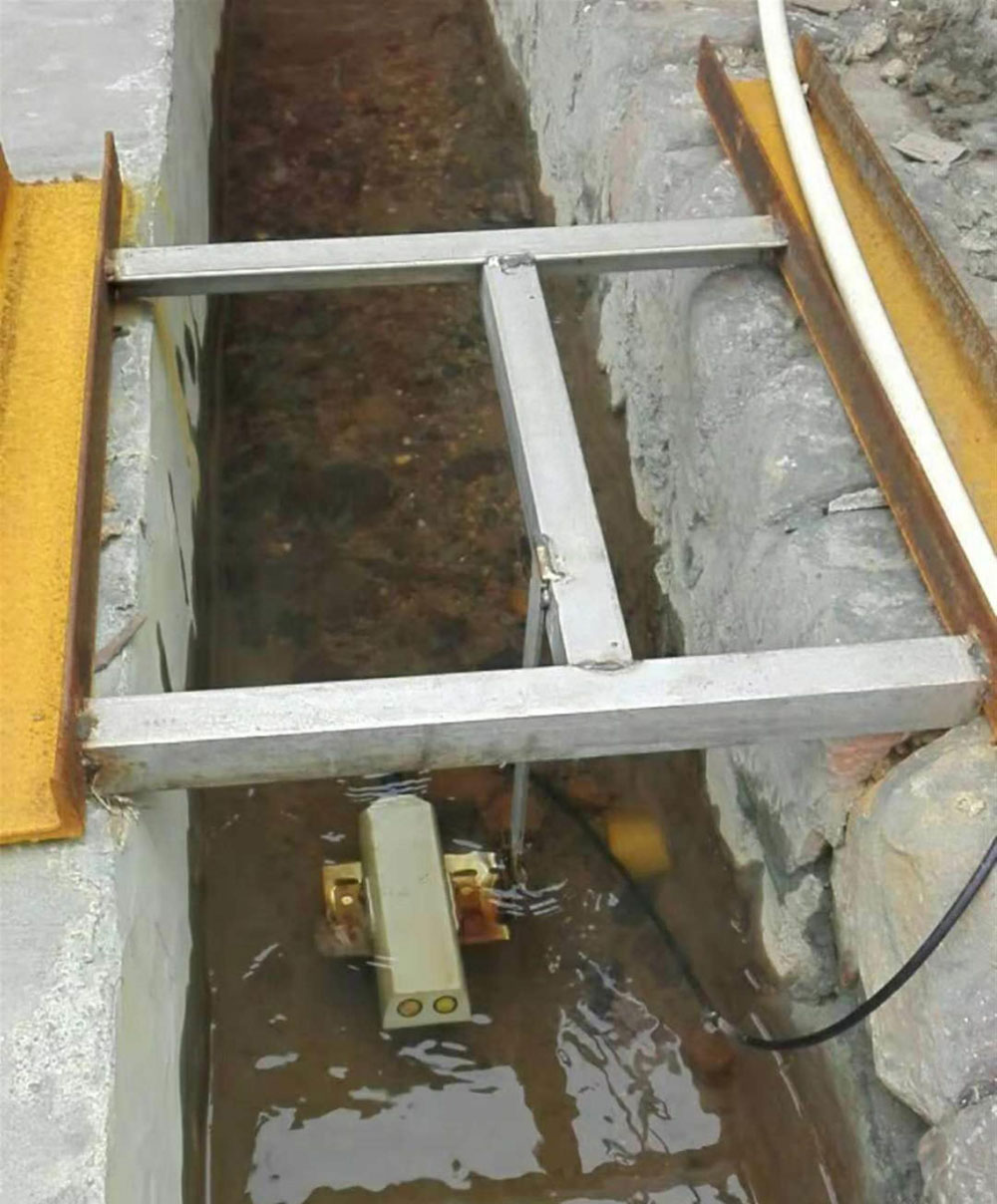
Doppler ultrasonic flowmeter probe: Fixed at the channel bottom or on a bracket, real-time monitoring of flow velocity, water level, water temperature, instantaneous/cumulative flow. Adopts waterproof and lightning-proof design, adapting to complex field conditions.
RTU telemetry terminal: As the data acquisition and transmission hub, supports RS485 serial port connection to sensors, timed data collection (default minute-level), and uploads to the server via GPRS/5G or 4G module. Built-in low-power mode, compatible with cellular networks, ensuring stable data return in remote irrigation districts.
Equipment enclosure and power supply subsystem: IP65 or higher protection enclosure houses RTU, charger, and colloid battery (typical 12V 30AH). Solar panel (50-100W configured according to site sunshine) combined with MPPT charger achieves self-sufficient power supply, supporting 7-15 days of continuous cloudy/rainy operation.
Auxiliary civil engineering and protection components: Galvanized steel pole (height 3-5m), lightning rod, and ground cage for equipment fixation, ensuring wind and seismic stability.
Backend server and cloud platform: Server parses RTU messages for data storage, anomaly diagnosis, and statistical analysis. Cloud platform supports WEB and mobile APP browsing, providing real-time curves, historical reports, and threshold alarm functions.
The system emphasizes modular design, allowing integrators to expand sensor types (e.g., adding radar flow velocity meters or water level gauges) according to irrigation district scale for multi-parameter fusion monitoring.
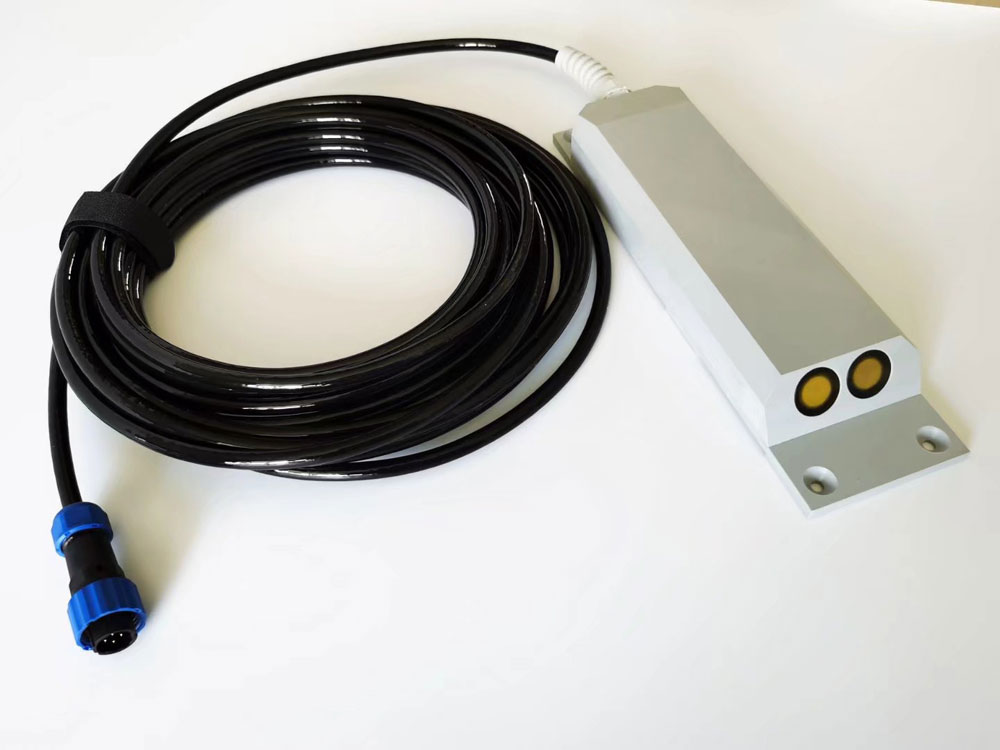
The following table summarizes the main technical parameters of the NiuBoL irrigation district water measurement automatic monitoring system (based on typical configuration, customizable):
| Parameter Category | Parameter Item | Specification Value |
|---|---|---|
| Flowmeter Type | Doppler ultrasonic flowmeter | |
| Measurement Parameters | Flow velocity, water level, water temperature, instantaneous flow, cumulative flow | |
| Flow Velocity Range | 0.01~10 m/s | |
| Water Level Range | 0~10 m (expandable) | |
| Measurement Accuracy | Flow Velocity | ±1% FS |
| Water Level | ±0.5% FS or ±5 mm | |
| Flow Rate | ±2%~±5% (depending on channel conditions) | |
| RTU Interface | RS485 (MODBUS RTU protocol) | |
| Data Transmission | GPRS/4G, baud rate 9600-19200 bps | |
| Power Supply Mode | Solar + colloid battery (12V 38AH) | |
| Solar Panel Power | 50-100 W (depending on sunshine duration) | |
| Operating Temperature | -20~+60℃ | |
| Protection Level | IP65 (enclosure and sensors) | |
| Data Acquisition Frequency | 1-60 minutes adjustable (default 5 minutes) | |
| Cloud Platform Functions | WEB/APP browsing, alarm push, report export |
These specifications ensure stable operation of the system under high flow velocity during flood periods and complex channels (e.g., high water levels, silt, vegetation interference). Radar flow velocity meter as an optional extension uses planar microstrip radar non-contact measurement, with small beam angle (<10°), low power consumption (<1W), further improving measurement robustness.
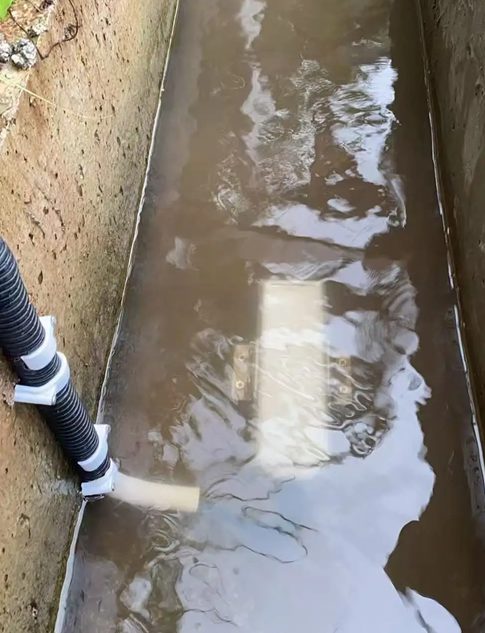
When undertaking irrigation district renovation projects, system integrators often use the NiuBoL system as the sensing foundation for refined water resource management. The following analyzes from typical scenarios:
First, in large irrigation district channel diversion control, the system is deployed at key nodes of main canals, branch canals, and lateral canals. Through Doppler flowmeter real-time monitoring of flow components, integrators can access the data to the irrigation district dispatching platform to achieve automatic gate adjustment based on water use plans. For example, in a 5000-hectare irrigation district project, integrators utilized RTU threshold alarm function; when branch canal flow deviation exceeds 10%, it triggers remote control of pumping stations or gates to avoid conveyance losses from over-irrigation. Actual cases show this application can increase canal system water utilization from 65% to over 85%.
Second, in ecological flow online monitoring and smart reservoir dispatching pilots, the system is suitable for downstream river channels of annual or multi-year regulated reservoirs. Integrators can extend with water level gauges and flow velocity meters to form multi-parameter monitoring stations. Data is uploaded via GPRS to provincial smart water conservancy platforms to support ecological dispatching model inputs. For instance, in a certain river and lake ecological restoration project, integrators deployed 20 stations for real-time ecological base flow monitoring; when flow falls below the warning value, it automatically notifies the dispatching center to adjust water release plans. This solution not only protects downstream wetland ecology but also provides data support for river and lake chief system assessments.
Third, in water-saving irrigation and crop quota management scenarios, the system links with soil moisture sensors and weather stations. Integrators can build IoT networks to calculate field water utilization and crop irrigation quotas. For example, in a 10,000-mu cotton field project in the northwest arid area, through cumulative flow statistics and historical data analysis, drip irrigation scheduling was optimized, achieving a 20% water-saving rate and providing metering basis for volumetric water fee collection.
Finally, in cross-basin water resource management systems, the system supports multi-site grid deployment. Integrators can use the cloud platform's GIS visualization function to generate irrigation district water distribution heat maps, supporting water rights trading and flood control decisions. In practical applications, the system has been verified in multiple provincial irrigation district renovation projects, helping reduce water resource waste and promote agricultural yield and income increase.
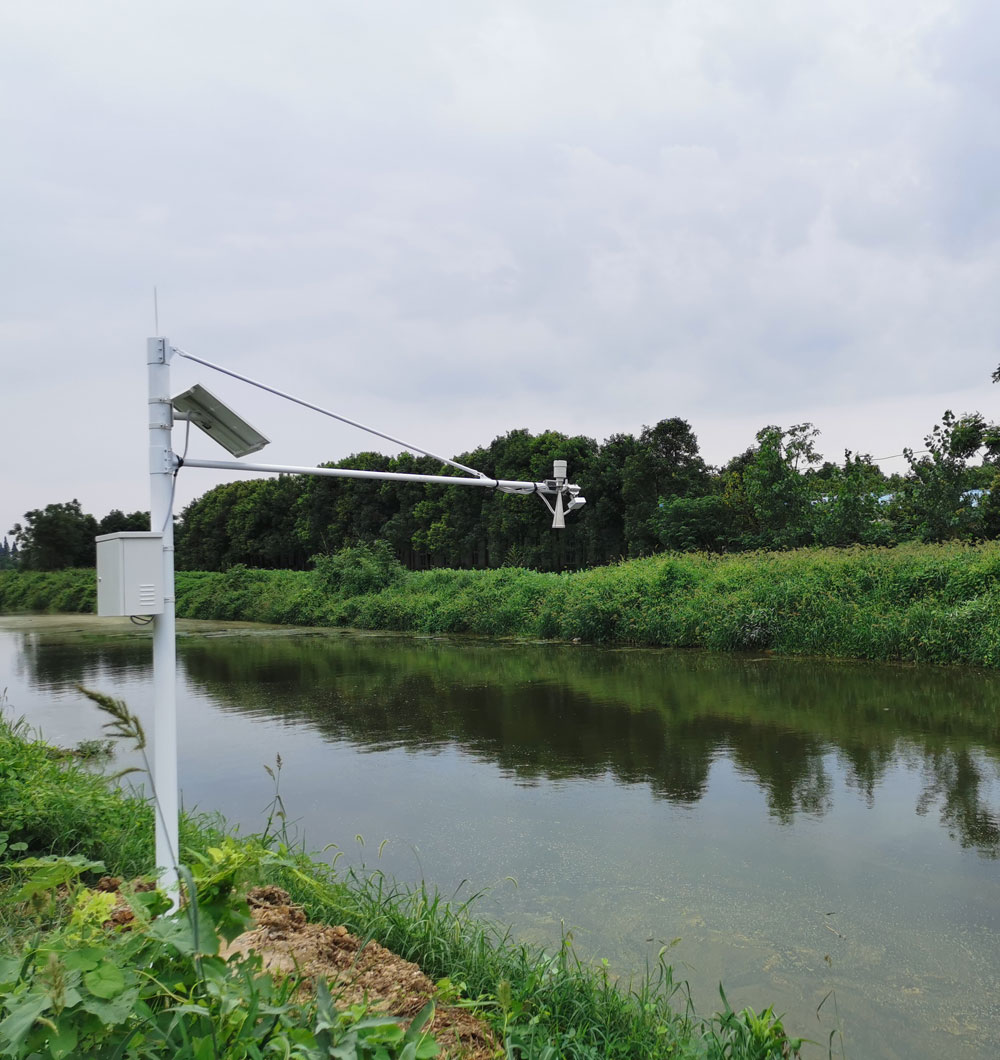
Selection is a key step to ensure project success. Integrators can refer to the following guide:
1. Irrigation district scale and site density: Small districts (
<1000 recommend="" basic="" configuration="" flowmeter="" rtu="" medium="" to="" large="" districts="">5000 hectares) require expanded multi-site grids, density one station per 10-20km channel section.
2. Sensor type: Complex channels (high sediment, vegetation interference) prioritize Doppler ultrasonic; high flow velocity flood periods select radar flow velocity meter (non-contact, accuracy ±1%).
3. Power supply and communication compatibility: Remote no-grid areas must select solar + 38AH battery; data transmission prioritizes GPRS/4G, supporting MODBUS protocol for easy access to existing SCADA systems.
4. Scalability: For ecological dispatching needs, select water temperature and level modules; budget controlled for ROI recovery within 1-2 years, considering annual maintenance cost<5%.
5. Environmental adaptation: High-temperature rainy areas select IP65 + lightning protection; cold areas verify -20℃ low-temperature performance.
Through these principles, integrators can customize efficient solutions.
1. Installation location and fixation: Flowmeter probe fixed at channel bottom or bracket, ensuring no bubble interference in acoustic path; RTU enclosure placed at pole top, lightning rod grounding resistance<10Ω.
2. Interface and protocol configuration: RS485 connects sensors, baud rate matched to 9600bps; RTU message format customized to ensure server parsing compatibility.
3. Power supply optimization: Solar panel facing south with tilt adjusted by latitude (e.g., 30° north latitude tilt 30°); battery depth of discharge protection<20%.
4. Data validation and calibration: After initial deployment, calibrate accuracy using standard flume or comparator; set acquisition frequency to avoid data redundancy.
5. Protection and maintenance: Add bird-proof nets and anti-theft fences; quarterly inspections clean probes and check battery SOC.
6. Fault diagnosis: RTU built-in self-test module pushes SMS on anomalies; cloud platform supports remote firmware upgrades.
Q1. How does the Doppler ultrasonic flowmeter handle channel sediment interference?
Uses digital signal processing algorithms to filter noise, maintaining measurement accuracy at ±2%; regular probe surface cleaning ensures long-term stability.
Q2. What communication protocols does the RTU telemetry terminal support?
Standard MODBUS RTU, supporting GPRS/4G/5G transmission; customizable LoRa for remote low-power scenarios.
Q3. How does solar power perform during continuous rainy weather?
Configured with 38AH battery + high-efficiency MPPT charger, supports 7-10 days of continuous cloudy/rainy conditions; low-power mode RTU standby<0.5W.
Q4. How does the system achieve ecological flow threshold alarms?
Cloud platform sets multi-level thresholds (e.g., base flow < design value 10%), triggering SMS/APP push, supporting linkage with gate controllers.
Q5. What is the difference between radar flow velocity meter and Doppler flowmeter?
Radar is non-contact planar microstrip measurement, suitable for high water level flood periods; Doppler requires immersion, higher accuracy but susceptible to silt influence.
Q6. How to adjust data acquisition frequency to balance power consumption and accuracy?
Default 5 minutes adjustable to 1-60 minutes; high-frequency mode for flood peak monitoring, low-frequency for daily water-saving scheduling.
Q7. Is the system compatible with existing hydrological telemetry platforms?
Yes, seamless access via RS485 and MODBUS interfaces; server supports custom message parsing.
Q8. What to note when deploying in densely vegetated channels?
Choose bracket fixation to avoid probe contact with vegetation; radar extension enables non-contact measurement to reduce interference.

NiuBoL irrigation district water measurement automatic monitoring system, with Doppler ultrasonic flowmeter and RTU as the core, provides a full-stack solution from front-end sensing to cloud decision-making. In water-saving renovation, ecological dispatching, and water resource management projects, it helps integrators improve irrigation district operational efficiency, achieving optimized water utilization and sustainable development. Actual deployments prove the system significantly reduces conveyance losses and provides data support for planning and design.
If you are a system integrator, IoT solution provider, or water conservancy engineering contractor planning irrigation district automation renovation, smart reservoir pilots, or ecological flow monitoring projects, welcome to contact the NiuBoL team for detailed implementation guides, system configuration solutions, or pilot case support. We provide professional technical consultation to help you efficiently implement smart water conservancy applications.
Related recommendations
Sensors & Weather Stations Catalog
 Agriculture Sensors and Weather Stations Catalog-NiuBoL.pdf
Weather Stations Catalog-NiuBoL.pdf
Agriculture Sensors Catalog-NiuBoL.pdf
Water Quality Sensor Catalog-NiuBoL.pdf
Related products
 Combined air temperature and relative humidity sensor
 TDR Soil Moisture & Temperature Sensor for irrigation| RS485 |4-20mA| NBL-S-THR
 Soil pH sensor RS485 soil Testing instrument soil ph meter for agriculture |NBL-S-PH
 Wind Speed sensor Output Modbus/RS485/Analog/0-5V/4-20mA
 Tipping bucket rain gauge for weather monitoring auto rainfall sensor RS485/Outdoor/stainless steel
 Pyranometer Solar Radiation Sensor 4-20mA/RS485

Screenshot, WhatsApp to identify the QR code
WhatsApp number:+8615367865107
(Click on WhatsApp to copy and add friends)

