





— Blogs —
—Products—
 Consumer hotline +8618073152920
 WhatsApp:+8615367865107
Address:Room 102, District D, Houhu Industrial Park, Yuelu District, Changsha City, Hunan Province, China
Product knowledge
Time:2026-02-01 10:17:52 Popularity:582
In industrial-grade meteorological monitoring and environmental data acquisition systems, system integrators have increasingly stringent requirements for sensor reliability, weather resistance, and interface compatibility. NiuBoL NBL-W-21GUWS ultrasonic wind speed and direction sensor, as a fully digital 2D ultrasonic device, realizes wind speed and direction measurement without mechanical moving parts based on the Time-of-Flight principle. The sensor supports wide-voltage DC 12-24V power supply, RS485 standard MODBUS protocol output, and optional heating function. It is specifically designed for projects such as expressway weather stations, airports, ports, wind farms, industrial parks, and multi-element automatic weather stations (AWS).
From the perspective of system integrators, this sensor effectively solves the high failure rate and data interruption issues of traditional cup or vane wind sensors in sand, freezing, and salt fog environments. Its sealed probe and high-strength structural design ensure long-term stable operation under extreme weather, making it easy to integrate into SCADA, PLC, or edge computing platforms for composite monitoring with elements such as temperature & humidity, air pressure, particulates, radiation, and rainfall.
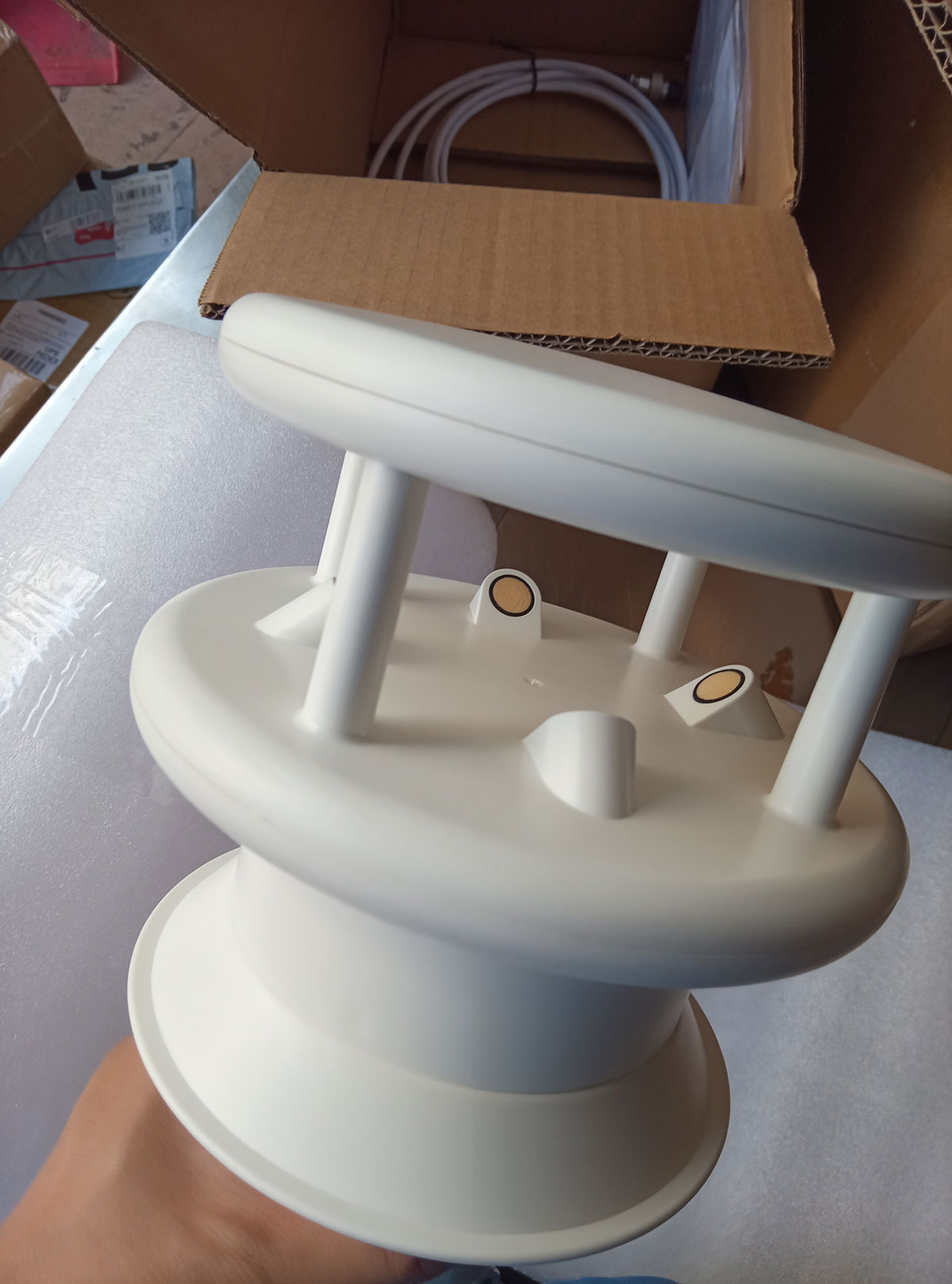
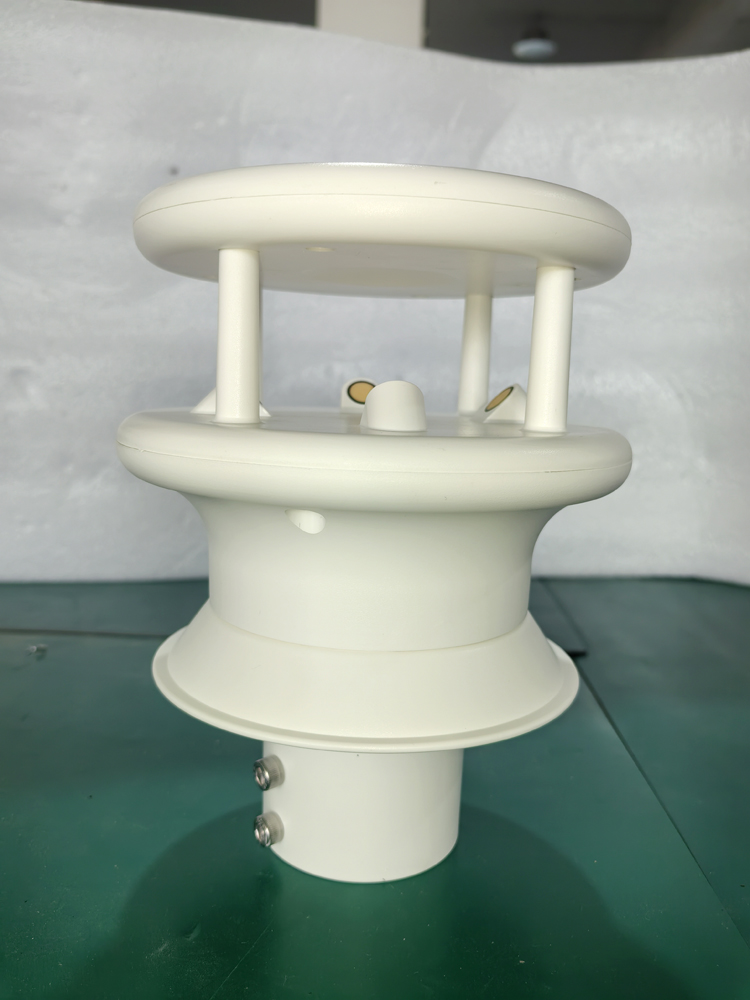
NBL-W-21GUWS uses orthogonally arranged ultrasonic transducer pairs (N-S and E-W axes). By measuring the propagation time difference Δt in downwind and upwind directions, it calculates wind speed components along the axes and vectorially synthesizes total wind speed and direction. This principle is unaffected by ambient temperature, humidity, or air pressure, requiring no additional temperature compensation circuit to maintain high-precision output.
Compared to mechanical sensors, its main technical advantages include:
No moving parts, avoiding bearing wear, jamming, or freezing.
Fast response and high resolution, supporting capture of instantaneous gusts.
Anti-corrosion and dust-proof design, using weather-resistant materials and surface treatments, suitable for coastal, high-cold, or dusty areas.
Optional heating function (3W), automatically activated in low-temperature environments to prevent probe icing.
These features enable the sensor to maintain data continuity during typhoons, blizzards, or sandstorms, providing reliable inputs for traffic safety, energy dispatching, and environmental warning systems.
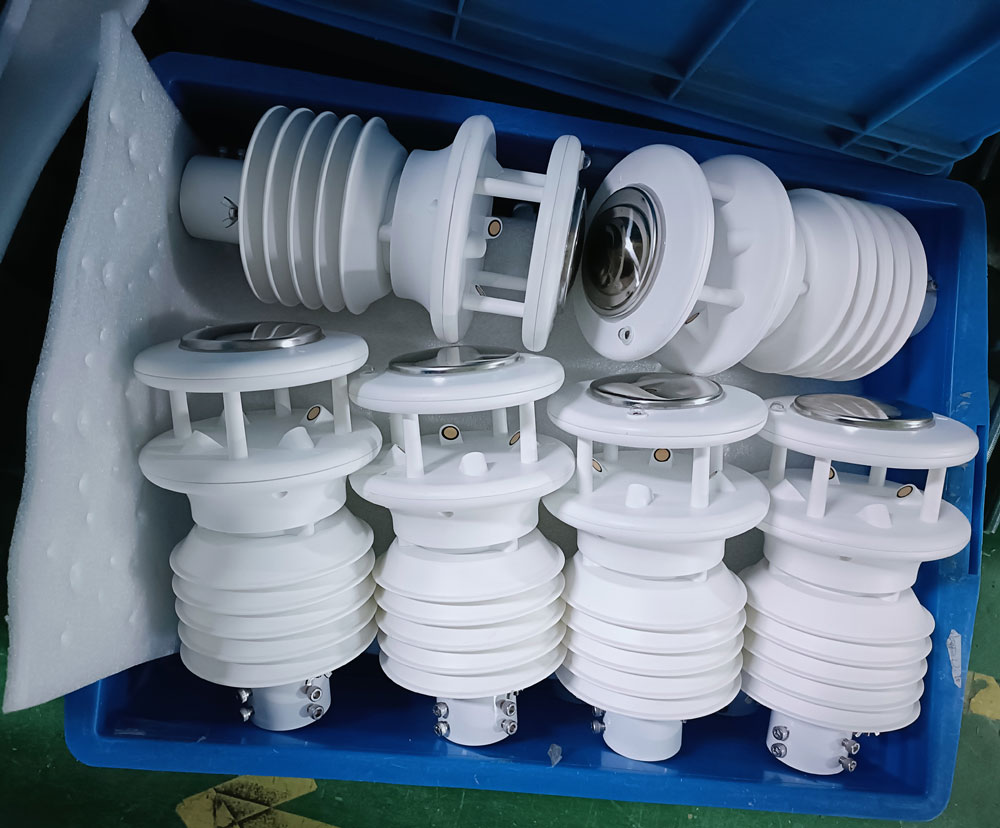
The following table summarizes the core technical parameters of NiuBoL NBL-W-21GUWS (based on official product manual and specifications):
| Parameter Category | Parameter Item | Specification Value |
|---|---|---|
| Power Supply Voltage | DC 12-24V | |
| Signal Output | RS485 | |
| Communication Protocol | Standard MODBUS protocol | |
| Baud Rate | 9600 bps | |
| Heating Power | (optional) | 3W |
| Operating Temperature | -20~80℃ (heating optional extends low-temperature performance) | |
| Operating Humidity | 0~100% RH | |
| Protection Level | IP65 | |
| Wind Speed Measurement | Range | 0~60 m/s |
| Accuracy | ±(0.5 + 3% FS) | |
| Resolution | 0.01 m/s | |
| Wind Direction Measurement | Range | 0~359° |
| Accuracy | ±3° | |
| Resolution | 1° | |
| Optional Extended Elements | Temperature & humidity, air pressure, PM2.5/PM10, noise, radiation, rainfall, etc. |
These parameters ensure the sensor meets relevant standards such as IEC 61400-12-1 and is suitable for wind power assessment, meteorological forecasting, and industrial safety monitoring. Low average power consumption (non-heating mode) facilitates solar-powered remote deployment.

1. When deploying large meteorological networks, system integrators often use NBL-W-21GUWS as the core component of the sensing layer. In wind farm projects, it can be installed on towers or nacelles for wind shear monitoring and yaw optimization; combined with MODBUS protocol, data is uploaded in real time to the central controller to support predictive maintenance.
2. In airport or port solutions, its no-blind-zone wind direction measurement and heating function ensure continuous monitoring of runway/berth wind conditions, integrated into ATIS or crane safety systems. Expressway weather station projects leverage its anti-dust capability to provide reliable gust data under haze or sandstorm conditions, supporting traffic control decisions.
3. For smart city or industrial park environmental monitoring, the sensor can be combined with particulate matter and noise sensors to form multi-parameter stations. RS485 bus extension reduces wiring complexity and facilitates access to LoRaWAN, 4G/5G networks for cloud data fusion and visualization analysis.
4. In bridge health monitoring or high-speed rail along-line warning projects, high-resolution output is used to capture instantaneous wind loads, supporting structural safety assessment.
When selecting, integrators can refer to the following points:
1. Environmental Adaptability: Prioritize heating optional for high-cold/coastal projects; verify IP65 protection in dusty areas.
2. Measurement Range: 0-60 m/s covers conventional meteorology and most wind power applications; evaluate 75 m/s endurance in extreme typhoon areas.
3. Interface Compatibility: RS485 MODBUS as standard configuration for easy existing SCADA integration; consult customization for analog output needs.
4. Multi-Element Requirements: Choose versions supporting integrated temperature & humidity and other modules to simplify station design.
5. Power Supply and Deployment: Wide-voltage input adapts to industrial/solar systems; recommend 1-3 sensors per station to cover key areas.
6. Cost-Effectiveness: Higher initial cost than mechanical types, but ROI positive within 1-2 years through reduced maintenance and data loss.
1. Installation Requirements: Place in open areas, recommended 10m height; align north mark with true north, avoid turbulent flow zones.
2. Power and Communication: Use shielded cables for RS485 connection, ground the bus to prevent interference; MODBUS address default configurable.
3. Heating Management: Enable heating in low-temperature projects, monitor power consumption to match power capacity.
4. Field Verification: After factory calibration, test accuracy with reference equipment or wind tunnel; regularly check probe cleanliness.
5. Protocol Configuration: Map registers in SCADA to read wind speed/direction and diagnostic bits; set threshold alarms.
6. Troubleshooting: In case of abnormal data, first check power supply, cables, and probe physical condition.
Q1. What is the ultrasonic frequency range of NBL-W-21GUWS?
Industrial-grade ultrasonic wind sensors commonly operate in the 40kHz-200kHz range; NiuBoL optimized design ensures balance between time-difference measurement accuracy and anti-interference.
Q2. Under what conditions does the heating function automatically activate?
Optional heating (3W) is typically automatically controlled at low-temperature thresholds (e.g., approaching 0℃) to prevent probe icing, suitable for environments below -20℃.
Q3. How to integrate RS485 MODBUS into existing PLC or cloud platforms?
Supports standard MODBUS RTU protocol, baud rate 9600 bps; directly map registers to read wind speed, direction, and status for seamless access.
Q4. How durable is the sensor in sandstorms or salt fog environments?
Sealed probe and high-strength corrosion-resistant material design effectively block intrusion, no mechanical wear, ensuring long-term stability.
Q5. How does wind speed accuracy perform across the full range?
±(0.5 + 3% FS), providing consistent reliability in 0-60 m/s range, resolution 0.01 m/s suitable for fine monitoring.
Q6. Does it support multi-element integration to form composite weather stations?
Yes, optional integration of temperature & humidity, air pressure, particulates, etc., reduces equipment quantity and integration complexity.
Q7. How does the operating temperature range handle extreme weather?
Standard -20~80℃, heating optional extends low-temperature performance, suitable for high-cold or desert areas.
Q8. What are the key differences from mechanical wind sensors?
No moving parts, no lubrication required, resistant to freezing, sand, and dust corrosion, significantly improving data continuity and reducing full lifecycle maintenance costs.
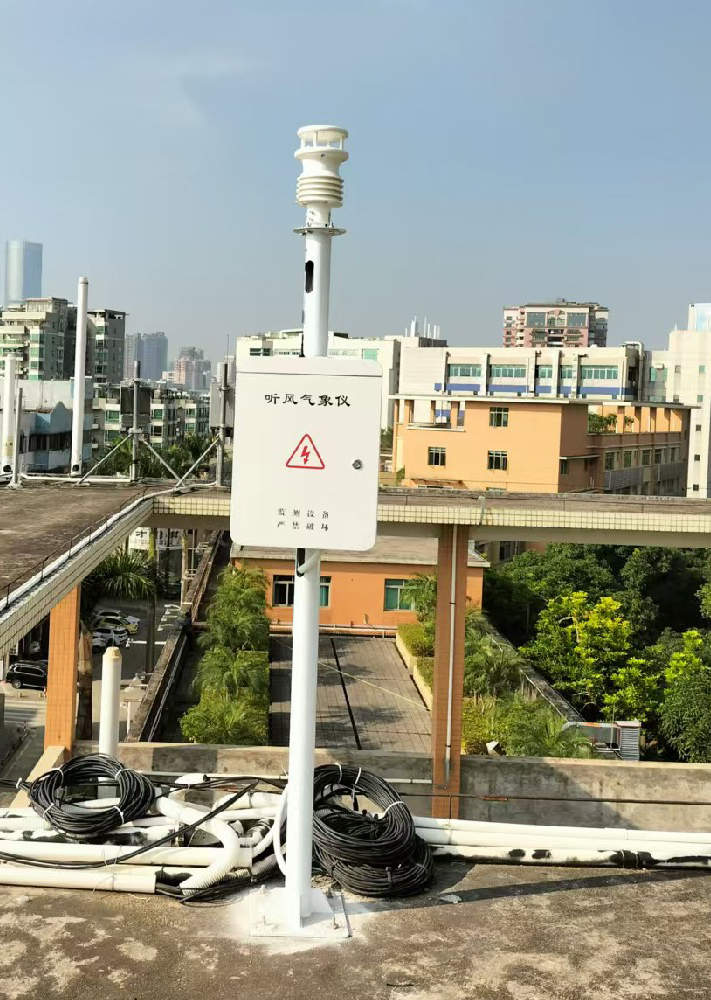
NiuBoL NBL-W-21GUWS ultrasonic wind speed and direction sensor, with its mechanical-free structure, time-difference measurement principle, and high-reliability parameters, has become a preferred component for industrial meteorological monitoring projects. Its tabulated specifications are clear, interface compatibility is strong, and environmental adaptability is outstanding, helping system integrators deliver stable and efficient automatic weather stations and IoT solutions. Ensuring data continuity under harsh conditions is a key link in enhancing overall project performance.
If you are a system integrator, IoT provider, or engineering contractor evaluating ultrasonic wind sensors for your next meteorological or environmental project, welcome to contact the NiuBoL team for complete data sheets, prototype testing, or customized solutions. We provide professional technical support to jointly optimize your industrial-grade sensing applications.
 NBL-W-21GUWS-Ultrasonic-Wind-speed-and-direction-Sensor.pdf
NBL-W-61MUWS-Ultrasonic-Weather-Station-Instruction-Manual.pdf
NBL-W-71MUWS-Micrometeorological-Sensor-Operating-Instructions.pdf
Related recommendations
Sensors & Weather Stations Catalog
Agriculture Sensors and Weather Stations Catalog-NiuBoL.pdf
Weather Stations Catalog-NiuBoL.pdf
Agriculture Sensors Catalog-NiuBoL.pdf
Water Quality Sensor Catalog-NiuBoL.pdf
Related products
 Combined air temperature and relative humidity sensor
 TDR Soil Moisture & Temperature Sensor for irrigation| RS485 |4-20mA| NBL-S-THR
 Soil pH sensor RS485 soil Testing instrument soil ph meter for agriculture |NBL-S-PH
 Wind Speed sensor Output Modbus/RS485/Analog/0-5V/4-20mA
 Tipping bucket rain gauge for weather monitoring auto rainfall sensor RS485/Outdoor/stainless steel
 Pyranometer Solar Radiation Sensor 4-20mA/RS485

Screenshot, WhatsApp to identify the QR code
WhatsApp number:+8615367865107
(Click on WhatsApp to copy and add friends)

