





— Blogs —
—Products—
 Consumer hotline +8618073152920
WhatsApp:+8615367865107
Address:Room 102, District D, Houhu Industrial Park, Yuelu District, Changsha City, Hunan Province, China
Product knowledge
Time:2026-03-25 11:18:01 Popularity:706
An insect pest forecasting lamp needs to move a sample through collection, treatment, presentation, photography and clearing without losing its identity. Image quality alone cannot establish that the photographed insects belong to the intended period. For the project engineer, batch handling and residual material deserve the same attention as the camera and network connection.
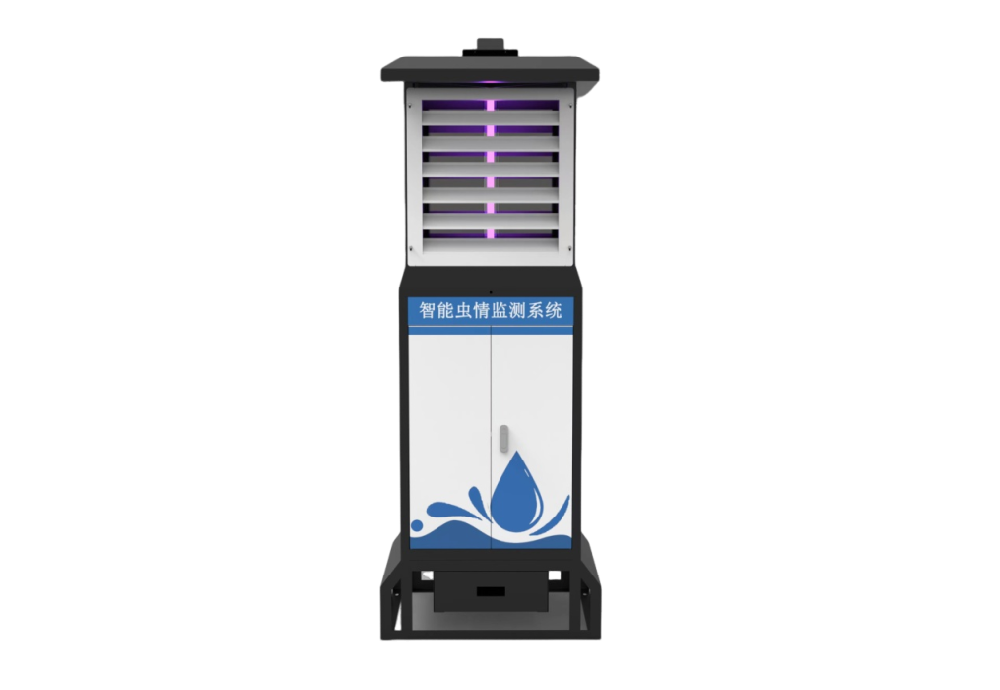
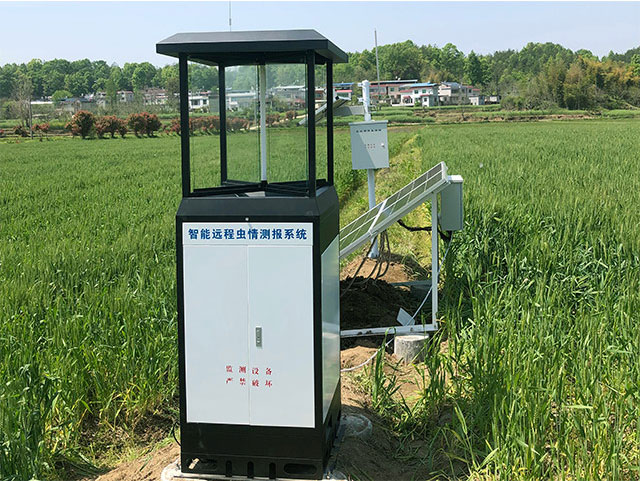
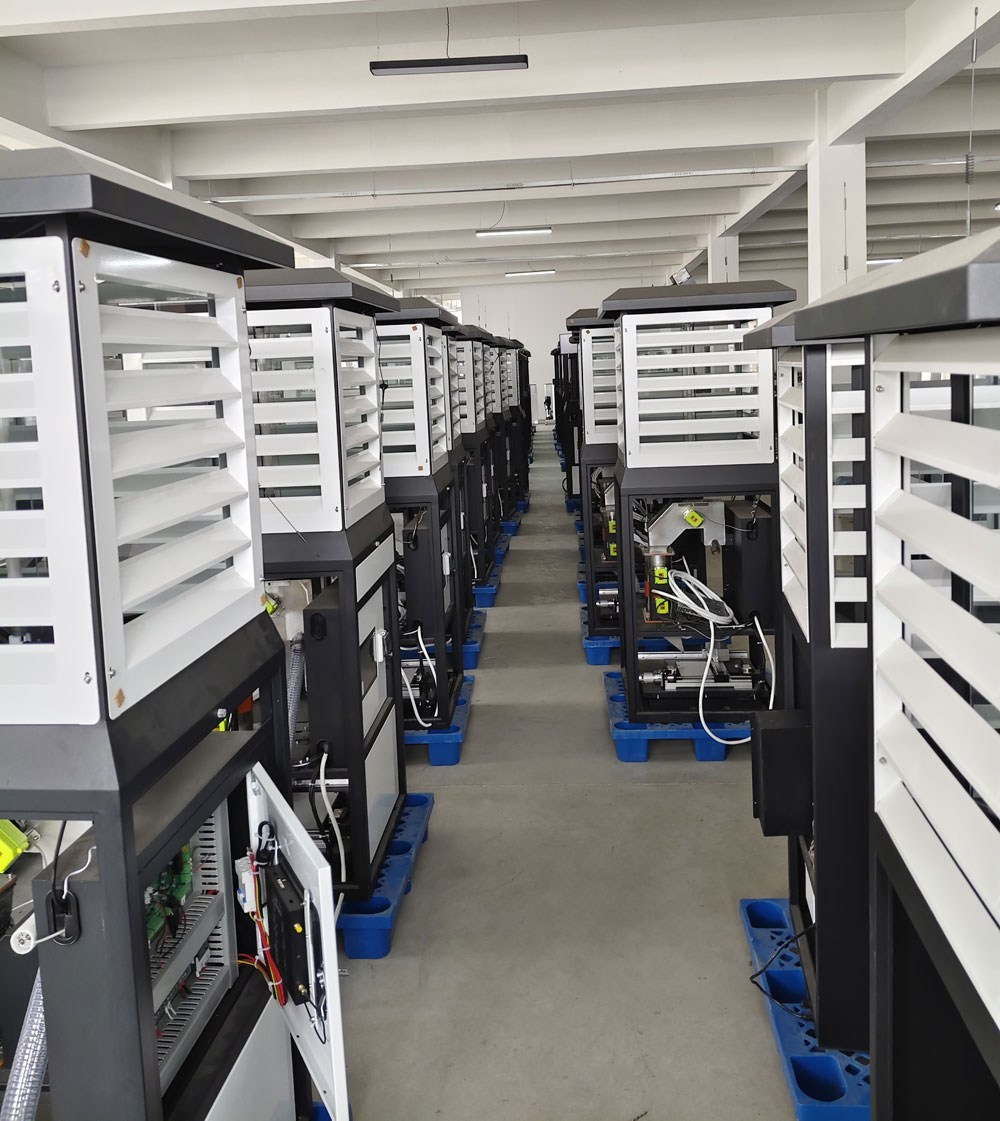
The NiuBoL NBL-IoT-SRPMS attracts insects toward impact screens and a collection path. The selected arrangement processes the insects using infrared heat, presents them on a collection board, captures an image and clears material toward the drawer. These steps should be demonstrated on the actual supplied version.
Identify where one sample ends and the next begins. An automatic photograph every set interval does not establish that the insects in each image represent exactly that interval. Material can wait in a chamber or remain on a surface. The reporting software must use the physical sampling arrangement rather than assuming that the camera clock alone defines the catch period.
| Cycle transition | Observation to make | Potential record error |
|---|---|---|
| Collection to treatment | Material enters the intended chamber and the gate operates correctly | Accumulation or an unidentified delayed sample |
| Treatment to presentation | Processed material reaches the image surface | Incomplete transfer reported as a low catch |
| Presentation to image | The surface has settled and the sample is visible | Blur or overlap interpreted as a recognition problem |
| Image to clearing | The previous material leaves the observation surface | Old insects included in the next sample |
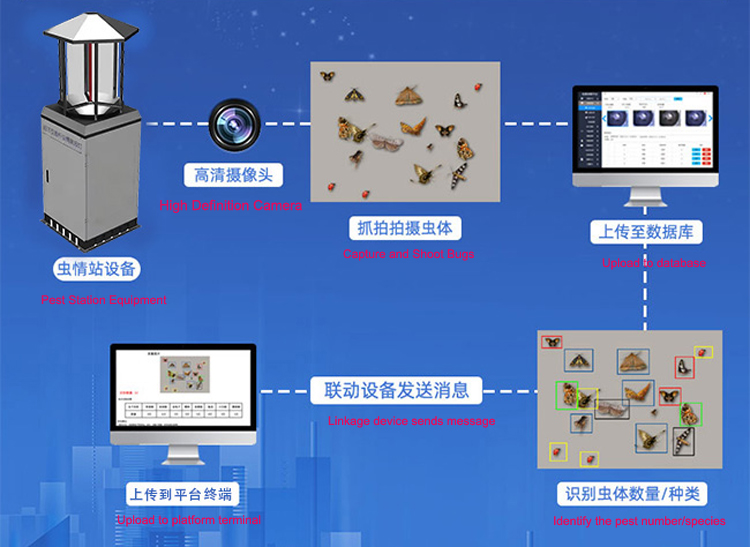
A successful component self-test is useful, but the complete sequence must also work. A gate, vibration device and clearing mechanism can each move while their timing leaves material in the wrong place. Test a representative complete cycle under the approved procedure, not just separate button presses.
The specified chamber working temperature is 85 ±5°C. Reaching that temperature, holding a treatment and waiting for a photograph are different parts of a cycle. Do not convert a short insect-processing claim into a promise that every fresh capture is photographed and uploaded within the same few minutes.
Check which temperature is measured, how treatment completion is determined and what happens if the chamber does not reach its operating condition. A controller setpoint is not evidence that each specimen received an identical temperature history. Never bypass a protective function to shorten a commissioning demonstration.
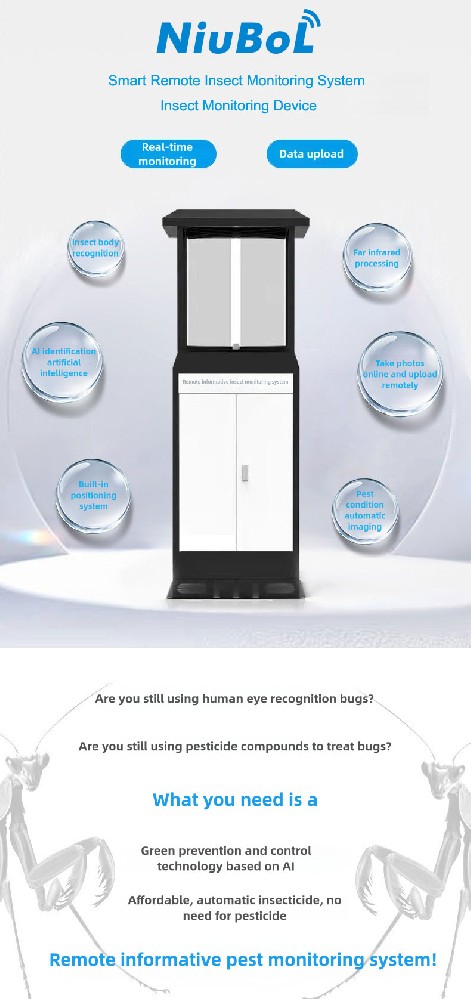
| NBL-IoT-SRPMS item | Configuration detail | Cycle implication |
|---|---|---|
| Attracting source | 18 W, 365-395 nm for the specified version | Attraction settings belong in the sample record |
| Processing | Far-infrared chamber, 85 ±5°C | Verify processing and transfer before photography |
| Camera | 12-megapixel industrial image acquisition | Pixels are not watts or a guarantee of a clear single-layer sample |
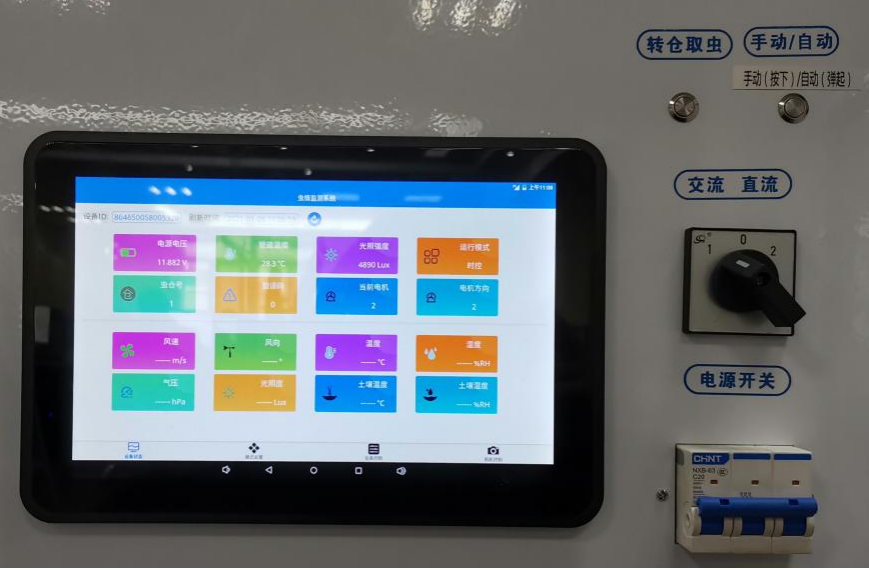
| Operator interface | 10-inch Android touchscreen | Retain the final operating mode and cycle settings |
| Reporting transport | 4G / Ethernet | Transfer time is separate from the collection and processing period |
For a wider agricultural system, request the supported interface and protocol for each value or command. RS485 Modbus RTU weather data can accompany the observations through compatible acquisition equipment, but does not define the cabinet's image-transfer or gate-control interface. Use the exact version in the acceptance test.
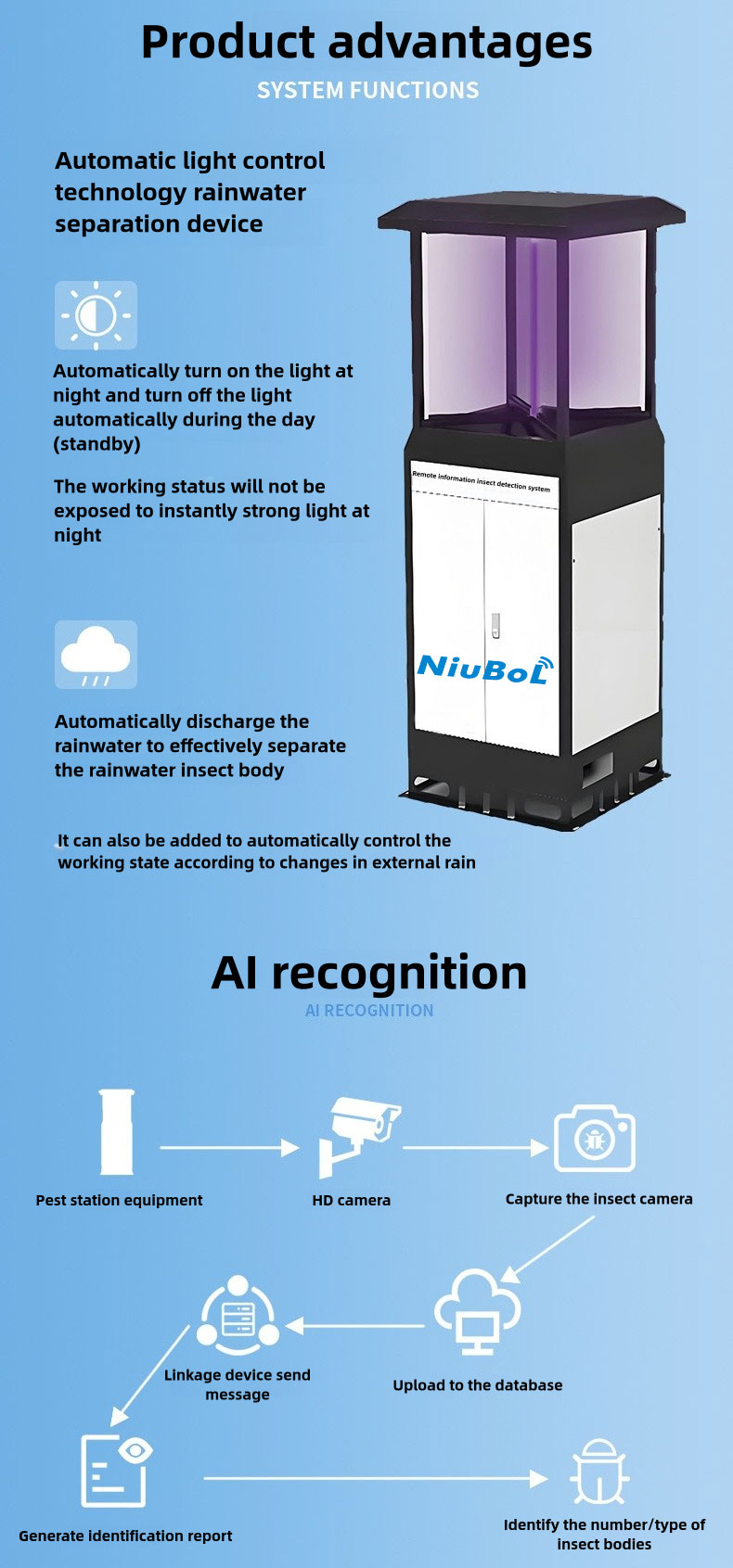
Inspect the observation surface before and after clearing. Agree how the supplier will demonstrate residual-material handling using an approved procedure that does not contaminate live records. Retain test images and the cycle settings. The point is to see whether the previous sample can appear again, not to declare zero carryover without a defined test.
Consider an illustrative next batch containing 20 new target specimens. If three old target specimens remain visible, a raw image count could be 23. That is 15% above the new-batch count. This example is not a measured equipment result, and image software may behave differently; it shows why a counting error can originate in sample handling rather than species recognition.
Vibration can help distribute material, but does not guarantee every specimen lies separately with all identifying features visible. Dense catches, different body sizes and debris can produce overlaps. Ask how the selected processing arrangement handles a load it cannot present clearly and whether the image is flagged for review.
Do not conceal a poor presentation by increasing the counting software's confidence display. Retain an unreadable or incomplete sample state where appropriate. A claim about the maximum expected batch should be based on an agreed test, including the material and conditions used, rather than an assurance that the mechanism can never block.
Record drawer service, treatment interruptions and authorized changes to the light or timing configuration. A routine cleaning can improve image presentation without indicating a change in field insect activity. A short maintenance period can also reduce the effective collection effort even if the daily platform summary still shows a date.
Service access involves moving parts, hot surfaces and the selected electrical supply. Follow safe isolation and cooling procedures before opening protected areas. Automatic sample handling reduces some repetitive work; it does not remove drawer cleaning, inspection or the need to investigate unusual cycle behavior.

If recovery after interruption is required, agree an authorized test with the supplier. Establish whether the retained task is resumed, abandoned or marked incomplete, and check what happens to material already inside. Do not assume that restarting the controller creates a clean new sample.
After recovery, compare the local cycle state with the receiving record. A recovered image should retain the correct sample identity instead of being assigned solely to the reconnection time. Any duplicate or incomplete sample must remain distinguishable so an operator does not interpret recovery traffic as new insect activity.
Provide NiuBoL with the targets, expected loading, required collection periods and intended image-review process. Ask for a witnessed complete cycle, visible clearing, handling of an unreadable sample and the agreed interruption test. Confirm replacement and service access for the actual arrangement.
Keep camera performance, mechanical handling and platform functions as separate acceptance items. This helps a contractor locate a failed requirement without replacing the wrong component. It also avoids pricing the system around unverified guarantees of specimen integrity, unlimited capacity or a universal maintenance interval.
Not automatically. Material may spend time in collection and treatment before reaching the camera. Define the sample period and retain the relationship between that period, the physical cycle and the image.
No. It specifies a chamber operating condition, not an identical temperature history for every specimen. Verify the selected cycle, control behavior and handling of an incomplete treatment.
Yes. Material left after clearing can reappear in a later image. Inspect the collection surface and retain cycle evidence before attributing every counting discrepancy to software.
No. Test realistic loading and specimen mixtures. Identify when an image needs review or cannot support a reliable count instead of claiming unlimited single-layer presentation.
Apply the behavior agreed for the supplied configuration and preserve the sample's identity. Demonstrate whether processing resumes or the sample is marked incomplete, then check that the receiving system does not create an unjustified new batch.
An insect pest forecasting lamp produces useful image records when its physical batches remain identifiable. Verify treatment, transfer, presentation and clearing as one sequence. NiuBoL automated handling can support routine monitoring, while visible sample-state checks help prevent residual material or an interrupted cycle from becoming a misleading count.
 Intelligent Remote Insect Monitoring and Reporting System(Insect Monitoring Device) Data Sheet.pdf
Prev:Agricultural Pest Forecasting System: Define and Test the Forecast
Next:Pest Monitoring System Data Integration: Link Images, Counts and Status
Related recommendations
Sensors & Weather Stations Catalog
Agriculture Sensors and Weather Stations Catalog-NiuBoL.pdf
Weather Stations Catalog-NiuBoL.pdf
Agriculture Sensors Catalog-NiuBoL.pdf
Water Quality Sensor Catalog-NiuBoL.pdf
Related products
 Combined air temperature and relative humidity sensor
 TDR Soil Moisture & Temperature Sensor for irrigation| RS485 |4-20mA| NBL-S-THR
 Soil pH sensor RS485 soil Testing instrument soil ph meter for agriculture |NBL-S-PH
 Wind Speed sensor Output Modbus/RS485/Analog/0-5V/4-20mA
 Tipping bucket rain gauge for weather monitoring auto rainfall sensor RS485/Outdoor/stainless steel
 Pyranometer Solar Radiation Sensor 4-20mA/RS485


Screenshot, WhatsApp to identify the QR code
WhatsApp number:+8615367865107
(Click on WhatsApp to copy and add friends)

