





— Blogs —
—Products—
 Consumer hotline +8618073152920
 WhatsApp:+8615367865107
Address:Room 102, District D, Houhu Industrial Park, Yuelu District, Changsha City, Hunan Province, China
Product knowledge
Time:2025-12-08 17:50:17 Popularity:1317
As a key meteorological instrument for measuring natural rainfall, the rain gauge's data objectivity and authenticity directly impact the accuracy of hydrological monitoring, flood warning, and agricultural decisions. Since rain gauges are exposed to complex outdoor environments long-term, regular maintenance and calibration not only significantly extend the instrument's lifespan but also fundamentally ensure objective, true rainfall measurements and accurate data.
Experience shows that rain gauges typically require monthly maintenance and corrective checks before heavy rainfall to keep the instrument in optimal condition.
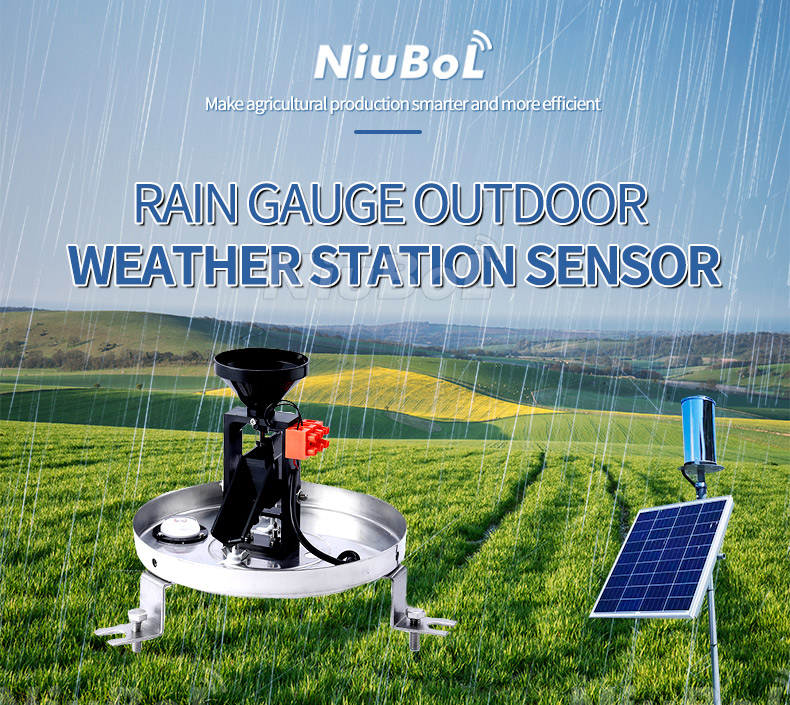
1. Structural and Level Assurance
Goal: Ensure the outer cylinder (receiving bucket) is stable and vertical to avoid wind-induced shaking errors and guarantee water flow universality.
| Maintenance Points | Action Essentials | Importance |
|---|---|---|
| Outer Cylinder Stability and Verticality | Adjust the three leveling screws on the base to make the bubble level indicate horizontal (bubble stays in the center of the circle). After adjustment, slowly tighten the M8 screws to fix; if the bubble changes, readjust. | Unstable outer cylinder causes wind shaking damage. Non-vertical outer cylinder affects rainwater reception and sedimentation filtration device universality. |
| Protection of Level Gauge | Special emphasis: Do not fix the level gauge on the base; remove it after calibration. | Prevent damage or loss of leveling capability due to expansion in extreme winter low temperatures. |
| Port Inspection | Check all inlet/outlet ports and outer cylinder surface for obvious dents, injuries, cracks, and deformations. | Ensure mechanical integrity of the instrument and prevent leaks or structural instability. |
Goal: Remove all dirt and debris that may affect water flow and tipping bucket action accuracy.
1. Cleaning of Receiving and Filtration System
| Component Name | Cleaning Content | Key Details |
|---|---|---|
| Filter/Sieve | Carefully inspect and immediately remove dust and dirt from the filter to prevent poor water flow or blockage. | Cylindrical filter can be removed and rinsed with clean water. Failure to check on time can lead to insufficient or low rainfall measurement deviation. |
| Throttle Tube and Channel | Carefully check for spider webs or other dirt in the throttle tube and keep the throttle pipe unobstructed. | Throttle tube relates to total rainfall flow reliability; blockage may cause insufficient rainfall. |
| Buchner Funnel | Use a soft brush to clean dust from internal structural components; the funnel surface can be cleaned with neutral detergent. | Ensure smooth rainwater convergence; avoid oil residue. |
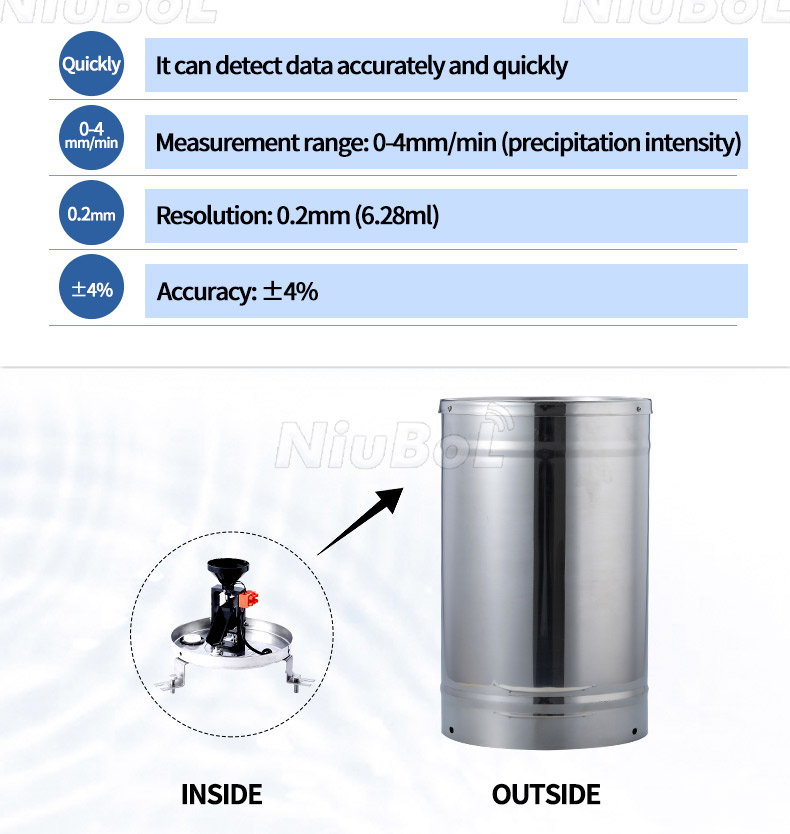
2. Precision Cleaning of Metering Tipping Bucket
Dust on the tipping bucket is the most direct factor affecting rain gauge accuracy.
Dust Hazards: Dust accumulation may cause:
Premature rotation: The tipping bucket should only rotate when water reaches a certain amount; dust weight causes premature rotation, leading to rainfall measurement errors.
Operational inflexibility: Dust can compromise tipping bucket rotation flexibility.
Cleaning Requirements: If the tipping bucket inner wall is dirty, rinse with water, alcohol, or detergent aqueous solution.
Strict Prohibitions: Do not wipe the tipping bucket inner wall with fingers or other objects to avoid oil contamination or scratches, which could destroy its precision balance and affect metering accuracy.
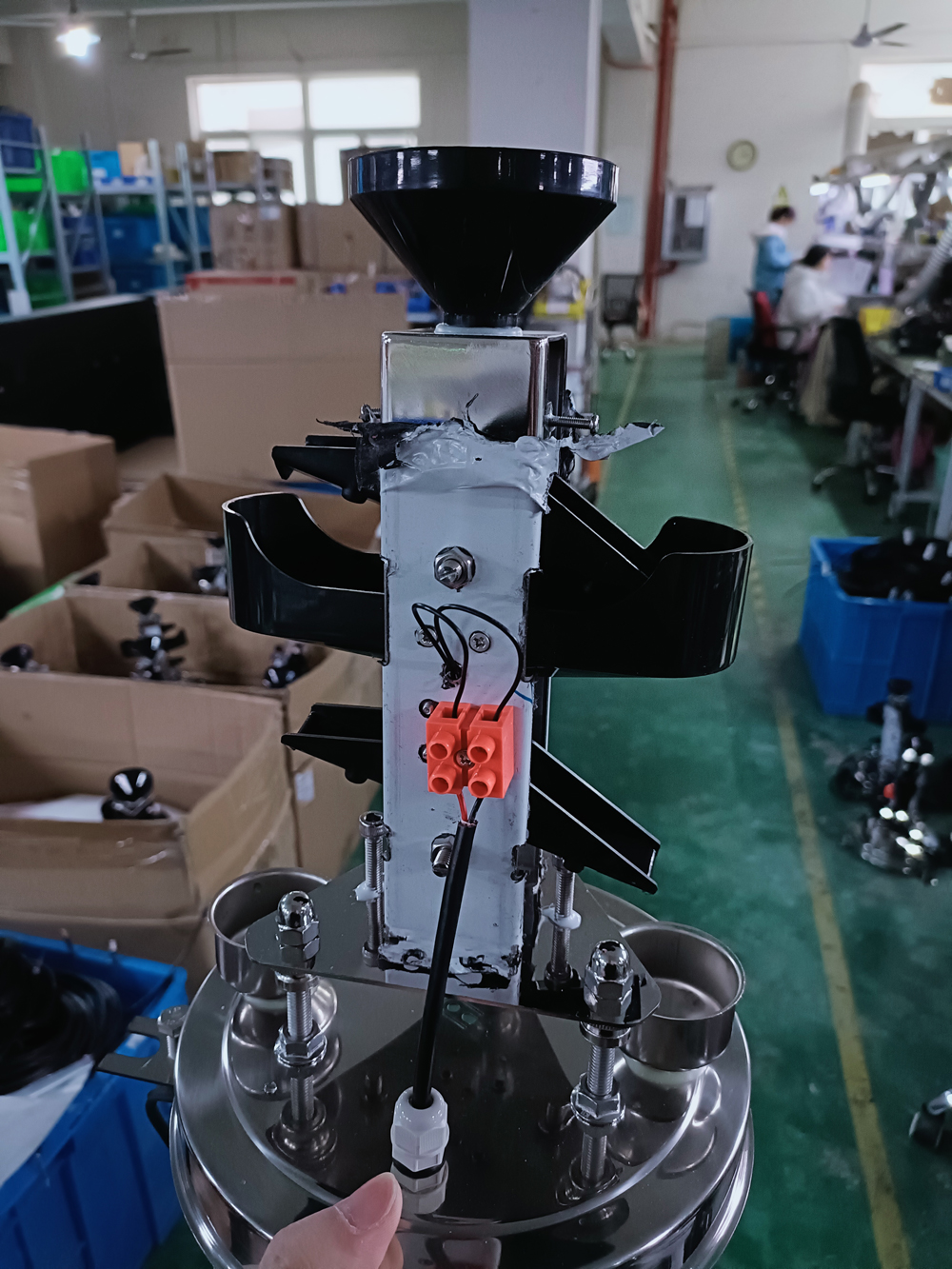
1. Maintenance and Replacement of Reed Switch
The reed switch (dry reed tube) is one of the most easily damaged components in the rain gauge.
Inspection Method: Connect the two probes of a digital multimeter to the rain gauge's two terminals, gently rotate the tipping bucket, and observe if the pointer multimeter moves.
Fault Judgment: If the pointer does not move, the reed switch is damaged and must be replaced immediately.
Replacement Notes: When disassembling and replacing a new reed switch, ensure secure soldering and avoid damaging the dry reed tube resistance or rain gauge magnetic tile assembly.
2. Accuracy Verification and Calibration
Verification Frequency: After one month of operation or after heavy rainfall, perform a more accurate calibration.
Judgment Standard: If the difference exceeds ±4% (NBL-W-DRS accuracy standard), check the reed switch and base point to rule out common faults.
On-Site Calibration: After fixing, open the rain bucket, inject a fixed amount of water (60mm-70mm), observe the tipping bucket flipping process, and check if the collected instrument display matches the injected water volume. If not, repair and adjust.
3. Data Connection and Operational Safety
During the entire cleaning process, disconnect data connections.
Do not connect wires while powered; check wiring thoroughly before powering on.
Avoid disassembling the sensor during installation to prevent damage to internal precision components.
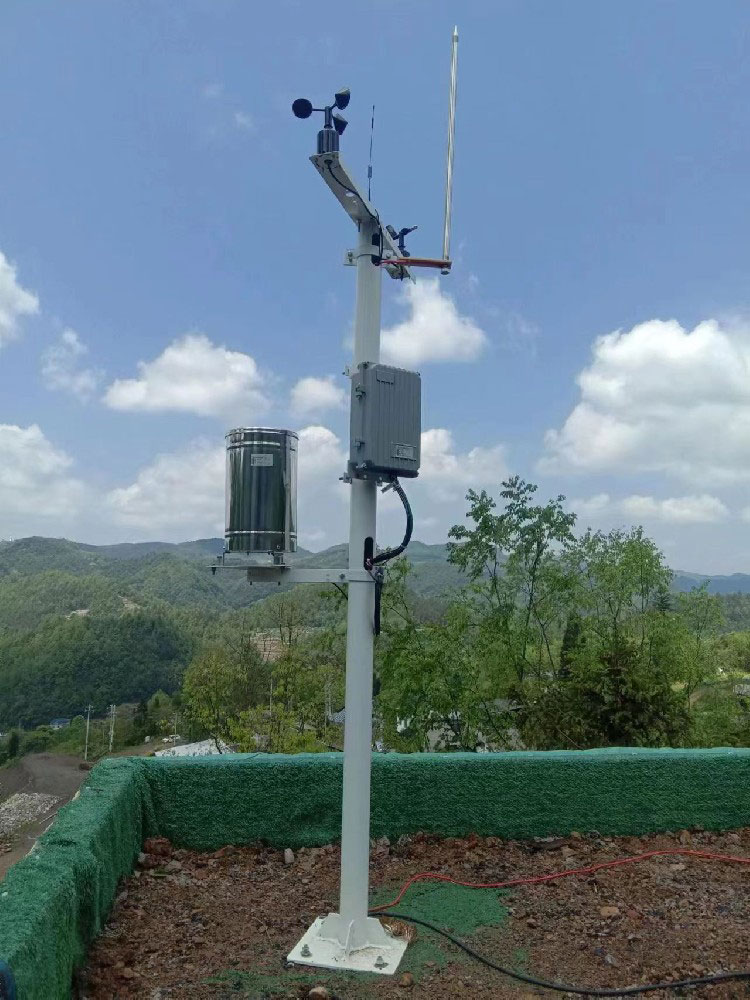
Decommissioning Timing: Stop using the instrument during winter icing periods.
Operational Requirements: Retrieve the instrument indoors. For long-term shutdown, disassemble the rain gauge and use a cylinder head to lock the cover tightly to prevent dust and other items from falling into the dehydration load.
Ultra-Low Temperature Impact: Tipping bucket rain gauges typically operate above 0°C; ultra-low temperatures may cause internal water droplets to freeze, damaging the tipping bucket or reed switch, so usage must cease.
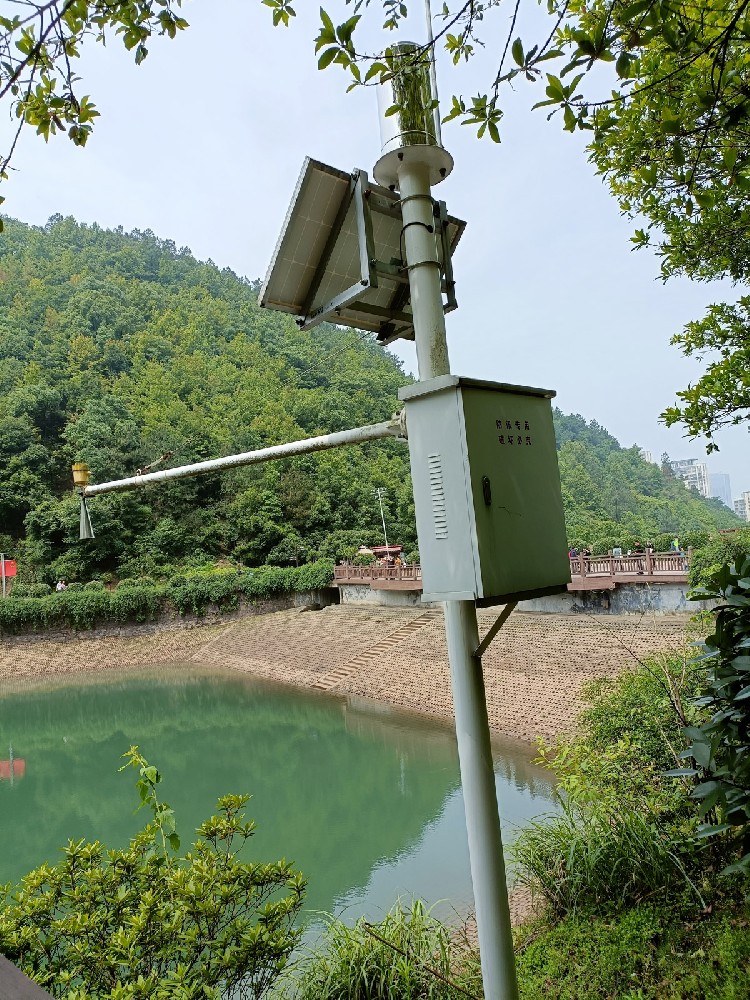
Q1: How often should the rain gauge be maintained?
A: Typically, at least monthly checks are required, with structural and level corrections before heavy rainfall to ensure data authenticity.
Q2: Why can't hands or cloth be used to wipe the tipping bucket during cleaning?
A: Fingers or cloth may carry oil, or cause scratches to the inner wall. These can destroy the tipping bucket's precision mass balance, leading to reduced metering accuracy.
Q3: What are the best weather conditions for cleaning the rain gauge?
A: Usually choose sunny days with no rain and mild, low-wind weather to minimize environmental impact on cleaning and debugging.
Q4: How to determine if the tipping bucket is "prematurely rotating" due to dust?
A: This is an indirect judgment. If the station's measured rainfall is significantly lower (readings greater than actual), and rainfall is detected on a clear sky day, it may be blockage or dust accumulation affecting balance.
Q5: What to do if accuracy deviation exceeds ±4%?
A: Immediately troubleshoot: First check if reed switch is normal, then check base point (levelness) and tipping bucket inner wall cleanliness. If unresolved, contact manufacturer for repair and adjustment.
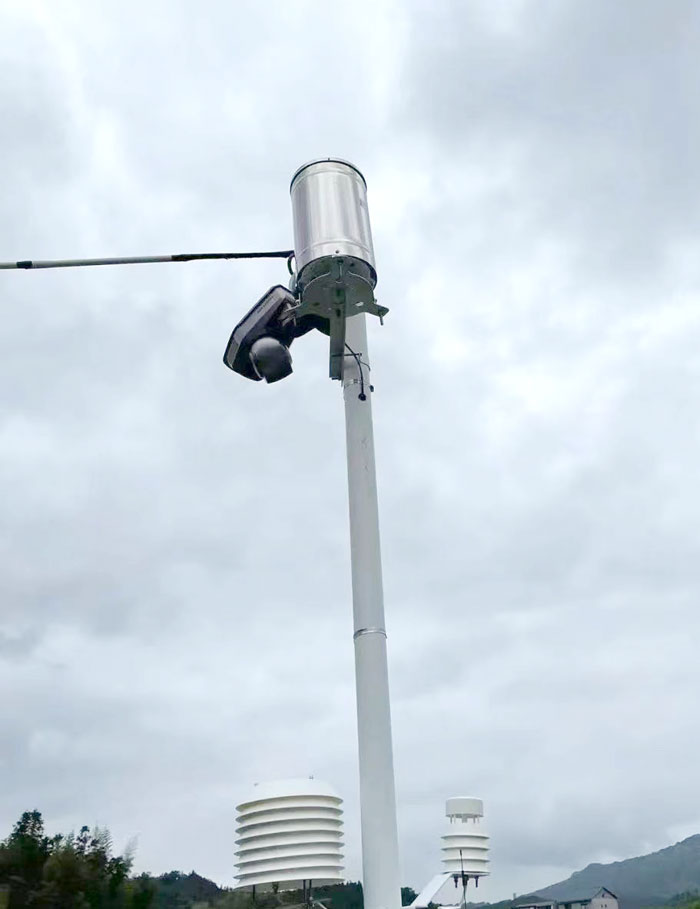
Q6: If the collector shows no reading, how to troubleshoot?
A: First, check if wiring is correct and secure (avoid live wiring); second, check if internal tipping bucket ties have been cut (for newly installed instruments).
Q7: Does sensor cable length affect product output signal?
A: Yes. Cable length affects output signals (especially pulse and voltage). Do not arbitrarily change factory-welded wires; contact vendor if changes needed.
Q8: How to prevent rain gauge damage from ultra-low winter temperatures?
A: Must stop use during icing periods and retrieve indoors. Also, remove non-fixed parts like level gauge after calibration to prevent low-temperature expansion damage.
Q9: How to check if reed switch is damaged?
A: Use multimeter to connect rain gauge terminals, manually flip tipping bucket; if multimeter pointer doesn't move, reed switch is damaged.
Q10: What are the location requirements for rain gauge installation?
A: Installation should be on ground, self-made large cylinder, iron column flange, or house roof, but ensure no surrounding obstacles block rainwater, and base is absolutely level after leveling screw adjustment.
Q11: What certifications does NiuBoL have?
A11: CE, ISO9001, RoHS, and nationally recognized meteorological calibration certificates.
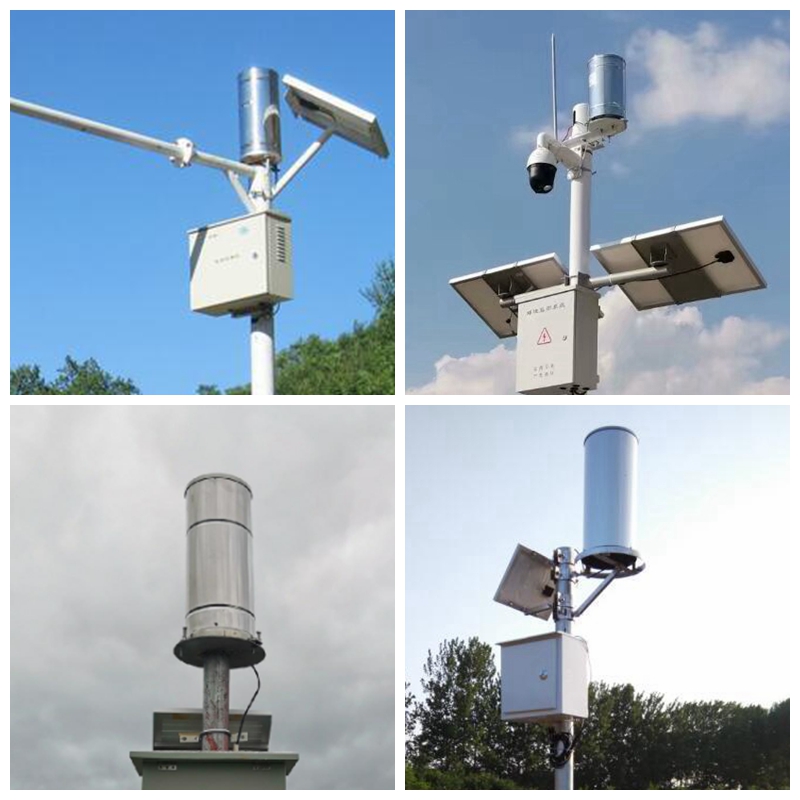
NiuBoL tipping bucket rain gauge is a core tool for high-precision hydrological and meteorological monitoring. Its accuracy assurance relies not only on strict factory verification but also on users' strict execution of structural stability, level calibration, in-depth cleaning, and electrical checks.
By adhering to monthly detailed maintenance, especially following the "no finger wiping" principle for tipping bucket cleaning, and regularly inspecting reed switches, deviations due to instrument faults can be effectively avoided. Only by ensuring the instrument is in optimal working condition can it provide the most objective and true rainfall data for critical areas like flood control and water resource management.
If you encounter any technical difficulties during maintenance, please contact us at NiuBoL promptly. With years of industry experience, we will provide the most professional guidance and support.
 NBL-W-ARS-Tipping-bucket-rain-gauge-instruction-manual.pdf
NBL-W-RS-Rain-sensors-instruction-manual-V4.0.pdf
NBL-W-DRS-Double-Tipping-Bucket-Rain-Sensor-Instruction-Manual.pdf
Prev:Ultrasonic Level Gauge | NiuBoL Ushers in a New Era of Intelligent Level Measurement
Next:How Does a Rain Gauge Work? Usage & Precautions | NiuBoL NBL-W-DRS
Related recommendations
Sensors & Weather Stations Catalog
Agriculture Sensors and Weather Stations Catalog-NiuBoL.pdf
Weather Stations Catalog-NiuBoL.pdf
Agriculture Sensors Catalog-NiuBoL.pdf
Water Quality Sensor Catalog-NiuBoL.pdf
Related products
 Combined air temperature and relative humidity sensor
 TDR Soil Moisture & Temperature Sensor for irrigation| RS485 |4-20mA| NBL-S-THR
 Soil pH sensor RS485 soil Testing instrument soil ph meter for agriculture |NBL-S-PH
 Wind Speed sensor Output Modbus/RS485/Analog/0-5V/4-20mA
 Tipping bucket rain gauge for weather monitoring auto rainfall sensor RS485/Outdoor/stainless steel
 Pyranometer Solar Radiation Sensor 4-20mA/RS485

Screenshot, WhatsApp to identify the QR code
WhatsApp number:+8615367865107
(Click on WhatsApp to copy and add friends)

