





— Blogs —
—Products—
 Consumer hotline +8618073152920
 WhatsApp:+8615367865107
Address:Room 102, District D, Houhu Industrial Park, Yuelu District, Changsha City, Hunan Province, China
Product knowledge
Time:2026-05-03 14:24:40 Popularity:297
In modern activated sludge processes and their modified processes, sludge concentration (MLSS) is not only the core carrier for maintaining biochemical reactions but also a key lever for balancing system nitrogen and phosphorus removal efficiency. The biological nitrogen and phosphorus removal process involves multiple microbial communities such as autotrophic nitrifying bacteria, heterotrophic denitrifying bacteria, and polyphosphate accumulating organisms (PAOs). Due to the significant differences in environmental requirements (such as sludge age, dissolved oxygen, and organic load) among these microorganisms, reasonable control of MLSS concentration becomes a prerequisite for stable system operation.
As a leading brand in the field of environmental monitoring, NiuBoL is committed to providing high-precision online monitoring solutions for global system integrators. This article will deeply analyze the impact pathways of MLSS from the three dimensions of nitrification, denitrification, and biological phosphorus removal.
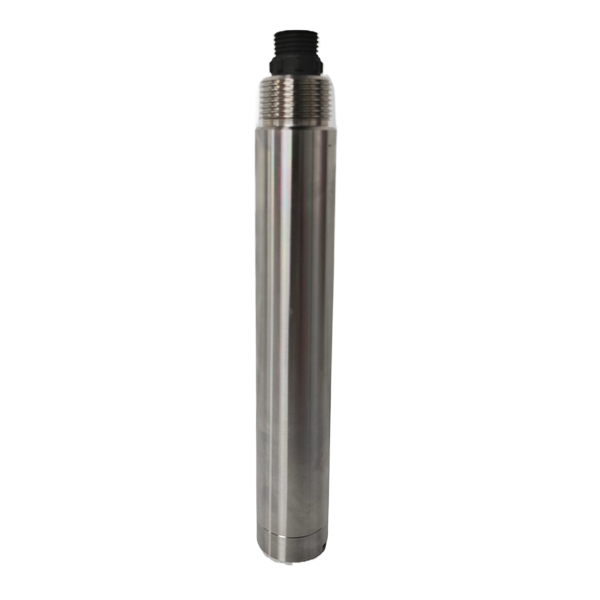
Nitrification is the process of converting ammonia nitrogen (NH4+-N) into nitrate (NO3--N), completed by autotrophic nitrifying bacteria. Although nitrification control is relatively straightforward, it is extremely sensitive to MLSS fluctuations.
1. Positive Correlation Between Nitrification Rate and Microbial Concentration
In the aerobic stage, higher MLSS means a higher absolute number of nitrifying bacteria. Since nitrification is a first-order kinetic reaction, increasing sludge concentration can directly improve the reaction rate under sufficient substrate conditions, thereby achieving higher ammonia nitrogen conversion rates in shorter residence times.
2. Substrate Competition and Dominant Flora Formation
The growth rate of nitrifying bacteria is much lower than that of heterotrophic bacteria. If the influent organic load (BOD) is too high, heterotrophic bacteria will proliferate rapidly and compete for dissolved oxygen (DO) and space, leading to the marginalization of nitrifying bacteria.
3. Compensation Mechanism Under Low Dissolved Oxygen
In processes such as oxidation ditches, although the average DO is often lower than 2 mg/L, the nitrification effect is still ideal. This is mainly due to the compensation effect produced by high MLSS.
4. Synergistic Control of Sludge Age (SRT)
To prevent the loss of nitrifying bacteria, the system sludge age is usually controlled above 8 days. High MLSS is the physical basis for achieving long sludge age, ensuring that nitrifying bacteria complete generational turnover in the system and avoiding the collapse of the nitrification system due to excessive sludge discharge.
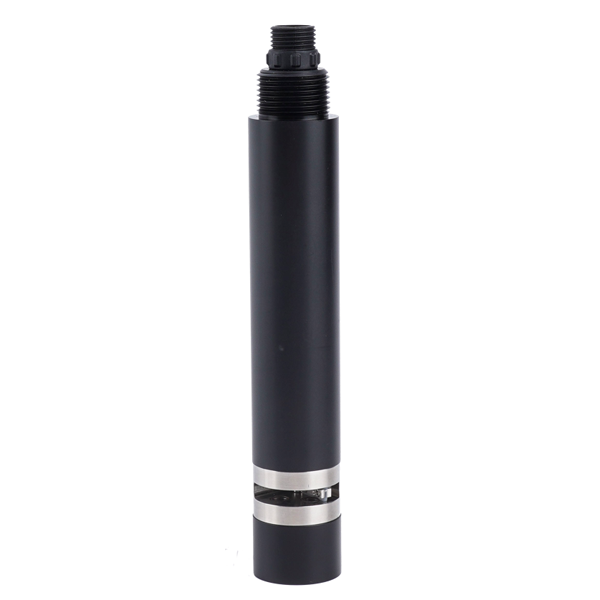
Denitrification is the core and difficulty of the nitrogen removal process, greatly affected by carbon source sufficiency, dissolved oxygen interference, and sludge concentration.
1. Reduction of Dissolved Oxygen Interference in Return Liquid
Denitrification requires an extremely strict anoxic environment. High MLSS systems optimize denitrification through the following pathways: strengthening endogenous respiration and increasing diffusion resistance.
2. Compact Reaction Volume and Carbon Source Utilization
Denitrification rate is first-order with denitrifying bacteria concentration. High MLSS can significantly shorten the required anoxic residence time, meaning that under a given volume, the system can treat higher-load wastewater.
Unlike the nitrogen removal process, biological phosphorus removal has a more complex logic for MLSS control, with the core lying in the contradiction of "sludge age".
1. Acidification and Phosphorus Release Enhancement in Anaerobic Section
In the anaerobic zone, high MLSS is beneficial for polyphosphate accumulating organisms (PAOs) to absorb volatile fatty acids (VFA) and release phosphorus.
| Monitoring Parameter | Physical Principle / Communication Protocol | Recommended Control Range (A2O Process) | Function Description |
|---|---|---|---|
| Sludge Concentration (MLSS) | Infrared scattered light / fiber optic type | 3000 - 5000 mg/L | Control sludge age and reaction load |
| Dissolved Oxygen (DO) | Fluorescence method (no oxygen consumption) | 2.0 - 2.5 mg/L (aerobic) | Ensure nitrification oxygen demand and avoid energy waste |
| Oxidation-Reduction Potential (ORP) | Platinum electrode / RS485 Modbus-RTU | -150 to -250 mV (anaerobic) | Monitor phosphorus release and denitrification process |
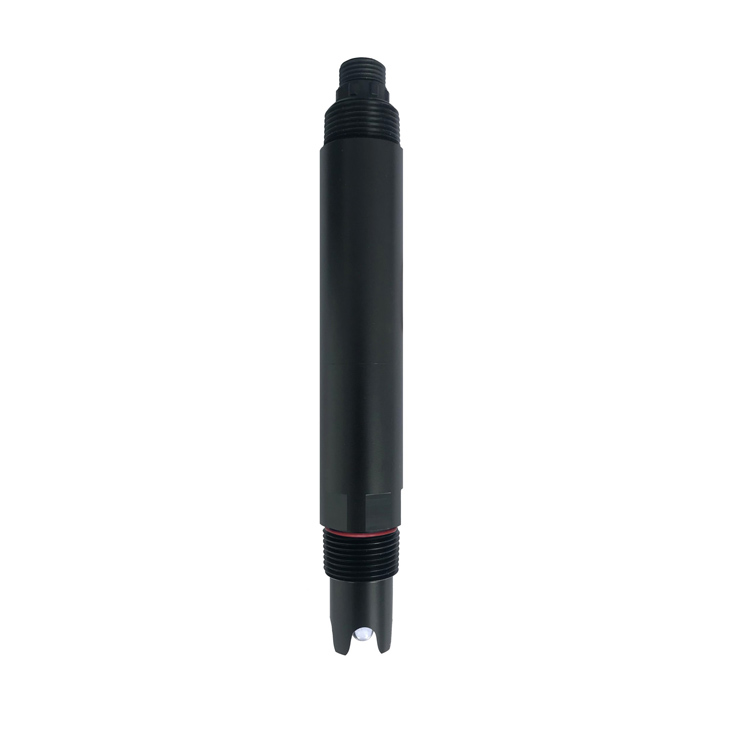
Q1: Why does my system have high MLSS but poor ammonia nitrogen removal effect?
There may be sludge aging phenomenon. Although MLSS is high, most of it is inorganic matter or inactive biomass (low MLVSS proportion). It is recommended to test the VSS proportion and check for toxic inhibitory substances.
Q2: Can increasing MLSS really save aeration energy consumption?
Indirectly yes. Although high MLSS increases oxygen demand, it allows the system to maintain efficient nitrification at lower DO levels. Reducing aeration head output pressure and frequency can significantly reduce fan energy consumption.
Q3: How to balance the long sludge age required for nitrogen removal and the short sludge age required for phosphorus removal?
This is a process difficulty. Usually, a compromise solution is adopted, or enhanced biological phosphorus removal (EBPR) is combined with chemical phosphorus removal. Real-time monitoring of MLSS through NiuBoL online MLSS sensors and accurate calculation of sludge discharge volume is the only scientific path.
Q4: What risks does high MLSS pose when influent carbon source is insufficient?
If the carbon source (BOD) is insufficient to support the metabolism of high-concentration sludge, microorganisms will undergo endogenous respiration, leading to sludge disintegration, increased effluent suspended solids, and decreased phosphorus removal efficiency.
Q5: What is the impact of sludge concentration on sludge settling ratio (SV30)?
Excessively high MLSS will lead to hindered sedimentation (crowded sedimentation), increasing the load on the secondary sedimentation tank and easily causing sludge loss. It is generally recommended to keep SVI between 80 - 150.
Q6: What integration protocols does NiuBoL's sludge concentration sensor support?
Our sensors are standard equipped with RS485 interface and support standard Modbus-RTU protocol, which can be directly connected to PLC, DCS or various IoT gateways.
Q7: Why does the anaerobic section need to maintain high MLSS?
High MLSS can provide stronger acidification buffering capacity, promote the degradation of complex organic matter, and provide more easily degradable carbon sources for polyphosphate accumulating bacteria.
Q8: What are the common interfering factors in MLSS measurement?
Air bubbles, light interference, and biological fouling on the probe. NiuBoL sensors adopt a design with self-cleaning function, effectively solving the maintenance problem of optical probes.
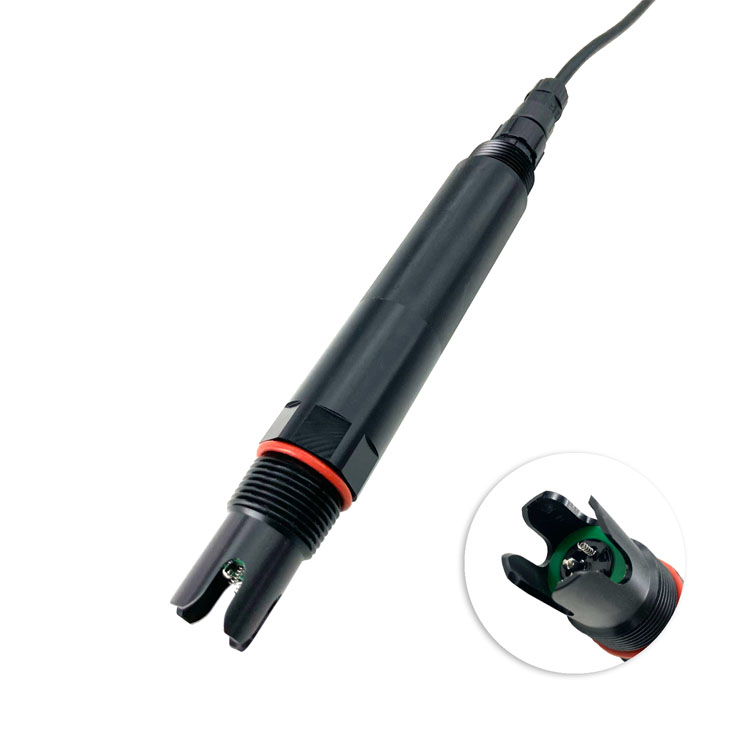
Sludge concentration (MLSS) is the most flexible variable in biological nitrogen and phosphorus removal processes. By maintaining a higher level of MLSS, the system can achieve efficient nitrification in low DO environments, enhance the stability of denitrification, and promote the occurrence of simultaneous nitrification and denitrification. However, we must guard against the negative effects of excessively high concentration leading to excessively long sludge age on biological phosphorus removal.
In actual engineering, relying on manual laboratory testing of MLSS has serious lag. The RS485 communication solution and high-stability sensors provided by NiuBoL can help system integrators build real-time feedback control loops to achieve true "smart water affairs" management and ensure that every drop of effluent meets environmental protection standards.
Related recommendations
Sensors & Weather Stations Catalog
 Agriculture Sensors and Weather Stations Catalog-NiuBoL.pdf
Weather Stations Catalog-NiuBoL.pdf
Agriculture Sensors Catalog-NiuBoL.pdf
Water Quality Sensor Catalog-NiuBoL.pdf
Related products
 Combined air temperature and relative humidity sensor
 TDR Soil Moisture & Temperature Sensor for irrigation| RS485 |4-20mA| NBL-S-THR
 Soil pH sensor RS485 soil Testing instrument soil ph meter for agriculture |NBL-S-PH
 Wind Speed sensor Output Modbus/RS485/Analog/0-5V/4-20mA
 Tipping bucket rain gauge for weather monitoring auto rainfall sensor RS485/Outdoor/stainless steel
 Pyranometer Solar Radiation Sensor 4-20mA/RS485

Screenshot, WhatsApp to identify the QR code
WhatsApp number:+8615367865107
(Click on WhatsApp to copy and add friends)

