





— Blogs —
—Products—
 Consumer hotline +8618073152920
WhatsApp:+8615367865107
Address:Room 102, District D, Houhu Industrial Park, Yuelu District, Changsha City, Hunan Province, China
Product knowledge
Time:2024-09-17 14:20:35 Popularity:1828
A moisture sensor for soil should be evaluated in the soil and measurement conditions it will represent. Moving a probe between air and water can help investigate response or signal transfer where the selected procedure permits it, but it does not establish a soil-specific calibration. Volumetric water content is not air relative humidity, and a wet soil does not need to display 100%.
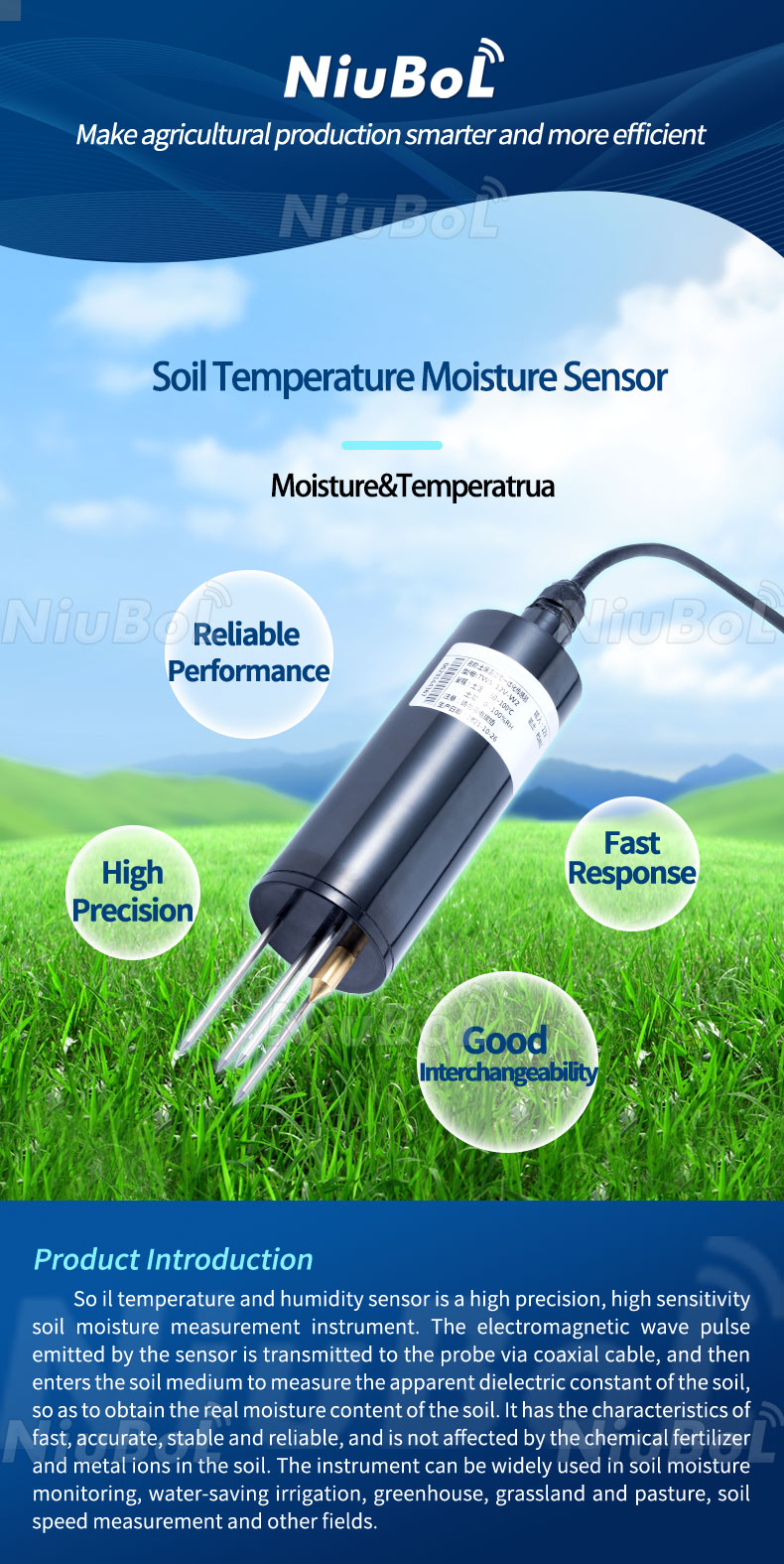
Volumetric water content describes water volume relative to the sampled bulk soil volume. Soil also contains solid material and pore space. A saturated soil has water-filled pores, not a bulk volume made entirely of water. A reading below 100% therefore does not, by itself, demonstrate a failed moisture probe.
Keep this quantity separate from gravimetric water content, which relates water mass to dry soil mass, and from air relative humidity. Reporting all three as an unlabeled percentage prevents a valid comparison. Identify the quantity and reference method first, then assess whether a difference actually indicates an instrument error.
| Observation | What it can help check | What it cannot prove alone |
|---|---|---|
| Different readings in air and water | A response to changed surroundings, using a permitted check. | Accuracy over the field soil moisture range. |
| Stable reading in one soil sample | Short-term stability under that condition. | A valid calibration across several moisture states. |
| Valid serial reply | Communication with the device. | Correct units, installation or soil accuracy. |
| Paired soil reference and probe observations | Agreement under the sampled conditions. | Field-wide representativeness from one point. |
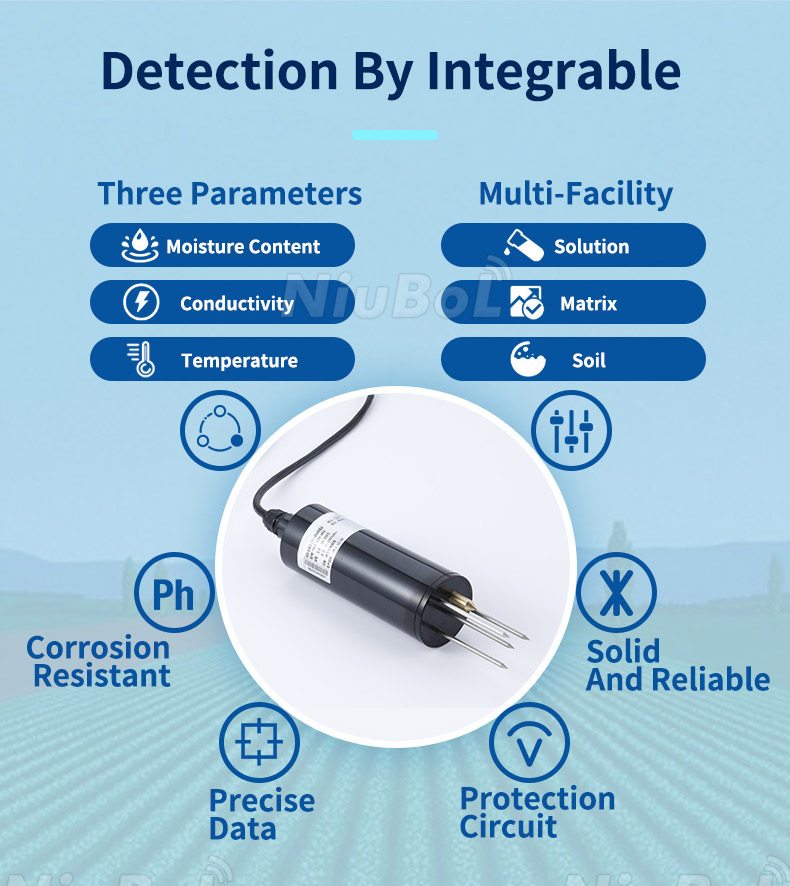
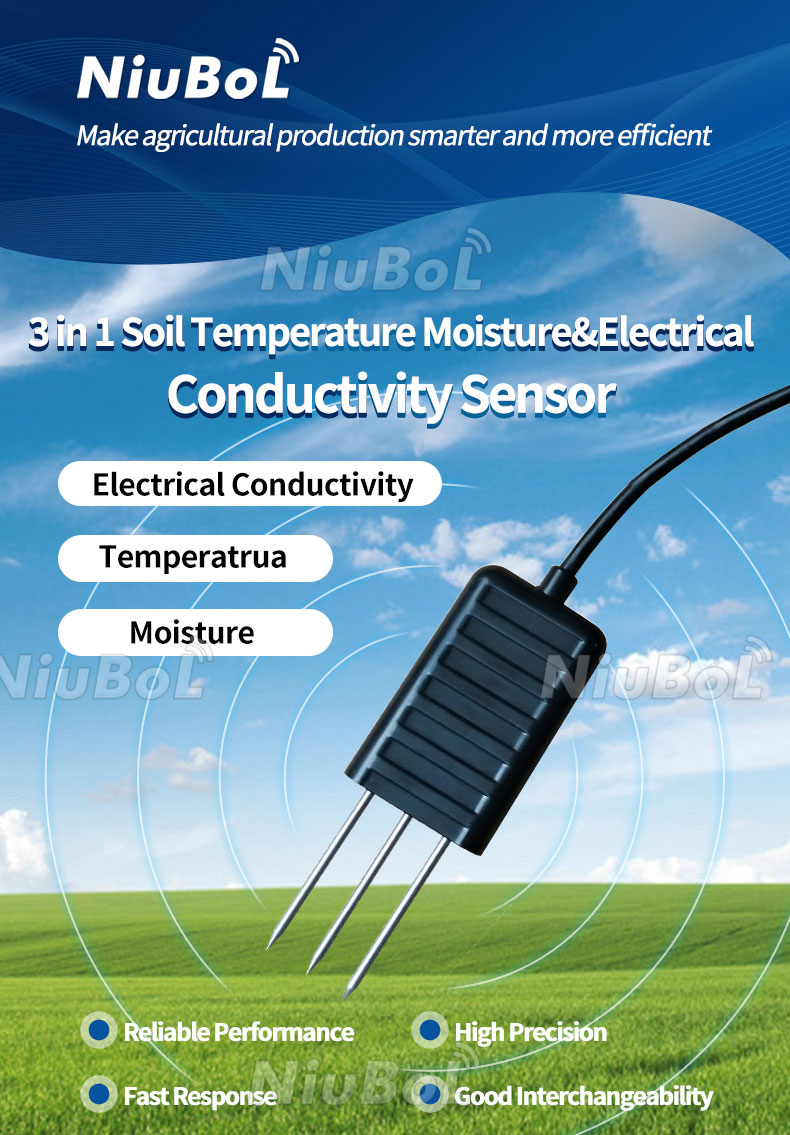
NiuBoL's NBL-S-THR measures moisture and temperature using a TDR moisture principle. The NBL-S-TMC adds EC and uses an FDR moisture principle. The output list, accuracy and supply must therefore be tied to the selected model. Similar-looking rods and a common 0–100% moisture range do not make the two devices one specification.
| Parameter | NBL-S-THR | NBL-S-TMC |
|---|---|---|
| Measured quantities | Soil moisture and temperature. | Soil moisture, temperature and EC. |
| Moisture principle / range | TDR; 0–100%. | FDR; 0–100%. |
| Listed moisture accuracy / resolution | ±3%; 0.1%. | ±5%; 0.1%. |
| Temperature range / accuracy | -50 to 100°C; ±0.5°C. | -40 to 80°C; ±0.5°C. |
| Supply | 12–24 V DC. | 5–24 V DC or 12–24 V DC according to configuration. |
| Output | Selected RS485 Modbus RTU, 4–20 mA or 0–5 V. | RS485 Modbus RTU. |
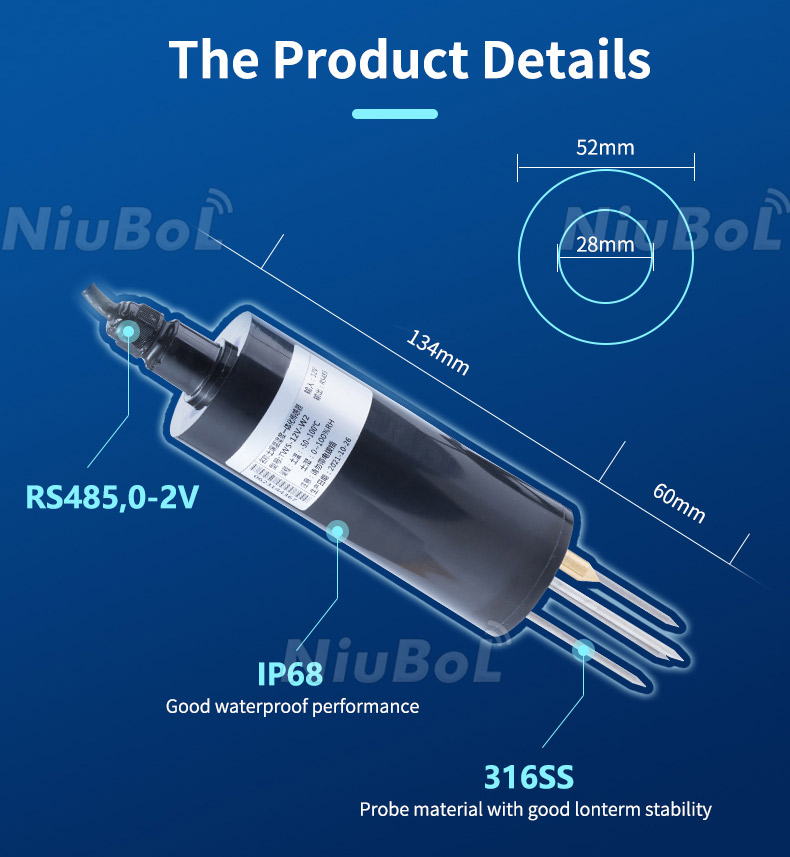
| Environment | IP68; operating environment -40 to 80°C; approximately 0.3 W. | IP68; operating environment -40 to 85°C. |
Do not interpret IP68 as an unlimited promise about immersion depth, duration, media or connectors. Confirm the actual assembly and permitted test procedure. Protection of the housing is separate from the validity of a water reading as a soil calibration point. Keep connectors and acquisition equipment within their own environmental limits.
For a soil-specific assessment, pair probe readings with a suitable reference for the same depth, time and soil condition. A laboratory team can determine water mass by weighing a sample before and after the specified drying procedure. Converting a mass-based result to volumetric water content also requires the appropriate soil-volume or bulk-density information.
Repeat paired observations over the moisture range relevant to the task rather than adjusting a curve to one wet sample. Keep container mass, sample identity and handling consistent, and avoid moisture loss before the wet measurement. NC State Extension's calibration procedure explains the gravimetric comparison and the role of bulk density. Use an appropriate laboratory procedure for the medium, not an improvised field oven test.
A simple dimensional example explains why labels matter: 60 mL of water in a 300 mL bulk soil volume is 20% volumetric water content. It is not a measurement of 20%RH. This is arithmetic illustrating the definition, not a claimed calibration result for a NiuBoL probe or a threshold for irrigation.
A calibration change can conceal poor soil contact or incorrect scaling. Check whether the full active sensing section contacts the intended medium and whether installation disturbed the surrounding soil. Then confirm the receiving unit and conversion. If a digital value requires a scale factor, decoding it incorrectly can create an apparent sensor offset.
Do not rock the probe to make an oversized opening or use it to break stones. For detailed placement and contact methods, use the soil sensor installation guide. Keep an installation fault separate from a valid soil-specific calibration question, and preserve the original observations when investigating a suspected correction.
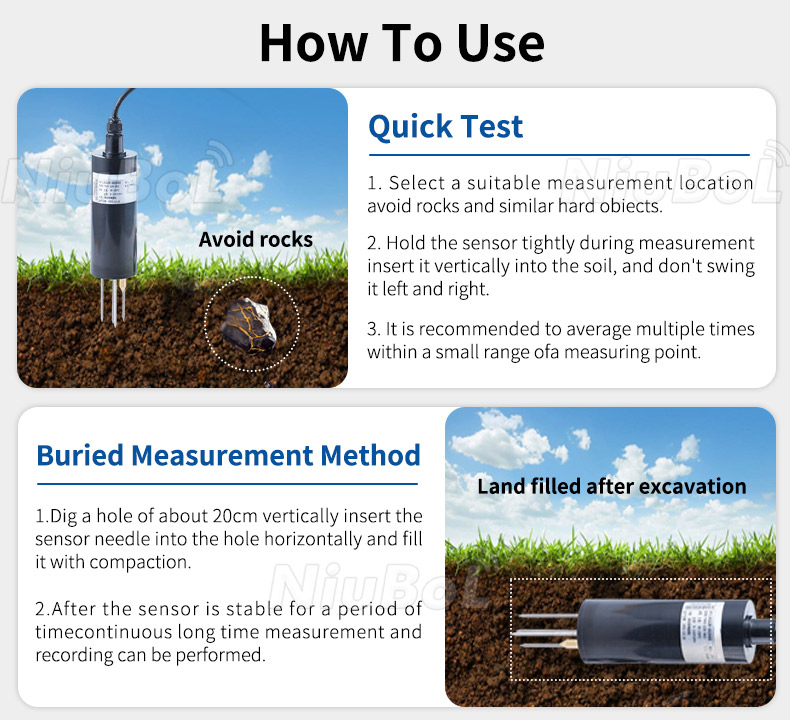
After installation, observe the local wetting and drying response with irrigation times and field conditions recorded. A probe beside an emitter and one deeper in the root zone may respond differently. That difference does not necessarily mean one is wrong. The intended sampling position and crop decision determine how the trace should be interpreted.
A water-container response is not a universal start or stop threshold for a farm valve. Establish the relationship to the actual root zone, crop and soil. For field validation and maintenance context, University of Arizona guidance recommends comparisons under matching soil and environmental conditions and addresses the effects of soil variability and sensor condition.
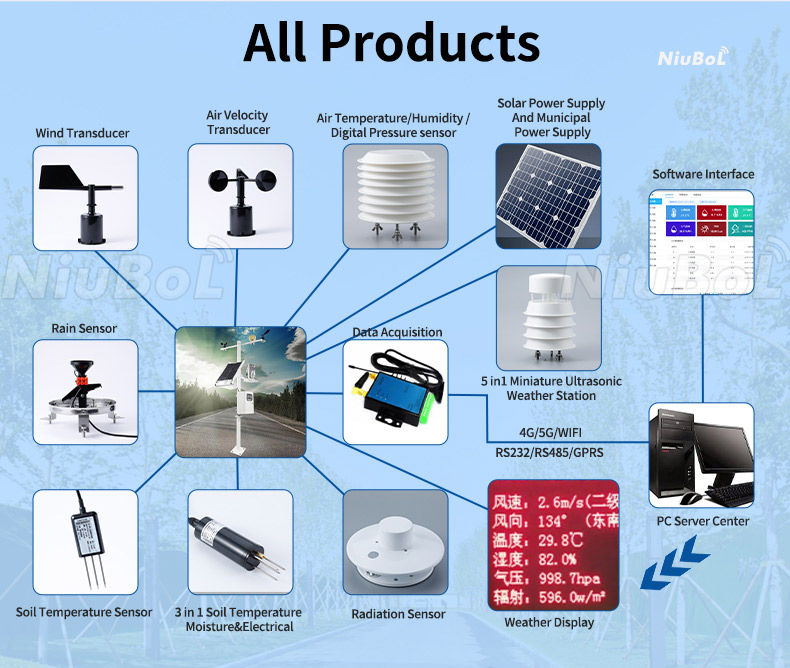
In an industrial monitoring arrangement, separate the probe, logger and any actuator logic. RS485 Modbus RTU support must match the device definition and receiving equipment. A sensor reporting moisture does not inherently contain wireless backhaul, a pump relay or a validated irrigation algorithm.
No universal 100% target applies. Volumetric moisture relates water volume to bulk soil volume, which includes solids. Assess the ordered device against the actual medium and reference method; do not change its calibration solely because a thoroughly wetted soil reads below the top of the stated range.
No. A permitted response check can help investigate the device and acquisition path, but soil accuracy requires a suitable comparison in the relevant medium and moisture conditions. A functioning display in water is not an independent validation of a soil calibration curve.
Only after confirming that both express the same quantity. A mass-based water-content percentage is not automatically volumetric water content. Obtain the required volume or bulk-density information and use consistent units before evaluating any difference between the reference and the probe.
No sensing-principle name establishes immunity to all field conditions. Compare the selected model's performance and relevant soil conditions, then validate the installation. Do not assume a TDR or FDR label alone guarantees identical results across soils, substrates or saline conditions.
Send NiuBoL the model or required quantities, growing medium, installation depth, moisture range of interest, output and receiving device. For a suspected fault, include the unit labels, observation times, reference method and installation photographs. This helps distinguish device selection, decoding, contact and calibration issues.

Select and evaluate a moisture sensor for soil using a clearly defined water-content quantity and the intended medium. Keep air/water response checks separate from soil calibration, compare like reference quantities, and resolve contact or decoding problems before applying a correction. Irrigation thresholds need field interpretation, not an assumed 100% wet endpoint.
 NBL-S-THR-Soil-temperature-and-moisture-sensors-Instruction-Manual-V4.0.pdf
NBL-S-TMC-Soil-temperature-and-moisture-conductivity-sensor.pdf
Related recommendations
Sensors & Weather Stations Catalog
 Agriculture Sensors and Weather Stations Catalog-NiuBoL.pdf
Weather Stations Catalog-NiuBoL.pdf
Agriculture Sensors Catalog-NiuBoL.pdf
Water Quality Sensor Catalog-NiuBoL.pdf
Related products
 Combined air temperature and relative humidity sensor
 TDR Soil Moisture & Temperature Sensor for irrigation| RS485 |4-20mA| NBL-S-THR
 Soil pH sensor RS485 soil Testing instrument soil ph meter for agriculture |NBL-S-PH
 Wind Speed sensor Output Modbus/RS485/Analog/0-5V/4-20mA
 Tipping bucket rain gauge for weather monitoring auto rainfall sensor RS485/Outdoor/stainless steel
 Pyranometer Solar Radiation Sensor 4-20mA/RS485


Screenshot, WhatsApp to identify the QR code
WhatsApp number:+8615367865107
(Click on WhatsApp to copy and add friends)

