





— Blogs —
—Products—
 Consumer hotline +8618073152920
 WhatsApp:+8615367865107
Address:Room 102, District D, Houhu Industrial Park, Yuelu District, Changsha City, Hunan Province, China
Technical Support
Time:2026-09-07 16:27:29 Popularity:330
How to install soil sensors is largely a question of soil contact and representative placement. A probe can pass an electrical bench test yet produce poor field data if its sensing rods touch stones, sit in an air gap or sample a spot that behaves unlike the irrigated zone. Installation records should therefore describe the surrounding soil and the management decision, not just the sensor's depth.
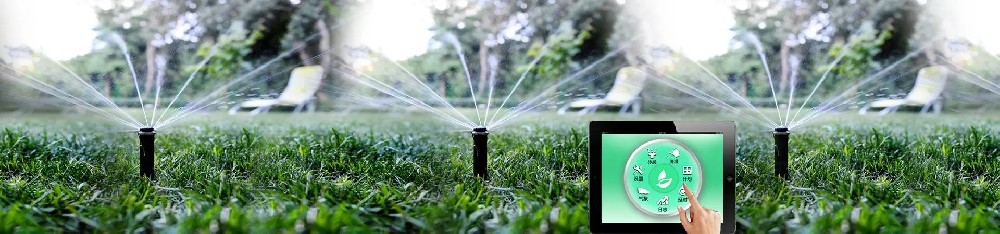
Map the irrigation blocks, soil-texture changes, slope positions and crop rooting patterns. Select a point that represents each management zone; avoid a leaking pipe, a headland, a wheel track or the wetting pattern immediately beside one dripper unless that is the condition the project intends to monitor. A single probe measures a small volume around its electrodes. It cannot stand in for a whole field merely because it reports to a central dashboard.
Agree what the record will drive: irrigation start, irrigation stop, a research profile or a check on drainage below the root zone. Then select depths around that decision. A shallow probe may show the wetting front while a deeper one shows whether water is reaching the lower root zone. A multi-depth tube measures several layers at one horizontal location; it does not remove the need to choose representative positions across a variable field.
Record the intended depth as the depth of the active sensing section, not just the top of the housing. The same number on two installation drawings can otherwise refer to different actual soil volumes. Photograph the undisturbed profile and note texture, stones, compaction and any visible roots before backfilling.
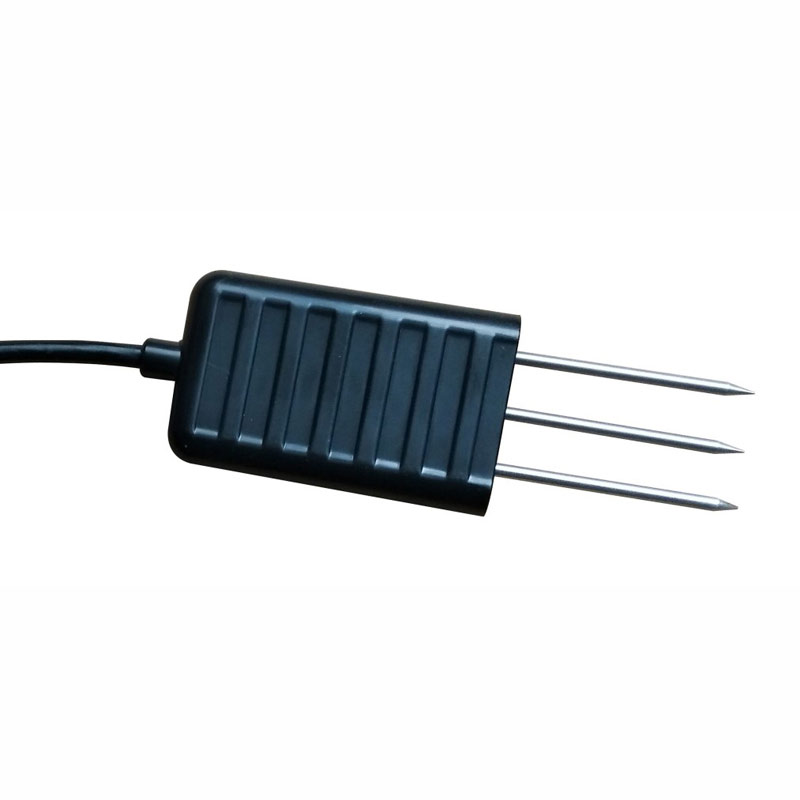
For a pin-style probe used for rapid measurements, clear stones from the intended insertion path and expose the target layer without loosening the soil that will contact the electrodes. Insert steadily, with the sensing length fully in soil. Do not rock the body back and forth to make a hole; the resulting air space can bias the dielectric moisture response. In hard ground, prepare a suitable pilot opening with a separate tool rather than using the probe as a lever.
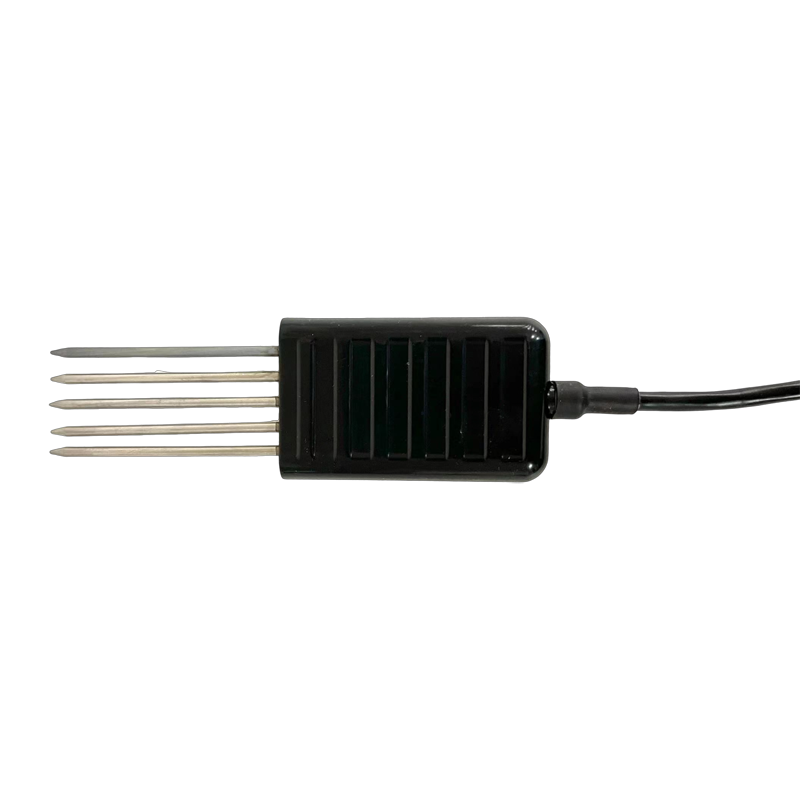
For a fixed installation, excavate an inspection pit and press the sensing section into an undisturbed sidewall at the chosen depth. Backfill in layers and restore contact around the cable entry without packing a lump of loose soil around the rods. The NiuBoL 7-in-1 soil sensor instructions describe both vertical insertion for rapid readings and horizontal insertion into a pit wall for long-term burial. These are methods for that probe form; follow the delivered instructions for a tube or another geometry.
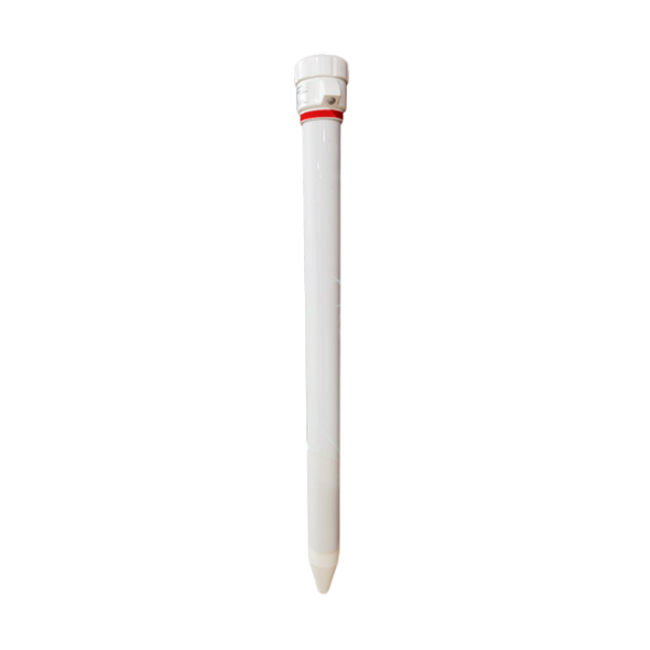
Where a multi-depth tube is specified, a straight, close-fitting bore and full soil-to-tube contact matter at every measuring layer. Backfill a gap according to the tube product's method rather than packing only the surface. A misleadingly dry lower channel can be an installation defect, not deep-root water stress. Do not infer that one nominal tube length guarantees exact sensing depths; confirm the ordered layer positions and the installed datum.
| Installation form | Useful duty | Acceptance observation |
|---|---|---|
| Pin-style probe, temporary insertion | Spot checks or repeat measurements at mapped points | Full insertion, no stones or visible voids; repeated readings at nearby positions. |
| Pin-style probe, pit-wall burial | Continuous trend at a specified soil layer | Undisturbed sidewall contact, marked depth, protected cable and restored backfill. |
| Multi-depth tube | Moisture and temperature profile at one horizontal location | Layer registration, straight bore, continuous tube contact and stable post-installation trend. |
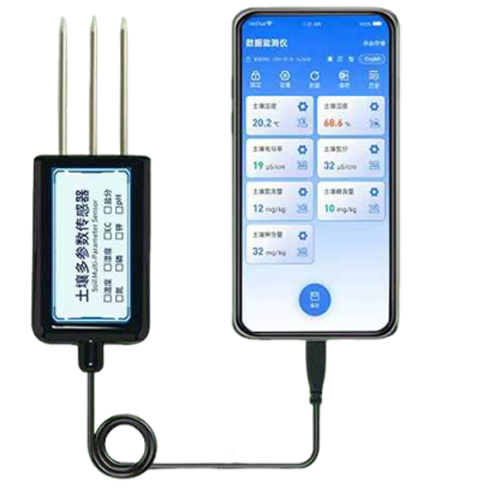
The photographs on this page show more than one NiuBoL soil-sensing form. The NBL-S-TMC-7 integrated soil probe can be used for spot or fixed measurements, while the NBL-S-TMSMS multi-depth tube reports several layers. A USB Type-C handheld soil tester shown in one photograph is a different workflow from an unattended RS485 station. Do not copy its interface, depth or accuracy into an online-monitoring specification.
| NBL-S-TMC-7 item | Specified value | Installation consequence |
|---|---|---|
| Supply and output | 5-24 VDC; RS485, Modbus communication, 9600 bps | Power and address the probe before connecting a shared logger bus. |
| Moisture / temperature range | 0-100% / -40 to 80 °C | Check soil conditions and display units; range alone does not define field accuracy. |
| Moisture / temperature accuracy | ±5% / ±0.5 °C in the product instructions | Check sensor limits and point placement separately. |
| Soil EC range | 0-10000 µS/cm | Interpret with soil moisture and temperature context. |
| Power use | 15 mA at 12 VDC | Include logger, modem and duty cycle in a solar-power calculation. |
The NPK values on this integrated product are empirical estimates derived from electrical properties, not separate laboratory assays of nitrogen, phosphorus and potassium. Its soil pH channel is likewise not a substitute for a specified glass-electrode or laboratory method where dosing or compliance depends on pH accuracy. Use these extra channels as trend context within their limitations.
Give the cable a protected route from the buried head to the junction or logger. Provide strain relief so pulling at the surface does not disturb the electrodes. Mark the buried path for later cultivation and maintenance. A water-resistant probe does not make an unsealed extension joint safe underground; place service joints in a suitable enclosure and document their location.
For an RS485 Modbus RTU system, label each point with location, depth, sensor model and device address. Read the value directly from the probe before mapping it into the PLC, RTU or data logger, then compare the displayed channel and timestamp. Check register order, units, decimal scaling and invalid-value handling. On the NBL-S-TMC-7, the product instructions specify at least 1000 ms between communication requests; use the delivered protocol for actual polling settings.
Do not make irrigation valves respond automatically to a newly installed moisture number without observing a baseline. Record one complete wetting and drying cycle, rain or irrigation event, and the associated readings at each depth. A deep channel that jumps before the shallow layer may indicate preferential flow or a poor installation; inspect the site before editing a control threshold.
A brief air-to-water check can show that some moisture probes respond, but it is not a soil calibration. Dielectric response, contact geometry and soil texture differ from a beaker. Do not immerse a connector or logger to perform this check, and only wet the portion the delivered model is designed to expose. A probe that reads high in water may still be wrong in soil with an air gap around its rods.
For field acceptance, compare a few nearby insertions or a well-documented soil sample at the same depth and time. Expect spatial variation; investigate an implausible point rather than tuning every sensor to one laboratory number. Document the method and any site-specific conversion required for the agronomic decision. The acceptance sheet should show depth, position, soil condition, first stable readings, communication status and a response to a real irrigation or rainfall event.
Uneven wetting is one common cause. Drip irrigation creates a strong gradient from the emitter outward; a probe near the wettest zone may stop the system too early for the rest of the root volume. In sprinkler fields, slope and nozzle coverage can produce similar contrasts. Place additional points where the management zone genuinely differs instead of averaging a good point with an irrelevant one.
Another cause is a disturbed installation layer. A loose backfilled pit can drain or wet differently from undisturbed soil. Set a stabilization period after installation and use subsequent event response to judge whether the point behaves plausibly. If a channel remains flat through a known wetting event, check power and communication, then inspect the probe contact. Recalibration is not the first remedy for a mechanical gap.
For projects with several depths and plots, preserve the physical hierarchy in the data system: site, zone, plot, location and depth. That makes later comparison possible and prevents a 20 cm channel from being relabeled as 40 cm during a logger replacement. Retain the as-built map with the asset inventory.
When planning how to install soil sensors across several plots, send NiuBoL the crop and irrigation method, soil textures, intended decisions, number of management zones, proposed depths, cable lengths, power supply and receiving system. Specify whether you need a temporary handheld survey, fixed pin probes or a multi-depth profile. Ask the contractor to separate sensors, mounting or boring work, cable protection, logger, gateway, commissioning and later inspection. The installed point has a different cost and risk from a bare sensor.
Q1. Must soil sensing rods be vertical?
A1. Not always. NBL-S-TMC-7 instructions allow vertical insertion for rapid checks and horizontal insertion into a pit wall for fixed monitoring. The active rods must be fully surrounded by representative soil without voids.
Q2. Can a 30 cm insertion represent the average moisture of 0-30 cm?
A2. No. The sensor reports the volume near its active section. Use separate depths or a specified multi-layer product if a root-zone profile is required.
Q3. How many sensors should a field contain?
A3. There is no reliable universal area per probe. Divide the field by irrigation control, soil texture, slope and crop behavior; place enough points to test the variation that would change a management decision.
Q4. Does an air-and-water response prove moisture accuracy?
A4. It only checks a basic response, where the model permits that test. Verify contact and trend under actual soil conditions before accepting an irrigation-control point.
Q5. Can the integrated NPK output replace laboratory nutrient testing?
A5. No. On the referenced 7-in-1 device, NPK is an empirical estimate from electrical properties. Use an appropriate laboratory method where fertilizer quantity or research claims depend on actual nutrient concentration.
Q6. What should be checked when one depth remains flat after irrigation?
A6. Confirm power, Modbus polling and the mapped channel; then inspect depth, contact and whether wetting actually reached that layer. Do not assume a flat line proves sensor failure.
Q7. What must the installation record contain?
A7. Keep model, address, position, sensing depth, orientation, soil description, cable route, first stable readings and a documented wetting response. Those records make later replacement and fault diagnosis possible.
Reliable soil-sensor installation starts with representative location, full soil contact and a depth tied to a specific decision. Verify the probe and data path, then check its response to real wetting before using the trend for irrigation control. NiuBoL can match the sensing form and interface to the field layout once the management zones and depths are defined.
Prev:RS485 Sensor to Cloud: LoRaWAN, MQTT and HTTP Integration
Next:Ultrasonic Wind Sensor Installation: North Alignment and Moving Platforms
Related recommendations
Sensors & Weather Stations Catalog
 Agriculture Sensors and Weather Stations Catalog-NiuBoL.pdf
Weather Stations Catalog-NiuBoL.pdf
Agriculture Sensors Catalog-NiuBoL.pdf
Water Quality Sensor Catalog-NiuBoL.pdf
Related products
 Combined air temperature and relative humidity sensor
 TDR Soil Moisture & Temperature Sensor for irrigation| RS485 |4-20mA| NBL-S-THR
 Soil pH sensor RS485 soil Testing instrument soil ph meter for agriculture |NBL-S-PH
 Wind Speed sensor Output Modbus/RS485/Analog/0-5V/4-20mA
 Tipping bucket rain gauge for weather monitoring auto rainfall sensor RS485/Outdoor/stainless steel
 Pyranometer Solar Radiation Sensor 4-20mA/RS485

Screenshot, WhatsApp to identify the QR code
WhatsApp number:+8615367865107
(Click on WhatsApp to copy and add friends)

