





— Blogs —
—Products—
 Consumer hotline +8618073152920
WhatsApp:+8615367865107
Address:Room 102, District D, Houhu Industrial Park, Yuelu District, Changsha City, Hunan Province, China
Technical Support
Time:2026-09-07 16:27:29 Popularity:309
An RS485 sensor to cloud connection normally requires a data logger, RTU or gateway that reads the sensor and prepares data for the destination server. MQTT and HTTP operate on the network side; they do not replace the sensor's Modbus registers. LoRaWAN adds an end device, radio gateway and server functions. Select the complete path, including data format, security and outage behavior, rather than matching protocol names alone.
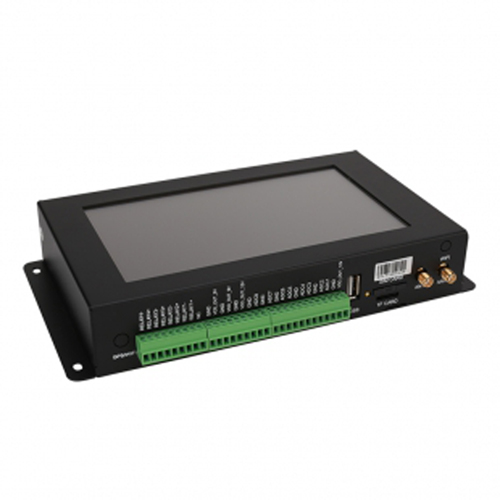
A soil or weather sensor may measure correctly while its cloud value is wrong. The acquisition device can use the wrong scale, the payload can omit the unit, or the server can assign a received value to the wrong station. Treat integration as a sequence of transformations that can each be checked, not a single connected/disconnected status.
For an RS485 Modbus RTU sensor, the first transformation is from register words to an engineering value. The gateway must know the device address, register offset, data type and scale. For a 4-20 mA transmitter, it instead needs a compatible analog input, the correct loop arrangement and the configured measurement range. Neither input automatically defines the cloud field name.
| Stage | What must be agreed | Useful commissioning check |
|---|---|---|
| Sensor to acquisition device | Power, input type, protocol and measurement interpretation | Compare a raw read with the local engineering value |
| Acquisition to network message | Station identity, units, timestamp, quality flag and record identifier | Inspect one complete outgoing record |
| Network to receiving service | Endpoint, authentication, encryption and retry behavior | Verify receipt using the intended credentials and network |
| Receiving service to stored data | Field mapping, duplicate handling and historical timestamps | Retrieve the same record from the final database or API |
Keep the logger's local reading available during the first test. If it is correct but the cloud value is not, replacing the probe is unlikely to solve the problem. Compare the outgoing message with the stored record and locate the first stage where the value, time or identity changes.
A logger at the monitoring point polls the wired sensors, stores or processes the measurements as configured, and sends records over cellular or Ethernet. This arrangement suits a station with several nearby sensors and a usable network connection. Select the regional cellular hardware for the installation location; a modem name or SIM slot does not establish network compatibility.
A router alone may only provide connectivity for another network-capable device. Likewise, a transparent serial DTU may transport bytes without converting them into named, timestamped measurements. Determine where Modbus polling and payload creation will run before selecting either device. Otherwise the server team may receive raw serial traffic when it expected structured records.
A wired RS485 probe needs a compatible LoRaWAN end device that powers and reads it, then encodes an uplink payload. A LoRaWAN radio gateway forwards radio traffic toward the network server; it should not be assumed to contain the Modbus client for every remote probe. The application then decodes the payload into useful measurement fields.
LoRa and LoRaWAN are not interchangeable purchasing terms. Check the end-device protocol, network-server compatibility, regional channel plan and application decoder. The LoRaWAN standards overview separates the link layer, backend interfaces and regional parameters. A matching radio frequency alone is not proof that two products will exchange application data.
Battery operation also depends on the connected probe. A low-power radio does not eliminate the energy needed to power a sensor or wait for a stable measurement. Request a duty-cycle calculation that includes sensor warm-up, acquisition and radio activity. The payload size, reporting interval and supported downlink behavior must fit the network and the application.
If a PLC or RTU already reads the sensors correctly, the cloud connection can use its supported upstream interface. This avoids placing a second independent Modbus client on the same serial segment. Agree which device owns scaling and timestamping so the gateway does not apply a conversion twice or silently substitute its upload time for the measurement time.
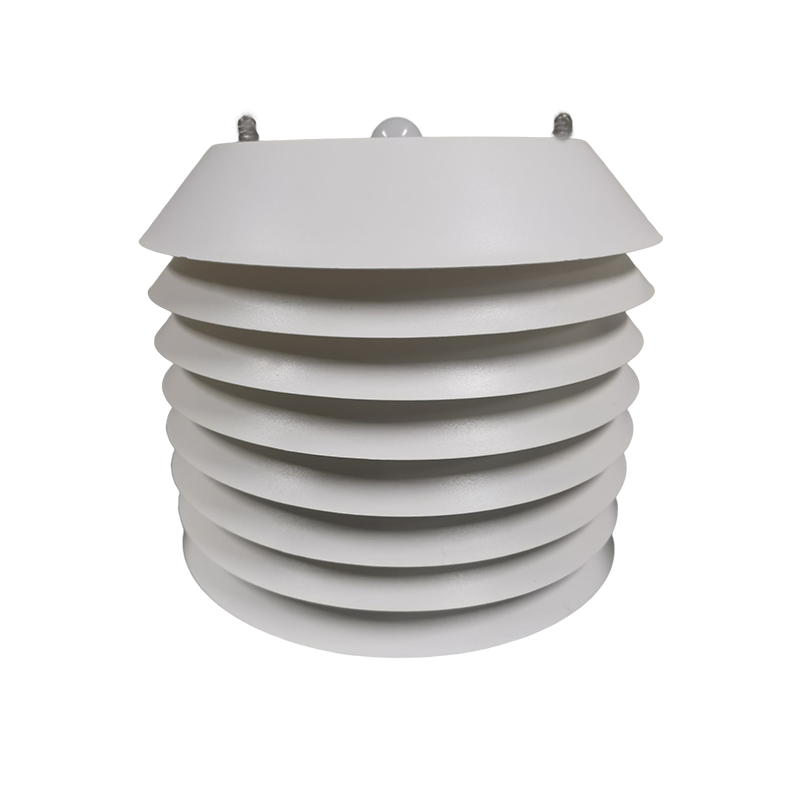
For a weather station, the receiving system needs to know which value is air temperature and which is soil temperature, even if both use degrees C. For a soil profile, depth is part of the measurement identity. For rainfall, a cumulative counter is not the same quantity as rainfall during one reporting interval. These distinctions belong in the data definition before programming begins.
An example field list might contain station_id, sensor_id, parameter, unit, value, measured_at, quality and record_id. This is an illustrative project schema, not a fixed NiuBoL payload. Define how unavailable values are represented and whether one message contains all channels or one channel. Use a sample message to test the server parser before configuring every station.
For MQTT, agree the broker address, port, protocol version, client identifier, topic structure, authentication and permitted publish/subscribe operations. With QoS 1, duplicate delivery is possible; the MQTT specification defines it as at-least-once delivery. The receiving application still needs a way to avoid inserting the same measurement twice. A retained message is not a historical time-series database.
For HTTP or HTTPS, define the request method, URL, headers, credentials, body format and response handling. A successful transport response alone does not establish that every field was stored correctly. Test the application response and retrieve the submitted record. If the endpoint times out after accepting a record, a retry must not create an uncontrolled duplicate.
These choices do not change the physical sensing method. A salinity probe does not become an MQTT sensor because a gateway forwards its values. Keeping sensor acquisition separate from upload configuration also allows a server migration without unnecessary changes to the field wiring.
The TG462 / TG462S data logger is an option for a station combining serial and analog measurements. Its available hardware provides a basis for integration, while the final endpoint behavior depends on the configured software. Do not interpret a storage slot or a networking protocol as a promise that a particular cloud workflow is already implemented.
| Logger item | TG462 / TG462S specification | Implication for the installation |
|---|---|---|
| RS485 interfaces | 3 ports | Separate compatible sensor groups when one shared segment is unsuitable |
| Analog acquisition | 8 x 12-bit ADC channels | Specify the required current or voltage input configuration |
| Network and protocols | 2 Ethernet ports; cellular by configuration; MQTT and Modbus gateway functions | Check modem region, server interface and project software together |
| Input supply | 5-35 VDC; standard supply 12 V / 1.5 A | Budget for logger operation and connected loads separately |
| Local storage | Micro SD support up to 32 GB | Usable retention depends on record format and logging software |
| Enclosure and temperature | IP30; -35 to +75 degrees C | Use a suitable outdoor cabinet; control cabinet temperature and condensation |
HTTP in a device networking stack does not guarantee support for an arbitrary HTTPS API, token refresh procedure or custom JSON schema. Provide an endpoint specification and example request so the required implementation can be established. Ask the same question about automatic retransmission and persistence through a power restart.
Disconnect the upstream network during a controlled test without removing sensor power. Check whether acquisition continues, where records accumulate, and what happens when the buffer becomes full. Restore the network and compare the original measurement timestamps with the recovered records. An empty period in a chart must not be silently filled with repeated last-known values.
For a capacity estimate, suppose one station stores one 240-byte record every minute for 48 hours. That requires 2,880 records, or 691,200 bytes of record payload, before database, file-system and other overhead. It says nothing about the actual logger's implemented retention. Use the configured record size, number of channels and worst expected outage to size and test storage.
Also restart the logger during an outage test. RAM buffering can behave differently from durable storage. During recovery, old records should remain identifiable as historical data while new readings continue to arrive. Define whether delayed records update charts only or can trigger alarms; an old high-temperature event should not automatically be presented as a current condition.
Before site deployment, test DNS resolution, outbound firewall rules, certificate validation and credentials from the intended network. Use authenticated, encrypted connections where required, and keep administrative services separate from measurement upload. Do not expose a field Modbus interface directly to the public Internet to avoid implementing a proper upload path.
Agree who maintains credentials, certificate renewal and firmware configuration. Separate read-only telemetry from remote configuration or control permissions. A cloud dashboard that can view soil moisture does not automatically need permission to change sensor calibration or operate an irrigation relay.
For integration pricing, describe the work rather than requesting only a gateway model: sensor maps, number of stations, upload schema, authentication, outage duration and required acceptance tests. Existing standard configuration and new endpoint-specific software can have different implementation scopes. Request those items separately so hardware cost is not confused with custom integration effort.
Normally it supplies serial measurements to a client. MQTT publishing requires an IP-capable device and software that reads and formats those measurements. Choose a sensor with integrated networking only when that capability is explicitly part of the selected version.
Not necessarily. The field end device normally performs that acquisition. The radio gateway and server path must then support the chosen node and payload decoder. Check the complete chain before assuming a gateway's presence is sufficient.
Often the field sensors can remain, but the upload device may need different credentials, topics, payload mapping or software. Test one station against the new endpoint, including historical data and alarms, before changing the remaining stations.
No. Messaging delivery does not repair an unpowered sensor, an incorrect Modbus read or a logger that never stored the measurement. Verify acquisition, durable buffering and database handling separately from the MQTT connection.
They may, when explicitly supported, but permissions, acknowledgments and local safeguards need separate design. Do not treat receipt of a command as proof that an actuator operated. Avoid relying on an intermittent telemetry path for time-critical protective control.
No. Standard Modbus acquisition and a documented server interface may be sufficient. An SDK or custom development becomes relevant when the chosen device's configuration tools cannot implement the required parser, authentication, storage or control behavior.
Choose an RS485 sensor to cloud architecture by tracing a measurement all the way to its stored record. Prove the sensor read, payload interpretation and outage recovery independently. For NiuBoL integration review, supply the sensor list and a working example of the server's expected message so the logger and software can be matched to the actual task.
Prev:Multiple RS485 Sensors on One Bus: Power and Polling Limits
Next:How to Install Soil Sensors for Representative Field Data
Related recommendations
Sensors & Weather Stations Catalog
 Agriculture Sensors and Weather Stations Catalog-NiuBoL.pdf
Weather Stations Catalog-NiuBoL.pdf
Agriculture Sensors Catalog-NiuBoL.pdf
Water Quality Sensor Catalog-NiuBoL.pdf
Related products
 Combined air temperature and relative humidity sensor
 TDR Soil Moisture & Temperature Sensor for irrigation| RS485 |4-20mA| NBL-S-THR
 Soil pH sensor RS485 soil Testing instrument soil ph meter for agriculture |NBL-S-PH
 Wind Speed sensor Output Modbus/RS485/Analog/0-5V/4-20mA
 Tipping bucket rain gauge for weather monitoring auto rainfall sensor RS485/Outdoor/stainless steel
 Pyranometer Solar Radiation Sensor 4-20mA/RS485


Screenshot, WhatsApp to identify the QR code
WhatsApp number:+8615367865107
(Click on WhatsApp to copy and add friends)

