





— Blogs —
—Products—
 Consumer hotline +8618073152920
 WhatsApp:+8615367865107
Address:Room 102, District D, Houhu Industrial Park, Yuelu District, Changsha City, Hunan Province, China
Product knowledge
Time:2026-01-08 14:59:40 Popularity:819
In modern water conservancy projects and smart city construction, the real-time and accuracy of water level data is the "lifeline" for decision-making and command. With the iteration of sensing technology, traditional immersion, float, or ultrasonic water level gauges gradually reveal limitations when dealing with extreme climates, complex water quality, and high maintenance costs.
As a leading brand in the field of environmental monitoring, NiuBoL relies on its self-developed millimeter-wave RF technology to launch the 77GHz~79GHz frequency-modulated continuous wave (FMCW) radar water level gauge. This is not only an upgrade in measurement frequency but also a qualitative change from "rough perception" to "centimeter-level precise measurement." This article will provide a comprehensive analysis of water level monitoring solutions from four dimensions: technical mechanism, product characteristics, practical advantages, and installation guide.
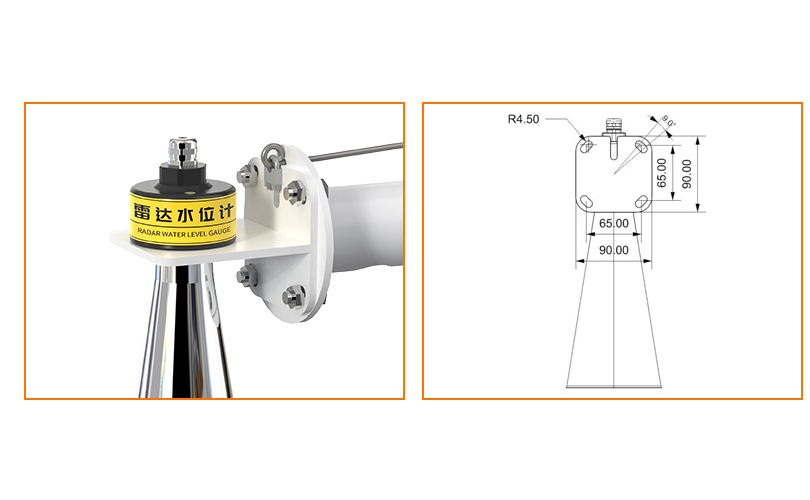
1. Synergistic Effect of Millimeter-Wave and FMCW
NiuBoL radar water level gauge adopts frequency-modulated continuous wave (FMCW) technology. Its principle is that the sensor antenna emits electromagnetic waves whose frequency changes linearly with time. When the electromagnetic wave encounters the water surface and reflects, the antenna receives the echo signal. By calculating the frequency difference between the transmitted signal and the received signal, the water level distance is obtained using algorithms.
Compared to traditional pulse radar, FMCW has the following natural advantages:
Higher signal-to-noise ratio: The self-developed CMOS RF chip ensures that weak echo signals can still be extracted under complex background noise.
Extremely short blind zone: Through a wider bandwidth (up to 2GHz), NiuBoL successfully compresses the blind zone to within 15cm, solving the problem of inability to monitor low water levels.
1.2 Practical Significance of 8° Narrow Beam
In actual installation environments, random stones on both sides of the river, bridge pillars, or inner walls of culverts often produce false echoes. NiuBoL 77GHz radar water level gauge controls the antenna beam angle to an extremely narrow 8°, which means the energy is more concentrated.
Strong anti-interference ability: Even when installed in narrow pump wells or beside bridge piers, it can precisely focus on the water surface below, effectively avoiding interference from structural components.
High installation flexibility: Smaller emission surface and concentrated beam reduce requirements for on-site installation environment.
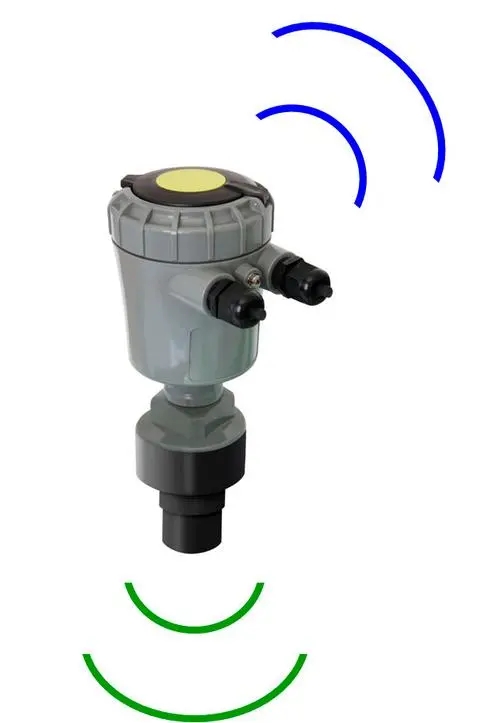
I. Precise and Unbiased: Millimeter-Level Measurement Benchmark
NiuBoL radar water level gauge has a resolution of 1mm, and under standard conditions, the accuracy can reach ±1mm. This leap in precision allows it not only to monitor water level height but also to sense subtle surge fluctuations, providing the most detailed data support for hydrological research.
II. Rapid Response: All-Weather Real-Time Online
Relying on powerful computing capabilities, the device supports continuous acquisition mode. Whether in the flood season with wind and rain or in the misty morning, radar waves can penetrate the air medium to achieve second-level data updates, ensuring that management departments can obtain first-hand warning information during sudden floods.
III. Industrial-Grade Reliability: Fearless of Harsh Conditions
Non-contact measurement: The sensor does not contact the water body, unafraid of sediment accumulation, debris entanglement, strong acid and alkali corrosion, or oil fouling.
Environmental immunity: Unaffected by atmospheric temperature changes, air pressure fluctuations, wind speed, or water vapor. In contrast, ultrasonic water level gauges often experience centimeter-level errors when temperature fluctuates drastically.
High-level protection: The whole machine adopts IP67 protection level design, integrated lens packaging, ensuring core components remain safe even in outdoor high-humidity environments or brief submersion.
IV. Minimal Maintenance: Low Power Consumption and High Efficiency
NiuBoL fully considers the inconvenience of field power supply. The device's maximum power consumption is only 0.6W, significantly reducing battery configuration requirements when using solar power systems. The RS485 standard communication output gives the device good compatibility, allowing direct access to PLC, RTU, or smart water affairs cloud platforms.
V. Long-Term Advantages of Non-Contact Design
Since the sensor antenna does not need to directly contact the water body, NiuBoL radar water level gauge completely solves the problems of sensor corrosion by pollutants in water, entanglement by debris, or burial by sediment.
Low maintenance cost: No need for regular probe cleaning, greatly reducing manual maintenance expenses.
Ultra-long lifespan: Core components do not contact water, with minimal mechanical wear, stable operation even in highly corrosive industrial wastewater or complex field environments.
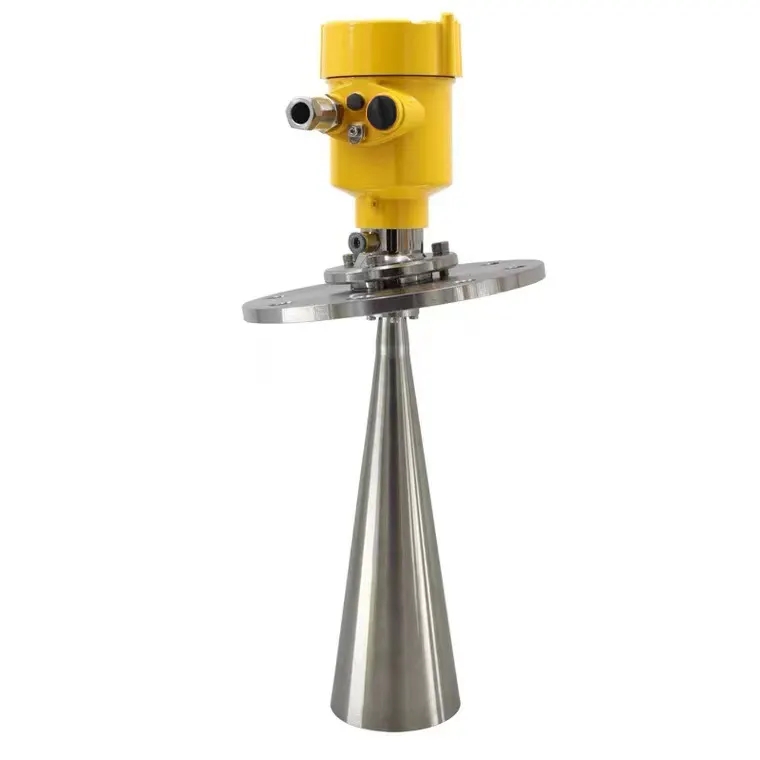
To facilitate selection by technical personnel, here are the key parameters of NiuBoL 77GHz radar water level gauge:
| Parameter | Specification |
|---|---|
| Transmission Frequency | 77GHz ~ 79GHz |
| Measurement Range | 0.15m ~ 65m (can be customized according to actual needs) |
| Measurement Accuracy | ±1mm |
| Resolution | 1mm |
| Beam Angle | 8° |
| Power Supply Range | DC 10-30V |
| Communication Interface | RS485 Output (Modbus RTU Protocol) |
| Operating Temperature | -40℃ to +80℃ |
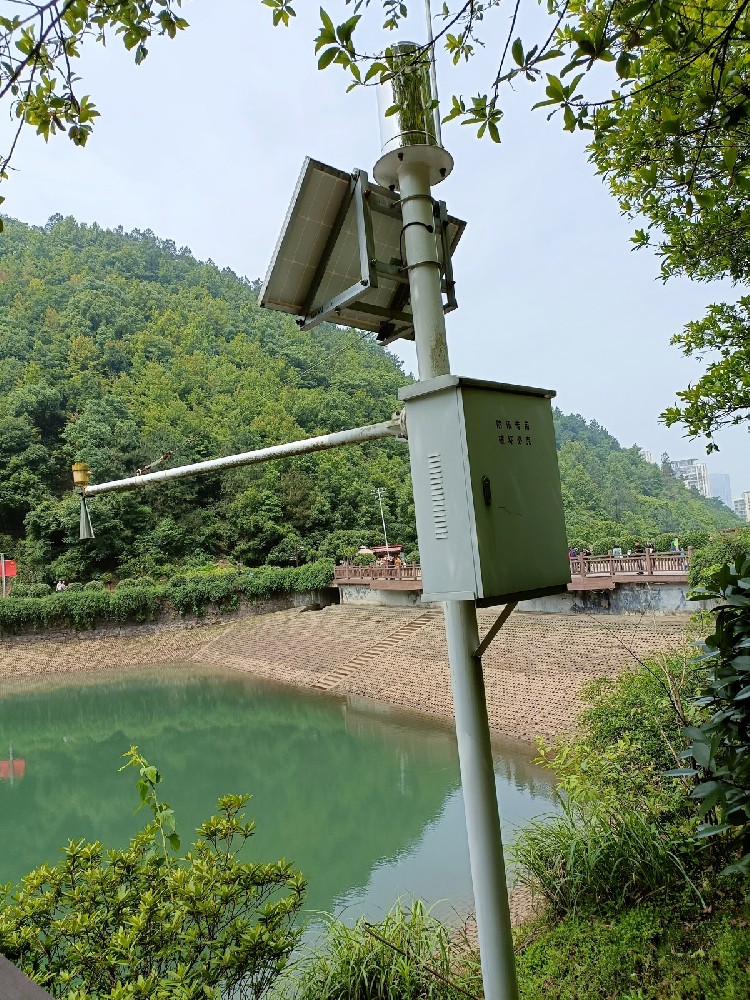
1. Smart Irrigation Areas and Farmland Water Conservancy
In the main and branch canals of modern irrigation areas, NiuBoL radar water level gauge can monitor subtle changes in water level in real time. Combined with NiuBoL smart gateway, data can be directly delivered to managers' mobile phones, achieving remote flow calculation and automatic gate control, greatly improving water resource utilization.
2. Urban Flooding Warning and Pipe Network Monitoring
Urban sewers and drainage pumping stations have complex environments. The small size and narrow beam characteristics of the radar water level gauge make it very suitable for installation under narrow manhole covers or in pump pits. Even during heavy rain when water levels rise sharply, its 15cm blind zone ensures no loss of data at the last moment.
3. Mountain Flood Disaster Defense and Dam Safety
For mountain streams with large drops or towering reservoir dams, NiuBoL's up to 65m range provides excellent applicability. Non-contact measurement ensures the device remains stable like a mountain during flood impacts or floating object collisions, buying precious time for downstream residents' evacuation.
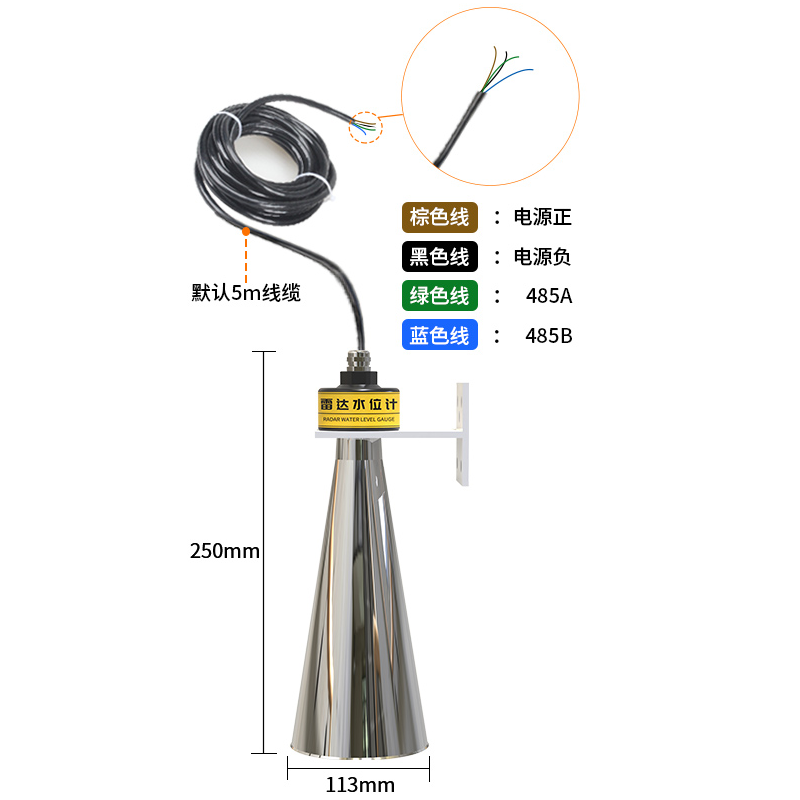
To ensure data accuracy, NiuBoL reminds you to pay attention to the following details during installation:
Verticality is key: Must ensure the emission surface of the water level gauge is parallel to the monitored water surface. Any angular deviation will cause the signal echo to not return along the original path, thereby reducing measurement distance or causing reading jumps.
Avoid eddy zones: Try to choose places with steady water flow. If installation in rapid flow areas is necessary, suggest avoiding positions below gates where intense bubbles and vortices are generated.
Clearance requirements: Although the beam angle is small, still need to ensure no cables, branches, or pipes cross within the 8° diffusion range.
Thanks to the non-contact design, NiuBoL radar water level gauge basically achieves "maintenance-free." However, in long-term field operation, it is recommended to check every six months whether the bracket has shifted, and whether the lens surface has serious mud or spider webs blocking; simple wiping can restore it to optimal condition.
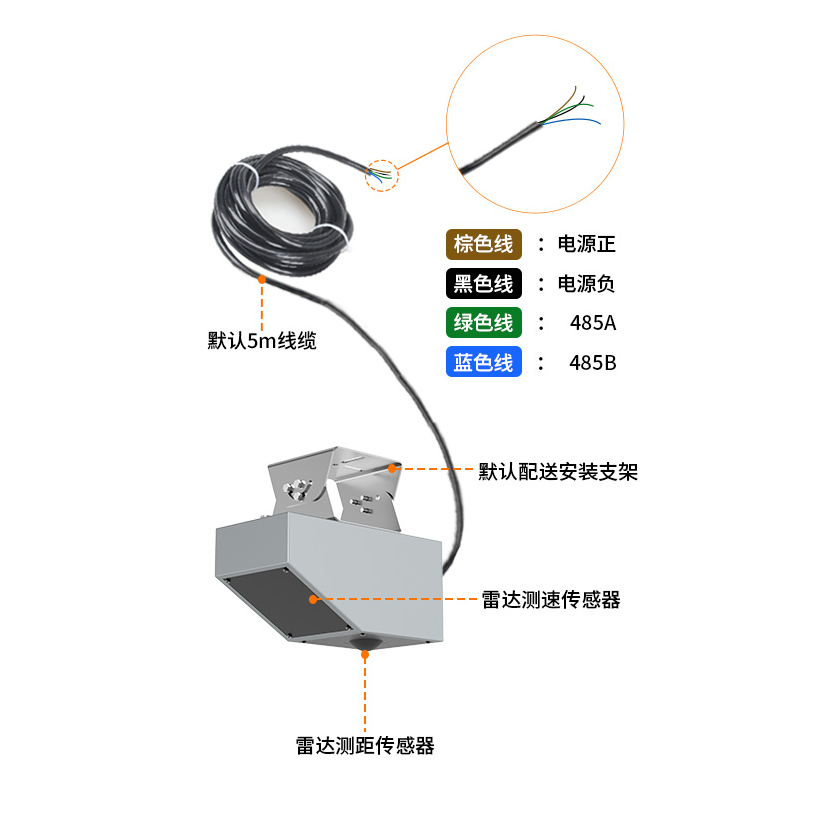
Q1: Can this radar water level gauge measure flow velocity?
A: This product focuses on precise measurement of water level. If you have flow velocity monitoring needs, NiuBoL also provides radar-based flow velocity meters or flow meters, welcome to consult NiuBoL for integrated solutions.
Q2: Does the radar wave have radiation hazards to the human body?
A: Fully complies with the standards of the National Radio Management Committee. Its transmission power is weak, with no negative impact on the human body and surrounding ecological environment.
Q3: In cold regions, will ice surfaces affect measurement?
A: Radar waves have different reflection characteristics on ice and water surfaces. If the water surface freezes, the radar measures the height of the ice surface. If under-ice water level is needed, specific algorithm processing or cooperation with other sensors is required; usually in smart water conservancy, it mainly monitors liquid water.
Q4: What advantages does the radar water level gauge have compared to ultrasonic water level gauge?
A: Ultrasonic is greatly affected by air density and temperature, with significant precision decline in large temperature differences, and easily interfered by strong winds. Whereas NiuBoL radar water level gauge uses electromagnetic wave principle, its propagation speed is almost unaffected by environmental parameters, with higher precision and stronger stability.
Q5: If there is foam on the water surface, can the radar still measure accurately?
A: Most radar waves can penetrate light foam or reflect from its surface. NiuBoL high-frequency radar has better penetration and sensitivity, combined with internal filtering algorithms, can effectively filter foam interference and obtain the true liquid surface.
Q6: How far does the product support transmission?
A: The product itself provides RS485 signal output. If combined with NiuBoL's wireless transmission modules (such as 4G data acquisition terminals), data can be transmitted farther.
Q7: Is there an upper limit to installation height?
A: NiuBoL 77GHz series products have a maximum range of up to 65m, sufficient to cover monitoring needs for most reservoir dams, deep wells, and super-large bridges.
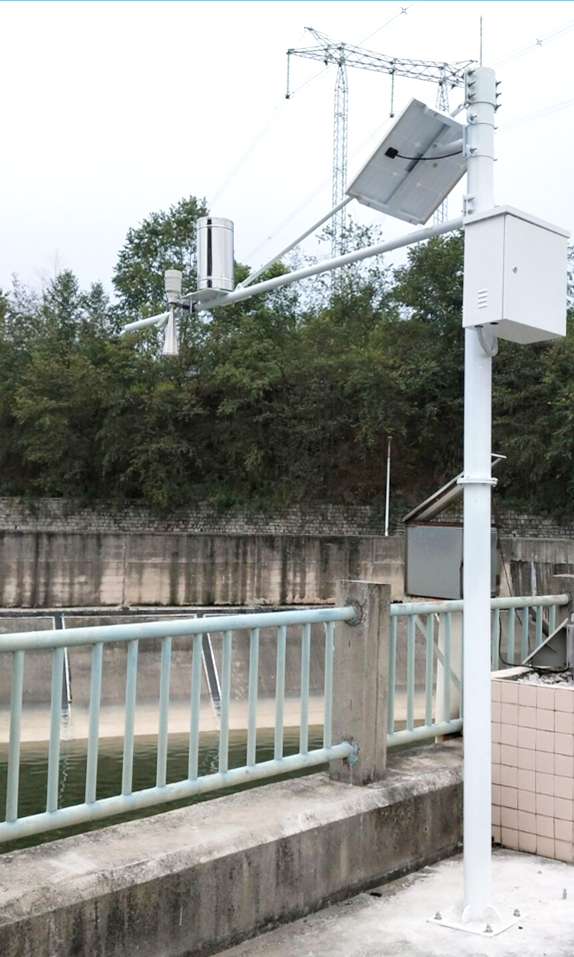
NiuBoL 77GHz millimeter-wave radar water level gauge, with its high frequency, high precision, low power consumption, and extremely strong environmental adaptability, is becoming the standard configuration in the water conservancy monitoring industry. It not only reduces manpower costs for operation and maintenance but also enhances society's resilience to flood disasters with digitalized and precise data support.
On the road to smart water affairs, NiuBoL is willing to be your most trusted hardware partner. Whether you are building national-level flood control projects or optimizing factory sewage treatment processes, we can provide the most suitable solutions for you.
Want to learn more about NiuBoL monitoring equipment solution designs? Please contact NiuBoL for one-on-one technical support.
Prev:Core Value of Installing Automatic Weather Stations in Scenic Areas and Commonly Used Sensors
Next:Necessity of Deploying Online Water Quality Monitoring Stations in Urban Sewage Pumping Stations
Related recommendations
Sensors & Weather Stations Catalog
 Agriculture Sensors and Weather Stations Catalog-NiuBoL.pdf
Weather Stations Catalog-NiuBoL.pdf
Agriculture Sensors Catalog-NiuBoL.pdf
Water Quality Sensor Catalog-NiuBoL.pdf
Related products
 Combined air temperature and relative humidity sensor
 TDR Soil Moisture & Temperature Sensor for irrigation| RS485 |4-20mA| NBL-S-THR
 Soil pH sensor RS485 soil Testing instrument soil ph meter for agriculture |NBL-S-PH
 Wind Speed sensor Output Modbus/RS485/Analog/0-5V/4-20mA
 Tipping bucket rain gauge for weather monitoring auto rainfall sensor RS485/Outdoor/stainless steel
 Pyranometer Solar Radiation Sensor 4-20mA/RS485

Screenshot, WhatsApp to identify the QR code
WhatsApp number:+8615367865107
(Click on WhatsApp to copy and add friends)

