





— Blogs —
—Products—
 Consumer hotline +8618073152920
 WhatsApp:+8615367865107
Address:Room 102, District D, Houhu Industrial Park, Yuelu District, Changsha City, Hunan Province, China
Product knowledge
Time:2026-05-12 16:54:18 Popularity:398
The online COD water quality analyzer is an important online analysis instrument in the fields of industrial wastewater treatment, environmental monitoring, and water resource management. It can realize real-time continuous monitoring of chemical oxygen demand (COD) in water. NiuBoL NBL-WQ-COD online COD sensor adopts dual-wavelength ultraviolet absorption method, requires no chemical reagents, simultaneously measures turbidity and temperature, supports RS-485 Modbus RTU and 4-20mA output, and is suitable for scenarios such as municipal sewage treatment, industrial wastewater discharge monitoring, and online river and lake water quality monitoring. This article systematically introduces its detection principle, technical specifications, application scenarios, selection points, and maintenance integration solutions, providing professional reference for system integrators, environmental protection engineering companies, and water treatment projects.
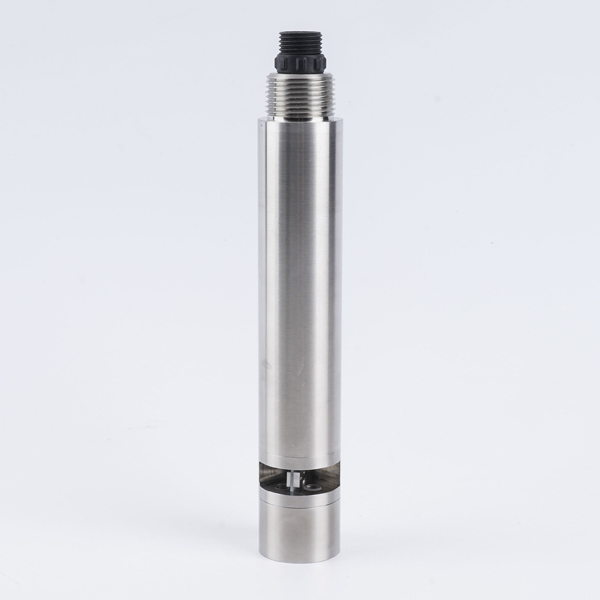
The core measurement principle of the COD water quality analyzer is based on the ultraviolet light absorption method. Many dissolved organic pollutants in water have strong absorption characteristics for specific wavelength ultraviolet light. The NBL-WQ-COD sensor uses two light sources: one 254nm ultraviolet light is used to measure the absorption degree of dissolved organic matter in water, and the other reference light is used to monitor the turbidity influence of the water body in real time. Through specific algorithms to compensate for the light path attenuation, it can effectively eliminate the interference of particulate suspended matter and turbidity, ensuring stable and reliable measurement results.
Compared with the traditional potassium dichromate method, the ultraviolet absorption method does not need to add any reagents, avoids secondary pollution, significantly reduces operating costs and meets green environmental protection requirements. This method has fast response speed (T90<30s) and is suitable for online process control that requires real-time data.
The sensor has a built-in automatic cleaning brush, which can regularly remove biofilm and pollutant attachment, further ensuring long-term measurement stability. Even in complex water quality environments, it can still maintain low drift characteristics.
| Parameter | Specification |
|---|---|
| Model | NBL-WQ-COD |
| Measurement Principle | Dual-wavelength ultraviolet absorption method |
| Range | COD: 0~200.0 mg/L (optional 0~500.0 mg/L) Turbidity: 0~200.0 NTU (optional 0~400.0 NTU) |
| Resolution | 0.1 mg/L |
| Accuracy | ±5% of reading |
| Response Time (T90) | <30 s |
| Minimum Detection Limit | 0.2 mg/L (0-200 range) 0.4 mg/L (0-500 range) |
| Calibration Method | Two-point calibration |
| Cleaning Method | Built-in automatic cleaning brush |
| Temperature Compensation | Automatic temperature compensation (Pt1000) |
| Output Mode | RS-485 (Modbus RTU), 4-20mA (optional) |
| Power Supply | 12~24 V DC |
| Power Consumption | 0.4W@12V (working) 2W@12V (cleaning) |
| Operating Temperature | 0~45℃ |
| Operating Pressure | ≤0.2 MPa |
| Protection Level | IP68 |
| Installation Method | Submersible type, 3/4 NPT |
| Shell Material | 316L stainless steel |
| Storage Temperature | -5~65℃ |
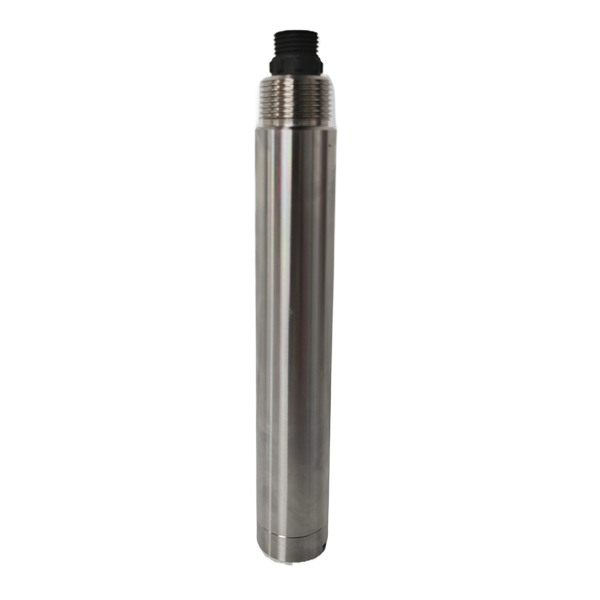
The sensor is compact in size and easy to install, enabling truly reagent-free online monitoring.
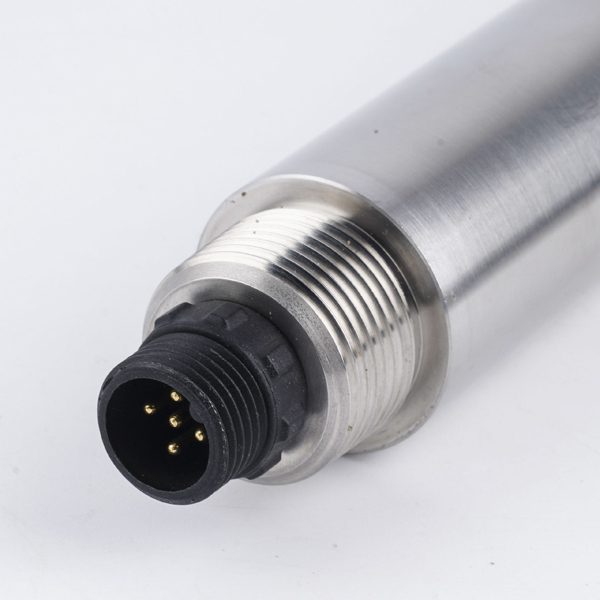
NBL-WQ-COD online COD analyzer is widely used in various occasions that require continuous monitoring of organic pollution load:
Municipal sewage treatment plants: real-time COD monitoring at inlet, outlet and each treatment unit, optimize aeration and dosing control, achieve energy saving, consumption reduction and standard discharge.
Industrial wastewater treatment: monitoring at the total discharge outlets of chemical, pharmaceutical, printing and dyeing, papermaking, electroplating and other industries, meet environmental supervision requirements and provide data support for process adjustment.
River and lake and surface water online monitoring: automatic station deployment for environmental quality, grasp the dynamic changes of organic pollution in water bodies.
Industrial park pipe network monitoring: monitoring of enterprise pretreatment facility effluent to prevent excessive discharge.
Aquaculture and food processing wastewater: rapid assessment of high organic load water bodies and verification of treatment effects.
Its 316L stainless steel shell and IP68 protection level ensure that the equipment can operate stably in long-term immersion and certain corrosive environments.
When purchasing an online COD water quality analyzer, it is recommended to focus on the following aspects:
Measurement range matching: 0-200 mg/L range is recommended for conventional municipal and medium-low concentration industrial wastewater, and high concentration scenarios can be extended to 500 mg/L.
Water quality complexity: high turbidity, high suspended solids or easy scaling water bodies should prioritize models with automatic cleaning brushes.
Integration requirements: RS-485 Modbus RTU is the mainstream industrial protocol, easy to access PLC, DCS or IoT platforms; 4-20mA output is suitable for traditional analog control systems.
Installation environment: evaluate working pressure, temperature range and whether high salt resistance or special corrosion protection is required.
Maintenance cycle and cost: the reagent-free characteristics of the ultraviolet method greatly reduce operating costs, and the automatic cleaning brush further reduces the frequency of manual intervention.
NiuBoL NBL-WQ-COD, with its stable and reliable performance and low usage cost, is suitable for most industrial and environmental online monitoring projects. In case of special working conditions, please communicate with the technical team for customized optimization solutions.
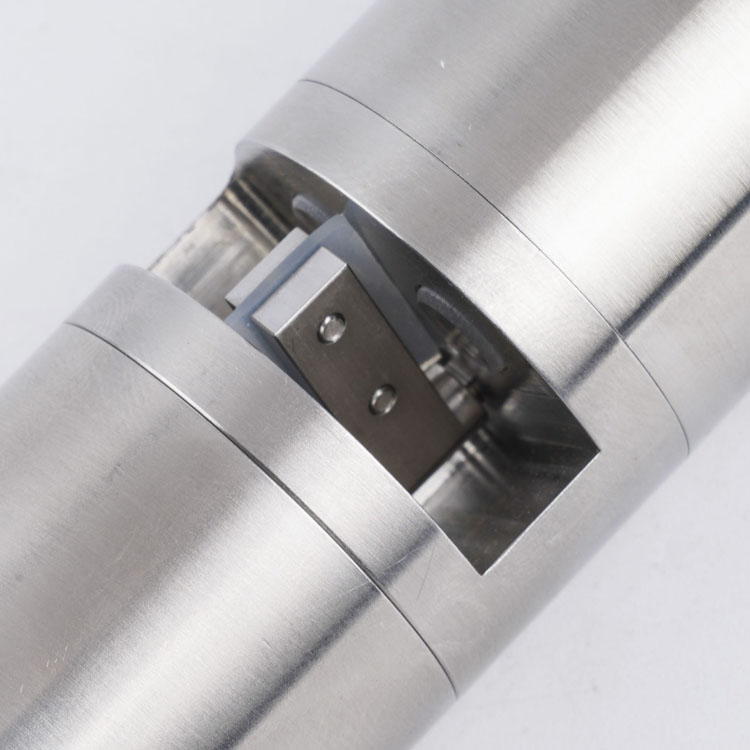
Installation requirements:
Use 3/4 NPT thread for submersible installation.
The sensor should be completely immersed in the measured water body. Vertical or inclined installation is recommended to avoid horizontal placement causing measurement blind zones.
The installation position should avoid strong turbulence areas and bubble gathering points to ensure stable light path.
Electrical connection:
Strictly connect power supply, grounding and communication cables according to the wiring sequence.
For long-term immersion or outdoor applications, all wiring terminals must be reliably waterproofed.
It is recommended to use shielded cables, perform good on-site grounding, and reduce the impact of electromagnetic interference on RS-485 communication.
System integration:
The sensor supports Modbus RTU protocol and can be directly connected to existing SCADA systems or PLCs to realize collection, display, alarm and linkage control of COD, turbidity, and temperature data (for example, automatically start adjustment facilities when exceeding standards). Combined with host computer software, it can realize multi-point networking monitoring and historical data trend analysis.
To maintain optimal measurement performance, the following maintenance measures are recommended:
Regularly check the operating status of the automatic cleaning brush to ensure the brush body is clean and effective.
Adjust the cleaning cycle according to the degree of water pollution.
Perform two-point calibration regularly to verify measurement accuracy.
Avoid exposing the sensor to air for long periods of drying.
If reading drift or abnormality occurs, first check the cleaning brush and light window pollution. If necessary, perform manual cleaning or calibration.
Thanks to the ultraviolet absorption method and automatic cleaning design, the sensor has low daily maintenance volume and long service life.
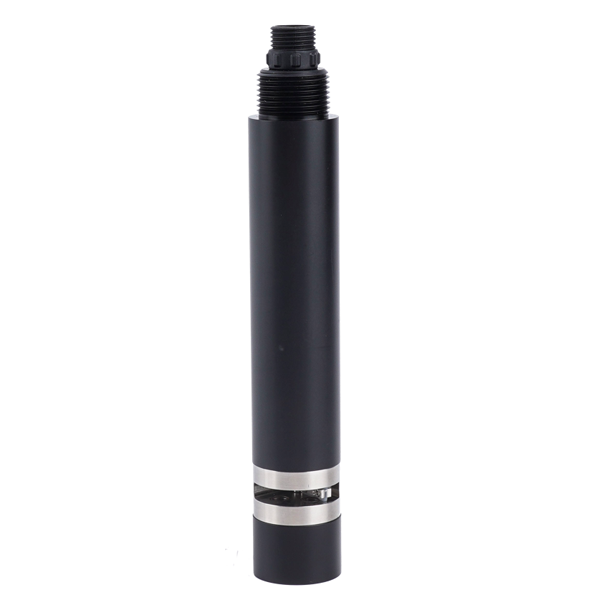
Q1: Is the measurement result of ultraviolet COD consistent with the traditional potassium dichromate method?
Ultraviolet method mainly measures dissolved organic matter, which has a certain correlation with the national standard method but is not completely equivalent. In actual applications, correction coefficients can be established through on-site comparison.
Q2: Does NBL-WQ-COD require reagent consumption?
No chemical reagents are needed, truly realizing green and environmentally friendly online monitoring and greatly reducing operating costs.
Q3: How does the automatic cleaning brush work?
The sensor can automatically start the cleaning brush according to the set cycle to remove biological attachment and pollutants on the light window surface and reduce manual maintenance.
Q4: What output methods does the sensor support?
Standard RS-485 Modbus RTU protocol, and optional 4-20mA current output, convenient for integration with different control systems.
Q5: What is the maximum working pressure it can withstand?
Conventional working pressure ≤0.2 MPa, meeting most open pool and low-pressure pipeline applications.
Q6: Will high turbidity water samples affect COD measurement?
The built-in reference light path and algorithm can automatically compensate for turbidity interference to ensure measurement accuracy.
Q7: Do the electrodes or light sources need frequent replacement?
The ultraviolet light source has a long life. The overall design emphasizes maintenance-free characteristics, and the long-term use cost is significantly lower than traditional methods.
Q8: Does it support remote monitoring?
By accessing the IoT platform or host computer through RS-485, remote data viewing, alarm push and parameter setting can be realized.
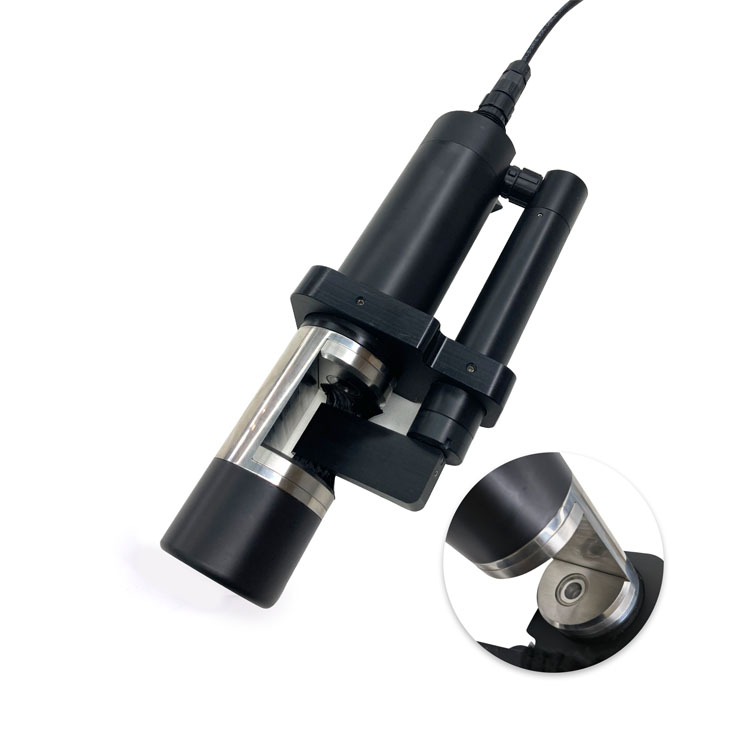
NiuBoL NBL-WQ-COD online COD water quality analyzer, with dual-wavelength ultraviolet absorption method, automatic turbidity compensation and self-cleaning technology, provides an efficient, stable and low-cost online solution for industrial wastewater and environmental monitoring. Its reagent-free characteristics comply with the current environmental protection policy direction, and the Modbus protocol and IP68 protection ensure system integration convenience and on-site reliability.
For system integrators, IoT solution providers and water treatment engineering companies, choosing an online COD sensor with stable performance and easy maintenance is the key measure to improve monitoring levels, reduce operating costs, and achieve refined management. Welcome to contact our technical team according to specific project conditions to obtain detailed configuration suggestions and engineering implementation support.
 NBL-WQ-CL Water Quality Sensor Online Residual Chlorine Sensor.pdf
NBL-WQ-DO Online Fluorescence Dissolved Oxygen Sensor.pdf
NBL-WQ-NHN Ammonia Nitrogen Water Quality Sensor.pdf
NBL-WQ-COD Online Water Quality COD Sensor.pdf
NBL-WQ-PH Online pH Water Quality Sensor.pdf
NBL-WQ-EC water quality conductivity sensor.pdf
Related recommendations
Sensors & Weather Stations Catalog
Agriculture Sensors and Weather Stations Catalog-NiuBoL.pdf
Weather Stations Catalog-NiuBoL.pdf
Agriculture Sensors Catalog-NiuBoL.pdf
Water Quality Sensor Catalog-NiuBoL.pdf
Related products
 Combined air temperature and relative humidity sensor
 TDR Soil Moisture & Temperature Sensor for irrigation| RS485 |4-20mA| NBL-S-THR
 Soil pH sensor RS485 soil Testing instrument soil ph meter for agriculture |NBL-S-PH
 Wind Speed sensor Output Modbus/RS485/Analog/0-5V/4-20mA
 Tipping bucket rain gauge for weather monitoring auto rainfall sensor RS485/Outdoor/stainless steel
 Pyranometer Solar Radiation Sensor 4-20mA/RS485

Screenshot, WhatsApp to identify the QR code
WhatsApp number:+8615367865107
(Click on WhatsApp to copy and add friends)

