





— Blogs —
—Products—
 Consumer hotline +8618073152920
 WhatsApp:+8615367865107
Address:Room 102, District D, Houhu Industrial Park, Yuelu District, Changsha City, Hunan Province, China
Product knowledge
Time:2026-05-12 17:00:48 Popularity:397
In the fields of environmental engineering and industrial water treatment, ammonia nitrogen (NH3-N) concentration is a key indicator for measuring water eutrophication and pollution levels. Whether it is process optimization in municipal sewage treatment plants or risk warning in high-density aquaculture, accurate and reliable ammonia nitrogen monitoring data is the core for system integrators and engineering project parties to achieve automated control.
This article will deeply compare mainstream ammonia nitrogen determination technologies and focus on how to select and integrate efficient online monitoring equipment in the context of the Internet of Things (IoT) to optimize project delivery quality and later operation and maintenance efficiency.
Ammonia nitrogen refers to the nitrogen existing in water in the form of free ammonia (NH3) and ammonium ions (NH4+). Its main sources include domestic sewage, loss of agricultural fertilizers, and industrial wastewater from chemical and refining industries. High concentrations of ammonia nitrogen will consume dissolved oxygen in water and cause toxic effects on fish and aquatic organisms.
For system integrators, understanding the underlying logic of different measurement methods helps to customize the optimal water quality monitoring chain for end customers according to project budget, site conditions, and accuracy requirements.
Currently, the industry-recognized ammonia nitrogen determination methods are mainly divided into two categories: chemical analysis methods and electrochemical methods.
Principle: Under alkaline conditions, mercury iodide and potassium iodide react with ammonia to form a light reddish-brown colloidal compound.
Application: Surface water, groundwater, and domestic sewage.
Evaluation: This method is a classic laboratory standard with a minimum detection limit of 0.025 mg/L. However, Nessler's reagent contains highly toxic mercury, resulting in high waste liquid treatment costs and inconvenience for large-scale online automated applications.
Principle: Under the catalysis of sodium nitroprusside, ammonium reacts with salicylate to form a blue compound.
Evaluation: High sensitivity (detection limit 0.01 mg/L) and does not contain heavy metal mercury, with better environmental friendliness. Suitable for drinking water and most industrial wastewater, but sensitive to calcium and magnesium ion interference, usually requiring potassium sodium tartrate to mask.
Principle: After distillation pretreatment, ammonia is released and absorbed by boric acid, then titrated with standard acid solution.
Evaluation: Suitable for high-concentration ammonia nitrogen (>5 mg/L) wastewater analysis. The procedure is cumbersome and is mainly used as a laboratory arbitration method, not suitable for real-time monitoring.
Principle: Oxidize ammonium salt to nitrite and determine the concentration by measuring its absorption intensity at specific wavelengths.
Evaluation: Extremely wide range (0.005-100 mg/L), strong anti-interference ability, widely used in marine monitoring and heavily polluted water source analysis.
Principle: Use the ammonium ion (NH4+) specific membrane to generate potential changes and calculate concentration combined with temperature compensation.
Evaluation: This is currently the mainstream choice for IoT integration and real-time online monitoring. Its advantages include no complex chemical pretreatment, fast response speed, long maintenance cycle, and easy digitization of output signals.
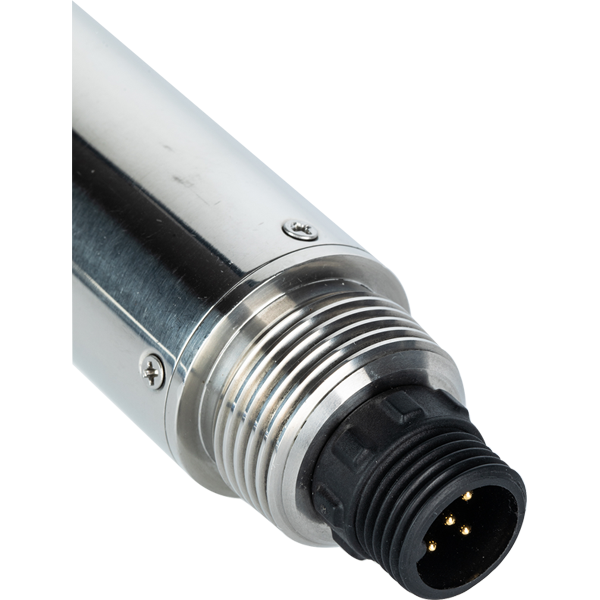
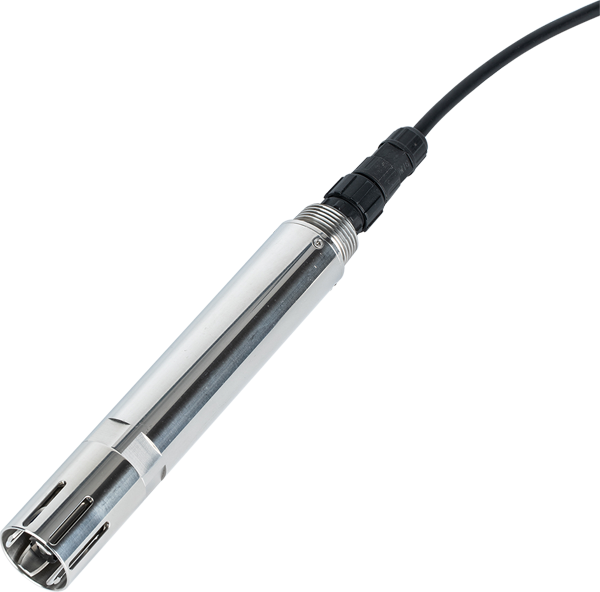
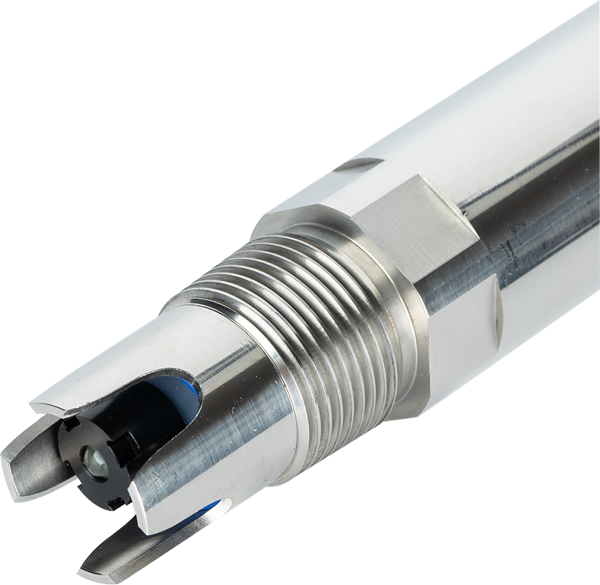
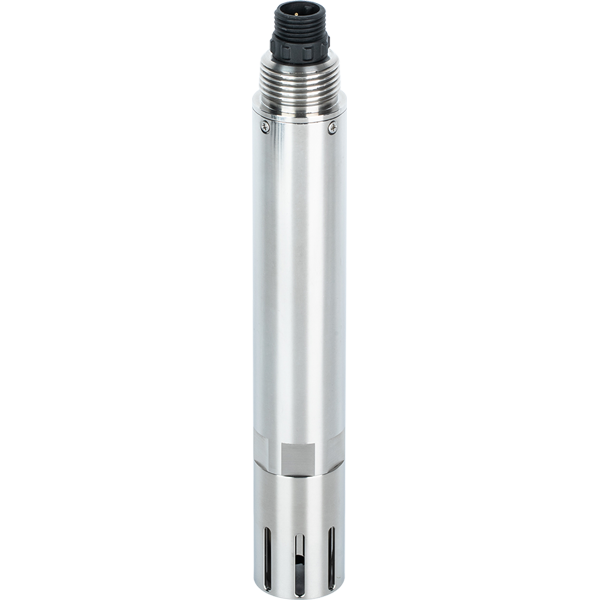
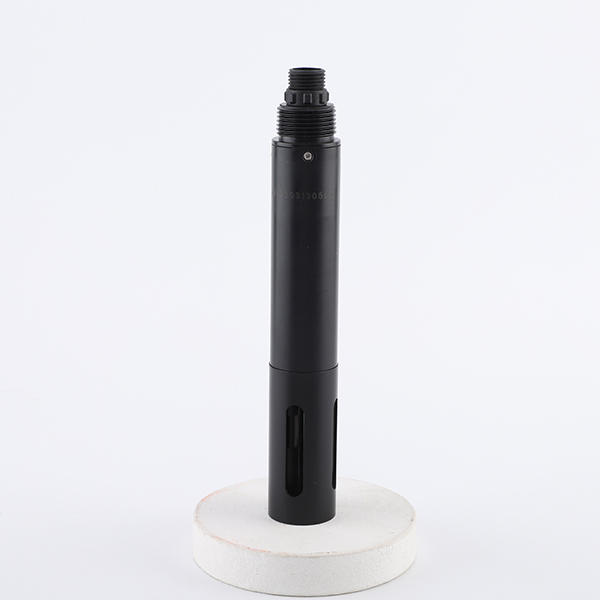
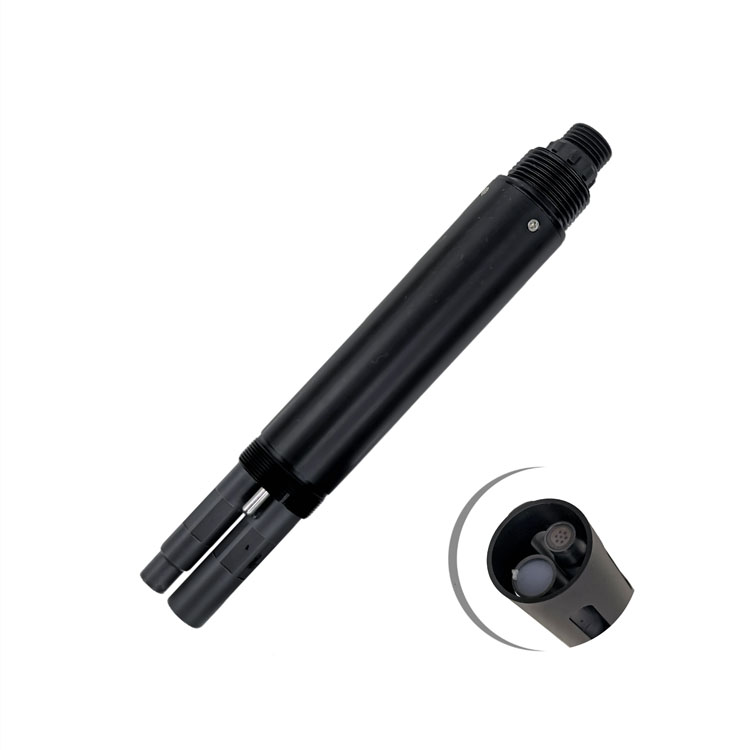
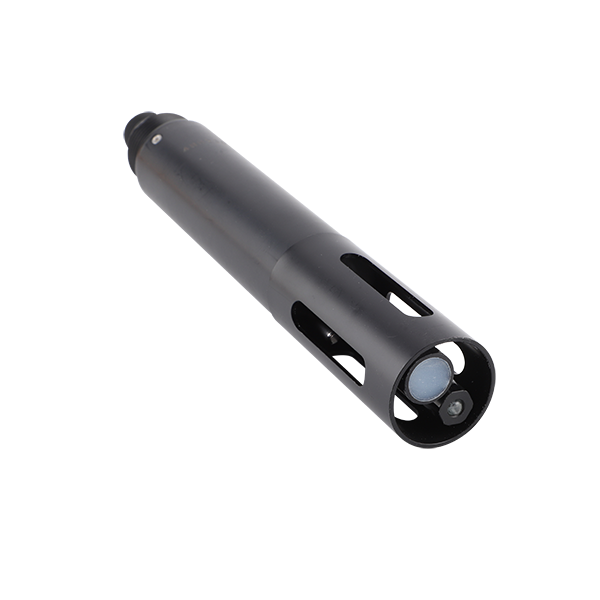
In response to the needs of project contractors and IoT solution providers, NiuBoL has developed the NBL-WQ-NHN integrated sensor based on PVC membrane ion selective electrode technology. This solution effectively solves the pain points of traditional online monitoring equipment such as large size, fast reagent consumption, and frequent maintenance.
| Parameter Item | Technical Specification |
|---|---|
| Model | NBL-WQ-NHN |
| Measurement Principle | Ion Selective Electrode Method (ISE) |
| Range | 0-10.00 / 0-100.00 / 0-1000.0 mg/L (optional) |
| Resolution | 0.01 mg/L / 0.1 mg/L |
| Measurement Accuracy | ±10% of reading or ±1 mg/L (whichever is greater) |
| Temperature Compensation | Automatic temperature compensation (Pt1000) |
| Response Time (T90) | < 60s |
| Output Signal | RS-485 (Modbus RTU protocol) |
| Working Environment | 0-40℃, < 0.1 MPa, pH 4-10 |
| Shell Material / Protection | ABS, PVC, POM / IP68 rating |
| Power Supply Voltage | 12-24V DC |
| Installation Interface | 3/4 NPT pipe thread |
In aeration tanks and discharge outlets, integrating NiuBoL ammonia nitrogen sensors can monitor nitrification reaction efficiency in real time. RS485 signal feedback to PLC automatically adjusts fan frequency, which not only ensures effluent compliance but also significantly reduces power consumption.
Ammonia nitrogen is the "invisible killer" of aquaculture. By deploying sensors in breeding ponds, system integrators can provide mobile early warning services for farmers. When ammonia nitrogen exceeds the standard, it automatically triggers aerators or water change pumps to reduce the risk of large-scale mortality.
In remote river or lake monitoring points, due to limited maintenance frequency, low-power (0.2W) and reagent-free electrode sensors are the best choice. Through 4G/5G gateways, data can be seamlessly connected to provincial and municipal regulatory platforms.
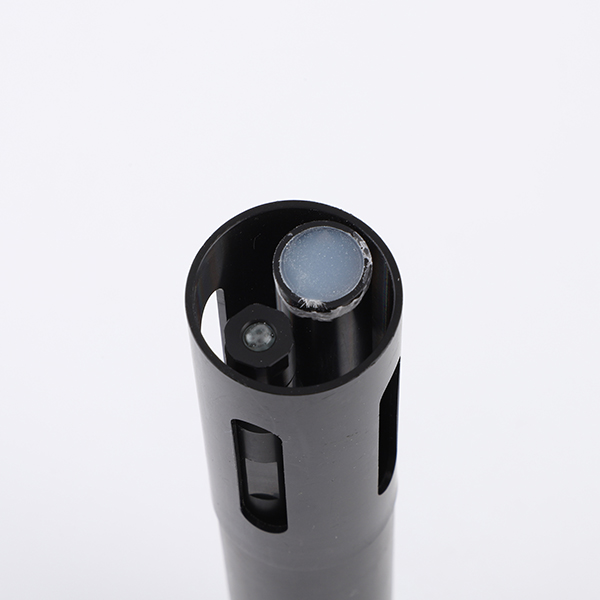
To ensure long-term stable operation of engineering projects, the following key points should be noted when integrating NiuBoL sensors:
1. Electrode Activation Treatment: Before first use, the protective cover must be removed and soaked in clean water for 2 hours to ensure the ion selective membrane is fully wetted to achieve the best response state.
2. pH Environment Matching: The ion selective electrode method has certain requirements for pH value (4-10). If the environmental pH is extremely high, ammonium ions will convert to ammonia gas and escape, resulting in low measured values. It is necessary to combine with pH sensors for correction.
3. Anti-fouling and Cleaning: For high-viscosity wastewater or water bodies with vigorous biological growth, the electrode PVC membrane should be rinsed regularly (usually 2-4 weeks) with deionized water to avoid sediment covering the sensing element.
4. Reference System Protection: NiuBoL adopts a patented reference system that slowly seeps out electrolyte under certain pressure. During installation, ensure the electrode is in a stable submerged or flow-through position to avoid mechanical impact damaging the microporous salt bridge.
5. Signal Lightning Protection and Shielding: In field projects, RS485 communication lines should use shielded twisted pairs and properly connect lightning protection modules to prevent induced lightning from damaging digital circuits.
Q1: What to do if the data from Ion Selective Electrode Method (ISE) and Nessler's reagent method are inconsistent?
Due to different measurement principles (ISE measures ion activity, spectrophotometry measures color absorbance), differences under complex working conditions are normal. It is recommended to use Nessler's reagent method as the laboratory benchmark and perform two-point calibration on the online sensor.
Q2: Does potassium ion (K+) interfere with ammonia nitrogen measurement?
Yes, potassium ion is the main interferent for ammonium ion selective electrodes. In working conditions with extremely high potassium ion content (such as fertilizer wastewater), it is recommended to consult the NiuBoL technical team for interference compensation configuration.
Q3: Does the sensor support direct connection to PLC?
Yes. The sensor adopts standard Modbus RTU protocol and can be directly connected to mainstream PLCs such as Siemens and Schneider or paperless recorders via RS485 bus.
Q4: What is the average service life of the sensor electrode?
Under standard maintenance, NiuBoL industrial-grade electrode life is usually 12-18 months, and the sensing element supports modular replacement, significantly reducing long-term holding costs.
Q5: Why does it need to be activated for 2 hours before measurement?
The PVC sensitive membrane is dormant in a dry state. The activation process is to establish transmembrane potential balance and ensure the stability and reproducibility of data reading.
Q6: Does the sensor require reagents?
No. The ion selective electrode method is a pure physical sensing process with zero chemical reagent consumption, which is very suitable for unattended online monitoring stations.
Q7: Does the sensor support remote configuration of address?
Yes. Through Modbus commands, integrators can remotely change the slave address and baud rate, making it convenient to mount multiple sensors on one bus.
Q8: What does the IP68 protection rating mean?
It means the sensor has complete dustproof capability and can be immersed in water for a long time under specified pressure, meeting various harsh submersible installation requirements.
The choice of ammonia nitrogen monitoring technology should serve actual business logic. For laboratory scenarios requiring authoritative reports, spectrophotometry is an unshakable foundation; while for B2B system integration projects pursuing efficiency, real-time performance, and low operating costs, the electrode method (ISE) demonstrates strong competitiveness.
As a professional equipment manufacturer, NiuBoL not only provides accurate NBL-WQ-NHN series sensors but also is committed to providing partners with in-depth support from underlying communication to industry applications. In the wave of digital water affairs transformation, stable and reliable underlying sensing data will bring you stronger project premium capabilities.
 NBL-WQ-NHN-4S Online Ammonia Nitrogen Sensor.pdf
Prev:Online COD Water Quality Analyzer | Dual-Wavelength UV Absorption Online COD Sensor
Next:Main Sources of Chloride in Water and Online Chloride Ion Monitoring Technology
Related recommendations
Sensors & Weather Stations Catalog
Agriculture Sensors and Weather Stations Catalog-NiuBoL.pdf
Weather Stations Catalog-NiuBoL.pdf
Agriculture Sensors Catalog-NiuBoL.pdf
Water Quality Sensor Catalog-NiuBoL.pdf
Related products
 Combined air temperature and relative humidity sensor
 TDR Soil Moisture & Temperature Sensor for irrigation| RS485 |4-20mA| NBL-S-THR
 Soil pH sensor RS485 soil Testing instrument soil ph meter for agriculture |NBL-S-PH
 Wind Speed sensor Output Modbus/RS485/Analog/0-5V/4-20mA
 Tipping bucket rain gauge for weather monitoring auto rainfall sensor RS485/Outdoor/stainless steel
 Pyranometer Solar Radiation Sensor 4-20mA/RS485

Screenshot, WhatsApp to identify the QR code
WhatsApp number:+8615367865107
(Click on WhatsApp to copy and add friends)

