





— Blogs —
—Products—
 Consumer hotline +8618073152920
WhatsApp:+8615367865107
Address:Room 102, District D, Houhu Industrial Park, Yuelu District, Changsha City, Hunan Province, China
Product knowledge
Time:2026-03-25 10:49:00 Popularity:819
An orchard weather station and insect monitoring system should be specified around the pests, diseases and crop stages that the project actually needs to observe. Weather sensors describe environmental conditions; a light-trap camera records attracted insects; a spore sampler collects a different type of sample. Combining their records can support orchard management, but does not make the instruments interchangeable or establish a treatment decision without field review.
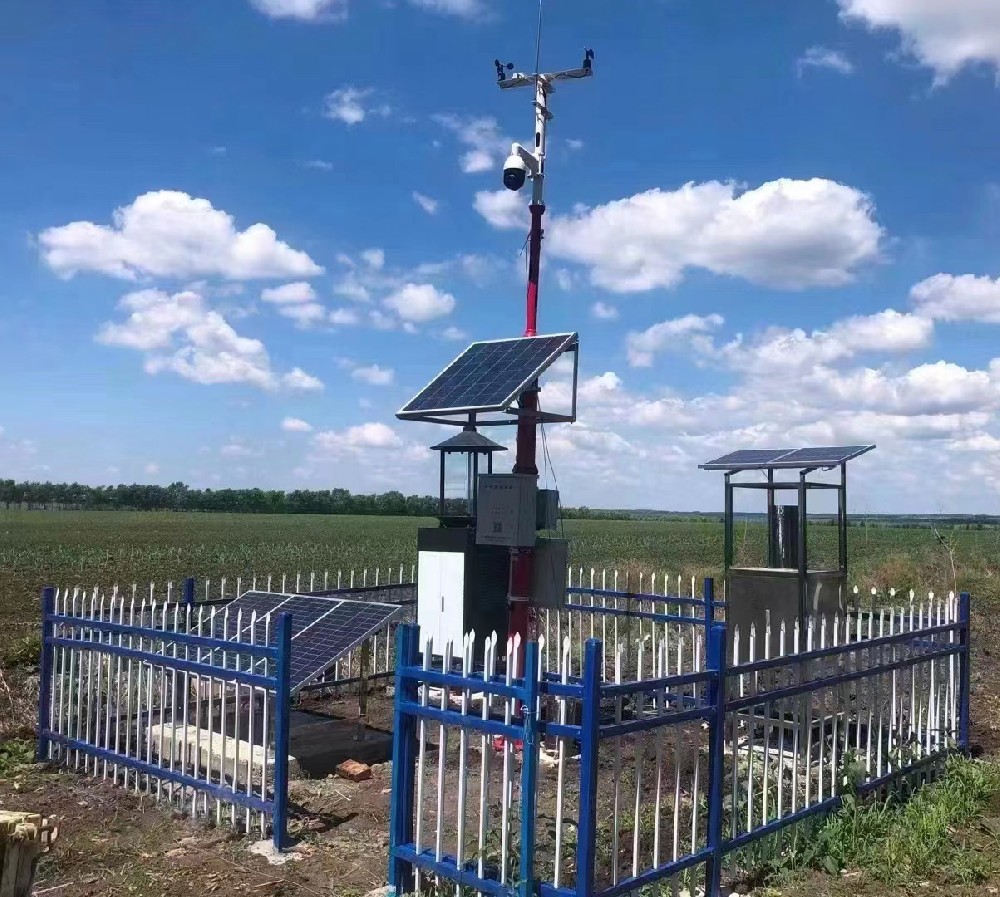
An orchard can face flying adult insects, leaf-feeding mites and diseases with very different detection requirements. A general request to "monitor pests and diseases" leaves too much unspecified. List the crop, target organism, relevant life stage, seasonal period and the observation needed by the plant-protection team.
For a flying adult attracted by the selected light, a trap record may be useful. For a mite living on leaves, leaf inspection is a different task. For disease, a weather record can indicate conducive conditions, but symptoms, pathogen identification or an appropriate sample may still be required. Start with these distinctions before selecting cameras, lures, samplers or software.
| Observation stream | What it contributes | What it cannot replace |
|---|---|---|
| Air temperature, humidity and rainfall | Weather context for a crop or disease assessment | Proof of infection, insect identity or damage |
| Light-trap images | Reviewable records of insects entering the selected trap | A census of every pest in the orchard canopy |
| Leaf, fruit and shoot inspection | Evidence at the affected plant tissue and life stage | A continuous weather record |
| Spore sample | Material collected for an appropriate identification and interpretation method | Universal detection of fungal, bacterial and viral diseases |
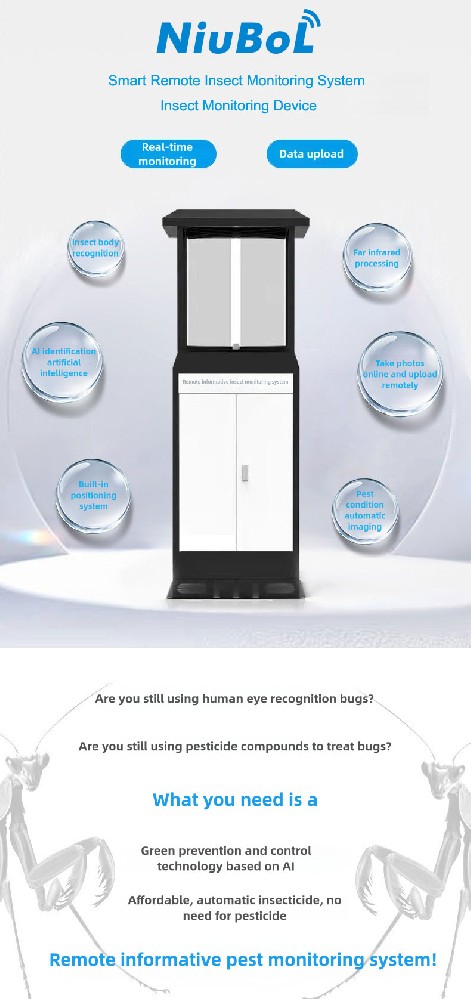
The NiuBoL NBL-IoT-SRPMS remote insect monitoring device provides a light-attraction, insect-processing and image-acquisition arrangement. Specify it as an insect observation component. The cabinet does not make a weather channel into a biological detector, and its presence does not establish that the target organism will be attracted or identifiable.
An image may contain several species, overlapping bodies or material that cannot be identified confidently. Require a way to retain the image behind a reported count and to record human review where needed. An unresolved specimen should remain unresolved rather than being forced into a target category to complete a dashboard.
Test identification with the insects expected at the proposed orchard, including non-targets that resemble the target. Record the model or recognition configuration used. A catalogue species list does not establish performance for local specimens, damaged bodies or seasonal mixtures. For an enquiry, supply the plant-protection team's target list and representative examples rather than asking only for a camera resolution.
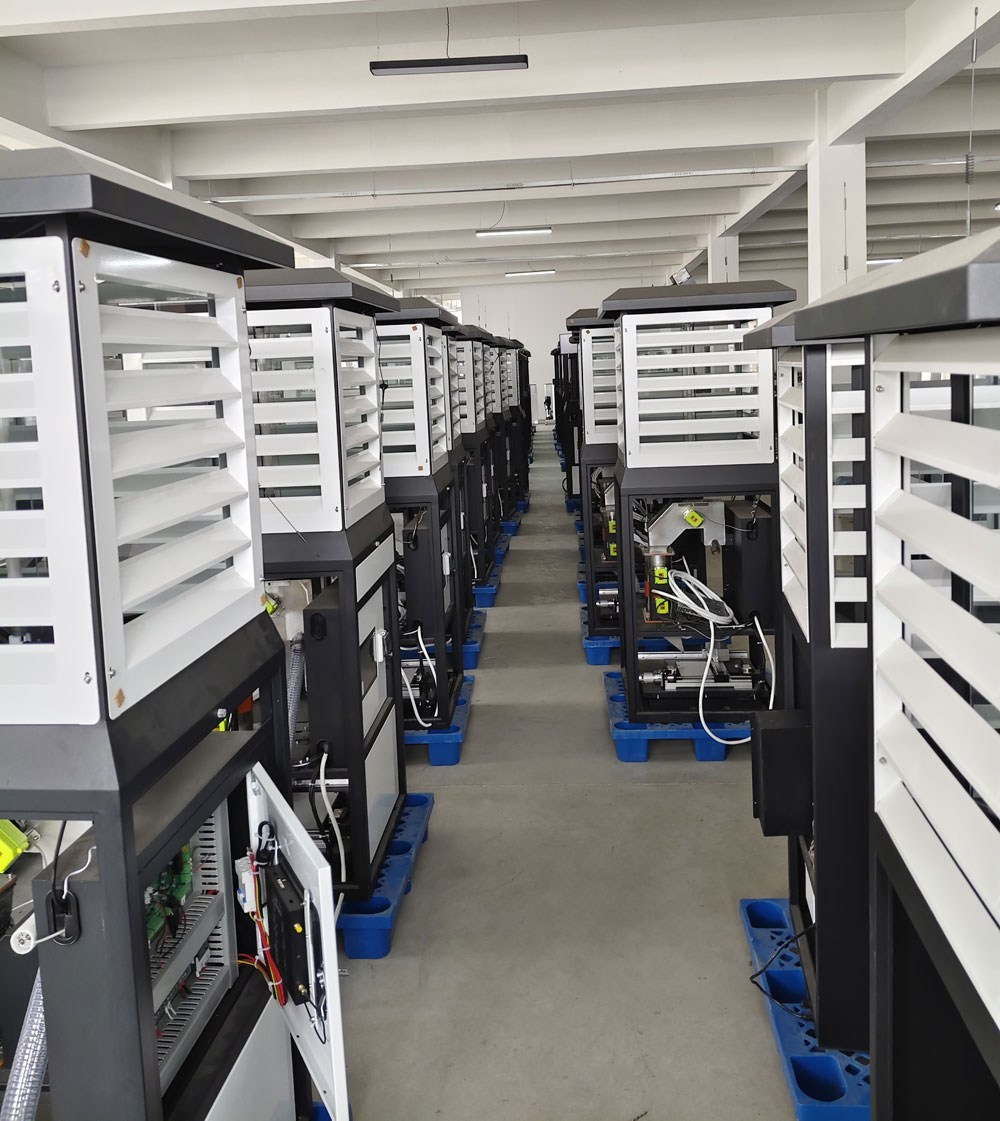
An adult capture can indicate activity at a particular time and place. Damage may come from another life stage on the plant, so the trap result and crop inspection answer different questions. A change in adult captures should prompt the relevant field check, not automatically be presented as the same change in larvae, damaged fruit or yield risk.
For citrus mites, retain a suitable leaf or fruit inspection program instead of assuming an insect lamp samples the canopy population. For an orchard with several target insects, determine whether one trapping method is appropriate for all of them. Additional target-specific traps or scouting may be more useful than a single larger general-purpose cabinet.
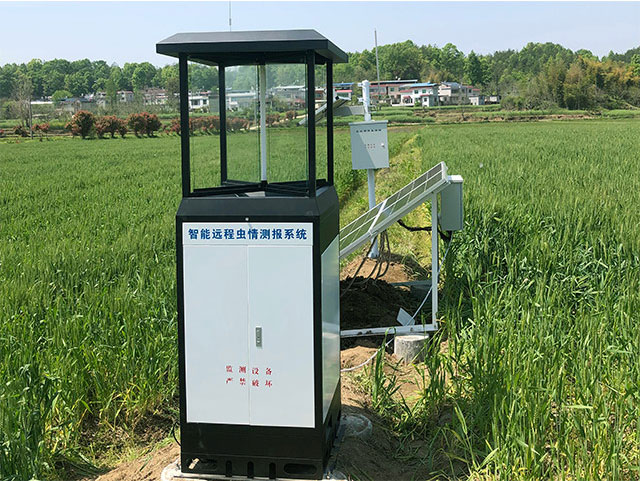
A spore sampler can be relevant to a disease investigation only when the sampling and identification method suits the target. It does not universally identify all particles as pathogens, and a collected fungal spore does not by itself establish infection in the orchard.
Citrus canker illustrates why the distinction matters. The UF/IFAS citrus canker guide identifies its cause as a bacterium, Xanthomonas citri subsp. citri. Describing a fungal-spore channel as direct canker detection would therefore assign the wrong biological method. Weather and symptoms can contribute to an assessment, but the diagnostic method must match the organism.
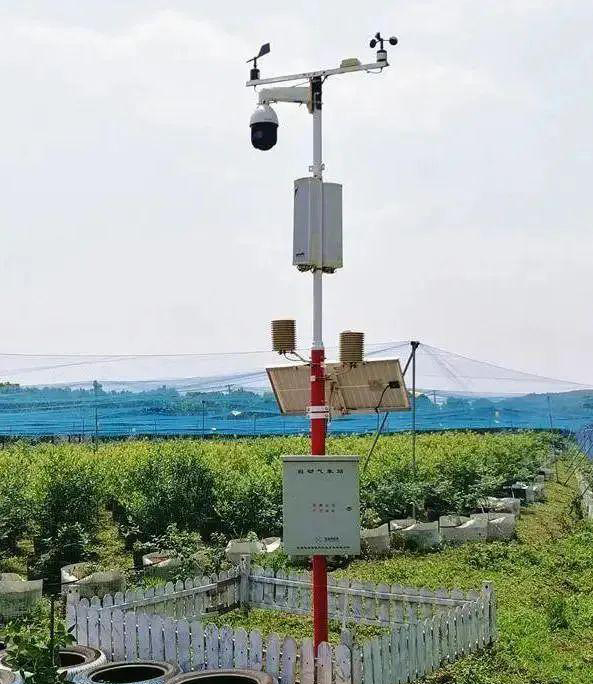
An orchard NiuBoL weather station can provide the selected atmospheric and soil channels. Air RH is not leaf wetness duration, light intensity in Lux is not solar irradiance in W/m², and soil water content is not a direct measure of disease. Include an additional instrument only when its quantity is needed for the chosen assessment.
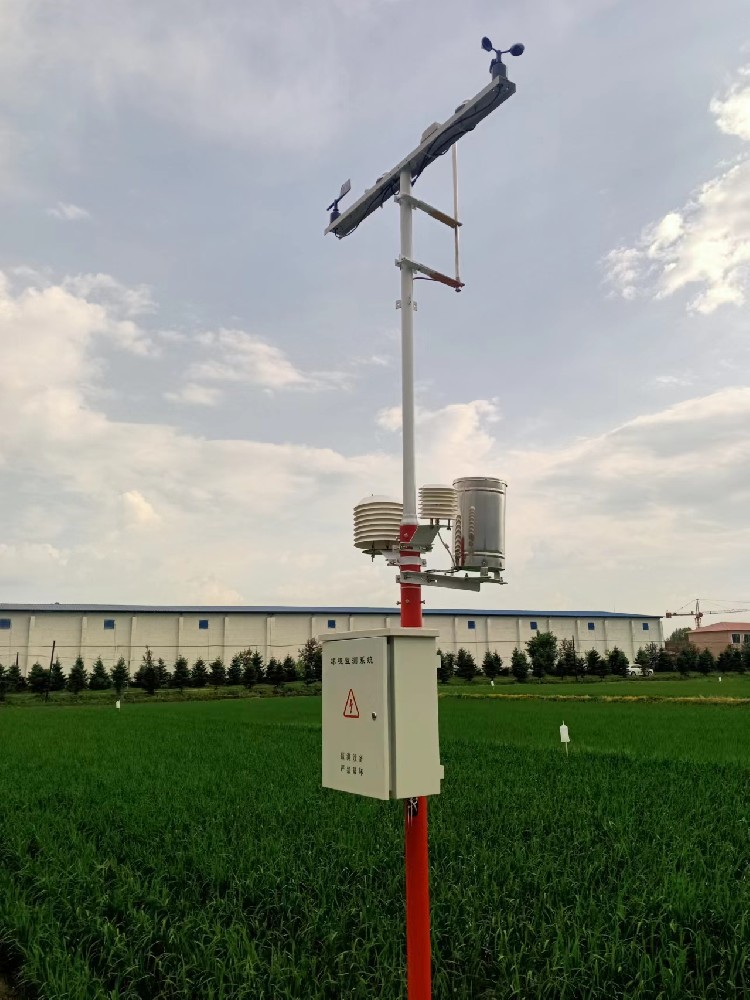
| Component or channel | Relevant configuration | Selection consequence |
|---|---|---|
| NBL-W-LBTH atmospheric sensor | Temperature -40 to 80°C, ±0.5°C; RH 0-100%, ±5%; pressure 10-1200 hPa, ±1.5 hPa | Use its actual performance, not a generic higher-accuracy orchard table |
| NBL-W-RS collecting rain gauge | 0.2 mm per tip; 0-4 mm/min; ±4% in the specified indoor test at 2 mm/min | Define the rain period and field exposure |
| NBL-W-SS / NBL-W-DS | IP65 | Maintain the installed wind direction reference and access arrangement |
| NBL-IoT-SRPMS imaging | 12-megapixel image acquisition | Megapixels describe image resolution, not watts or identification accuracy |
| Insect processing chamber | 85 ±5°C working temperature for the specified arrangement | Heating is a load and a sample-handling process, not proof of orchard-wide control |
Confirm the exact combination and power supply for the ordered instruments. Weather sensors with RS485 Modbus RTU do not imply that the imaging cabinet, remote platform and treatment equipment share the same interface. Image transfer and serial measurement data have different integration requirements.
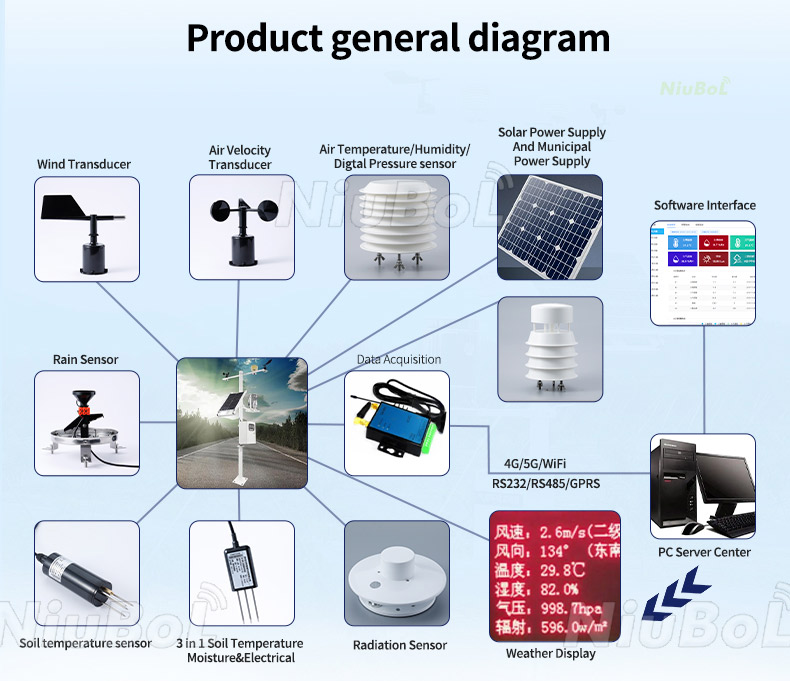
A weather sensor may need exposure distinct from the location chosen to sample insects. A leaf-wetness sensor, if required by an assessment method, needs an installation representative of that measurement. Do not force every device onto one mast simply because the project is called an integrated orchard station.
Record the orchard block, cultivar, canopy condition and trap position. Neighboring lights, canopy growth and changes to the attracting source can affect what enters the trap. These changes should be distinguishable from a biological trend. A shared map is useful for finding the observation; it does not establish that one station represents every orchard block.

Retain the trapping period separately from the image upload time. Link the reviewed count to its image and block, then attach weather observations for the relevant period. A delayed upload should not move a catch into the wrong day. Keep a period with no valid sample distinct from a valid sample with zero target insects.
The resulting record can help the plant-protection team prioritize scouting. It should show the reviewed organism, crop stage, field finding and decision where recorded. A warm, wet period may justify closer inspection under an appropriate disease program, but weather conditions do not establish that infection occurred.
If the project includes sprayer or irrigation integration, commission the interface as a separate function. A reviewed pest count, an operator's treatment decision and a start command to equipment are different steps. Verify authorization and the receiving equipment's safety requirements; do not make an unreviewed image count a default automatic spray trigger.
No universal three-to-seven-day forecast lead or fixed pesticide reduction follows from installing these instruments. To evaluate project value, define what information arrives sooner, which field visits it supports and how decisions are recorded. Any claim about crop outcomes needs actual project evidence and a suitable comparison.
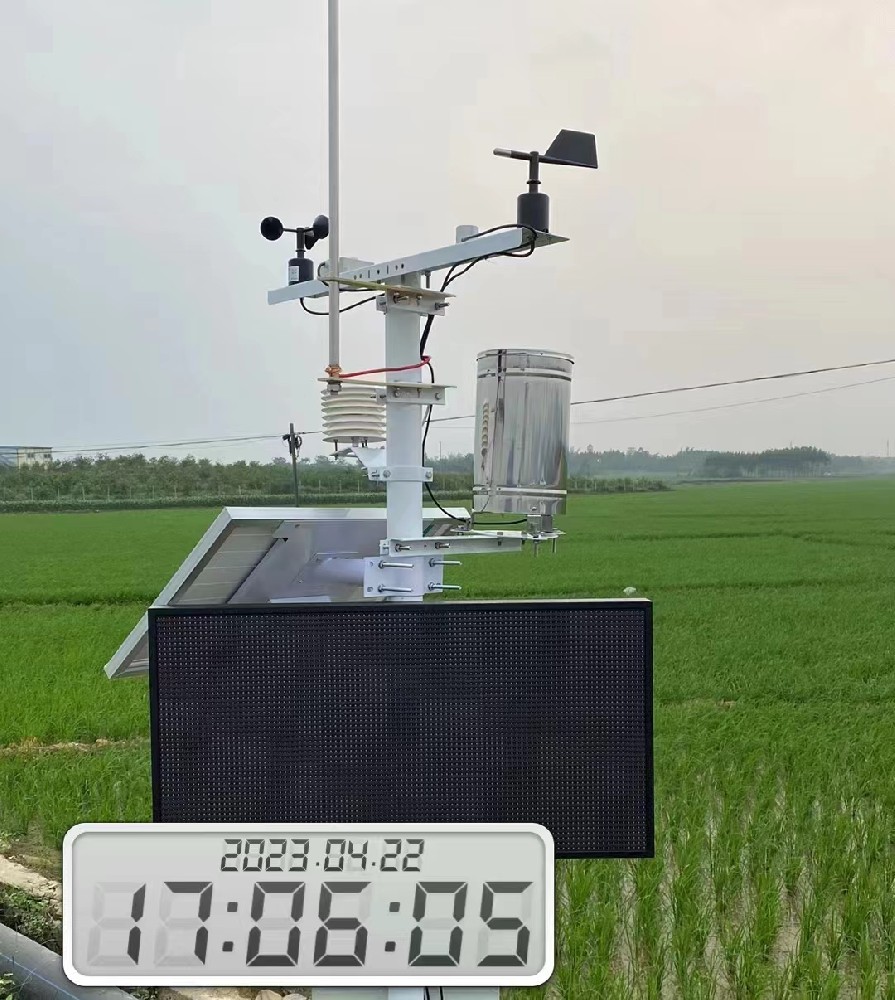
Send NiuBoL the crop and target list, block layout, observation season, required weather quantities and proposed review workflow. Identify which targets need imaging, a different trap, tissue inspection or specialist diagnosis. Include power and network conditions for the complete assembly, especially where image handling and heating are used.
Request separate scope for weather acquisition, insect capture and imaging, recognition/review software, any spore sampling and treatment integration. Confirm the actual data interface and support arrangement. This makes it possible to compare useful monitoring capabilities without assuming that a single cabinet supplies a complete pest-and-disease program.
No. Suitability depends on the organism, life stage and response to the trapping method. Leaf-dwelling mites, flying adults and larvae on fruit require different observations. Select the method around each priority target.
No. Captures describe the selected trap's sample. Relate them to the crop stage and a suitable field assessment before interpreting damage or deciding treatment.
A fungal-spore monitoring claim is not an appropriate direct diagnosis of this bacterial disease. Identify the target pathogen and use the relevant diagnostic method. Do not infer a universal disease detector from the presence of an air sampler.
No. Image resolution is one part of the acquisition chain. Target visibility, specimen condition and identification performance need assessment with relevant local samples and a way to review uncertain results.
Only where a separately specified interface and approved control workflow have been implemented and tested. Sensor connectivity alone does not establish sprayer compatibility or authorize treatment.
Use the intended crop blocks and target species, retain images and review results, and compare with appropriate field observations. Test sample availability, identification and usable data delivery rather than judging the pilot only by whether a dashboard is online.
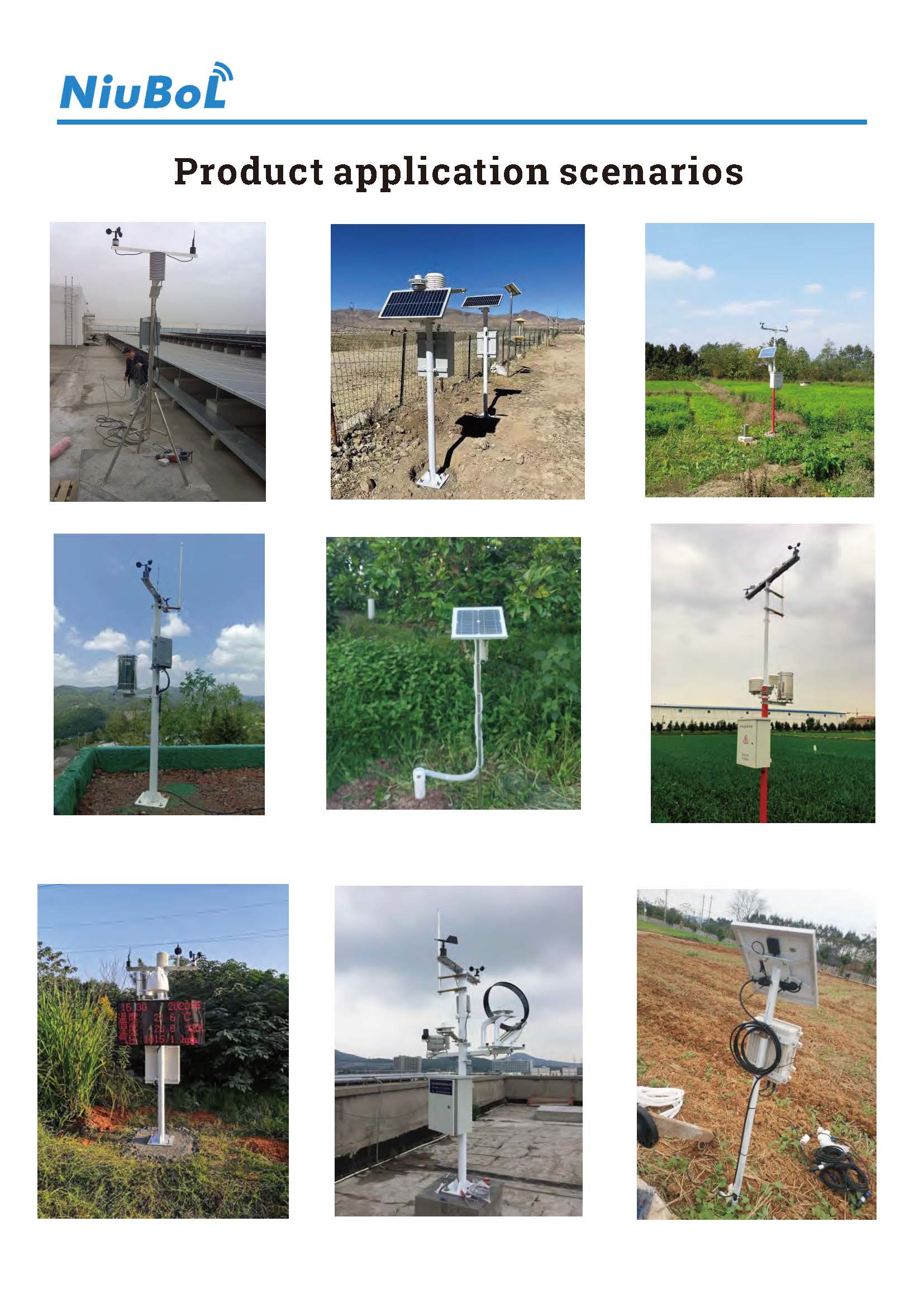
An orchard weather station and insect monitoring system supports decisions when the instruments match the target and the observations remain traceable. NiuBoL weather acquisition and insect imaging can form part of that arrangement. Keep crop inspection, pathogen diagnosis and treatment responsibility visible instead of presenting every data stream as a complete pest-and-disease forecast.
 Frequency vibration solar insecticidal lamp User Manual.pdf
Wind-suction Solar Insect Trap Light User Manual.pdf
Intelligent Remote Insect Monitoring and Reporting System(Insect Monitoring Device) Data Sheet.pdf
Prev:Soil Moisture and Weather Station Integration for Agriculture
Next:Suction-Type Insect Trap Lamp: Inspect Airflow and Collector Retention
Related recommendations
Sensors & Weather Stations Catalog
Agriculture Sensors and Weather Stations Catalog-NiuBoL.pdf
Weather Stations Catalog-NiuBoL.pdf
Agriculture Sensors Catalog-NiuBoL.pdf
Water Quality Sensor Catalog-NiuBoL.pdf
Related products
 Combined air temperature and relative humidity sensor
 TDR Soil Moisture & Temperature Sensor for irrigation| RS485 |4-20mA| NBL-S-THR
 Soil pH sensor RS485 soil Testing instrument soil ph meter for agriculture |NBL-S-PH
 Wind Speed sensor Output Modbus/RS485/Analog/0-5V/4-20mA
 Tipping bucket rain gauge for weather monitoring auto rainfall sensor RS485/Outdoor/stainless steel
 Pyranometer Solar Radiation Sensor 4-20mA/RS485


Screenshot, WhatsApp to identify the QR code
WhatsApp number:+8615367865107
(Click on WhatsApp to copy and add friends)

