





— Blogs —
—Products—
 Consumer hotline +8618073152920
WhatsApp:+8615367865107
Address:Room 102, District D, Houhu Industrial Park, Yuelu District, Changsha City, Hunan Province, China
Product knowledge
Time:2026-03-25 11:05:09 Popularity:726
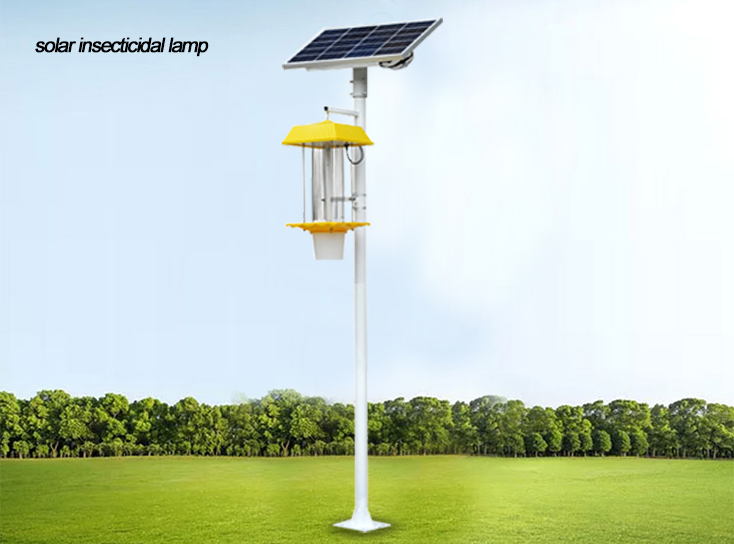
A suction-type insect trap lamp uses an attracting light and fan-driven airflow to move insects into a collection chamber. Its performance depends on the complete path from attraction to capture and retention. A lit lamp does not prove that the fan is drawing correctly, and an operating fan does not establish that insects remain in the collector. Check those functions before interpreting a low catch as low pest activity.
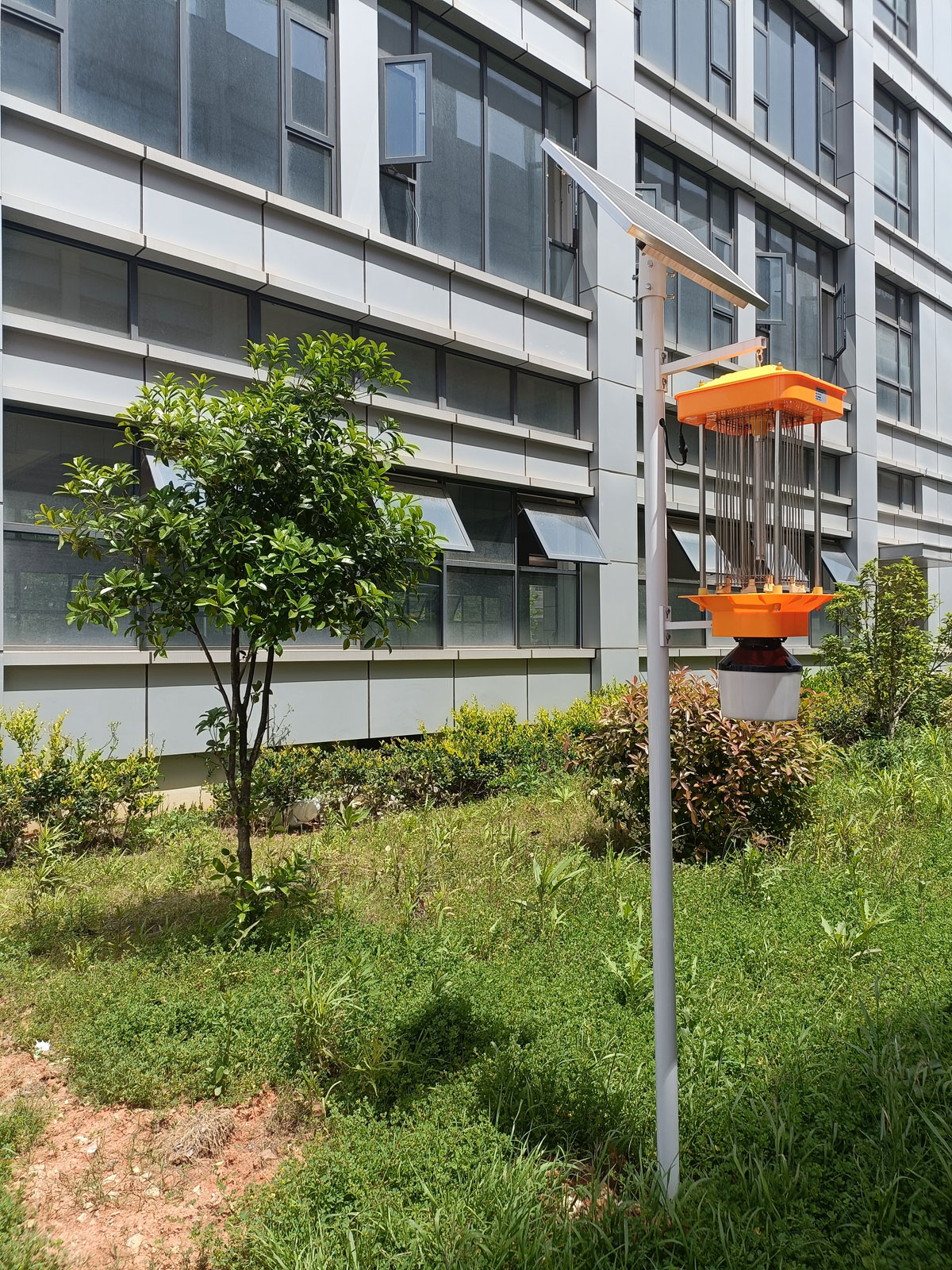
NiuBoL physical trapping equipment includes fan-suction arrangements and frequency-vibration grid lamps. These use different collection or killing mechanisms. A grid lamp illustration is not evidence that the pictured product has a suction fan, and a suction lamp is not automatically a species-counting camera system.
For a suction-type order, confirm the head, fan, collector and controller supplied together. Ask for the exact assembly drawing rather than selecting from appearance alone. The NiuBoL wind-suction lamp operating information describes attraction, airflow into a chamber and dehydration. Those are physical operating functions, not a guarantee of target selectivity or a measured reduction in the field population.
Air must enter the intended opening, pass the capture arrangement and leave through the designed route. Insect remains, dust or vegetation can restrict that path. A displaced collector can create a leak or escape route. The motor may still be audible while the arrangement no longer performs as intended.
| Observed condition | Possible explanation to investigate | Useful check |
|---|---|---|
| Light on, unexpectedly little collection | Fan not operating, restricted path or different insect activity | Verify the mechanism safely before assigning a biological cause |
| Fan runs but retention is poor | Collector seating, damaged parts or unsuitable operating arrangement | Inspect the approved assembly and retention path |
| Collection declines after several busy nights | Accumulation or blockage | Inspect and clean the collector and accessible air path after isolation |
| Collection changes after a location change | Different canopy, competing light or insect exposure | Record the move and avoid treating the two locations as identical |
Do not use improvised smoke, loose debris, fingers or live insects near a moving fan to demonstrate suction. Use the approved inspection procedure and competent personnel. If airflow performance must be quantified, agree the measurement method and acceptance value for the exact assembly rather than inventing a minimum from fan speed.
| Suction lamp item | Configuration information | Procurement implication |
|---|---|---|
| Fan | 12 V; 12 W or 20 W version; listed rotation speed 2200 rpm | Confirm the supplied version; rpm alone is not installed airflow |
| Total lamp power | Up to 15 W or 30 W, depending on model | Do not combine limits from different variants |
| Battery | Listed configuration: 12.8 V, 12 Ah lithium iron phosphate | Nominal capacity does not guarantee a fixed number of operating nights |
| Solar panel | At least 40 Wp for the listed arrangement | Confirm complete load, operating schedule and site charging conditions |
| Collector and enclosure | Swivel or bayonet collector option; IP65 | Check seating and service access; IP65 is not submersion protection |
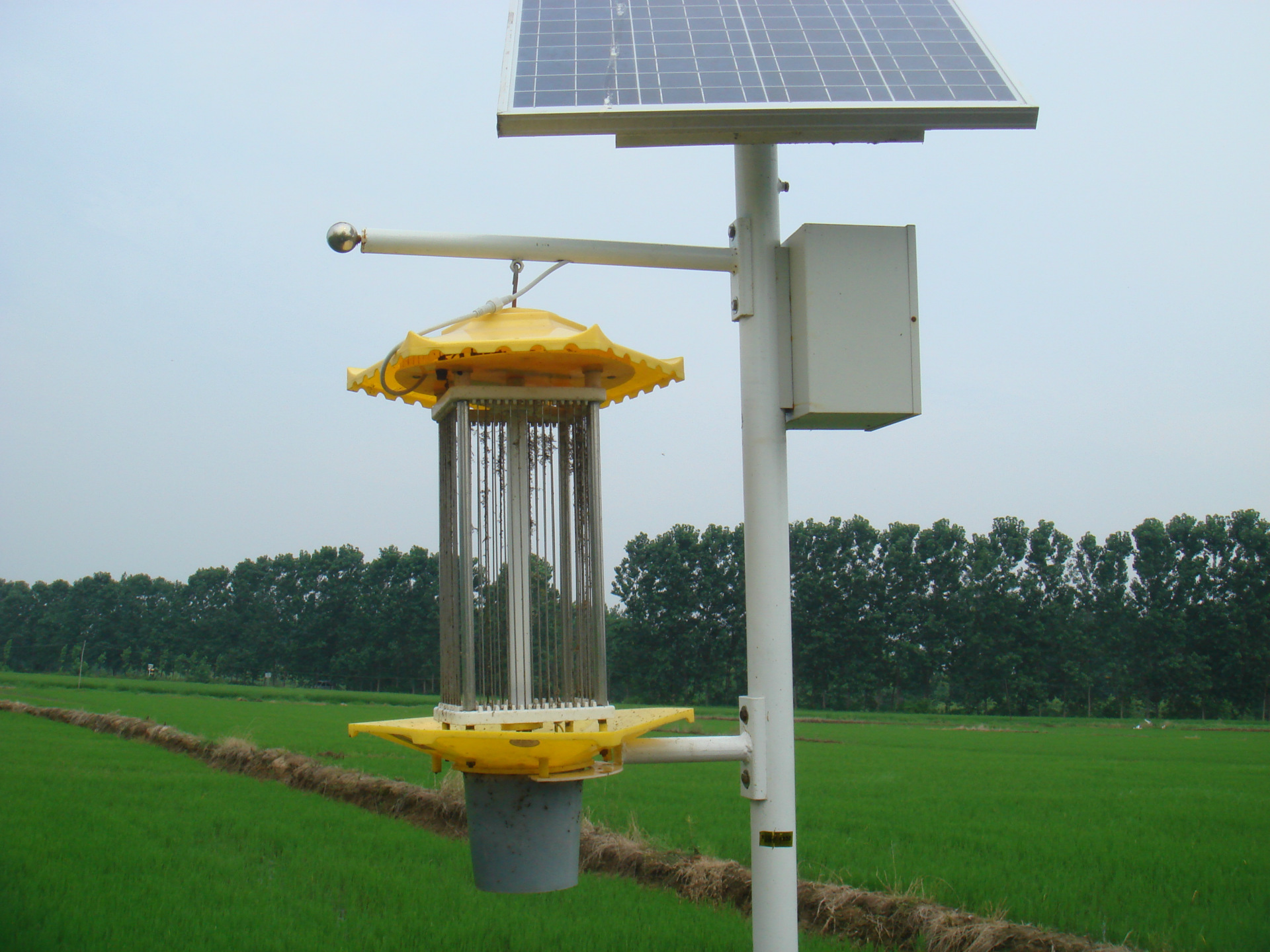
These are variant figures, not a new universal model table. Confirm the offered assembly in writing, including its light source and operating settings. Do not assign the same specifications to a frequency-vibration grid lamp or to the larger NBL-IoT-SRPMS imaging cabinet.
Inspect collection during early operation to establish a practical service interval. Busy trapping periods, dust, wet material and debris can require different attention from quiet periods. A fixed monthly emptying rule can allow obstruction at a busy site or create unnecessary visits at another.
After safe isolation, inspect the collector attachment, approved screens and accessible path for blockage or damage. Clean using the method appropriate to the assembly and reassemble it correctly. Do not add finer mesh, larger containers or improvised seals without confirming how they affect airflow and retention.
Record material accumulation and the condition found at service. A visibly full collector can explain why later observations were not comparable with an earlier clean period. Emptying it restores capacity; it does not establish that the light spectrum, fan or complete trapping performance has been verified.
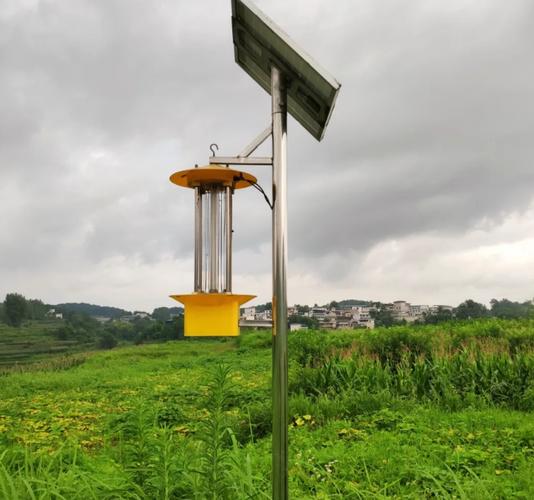
Light attraction depends on the organism and conditions. Fan collection does not itself identify a pest or exclude non-target insects. Choose the operating period and location with the local plant-protection team, and review what is being caught when ecological selectivity matters.
Similarly, catch quantity is not a direct field-density measurement. If the project needs a monitoring record, define sampling effort, identification and review separately. If its purpose is physical control, evaluate target activity and crop observations with an appropriate comparison. Neither purpose supports a universal capture percentage, escape rate or pesticide reduction without evidence.
The NBL-IoT-SRPMS insect monitoring system includes image acquisition and sample-processing functions. That can suit a project requiring reviewable insect images, but it should not be substituted into a suction-lamp specification as though it were merely a larger fan model.
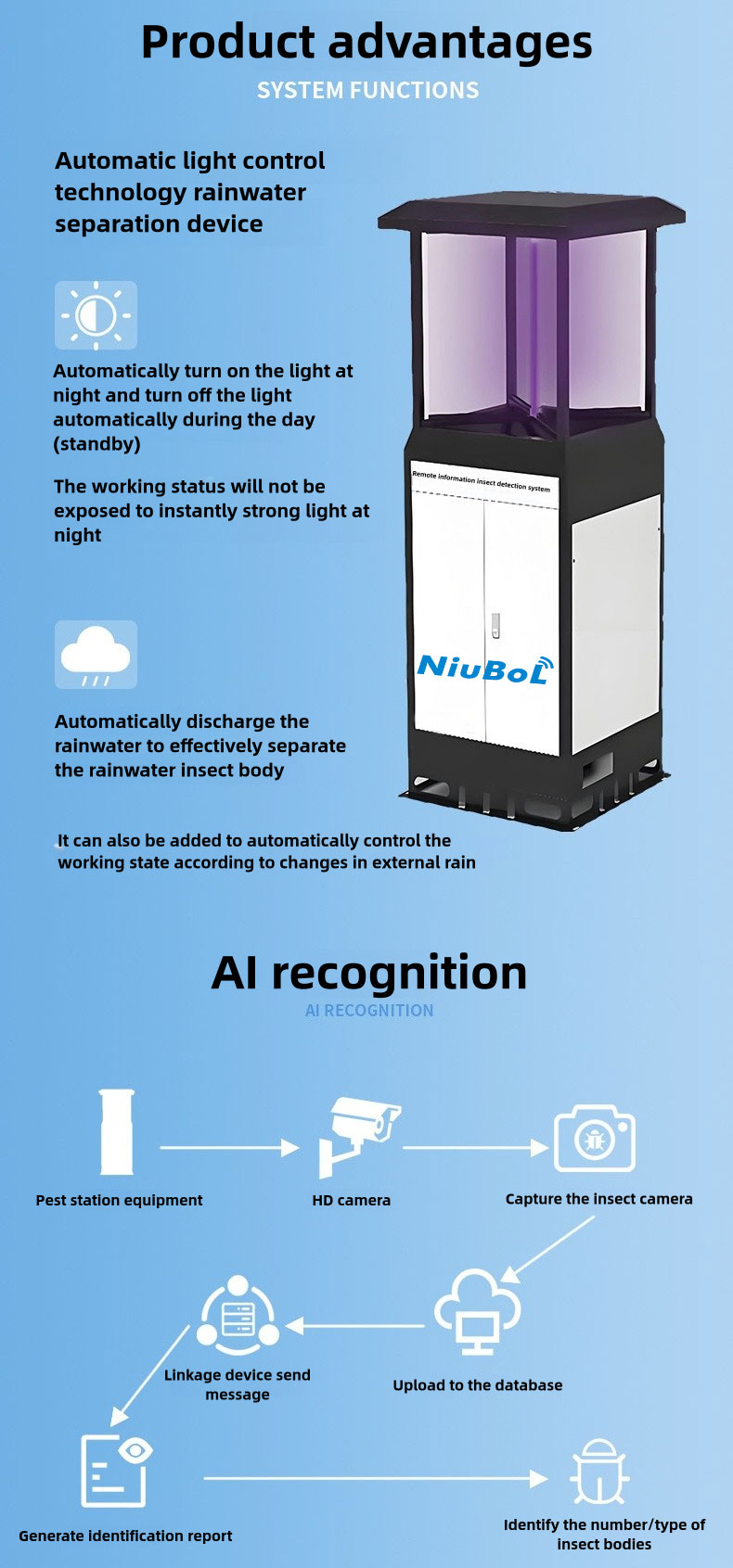
For a mixed project, state which units provide physical trapping and which provide monitored samples. A lamp's operating state is not a species count. Adding a gateway does not create that count unless suitable observation hardware and processing are present.
If remote integration is required, ask whether the offered controller supplies an interface and the exact states available. RS485 Modbus RTU should be specified and verified for the selected option, not assumed as a standard feature. Image delivery, remote commands and controller status may require separate equipment and data paths.
At a pilot installation, verify the selected light, fan, collector attachment and protection behavior under the supplier's approved procedure. Review early accumulation and actual service access. Keep the operating configuration unchanged during a comparison or record changes so they can be considered in the result.
For a NiuBoL quotation, provide the target insects, crop or site, desired operating period, service access and whether the requirement is control or monitoring. Request the exact head and collector arrangement, replacement parts and any verified remote option. Confirm availability and support terms for that order instead of relying on generic lifespan, warranty or delivery promises.
No. An operating motor can coexist with blockage, leakage or an incorrectly seated collector. Check the installed air path and use an agreed airflow test if the project requires a quantitative acceptance value.
Not by itself. Installed flow also depends on the fan arrangement and resistance of the collection path. Ask for the relevant assembly performance rather than converting a rotation speed directly into capture efficiency.
Set the interval from actual accumulation and the approved service procedure. Inspect early in operation and adjust for busy periods or contamination. A universal monthly interval is not a reliable substitute for loading information.
Only with approval for the selected assembly. A finer screen can restrict airflow and alter operation. Investigate the original retention arrangement before modifying it.
No. It physically attracts and collects insects. Species identification requires suitable samples or images and an identification process. Connectivity alone does not add those capabilities.
No. Endurance depends on the actual complete load, usable stored energy, schedule and charging conditions. Obtain a configuration-specific calculation and acceptance requirement rather than applying that promise to every model.

A suction-type insect trap lamp should be evaluated through its light, installed airflow and retention arrangement. Select the actual NiuBoL variant, inspect loading and keep physical trapping distinct from image-based monitoring. These checks support a serviceable installation without unsupported claims about selectivity, control results or automatic platform compatibility.
 Frequency vibration solar insecticidal lamp User Manual.pdf
Wind-suction Solar Insect Trap Light User Manual.pdf
Intelligent Remote Insect Monitoring and Reporting System(Insect Monitoring Device) Data Sheet.pdf
Prev:Orchard Weather Station and Insect Monitoring System: Match the Target
Next:Agricultural Pest Forecasting System: Define and Test the Forecast
Related recommendations
Sensors & Weather Stations Catalog
Agriculture Sensors and Weather Stations Catalog-NiuBoL.pdf
Weather Stations Catalog-NiuBoL.pdf
Agriculture Sensors Catalog-NiuBoL.pdf
Water Quality Sensor Catalog-NiuBoL.pdf
Related products
 Combined air temperature and relative humidity sensor
 TDR Soil Moisture & Temperature Sensor for irrigation| RS485 |4-20mA| NBL-S-THR
 Soil pH sensor RS485 soil Testing instrument soil ph meter for agriculture |NBL-S-PH
 Wind Speed sensor Output Modbus/RS485/Analog/0-5V/4-20mA
 Tipping bucket rain gauge for weather monitoring auto rainfall sensor RS485/Outdoor/stainless steel
 Pyranometer Solar Radiation Sensor 4-20mA/RS485


Screenshot, WhatsApp to identify the QR code
WhatsApp number:+8615367865107
(Click on WhatsApp to copy and add friends)

