





— Blogs —
—Products—
 Consumer hotline +8618073152920
 WhatsApp:+8615367865107
Address:Room 102, District D, Houhu Industrial Park, Yuelu District, Changsha City, Hunan Province, China
Product knowledge
Time:2026-05-13 11:34:18 Popularity:351
In industrial water treatment, chemical process control, and environmental monitoring IoT projects, the long-term stability and data accuracy of online pH meters are core indicators for measuring system performance. As a system integrator or project leader, understanding sensor performance under complex working conditions and mastering core troubleshooting capabilities is crucial for reducing later operation and maintenance costs.
This article combines the technical advantages of NiuBoL industrial-grade pH sensors to deeply analyze common challenges in online measurement and provide professional selection and integration recommendations.
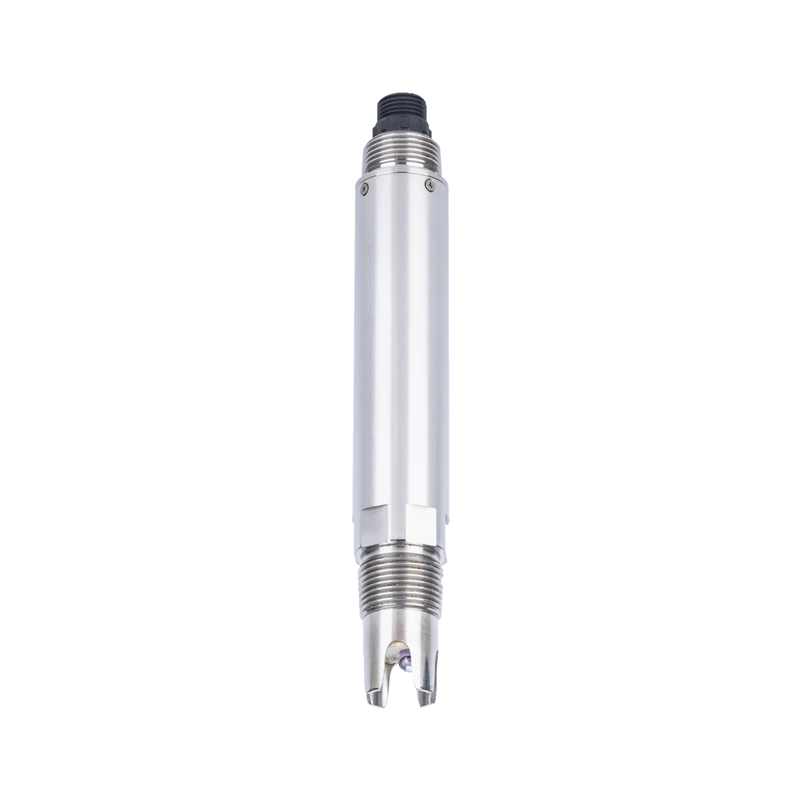
In engineering sites, pH measurement errors are often not caused by a single factor. The following summarizes the 11 most common technical issues on industrial sites and their engineering solutions.
When the screen shows “E” or an overflow prompt, it usually means the measurement signal exceeds the preset range (0-14 pH). During troubleshooting, focus on checking whether the high-impedance signal line is disconnected or has poor contact, causing the input terminal to float and generate induced potential.
If the measurement value shows irregular jumps and seriously deviates from actual water quality, it is mostly due to leakage at the reference connection or electromagnetic interference. It is recommended to clean the wiring terminals with absolute alcohol and ensure the RS-485 shielded wire is properly grounded, keeping the inside of the junction box dry.
If the online pH transmitter has no current or digital signal output, first confirm whether the instrument has mistakenly entered menu setting mode or calibration mode. In automation integration, ensure the Modbus communication address matches the host computer configuration.
When suspecting inaccurate readings, remove the NiuBoL sensor, clean the glass membrane head, and perform two-point calibration with standard buffer solutions. If the slope is below 85%, it indicates the electrode is nearing the end of its life and should be replaced.
Temperature decrease causes the internal resistance of the glass electrode to increase exponentially. In winter or low-temperature processes, slower response time is a normal physical phenomenon. In addition, contamination of the bulb or blockage of the salt bridge will also significantly delay the response, requiring regular chemical cleaning.
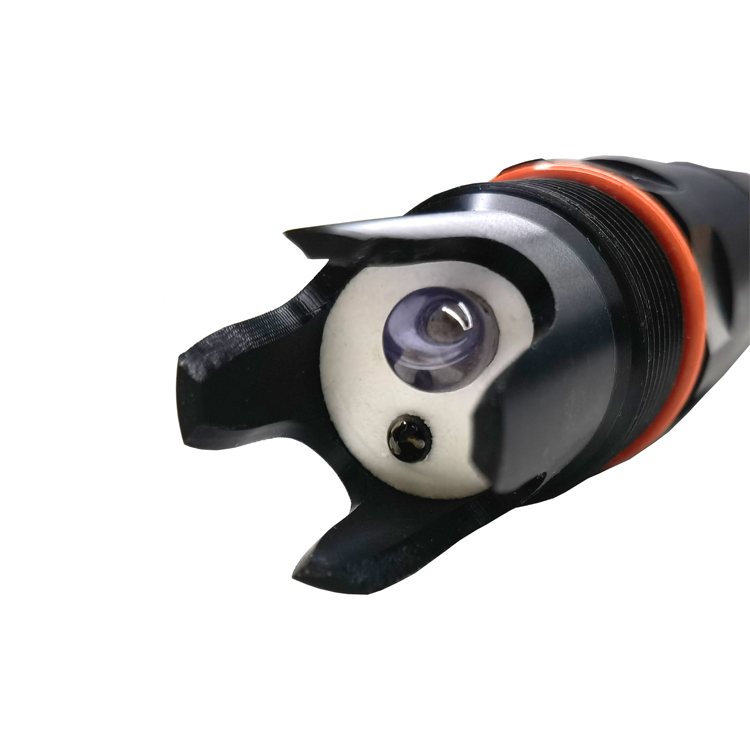
No change in reading regardless of the acid-base solution placed, usually indicates the electrode bulb is broken or the signal line is internally open. Immediately check the electrode appearance and measure cable continuity.
pH value is greatly affected by temperature. If the two measurements have different temperatures, or the sample undergoes chemical reactions in air (such as absorbing carbon dioxide), results will differ. It is recommended to measure under constant temperature conditions or use the sensor’s automatic temperature compensation (ATC) function.
Differences in calibration time, buffer solution accuracy, and electrode aging exist among different instruments. In large projects, all monitoring points should use the same batch of standard solutions and complete unified calibration within a similar time frame.
If the instrument display remains locked on a certain value for a long time, it may be that the electrode is not physically connected to the transmitter. During installation and commissioning, re-plug the connectors and rule out cable damage.
If the electrode response time in buffer solution exceeds 60 seconds, performance has degraded. You can try soaking and activating with dilute hydrochloric acid (0.1 mol/L HCl). For fast response but unstable sample measurement, consider whether the sample has extremely low conductivity or strong oxidizing properties, and adjust electrode selection accordingly.
It must be clear: the pH meter’s temperature compensation function compensates for “the effect of temperature on electrode slope”, not converting the pH value at the current temperature to the value at 25°C. If the process requires a 25°C standard value, constant temperature measurement should be performed in the laboratory or chemical compensation should be performed through background algorithms.
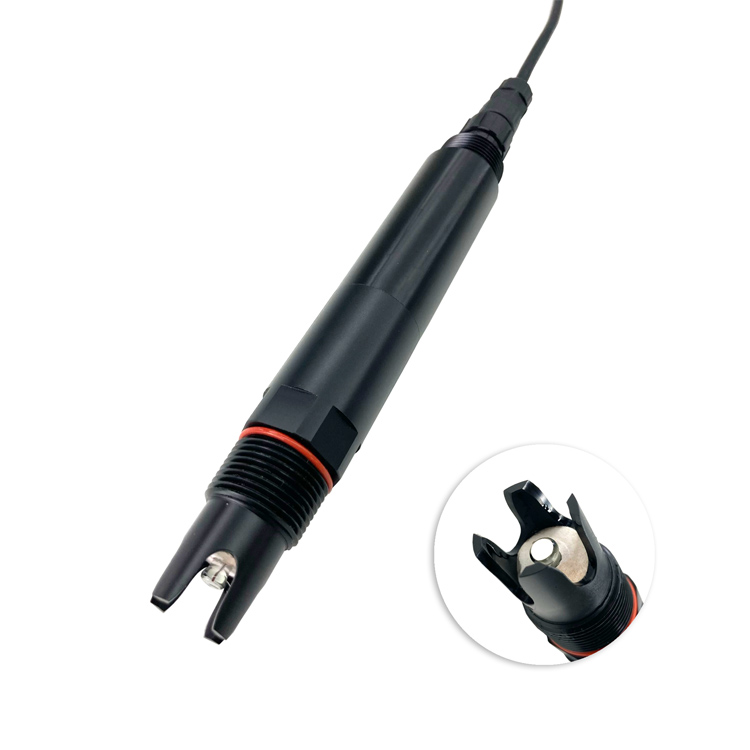
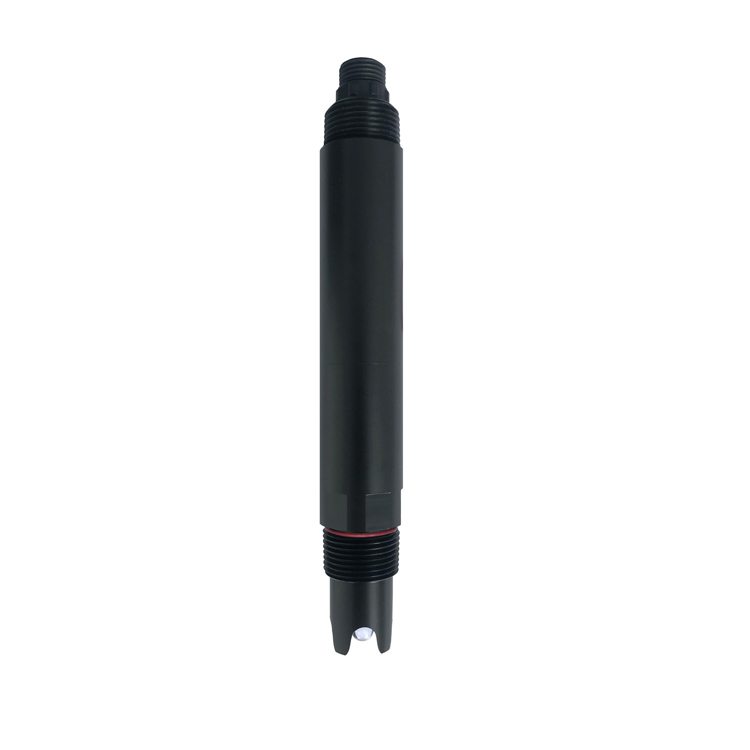
For different industrial application scenarios, NiuBoL provides various specifications of sensors. Its core advantage lies in the adopted reference system, where the internal reference liquid slowly seeps out under 100 KPa pressure, ensuring a stable working cycle of more than 20 months.
| Parameter Item | NBL-WQ-PH (Standard Type) | NBL-WQ-PH-4 (Enhanced Type) |
|---|---|---|
| Shell Material | ABS/PC Alloy | POM/316L Stainless Steel (optional) |
| Measurement Principle | Glass Electrode Method | Glass Electrode Method |
| Measurement Range | 0~14.00 pH | 0~14.00 pH |
| Resolution | 0.01 pH | 0.01 pH |
| Measurement Accuracy | ±0.1 pH | ±0.1 pH |
| Response Time (T90) | < 30s | < 30s |
| Temperature Compensation | Pt1000 Automatic Compensation | Pt1000 Automatic Compensation |
| Output Signal | RS-485 (Modbus RTU) | RS-485 + 4-20mA (Dual Output) |
| Pressure Resistance Range | ≤ 0.2 MPa | ≤ 0.2 MPa |
| Protection Rating | IP68 | IP68 |
| Installation Thread | 3/4 NPT | 3/4 NPT |
| Typical Application | Agricultural Irrigation, General Water Treatment | Chemical Process, Sewage Treatment, Industrial Monitoring |
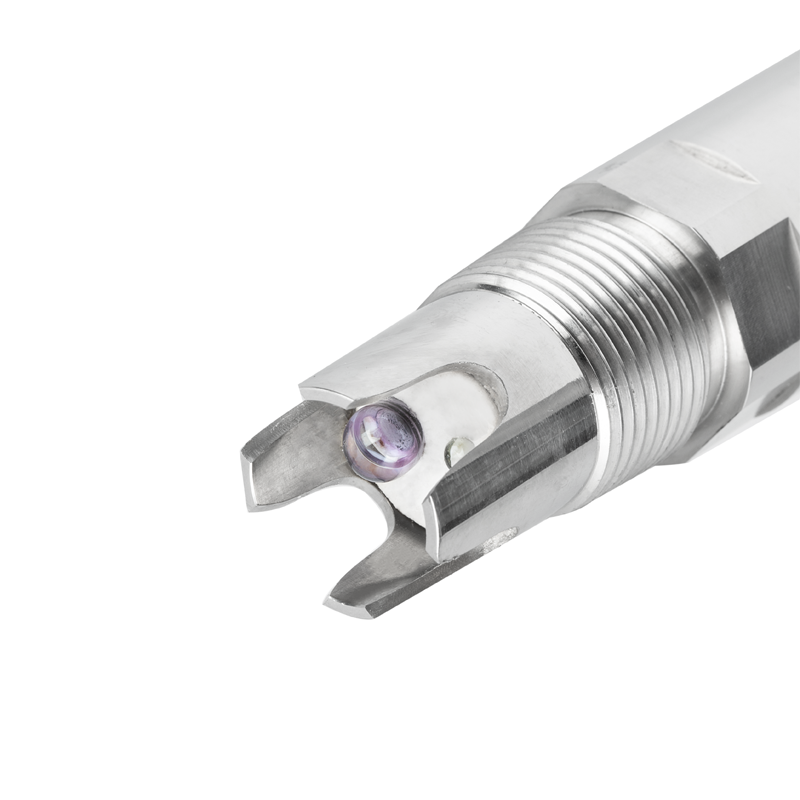
NiuBoL full series supports standard Modbus RTU protocol, enabling seamless connection of sensors to PLC or DCS systems. When writing driver programs, please pay attention to the stability of 12V-24V DC power supply. Too low voltage will cause communication packet loss or measurement value jitter.
The sensor supports 3/4 NPT thread installation. During submersible installation, ensure the sealing of the cable protection hose; in pipeline installation, select sections with stable flow velocity to avoid air bubbles accumulating on the electrode bulb causing reading jumps.
The industrial site environment is complex, and pH signals are weak electrical signals. Recommendations:
Keep signal lines at least 30 cm away from strong power lines.
Use shielded twisted pair cables for communication.
For long-distance transmission (over 100 meters), it is recommended to add a 120 ohm termination resistor at the end.
Q1: What is the typical electrode life of NiuBoL pH sensors?
In general industrial circulating water environments, thanks to patented reference liquid seepage technology, the life can usually reach 18-24 months. In strong acid, strong alkali or high temperature environments, the life will be shortened accordingly.
Q2: What is the maximum RS-485 signal transmission distance supported?
Under standard baud rate (such as 9600 bps), the reliable transmission distance can reach 1000 meters, but in engineering practice, it is recommended to add repeaters or ensure good line shielding.
Q3: How to deal with electrode scaling problems?
For industrial wastewater prone to scaling, it is recommended to perform chemical cleaning with 5% dilute hydrochloric acid regularly. Never wipe the glass bulb with hard objects.
Q4: Does the sensor support connection to third-party paperless recorders?
Yes. As long as the recorder has RS-485 (Modbus RTU) master station function or 4-20mA analog input interface, it can be easily integrated.
Q5: Can it be used under negative pressure conditions?
Not recommended. Negative pressure will cause accelerated loss of internal reference liquid or generate air bubbles in the electrode, affecting measurement accuracy.
Q6: How to choose calibration solutions?
It is recommended to use standard 4.00, 6.86, 9.18 (or 7.00, 10.01) buffer solutions. NiuBoL sensors support two-point calibration to ensure full-range linearity.
Q7: Does the IP68 protection rating mean it can be immersed in deep water for a long time?
IP68 means the sensor can be immersed for a long time under specified pressure. For deep water installation, professional mounting brackets are required and cable outlets must be well protected.
Q8: Why is pH measurement inaccurate in pure water?
Pure water has extremely low conductivity and is easily affected by carbon dioxide in the air. Special low-impedance electrodes and flow cells are required for pure water measurement. Ordinary industrial pH electrodes will show severe drift in pure water.
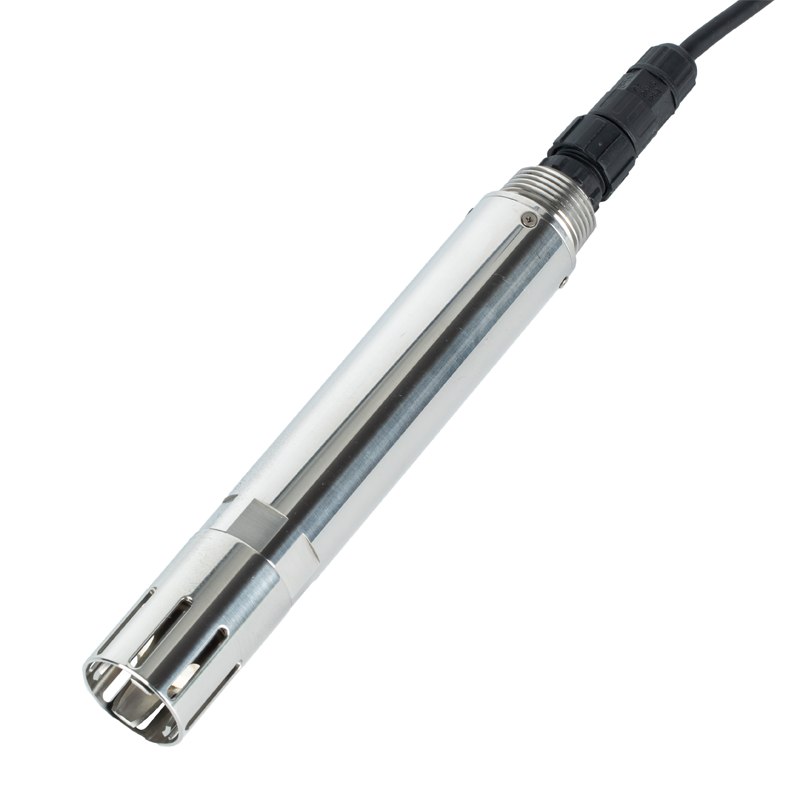
NiuBoL online pH sensors effectively solve the pain points of unstable measurement and short life in industrial sites with their dual high-impedance differential amplification technology and reference system. For system integrators, choosing sensors with high-performance anti-interference capabilities and standard industrial interfaces can not only significantly improve project delivery quality but also greatly reduce subsequent maintenance frequency.
In future industrial IoT construction, highly reliable underlying sensing data will be the cornerstone of intelligent operation and maintenance. NiuBoL is committed to providing global partners with stable, accurate, and easy-to-integrate core hardware for water quality monitoring.
 NBL-WQ-PH Online Water Quality pH Sensor.pdf
Related recommendations
Sensors & Weather Stations Catalog
Agriculture Sensors and Weather Stations Catalog-NiuBoL.pdf
Weather Stations Catalog-NiuBoL.pdf
Agriculture Sensors Catalog-NiuBoL.pdf
Water Quality Sensor Catalog-NiuBoL.pdf
Related products
 Combined air temperature and relative humidity sensor
 TDR Soil Moisture & Temperature Sensor for irrigation| RS485 |4-20mA| NBL-S-THR
 Soil pH sensor RS485 soil Testing instrument soil ph meter for agriculture |NBL-S-PH
 Wind Speed sensor Output Modbus/RS485/Analog/0-5V/4-20mA
 Tipping bucket rain gauge for weather monitoring auto rainfall sensor RS485/Outdoor/stainless steel
 Pyranometer Solar Radiation Sensor 4-20mA/RS485

Screenshot, WhatsApp to identify the QR code
WhatsApp number:+8615367865107
(Click on WhatsApp to copy and add friends)

